





Abstract
Objective:
To explore the technique and clinical efficacy of laparoscopic radical cystectomy and ileal conduit diversion for patients with muscle-invasive bladder cancer.
Materials and Methods:
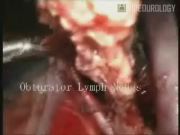
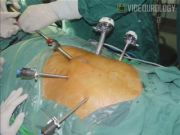
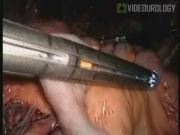
Laparoscopic radical cystectomies and ileum conduit diversions were performed in two patients with muscle-invasive bladder cancer (T2b, N0, M0; high-grade papillary urothelial carcinoma). The mean age was 69. Patients were administered general anesthesia and placed in supine position. A small incision was made 4 cm above the umbilicus, and a Veress needle was inserted through the incision to establish the pneumoperitoneum. The patient was then placed at a 30-degree Trendelenburg incline, and a five-port transperitoneal approach was employed. 1,2 The boundaries of extended pelvic lymph node dissection started from the bifurcation of common iliac vessel to the root of the inferior mesentery artery. The presacral nodes were also removed. The procedure of cystectomy, extended pelvic lymph node dissection, and ileal conduit diversion was performed purely laparoscopically. 3,4
Results:
All the procedures were completed. The time of operation was 320 and 280 min, respectively. The intraoperative blood loss was 350 and 450 mL, respectively. The number of nodes of dissection was 16 and 18, respectively, which were negative. The surgical margin was negative in two cases. The bowel recovery time was 3 days. The ureteral stents were removed in 2 weeks. There was no complication of urinary leakage. After 6 and 10 months of follow-up, there was no case of recurrence or metastasis.
Conclusions:
Laparoscopic radical cystectomy and laparoscopic ileal conduit have the advantage of minimal invasion and rapid recovery. The procedure is complex and requires advanced technique for operator.
No competing financial interests exist.
Runtime of video: 9 mins 8 secs
Get full access to this article
View all access options for this article.