





Abstract
Introduction:
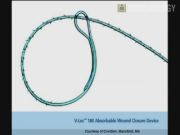
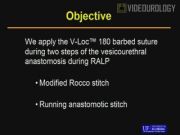
Completion of the vesicourethral anastomosis is a critical step of robot-assisted laparoscopic radical prostatectomy (RALP) and is especially challenging for novice robotic surgeons. Inadequate technical precision can result in postoperative morbidity in the form of anastomotic disruption and development of bladder neck contracture. Herein we apply the use of the V-Loc 180 barbed polyglyconate suture, whereby the unique design of the barbed suture is used to distribute and reduce tension to facilitate two steps of the vesicourethral anastomosis during robotic prostatectomy.
Materials and Methods:
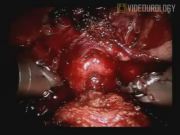
The V-Loc 180 barbed polyglyconate suture was used to perform the modified Rocco stitch and the vesicourethral anastomosis during RALP and is highlighted in this video demonstration. Video footage depicts the V-Loc grasping the tissues and distributing tension between Denonvillier's and posterior detrusor layers to the fibers of the posterior rhabdosphincter during the modified Rocco stitch. In addition, the ability of the V-Loc suture to promote mobilization of the urethral stump from the retropubic position to a more desirable intrapelvic location is further depicted during performance of the anastomotic stitch.
Results:
The V-Loc suture was useful in facilitating two steps related to the vesicourethral anastomosis during RALP: the modified Rocco stitch and the running vesicourethral anastomosis.
Conclusions:
The V-loc 180 barbed suture is an alternative suture that can be used during selective steps of RALP. Its use is especially attractive for novice robotic surgeons as it facilitates and simplifies the challenging steps of reconstructing the vesicourethral anastomosis. The barbed suture provides continuous and evenly distributed tension across the anastomosis, optimizing mucosa-to-mucosa reapproximation and completion of a water-tight closure.
No competing financial interests exist.
Runtime of video: 5 mins 3 secs
Get full access to this article
View all access options for this article.