





Abstract
Introduction:
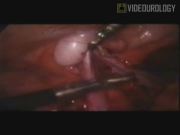
This video illustrates the technique of laparoscopic orchiopexy (LO) for low intraperitoneal impalpable testis.
Patients and Methods:
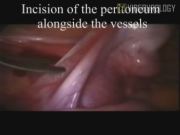
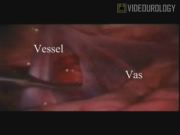
In all 86 patients underwent diagnostic laparoscopy (DL) (mean age 5 years, range 1–12) for clinically impalpable undescended testes during the study period (2004–2008). Diagnostic laparoscopy is then performed. A 5-mm trocar is inserted under direct vision using open trocar (Hasson) technique. Division of gubernacular attachment at the ring was done firstly helped by gentle traction on the testis. Dissection of the peritoneum begins medially over the bladder and then down the pelvic wall along the spermatic vessels.
Delivery of the Testis:
Using (Printess) technique or medialization of the spermatic vessels, a new internal ring is created medial to the obliterated umbilical artery and between it and the bladder. 6 We used little finger to dilate the tract and to guide delivery of the testis with the artery forceps. This simple maneuver greatly helped smooth delivery of the testis without frequent slipping as we met in our first two cases.
Results:
Among the 86 cases underwent DL, only 56 intra-abdominal testes were found to be close to the internal ring and amenable for direct laparoscopic orchiopexy. The estimated mean operative duration for a standard LO was 90 min (range 45–110). The operation was completed laparoscopically in all cases.
Follow-Up:
The mean follow-up was 8 months. In 53 testes underwent laparoscopic orchiopexy, testes were of average size and in favorable scrotal position. Only in two cases the testis retracted to the upper scrotum, which required further surgery.
Conclusion:
The present series and other large reported series 1 –5 show that laparoscopic orchiopexy has a more successful and safer outcome than the conventional approach of groin exploration with abdominal-extension orchiopexy.
The authors have nothing to disclose.
Runtime of video: 4 mins 52 secs
Keywords
Get full access to this article
View all access options for this article.