





Abstract
Introduction:
Percutaneous renal surgery has become standard urologic practice for diagnosing and treating upper urinary tract disease such as stone disease, transitional cell carcinoma, and ureteropelvic junction obstruction. The Hopkins rod-lens nephroscope has been the standard for the last 40 years. Despite its high resolution, it is bulky when external camera and light source are attached. Further, there is a risk of drape fires and patient burns from the xenon light source. Therefore, new technology to overcome these deficiencies in current endoscopes is needed.
Methods:
The Invisio Smith digital nephroscope is the first digital nephroscope from Gyrus ACMI (Southborough, MA) that was used in two patients with calyceal stones for the first time.
Results:
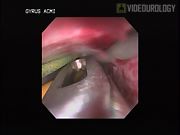
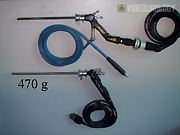
The tip of Smith digital nephroscope houses dual light emitting diode–driven light carriers and a 1-mm digital camera, which obviates an external xenon light source and eliminates the need for a hot light cord to light source, thus eliminating the risk of drape fires and patient burns. Since there are no external cameras or light cables, the Smith digital nephroscope is much lighter and more ergonomic than the standard rod-lens nephroscope. There is no need to focus or white balance—just plug and play. The weight of the new Smith nephroscope is 470 g, whereas the rod-lens nephroscope with external camera and light cord can weigh up to 939 g. This is about a 50% reduction in weight.
Conclusions:
The Smith digital nephroscope is much lighter and more ergonomic and reduces the risk of fires associated with external xenon light sources. Long-term use of this nephroscope is needed to compare its durability with the traditional Hopkins lens nephroscopes.
No competing financial interests exist.
Runtime of video: 5 min 38 sec
Get full access to this article
View all access options for this article.