





Abstract
Introduction:
The standard treatment for upper tract transistional cell carcinoma is radical nephro-ureterectomy with bladder cuff excision. Here we share our experience of pure robotic nephro-ureterectomy with a novel port placement allowing for single robotic docking.
Methods:
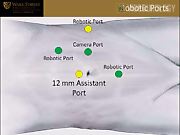
Port placement is integral to successful performance of the procedure without need for redocking of the robot. The patient is placed in a modified flank position at approximately 60 degrees. The port placement begins with a 12-mm camera placed 3 cm lateral to the umbilicus, off the rectus muscle. The first robotic arm port is placed lateral to the rectus muscle 7 cm cranial to the camera port. The second 8-mm port is placed 7 cm lateral to the camera. In a left-sided tumor, these two ports will serve as the left and right arm for managing the kidney, respectively. The fourth robotic 8-mm port is placed in the midline 8 cm caudal to the umbilicus. The lateral port and midline port will serve as left and right arms in managing the distal ureter and bladder cuff. A 12-cm assistant port is usually placed midline approximately 2 cm cranial to the umbilicus.
Results and Conclusions:
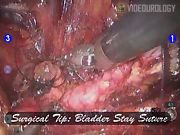
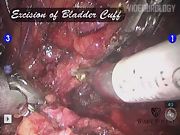
We have completed this procedure in 20 patients without the need to reposition the robot intraoperatively. 1 We believe midureteral placement of a hemolock clip after ligation of the renal hilar vessels prevents malignant cell spillage into the bladder during kidney manipulation. A suture placed adjacent to the ureteral orifice can serve as a stay suture and prevent retraction of the bladder during repair of the cystotomy. We have presented our novel technique of robotic nephro-ureterectomy with bladder cuff excision without the need for intraoperative robotic dedocking. This reduces operative time and reduces reliance on assistance while performing the procedure.
No competing financial interests exist.
Runtime of video: 4 mins 42 secs
Get full access to this article
View all access options for this article.