






Abstract
Background:
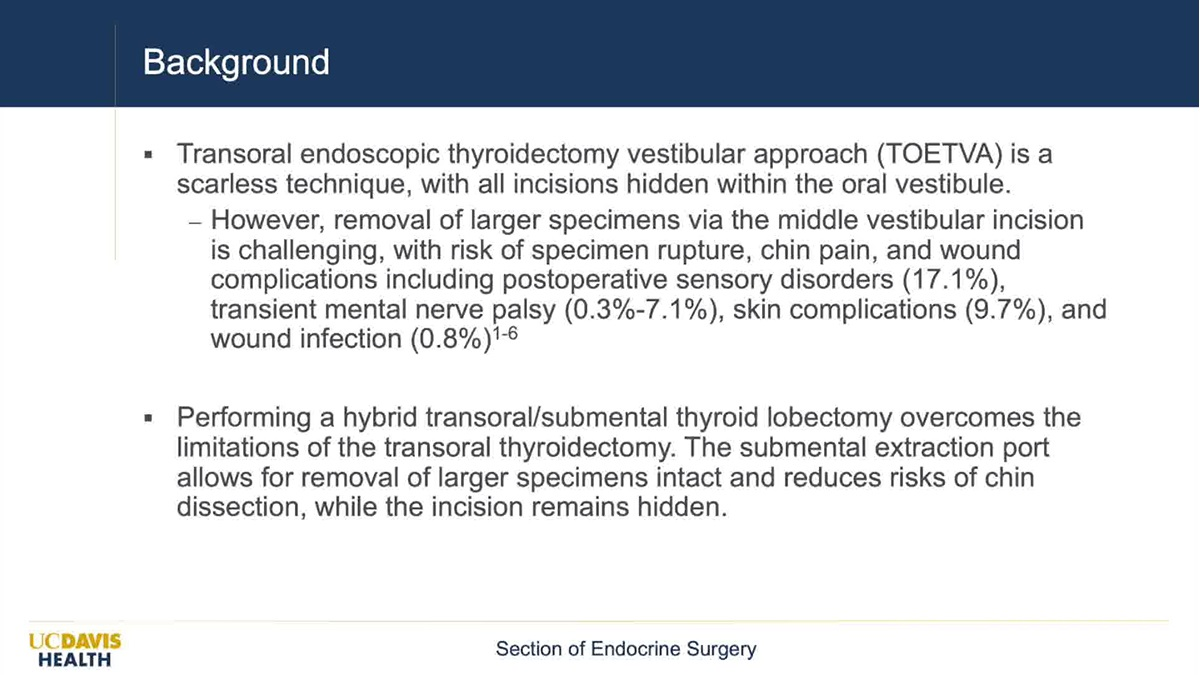
The transoral endoscopic thyroidectomy via vestibular approach (TOETVA) is a scarless technique with all incisions hidden within the oral vestibule. However, removal of larger specimens via the middle vestibular incision is challenging, with risks of specimen rupture, chin pain, and wound complications. A hybrid transoral and submental technique (TOaST) for thyroidectomy can obviate these limitations.
Case:
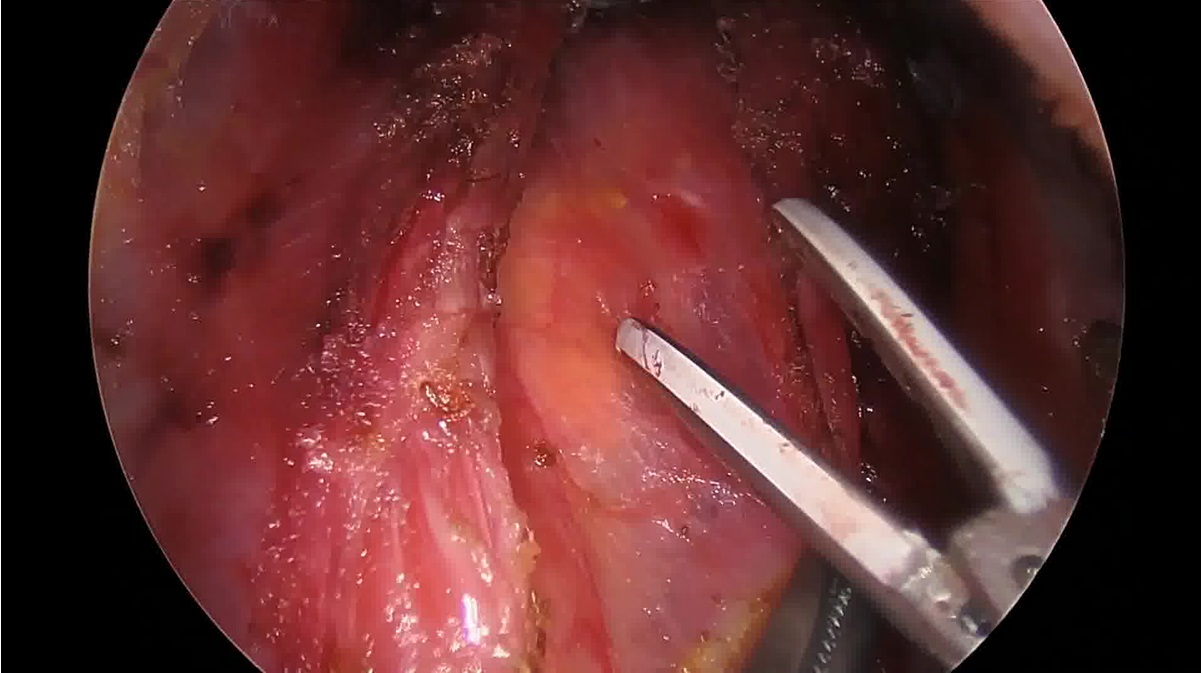
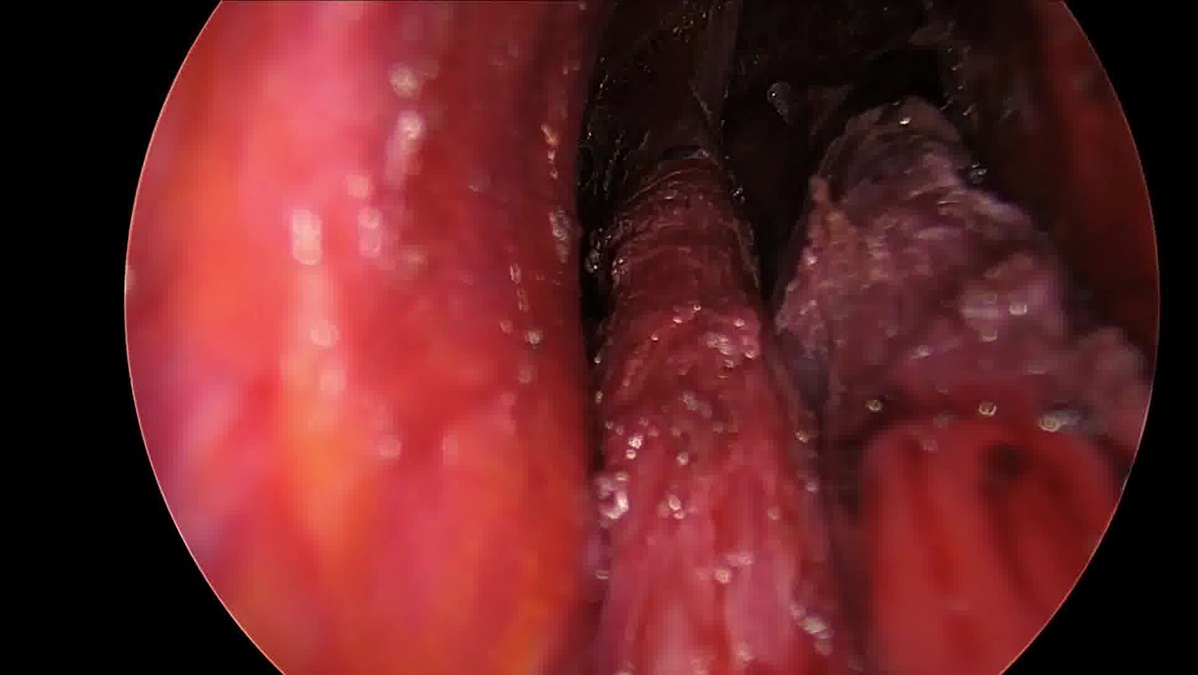
The patient is a 46-year-old healthy woman presenting with multinodular goiter, with a dominant right isthmus nodule (TIRADS 4 [TR-4], 3.7 cm), and right lower lobe nodule (TR-4, 1.5 cm), no left-sided nodules. She had no compressive symptoms but was bothered by continued growth and cosmesis. Fine needle aspiration biopsies of both nodules were benign. She elected to undergo TOaST right thyroid lobectomy. In TOaST, the middle port incision is made just inferior to the submental crease. A subplatysmal plane is developed bluntly prior to 12 mm port placement. Two working 5 mm ports are placed in the oral vestibule lateral to the incisors, as in TOETVA. Right thyroid lobectomy is performed in a top-down approach, taking care to preserve the recurrent laryngeal nerve and parathyroid glands. In this case, a long ball-tip nerve stimulator was used through the lateral port for intraoperative neuromonitoring.
Conclusion:
The TOaST procedure, a hybrid transoral/submental thyroidectomy, is a modified TOETVA technique with a submental camera/extraction port. The use of a submental port facilitates easier specimen removal by a direct path, can be easily enlarged without fear of damage to the mental nerves, and formal dissection of tissue from the mentum of the mandible is avoided, reducing chin trauma while retaining an excellent cosmetic outcome.
No competing financial interests exist
.
Runtime of video: 9 mins 4 secs
Presented as podium talk at ACS Clinical Congress, October 25, 2023 in Boston, Massachusetts, USA.
Get full access to this article
View all access options for this article.