





Abstract
Introduction:
Partial adrenalectomy is proposed as elective treatment in patients with multiple endocrine neoplasia type 2A (MEN 2A). 1 Surgery performed with minimally invasive technique is the treatment gold standard and, although the superiority of robotic surgery over classical laparoscopy is still controversial, the use of robotic device is increasing in this type of surgery. 2 Partial adrenalectomy greatly benefits from the use of indocyanine green angiography, and this benefit also enhances those of the robotic approach.3–7
Materials and Methods:
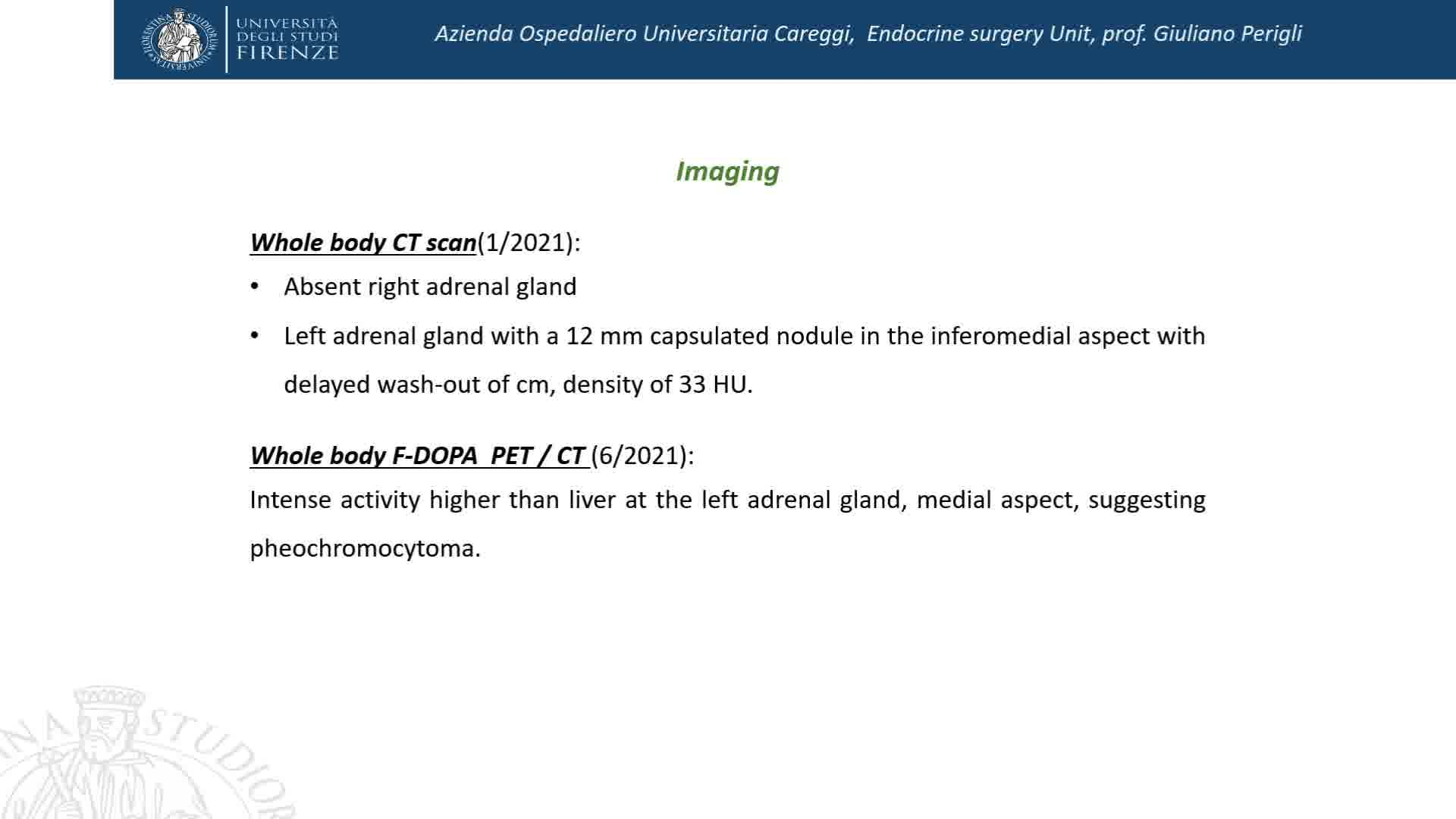
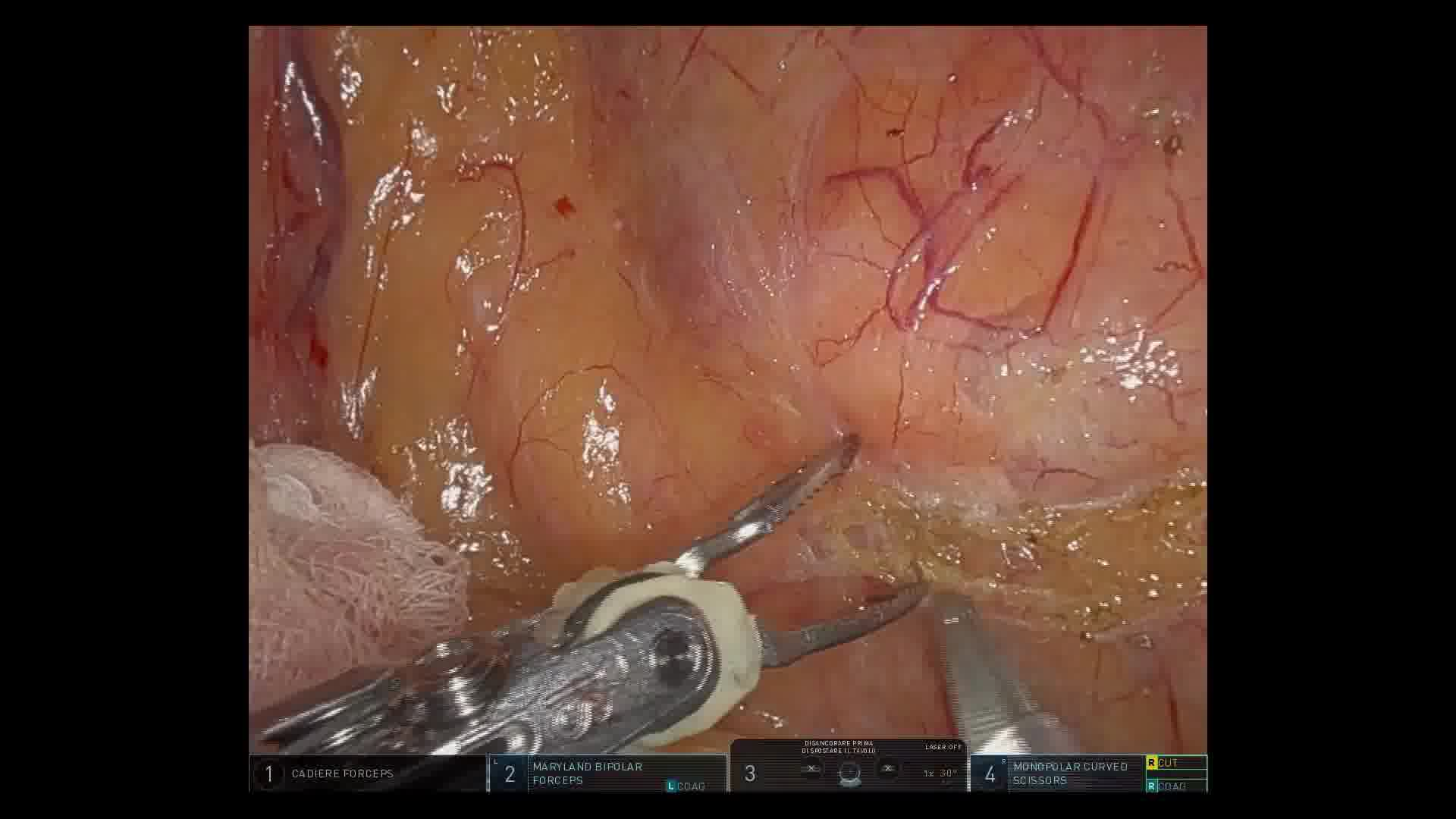
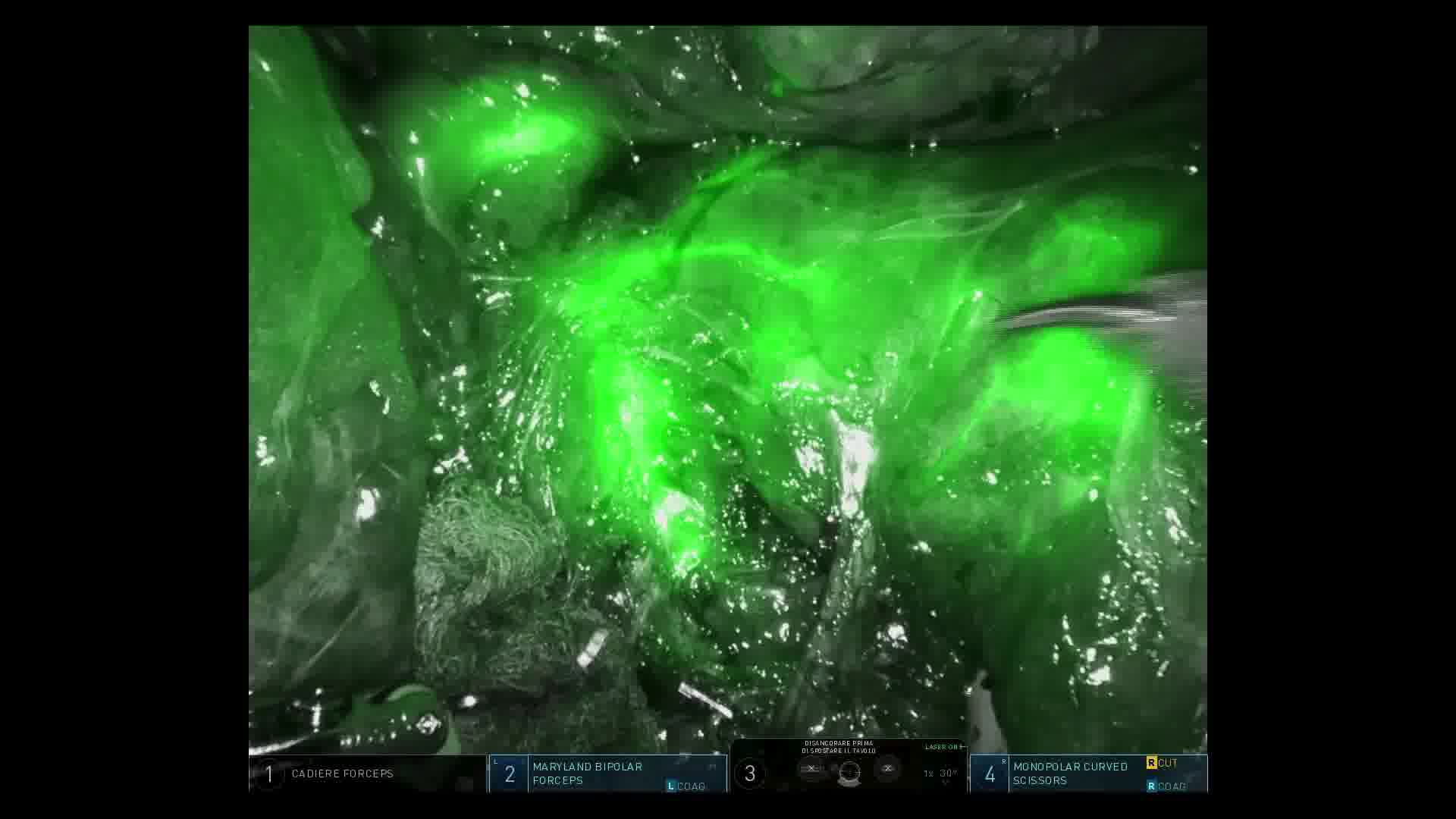
The patient of this case report is a 46-year-old woman affected by MEN 2A (Tymine-Cytosine-Guanine/Tymine-Guanine-Guanine mutation, 634 codon, 11 exon, Rearranged during Transfection Gene) who yet underwent open right adrenalectomy. During the follow-up, the patient developed elevated 24-hour urinary normetanephrine values. Cross-sectional and functional imaging studies revealed a left inferior pole adrenal nodule suspicious for pheochromocytoma. During surgery, the patient's position was in traditional lateral left decubitus. We used four robotic trocars for monopolar and Maryland bipolar forceps, tip-up pliers, and needle holder; moreover, we had one service trocar for Airseal and laparoscopic instruments of the bed-side surgeon. During surgery we performed intraoperative ultrasonography and indocyanine green angiography.
Results:
We performed robotic left partial adrenalectomy preserving all the neighboring structures and verifying vitality of residual gland, limiting the resection to the lesion only. These results agree with the literature.1,3–7 The specimen dimension agrees with preoperative imaging, the histologic diagnosis confirms pheochromocytoma and demonstrates free margins.
Conclusions:
According to the literature,3,4–7 the main strengths of this procedure are the sparing of the glandular healthy portion, a better identification of the lesion by intraoperative ultrasonography, and the indocyanine green angiography for an easy localization and evaluation of residual gland vitality.
No competing financial interests exist.
Runtime of video: 9 mins 15 secs
Get full access to this article
View all access options for this article.