






Abstract
Abstract
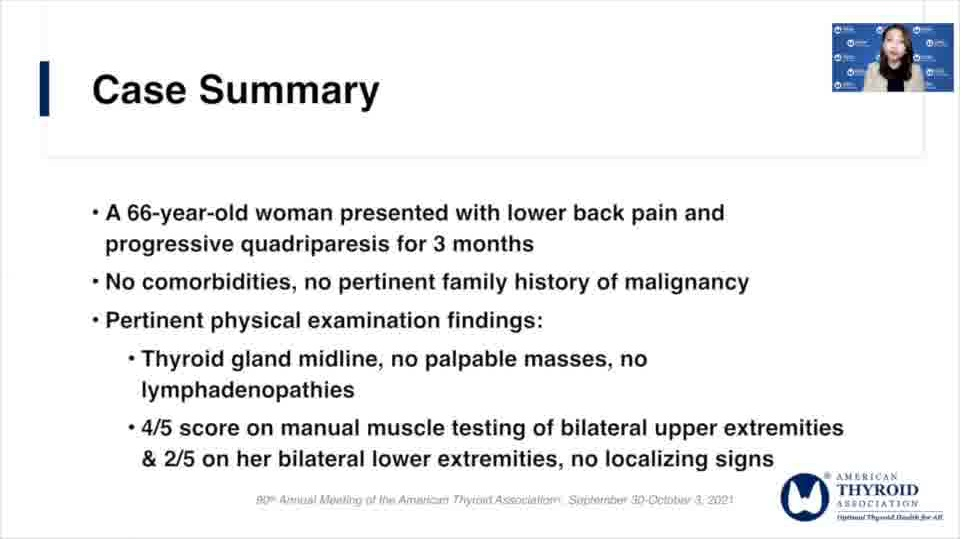
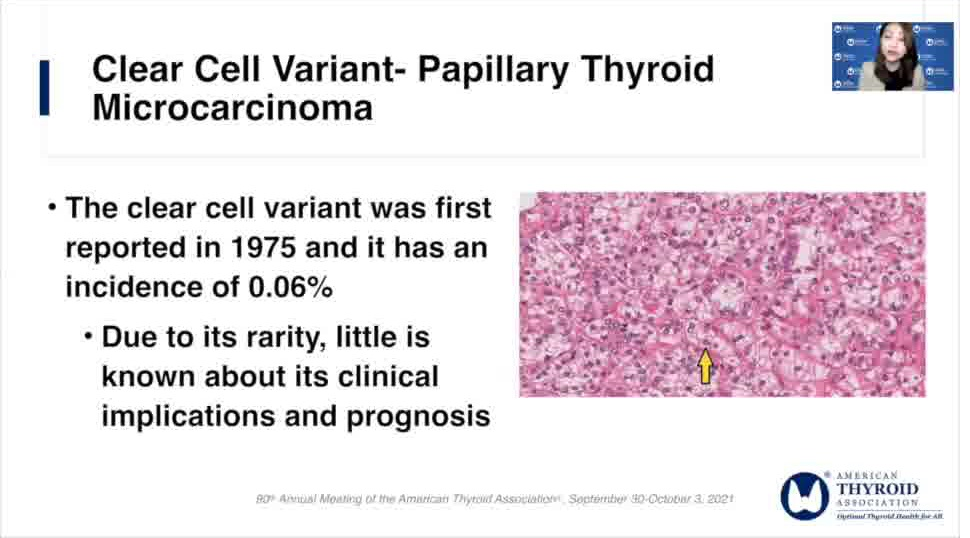
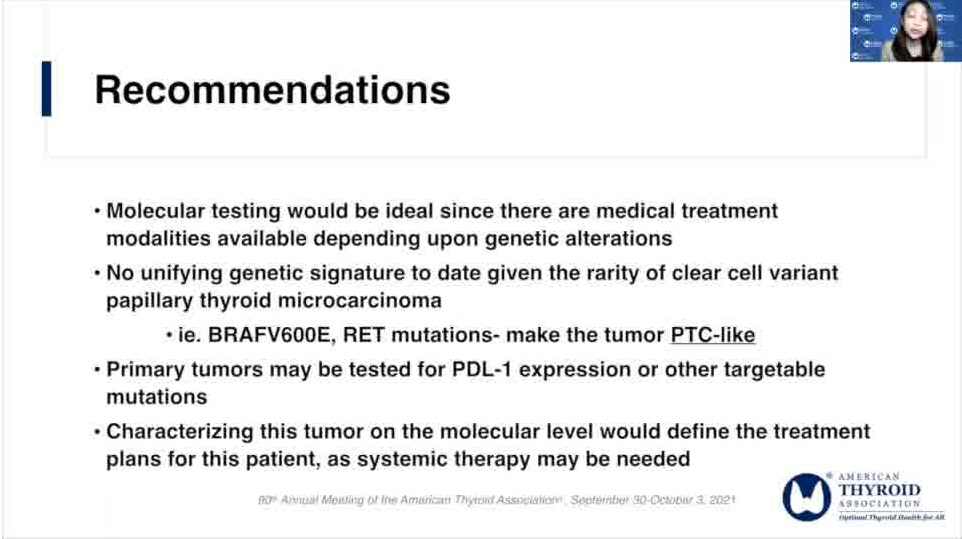
There is a lack of knowledge about papillary thyroid microcarcinoma clear cell variant especially its clinical significance, management approach, and prognosis. We describe the clinical course and multimodal management of a case of papillary thyroid microcarcinoma clear cell variant in a Filipino woman who initially presented with progressive quadriparesis. A 66-year-old woman presented with progressive quadriparesis and was found to have multiple lesions on the cervical, lumbar spine, and right lung with supraclavicular infiltration on positron emission tomography and computed tomography scan and magnetic resonance imaging. Biopsy of the mass on the lumbar spine revealed an adenocarcinoma with immunostaining positive for thyroid transcription factor-1 and thyroglobulin. A thyroid ultrasonograph detected an 8 mm nodule in the right thyroid lobe with features suspicious for malignancy. Posterior cervical decompression and total thyroidectomy were performed and histopathologic examination revealed a clear cell variant of papillary thyroid microcarcinoma. She received 200 mCi of iodine 131. On post-therapy scan, multiple radioactive iodine avid metastatic foci were seen in the right lung, supraclavicular regions, and cervical and lumbar spine. Multimodal management was done with external beam radiation to the cervical and lumbar spine, steroids for spine decompression, and zoledronic acid infusion for the bone metastases. She remains paraplegic and wheelchair bound, although she has had complete recovery of muscle strength and sensory function of her bilateral upper extremities, with resolution of urinary incontinence. To the best of our knowledge, this is the first reported case of papillary thyroid microcarcinoma clear cell variant that initially presented with spinal cord compression and that underwent multimodal management. The clear cell variant papillary microcarcinoma in this case presented with angioinvasion, which may have contributed to the extensive metastases seen in our patient. Further studies are necessary to confirm these findings. In conclusion, papillary thyroid microcarcinoma clear variant with spinal cord compression should be diagnosed early and a multidisciplinary approach should be applied, including surgery, external beam radiation therapy, radioactive iodine treatment, and concomitant glucocorticoid therapy, to improve patients' survival rate and quality of life. Further studies are recommended to document the possible aggressive nature and prognostic significance of the clear cell variant of papillary thyroid microcarcinoma. In this case, molecular testing would be ideal given that she presented with metastatic disease, and there are medical treatment modalities available depending upon the genetic alterations. There does not seem to be one unifying genetic signature to date given the rarity of the diagnosis of clear cell papillary thyroid microcarcinoma. Though little is known about the clear cell variant, knowing the mutations involved will help predict the prognosis, that is, BRAFV600E, rearranged during transfection makes the tumor more papillary thyroid carcinoma-like, whereas reticular activating system makes it more follicular thyroid carcinoma-like. The primary tumor was not tested for programmed death ligand 1 expression, and this may have direct therapeutic relevance and benefit for the treatment of this patient with immunotherapy. Characterizing this tumor on the molecular level would define the treatment plans for this patient, as systemic therapy may be needed. This information would aid the medical team in finding targetable mutations.
Authors have received and archived patient consent for video recording/publication in advance of video recording of procedure.
No competing financial interests exist.
Runtime of video: 6 mins 33 secs
This abstract was originally presented in the 90th American Thyroid Association Annual Meeting held from September 30 to October 3, 2021.
Get full access to this article
View all access options for this article.