






Abstract
Abstract
Introduction:
In selected patients, the transoral endoscopic thyroidectomy vestibular approach (TOETVA) can be performed safely with excellent cosmetic results and the same oncologic outcome and requires only conventional laparoscopic instruments. 1 , 2 Compared with the anterior chest or axillary approach, the transoral approach has a smaller working space, and even a small amount of surgical smoke affects visibility. Traditional transoral thyroidectomy uses carbon dioxide inflation and/or suspension devices to maintain the surgical space. Owing to the narrow space in the anterior neck, the working space maintained by CO2 air pressure is often insufficient and unstable. Moreover, CO2 inflation has a risk of gas embolism. The suspension method requires a special device and causes swelling of the flap and facial sensory numbness caused by retraction. In this video, we present a transoral thyroidectomy procedure with neither gas inflation nor suspension.
Materials and Methods:
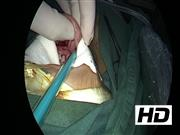
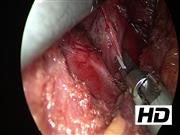
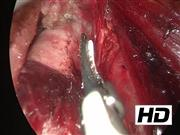
In January 2021, a 36-year-old female patient with two nodules on the right thyroid lobe proven as papillary thyroid carcinoma with cytology came to our department. The clinical staging was cT1aN0M0 stage I. The patient was concerned about surgical scarring and chose a transoral procedure. The operation room setup and the steps to create the surgical space are shown in the video. We made three incisions (1.5, 0.5, and 0.5 cm) in the vestibule and gingival–buccal sulcus. Three trocars were employed. A 30′ camera was put through the central main trocar. Endoscopic suction was inserted through the main port acting as a suspension and suction system. It was leveraged to support the upper flap and maintain the working space during the whole procedure; moreover, it sucked the smoke generated during the surgery. Ultimately, it made the spaces bigger, stable, and clear. A special endoscopic retractor that we invented was used to retract strap muscles to expose the thyroid and/or push the trachea to expose the central compartment. An intraoperative neuromonitoring system was used to identify and protect the external branch of the superior laryngeal nerve and the recurrent laryngeal nerve during the procedure.
Results:
The whole surgery took 2.5 hours, with an estimated blood loss of 20 mL. The right lobe, isthmus, and right central lymph nodes were removed en bloc. The signal of nerves was good. The superior and inferior parathyroids were preserved in situ. A drain was placed in the anterior neck and was removed the next day. The patient was hospitalized for 2 days. The 6-month follow-up after surgery showed no abnormalities.
Conclusions:
The gasless and nonsuspensional method has several advantages compared with gas inflation and/or suspension methods. The working space is sufficient and stable with a clear visual field, and there is no need for a special instrument.
No competing financial interests exist
.
Running time of video: 11 mins 52 secs
Get full access to this article
View all access options for this article.