





Abstract
Abstract
Introduction:
Pheochromocytoma in multiple endocrine neoplasia (MEN) 2A syndrome is characterized by its bilaterality in a high percentage of cases, which can lead to bilateral adrenalectomy being occasionally performed. As a result, corticoid treatment is administered for the rest of the patient's life and this is associated with severe complications. Subtotal adrenalectomy is an alternative technique that makes it possible to keep the adrenal glands functioning and prevent complete adrenal insufficiency. 1 However, it is important to carry out an assessment of the most appropriate gland on which to perform subtotal surgery, by using three-dimensional (3D) reconstruction and printing, 2 and to also confirm that the adrenal remnant is functional, using indocyanine green fluorescent imaging. 3 We will present the case of a female patient with bilateral pheochromocytoma and MEN 2A who was given a laparoscopic subtotal bilateral adrenalectomy using indocyanine green fluorescent imaging. Before surgical intervention, 3D reconstruction and printing were carried out to provide a better view of the anatomical position of both adrenal glands. 2
Clinical Case
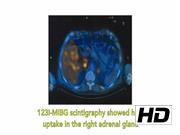
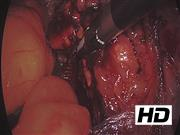
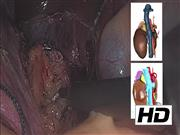
: The patient was a 24-year-old with MEN 2A syndrome (Cys634Tyr mutation). During follow-up it was observed that there were elevated catecholamine and metanephrine levels in urine (×2). The CT showed a 32 mm nodular lesion in the right gland and a left hyperplastic adrenal gland. 123I-meta-iodobenzylguanidine scintigraphy revealed high uptake in the right gland with a slightly lower level of uptake in the left gland, consistent with bilateral adrenal disease. The patient started to undergo treatment with doxazosin 4 mg/24 hours, which was maintained for 14 days. For surgical planning, 3D reconstruction and printing of both adrenal glands was carried out. In the right adrenal gland, it was seen how practically the whole of the gland was occupied by the tumor, making it difficult to leave a large enough adrenal remnant. However, in the left gland, given its anatomical position and vascularization, it was decided that subtotal adrenalectomy could be performed with a greater guarantee of leaving a larger vascularized remnant. To do this, subtotal left adrenalectomy was initially performed. Good vascularization of the remnant was confirmed using indocyanine green dye. Next, right adrenalectomy was performed. The patient was discharged on the third day, with a good evolution after being administered hydrocortisone treatment, which was gradually reduced until suspension. The definitive histologic analysis confirmed a 32 mm right pheochromocytoma and hyperplasia of the left adrenal gland. The rapid adrenocorticotropic hormone stimulation test with 250 μg was carried out showing a poststimulus cortisol level of 21 μg/dL at 30 minutes. In addition, cortisol and catecholamine levels were normal 1 year after surgery.
Conclusions:
Subtotal adrenalectomy helps to preserve the endocrine function of the gland without the need for substitutive treatment. Three-dimensional reconstruction and printing help us to organize surgical planning and to choose the most appropriate gland on which to perform subtotal surgery. In addition, green indocyanine fluorescence imaging allows us to assess vascularization of the adrenal remnant, guiding us on how well it is functioning.
No competing financial interests exist.
I confirm that the research has not received a government funding.
Runtime of video: 8 mins 57 secs
Keywords
Get full access to this article
View all access options for this article.