






Abstract
Abstract
Introduction:
This video was an invited presentation at the 88th Annual Meeting of the American Thyroid Association on the topic of “Surveillance” for thyroid carcinoma.
Materials and Methods:
Ultrasonography, cross-sectional imaging, and laryngoscopy are used to describe a continuum of surveillance strategies to optimize detection of recurrent thyroid carcinoma.
Results:
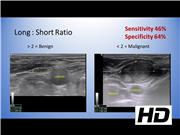
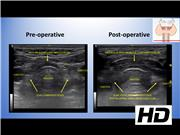
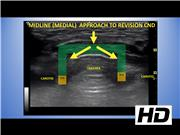
Ultrasonography of cervical lymph nodes can help determine whether a given node is suspicious for malignancy and enables risk stratification of the patient with regard to disease recurrence. Cross-sectional imaging is complementary to ultrasonography and may detect nodal recurrences in regions not well seen by ultrasonography. The appropriate approach to revision central neck dissection can be tailored to the patient on the basis of preoperative imaging findings and preoperative laryngeal examination findings, and intraoperative recurrent laryngeal nerve monitoring can help enable safe dissection in a revision field, regardless of the approach chosen.
Conclusions:
Ultrasonography surveillance for nodal recurrence in well-differentiated thyroid carcinoma is effective, complementary to other forms of imaging, and can help guide both surgical decision-making and approach in revision surgeries.
C.F.S. has no relevant conflicts of interest. C.F.S. has had no commercial associations during the past 2 years that might create a conflict of interest in connection with this video.
Runtime of video: 9 mins 41 secs
Presented at the 88th Annual Meeting of the American Thyroid Association, October 3–7, 2018, in Washington, DC.
Get full access to this article
View all access options for this article.