





Abstract
Abstract
Introduction:
Thyroid disease remains endemic in many developing nations and is largely the consequence of iodine deficiency. Patients with large goiters may have associated compressive symptoms, hyperthyroidism, or report poor quality of life. Surgery is the principal treatment of large symptomatic goiters but remains particularly challenging in resource-limited settings. Constraints to the surgical management of thyroid disease in Uganda include more advanced disease because of delayed presentation, limited supplies and equipment, limited formal training in endocrine surgery, and limited access to anesthesia.1–4 With a population of >40 million people, Uganda has <100 qualified anesthesia providers, with only a minority of those being physicians.2,3 Owing to this shortage of anesthesia providers in Uganda, some surgeons opt to perform thyroidectomies under local anesthesia. This video demonstrates a subtotal thyroidectomy performed under local cervical block anesthesia for the treatment of a large symptomatic goiter.
Materials and Methods:
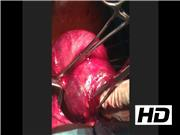
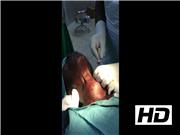
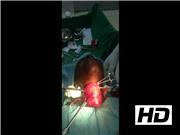
The aim of this video is to provide a demonstration of a subtotal thyroidectomy performed by using only local anesthesia. A 52-year-old female presented with a large symptomatic multinodular goiter. The operation was performed as part of a surgical outreach camp at Nebbi hospital in northwestern rural Uganda. 5 Owing to inaccessibility of thyroid replacement hormone and low suspicion for malignant disease, a subtotal thyroidectomy was performed. The patient was alert and conscious throughout the procedure. A 0.25% lidocaine solution with diluted adrenaline was used as local anesthetic. 6 The lateral aspect of the sternocleidomastoid muscle is injected bilaterally as it is the standard Kocher incision site. Owing to constraints of the operative facility, the procedure was performed without the use of electrocautery or suction irrigation. Hemostasis was achieved with hand-tied 3-0 or 2-0 silk sutures. The recurrent laryngeal nerve and parathyroid glands were identified intraoperatively. The patient's pain level and phonation can be tested throughout the procedure. The specimen was extracted en bloc and pathology analysis grossly demonstrated multinodular goiter. No drain was placed.
Results:
An effective subtotal thyroidectomy was performed without intraoperative complication. The patient tolerated the procedure well. The recurrent laryngeal nerve and parathyroid glands were preserved. The operative time was <2 hours and blood loss was minimal. There was no stridor, hoarseness, or symptoms of hypocalcemia identified postoperatively. Gross pathology analysis confirmed suspicion of multinodular goiter.
Conclusion:
Subtotal thyroidectomy for large symptomatic goiters may be performed safely in a resource-limited setting with the use of local anesthetic only. It is an excellent option for patients when access to anesthesia care is limited or unavailable.
No competing financial interests exist.
Runtime of video: 4 mins 38 secs
Get full access to this article
View all access options for this article.