






Abstract
Crimean–Congo hemorrhagic fever (CCHF) is a zoonotic tick-borne disease, caused by an arbovirus of the genus Orthonairovirus and the family Nairoviridae. Crimean–Congo hemorrhagic fever virus (CCHFV) is widespread in several regions of the world. While the virus is not pathogenic to all susceptible livestock and wild mammals, it can lead to severe hemorrhagic fever in humans. In this review, we compiled published data on CCHFV infections in humans, animals, and ticks in Tunisia. Based on that, we discussed the epidemiology and the distribution patterns of CCHFV infections highlighting the risk factors for this virus in the country. CCHF infection prevalence in humans was estimated to 2.76% (5/181) and 5% (2/38) in Tunisian febrile patients and Tunisian slaughterhouse workers, respectively. Concurrently, seroprevalence in domestic ungulates (sheep, goats, cattle, and dromedaries) ranged from zero to 89.7%, and only one Hyalomma impeltatum tick specimen collected from dromedaries in southern Tunisian was positive for CCHFV by reverse transcriptase–polymerase chain reaction (0.6%; 1/165). As Tunisian studies on CCHFV are geographically scattered and limited due to very small sample sizes, further studies are needed to improve the knowledge on the epidemiology of CCHF in Tunisia.
Introduction
Approximately 60
CCHF is a geographically widespread infectious disease (Blair et al., 2019; Papa et al., 2017) in Southern/Southeast Asia, in many parts of Africa, and in the Middle East, as well as in Mediterranean European Countries (García Rada, 2016; Gergova and Kamarinchev, 2013; Mourya et al., 2012; Nabeth et al., 2004; Rodriguez et al., 1997; Wilson et al., 1990). In 2022, for example, there was a new record year in Georgia, recording 42 human CCHF cases in the country. At the end of 2023, CCHFV was reported for the first time in mainland France (CIRAD, 2023). The increasing incidence of CCHFV highlights the need for vigilant surveillance and the implementation of response measures in endemic areas (Pshenichnaya et al., 2023).
Ticks of the genus Hyalomma are the main vectors and reservoirs of CCHFV (Estrada-Peña et al., 2012; Sherifi et al., 2014). Hereby, Hyalomma marginatum is the major vector of CCHFV in Mediterranean Basin and Asia according to Al-Abri et al. (2017), Gargili et al. (2017), and Papa et al. (2017) while other tick genera such as Rhipicephalus, Amblyomma, and Dermacentor may also maintain the virus in endemic areas (Gargili et al., 2017).
The transmission of CCHFV to humans occur through three routes: (1) most commonly through bites from infected ticks, (2) through direct contact with human patients during the acute phase of disease, and (3) through contact with tissue or blood of viremic animals (Appannanavar and Mishra, 2011; Blair et al., 2019). In humans, CCHFV causes primarily a nonspecific febrile disease with fever, abdominal pain, headache, nausea, and diarrhea (Center for Disease Control and Prevention, 2013). In some cases, severe fever and bleeding can lead to death if the virus is not cleared within 10 days. There are even reports of fatal cases before the 10th day. Depending on the general level of (medical) awareness of the disease (underreporting of mild clinical cases) and the medical resources available (disease monitoring combined with diagnostic and therapeutic interventions) lethality can be up to 40% (Al-Abri et al., 2017; Appannanavar and Mishra, 2011; Hawman and Feldmann, 2018). Ticks are vectors and reservoirs of CCHFV at the same time, while domestic and wild vertebrates act only as amplification hosts of the virus (Akuffo et al., 2016).
In contrast to humans, animals do not develop patent clinical symptoms but only a transient viremia (Akuffo et al., 2016; Spengler et al., 2016a). Therefore, farmers, slaughterhouse workers, butchers, and health care workers living in endemic areas are at high risk of infection (Kar et al., 2020; Spengler et al., 2016a).
Ticks become infected when feeding on infected animals or indirectly by cofeeding with infected ticks (Gordon et al., 1993). CCHFV can remain in ticks throughout their life cycle and can also be vertically transmitted to their offspring (Gargili et al., 2017; Zeller et al., 1994). Several risk factors contribute to the spread of CCHFV into new geographic areas, namely: (1) the transport of infected ticks by migratory birds, (2) national and international trade of animals, and (3) climate and land use changes (Gharbi, 2020; Grandi et al., 2020; Lindeborg et al., 2012; Rainey et al., 2018).
In this present review, we examined all studies on CCHFV infections in humans, domestic animals, and ticks in different Tunisian governorates (administrative Tunisian districts) (Fig. 1), to update and analyze the epidemiological situation for CCHFV infections, focusing on risk factors and endemic regions.
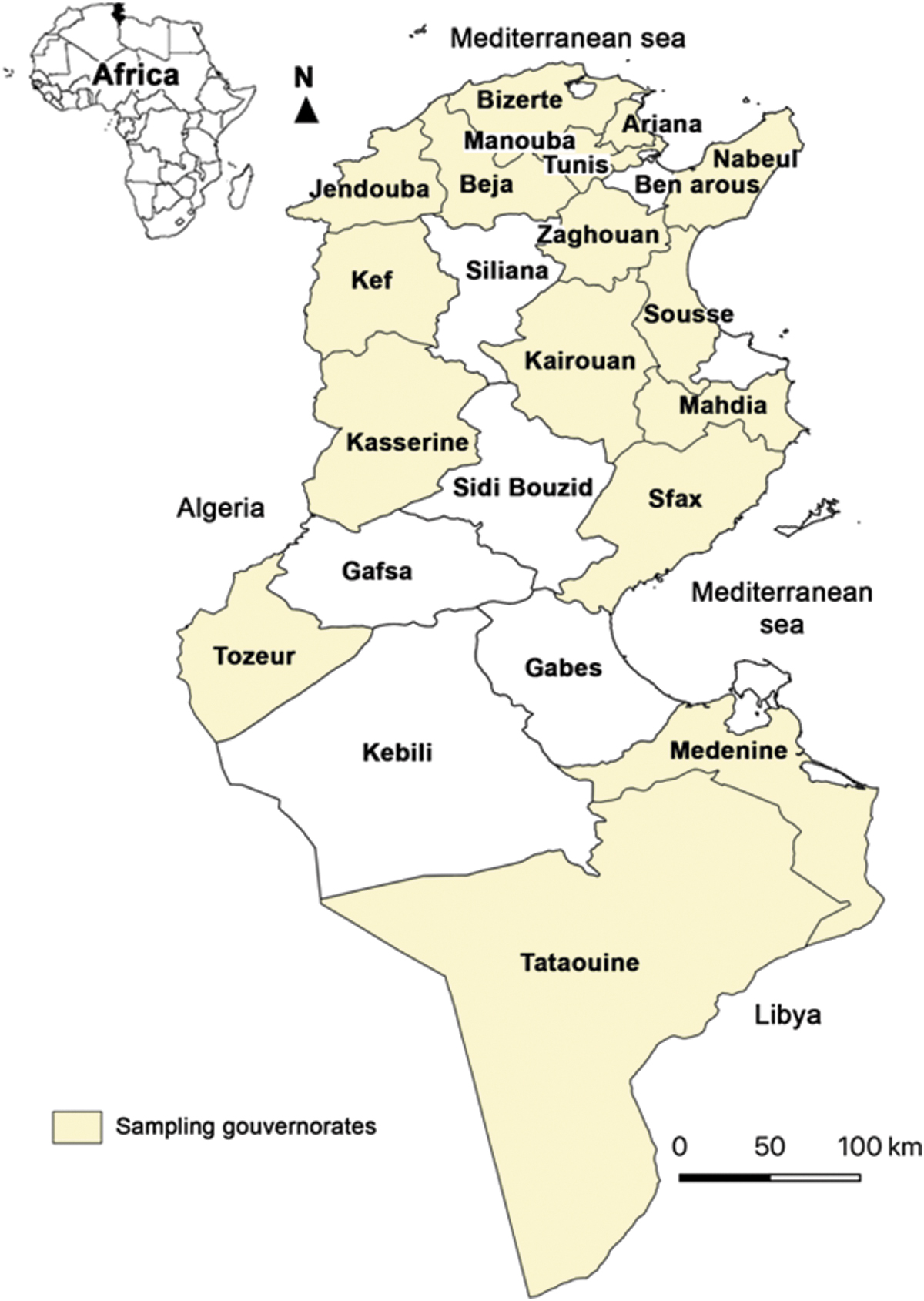
Map showing the 24 Tunisian governorates. In yellow, governorates where studies on CCHFV were performed. CCHFV, Crimean
Human CCHFV Infections in Tunisia
Despite the importance of CCHF as a zoonotic disease and its presence in different Tunisian animals and in one tick, only one survey was carried out in 2014 to estimate the CCHF antibody prevalence in Tunisian human population. The study targeted two populations (patients with unexplained fever and slaughterhouse workers) using reverse transcriptase–polymerase chain reaction (RT-qPCR) and Enzyme-Linked Immunosorbent Assays (ELISAs) (Fig. 2A). Among the group of 181 febrile patients, this study revealed that 5 humans (2.8%) displayed elevated IgM titters, suggesting recent exposure to CCHFV. Furthermore, 2 of 38 slaughterhouse workers (5.2%) showed anti-CCHFV IgG responses (Table 1), but no viral RNA was found in any of the blood samples from these individuals. All of them were certainly infected in Tunisia since none of them reported an overseas travel, although none of them remembered a tick bite incident either (Wasfi et al., 2016).
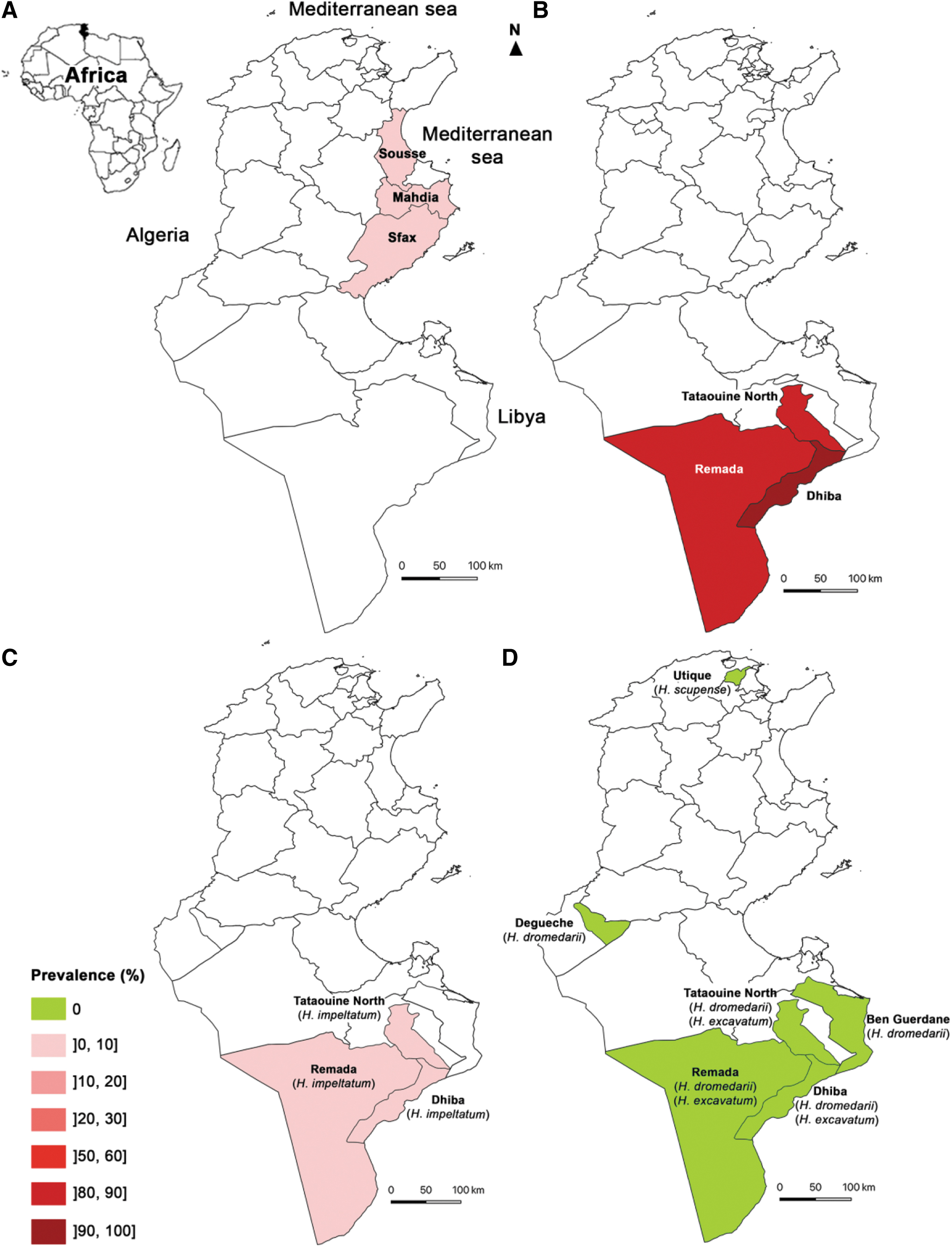
Map of Tunisia showing localities where humans, dromedaries, and ticks were sampled.
Crimean–Congo Hemorrhagic Fever Virus Prevalence in Humans, Animals, and Ticks in Tunisia
All the ELISA tests reported in this table were performed using commercial ELISA kits.
The number of examined animals represents the total number of animals included in each study.
CCHFV prevalence infection in Tunisian febrile patients.
CCHFV prevalence infection in Tunisian slaughterhouse workers.
CCHFV, Crimean
CCHFV Infections in Tunisian Animals
In Tunisia, three studies investigated the presence of anti-CCHFV antibodies in sera from domestic animals (Table 1).
CCHFV infection in sheep
Using ELISA, 270 Tunisian sheep sera from different regions of the country were examined, including the North (Jendouba, Manouba, and Zaghouan districts), the center (Kasserine and Sfax districts), and the south (Tataouine). Sera were tested using a commercial CCHFV double-antigen multispecies ELISA (IDvet Screen® Montpellier, France), following the manufacturer's recommendations for detecting specific anti-CCHFV nucleoprotein antibodies. Three sera (1.1%) were positive for CCHFV, one from the Center (Bir Ali Ben Khalifa, Sfax governorate) and two from the southeast (Bir Lahmer, Tataouine governorate) (Fig. 3A). The sheep from Bir Ali Ben Khalifa showed high titer in ELISA and was strongly positive when tested with viral neutralization test (VNT). The two other sheep sera from Bir Lahmar and Tataouine governorate showed borderline ELISA results with no detectable neutralizing antibodies in the VNT (Khamassi Khbou et al., 2021a). It is important to highlight that only this last publication by Khamassi Khbou et al. (2021a) has corroborated the ELISA results through the neutralization test.
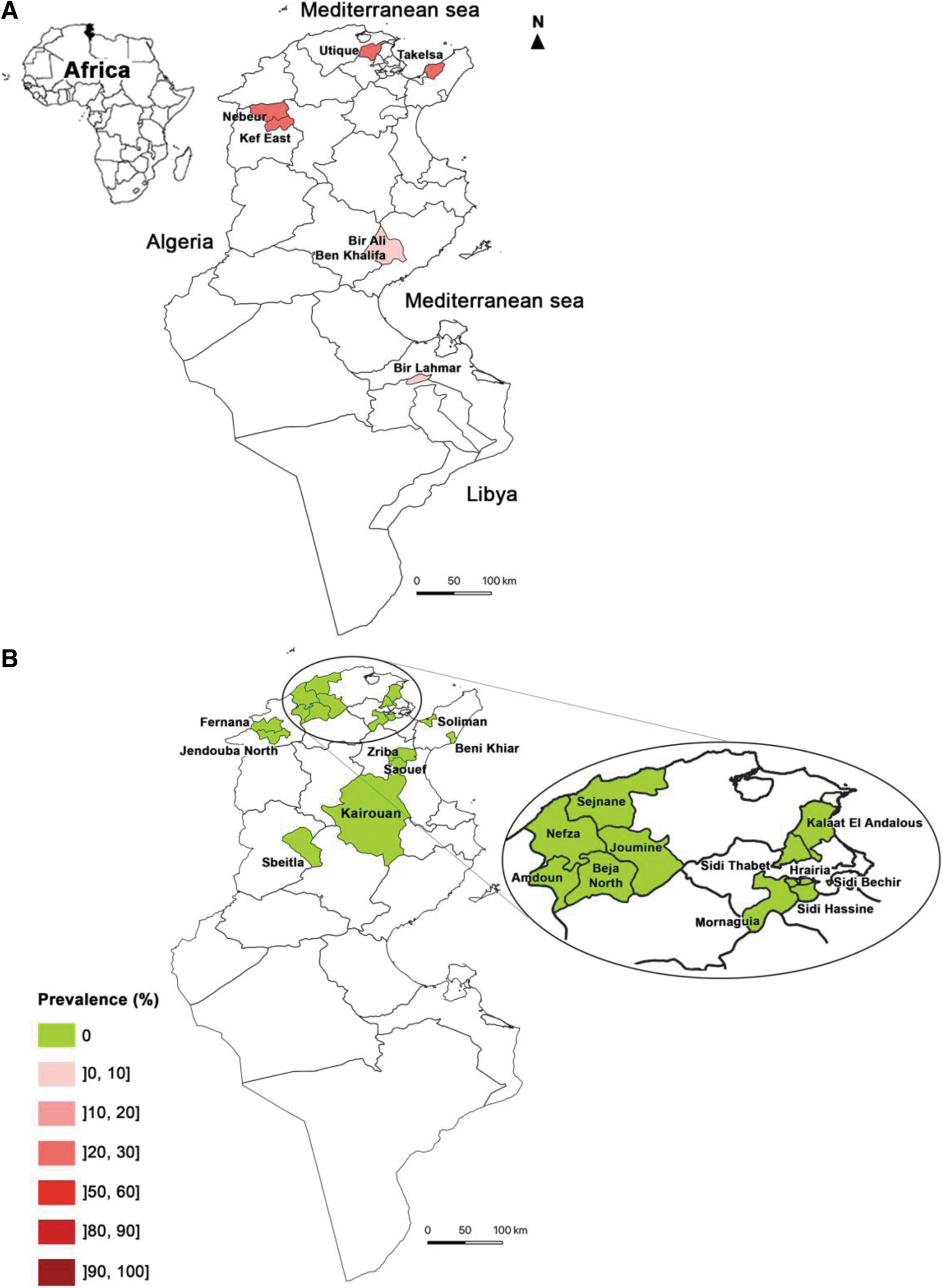
Map of Tunisia showing localities of sheep sampling.
Zouaghi et al. (2021) reported the overall seroprevalence in sheep to be 6.2% (20/235) using ELISA and indirect immunofluorescence antibody test (IIFAT) from samples collected from North Tunisia (Governorates of Ariana, Beja, Bizerte, Jendouba, Kef, Nabeul, Tunis, and Zaghouan) (Fig. 3A, B). However, these results were not verified using VNT.
CCHFV infections in goats
Only one study using ELISA and IIFAT was performed to screen 166 goats for anti-CCHFV antibodies in North Tunisia (Governorates of Ariana, Beja, Bizerte, Nabeul, Tunis, and Zaghouan). This study revealed an overall anti-CCHFV seroprevalence of 7.8% (13/166) (Zouaghi et al., 2021) (Fig. 4A, B).
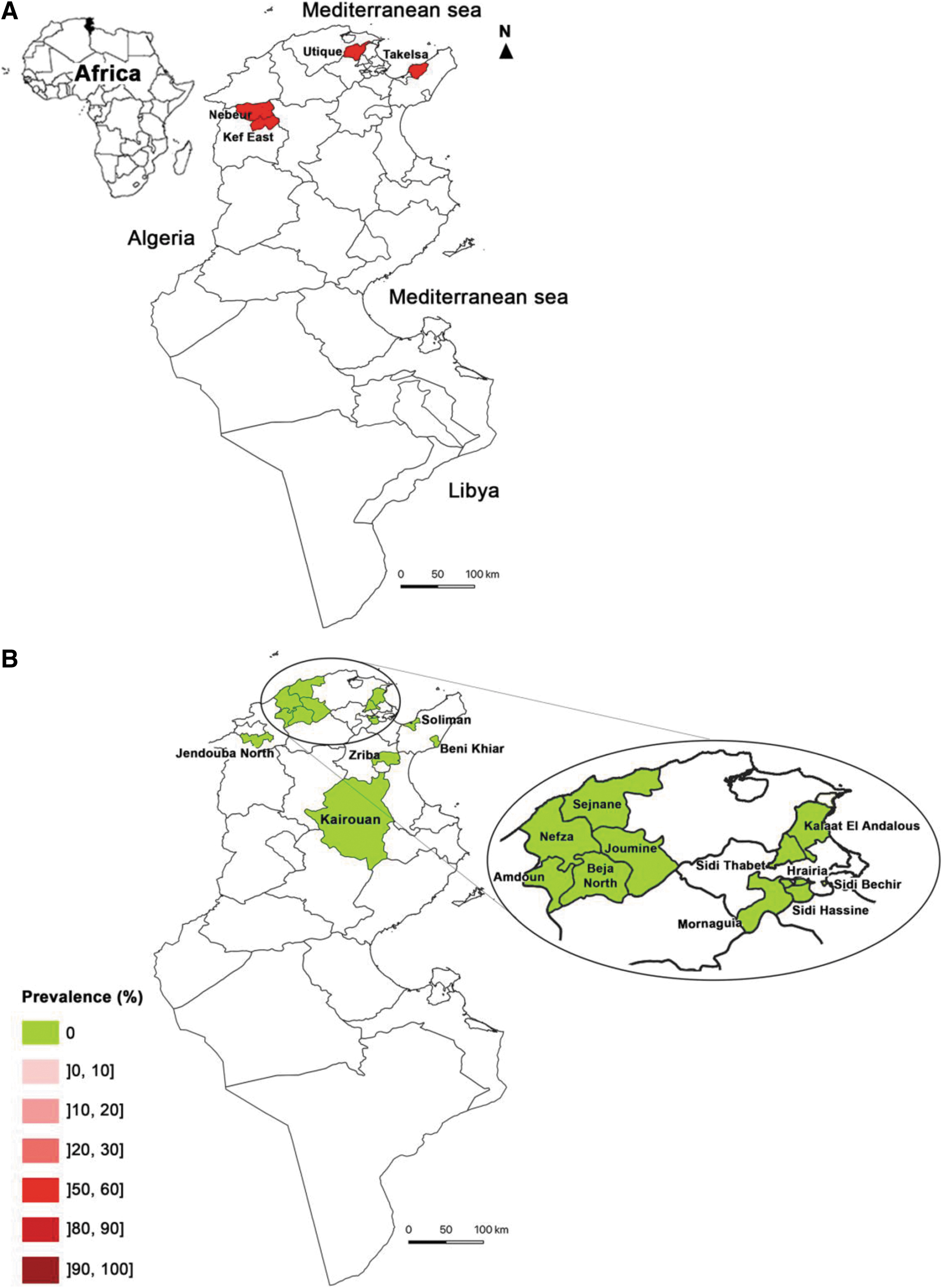
Map of Tunisia showing goats sampling locations.
CCHFV infections in cattle
ELISAs and IIFAT were used to screen cattle from Northern (governorates of Ariana, Bizerte, Beja, Nabeul, Tunis, and Zaghouan) and central Tunisia (governorate of Kairouan) for the presence of anti-CCHFV antibodies. It revealed an overall seroprevalence of 11.1% (43/388) (Zouaghi et al., 2021) (Fig. 5A, B).
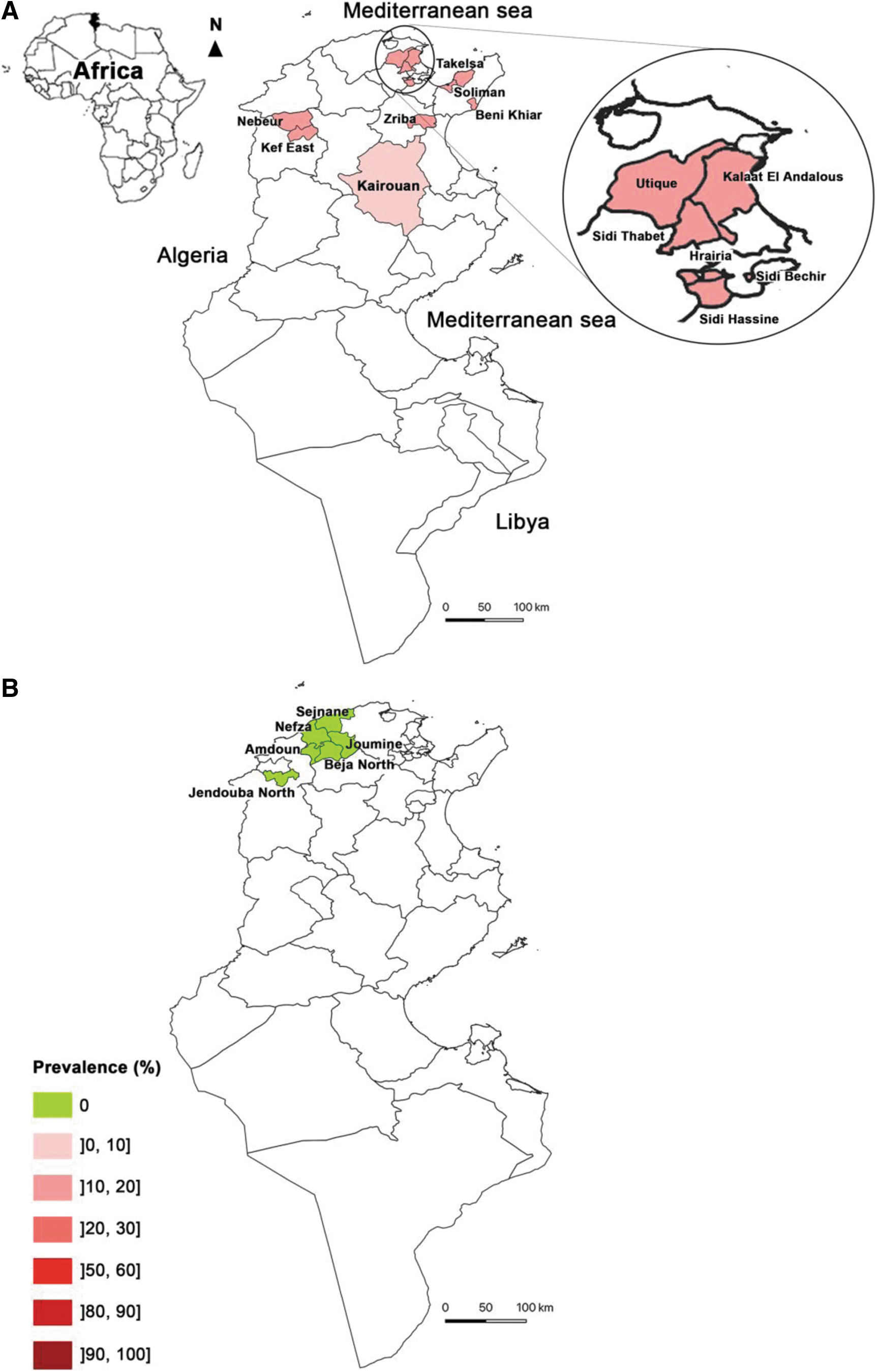
Map of Tunisia showing the localities where cattle were sampled.
CCHFV infections in dromedaries
The first study on CCHFV antibodies in Tunisian dromedaries (Camelus dromedarius) yielded an unexpectedly high seroprevalence. A cross-sectional investigation was carried out on 273 dromedary sera from the governorate of Tataouine, southern Tunisia, using both the ID Screen® CCHFV Double Antigen Multispecies ELISA and a camel-specific in-house CCHFV ELISA developed by Schulz et al. (2021). It showed a noteworthy seroprevalence of 89.7% (245/273) (Bouaicha et al., 2021). Since CCHFV-infected animals usually exhibit a short viremia (Spengler et al., 2016b), the same study reported no positive RT-qPCR in all animal blood samples (Bouaicha et al., 2021) (Fig. 2B).
Risk Factors Associated with CCHFV Infections in Tunisian Animals
CCHFV infection according to species
In Tunisian animal samples, the highest seroprevalence was obtained in dromedaries (89.7%, 245/273) (Bouaicha et al., 2021) followed by cattle (11.1%, 43/388), goats (7.8%, 13/166), and sheep (6.2%, 20/235) (Zouaghi et al., 2021) (p < 0.001). The reason for the high seroprevalence in dromedaries is unclear: Are dromedaries more exposed and/or more susceptible to the virus or does the infection lead to more persistent antibodies than in other domestic animal species?
CCHFV infections according to age
Two Tunisian studies showed that there is a significant positive correlation between age and seroprevalence in both Tunisian dromedaries and cattle (Bouaicha et al., 2021; Zouaghi et al., 2021). This could be explained by two factors, (1) older animals are more attractive to ticks than young individuals leading to a higher risk of infection in adults (Gharbi et al., 2013b) and/or (2) there are successive infections resulting in persistent antibodies that contribute to a positive age–seroprevalence correlation. This positive correlation between age and CCHFV seroprevalence was reported by several authors, in both humans and animals in different countries (Chapman et al., 1991; Lwande et al., 2012; Mangombi et al., 2020; Msimang et al., 2021; Schulz et al., 2021). The fact that camel herds in particular have a relatively high average age might also explain why a high seroprevalence is often found in these animals.
Geographic distribution of CCHFV infections
Tunisian ruminants (sheep, cattle, and goat) in the subhumid regions (North Tunisia) (Figs. 3–5) had the highest seroprevalence rates (23.4%, 51/218). This could be explained by the abundance of Hyalomma marginatum ticks in these regions (Zouaghi et al., 2021).
The high seroprevalence in dromedaries in southern Tunisia suggests two possible hypotheses. First, the widespread practice of transhumance among Tunisian dromedary breeders, involving seasonal dromedary movements, extends beyond the borders of Libya and Algeria. These movements increase the risk of dromedaries being in contact with virus-susceptible animals, including sheep, goats, and wild desert mammals. Moreover, transhumance increases the risk of infestation of dromedaries by tick vectors. Therefore, it is crucial to conduct comprehensive epidemiological investigations in the Tunisian southern regions and the surrounding areas to pinpoint the reservoir species influencing transmission dynamics.
Second, the prevalence of antibodies in dromedaries may be attributed to their shared habitats with sheep and goats as well as their proximity to diverse multispecies herds around water sources. Considering the findings of Nabeth et al. (2004) who identify goats and sheep as potential vectors for CCHFV transmission to humans, it is plausible that these animals contribute significantly to the transmission of CCHFV to dromedaries (Bouaicha et al., 2021).
CCHFV infections according to breed
There is a statistically significant association between breed and the seroprevalence of CCHFV. In fact, local Tunisian cattle breeds had the highest CCHFV seroprevalence rates (21.6%, 22/102) (Zouaghi et al., 2021). These animals graze all day and are therefore more exposed to infestation by exophilic ticks such as Hyalomma spp. (except H. scupense). Moreover, local Tunisian cattle breeds are less frequently treated against ticks since they are more resistant to tick-borne infections like theileriosis and babesioses (Gharbi et al., 2013a).
Among sheep, the Queue Fine de l'Ouest breed showed the highest seroprevalence (56%, 14/25) (Zouaghi et al., 2021). An opposite trend was reported for other pathogens, since the Queue Fine de l'Ouest sheep breed was shown to be less infected by sheep piroplasms (Babesia and Theileria) than the Barbarine sheep breed (Khamassi Khbou et al., 2021b).
CCHFV infections according to sex
Bouaicha et al. (2021) reported that seropositivity was significantly higher in female dromedaries (92.8%, 233/256) compared with males (54%, 12/22) (p < 0.001). This could be explained by the fact that females are more tick-attractive to ticks than male animals (Gharbi et al., 2013a). Even if this difference was statistically significant, the number of tested males was low (n = 22) leading to a high risk of biased results. In Tunisia, the total population of dromedaries is estimated at 80,000 (OEP, 2017). In contrast, adult males are typically raised in smaller numbers. This disparity may be attributed to a selective preference in breeding, with breeders often favoring females due to their reproductive capacity and milk production. At the same time, males are frequently raised to be slaughtered for meat to meet nutritional needs and market demands. These practices reflect a combination of reproductive and economic considerations in the management of Tunisian dromedary herds.
CCHFV Infections in Ticks Collected in Tunisia
Ticks are vectors and reservoirs of CCHFV since they maintain the virus and transmit the virus by both trans-stadial and trans-ovarial routes (Zeller et al., 1994). In Tunisia, several studies investigated the presence of pathogens in ticks such as Theileria, Babesia, Anaplasma, and Ehrlichia (Bouattour and Darghouth, 1996; Gharbi et al., 2014; M'ghirbi et al., 2010; Rjeibi et al., 2022; Said et al., 2021). As far as we know, only three studies have been carried out in Tunisia screening ticks for CCHFV infections in different regions of the country and focused on various tick species (Bouaicha et al., 2021; Wasfi et al., 2019; Wasfi et al., 2016) (Table 1, Fig. 2C, D, and Fig. 6).
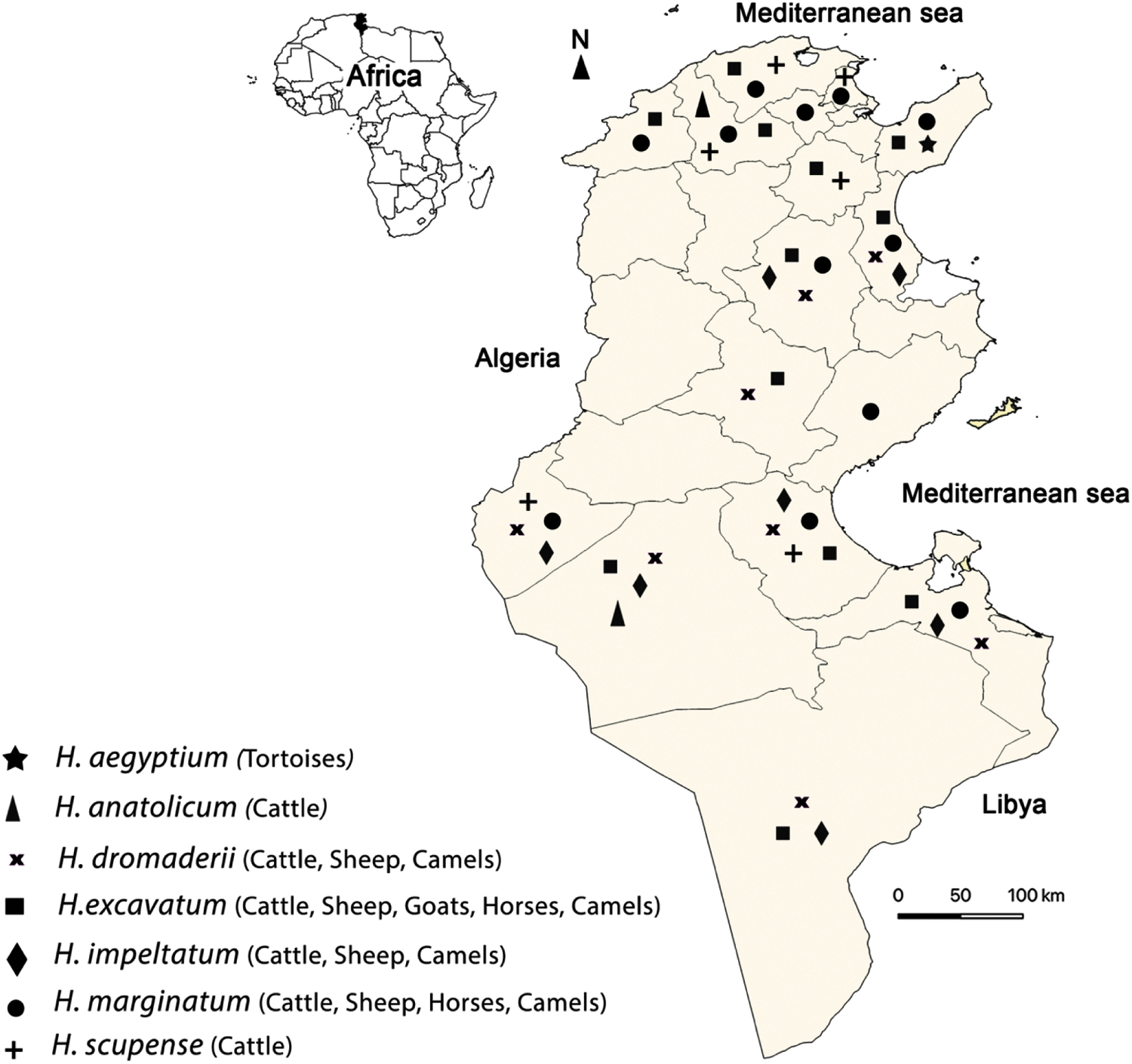
Map showing the distribution of Hyalomma spp. in different Tunisian governorates.
It is worth mentioning that in the Tunisian context, the use of antiparasitics is not yet a common practice among animal owners, and there appears to be a lack of knowledge on this issue. Farmers may not be fully aware of the benefits of disease control, especially when dealing with ticks, likely due to limited access to relevant information. Furthermore, these studies did not address the implementation of specific tick control measures. This observation highlights the urgent need for targeted educational initiatives to inform and guide farmers toward more comprehensive health management practices, ensuring the optimal welfare of their animals.
CCHFV infections in Hyalomma marginatum
Hyalomma marginatum also called the Mediterranean Hyalomma, is a two-host tick. Adults infest mainly cattle and other ungulates like sheep, goats, horses, and dromedaries. This species is very common in North Africa. In Tunisia, it was collected in the whole country (Gharbi et al., 2013b, Said et al., 2021; Zouari et al., 2017). H. marginatum is the main vector of CCHFV (Ciloglu et al., 2021). To our knowledge, there is no published data on the infection of H. marginatum CCHFV infection in Tunisia.
CCHFV infections in Hyalomma impeltatum
Hyalomma impeltatum is a three-host tick, infesting large domestic animals such as cattle and dromedaries (Estrada-Peña et al., 2004). In Tunisia, H. impeltatum is present in arid bioclimatic zones where it infests domestic herbivores (sheep, cattle, dromedaries, etc.) (Bouattour et al., 1999; Khamassi Khbou et al., 2021b).
A total of 56 specimens among 165 ticks (40%) collected from dromedaries in Tataouine (South Tunisia) were identified as H. impeltatum. They were tested with a quantitative RT-qPCR for the presence of CCHFV (Bouaicha et al., 2021). Only one H. impeltatum male tick specimen was positive, giving an overall CCHFV infection prevalence of different tick species of 0.6% (1/165). This study reported for the first time the presence of CCHFV in North African ticks collected from dromedaries (Bouaicha et al., 2021).
CCHFV infection in Hyalomma dromedarii
Hyalomma dromedarii is a two- or three-host tick that infests preferably (dromedary) camels (Estrada-Peña et al., 2004). In Tunisia, H. dromedarii is particularly present in the south of the country and has been found mainly in dromedaries, but also collected in areas where oryx antelopes are present (Bouaicha et al., 2021; Said et al., 2021; Wasfi et al., 2016). H. dromedarii was also identified among the 310 ticks collected by Wasfi et al. (2016) from oryx resting sites in the National Park of Sidi Toui and Dghoumes, Southern Tunisia. The RT-qPCR revealed no positive ticks for CCHFV. Similarly, negative results were reported by Bouaicha et al. (2021) on 96 H. dromedarii collected from dromedaries in Tataouine, Southern Tunisia.
CCHFV infections in Hyalomma scupense
Hyalomma scupense is a two-host tick infesting mainly cattle (Estrada-Peña et al., 2004). H. scupense is present in north Tunisia. It is the vector of tropical theileriosis in cattle (Theileria annulata infection) (Gharbi et al., 2013a).
Among the 310 ticks collected by Wasfi et al. (2016), all those obtained from cattle living in Mabtouh region (Governorate of Bizerte, Northern Tunisia) were identified as H. scupense. All ticks were tested negative for CCHFV using RT-qPCR.
CCHFV infections in Hyalomma excavatum
Hyalomma excavatum is a two- or three-host tick, depending on the availability of the hosts. It infests large ungulates such as sheep, goats, cattle, dromedaries, horses, and donkeys (Estrada-Peña et al., 2004). In Tunisia, H. excavatum is frequent in Central and Southern Tunisia (Gharbi et al., 2013b, Seddik et al., 2016).
In the study carried out by Bouaicha et al. (2021), a total of 13 H. excavatum ticks collected from dromedaries in Tataouine, Southern Tunisia, were negative for CCHFV by RT-qPCR.
CCHFV infections in Hyalomma aegyptium
Hyalomma aegyptium is a three-host tick; it infests mainly palearctic tortoises of the genus Testudo sp. in North Tunisia (Gharbi et al., 2015). A total of 120 H. aegyptium ticks collected from spur-thighed tortoises (Testudo graeca) living in humid and subhumid areas in north Tunisia were negative for CCHFV using RT-qPCR (Wasfi et al., 2019).
Conclusions and Perspectives
In Tunisia, the presence of CCHFV infections was confirmed in humans, ticks, and animals. Serological studies conducted on both humans and animals, utilizing different ELISA methods, have revealed a positive prevalence of the virus. In general, serological detection methods have undergone significant improvements over time. Technological advancements, such as the development of various ELISA tests, enable the identification of minimal quantities of antibodies (Donets et al., 1982). ELISA tests are widely considered as the preferred approach for serological investigations of CCHFV (Spengler et al., 2016a). However, there is a risk of crossreactivity with other nairoviruses, including Dugbe virus, Nairobi sheep disease virus, and Qalyub viruses (Guilherme et al., 1996). Antibodies against these nairoviruses can exist either independently or alongside specific CCHFV antibodies (Spengler et al., 2016a). This should be kept in mind when studying published serological data on CCHFV.
All examined humans and animals had not traveled abroad in the past, confirming that they acquired the infection in Tunisia. Over the last 20 years, CCHFV has spread from the east to the west in Europe, favoring the exposure of ticks and birds to CCHFV and its spread to new areas (Spengler et al., 2019), such as North Africa. We assume that CCHFV is regularly introduced to Tunisia by ticks from migratory birds, since Tunisia is situated on one of the most important flyways for migratory birds. It was shown that migratory birds play a key role in CCHFV emergence, by introducing infected ticks in previously free areas (Leblebicioglu et al., 2014; Mancuso et al., 2022).
CCHFV could also be introduced by domestic animals from Algeria and Libya since there is an intense uncontrolled animal movement and traffic with these two neighboring countries. Indeed, CCHFV was detected by nested reverse transcriptase–polymerase chain reaction in 28.6% (16/56) of H. aegyptium ticks collected from spur-thighed tortoises (Testudo graeca) in Algeria (Kautman et al., 2016).
Further studies are needed to improve the knowledge about CCHFV transmission cycle including the four components of the cycle: Virus: genotyping of the virus strain(s) circulating in Tunisia since they have different pathogenic potentials in humans. Ticks: large-scale investigations on unfed ticks should be carried out to estimate the vector capacity of different tick species and estimate their infection prevalence in Tunisia. This study will allow the establishment of a risk map according to the tick species. Animals: a large epidemiological study should be performed on animals to identify the animal populations at-risk and their products. Finally, a seroepidemiological survey should be performed on the Tunisian human population at-risk to identify the risk factors and target this part of the population through awareness-raising programs. In the context of the One Health approach, education sectors as well as human and animal specialists should be informed and sensitized on the presence of CCHFV in the country and the associated risks for the Tunisian human population. A clear checklist and decision-making algorithms for health care personal and public health services should be established and implemented in the event of any CCHF outbreaks. As a first and easy step, CCHF should be added to the list of infections causing fever of unknown origin in Tunisia. A detailed questionnaire comprising the tick exposure risk factor associated to the occurrence of fever must be jointly developed by veterinarians and medical doctors to facilitate diagnosis and recognition by health care professionals. Consequently, persons with undiagnosed fever should be systematically tested for CCHFV infection using serological tests.
Footnotes
Authors' Contributions
S.R.: Writing—original draft (lead), I.H.: Investigation (equal) and formal analysis (lead); O.T.: Investigation (equal); D.M.: Investigation (equal) and data curation (equal); M.K.K.: Investigation (equal), validation (lead), visualization (equal), and review and editing (equal); A.S.: Review and editing (equal) and validation (equal); M.H.G.: Review and editing (equal) and validation (equal); M.G.: Conceptualization (lead), methodology (lead), review and editing (lead), and supervision (lead).
Author Disclosure Statement
No conflicting financial interests exist.
Funding Information
This work was supported by the “Laboratoire d'Épidémiologie des Infections Enzootiques des Herbivores en Tunisie: Application à la Lutte” (Ministère de l'Enseignement Supérieur et de la Recherche Scientifique, Tunisia) (LR16AGR01) and by the Friedrich-Loeffler-Institute, Institute of Novel and Emerging Infectious Diseases, Germany (Project: Reducing biological proliferation risks when dealing with highly pathogenic agents in MENA countries: Middle East/North Africa”) and funds by the Federal Foreign office Germany.