






Abstract
Dental stem cells (DSCs) are mesenchymal stem cell-like populations with self-renewal and multidifferentiation potential. These cells have been studied in regenerative medicine and tissue engineering. Despite rapid progress in the past two decades, there has been no bibliometric analysis of DSC research. Here, we performed a comparative study using bibliometric methods for DSCs. A total of 5498 articles were included. Our results showed that the United States was the leader in international cooperation and numbers of citations and was the largest contributor. The Journal of Endodontics published the largest number of articles. The author with the greatest contribution was Songtao Shi. The keywords were mainly related to the fields of tissue engineering and regenerative medicine. Relative research interest and the number of publications increased yearly worldwide. The hotspots of DSC research were transiting from basic research to clinical regenerative medicine.
Impact statement
Dental stem cells (DSCs) are stem cells with self-renewal and multidirectional differentiation potential. Research in this field is attracting increasing attention. This study aimed to understand the current research status of DSCs and to predict promising keywords and trends. We found the global trend of DSCs and their application in the field of regenerative medicine and tissue engineering. Our study makes a significant contribution to the literature because it will help researchers to understand the research trends and directions in this field.
Introduction
Dental stem cells (DSCs) are mesenchymal stem cell-like populations with self-renewal and multidifferentiation potential. These cells have the potential to differentiate into mesodermal, ectodermal, and endodermal lineages 1 and have been studied in regenerative medicine and tissue engineering. The DSCs also exhibit immunomodulatory properties by secreting cytokines and immune receptors 2 and can be used in treating inflammatory diseases, autoimmune diseases, allergic diseases, and other disease pathways.
Currently, five types of DSCs have been isolated and identified. These cells mainly include human dental pulp stem cells (DPSCs), stem cells from human periodontal ligament (PDLSCs), stem cells from human exfoliated deciduous teeth, stem cells from apical papilla, and dental follicle stem cells.3–8 The DSCs are a precious stem cell source in regenerative medicine and have the advantages of being easy to obtain, minimally invasive, highly malleable, and expandable in vitro, with relative genomic stability for a long period of time and good interaction with scaffolds and growth factors. 9 There is no moral or ethical controversy involved in their use; however, there are still some limitations to application of DSCs. 1 Studies are limited, with small numbers of patients and rather short-term follow-up. Therefore, before they can be safely and effectively used in clinic, more clinical trials and in-depth understanding of the regulatory mechanism of DSCs are needed.
Bibliometrics uses mathematical and statistical methods to analyze the quantitative changes, distributions, and change rules of published literature. It provides scientific objective indicators for evaluating research results. 10 There has been increased interest in the use of DSCs. To the best of our knowledge, the quantity and quality of DSC research production have not been reported. Thus, a summary of the current status of DSC research and prediction of promising keywords and trends is needed. The purpose of this study was to evaluate the status and trends of DSCs and to summarize the development process, which will help researchers to find research hotspots in this field and provide references for further research.
Materials and Methods
Data source
Bibliometric analysis was performed based on the Science Citation Index Expanded (SCIE) of the Web of Science (WoS), which is considered the optimal database for bibliometrics. 11
Search strategy
The search strategy is shown in Figure 1. Publications on DSC research were searched in WoS. The search method was as follows: topic search (TS) = (“dental” or “dentistry” or “tooth” or “teeth”) and TS = (“stem cell” or “stem cells”). The publication dates were from January 1, 2000, to September 24, 2020. The publication language was set to English only. The publication type was set to article only. All records of each publication, including title, year of publication, authors' names, nationality, affiliation, publication journal name, keywords, and abstract, were downloaded from the WoS database in the form of a TXT file and imported into Microsoft Excel 2010. To avoid the impact of WoS database updates, all data searches and data downloads were performed on September 24, 2020.
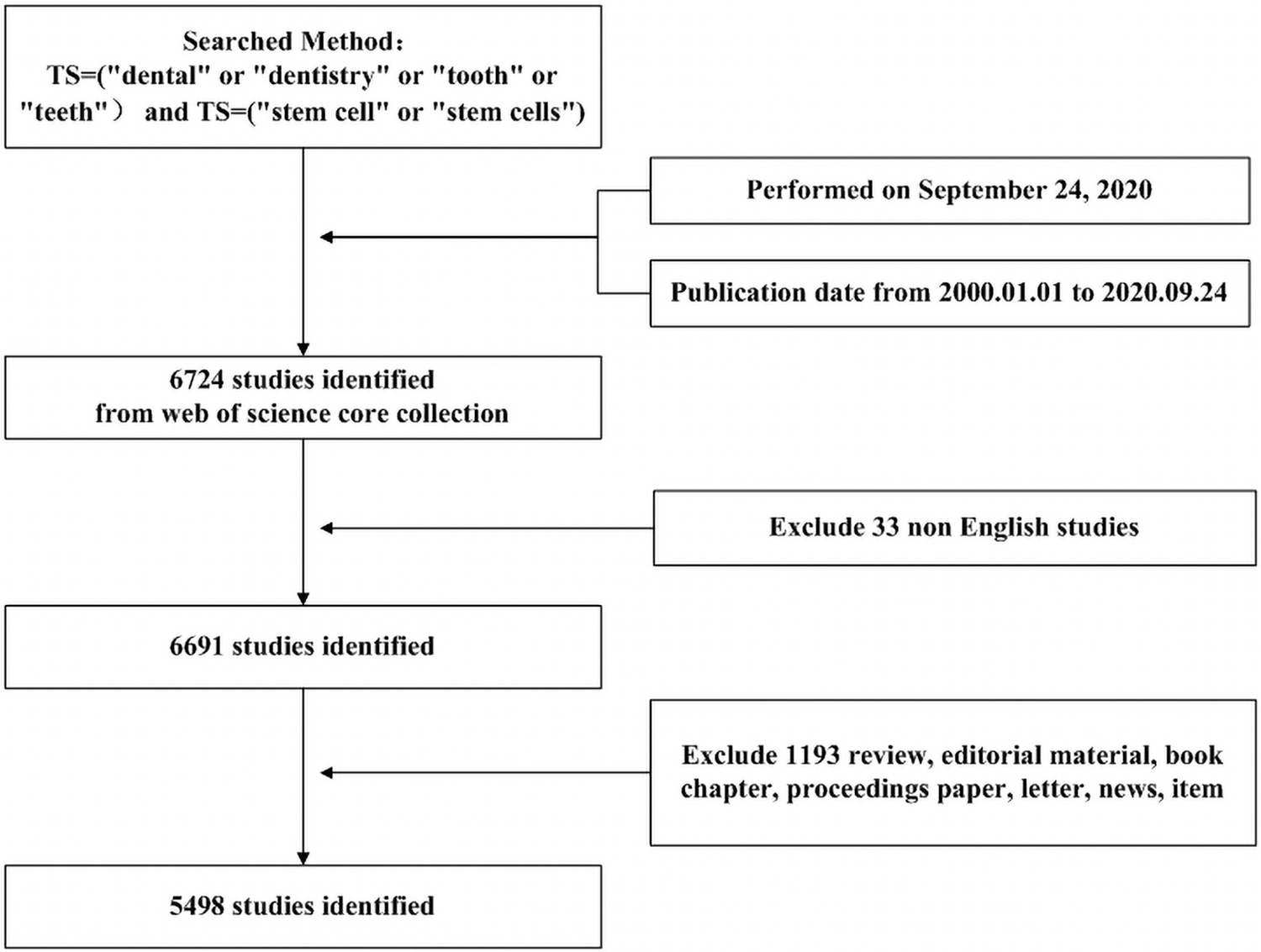
The search strategy of publications of dental stem cell research. The search method was as follows: TS = (“dental” or “dentistry” or “tooth” or “teeth”) and TS = (“stem cell” or “stem cells”). The publication date was from January 1, 2000, to September 24, 2020. After that, 6724 studies identified from Web of Science core collection, excluding 33 non-English studies, 6691 studies were identified, excluding 1193 non-article studies, 5498 studies were identified at last. TS, topic search.
Data analysis and visualization software
VOSviewer (version 1.6.15) was used to analyze the co-authorship, co-occurrence, established co-authorship network visualization map, author keyword network visualization map, and overlay visualization map.
Results
Amount and publishing trends of global publication
From 2000 to 2019, a total of 5498 articles met the retrieval criteria (the articles published in 2020 were deleted because the statistical data were not a complete year by September 24, 2020). From 2000 to 2019, a significant growth trend of global publications on DSCs per year was found (Fig. 2). Starting from 5 articles in 2000, the number of articles published in 2008 exceeded 100, with more than 500 articles in 2015 and 2016, and more than 600 articles in 2017 up to 2019, indicating that this field is attracting more researchers' attention, with many achievements.
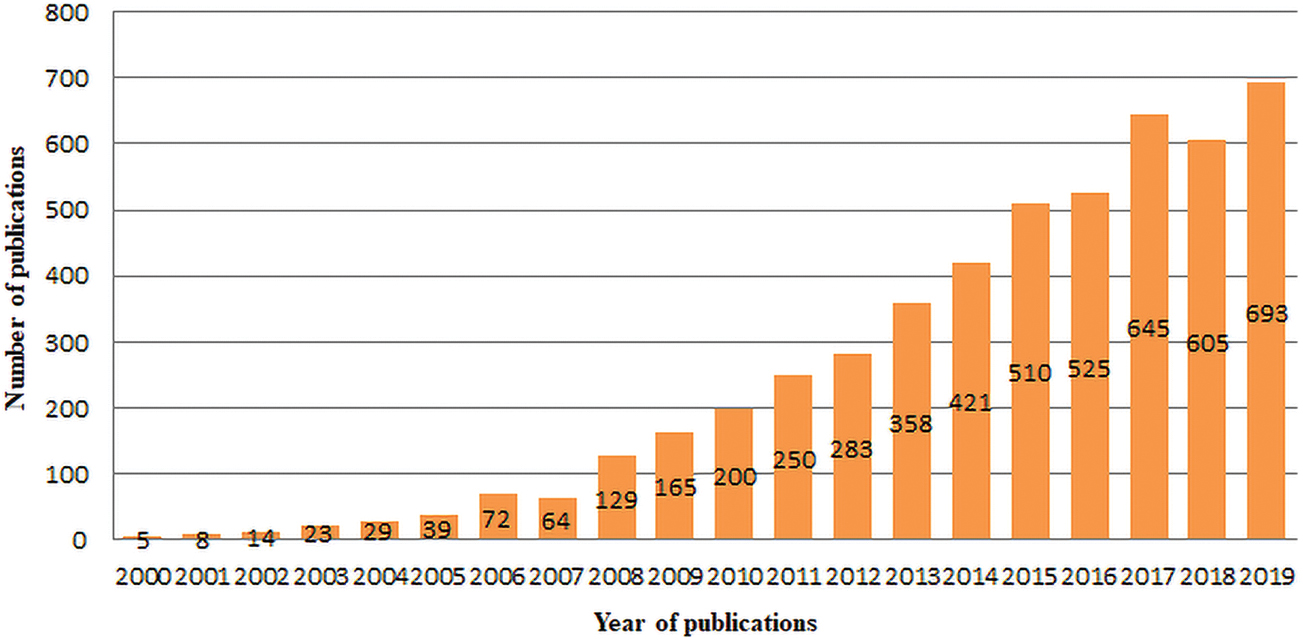
Global publication trend of dental stem cells from 2000 to 2019. From 2000 to 2019, a total of 5498 articles met the retrieval criteria. Starting from 5 articles in 2000, the number of articles published in 2008 exceeded 100, with more than 500 articles in 2015 and 2016, and more than 600 articles in 2017 until 2019. Most of the studies were published in 2019 (693). The number in 2019 was 138.6 times that of 2000. Color images are available online.
Journal of high yield
Most of the DSC publications are in two kinds of journals: endodontics and stem cells. The Journal of Endodontics published the largest number of studies (impact factor [IF] = 3.118, 390 articles), followed by the Journal of Dental Research (IF = 4.914, 183 articles) and Archives of Oral Biology (IF = 1.931, 131 articles). Table 1 lists the top 10 journals.
Top 10 Journals with the Most Published Articles
IF, impact factor; UK, United Kingdom; USA, United States of America.
Highly cited articles
Among the highly cited articles, the research on DPSCs by Gronthos ranked first (2707) and was published in the Proceedings of the National Academy of Sciences of the United States of America. Seo's research on “Investigation of multipotent postnatal stem cells from human periodontal ligament” ranked second (2039). Miura's article “SHED: stem cells from human exfoliated deciduous teeth” was in third place (1678). The corresponding author for each article was Songtao Shi (Table 2).
Top 10 Authors with the Most Published Articles
Contribution of countries/regions and international cooperation
Among the countries/regions that have contributed to this field (Table 3), China published the most relevant articles (1535 publications), followed by the United States (1177) and Japan (700). The most cited country was the United States (49,081 citations), followed by China (24,368) and Japan (17,643).
Top 10 Countries with the Most Published Articles
Cluster analysis showed that 50 countries/regions appeared more than 10 times, which were divided into 5 clusters based on the number of co-authored articles (Fig. 3). The first cluster included China, the United States, Japan, South Korea, and Australia. The second cluster included England, Italy, France, and Spain. The third included Germany, Switzerland, Sweden, and Greece. The fourth cluster included Canada, Iran, Netherlands, and Turkey. The fifth cluster included Saudi Arabia, Malaysia, India, and Egypt.
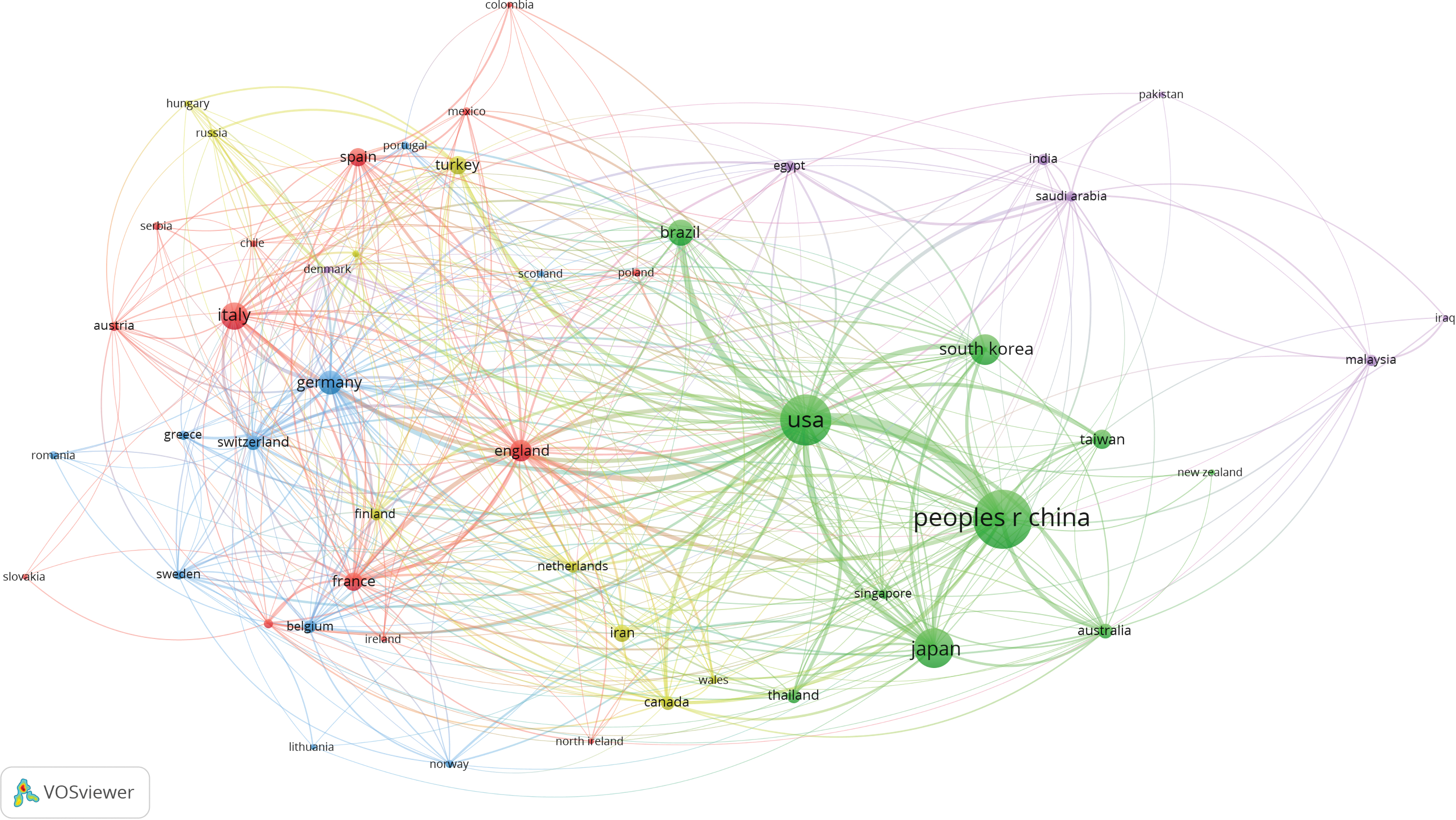
Cluster maps of the countries/regions (appearing more than 10 times). The visualization map of publications for 50 countries forming 5 collaborating clusters (nodes with the same color); a node represents a country, the size of the node represents the number of publications, a link shows collaboration, and the distance and the thickness of the link between nodes show the relative strength of the relation. Color images are available online.
Among them, the first cluster had the strongest connections. It showed that China, the United States, Japan, South Korea, and Australia had the most cooperation and the most close ties. Since Gronthos 3 first isolated DPSCs from teeth in 2000, this field has attracted increasing attention. The research institutions dominated by the Craniofacial and Skeletal Diseases Branch, the National Institute of Dental and Craniofacial Research, and the National Institutes of Health have played very important roles in this field. Subsequently, cooperation extended to the Mesenchymal Stem Cell Group, Division of Hematology, Institute of Medical and Veterinary Science in Australia, with cooperation gradually extended to South Korea, China, and Japan.
Contribution of institutions
The organization output chart lists the top 10 institutions that contributed the most (Table 4): Sichuan University published the most articles (186), the Fourth Military Medical University ranked second (178), and Sun Yat-sen University ranked third (143).
Top 10 Institutions with the Most Published Articles
There were 118 institutions with more than 20 occurrences (Fig. 4). Among them, 116 institutions formed the largest co-author network and were divided into 9 clusters. The representative institutions were Sichuan University, Peking University, the University of Michigan, Wuhan University, University of California San Francisco, Osaka University, China Medical University, the University of Bologna, and Seoul National University. Among them, Sichuan University, the Fourth Military Medical University, and Sun Yat-sen University had the closest cooperation.
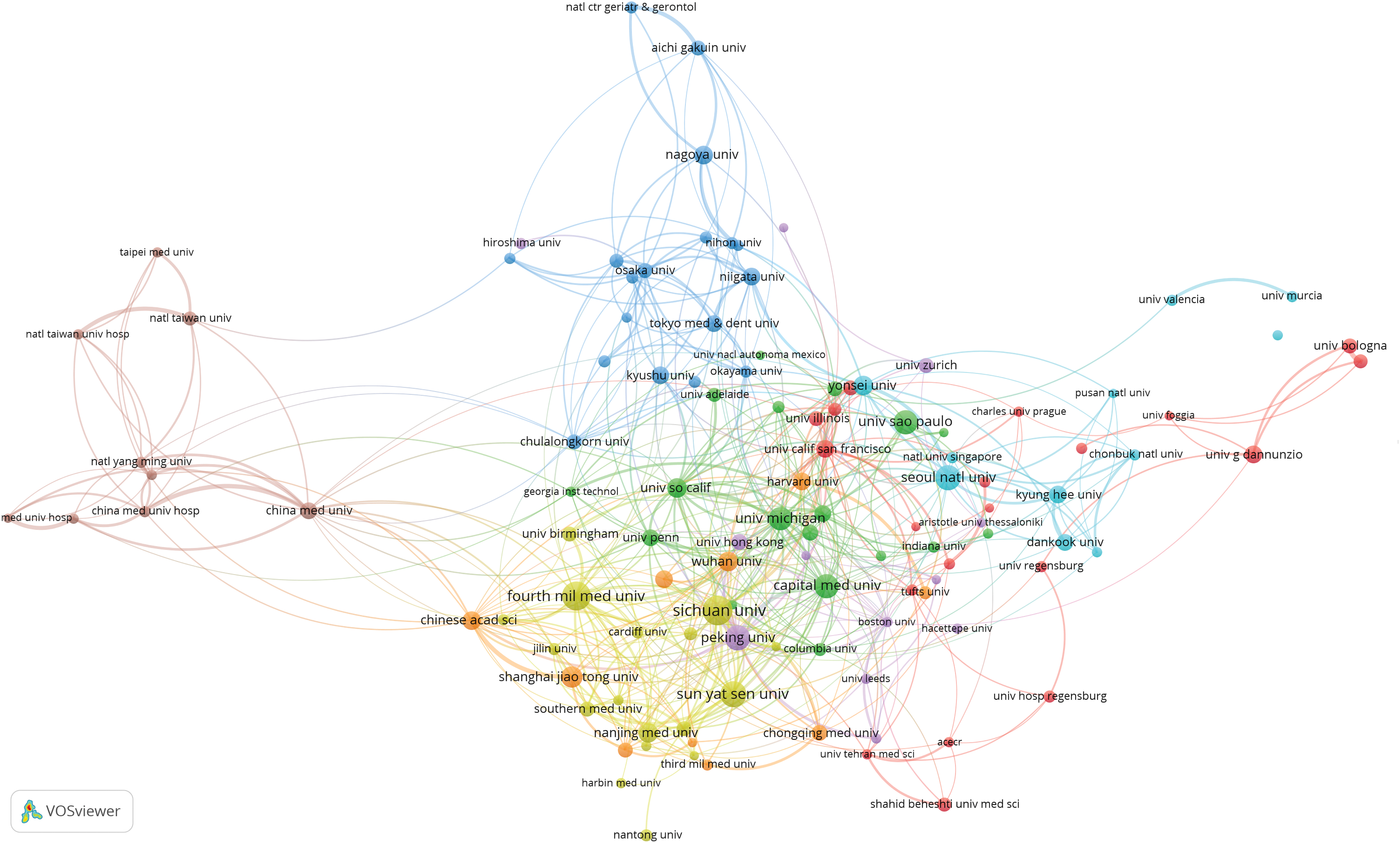
Cluster maps of the institutions. The visualization map of publications for 116 institutions forming 9 collaborating clusters (nodes with the same color); a node represents one institution, the size of the node represents the number of publications, a link shows collaboration, and the distance and the thickness of the link between nodes show the relative strength of the relation. Color images are available online.
Contribution of authors
The top 10 authors had 414 articles, accounting for 7.53% of all articles (Table 5). The three authors who published the most articles were Songtao Shi (51 articles), Yan Jin (50 articles), and Weidong Tian (48 articles). Songtao Shi had the largest number of citations (5417).
The Top 10 Authors with the Most Published Articles
There were 244 authors who appeared more than 10 times, of which 186 formed the largest co-author network, which was divided into 17 clusters. The most significant co-author networks were Songtao Shi, Yan Jin, and Weidong Tian (Fig. 5).
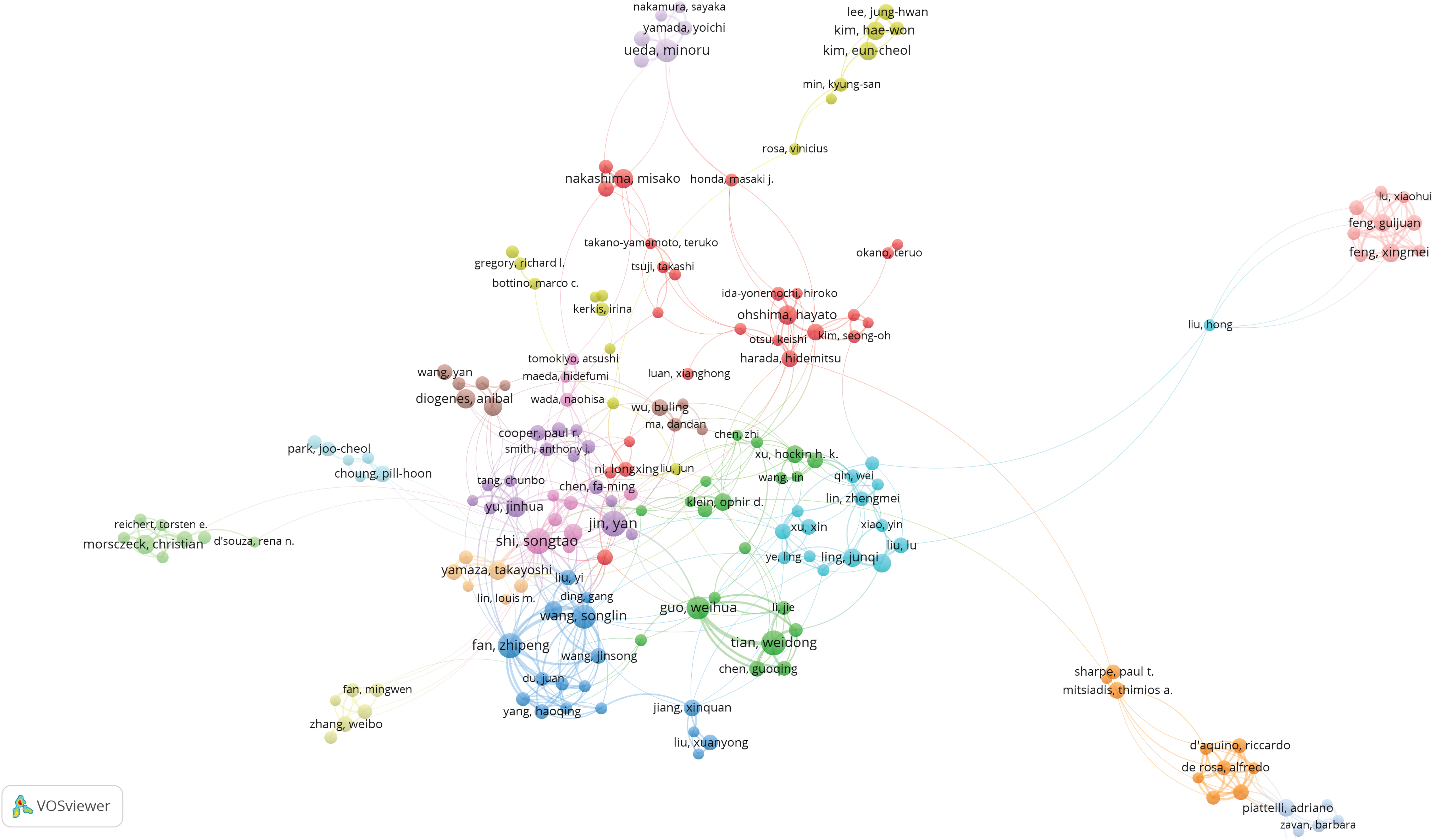
Cluster maps of the authors. The visualization map of publications for 244 institutions forming 17 collaborating clusters (nodes with the same color); a node represents an author, the size of the node represents the number of publications, a link shows collaboration, and the distance and the thickness of the link between nodes show the relative strength of the relation. Color images are available online.
Keyword analysis
There were 117 keywords that appeared at least 20 times (Table 6), and these were roughly classified into 5 clusters (Fig. 6) based on their number of co-occurrence articles. In the first cluster (red points), there were 29 keywords, and the high-frequency keywords were osteogenic differentiation, bone regeneration, dental implants, osteoblasts, and scaffolds. For the second cluster (green points), there were 28 keywords, with a high frequency of the following: stem cells, odontoblasts, cell differentiation, dental pulp cells, and teeth. For the third cluster (blue points), there were 23 keywords, with a high frequency of the following: regeneration, regenerative endodontics, angiogenesis, odontogenic differentiation, and mineral trioxide aggregate. In the fourth cluster (yellow points), there were 23 keywords, with a high frequency of the following: dental pulp stem cells, mesenchymal stem cells, dental pulp, differentiation, and proliferation. In the fifth cluster (purple points), there were 14 keywords, with high frequencies of tissue engineering, osteogenesis, periodontal ligament, periodontal ligament stem cells, and periodontitis.
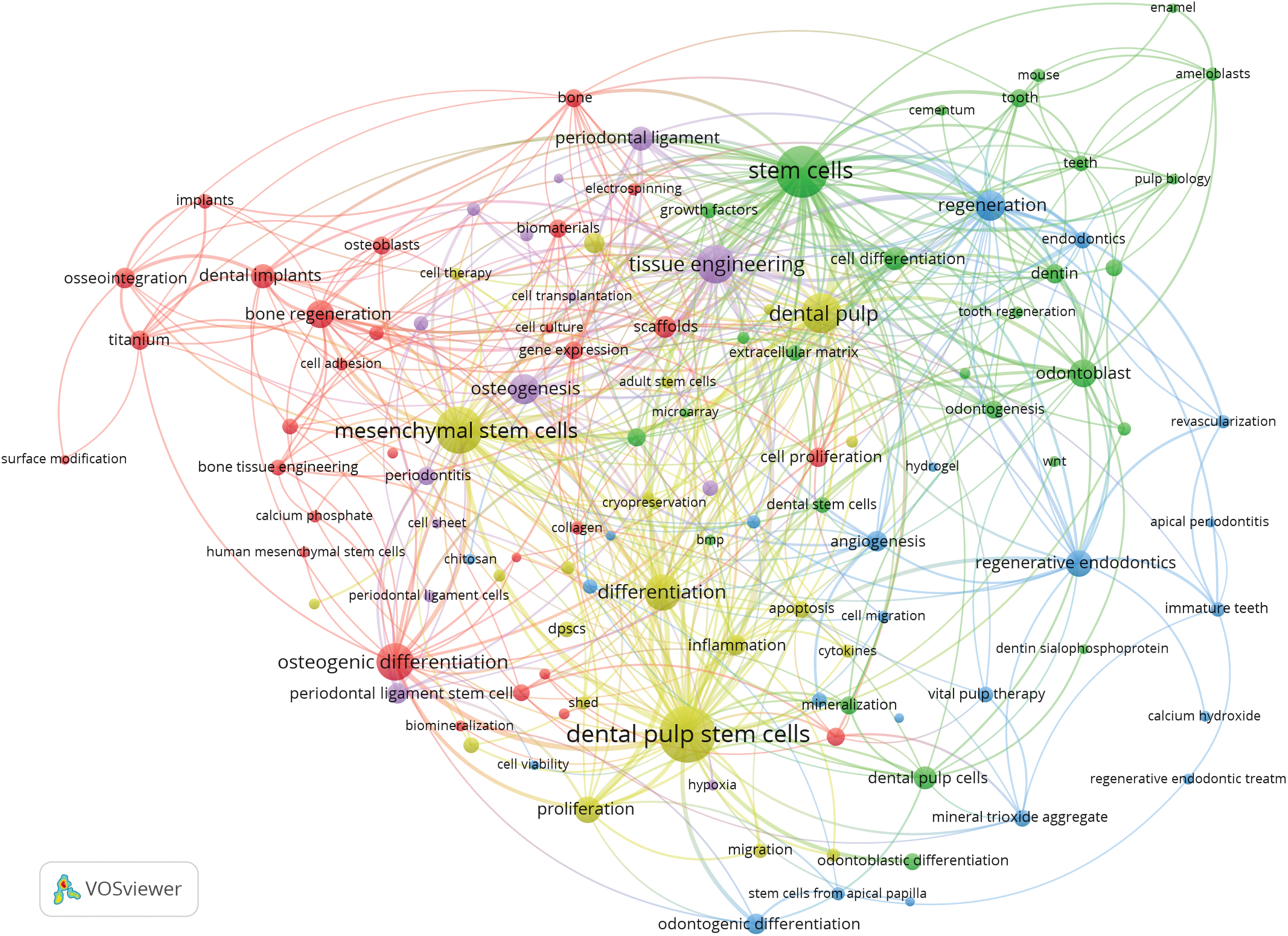
The co-occurrence network visualization map of the top 117 author keywords. The visualization map of publications for 117 author keywords forming 5 collaborating clusters (nodes with the same color); a node represents a keyword, the size of the node represents the number of publications, a link shows collaboration, and the distance and the thickness of the link between nodes show the relative strength of the relation. Color images are available online.
Analysis of 117 Keywords in 5 Clusters
The co-occurrence overlay visualization map of the top 117 author keywords is shown in Figure 7. The color of the node represents the average publication year of the author's keywords, and blue to yellow represent the average publication year from early to late. The latest keywords included “regenerative endodontic treatment,” “hydrogel,” “immunomodulation,” “stem cells from apical papilla,” “hypoxia,” and “stem cells from human exfoliated deciduous teeth.”
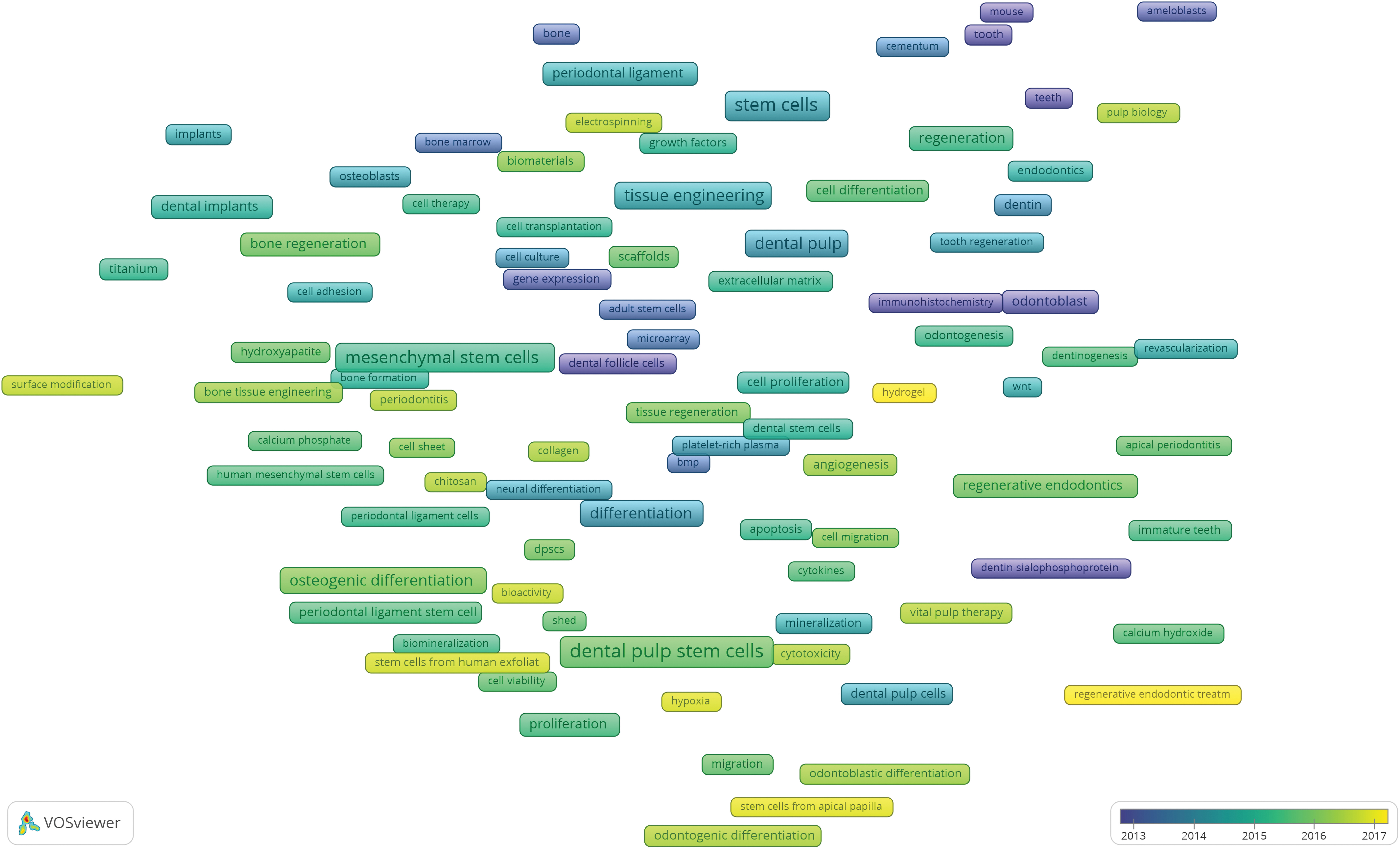
The co-occurrence overlay visualization map of the top 117 author keywords. The color of node represents the average publication year of the author's keywords, and the blue to yellow represents the average publication year from early to late. Color images are available online.
Discussion
Trends in DSCs
Bibliometric and visualized analysis can present the current research status and predict promising research fields. Therefore, this particular study was performed to evaluate DSCs in regard to contributing countries, institutions, journals, authors, and research hotspots. Advancements in the field of DSCs have been an emerging and quickly developing area of research.12–16 Our study showed that increasing numbers of publications per year were available. Moreover, more than 50 countries had published relevant studies in this field. According to the current data obtained, we predict that more studies with in-depth knowledge and insightful understanding about DSCs will be published in the years to come.
Quality and status of global publications
The total number of citations of a country represents its academic impact and quality of publications. Although China (1535 publications) made the highest contribution to global research in the total number of publications, the total citation frequency of the United States (49,081 citations) was highest, followed by China (24,368) and Japan (17,643). Therefore, the United States is the principal country in this field, with China ranked second and followed by Japan and South Korea. However, with the gradual thorough study conducted by China and the continually expanding funding research investment, the quality and value of studies in China can be promoted to be equal to global publications in this field.
The Journal of Endodontics, the Journal of Dental Research, Archives of Oral Biology, and PLoS One published the most studies on DSCs. However, the Journal of Endodontics had more than twice as many publications as those published in the second rank journal, the Journal of Dental Research. In terms of IF, the Journal of Endodontics ranked seventh while Stem Cell Research had the highest IF. Thus, taking quantity and quality into account, the journals in the list could be the main access to publication for future research in this field.
The top 10 institutes in DSC research corresponded with top 10 countries in global publications, demonstrating that founding advanced research institutes is critical to the academic level of a country. The authors who published more studies in this field were also presented, suggesting that these authors enjoyed the highest reputation and their future in-depth discoveries could be expected to produce the latest information on DSCs. We conducted co-authorship analysis to evaluate cooperation between authors, institutions, and countries. Higher total link strength indicates that the authors/institutions/countries are more collaborative. It is assumed that close communication between countries with higher academic levels contributes to more productive and valuable publications. In the cluster analysis of institutions, the top three representative institutions were Sichuan University, Peking University, and the University of Michigan. The analysis showed that these universities team up actively with each other and have established friendly cooperative relationships. In the cluster analysis of authors, the most noticeable co-author networks were Songtao Shi, Yan Jin, and Weidong Tian. Accordingly, their teamwork can lead to more comprehensive and profound studies and their significant academic share will encourage more researchers to devote themselves to this field.
Research focus on DSCs
Co-occurrence analysis was applied to find interests and prevailing topics in this field and help researchers navigate their way through numerous studies. The keywords in the title and abstract of all included studies were examined to establish a similarity relationship and so create a map of a co-occurrence network. This co-occurrence map showed five clusters: bone regeneration, dentin regeneration, dental pulp regeneration, and application of DPSCs and PDLSCs. To make the directions of future research clearer, we found that in the center of the co-occurrence map, some keywords (stem cells, mesenchymal stem cells, dental pulp stem cells, tissue engineering, bone regeneration, differentiation, and osteogenic differentiation) were conspicuous with higher weight in size and relation strength compared with other keywords. This suggested that diverse types of DSCs were applicable to tissue repair and regeneration, such as bone, dental pulp, regenerative endodontics, periodontal ligament, and even to dental implants. Hence, further high-quality and standardized studies evaluating DSCs in these five directions are required.
The overlay visualization map was identical to the co-occurrence map except for the color of each item. This analysis was used to monitor the directions of research because the color of the node represents the average publication year of the author's keyword. According to the results, with the passage of time, regenerative endodontic treatment, hydrogel, immunomodulation, stem cell from apical papilla, hypoxia, and stem cells from human exfoliated deciduous teeth were colored warm. Thus, these keywords were the latest popular topics in this field and showed that studies have been more concentrated on specific applications of DSCs. Therefore, primary studies discussing the feasibility and efficacy of DSCs are still the main focus in this field.
Strengths and limitations
Although this study provided relatively all-round and objective bibliometric and visualized analyses information related to current publications of DSCs, there were still limitations. First, non-English language literature was ignored based on the SCIE database of WoS. Second, some recently published articles might be discounted because of low citation frequency during the short period following publication. Third, changing bibliometric data as time passes might draw a different conclusion. Therefore, the latest primary studies and non-English studies need to be tracked in updated research work.
Conclusions
Current research showed the global trends of DSC. The United States was the largest contributor to research and was in a leading position in global research in this field. The Journal of Endodontics published the most articles in the field. This was consistent with the research results of Shamszadeh et al. 17 in the field of regenerative endodontics. Clinical research involving DSCs in the field of regenerative medicine will likely receive more attention and “regenerative endodontic treatment,” “hydrogel,” “immunomodulation,” “stem cells from apical papilla,” “hypoxia,” and “stem cells from human exfoliated deciduous teeth” were the new research hotspots.
Footnotes
Acknowledgment
The authors are very grateful to Yao Liu (Department of Paediatric Dentistry, School and Hospital of Stomatology, China Medical University, Shenyang, China) for the scientific revisions of the article.
Disclosure Statement
No competing financial interests exist.
Funding Information
No funding was received for this article.