






Abstract
During spaceflight, astronauts are exposed to a variety of unique hazards, including altered gravity fields, long periods of isolation and confinement, living in a closed environment at increasing distances from Earth, and exposure to higher levels of hazardous ionizing radiation. Preserving human health and performance in the face of these relentless hazards becomes progressively more difficult as missions increase in length and extend beyond low Earth orbit. Finding solutions is a significant challenge that is further complicated by logistical issues associated with studying these unique hazards. Although research studies using space-based platforms are the gold standard, these are not without limitations. Factors such as the small sample size of the available astronaut crew, high expense, and time constraints all add to the logistical challenge. To overcome these limitations, a wide variety of Earth-based analogs, from polar research outposts to an undersea laboratory, are available to augment space-based studies. Each analog simulates unique physiological and behavioral effects associated with spaceflight and, therefore, for any given study, the choice of an appropriate platform is closely linked to the phenomena under investigation as well as the characteristics of the analog. There are pros and cons to each type of analog and each actual facility, but overall they provide a reasonable means to overcome the barriers associated with conducting experimental research in space. Analogs, by definition, will never be perfect, but they are a useful component of an integrated effort to understand the human risks of living and working in space. They are a necessary resource for pushing the frontier of human spaceflight, both for astronauts and for commercial space activities. In this review, we describe the use of analogs here on Earth to replicate specific aspects of the spaceflight environment and highlight how analog studies support future human endeavors in space.
INTRODUCTION
Finding approaches to maintain the health and safety of crews venturing on extended exploration missions is a significant challenge. While living and working in space, astronauts are exposed to altered gravity fields, live in a closed environment at increasing distances from Earth, are isolated and confined, and experience higher levels of exposure to dangerous ionizing radiation (Fig. 1). There are 23 documented health risks associated with these spaceflight hazards. Those designated as “red” risks by NASA's Human Research Program (HRP) 1 are considered the highest priority given their likelihood of occurrence and potential for significant impacts to crew health, performance in-flight and/or to long-term health, and are described online by the Human Research Roadmap (https://humanresearchroadmap.nasa.gov/).
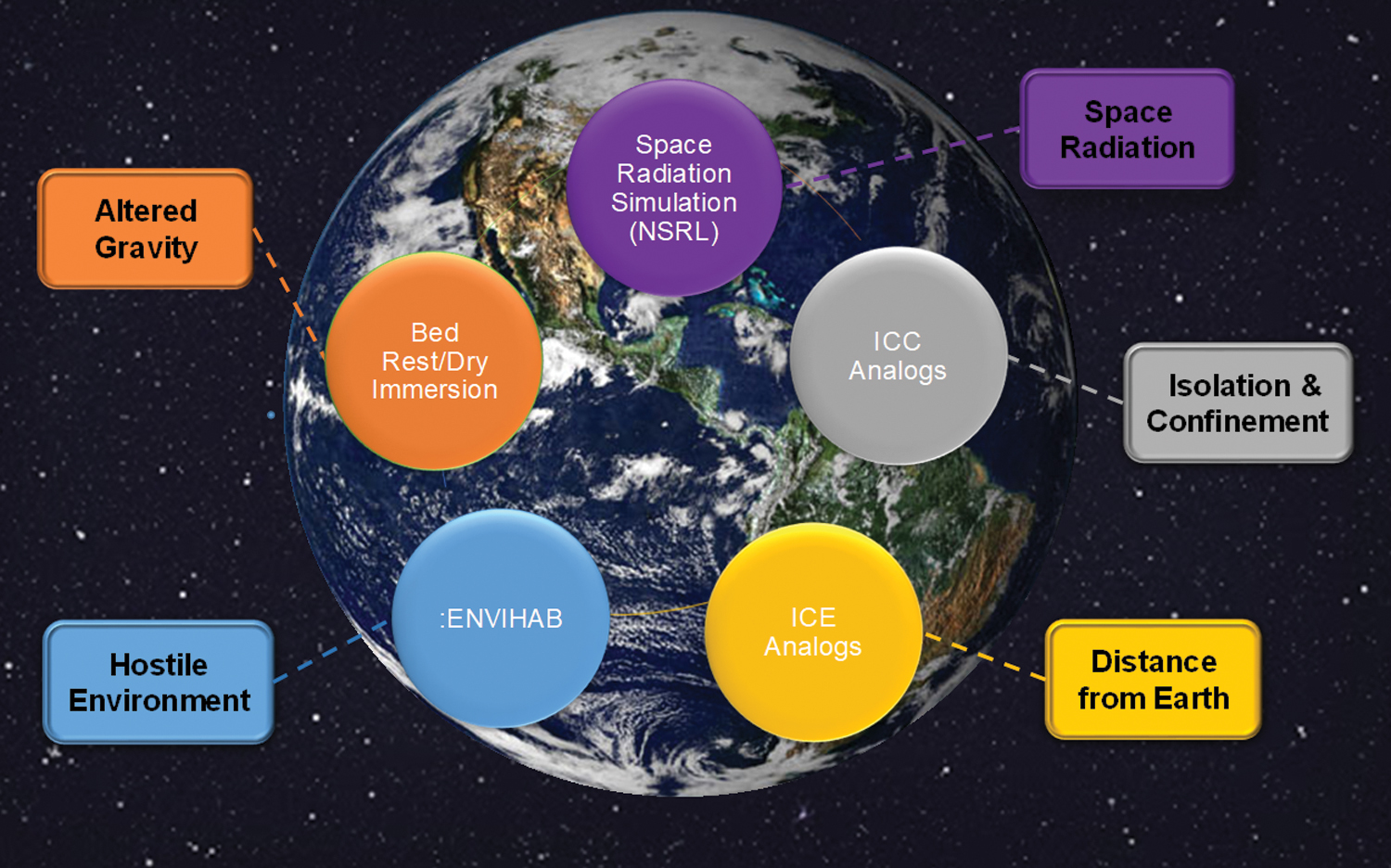
The major hazards associated with human health in the space environment, and associated ground-based research analogs used to characterize these risks and develop mitigation approaches. ICC, isolated, confined, and controlled; ICE, isolated, confined, and extreme; NSRL, NASA Space Radiation Laboratory. Color images are available online.
Providing solutions to these challenging extraterrestrial human health risks requires extraordinary creativity in experimental design. 2 Although there is ongoing extensive utilization of the International Space Station (ISS) to study astronaut health in space, NASA and other space agencies also perform human spaceflight research studies using analog systems here on Earth. These model analog settings create simulated environments and conditions that produce effects on the human body similar to those experienced during spaceflight. The choice of which analog to use for a given study depends on the specific project goals and the phenomenon being addressed. There are also circumstances where studying the effects of a particular spaceflight hazard using human subjects can be unethical, as is the case for space radiation research. Under these circumstances, ground analogs using experimental cell and animal model systems are implemented.
In all cases, analog studies are used to support the major agency goals to protect the health and safety of humans in space and to support scientific discovery and technological advancements that benefit all of humankind. This knowledge collected from ground analogs and the ISS is directly relevant to commercial spaceflight and space tourism. In this review, we discuss the wide variety of analog research platforms used by NASA and partner space agencies to address spaceflight health risks, including ground-based human analog studies and ground-based experimental model studies (Fig. 1).
HUMAN SUBJECT RESEARCH ANALOGS
A variety of ground-based research analogs are used by NASA and partner space agencies to produce physiological and behavioral changes similar to those encountered during spaceflight (Table 1). 3 There are multiple reasons for conducting studies using ground-based analogs. Not all experiments can be completed on the ISS as resources are limited. These resources include the time that crew members spend serving as research subjects and collecting data, the cost to complete the study, and the ability to obtain a large enough sample size for study results to be meaningful. Studies conducted in analogs are often used as a stepping stone to, or proving ground for, spaceflight studies. 3 Testing a countermeasure in a ground analog allows an investigator to conduct multiple studies to refine the countermeasure before ultimately testing and validating its effectiveness on the ISS. This integrated approach saves time and money as studies can be completed quickly and less expensively on the ground.
Summary of Spaceflight Analog Facilities for Human Research
ANSMET, Antarctic Search for Meteorites; DLR, Deutsches Zentrum für Luft- und Raumfahrt (German Aerospace Center); EVA, extravehicular activity; GCR, galactic cosmic rays; HERA, Human Exploration Research Analog; IBMP, Institute of Biomedical Problems; ICC, isolated, confined, and controlled; ICE, isolated, confined, and extreme; JAXA, Japanese Aerospace Exploration Agency; NEEMO, NASA Extreme Environment Mission Operations; NEK, Nezemnyy Eksperimental'nyy Kompleks (Ground-Based Experimental Facility); NSRL, NASA Space Radiation Laboratory.
A single perfect ground analog that simulates all the characteristics and effects of spaceflight does not exist. However, choice of an appropriate analog will depend on how well the analog simulates the particular effects of spaceflight that are being studied. In general, there are 2 types of ground analogs utilized for human research related to spaceflight: physiological analogs and isolation and confinement analogs.
Physiological analogs produce adaptations in the human body that are similar to what is experienced in spaceflight. The analog typically does not replicate a spaceflight mission but instead simulates the effects of the spaceflight environment on the human body. The 2 analogs primarily used for this purpose are bed rest and dry immersion (Fig. 2).
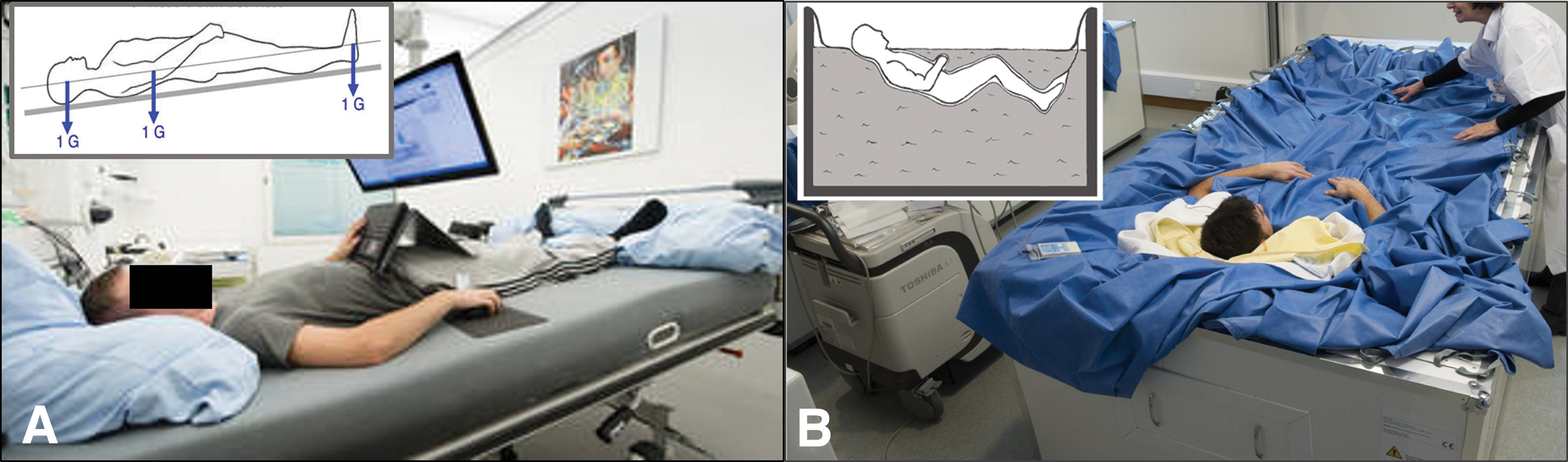
Methods of simulating effects of altered gravity in ground analogs.
The bed rest model is widely accepted for providing controlled conditions to study physiological changes that occur during spaceflight due to exposure to reduced gravity.4,5 Research using the bed rest model is typically done in the head-down tilt position for extended periods of time (60 days or more) producing changes in physiological systems such as the cardiovascular and musculoskeletal systems.4–6 The position often used is a 6° tilt where the head is below the level of the feet. This head-down tilt position produces shifting of body fluids toward the head, similar to spaceflight, which impacts the cardiovascular system. 7 The extended length of time an individual is confined to bed causes muscle deconditioning and bone atrophy, also similar to spaceflight.8,9
Because this analog platform is so widely used by many space agencies conducting ground research, a standardized set of conditions and physiological measures were agreed upon by NASA and the international partner space agencies. By applying standardized conditions and physiological measures to all bed rest studies, multiagency collaborative research can be completed, and results can be more easily compared across studies (Fig. 3). Some of these standardized conditions include 6° of head-down tilt and 60 days as the recommended time for long-duration bed rest. Guidelines are also provided for subject selection, study integration, clinical support, dietary standards, and handling of biological samples. Use of standardized physiological measures represent some of the testing routinely done on astronauts for monitoring body systems before, during, and after spaceflight.4–6 These measures assess multiple physiological systems and can detect changes in body systems not targeted by the countermeasure under investigation. This information is valuable for determining unexpected effects of countermeasures.
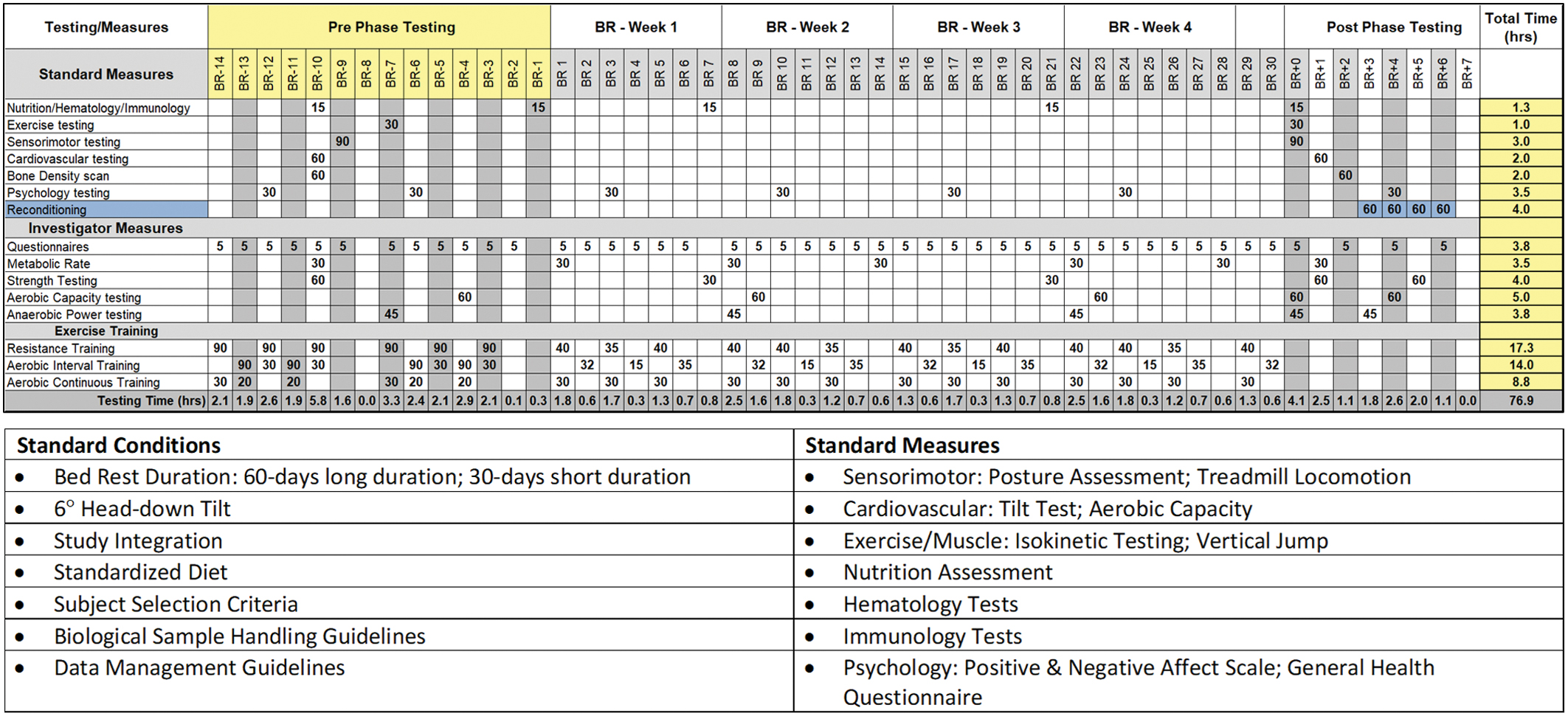
An example of an integrated testing schedule following the international bed rest guidelines developed by the International Academy of Astronautics study group. 4 Top panel: Testing schedule for a short-duration bed rest study. Standard measures are integrated with study requirements for exercise training and investigator measures. Bottom panel: Summary list of the international standard conditions and standard measures. Color images are available online.
Bed rest facilities used by space agencies are located all over the world and are accessed by NASA and the international partner agencies for ground research. Previously, NASA utilized a dedicated bed rest facility at the University of Texas Medical Branch (UTMB) in partnership with the UTMB Institute for Translational Sciences Clinical Research Center. 10 Although this facility is no longer operating, NASA continues its bed rest studies at the :envihab facility in Cologne, Germany. 11 The :envihab is a 3,500 m2 state-of-the-art research facility operated by DLR (Deutsches Zentrum für Luft- und Raumfahrt), the German Aerospace Agency. It offers a variety of resources that can be applied to ground research for investigating spaceflight risks. A 12-bed unit is available for bed rest studies and provides control of the environmental air composition, which is important for studies aimed at evaluating the impact of extreme environments associated with spaceflight. Other chambers that control air composition and pressure are also available in the :envihab. In addition, a short-arm centrifuge can be used for artificial gravity studies, and medical imaging capabilities are accessible to scientists for investigations. A virtual reality laboratory is available to evaluate performance outcomes, for example, virtual spacecraft docking and other activities.
Another well-established facility is the Medes Institute for Space Medicine and Physiology, with >20 years of experience in conducting ground studies for human spaceflight. 12 Medes is located in Toulouse, France, within the Toulouse Rangueil University Hospital. This facility consists of 14 beds to accommodate research participants, along with clinical laboratory facilities, medical imaging, and a short-arm centrifuge for research purposes.
More recently, Medes has added dry immersion capabilities, done in consultation with the Russian Institute of Biomedical Problems (IBMP), which has long-standing experience with this methodology.13,14 Dry immersion uses water suspension techniques where an individual is immersed into a tank surrounded by a bladder filled with thermoneutral water (Fig. 2). 14 The individual is suspended within the water, but remains dry. 15 This methodology produces similar effects on muscle, bone, and the cardiovascular systems as the bed rest analog. It also has added effects on the sensorimotor system of both decreased muscle tone and afferent input. 15
In contrast to a physiological analog that focuses on clinical adaptation of the human body, isolation and confinement analogs are used to evaluate behavioral health and performance at the individual and team level. Ground research to study effects of isolation and develop countermeasures can actually be more useful than studies of this type conducted on the ISS. This is because astronauts on the ISS receive significant support to alleviate the effects of isolation. They have real-time communications with mission control, are able to interact with family and friends, and can receive care packages from home on resupply flights. This type of extended support will not be available for astronauts on long-duration deep space missions, such as an exploration mission to Mars, and, therefore, other mitigation approaches are sought.
There are 2 types of isolation and confinement analogs. One is an isolated, confined, and extreme (ICE) environment, and the other is an isolated, confined, and controlled (ICC) environment. ICE analogs are facilities located in remote locations in extreme environments (Fig. 4). Travel to these destinations can be difficult, with little or no opportunity for emergency evacuation once the crew members arrive. The main goal of these missions is to conduct training exercises or field research such as geological, environmental, or marine science. Human spaceflight research is an adjunct to the primary mission. The field research team is utilized as an analog for a spaceflight crew on a mission and is then studied for their responses to isolation and stress. As NASA looks toward deep space exploration missions, the Antarctic winter-over will serve as an ICE analog to study the spaceflight hazard of increased distance from Earth. During an Antarctic winter-over, the capabilities for resupply and evacuation are extremely difficult and often impossible for at least 7–8 months, thus providing a good simulation of an exploration mission.
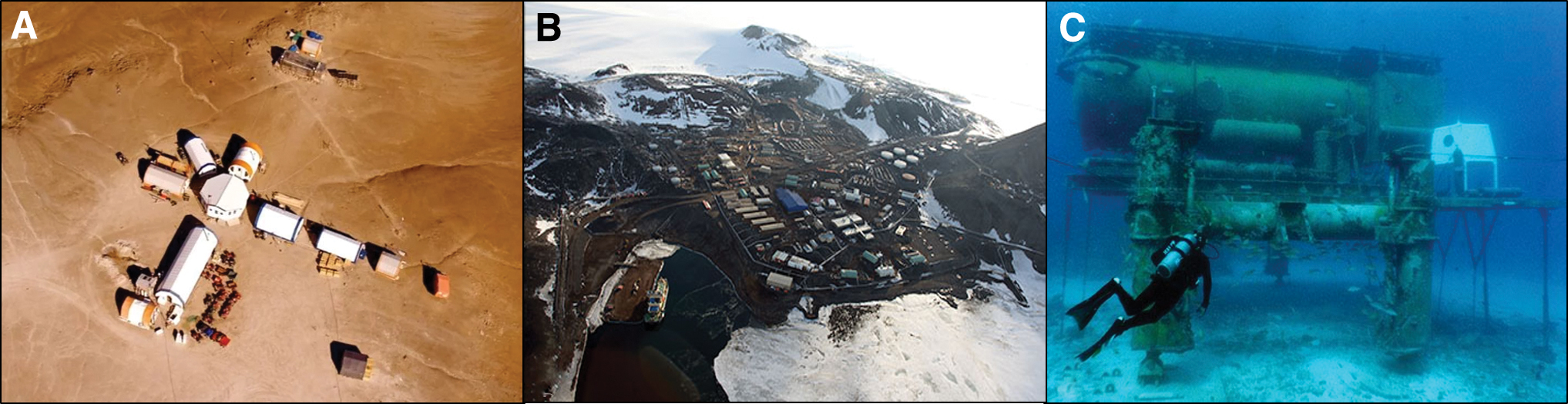
ICE facilities are analogs located in remote locations in extreme environments. Pictured are:
There are a number of locations where ICE environments can be studied. These include Arctic and Antarctic stations and the Aquarius Undersea Habitat. Arctic stations such as the Alert and Eureka Canadian weather stations are the most northerly and permanently inhabited locations in the world. 16 These stations can accommodate ∼50–60 visitors and staff to conduct climate and environmental research. Because they experience nonstop darkness from late October to February and continuous sunlight from April to September, studies of circadian disruption are appropriate for these ICE environments. In addition, the terrain is useful for Mars hardware and operations testing.
The Haughton-Mars Project is another Arctic station that is located at the site of the Haughton meteorite impact crater on Devon Island, Canada. 17 Scientific research teams of up to 30 scientists study the rocky polar desert setting for insights into the evolution of Mars. The Mars-like terrain at this site supports technology evaluation and procedures that will be useful for missions to the Moon and Mars. Behavioral studies of team cohesion and crew autonomy, 18 safety and efficiency of extravehicular activity traverses, 19 and altered immune function 20 investigations have been studied at Haughton-Mars.
The Antarctic continent also provides a number of locations for conducting studies in an ICE environment. 21 There are 64 stations operated by 20 countries in Antarctica. Field research studies at these sites examine astronomy, geology, glaciology, marine biology, oceanography, climate science, atmospheric science, and environmental science. The choice of station for spaceflight analogs will depend upon the phenomenon being studied because characteristics of these stations vary. For example, the coastal McMurdo station is the largest community in Antarctica and can support >1,200 residents. 22 This station can be useful for studies involving circadian disruptions, nutritional supplementation, and immune function. For studies that require smaller groups of individuals to examine cohesion within a team, or autonomy of a crew, the Antarctic Search for Meteorites (ANSMET) team serves as a better mission analog. 23 ANSMET sends 4–10 explorers, typically meteorite scientists, for 5–7 weeks to look for meteorites in the Transantarctic Mountains. The size of this team is better suited for behavioral studies related to spaceflight.
The undersea Aquarius Reef Base 24 operated by Florida International University provides a unique training environment for NASA astronauts. The NASA Extreme Environment Mission Operations (NEEMO) sends 4–6 crew members and habitat technicians for 7–21 days to train and conduct exercises in the Aquarius habitat and surrounding underwater environment. 25 The NEEMO missions create unique opportunities to collect data in an extreme environment on a small crew comprised primarily of astronauts.
The other type of analog, the ICC, provides isolation and confinement under controlled conditions. For this analog environment, facilities are used to isolate the crew to simulate aspects of spaceflight, and mission scenarios are created to provide meaningful work for crew members. The purpose of these simulated missions is to provide a platform for controlled research studies that examine effects of isolation and mission stress on the crew. Examples of these types of facilities include the Japanese Aerospace Exploration Agency (JAXA) Isolation Chamber 26 in Tokyo, the Nezemnyy Eksperimental'nyy Kompleks (NEK [Ground-Based Experimental Facility]) 27 facility at the Russian IBMP, and the NASA Human Exploration Research Analog (HERA) facility 28 in Houston (Fig. 5). In these analogs, prescribed conditions simulate behavioral effects on the human similar to those that occur in space. Volunteer human subjects are recruited to form a crew who embark on a simulated spaceflight mission, which is designed to study the effects of isolation on human behavior.
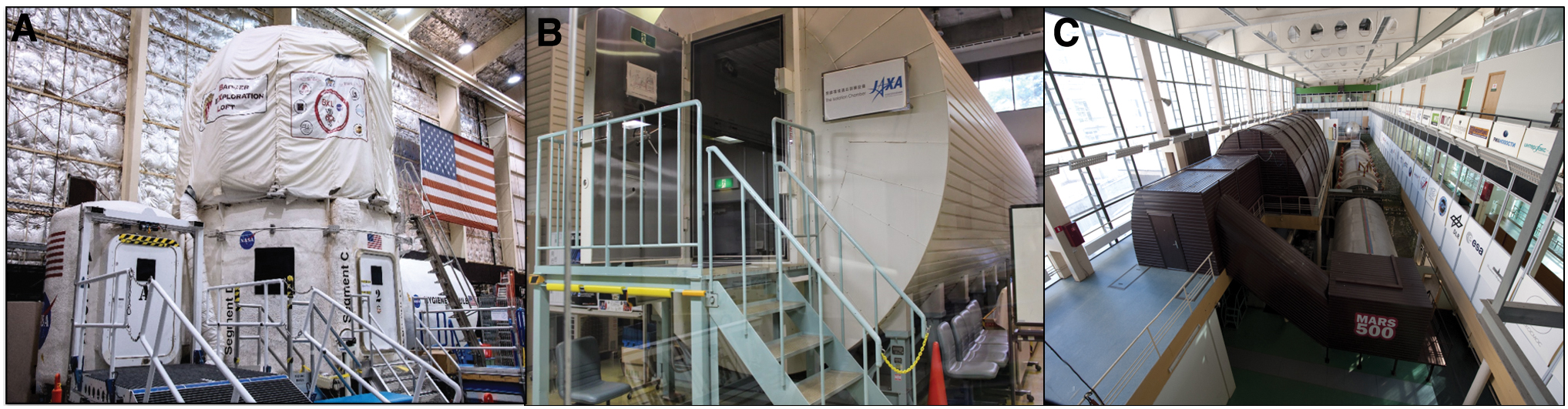
ICC analogs provide isolation and confinement under controlled conditions. Pictured are:
The JAXA Isolation Chamber is located at the Tsukuba Space Center in Japan. 29 It consists of an experiment module for conducting research activities and a habitat module for crew living quarters. This chamber can accommodate 6–8 crew members for up to 6 months and is designed to simulate ISS missions.
The NEK is located at the IBMP at the Russian Academy of Sciences in Moscow, Russia. This facility has 4 interconnected experimental chambers and an additional chamber that simulates the Mars surface. 27 It can support 3–10 crew members and has the flexibility to configure the modules to suit the mission design. For example, some modules can be closed off to allow for a more realistic transit vehicle simulation with smaller transport habitats. This facility was used for the 520-day simulated mission to Mars.30–32
The NASA HERA facility 28 is located at the NASA Johnson Space Center in Houston, Texas (Fig. 5). This analog was designed to simulate a deep space exploration transit vehicle. The HERA is 2-story cylindrical habitat with a lofted sleeping area. It connects to a simulated airlock and hygiene module. Research conducted during HERA missions examines the behavioral health impacts of stressors that are expected to occur during an exploration mission. These stressors include factors such as isolation, sleep deprivation, and communication delays.
Finally, NASA plans to use the ISS as an analog to simulate transit during deep space exploration missions. Although the ISS is not a ground-based analog, it provides a setting closer to Earth to safely examine challenges posed by transit during exploration missions. The ISS is better suited as an analog for transit than for planetary surface habitation as factors such as partial gravity and surface operations, for example, cannot be simulated. Because of the support that NASA provides to astronauts on the ISS, it is not an ideal platform to study the effects of deep space exploration missions. However, to prepare for these long-duration missions, NASA plans to make some operational changes on the ISS to examine scenarios using it as an analog for deep space exploration (Fig. 6). 33 Multiple 1-year missions that extend the usual 6-month stay on the ISS are planned to examine the impact of extended duration on the human body. Upon landing, astronauts will perform tasks that simulate those completed on the first 2–3 days of landing on a planetary surface. NASA will also impose communication delays between the astronauts and ground support team for a 2-week period on the ISS to examine the impact of these changes and determine operational countermeasures. Procedures for autonomous medical care will be tested as simulated medical assessments are completed without ground support. Other alterations to more accurately simulate transit during long-duration exploration class missions will include limiting the habitable volume, limitation to the food system, and switching to more compact exercise equipment. 33
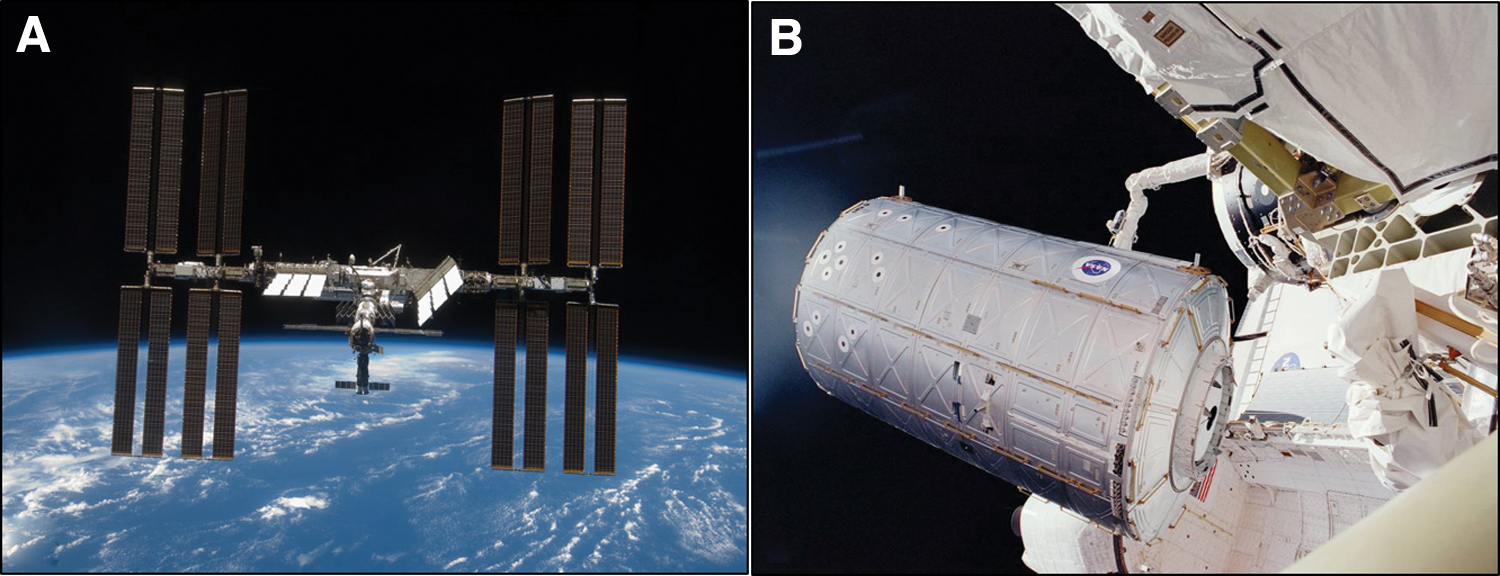
The ISS is a research platform in low Earth orbit that is a joint endeavor of multiple international partners. Pictured are:
In summary, analogs for human subject research are valuable for studying spaceflight risks to human health and development of countermeasures to mitigate these risks. Space agencies use different types of analogs to complete their research. Analogs such as bed rest and dry immersion cause changes in physiology similar to what is seen in space. Isolation and confinement analogs, such as ICE and ICC, create an austere environment approximating that experienced in space. Not all analogs simulate all aspects of spaceflight. However, careful selection of an analog based upon matching analog characteristics to the phenomena under study can yield excellent results. Standardization of analog conditions and measures provides an overview of the response of multiple physiologic systems and allows for comparison of results across studies. Expanding ground-based analogs into the spaceflight environment by making some operational changes on the ISS will better prepare NASA for future flights to Mars.
GROUND ANALOG: THE NASA SPACE RADIATION LABORATORY
A different type of ground analog that relies on use of cell and animal model systems is employed in situations where studying spaceflight parameters directly on a human subject is unethical or impractical for experimental reasons. The study of the health effects associated with space radiation exposure is one of these risks. NASA performs space radiation research at a ground-based facility called the NASA Space Radiation Laboratory (NSRL) (Table 1). The NSRL is based at the Brookhaven National Laboratory (BNL) in Upton, New York (Fig. 7). The NSRL has the capability to deliver beams of ions with masses and energies similar to the galactic cosmic rays (GCR) and solar particle events encountered in space. Commissioned in 2003, the NSRL performs 3 campaigns per year dedicated to experimental studies of heavy ion radiobiology, physics, dosimetry, and electronics testing. 34 Ions range from protons to gold with primary energies ranging from 50 to 2,500 MeV for protons, 50 to 1,500 MeV/n for ions ranging from helium (He) to iron (Fe), with heavier ions up to 500 MeV/n (Table 2). The NSRL beamline is connected to a support facility with a control room, short-term cell culture and microscope rooms, and animal care facilities. 35 Laboratory space and animal facilities for longer term studies are also available onsite at the BNL.
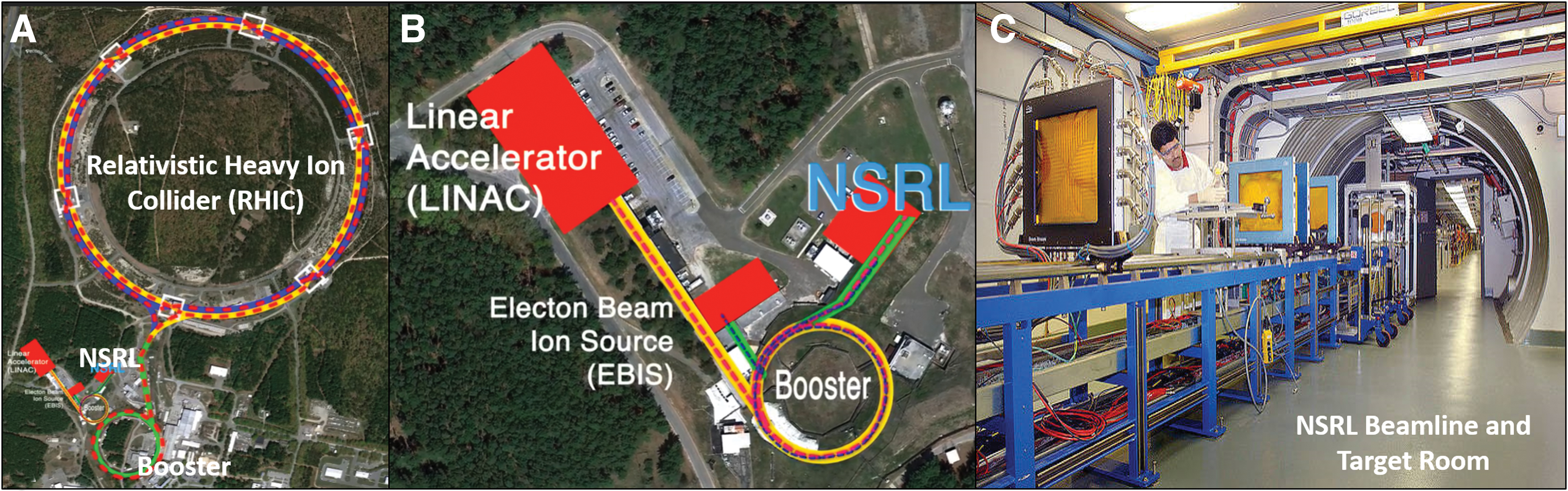
The NSRL is a research facility at the BNL. BNL's Booster provides ions of all species to the large RHIC
Examples of the Spectrum of Ions, Energy, LET, and Range for Beams Available at NASA Space Radiation Laboratory in 2020
Source: NASA NSRL.
LET, Linear Energy Transfer.
A major effort recently completed at the NSRL is the GCR Simulator Project, which focused on the development of the facility, hardware, and software tools needed to reproduce a primary and secondary GCR environment. The radiation environment in space consists of a mixture of particles with varying energies. The GCR Simulator Project provides capability to deliver a mixed field high-energy capability that accurately simulates the radiation environment astronauts will experience during interplanetary travel to Mars.36–38 Advanced ion source technology and control systems at the NSRL enable rapid ion switching and generation of a spectrum of ion beams that approximate the primary and secondary GCR field experienced at human organ locations within a deep-space vehicle. An example of the time-dependent delivery of the 33-ion beam GCR simulation is shown in Figure 8. 35 To more closely simulate the low dose rates found in space, sequential field exposures can be divided into daily fractions for several weeks. The GCR simulator development process requires consideration of multiple factors and poses a true multidisciplinary challenge at the intersection of physics, engineering, and biology. Pilot studies using the full simulation began at NSRL in 2018. It is anticipated that the data generated from this project will provide an important translational step linking the historical data sets using traditional single ion exposures to the mixed fields and chronic exposures that astronauts will experience during spaceflight. Information regarding access to the NSRL can be found on the facility website (https://www.bnl.gov/nsrl/).
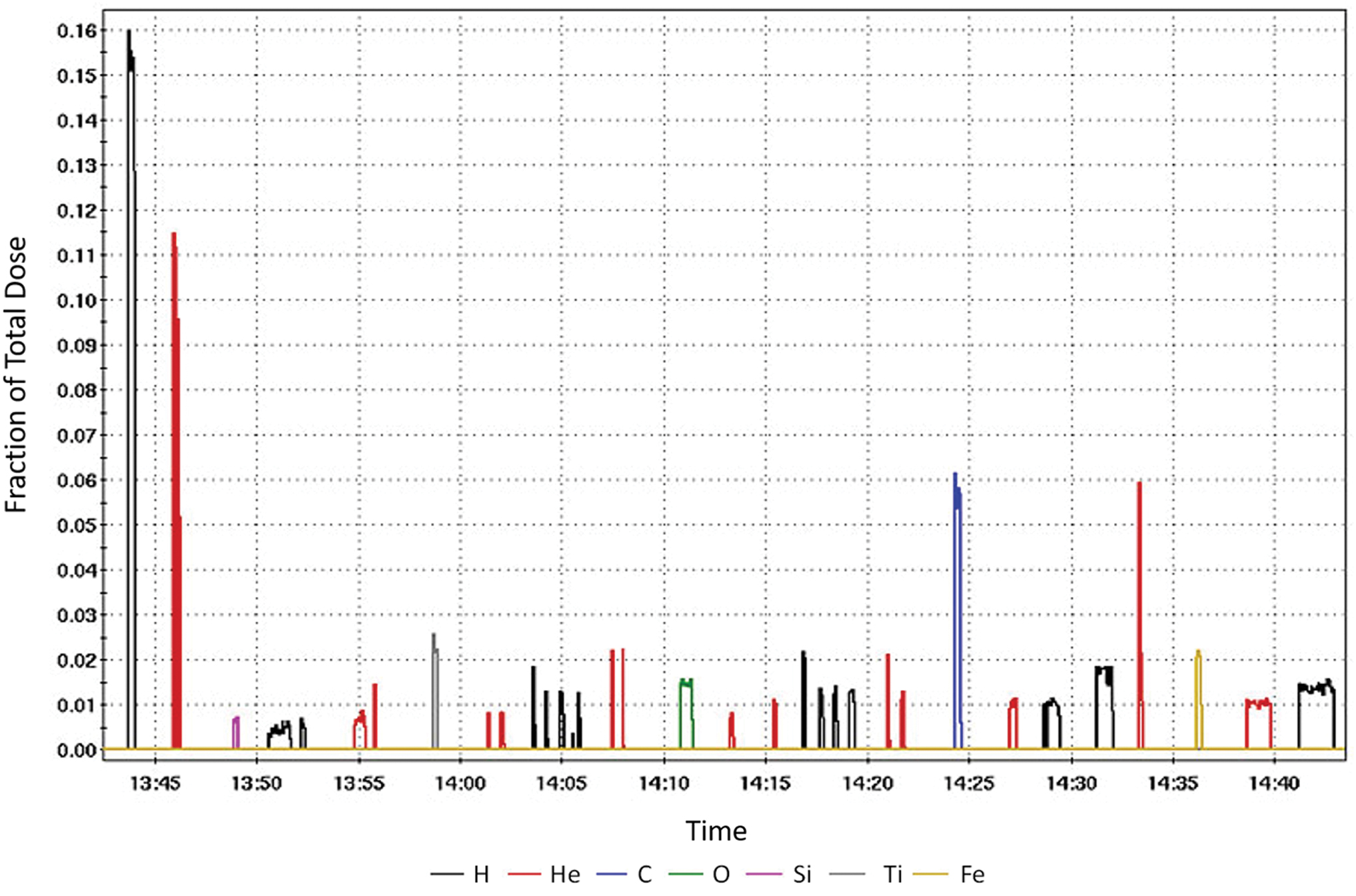
The list of ions and the fraction of the total dose delivered by each beam in the 33 beam NSRL Galactic Cosmic Ray Simulation (image courtesy of NSRL and BNL). Color images are available online.
BENEFITS FOR COMMERCIAL USE OF SPACEFLIGHT ANALOGS
Use of spaceflight analogs has demonstrated benefits for the commercial sector. Ground-based human research analogs, the ISS and NSRL, have all proven valuable to commercial entities for successful investigations in the areas of preclinical research, technology development, and late-stage testing for flight readiness. These benefits are described hereunder and some recent examples are illustrated. Finally, suggestions for further use of analogs are provided.
There is growing interest in the United States to invest in cancer treatments that utilize heavier charged particles (charge >1) such as carbon ions. 39 The National Cancer Institute and their funded investigators utilize the NSRL facility for preclinical studies related to heavy ion therapies for advanced cancer treatments. The NSRL beam quality and life sciences support available at Brookhaven have enabled these partnerships. The NSRL also provides a unique facility for electronics and materials testing, instrument calibration, and physics research. Although other test facilities exist throughout the country (and world), space industries including NASA's and the Department of Defense (DOD) commercial partners specifically utilize the higher energy ions available at the NSRL. These are required to more fully test advanced radiation detector technology, prototype electronics and semiconductor technologies for satellites, circuitry for crewed spacecraft, and radiation damage testing of advanced materials (Fig. 9). All non-NASA access to the facility is managed through Brookhaven's strategic partnership project agreements (https://www.bnl.gov/nsrl/facility-users/steps.php).
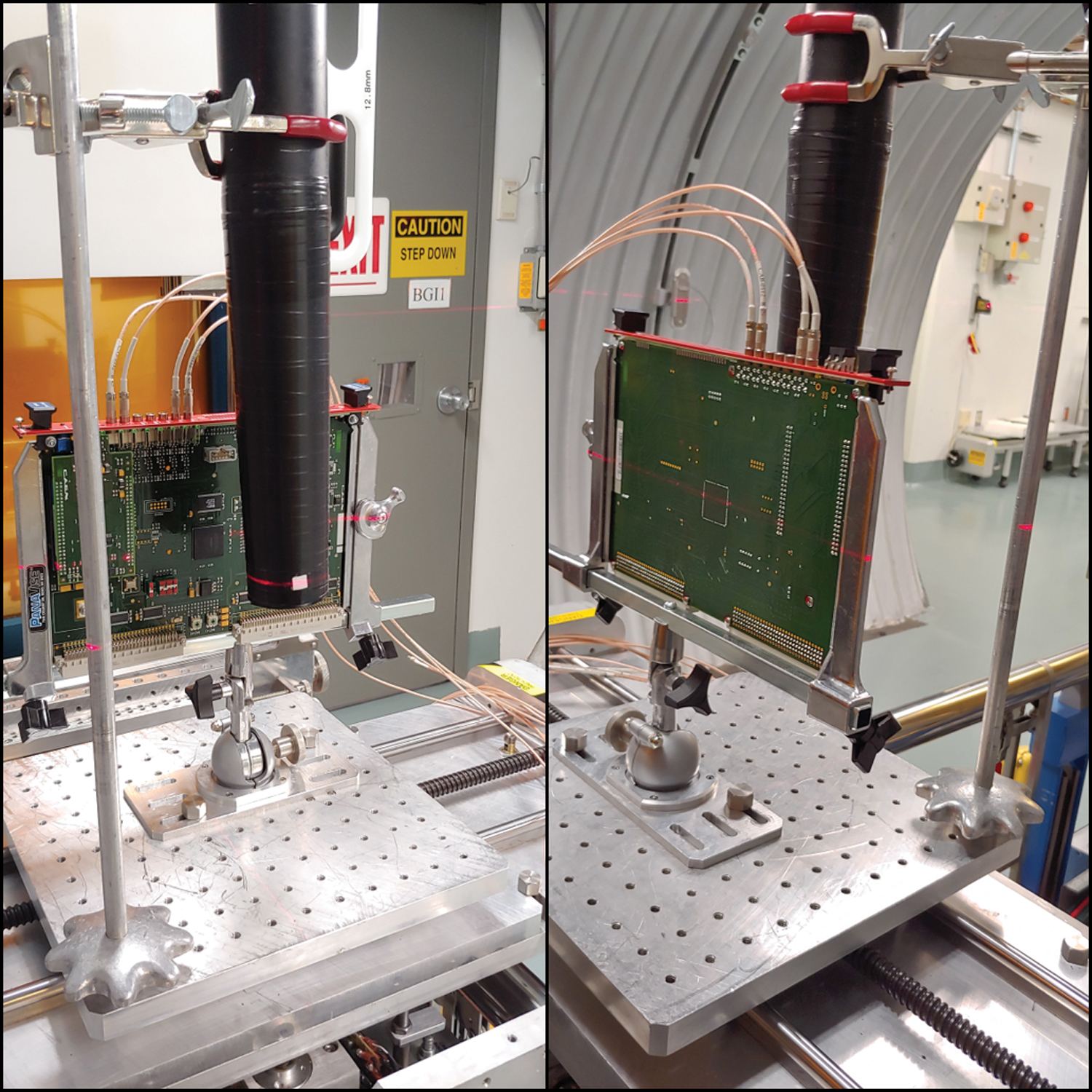
Example of circuit board testing with a scintillator detector system at NSRL (images courtesy of NASA). Color images are available online.
Ground-based human research analogs offer platforms to refine technologies and test efficacy in a simulated spaceflight environment before utilization on board spacecrafts. One such tool, the Psychomotor Vigilance Test (PVT) utilized ground analogs for development. PVT assesses behavioral factors such as attention, movement speed, and impulsivity; and rates levels of workload, sleep, fatigue, and stress. Development of the PVT began in the laboratory 40 and then used ground analogs as a test bed followed by final utilization in spaceflight.30,31,41 Furthermore, commercial benefits of the PVT were expanded to monitor vigilance and fatigue in physicians, aviation workers, and truck drivers. 42
As a transit analog for deep space exploration, the ISS provides an actual spaceflight environment where technologies can be tested to determine readiness for long-duration exploration missions. Testing technologies on the ISS determines the effects of factors such as space radiation and weightlessness on technology performance. One such device currently being developed for deep space exploration is the 1Drop Diagnostics analyzer.43,44 Using microfluidics technology, the 1Drop analyzer can analyze multiple biomarkers from a single drop of blood. Development of this device will support autonomous medical care for deep space exploration missions. Once fully developed, the 1Drop Diagnostics analyzer will also have applications for personalized health monitoring here on Earth.
Commercialization of spaceflight offers an opportunity to expand the use of ground-based spaceflight analogs. For example, ground analogs could potentially be used as training sites for commercial astronauts and space tourists. Training in a NASA HERA mission could provide necessary spaceflight simulation experience to prepare these future space travelers. The NASA HRP could then collect valuable research data from these individuals on the ground and during their spaceflight experience to assess crew performance and analog efficacy.
Partnerships between NASA HRP and commercial entities for developing technologies to support human health in space could also expand the use of ground analogs for commercial purposes. In this scenario, commercial entities can test their technologies, for example, as part of a NASA HERA mission. Testing the technology becomes part of the mission tasks and provides meaningful work for the crew. Cost benefit can be realized as partners share analog platform costs making this arrangement cost-effective for all parties.
CONCLUSIONS
Planning for safe human exploration of space requires evaluation of a wide variety of unique hazards. Ground analogs for human subject research are a valuable component of research efforts aimed at understanding and identifying approaches to reduce or mitigate the health risks associated with these spaceflight hazards. They provide a means to overcome barriers associated with conducting experimental research on space-based platforms. No analog is a perfect simulation of all characteristics of spaceflight, but individual analogs can provide suitable recreations of one or more of the main spaceflight hazards and can be carefully selected to match goals of a given study. Future study in this area should include detailed analyses of individual analog characteristics that make each analog uniquely suited for specific types of research. Analogs provide down-to-earth solutions for out-of-this-world problems, expanding the depth and breadth of human spaceflight research and supporting commercial space applications as humankind pushes to explore destinations further into space.
Footnotes
AUTHOR DISCLOSURE STATEMENT
All of the authors declare that they have no “competing interests” related to funding, person, or financial interest. Although the authors work directly (J.L.H. and L.C.S.) as employees or indirectly as contractors (R.L.C. and Z.S.P.) for NASA, the views and opinions expressed in this study are those of the authors and do not necessarily reflect the views of NASA or the U.S. government.
FUNDING INFORMATION
This review was supported by the Translational Research Institute for Space Health (TRISH) at the Baylor College of Medicine (R.L.C.; Z.S.P.—The Red Risk School); through the NASA Human Health and Performance Contract #NNJ15HK11B (Z.S.P.); and NASA directly (J.L.H. and L.C.S.).