






Abstract
Amphibian oocytes have the special ability to directly induce the transcription of pluripotency and other genes in transplanted somatic nuclei. To this extent, oocytes induce a stem cell-like pattern of transcription in somatic cell nuclei. We ask whether the induced transcription in transplanted nuclei reflects the normal transcriptional activity of oocyte genes. We describe here the transcript content of a wide range of genes in Xenopus tropicalis oocytes. Using accurate quantitation, we find that each mature oocyte has accumulated several hundred transcripts of cell-type specific genes. This value is several orders of magnitude greater than the “leakage” level found in most somatic cells and about the same level found in somatic cells where these genes are fully expressed. Illumina sequencing confirms the high transcript content of a mature Xenopus oocyte. Most of the transcripts from these highly expressed genes in oocytes are correctly and efficiently spliced. Our results contribute a more quantitative view of certain amphibian oocyte transcripts than previously available. Our results also show that transplanted somatic nuclei conform, with respect to the genes analyzed, to the transcriptional characteristics of the recipient oocytes.
Introduction
F
Taking advantage of current methodology, we focused on the transcript content of Xenopus tropicalis, whose genome has been recently fully sequenced (August 2005;
Methods
Oocytes maintenance and Hoechst staining
After removal from the X. tropicalis ovary, oocytes were kept at 23°C in modified Barth saline (MBS) medium [88 mM NaCl, 1 mM KCl, 2.4 mM NaHCO3, 10 mM Hepes, pH 7.5, 0.82 mM MgSO4, 0.33 mM Ca(NO3)2, and 0.41 mM CaCl2]. Three milliliters of packed oocytes, to which is added 9.5 mL of MBS medium and 7 U of liberase (Roche), was incubated with gentle shaking for 2 h at room temperature to remove the follicular cell layers [13]. Oocytes were incubated in 1×MBS + 1 μL of Hoechst (from stock 10 μg/μL) for 10 min to stain the follicular cell nuclei.
Cell lines
Embryonic stem (ES) cells were kindly provided by Prof. A. Surani. The C2C12 cell line was purchased from the American Tissue Culture Collection.
High-throughput sequencing analysis
Starting from 200 X. tropicalis oocytes, ∼200 μg of total RNA have been recovered (∼1 μg of total RNA per X. tropicalis oocyte). Ribosomal-depleted RNA was obtained using RiboMinus (Invitrogen) and fragmented using fragmentation reagents (Ambion). After RNA precipitation and purification, reverse transcription was performed and double-stranded cDNA has been obtained. End repair and 3′ adenylation were performed before Illumina adaptor ligation. The obtained cDNA was then purified and size selected before polymerase chain reaction (PCR). The quality of the final library was checked by Bioanalyzer (Agilent) and Qubit (Invitrogen). Clusters were generated and sequenced as 36 bp single reads on a GAIIx. The oocyte RNA expression profile was analyzed in the following way: the set of Illumina sequence reads was first searched against a database of Xenopus ribosomal RNA sequences and matching reads were discarded. Next, the set of X. tropicalis transcript sequences was downloaded from the Ensembl BioMart database in fasta format. The set of Illumina sequence reads was mapped against this using SSAHA2 with the scoring limit relaxed to allow up to 2 mismatches. Reads that matched transcript sequences from more than one gene were discarded. Allowing for multiple transcripts for some genes, the number of unique reads matching each gene was counted and the average transcript length for each gene was calculated. The read counts were then normalized according to transcript length and sample size following the method of Mortazavi et al. [14], to give a value for reads per kb per million reads (RPKM) according to the following formula: RPKM=(unique reads per gene)/{((average transcript length for gene)/103)×((total mapped reads in sample)/106)}.
RNA extraction and reverse transcription
RNA was extracted from 8 full size (800 μm diameter) X. tropicalis oocytes using the RNeasy kit (Qiagen) following the instructions of the manufacturer. The RNA was eluted in 27 μL RNase-free water and used for reverse transcription in a final volume of 50 μL. For reverse transcription, either gene-specific or random hexamer primers were used. cDNA was diluted to 100 μL, aliquoted, and stored at −80°C. Spike-in experiments were done in the presence of tRNA as RNA carrier and 0.1% bovine serum albumin.
PCR/quantitative PCR
Semiquantitative PCR (semi-qPCR) was used to amplify part of the sequence of the chosen genes to be used as a standard curve. For this purpose, the forward and reverse primers contain the T7 and T3 sequences (capital letters) to make mRNA and subsequently cDNA. The following X. tropicalis primers were used for semi-qPCR:
Arg1 F: GCTTGATTCTAATACGACTCACTATAGGGtg gtctggacccaagtat
Arg1 R: AAAGTCATGTCAAGCGCAGTGT
B4 F: GCTTGATTCTAATACGACTCACTATAGGGtgaaa ccccaaaagaagg
B4 R: ATGATTATGGTCACTTCTTCCCTTTC
Beta globin F: GCTTGATTCTAATACGACTCACTATAG GGatggttaatctgacagca
Beta globin R: TTGCGGCCGCTAATTAACCCTCACTAA AGGGgtggtaacccttgccaag
Brachyury F: GCTTGAATTCTAATACGACTCACTATAG GGatgagtgtaagtgccacc
Brachyury R: TTGCGGCCGCTAATTAACCCTCACTAA AGGGccctttactacgtgcagg
Brachyury F1: GCTTGAATTCTAATACGACTCACTAT AGGGtagcagataattcttcag
Brachyury R1: ACGTCATACTGGTTTTCTGCTATTTC
Eomesodermin F: GCTTGATTCTAATACGACTCACTA TAGGGggatctgaacgactctgct, Eomesodermin R: TGCCCCC ATGTCCAGTTTAT;
Myf4 F: GCTTGATATCTAATACGACTCACTATAGGGa tggagctttttgaacc,
Myf4 R: TTGCGGCCGCTAATTAACCCTCACTAAAGG Gttctagcagggttatgta;
Myf5 F: TGATATCTAATACGACTCACTATAGGGatgga gatggtagatacc,
Myf5 R: TTGCGGCCGCTAATTAACCCTCACTAAAGG Gtagtacatggtagattgg;
MyoD F: GCTTGATATCTAATACGACTCACTATAGGG atggagctgttgccccca,
MyoD R: TTGCGGCCGCTAATTAACCCTCACTAAAGG Ggagtatgggctgaaggaa;
NeuroD1 F:GCTTGAATTCTAATACGACTCACTATAGG Gcttatatattattatgtg,
NeuroD1 R:TTGCGGCCGCTAATTAACCCTCACTAAA GGGtcgtgaaagatggcatta;
Pou25 F: GCTTGATTCTAATACGACTCACTATAGGGa tgtacagccaacagccc;
Pou25 R: TTGCGGCCGCTAATTAACCCTCACTAAAGG Gtatagagaggttgggcaa;
POU60 F: GCTTGATTCTAATACGACTCACTATAGGGa tggctccagcagggcca,
POU60 R: TTGCGGCCGCTAATTAACCCTCACTAAAG GGagacagcagctgttgcag;
PRC1: F: GCTTGATTCTAATACGACTCACTATAGGGg cagcttgaggaggaaatgtattat,
PRC1: R: TTGCGGCCGCTAATTAACCCTCACTAAAGG Gtccattcaactcggacatattctctt;
Sox3: F: GCTTGATTCTAATACGACTCACTATAGGGaa aggcaatgcttctatc,
Sox3: R: GGGCAGGTACATGCTGATCA;
Thy1 F: GCTTGATTCTAATACGACTCACTATAGGGttg tatacctgcaatttg,
Thy1 R: AAGTGAAAGTAGGAAGGCAAATGG.
Real-time PCR primers are listed in Supplementary Fig. S2. The Applied Biosystems 7300 real-time PCR system in a 96-well format with Power SYBR Green PCR Master Mix (AB) was used for quantitative analysis. The number of transcripts per oocyte was obtained in the following way. We generated a standard curve using a known amount of cDNA containing the appropriate sequences. We divided the amount of DNA (in the range of 1,000 fg to 0.1 fg for low abundant transcripts and in the range of 10 ng to 100 fg for highly abundant transcripts) by its molecular weight (base pair×660 g/mol). This value was multiplied by the Avogadro's number (6.022×10²³) to obtain the absolute number of transcripts. To estimate the absolute number of transcripts, we compared the Ct value of the transcripts present in the oocyte to the Ct values of the standard curve. This value was then corrected for the number of oocytes used and the dilutions of the sample starting from the RNA extraction step. Samples were normalized against the total amount of RNA.
Results
Follicle cells can be completely removed from X. tropicalis oocytes
To analyze an oocyte's transcript content, we chose to use X. tropicalis oocytes, as its genome has been fully sequenced. X. tropicalis oocytes, like X. laevis oocytes, can be easily collected from the frog ovary at stages V and VI [15], in first meiotic prophase. Each oocyte was wrapped in about 5 transparent layers of about 10,000 follicular cells, not visible under normal light (Fig. 1a). The presence of the follicular cell layers would interfere with the precise quantitation of the transcripts present in the oocyte itself. As the nucleus of the oocyte (GV) contains only one tetraploid chromosome set, even a few transcriptionally active follicle cells not removed from an oocyte could distort the results. For this reason, before all experiments, we removed the follicular cells by treating oocytes with an enzyme preparation, liberase, which loosens the cell layers surrounding the oocyte [13]. Oocytes were incubated either in the presence or absence of liberase for 2 h at room temperature before they were stained with Hoechst. In the absence of liberase, thousands of follicular cell nuclei were visible, under ultraviolet light, surrounding each oocyte (Fig. 1b). Liberase treatment is very effective in removing the follicular cells as a largely entire layer rather than releasing single follicle cells (Fig. 1c). This leaves the oocytes with almost no attached follicular cells (even a single remaining follicular cell is easily visible) (Fig. 1d). Only liberase-treated oocytes, checked for the lack of even a single follicle cell, have been used for all the following experiments. To further check that follicle cells do not contribute to the transcript values that we find in oocytes, we analyzed transcripts in samples consisting only of different numbers of follicle cells. We detected only a minimal number of transcripts for many of the oocyte transcribed genes, even in 100,000 follicle cells collected from 10 oocytes (Table 1). As expected, follicle cell layers contain an abundance of globin transcripts. This result further demonstrates that even the presence of few follicle cells cannot interfere with the accurate measurement of the oocyte transcripts.
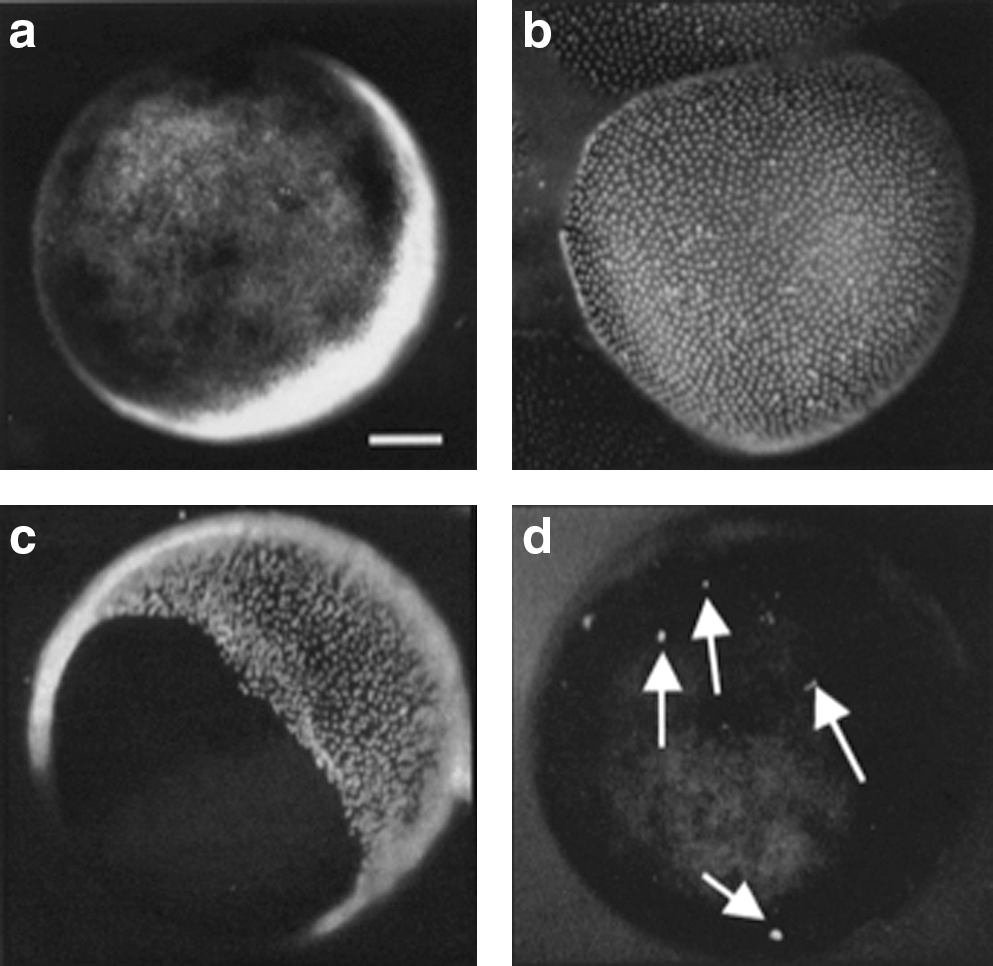
The follicular cell layers surrounding the Xenopus tropicalis oocytes do not interfere with the quantitation of the specific oocyte transcripts. Liberase treatment efficiently removes follicle cells from oocytes. Oocytes are checked under a stereomicroscope with either normal light
RNA from oocyte-specific genes, pluripotency genes, and lineage-determining genes were assayed by real-time polymerase chain reaction in isolated follicle cells. Primers within 1 exon were used to determine the presence of the represented transcripts.
We have tested the efficiency of RNA recovery in all our experiments using a “spike-in” addition of mouse RNA determined from the optical density of large amounts of purified mRNA. A known number of transcripts of mouse neurogenin were added to samples of 8 oocytes. Following RNA extraction, cDNA synthesis, and real-time PCR, we recovered an average of 90%–95% of the total added mouse neurogenin RNA even for concentrations lower than 1 fg (Supplementary Fig. S1; Supplementary Data are available online at
Xenopus tropicalis oocytes contain a wide variety of transcripts including those for lineage determination and terminal differentiation
To establish whether transcripts representative of different somatic cell lineages are present in a Xenopus oocyte, we tested MyoD1 [16], Myf4 [17] and Myf5 [18], Xbrachyury [19], eomesodermin [20], and beta globin [21] as representative of the mesodermal lineage, NeuroD1 [22], FoxD1 [23], and Sox3 [24] representing the ectodermal lineage, Arg1 [25] representing the endodermal lineage, Pou25 [26] and Pou60 [27] representing pluripotency genes, B4 as an oocyte-specific gene [28], and PRC1 [29] as a representative of cytokinesis regulators (Table 2). We found that transcripts of all these lineages, mostly somatic, are present in lampbrush-stage oocytes.
We measured the absolute number of transcripts for each selected gene using real-time PCR (see list of qPCR primers in Supplementary Fig. S2). The use of primers within an exon allowed us to determine the total amount of transcripts, spliced and unspliced. As expected, we detected a very high number (47 million) of the oocyte-specific linker histone B4 transcripts (Table 3). Sox3, Pou25, Pou60, and PRC1 are also very abundant (hundreds of thousands per oocyte). Transcripts characteristic of terminal differentiation such as Thy1 (thymocytes) and Arg1 (liver), transcripts of lineage determination genes such as MyoD1, Myf4, Myf5, and NeuroD1, and transcripts of early embryo genes such as Xbra and Eomes are present in the oocyte with an absolute number of transcripts ranging from 240 to 1,200. β-globin transcripts are unexpectedly abundant (see Discussion section). A summary of these data is presented in Table 3.
See Fig. 2A for a diagram explaining the choice of primers. The total amounts of transcripts have been converted into absolute numbers per oocyte. Results are mean±standard deviation of 3 independent experiments.
We conclude that, in X. tropicalis oocytes, transcripts that appear to be not required at the oocyte stage are nevertheless present, albeit in different amounts.
Transcripts are mostly present in spliced form in the oocyte
To understand why the oocyte contains transcripts that could encode proteins thought to be not required at the oocyte stage, we designed primers on introns to discriminate between spliced and unspliced transcripts (Fig. 2A). It seems possible that splicing could be very inefficient and that primary transcripts would not yield proteins. Our results show that, for all the analyzed genes, transcripts are mainly present in the oocyte in a spliced form (Fig. 2B, C). In particular, the most abundant transcripts do not show any detectable unspliced transcripts. Some of the less abundant transcripts, such as MyoD1 and NeuroD, have a significant proportion of unspliced transcripts (Fig. 2B, C).
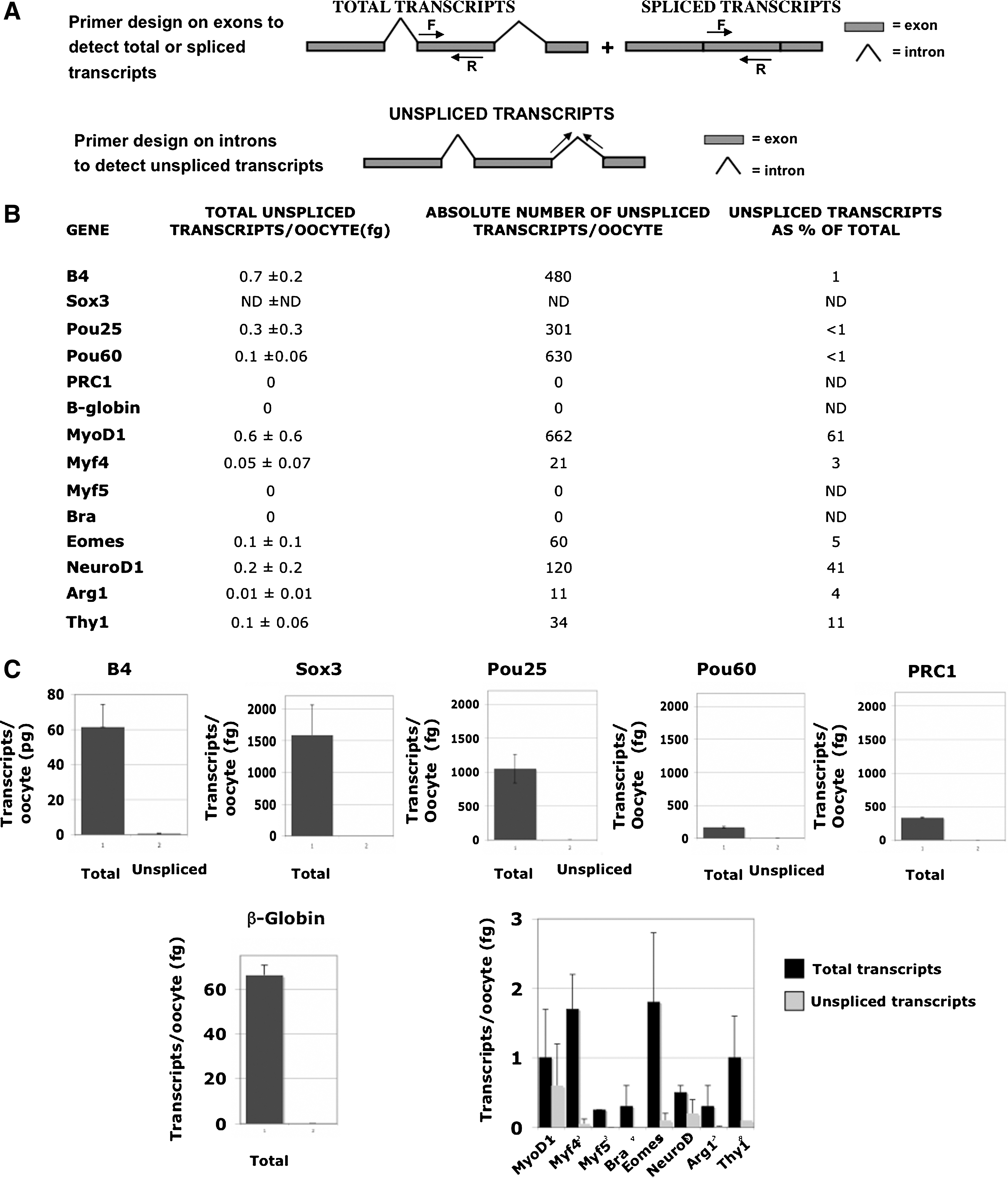
Most transcripts are efficiently spliced.
The experiments described so far were performed by real-time PCR using sets of primers designed to recognize either the same exon or the same intron. Primers were close to the 3' region of each transcript. To check that the efficiency of splicing does not vary between different introns in the same gene, we used another set of primers designed for genes containing one or more introns (Fig. 3A, F+R and F1+R are examples of primer pairs). For these sets of experiments, we used semi-qPCR with the same batches of X. tropicalis oocytes as for the previous real-time PCR experiments. These results confirm the previous conclusions that almost all transcripts are present in the oocyte in spliced form (Fig. 3B). We conclude that oocytes have a generally effective splicing capacity even for transcripts that would not seem to be required for oogenesis.
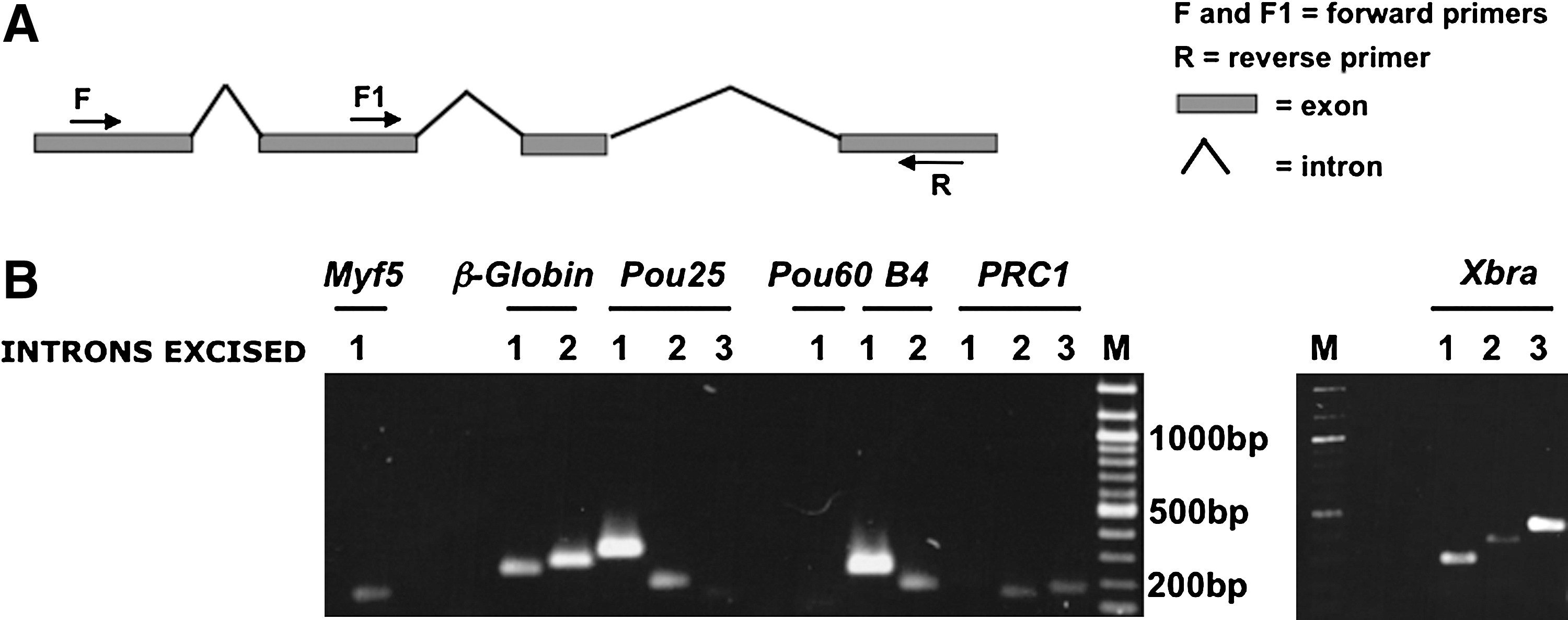
Introns are efficiently spliced out in X. tropicalis oocytes.
We considered the possibility that oocytes might fail to transport their unexpected transcripts to the cytoplasm and so not translate these transcripts into proteins. We dissected 30 GVs in oil to avoid loss during aqueous isolation [30] and tested MyoD1, Myf4, Neurogenin 1a, and beta-globin transcripts. Transcripts are present in the cytoplasm at about a 30 times higher level than in the GV of the same oocyte (not shown) and therefore at a similar concentration throughout the oocyte. The transfer of transcripts from nucleus to cytoplasm is therefore about as efficient in oocytes as in somatic cells [31].
We conclude that the oocyte is an unusual cell that contains a representation of transcripts characteristic of several specialized somatic cell types and that these primary transcripts are efficiently spliced and transplanted to the cytoplasm, as in most cell types.
Xenopus oocytes have an unusual transcript content by comparison with somatic cells
To understand the general significance of transcripts not obviously required for oogenesis, we compared the number of transcripts found in X. tropicalis oocytes with those in other cell types. Values are included in Table 4 for mouse T101/2 cells, mouse proliferating and differentiated C2C12 cultured cells, mouse thymus cells, and mouse ES cells. We found that ES cells, as expected, have a high content of Oct4 transcripts and a significant content of other gene transcripts, in accord with the results of Efroni et al. [32]. C2C12 cells are related to mesodermal and muscle differentiation [33] and, as expected, have a substantial content of MyoD. Thymocytes contain many transcripts of Thyl, but not of the other markers tested. X. tropicalis oocytes therefore have a high content of the cell-type–specific transcripts assayed. In contrast, somatic cells, as represented by 10T1/2, C2C12 cells, and thymocytes, do not contain a significant number of other tissue-specific transcripts. Nevertheless, because of the large size of an oocyte, the concentration of somatic-specific transcripts in an oocyte is not unusual. Rather it is the number of these transcripts per cell that is exceptional, and this point is elaborated in the Discussion section.
The absolute number of total transcripts per single cell was determined by real-time quantitative polymerase chain reaction. 10T1/2, C2C12 thymocytes, and embryonic stem (ES) cells are mouse cell lines. Results are the average of 3 independent experiments. Values for X. tropicalis oocytes are shown for easy comparison and were taken from Table 3.
Semiquantitative PCR (semi-qPCR).
Same as Pou60/Pou25 for X. tropicalis.
To relate the level of transcripts in an oocyte to that in somatic cells where a gene is presumed to have an essential function, we analyzed MyoD1 transcripts in more detail. We tested the presence of MyoD not only at the oocyte stage but also in the unfertilized egg and at other developmental stages (Fig. 4). The amount of MyoD transcripts present at the oocyte stage is progressively reduced from the unfertilized egg stage and is completely absent from the 2-cell stage up to stage 7. MyoD1 transcripts then start to reappear after stage 8, soon after the midblastula transition (Fig. 4). A Xenopus embryo at stage 26 has around 120,000 cells. If we consider that 5% of the total number of cells in an embryo is represented by functional muscle cells, each muscle cell contains about 0.04 fg or 200 transcripts of MyoD (Fig. 4). An oocyte therefore contains more MyoD transcripts (over 1,000) than a functional muscle cell (Table 3).

Analysis of Xenopus transcripts at different stages of development. MyoDa transcripts were determined by real-time quantitative polymerase chain reaction (qPCR) in Xenopus laevis. MyoDa transcripts are present at the oocyte stage but are absent in an unfertilized egg, stage 2 cell, and stage 7. After the midblastula transition, MyoDa transcripts start to be accumulated as the percentage of muscle cells increases in the embryo. At stages 12–43, it is assumed that the cells that contain MyoD are 5% of the total cell number. Semi-qPCR has been performed to detect maternally or zygotically inherited transcripts. RNA was extracted from samples of 8 embryos. Reverse transcription was carried out by PCR. At stage 26, 5% of total cells (ie, 6,000) are assumed to be muscle, and altogether these contain ∼250 fg MyoD transcripts. This is equivalent to 0.04 fg or 200 transcripts of MyoD per cell.
One explanation for the presence of lineage-specific transcripts in an oocyte is that the level observed is no more than that of transcriptional leakage and that this level is what would be expected in any somatic cell. We have therefore carried out qPCR transcript assays on a range of somatic cell types, using the same primers and procedure as we have used for oocyte and somatic cell assays (Table 4). We found a substantial transcript content for lineage-specific genes in the appropriate cell type, as expected. Mouse ES cells, which were predisposed to differentiate in a neural direction, gave a value of 15 transcripts of neuroD per cell (Table 4). In all other cases, we did not find more than one transcript per cell. Because many tissues contain a variety of cell types, including fibroblasts, we analyzed blood cells, which are relatively homogeneous with respect to blood cell types for a range of transcripts. We recorded 1.5 transcripts per cell for Arg1, 1.3 transcripts per cell for Pou60, and nil transcripts per cell for B4, Pou25, Sox3, Eomes, MyoD, NeuroD, Myf4, and Myf5 (data not shown). The nil values were generally around Ct38 and therefore well below a Ct value of about 30 for 1 transcript per cell. Most of these “nil” values amounted to less than an average of 1 transcript per 100 cells. As a positive control, we recorded well over 100 transcripts for β-globin in an average blood cell. We conclude that, using our methods, the leakage level is <1 transcript per cell for all cell types tested with respect to 14 different genes. The transcript level for these genes in an oocyte is therefore several hundred times greater than the negligible leakage level seen in other cell types.
We should comment on the anomalous position of 100,000–200,000 β-globin transcripts per oocyte ([11] and Table 3). An explanation we can offer for this is that these transcripts are transferred into the oocyte from the blood supply that surrounds each oocyte. It is known that half of the total content of an oocyte, namely the yolk, is synthesized as protein in the liver and is transferred into the oocytes through the blood supply and through the follicle cells [34,35]. We suggest that some of the globin transcripts in the blood are taken up, as it were inadvertently, by the oocytes when they absorb protein, and probably degradation products of dying blood cells, from the blood supply.
Transcriptome analysis of X. tropicalis oocytes using high-throughput sequencing
So far we have made a quantitative description of a limited number of gene transcripts. We now ask whether these characteristics of oocyte transcription are widely applicable to other genes. To obtain a full survey of transcripts present in the X. tropicalis oocyte, we prepared an RNA library to be sequenced by Illumina, a current sequencing platform. We extracted total RNA from 200 defolliculated (liberase treated) X. tropicalis oocytes. Total RNA was then depleted of the ribosomal RNAs, which represent more than 80% of the total RNAs of an oocyte. Figure 5A shows how the experiment has been designed for the Illumina library construction.
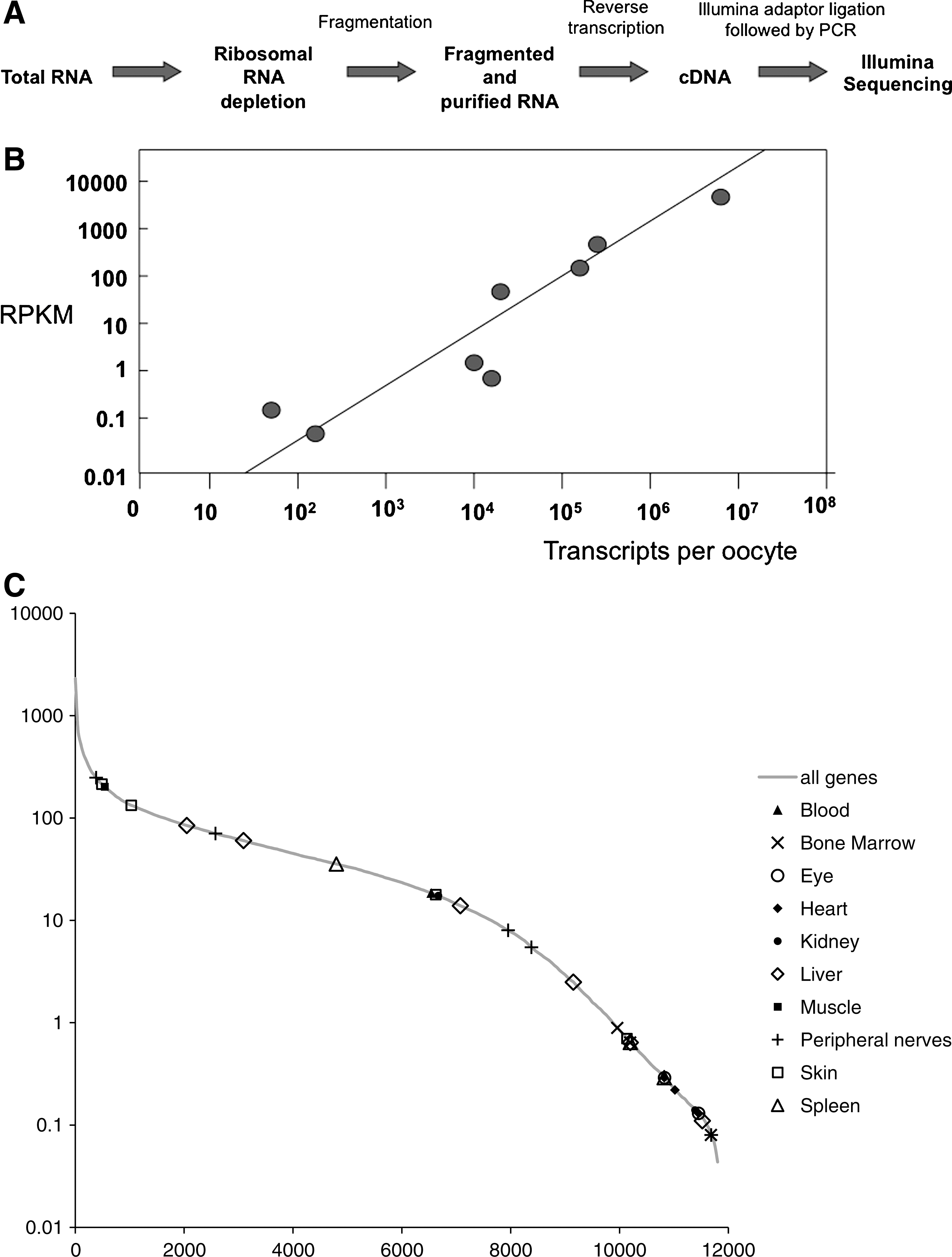
Illumina sequencing.
To ensure that our Illumina procedure correctly estimates the abundance of different kinds of transcript, we compared our results with those obtained by qPCR. The quantity of RNA transcripts indicated by Illumina was estimated from the frequency with which different sequences from the same gene were obtained. We found a good agreement between the accurate quantitation by qPCR and the estimation of the abundance of the same transcripts by Illumina sequencing (Fig. 5B).
We also asked whether there is evidence that genes for which there is no obvious need in the oocyte (eg, adult tissue-specific genes) are expressed over a wide range of transcript abundance levels. Figure 5C shows that this is the case. For this analysis, we selected the top 10 genes by “enrichment factor” from 10 tissues from the TiGER database [36] and looked for their likely Xenopus orthologs in our Illumina sequence data. We found that many of these genes were either strongly or weakly expressed over a wide range of expression levels in the X. tropicalis oocyte. This supports the point that a number of the genes expressed in the X. tropicalis oocyte, some at quite high levels, are the ones that are regarded as tissue specific in the human genome.
We obtained values for the abundance of 11,000 different transcripts in X. tropicalis oocytes by deep sequencing (full list in Supplementary Table S1 and most abundant 500 in Supplementary Table S2). Summarizing the general conclusions from this list, we can say that 50% of all transcripts are synthesized by 10% of genes and that the 1% of the most strongly expressed genes account for about 15% of detected transcripts. We see that 7% of all genes (780) each contribute over 500 transcripts per oocyte. In Table 5, we exemplify a range of genes that are very strongly transcribed in oocytes as judged by the Illumina analysis. The main conclusion from this analysis is that it agrees with the more accurate quantitation by qPCR—this is that a wide range of genes in lampbrush chromosomes accumulate a large number of transcripts.
A selection of abundant transcripts found in X. tropicalis oocytes by illumina sequencing is listed. A total of 360 genes contained from 5 to 20×106 transcripts per oocyte.
Discussion
The main conclusion from this work is that a wide range of genes make transcripts, mostly correctly spliced, in the oocyte and that many of these genes are ones that are normally transcribed only in cell-type–specific lineages that arise during development. Our results support the view that the lampbrush state of oocyte chromosomes leads them to be transcriptionally active. This is in accord with the view that the lampbrush chromosomes are in a strongly decondensed and derepressed state and are therefore transcribed by the highly active transcriptional components of the oocyte.
What is the significance of this widespread transcription in oocytes? We have noted that the transcripts required for the very abundant proteins of oocytes, such as the linker histone B4, are extremely numerous. The unexpected and cell-type–specific transcripts in oocytes are about 1,000 times less abundant. Therefore, the concentration of these transcripts in the huge oocyte is very low. If these transcripts were to be translated into proteins, the concentration of such proteins would be negligible in the oocyte. What is remarkable is the accumulation of these transcripts. In Table 4, we show that the abundance of unexpected transcripts is between 100 and 1,000 in each oocyte and this level of transcripts is produced by one tetraploid nucleus. When we consider the production of such transcripts by the oocyte nucleus, this means that the oocyte nucleus is between 100 and 1,000 times more active in accumulating these transcripts than is a typical cell (Table 4). We cannot deduce a rate of transcription from an accumulated content. The average half life of transcripts from nuclei transplanted to oocytes is about 12 h. Even if the half life of transcripts from lampbrush chromosomes should turn out to be 10 times longer (5 days), this would still require very active transcription from lampbrush chromosomes, as has been indeed observed [6,9]. This high accumulated content of transcripts may reflect the decondensed state of the amphibian oocyte chromosomes. We suggest that those genes whose transcripts are extraordinarily abundant (106 per oocyte) are either present in multiple copies or are transcribed by a special oocyte-specific mechanism. We asked at the outset of this work whether the unexpected transcription of several embryo-specific and cell-type–specific transcripts in somatic nuclei transplanted to oocytes is an artifact of nuclear transfer or whether this reflects an extent to which somatic nuclei are reprogrammed to conform to the transcriptional state of a normal oocyte. The results here favor the second interpretation. It is interesting that one of the few genes not activated in somatic nuclei transplanted to oocytes is adult globin [10]. If our interpretation of the high content of adult globin transcripts in oocytes as a result of transmission from the blood stream is correct, adult globin genes may be quiescent in the oocyte—this would explain why globin transcription is not induced to a significant extent in transplanted somatic nuclei.
Footnotes
Acknowledgments
This work was funded by the Wellcome Trust and the “Cell into Organs” Network of Excellence of the European Union. The authors thank David Simpson for technical support and Richard Halley-Stott for real-time PCR advice and for the supply of the mouse Oct4 RNA. The authors also thank Dr. Kim Brugger and Dr. Anthony Rogers from the EASIH lab for their interpretations of some Illumina results. The authors also thank Dr. J. Gall for comments.
Author Disclosure Statement
No competing financial interests exist.
References
Supplementary Material
Please find the following supplemental material available below.
For Open Access articles published under a Creative Commons License, all supplemental material carries the same license as the article it is associated with.
For non-Open Access articles published, all supplemental material carries a non-exclusive license, and permission requests for re-use of supplemental material or any part of supplemental material shall be sent directly to the copyright owner as specified in the copyright notice associated with the article.
