






Abstract
The evidence that a healthy and safe workforce provides a competitive business advantage is increasingly clear. However, how to obtain this may be unclear to many. This article presents a case study showcasing how one large employer worked toward improving its culture of health and well-being. Measuring progress using an established corporate health assessment tool, results improved 75% over a 5-year period. In addition, site scan culture checks showed annual improvement, exceeding best-in-class scores by the fifth year. Building a culture of health and well-being often requires a few years to implement fully and involves a commitment to plan, deploy, improve, and manage over time. Ultimately, by following approaches taken by best-in-class employers, this can be accomplished with some ease and without missteps along the way.
Introduction
The workplace and the company environment have been recognized as ideal for helping employees and their families manage their health since at least the early 1980s. 1 For employees, this presents a particularly rich area for creating a culture of health and well-being, given the number of hours spent working and the impact of social networks often developed at work. 2 Organizations with a culture of health and well-being surround employees with the environment, policies, and cues that support making conscious and unconscious healthy choices. 3
For employers, the reasons include managing health care spending, improving productivity, reducing absences, attracting and retaining quality employees, better employee engagement, enhancing workplace safety, and superior organizational reputation. 4,5 For more evolved companies, the reasons may be more altruistic—because it is the right thing to do for their employees.
Quantifying a culture of health and well-being can be done using one or more of the tools developed to provide a corporate health assessment score, such as the Health Enhancement and Research Organization’s (HERO) scorecard or the HealthNEXT Employer Health Opportunity Assessment (EHOA™). 6 Corporate health assessments such as these can measure elements that contribute to a culture of health and wellness using data collected from document reviews, workplace observational visits, and interviews with senior leadership, management, and employees. While it is possible to track a population’s medical and pharmacy claims information, health appraisals, biometric screening results, and other process measures, they are only a proxy for measuring a culture of health and well-being. Developing a sustainable culture of health and well-being requires a systematic approach addressing transformational drivers of culture change and comprehensive efforts to improve health and well-being to reduce costs and illness burdens, such as those measured by corporate health assessments.
This article presents a case study showcasing how one large employer worked toward improving its culture of health and well-being over a 5-year period and demonstrates some of the wins they achieved along the way. Consequently, the authors hope to encourage other organizations to design their blueprint for building a benchmark culture of health and well-being.
Methods
Using a case study approach, this research documents the progress of a large employer, showcasing how this organization worked toward improving its culture of health and well-being over a multiyear period.
Case Study Site and Population
DTE Energy (DTE) is a Detroit-based diversified energy company that develops and manages energy-related businesses and services nationwide. Its operating units include an electric company serving 2.3 million customers in Southeast Michigan and a natural gas company serving 1.3 million customers in Michigan. The DTE portfolio includes nonutility businesses focused on industrial energy services, renewable natural gas, and energy marketing and trading. DTE has almost 11,000 employees, 50% of whom are field-based, in utility and nonutility subsidiaries involved in a wide range of energy-related businesses built around the strengths, skills, and assets of DTE Energy’s electric and gas utilities. Nearly half (49.3%) are represented by a union.
DTE’s workforce is predominately male (73%), and 29% of employees are minorities. Employees span various roles and work environments, including remote, office-based, plant, and field operations across more than 100 work locations and in 22 states. Plant and field operations utility workers also often face unique challenges due to the nature of their work environment, such as highly variable tasks, high physical demands, and extremes in temperature conditions. 7,8 Initial analysis demonstrated that the burden of illness for DTE employees was higher than average for Michigan and the United States. According to DTE’s 2019 Health and Well-Being report, 90 percent of DTE employees had an underlying health risk or condition, and at least 30% had at least one chronic condition. 9
In 2018, DTE began implementing a comprehensive plan to focus on and accelerate the health and well-being of their employees. This framework was converted into manageable blocks of work accomplished over time. DTE focused on three primary components: “The Why,” “The How,” and “The Results” they aspired to achieve. Their goal was to attain best practice.
“The Why”
DTE’s “Why” was articulated as doing the right thing for our DTE family, customers, and community. It can be summarized as “Developing a culture of health and well-being is clearly connected to our overall business goals, but most importantly, it is the right thing to do. They focused on well-being in four key areas: physically thriving, emotionally resilient, socially connected, and financially secure. The desired result was to “empower employees and their families to live with positive energy, good health, and passion for life by fostering a lifetime commitment to total well-being and vitality.”
“The How”
DTE took a disciplined approach, leveraging two externally validated, evidence-based tools to make the journey easier and more efficient. An established corporate health assessment, the EHOA, developed by HealthNEXT, was used to provide a top-down view of organizational maturity of the culture of health and well-being. In contrast, the Culture Check Site Scan, originally developed by Dr Mary Marzec and the University of Michigan’s Health Management Research Center, now offered through Virgin Pulse, provided a bottom-up view of individual worksites on well-being supportive maturity.
The EHOA leverages ten best practice pillars to tabulate a single metric with a maximum score of 1,000 and a benchmark of 700. Through an independent review of extensive documentation, worksite observations, and multilevel employee interviews, the assessment scores employers on 218 elements within ten best practice pillars, utilizing 11 implementation thresholds. These are used to assess where an employer is along the continuum, ranging from not present (shown in red in Fig. 1) to benchmark performance (shown in dark green in Fig. 1).
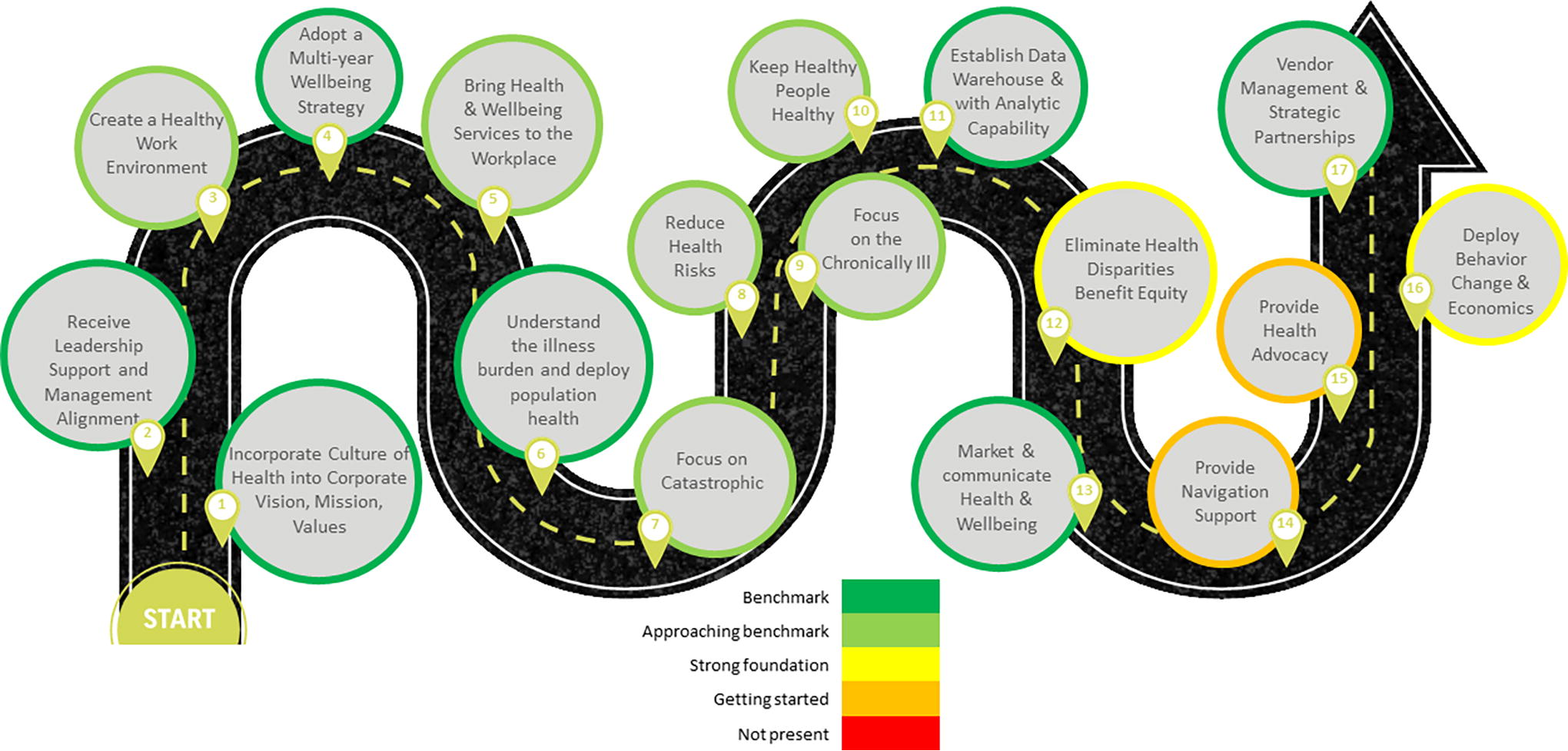
DTE 2022 Culture of Health, Safety, and Well-being Roadmap.
Using the initial results from the EHOA, gaps were identified from benchmark enterprise health and well-being cultures and organized into an easy-to-follow, step-by-step roadmap that sequences and prioritizes these identified opportunities for improvement. In addition, the process provides a methodology for regular monitoring to assess progress. Detailed descriptions of the EHOA can be found in previously published work. 6
The initial DTE EHOA in 2018 identified 11 areas of focus to bridge the gaps and achieve benchmark over a multiyear strategic plan. These were as follows: Bring a best-practice culture of health and well-being into DTE’s culture. Develop and engage an executive committee and champion. Enhance the environment with a focus on improved nutrition. Improve population health, including behavioral health. Market vitality Data integration and analytics Consumer training and advocacy Evidence-based benefit design Expand on-site services Strategic partnerships and integration Direct provider relationship
Using these focus areas, a comprehensive project plan was developed that included the tasks, milestones, and goals, with a transparent methodology for planning, deploying, improving, and managing over time. This roadmap of tactics was refreshed and updated each year, building on successes and ensuring that the correct sequence was followed. Many goals require a few years to implement the detailed blocks of work fully. The project roadmap allowed visibility for planning, governing, deploying, improving, and managing initiatives over time and across locations. The 2022 roadmap is shown in Figure 1.
A three-step process was used to complete the enterprise-level independent assessment annually. This process began with a benefit health program design and data review, which gathered and evaluated more than 1,000 documents. This document review included summary accounts from all health and well-being-related vendors, aggregate claims, biometric screening, health risk assessment reports, corporate policies, marketing and communication materials, etc. Next, workplace observations were completed. Given the large number of DTE work locations, three major locations were selected annually. The workplace observations utilized a checklist of efforts to augment the commitment to building a best practice Culture of Health & Well-Being (COHWB), including posters, brochures, TV monitors, tabletop tents, fitness centers, walking trails, automated external defibrillators (AEDs), first aid kits, workplace health centers, occupational health nursing stations, stairwell enhancements, and “healthy eating” cafeterias. Finally, employees at all levels within DTE were interviewed each year. These interviews focused on the employees’ awareness and satisfaction with the health and well-being-related programs and benefits and captured suggestions on potential additions or modifications.
Support for DTE’s goals was multilayered and broad-based. In 2018, DTE leadership committed to transforming the enterprise into a best-in-class COHWB. The execution commenced in 2019 with a significantly increased investment and the implementation of a sequenced 5-year strategic plan. This included the formation of the executive leadership governance committee, with the chief financial officer serving as the executive sponsor. These changes were intended to establish the governance structure and reinforce cross-functional internal partnerships.
Internal champions were an integral part of DTE’s programs. This included several components led by the Well-being Executive Leadership Committee (WELCOM), which comprised 25 leaders representing all business units and was responsible for specific projects designed to mitigate the gaps from best-in-class and cascade the COHWB commitment. Many cross-functional partners supported this goal, including benefits, corporate safety, corporate communications, diversity, equity, and inclusion (DEI) talent acquisition, IT, public affairs, and more. The Energize Your Life (EYL) team, DTE’s corporate well-being program, comprised multidisciplined health and well-being professionals, including athletic trainers, health educators, exercise physiologists, registered dietitians, communication strategists, public health professionals, as well as health informatics and corporate medical management experts. The EYL team engaged with employees to promote and reinforce total well-being by creating awareness, facilitating access, providing 1:1 support, delivering extensive health education, and connecting employees to the appropriate resources available via the robust ecosystem of program and support offerings. The EYL Champion Network supported this team’s work.
Locally, employees were supported by the 200-person Well-being Champion network and 19 local Well-being Committees as part of the WELCOM governance. Champions attended monthly well-being updates and an annual summit, as well as engaged, participated in, promoted, and gave feedback on EYL programs. The Local Well-being Committees met monthly and were responsible for driving local COHWB, cascading the commitment to well-being at a local level, escalating concerns to the WELCOM, and addressing site-specific cultural needs.
An annual calendar of educational programming was developed to provide information to employees in all four quadrants of total well-being: physical health, emotional wellness, social connectivity, and financial fitness. Educational programming ranged from cooking demonstrations to field warm-ups, monthly budgeting sessions, and “Walking Wednesdays.”
Results
As shown in Figure 2, over the 5 years measured, DTE improved its EHOA score from 386 to 675, a 75% improvement. These improvements were the result of moving toward benchmark intensity status over time with remarkable advancements in many areas, including vendor management and strategic partnerships (310% increase from 2018 to 2022), leadership support and management alignment (109% increase), and engagement and navigation (97% increase). Every best practice pillar saw year-over-year improvement, with all achieving higher than average or benchmark intensity by 2021.
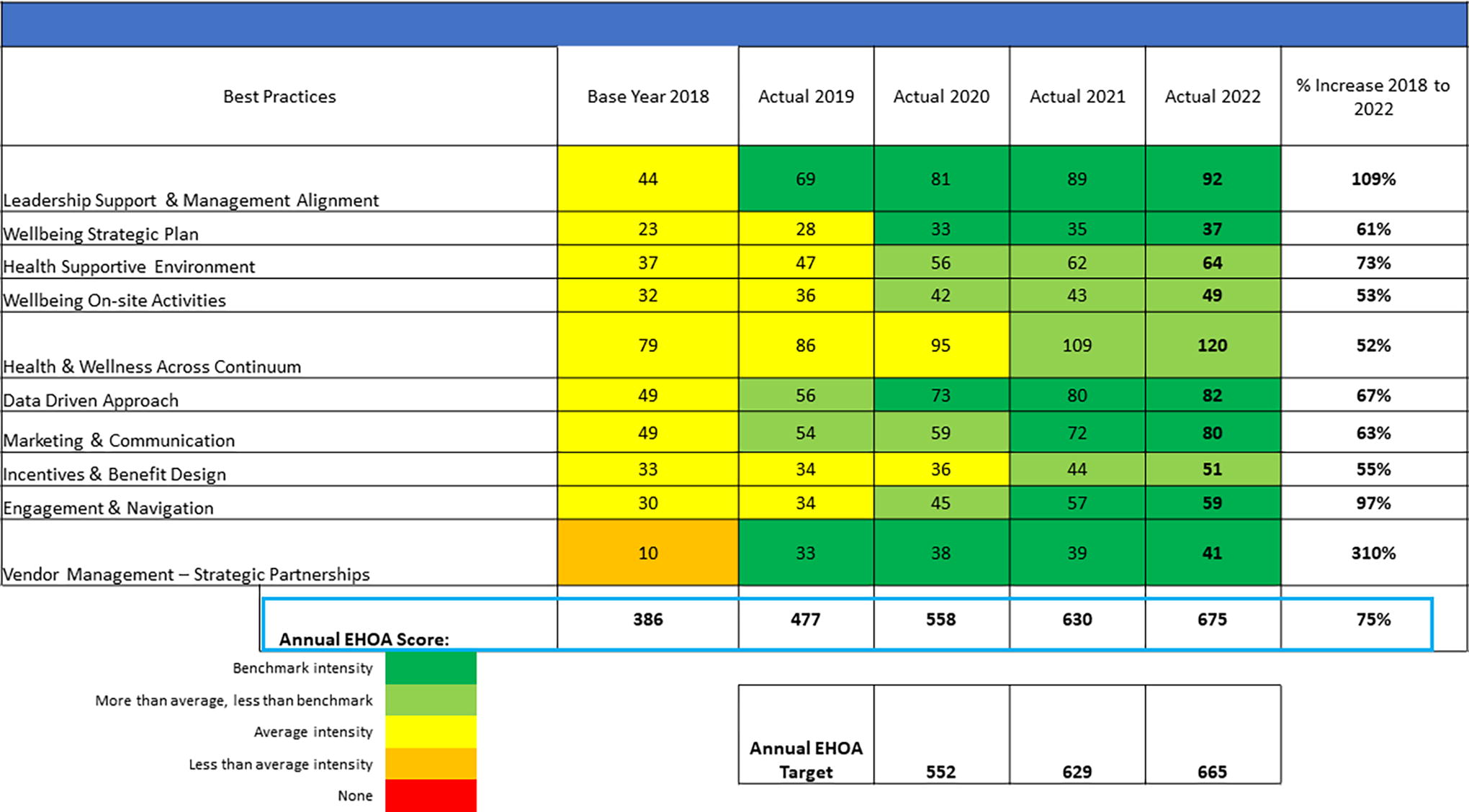
DTE’s EHOA Corporate Health Assessment Scores Against Goals at the Pillar Level (2018–2022).
Similarly, as shown in Figure 3, Site Scan Culture Checks had improvements in each of the 5 years measured and exceeded targets in 4 of the 5 years. In the year the target was not achieved (2022), results still exceeded best-in-class scores.
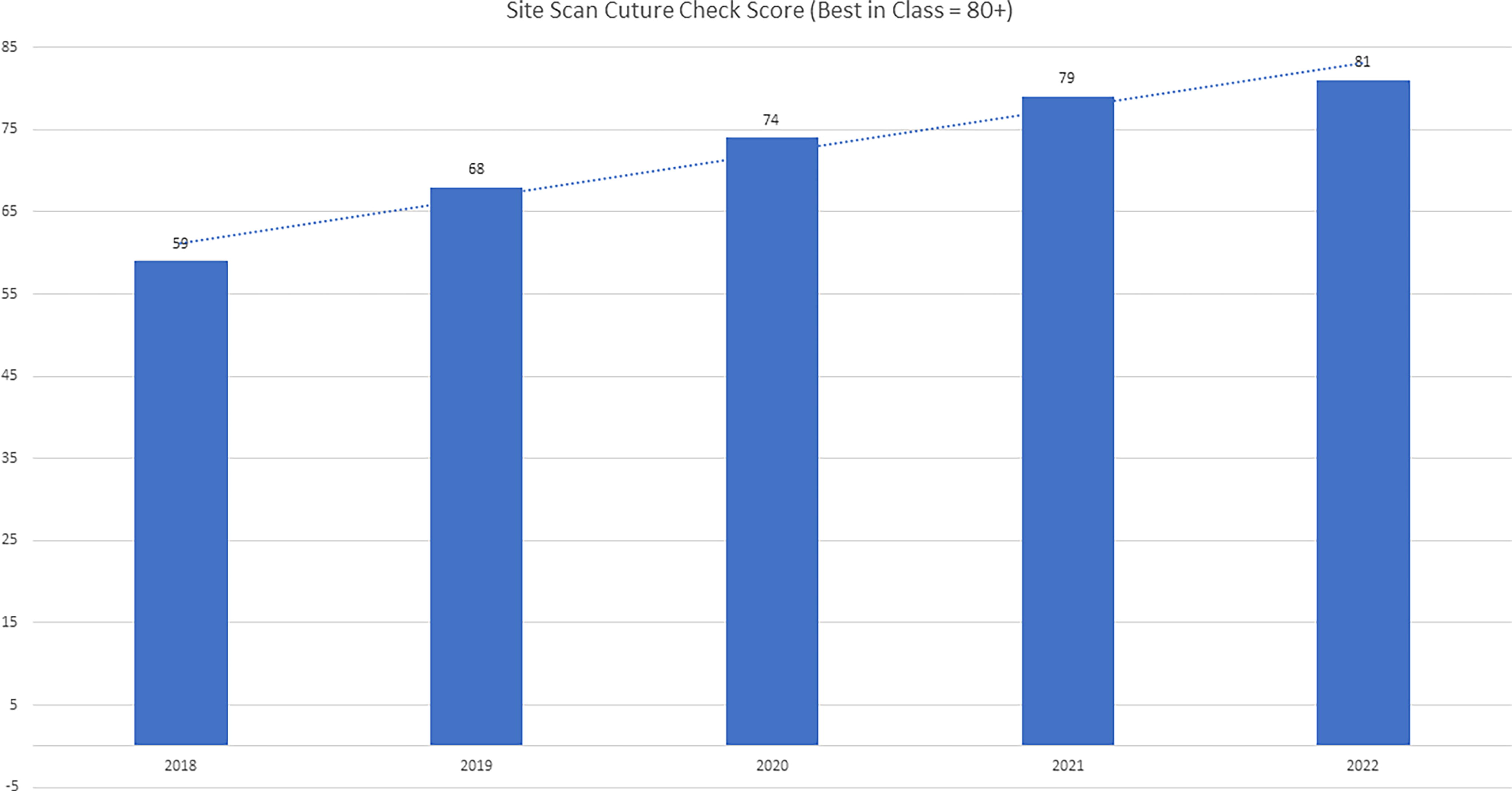
DTE’s Site Scan Culture Check Scores (2018–2022).
Using both top-down and bottom-up assessments ensures that the changes in the culture of health and well-being are fundamental and likely to be sustainable.
At even more granular levels, additional evidence of culture of health and well-being effectiveness can be seen in many ways such as engagement in health and well-being programming and employees having a “medical home” trusted relationship with a primary care provider. Both overall health and well-being and the EYL program received high satisfaction scores and engagement. Over time, an increasing percentage of eligible employees and medically enrolled spouses completed healthy living programming, with more than 89.2% doing so in 2023, the last year for which complete data are available. The percentage of DTE enrolled members with an established medical home was well above national averages, 10 with 80.7% having a regular place to seek care in 2023. DTE members also saw improvements in adherence to preventive care services and chronic care guidelines, although they did not achieve benchmark targets in these areas during the 5-year measurement period. During the 5-year measurement period, the aggregate health risk of DTE’s employees remained stable. This stable aggregate health risk is favorable given that populations typically get sicker if nothing is done. 11 Specific improvements were made in blood pressure, blood sugar, preventive care, and social support.
Injury prevention is an integral part of the commitment to becoming a best-in-class culture of health, safety, and well-being organization. Injury prevention efforts included safety committees, medical services, training, ergonomics, and body preparation and conditioning. The results of this commitment were evident. As shown in Figure 4, musculoskeletal injury rates were down 36% in 2022 compared with the 5-year average. There was also a marked reduction in Workers’ Compensation claims from 2018 to 2022, with a mean percentage of new workers’ compensation claims decreasing from 2.7% to 1.2%, which was statistically significant at the <0.001 level. 12
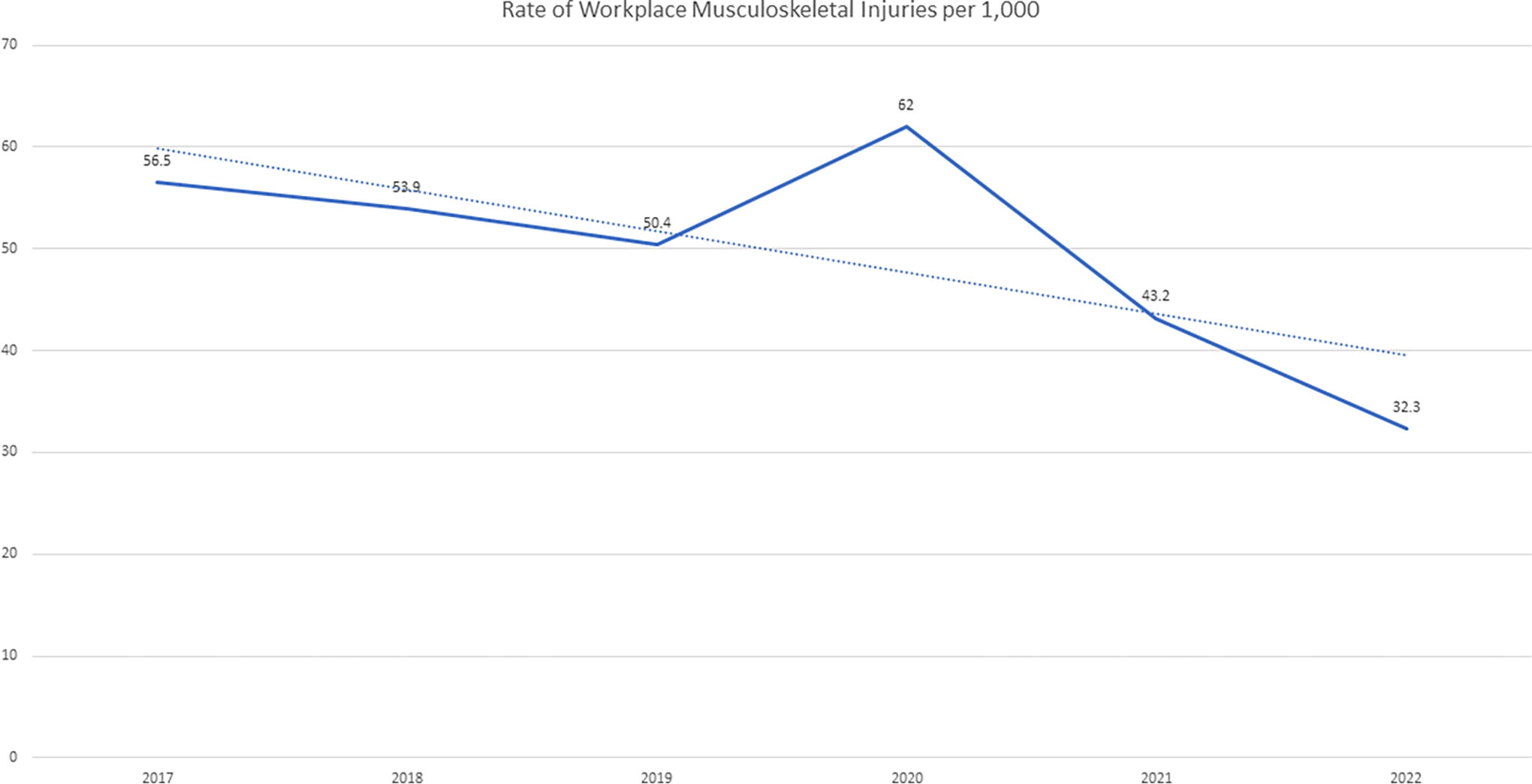
Rate of musculoskeletal injuries per 1,000 employees (2017–2022).
In 2022, DTE’s workforce continued to believe that “DTE cares about my well-being,” ranking in the 83rd percentile, increasing from the 73rd percentile in 2021, while other companies were declining. 13 Research demonstrates that this degree of appreciation correlates with retention, attraction, and engagement. 14
DTE’s effort to improve health and wellness also led to numerous awards and special recognition. Since 2018, DTE has won 25 prominent awards, including the 2023 Best Employers Excellence in Health & Well-being Award from Business Group on Health, Best and Brightest in Wellness, the US Surgeon General, and most recently, they earned the most prestigious recognition by winning The Health Project’s 2023 C. Everett Koop National Health Award. 12
Discussion
Wellness and health were familiar concepts to DTE and their employees. DTE has been focused on wellness since at least 1938 when they began offering employees access to a health club and small clinic. The offerings and focus of DTE health and well-being programs evolved over the years to include environmental health and safety, disease management, on-site wellness staff and health care clinic network, health screenings, a company wellness portal, financial literacy, subsidies for weight loss, and fitness equipment, among many others. 9 The current case study demonstrates that progress toward building a culture of health and wellness is ongoing, and through their focused determination to make incremental progress, the DTE demonstrated that building a benchmark culture of health and well-being, even during challenging times (including the COVID-19 pandemic), is possible.
Creating a best-in-class culture of health and well-being at DTE was driven by a commitment to doing the right thing for the DTE family, its customers, and the community it serves. While many employer surveys show that employers are interested primarily in controlling health care costs, DTE, while of course interested in managing costs, was primarily committed to expressing their care for their most important asset, its people. This was demonstrated by not only the long-term commitment and resources put in place by DTE but also through regular, multifaceted communication efforts to share information with employees and their families, such as mailing a quarterly dedicated health and well-being magazine. DTE also shared results publicly, producing a health and well-being annual report since 2019. 9,15
This research’s limitations are primarily due to the lack of publicly reportable data on health care costs and utilization and the specific disease burden for the population. A third-party organization analyzed these data, but the authors do not have access to it. Although the purpose of this case study was to demonstrate how developing a multiyear culture of health and well-being can unfold for large employers, future research should consider including health costs and utilization data in its work.
Conclusion
Building a culture of health and well-being often requires a few years to implement fully and involves a commitment to plan, deploy, improve, and manage over time. However, significant gains and benefits can be achieved along the way throughout the enterprise. Ultimately, by following the approach benchmark employers have taken, the endeavor can be accomplished efficiently, making it well worth the investment.
The relationship between health and work is bidirectional. 16 Work affects health, and health affects work. Healthy workers are more productive, have fewer disability days, are absent less, and use fewer health care resources. Consequently, a healthy workforce spends less of its dollars on health care, spends more high-quality time with family, and enjoys greater vitality. Since employees spend most of their waking hours working, and the vast majority trust their employer, the enterprise is an ideal focal point to advance a more health-supportive cultural transformation. The research has clearly delineated the roadmap to drive healthy lifestyles, reduce the progression of illness, and improve an organization’s culture of health and well-being. These efforts can have a tremendous impact. The DTE workforce and their families, similar to many organizations, continue to have a significant burden of illness. However, evidence shows that the risk and illness burden is gradually improving and that the corporation is benefiting from these improvements as well. Their journey is not over, but it is well underway.
Footnotes
Authors’ Contributions
K.P.: funding acquisition (equal); investigation (supporting); project administration (equal); supervision (equal); validation (equal); writing—original draft (supporting); writing—review and editing (equal). R.F.: Conceptualization (lead); funding acquisition (equal); investigation (supporting); Methodology (equal); resources (equal); software (equal); validation (equal); writing—original draft (supporting); writing—review and editing (equal) D.K.: Data curation (lead); Formal analysis (supporting); investigation (lead); Methodology (equal); project administration (equal); resources (equal); software (equal); supervision (equal); validation (equal); visualization (lead); writing—original draft (supporting); writing-review and editing (equal) D.T.: Formal analysis (lead); Methodology (equal); resources (equal); software (equal); writing—original draft (supporting); writing—review and editing (equal) S.P.: formal analysis (supporting); Writing-original draft (lead); Writing—review and editing (equal).
Author Disclosure Statement
K.P. is employed by DTE Energy. However, her compensation was not dependent on the results obtained in this research. R.F., D.K., and D.T. are employed by HealthNext, which provides corporate health and well-being services. However, their compensation was not dependent on the results obtained by this research. S.P. served as an independent researcher on this project and has no conflicts of interest to report.
Funding Information
No funding was received for this article.