






Abstract
As a health care collaborative among Trenton's hospitals, its only Federally Qualified Health Center, its Division of Health, and more than 40 community organizations serving on the Community Advisory Board, Trenton Health Team has leveraged unprecedented data sharing and direct engagement with community residents to identify the health needs and priorities for its geography. This process has resulted in a unified Community Health Needs Assessment and Community Health Improvement Plan for the city of Trenton, allowing collaborative allocation of resources to manage and improve population health in the city. (Population Health Management 2013;16:S-34–S-37)
“
A collaborative of the city's 2 hospitals, its only Federally Qualified Health Center (FQHC), and its Division of Health, the THT was formed when it became clear that no single individual or organization could resolve the challenges that face Trenton. Shifting from competition to collaboration among all of the city's health care providers was the only way to develop a more complete understanding of the service delivery and health outcomes within Trenton. THT's leadership also recognized the need to break down the silos separating public health from the rest of health care and to integrate these disciplines in a new way to benefit the community.
To begin addressing the city's health issues, THT utilized the Internal Revenue Service's (IRS) Community Health Needs Assessment (CHNA) and Community Health Improvement Plan (CHIP) obligation as an opportunity to complete a community health needs assessment for the city's geography in an innovative way. First, a unified community health assessment was performed in place of separate assessments as done in the past. Second, the approach was shifted from one that viewed this as a “requirement” to one that engaged the community and permitted the voice of the community to illuminate the successes as well as the barriers and challenges Trenton residents face in maintaining their health.
THT has established 5 strategic initiatives to prepare city health care settings to address community needs from a population health perspective. The health needs assessment and planning process described in this article were driven by these 5 initiatives: 1. Expansion of access to primary care by drastically reducing wait times at the city's health centers and providing new patient-centered, personalized approaches to care; 2. Coordination of community-wide clinical care for the population of patients in Trenton seeking primary care in the ED; 3. Sharing information among health care providers across settings to improve care coordination, avoid duplication of services, and reduce medical errors; 4. Laying the groundwork to become a Medicaid Accountable Care Organization, further enabling THT to address the needs of Trenton's Medicaid population; 5. Engagement of residents in an effort to characterize and overcome barriers to quality health care in the city. Engaging the populations THT serves is a key factor in driving population health in the city.
THT's initiatives focus on transforming the health of the population within the 6zip codes that make up the city of Trenton (08608, 08609, 08611, 08618, 08629, and 08638). These zip codes are also the communities demonstrating the highest level of need in Mercer County, New Jersey, based on Claritas 2011 Community Needs Scores (CNS) (Table 1). CNS scores for these zip codes range from 4.2 to 5.0, with 5.0 representing the highest need on the scale. A population of 114,495 persons lives within these zip codes.
 =Trenton/CHNA zip code.
Ranking: 1=lowest need; 5=highest need.
St. Francis Medical Center and THT received funding from the Robert Wood Johnson Foundation's New Jersey Health Initiatives to support the community health needs assessment, along with 6 other communities across the state. The CHNA methodology involved 3 major components. The first was to form a Community Advisory Board (CAB). This organization was chartered in late 2011 and reports directly to the THT Board of Directors. The CAB consists of 40 unique community organizations, which include municipal, county, and state government, behavioral health providers, social service agencies, academia, homeless service providers, and the faith community. Members of the CAB that possessed community data shared their data with THT. In turn, THT committed to sharing its compiled data with the CAB. Second, THT performed a 3-year retrospective data analysis utilizing data from all of the hospitals and outpatient clinics. These data have been analyzed in a very robust manner and key health care trends have been geomapped to the zip code level.
The third component involved THT contracting People Improving Communities Through Organizing to help obtain the voice of the community through 1-on-1 interviews and community forums across the geography. Many of the 1-on-1 interviews were videotaped, creating a permanent first person narrative record of the health challenges facing the community. Twenty-five community forums were led by members of the THT executive team, which enabled them to hear the unfiltered voices of the residents. This element is very unique to THT's methodology and demonstrated how quantitative and qualitative data can be mutually re-enforcing and useful in refining understanding of barriers to good health in the community. THT also developed a deeper appreciation of the rich diversity in the community. This knowledge will be valuable in developing the community health improvement plan because no single intervention will meet diverse needs.
As the community forums commenced, and residents began to share their health care narratives, it became apparent that the barriers they faced went beyond the purview of traditional health care. Many of these barriers were environmental and social (eg, infestations, lead paint, homelessness, crime). Based on this information, THT modified its approach by grouping the findings under the headings of medical, environmental, and social to identify areas of overlap among the three. Depicted as a Venn diagram (Fig. 1), the intersection of all three arenas was used to help the community prioritize health needs. Similarly, THT is utilizing the intersection of medical, environmental, and social issues as a framework to hear directly from the community about which interventions have had a positive impact on health. The community forums are laying the foundation for THT's CHIP.
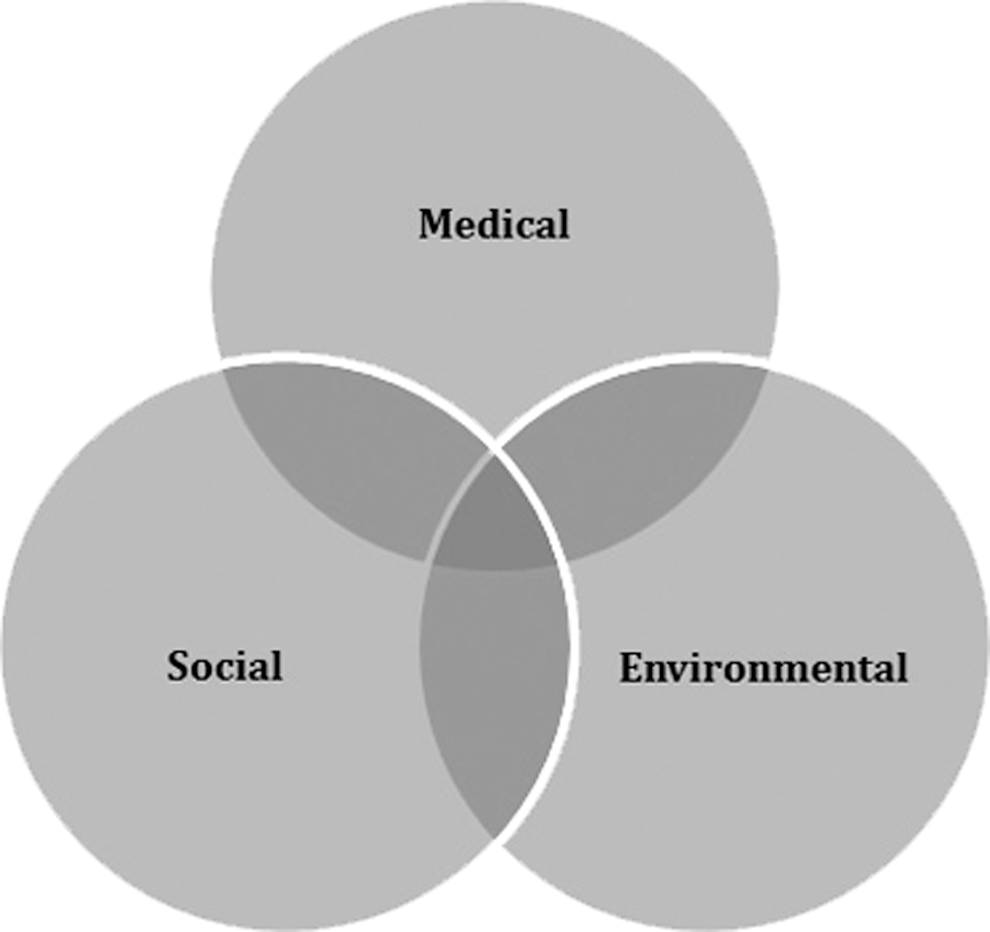
Community health forums.
In Trenton, 6 priorities have emerged in the CHNA as factors found in the center of the Venn diagram. Poverty, the overarching priority, influences the others, which include crime, chronic disease, substance abuse/mental health, obesity, health literacy, and health disparities.
Trenton's CHIP will be governed by a CHIP steering team. The improvement plan will be supported by a project manager and each priority area will have a community leader to drive that particular initiative and engage other community resources as needed. This organizational structure will engage community leaders in helping THT to address the socioeconomic determinants of health in ways that will have the greatest impact (Fig. 2). The individual priority leaders will report to the project manager who will report to the THT Board of Directors.
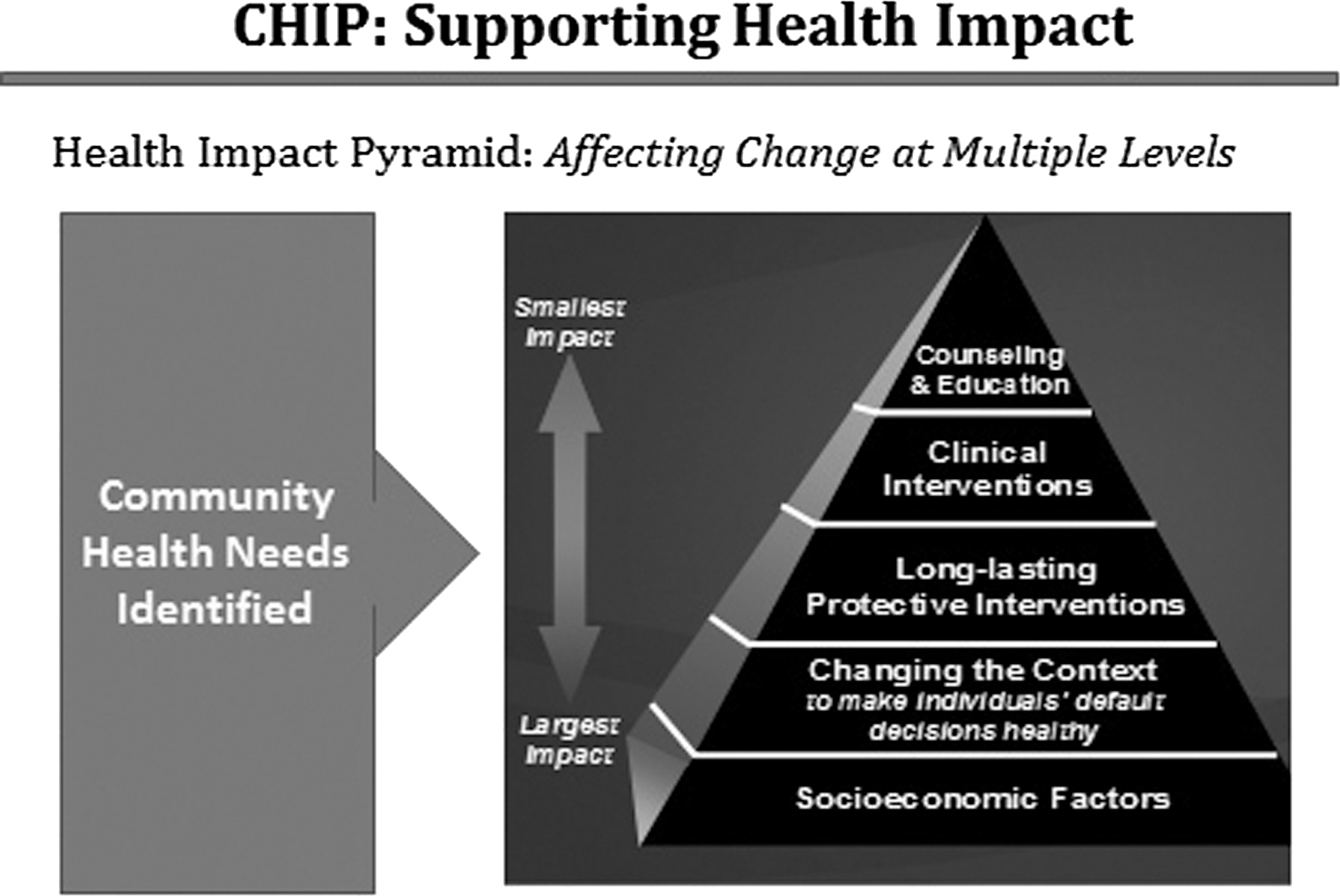
CHIP: Supporting health impact.
THT's process has aligned the participating organizations around the community's health needs. Historically, CHNA and CHIP efforts have been conducted separately by organizations serving the same community. Hospitals, FQHCs, and other nonprofit community organizations share an obligation to the federal government to describe what they have done to conduct a CHNA and CHIP. The IRS requirements include a description of the process used to develop the CHNA, the partners involved, how community residents participated in the development of the priorities, and how resources will be allocated to address the priorities identified. THT's partners have reported on the CHNA to their individual boards of directors and woven the needs into their strategic plans and 990 reporting process (Fig. 3). THT's process meets the IRS requirements and forms a common backbone 990 for all CAB member organizations. This type of community alignment and transparency is unique and will fuel THT's goals, while driving community resource allocation in a more focused manner to guide and improve population health.
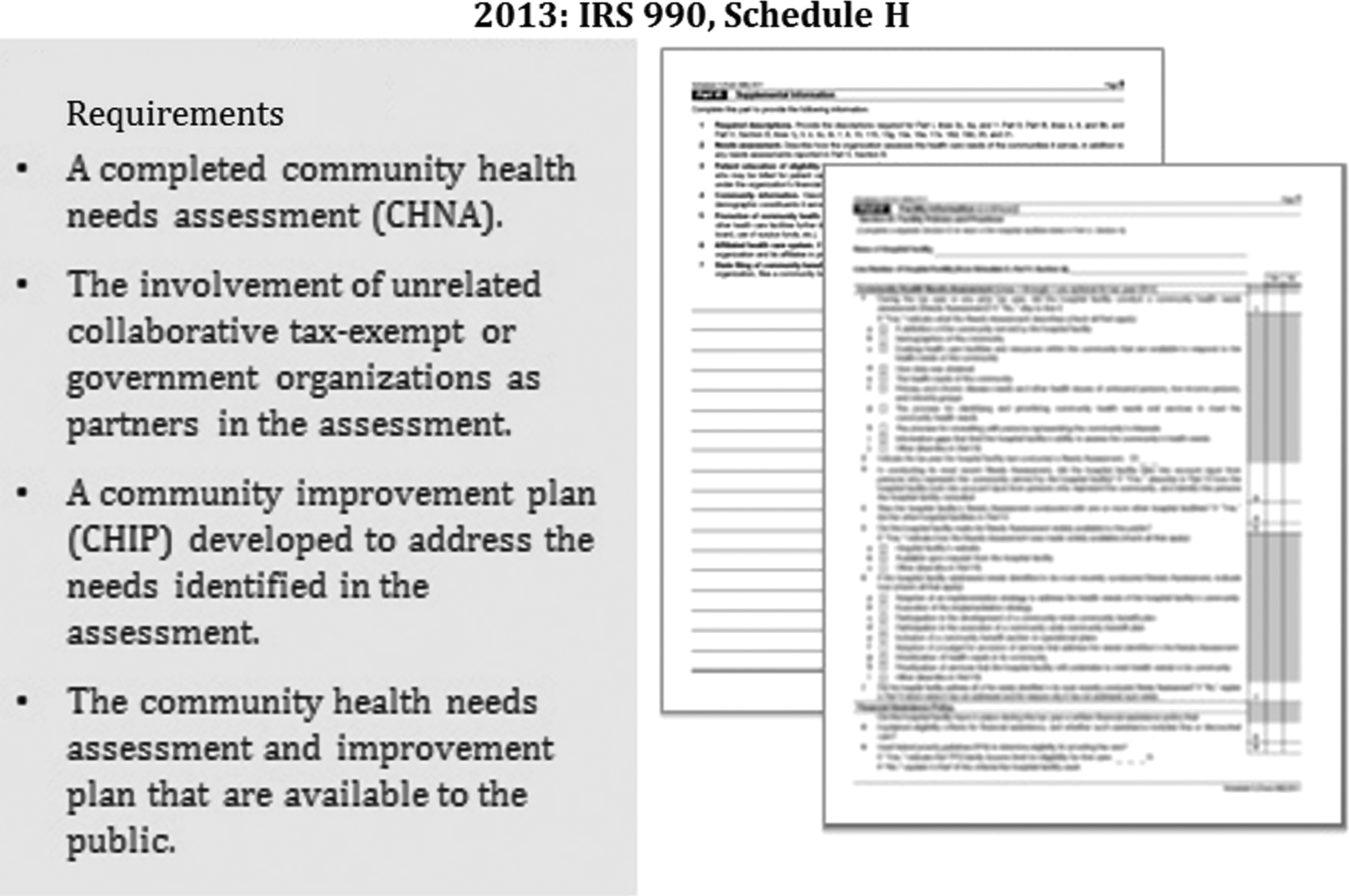
2013 IRS 990.
While conducting the CHNA and developing the CHIP, THT realized that it had to manage and utilize the data collected with a different perspective (ie, a shift from viewing information as an internal organizational record to viewing it from a population health-centered perspective wherein data are shared). By collaborating with and learning from other New Jersey Health Initiative grantees across the state, THT became aware of a powerful tool to help manage and share data that will enable the needed community-wide change.
Healthy Communities, Inc. (HCI) is working with THT to create a dashboard to report on publically available health data for the community down to the county and zip code level. The Web-based tool will allow THT to upload community data as well. The data can be displayed as a robust dashboard that will enable THT to track the community's progress against predetermined health goals. Additionally, the system will geomap trends within the community's geography. The dashboard will include the Department of Health and Human Services Healthy People 2020 initiatives and health disparities module. HCI will enable THT to share CHIP activities and minutes online and provide THT with best practice examples from across the country.
THT will communicate the CHNA and CHIP to the community in a variety of public meetings and forums. Each hospital, the FQHC, and the city health department is obligated to hold an annual public meeting during which board members are available to answer residents' questions. This process will culminate in a single, unprecedented citywide public meeting focused on health. THT organizations and their respective boards of directors will stand together to talk about the CHNA, the CHIP, and the new HCI dashboard.
Conclusion
As a health care collaborative among Trenton's hospitals, its only FQHC, its Division of Health, and more than 40 community organizations serving on the CAB, THT has leveraged unprecedented data sharing and direct engagement with community residents to identify the health needs and priorities for Trenton's geography. This process has resulted in a unified CHNA and CHIP for the city of Trenton, allowing collaborative allocation of resources to manage and improve population health in the city.
Footnotes
Author Disclosure Statement
Dr. Perry and Ms. Stephenson declared no conflicts of interest with respect to the research, authorship, and/or publication of this article. The authors received no financial support for the research, authorship, and/or publication of this article.