






Abstract
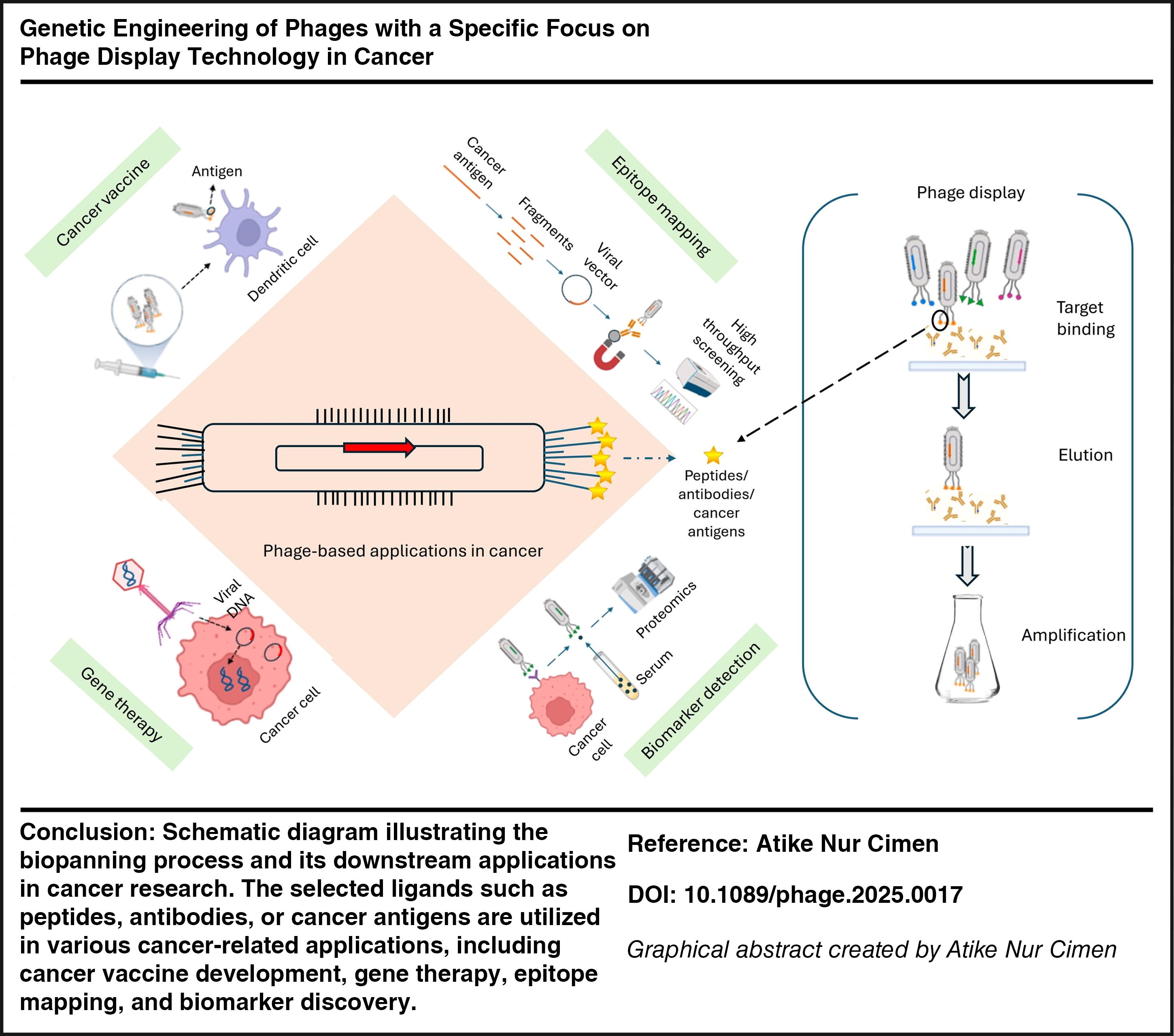
Genetic modification of phages has made significant contributions to cancer diagnostics and therapy in modern research. The development of these molecular tools has enabled a broad spectrum of applications, ranging from vaccine development to biomarker discovery, with significant implications in both medical and biotechnological fields. Among the various phage-based methods, phage display stands out as the most widely used. This technique presents novel concepts with vast potential. In this review, we provide an update on the engineering of M13 bacteriophage and its use in phage display technology in the context of cancer diagnosis and treatment. Additionally, we discuss phage-focused applications that involve the genetic modifications of phages themselves, which contribute to the improvement of cancer biotechnology. The effectiveness of phage display technology in identifying high-affinity ligands for substrates, such as cancer cells and tumor-associated molecules, further enhances its value in biomedical applications.
Get full access to this article
View all access options for this article.