






Abstract
This article is part of a larger body of work entitled, “The Impact of Sex and Gender on Adaptation to Space.” It was developed in response to a recommendation from the 2011 National Academy of Sciences Decadal Survey, “Recapturing a Future for Space Exploration: Life and Physical Sciences for a New Era,” which emphasized the need to fully understand sex and gender differences. In this article, our workgroup—consisting of expert scientists and clinicians from academia and the private sector—investigated and summarized the current body of published and unpublished human research performed to date related to sex- and gender-based differences in behavioral adaptations to human spaceflight. This review identifies sex-related differences in: (1) sleep, circadian rhythms, and neurobehavioral measures; (2) personality, group interactions, and work performance and satisfaction; and (3) stress and clinical disorders. Differences in these areas substantially impact the risks and optimal medical care required by space-faring women. To ensure the health and safety of male and female astronauts during long-duration space missions, it is imperative to understand the influences that sex and gender have on behavioral health changes occurring during spaceflight.
Sex Differences in Demographic and Mission Factors for International Space Station Astronauts and Cosmonauts from 1998 to 2013
F
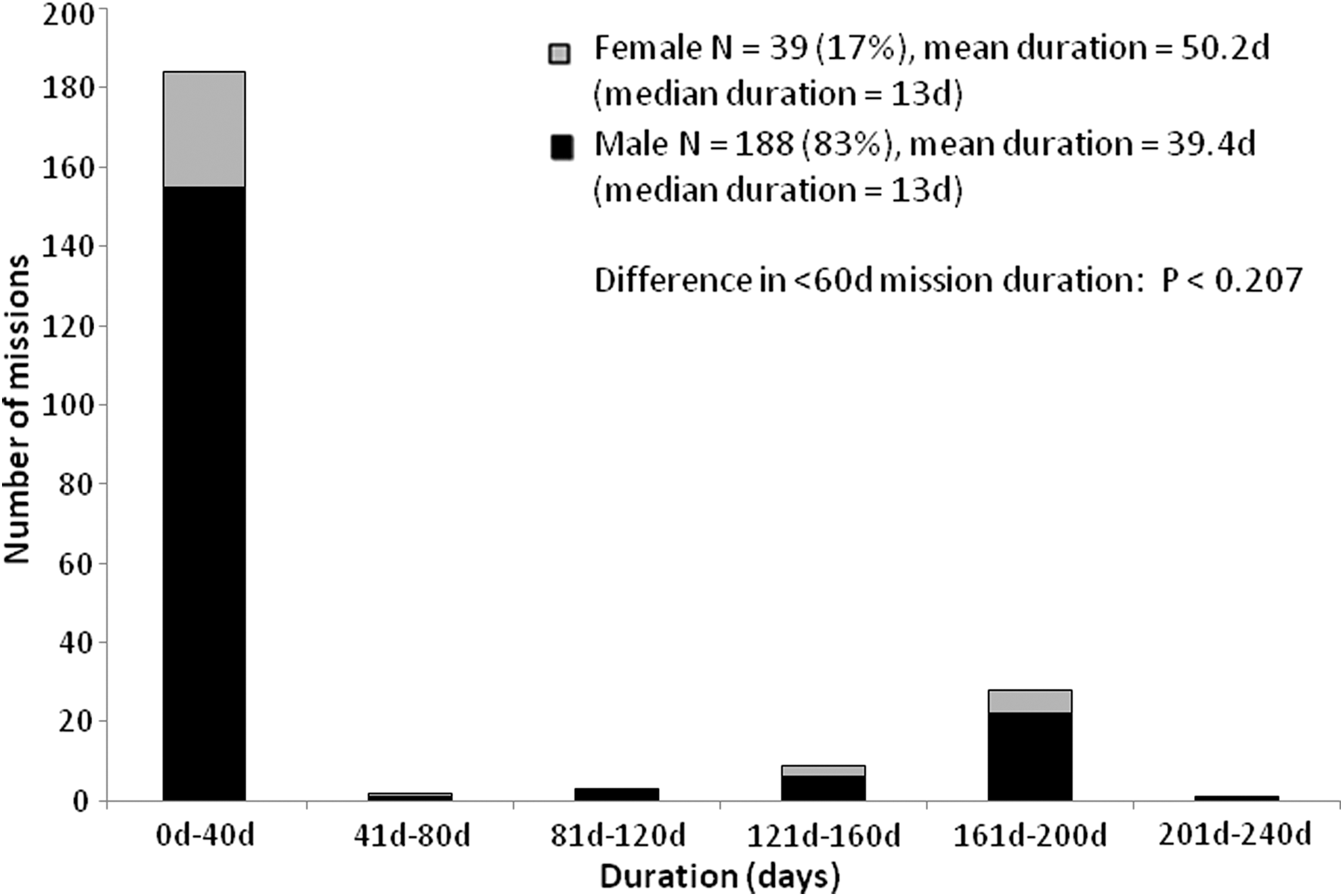
Space mission duration distribution for U.S. astronauts (1998–2013).
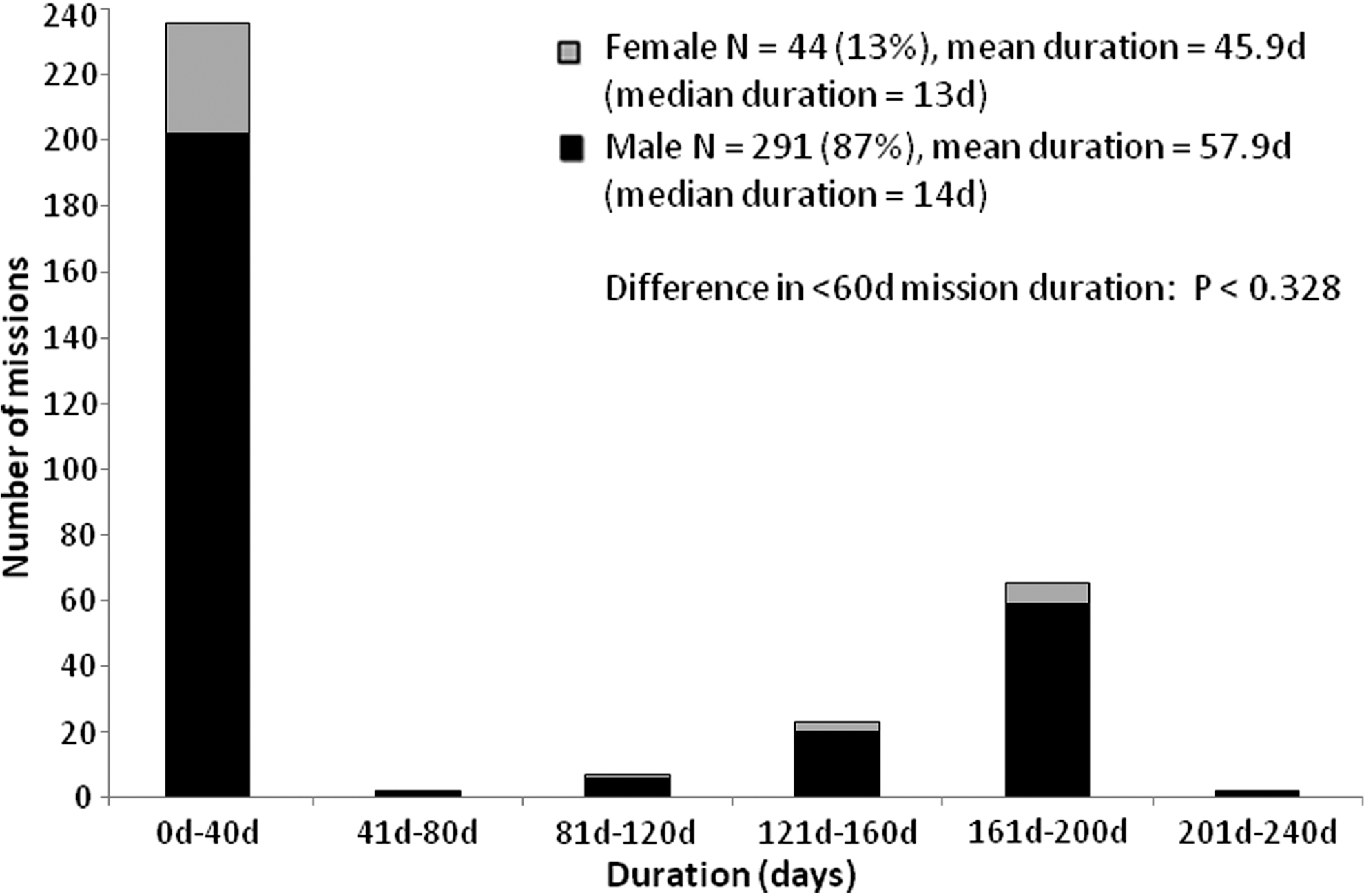
Space mission duration distribution for astronauts and cosmonauts (all nationalities) (1998–2013).
The data in this table were extracted from the following publically accessible websites:
Mean age across multiple missions in years (base ten).
Value for one astronaut and one trip, not a mean.
Includes multiple missions per astronaut.
F, female; ISS, International Space Station; M, male; N/A, not applicable.
Independent t‐test p<0.05 for females vs. males.
There were notable differences in the military and educational backgrounds of male and female U.S. astronauts who went to the ISS. For example, a significantly greater percentage of male astronauts (72.8%) had a military service background compared with female astronauts (38.5%) (see Table 4).
Chi square p<0.001 for females vs. males.
There was an educational advanced degree difference between female and male U.S. astronauts (see Table 5). Female and male astronauts had comparable percentages of bachelor's degrees. However, female astronauts had nearly twice the percentage of doctoral degrees as male astronauts (i.e., 50% vs. 28%) while men had significantly more master's degrees than women (85% vs. 58%, respectively). In terms of educational fields of specialization, women had proportionally more bachelor's degrees in biology, while men had proportionally more bachelor's and master's degrees in engineering (though women had proportionally more doctoral degrees in engineering; see Table 6).
Chi square p<0.05 for females vs. males.
Chi square p<0.01 for females vs. males.
Includes: Analytical chemistry, aerospace medicine, biochemistry, bioengineering, biomechanics, chemistry, chemical engineering, earth and planetary sciences, geology, geophysics, physical science, medical science, MPH, solid earth sciences, space science, zoology.
Includes: Aeronautics astronautics, aeronautical engineering, aerospace engineering, aeronautical and astronautical engineering, aviation systems, civil engineering, computer engineering, electrical engineering, engineering management, engineering mechanics, engineering physics, flight structures, flight test engineer, industrial engineering, marine engineering and nautical science, material science and engineering, mechanical engineering, mechanics, ocean engineering, polymer science and engineering, space operations, space systems, space systems management, systems engineering.
Includes: Applied physics, astronomy, computer science, laboratory astrophysics, physics, solid state physics, space physics.
Includes: Accounting, economics, international relations, law, management, MBA, MPA, national security and strategic studies, operations research, politics, strategic studies.
Includes: Teaching certificates.
Chi square p<0.05 for females vs. males.
Chi square p<0.001 for females vs. males.
Other key demographic features also showed differences between male and female astronauts. Across all nationalities, female astronauts were significantly younger than male astronauts both at time of the first transit to the ISS (42.5 years vs. 44.5 years, respectively; see Fig. 3) and for all transits to the ISS (43.2 years vs. 45.9 years, respectively; see Fig. 4). While there were no differences in the percentage of male (76%) and female astronauts (69%) who were married, a significantly greater percentage of male astronauts had at least one child (67% vs. 38%), and overall, males had significantly more children than females (on average, one more child; see Table 7).
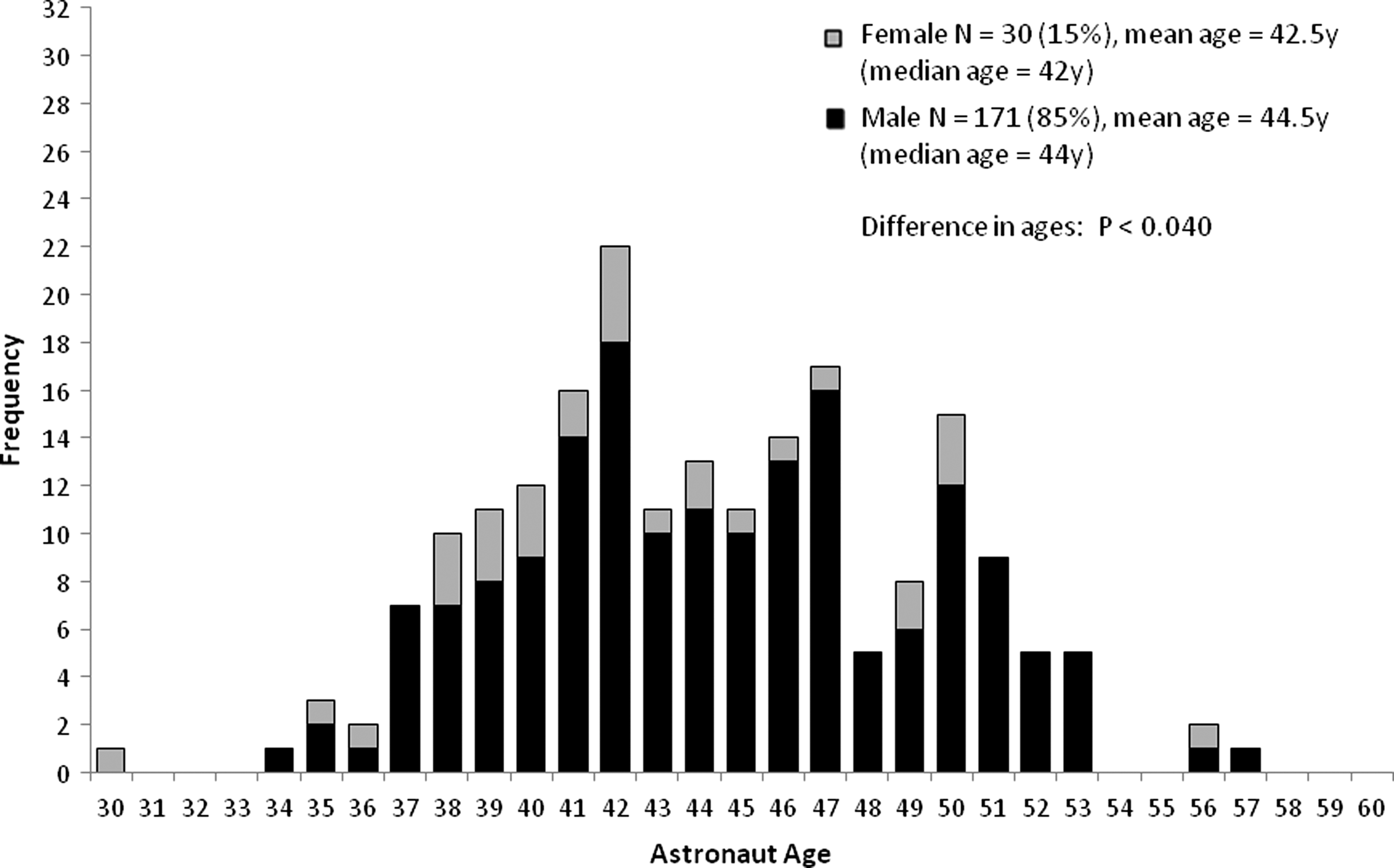
Age distribution for astronauts and cosmonauts (all nationalities) for first transit to the International Space Station (ISS) (1998–2013).
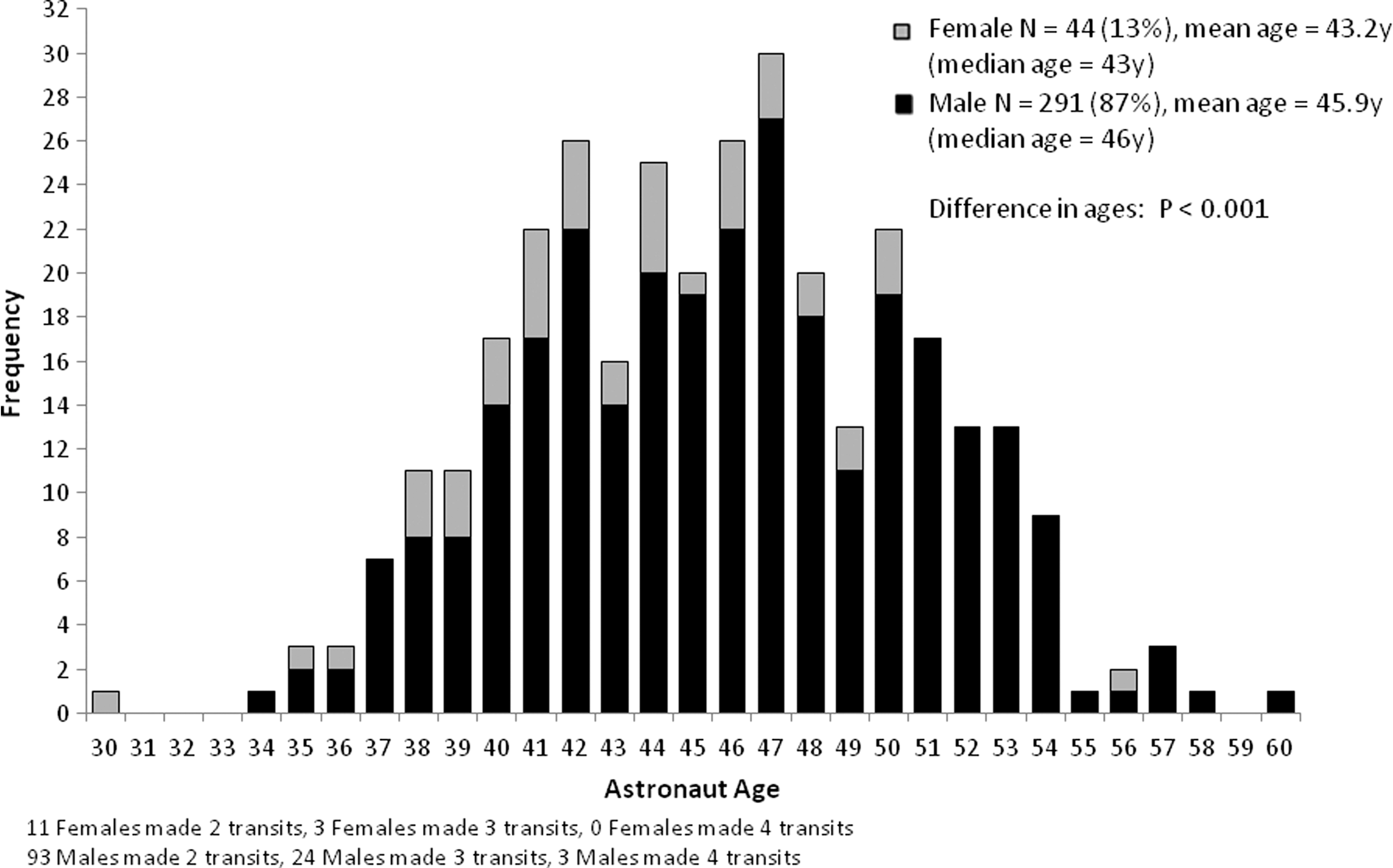
Age distribution for astronauts and cosmonauts (all nationalities) for all transits to the ISS (1998–2013).
Chi square p<0.01 for females vs. males.
Independent t‐test p<0.01 for females vs. males.
Divorce and separation data could not be obtained.
Gender and Sleep, Circadian Rhythms, and Neurobehavioral Measures
In a subset of the aforementioned astronauts on the ISS (14 men, 4 women), data on Psychomotor Vigilance Test (PVT) performance, self-reported sleep duration and sleep quality ratings, as well as self-ratings of workload, tiredness, and stress collected in-flight and postflight from astronauts on the ISS were analyzed (D.F. Dinges, personal communication). There were no sex-based differences in the means or standard deviations of a global percentage score of performance on the PVT either in-flight (1,376 total tests) or postflight (231 total tests). Similarly, there were no differences between men and women in the means or standards deviation of self-ratings of workload, tiredness, and stress, or self-ratings of sleep quality, in-flight or postflight.
Medication use to promote sleep and wake in astronauts
The manner in which sleep duration and sleep quality reported on the ISS and other analog environments relate to medication use in space is unclear. While in spaceflight, an unknown number of astronauts use sleep medications (e.g., zolpidem, zaleplon, eszopiclone, ramelteon, temazepam, trazodone) and/or wake-promoting medications (e.g., modafinil, armodafinil, dextroamphetamine). It was not possible to determine whether there are sex-based differences in spaceflight in the utilization of sleep-promoting and wake-promoting medications relative to frequency and dosage taken. Such information would be important to obtain and analyze, particularly given the 2013 decision by the U.S. Food and Drug Administration (FDA) to mandate lower prescribed doses of zolpidem for women, based on more reported adverse incidents and slower metabolism in females. 2 Given the FDA's decision, more research is needed to determine possible sex-based differences in pharmacokinetics, pharmacodynamics, side effects, and efficacy for sleep-promoting and wake-promoting medications in spaceflight, and how these differences translate to medication use in space.
Sleep and circadian rhythms in the laboratory environment
Ground-based research on sleep and circadian rhythms in the laboratory environment has yielded several sex-based effects that may be relevant to spaceflight. While notable sex differences in neurobehavioral performance in response to acute total sleep loss or chronic sleep restriction have not been found, men have been found to gain significantly more weight than women during chronic sleep restriction. 3 There is also some evidence that chronic sleep restriction induces greater increases in leptin, 4 and greater cellular immune activation of interleukin-6 and tumor necrosis factor-alpha in women than men. 5 Chronic sleep restriction also decreases adiponectin levels in Caucasian women but increases them in African American women, although it does not alter levels in men. 6 It remains to be systematically investigated whether individual differences are larger than reported sex-based differences in these measures.
In laboratory studies without sleep loss, healthy young adult sleepers show differences as measured by polysomnographic sleep: women fall asleep faster (have shorter sleep onset latency) and have better sleep efficiency, with more time asleep and less time awake than men. 6 These sex-based differences also exist in middle-aged and elderly populations. 7 Chronotype or morningness–eveningness (i.e., the tendency to be an early “lark” or a late “owl”) also appears to be influenced: Women consistently show a greater skew toward morningness than men. 8 –11 Women also have been reported to have an earlier entrained circadian phase 12 and a shorter average intrinsic circadian period than men, 13 though not consistently. 14,15 These differences on Earth may relate to effective adaptation to changes in the light–dark cycle or changes in light intensity experienced in space, as well as the ability to obtain restorative sleep. Thus, NASA should conduct assessments of space-based physiological sleep and circadian rhythms, including a terrestrial baseline.
Sex, Gender, and Behavioral Health on Earth
Anxiety disorders
A variety of evidence indicates that anxiety disorders are about twice as prevalent in women as in men on Earth. 16 Several differences in anxiety symptom presentation related to sex have been reported. 17 Women have greater symptom severity of generalized anxiety disorder and more functional impairment. Women also have greater severity of social anxiety disorder, a greater number of social anxiety-related fears, and are more likely than men to have a generalized type of the disorder. Women with panic disorder have more frequent panic attacks, higher levels of phobic avoidance, and more functional impairment than men. Differences between men and women in the course of anxiety disorders have also been reported. 17 Women have a more chronic course of generalized anxiety disorder compared to men, a later age of onset, and a more chronic and recurrent course of panic disorder. Women are more susceptible to developing posttraumatic stress disorder in response to trauma. Differences in comorbidity with anxiety disorders have also been described. 17 In addition, there are differences in medication use and response between men and women. Women with generalized anxiety disorder are more likely to be prescribed medications for treatment, especially benzodiazepines. Women with posttraumatic stress disorder respond better than men to sertraline. 18
Depressive disorders including premenstrual disorders
As is true for anxiety disorders, major depressive disorder is about twice as common in women than in men on Earth. 19 In addition to prevalence rate differences, gender differences have been noted in symptoms, course, comorbidity, and treatment response. 20,21 Women are more likely than men to present with atypical depressive symptoms, such as increased appetite and weight gain, as well as more anxiety and somatic symptoms, whereas men are more likely to present with neurovegetative symptoms, such as insomnia and weight loss. While suicide attempts are more common in women, the rate of completed suicide is higher in men. Differences in comorbidity have also been noted, with depressed women having more anxiety and eating disorders and depressed men having more alcohol and substance abuse problems.
Women are also more likely to have a greater chronic and recurrent course of illness. 20 Women are more sensitive than men to developing an episode of depression following stressful life events; moreover, the type of stressful life event trigger is different, with women more prone to becoming depressed in response to stressors involving family or interpersonal relationships and men in response to stressors involving work or financial issues.
Differences in antidepressant treatment response by women and men have been reported. 20 Women respond better to selective serotonin reuptake inhibitors than men. 22 Differences related to menopausal status have also been noted, with postmenopausal women responding more poorly to selective serotonin reuptake inhibitors than premenopausal women, 23 and premenopausal women responding poorly to tricyclic antidepressants. 24
Premenstrual disorders (PMD) are prototypical female-specific disorders that include premenstrual syndrome (PMS), premenstrual dysphoric disorder (PMDD), and premenstrual exacerbation (PME) of ongoing affective disorders such as dysthymia and major and minor depression. While the prevalence of PMS ranges from 10–85% of women depending on the criteria used, PMDD occurs in up to 5% of women, but the prevalence of PME is not as well characterized. 25 –27 Selective serotonin reuptake inhibitors are the gold-standard treatment for PMDD, taken daily throughout the menstrual cycle or during the luteal phase only. 28 Intermittent dosing is popular as it reduces medication exposure and risk of side effects. Oral contraceptive pills are effective in reducing many of the physical symptoms of PMS/PMDD but are typically less reliable for the treatment of mood symptoms, making women with PMDD considerably more symptomatic in some cases. Finally, supplements such as calcium (1,200 mg/d) may help to relieve some of the physical and emotional symptoms of PMS/PMDD. The evidence base of moderate exercise for improving mood and physical symptoms of PMDs is limited. 29
Relevance of clinical disorders to space and analog environments
There is no evidence to date that astronauts experience the same risk for depression and anxiety disorders as their counterparts in the general population. Because all astronaut candidates undergo a process of psychological screening and selection, the likelihood of differences in mood disorders attributed to sex may be reduced, although the authors are unaware of research conducted among astronauts to support this assumption. With respect to the question of how space travel may impact PMDs or vice versa, one must consider the effects of hyper- and hypo-gravity on ovarian function. Much of the literature on this topic has focused on nonhuman mammals; relatively little is known about the impact of long-term exposure to gravitational changes and radiation on ovarian function and gamete development in humans. 30,31 Alterations in ovarian hormone production could lead to changes in mood in women, like those with PMDs, who are sensitive to ovarian hormone fluctuations. PMDs can worsen with age, and there is clear evidence that PMDs increase the risk of a major depressive episode in women during the menopause transition, 32 which occurs in the age range of women currently transiting to and from and living on the ISS (see Table 1 and Figs. 3 –6).
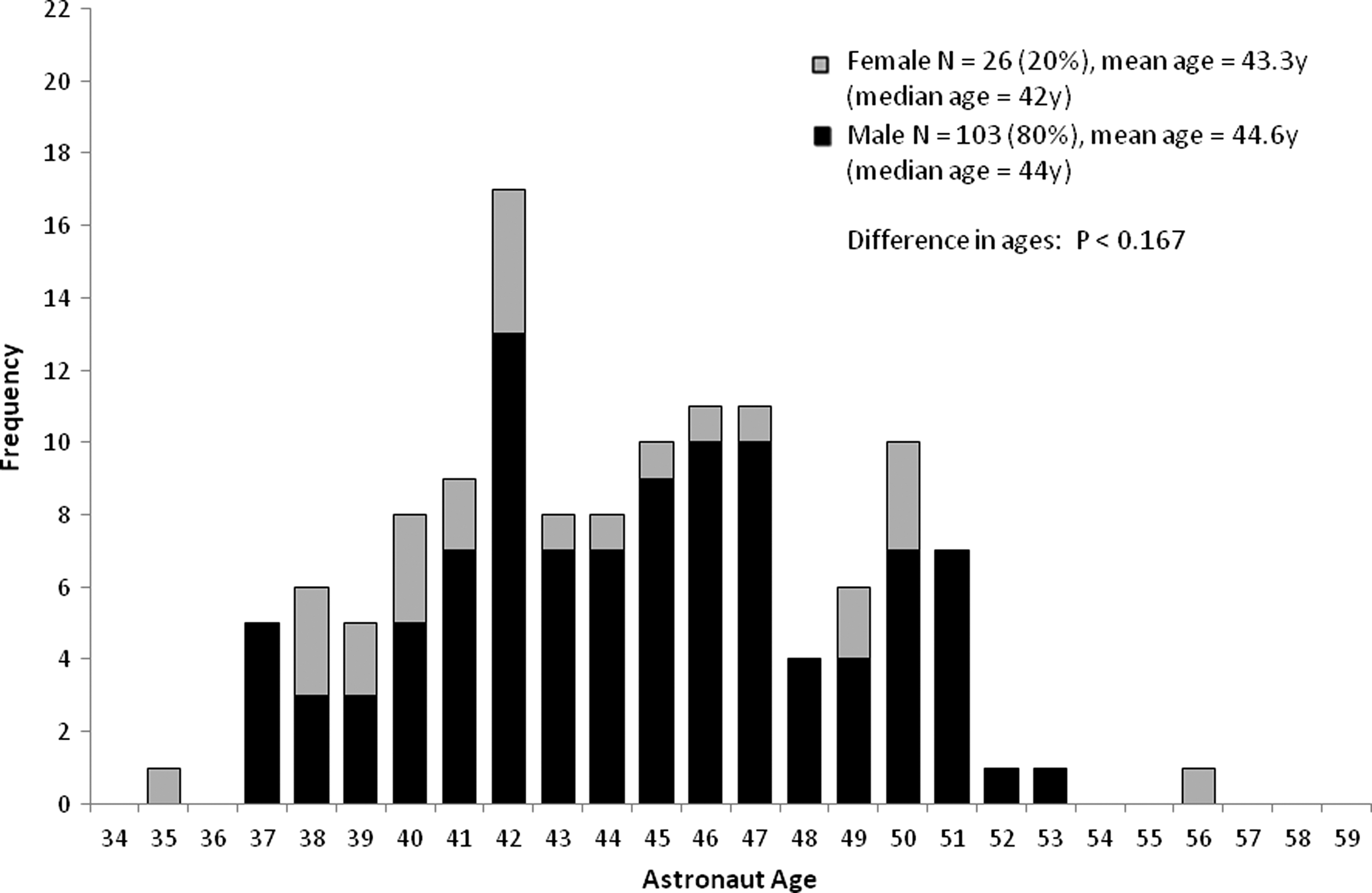
Age distribution for U.S. astronauts for first transit to the ISS (1998–2013).
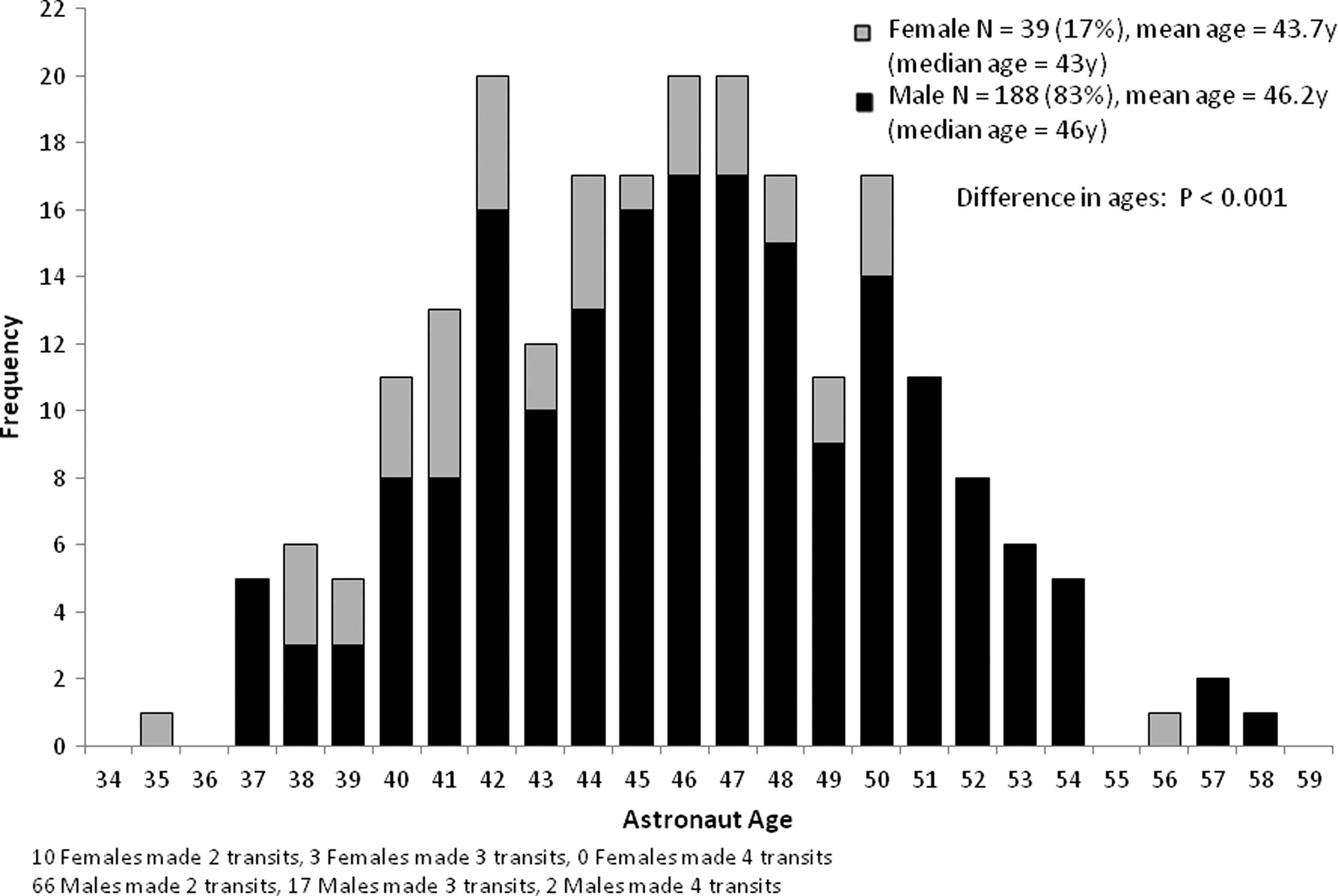
Age distribution for U.S. astronauts for all transits to the ISS (1998–2013).
In addition, it is possible that the separation from family and other important relationships inherent in long-duration spaceflight may make women more susceptible to the stress of isolation and perhaps even to depression, but it is possible they also may be more likely to be interpersonally supportive of others who miss family and friends. Men, on the other hand, may tend to express psychosocial isolation through anger, noncooperation, and conflict. These sex and gender differences in aspects of behavioral health on Earth provide the rationale for more investigation of sex and gender differences in behavioral health reactions in spaceflight and space analog environments.
Behavioral Health in Spaceflight and Analog Environments
There are limited data on sex- and gender-based differences in behavioral health in space or in other isolated and confined extreme environments. Studies of sex and gender differences in behavioral health in Antarctica have produced mixed results. In one study, winter-over female personnel reported a significantly larger number of depressive symptoms than males, although there were no sex-related differences in mood disorder diagnoses. 33 However, another study reported no significant difference between men and women with respect to depressive symptoms in summer or winter. 34 A third study found no difference in depressive symptoms after adjustment for coping resources and strategies. 35 The major shortcoming of these studies is that the female and male participants were not demographically similar to astronauts, thereby limiting the ability to generalize study results.
Nevertheless, attention needs to be paid to the effects of stresses on behavioral health and crew functioning. In one highly publicized incident, both a male astronaut and a female astronaut were terminated from the astronaut corps in part due to their interpersonal actions. It is important that effective behavioral health services are provided for astronauts and their families across their tenure in the space program, and that one cannot generalize regarding sex differences in behavioral health based on isolated cases.
Personality and behavioral health
There are few studies of astronaut personality characteristics; published reports cover material collected close to two decades ago. The most striking finding comparing personality traits of 12 female and 51 male applicants assessed between 1989 and 1994 and selected into the astronaut corps was the overall similarity between sexes. 36 Women scored higher than men on expressivity and achievement strivings, although these differences were only marginally significant. Men scored significantly higher on competitiveness. Findings on the same cohort indicated that astronauts who were rated the most effective displayed characteristics, termed the “right stuff,” as high in positive expressivity and instrumentality and low on negative instrumentality. 37 Astronauts with higher levels of expressive traits were rated higher by their peers on group living (interpersonal and team) performance, 38 although this factor was not related to flight assignments. 39 A peer-rated performance and competence factor was closely associated with flight assignments of mission specialists. 39 The several studies that assessed personality characteristics of women and men in polar work groups or expedition teams also have not found differences. Men and women in Antarctic groups scored lower on neuroticism and higher on positive personality traits than normative gender groups, and were not significantly different from each other. 40,41 In an all-women expedition team, personality traits indicative of low stress reactivity, and higher scores on positive compared to negative emotionality factors, were similar to findings with an all-men expedition team. 42,43 Scores on achievement motivation tended to be relatively higher in the all-men teams, although at or above population norms for both sexes.
Because the preponderance of findings demonstrates few or no differences in personality characteristics in men and women in isolated, confined, and extreme environments, a focus on the relationship between individual differences and performance rather than sex and performance would be more informative. Furthermore, inspection of the demographic characteristics of the current female astronaut corps points to a group with a high level of professional skills and experience, many excelling in areas such as the military, engineering, science, etc. (see Tables 4 –6). In order to succeed in these professional areas, it is likely that personality and motivational traits associated with success in men are similar in successful women in these areas.
Group interactions
The polar literature generally supports findings in other contexts, indicating that women tend to assume a more cooperative and supportive role than men in their interactions with other members of their group, exhibiting sensitivity and concern about the welfare of others. 44 While prior studies of all-men's teams have indicated a competitive orientation in interpersonal interactions, more recent expedition studies have found a primary cooperative orientation in all-men's teams (G.R. Leon, personal communication). 41 One study 45 found that homogeneity related to sex was associated with high social compatibility, while another study found heterogeneity with respect to sex to be associated with high social compatibility. 46 Problems with small sample sizes and strict comparisons between same-sex versus mixed-sex crews, however, preclude meaningful interpretation of the results of either study.
Cultural influences also have an impact on sex-related group processes. Early anecdotal and debriefing reports indicate some space-faring cultures have lower expectations and hold negative stereotypes about the role and abilities of women. 44,47 In an international space simulation study, there was a publicized incident involving a male and a female participant. The two came from significantly different cultural backgrounds, and when the man initiated an unwanted intimate advance, it distressed the woman and disrupted the simulation. This event illustrated the potential culturally influenced differences in expectations regarding appropriate interpersonal relations during periods of extended isolation and confinement. However, it is impossible to make generalizations on the basis of this single episode.
Work performance and satisfaction
Findings in this area suggest that women have a somewhat more difficult interpersonal experience than men in polar work groups, which may impact work performance. A study of Australian expeditioners found that men scored higher than women on measures of task performance. 40 A study with a relatively larger proportion of women than in other studies found that women were significantly more likely to receive a rating of good adaptation (work performance, psychological functioning, social adaptability) by their station commanders. 48 The personality trait of openness-to-experience was a significant sex and gender-independent predictor of positive adaptation. The inclusion of women in Antarctic work groups had a positive effect on group climate although there was an increase in sexual tensions. 46 Women indicated a less perceived fit with the station culture, greater role conflict, and less role clarity. 40 Systematic evaluation of work satisfaction in Antarctic groups aggregated over a 10-year period indicated that interpersonal tensions had a negative effect on both women and men; however, lack of station cohesion had a greater impact on women. 49 While there were no overall sex-related differences in ratings of social support, female leaders perceived significantly less support than male leaders or followers; on the other hand, female followers perceived slightly greater social support than male leaders or followers.
It is not known to what extent sex and gender influence work performance and satisfaction in spaceflight. Although fewer women than men have flown in space, a greater number continue to fly and hence more research in this area would be warranted to ensure data exist for optimizing crew integration (i.e., individual and interpersonal behavioral health) in longer duration exploration missions.
Personal and social values
Evaluation of personal and social values mentioned in the memoirs of a small group of astronauts who flew in space indicated that achievement was the most frequently mentioned value for both male and female astronauts preflight and for male astronauts postflight. 50 A study of a large mixed-sex group of astronauts showed the salience of values of achievement, enjoyment, and self-direction for the overall group; postflight, there were increases in the mention of values of universalism, spirituality, and power. 51 However, this study did not consider potential sex differences in these value orientations.
Adjustment aboard the ISS
Results from the Journals Flight Experiment on the ISS suggest slight differences between men and women in terms of net positivity/negativity, as reflected in entries assigned to the “Adjustment” category by content analysis of confidential journals. 52 Net positivity/negativity was calculated by subtracting the proportion of negative entries from the proportion of positive entries to obtain a single metric that can be tracked over time. Men exhibited greater positivity than women overall and particularly during the first and fourth quarters of ISS expeditions, and the relevant entries of women fluctuated less than those of their male comrades in this metric. Emotional stability was found to be among the characteristics of successful adaptation and esteemed leadership in previous studies of isolated and confined personnel, suggesting that the difference, if actual, reflects successful adaptation by women to the conditions aboard the ISS. The small number of female participants and the large difference in the number of entries do not permit a definitive answer to any questions concerning differential adjustment and performance.
Sex, gender, and stress
In examining sex and gender differences related to stress and stress reactivity on Earth, women generally show both heightened stress sensitivity and an increased presentation of stress-related affective disorders. The stress response is essential for maintenance of homeostasis, but increased response to stress or persistence of stress reactions can lead to disease or inappropriate behaviors, including an elevation in risk factors for depression and anxiety. 53 Further, increased passive behavioral responses to stress are associated with the occurrence of depressive symptoms. 54 Differences between men and women exist in the hypothalamic-pituitary-adrenal axis stress response where women display a greater physiological stress response than men as demonstrated by higher cortisol levels following a variety of stressors. In addition to the hypothalamic-pituitary-adrenal axis, women are more sensitive to the effects of elevated adrenaline during stress activation as part of the autonomic nervous system stress response. In these studies, the magnitude of sex-related differences was influenced by individual life experiences and fluctuations in reproductive hormone levels in women. 55 As evidence of such effects, functional magnetic resonance imaging (fMRI) analyses in women have shown fluctuations across the menstrual cycle in response to emotional stress-provoking stimuli in the orbitofrontal cortex, a brain region important in affect determination. 56
How these known sex and gender differences in stress reactivity may be affected by the complex environment of microgravity and spaceflight likely relate to the psychological stress reported in confined space for extended periods as well as the physiological stress associated with weightlessness. 57 –59 Consequences of increased stress activation over extended periods include effects on the cardiovascular and immune systems and an array of important brain processes. For example, elevated cortisol production directly interferes with first-line immune responses and can decrease host defense and resistance, thus increasing illness predisposition. 60 Within the brain, extended periods of elevated cortisol levels can directly impact the hippocampus, affecting learning and memory, as well as targeting the amygdala and altering mood and affect. 61,62
While women are generally more stress reactive, little research has examined whether the specific types of stressors found in spaceflight and microgravity show similar tendencies. A recent study using head-down tilt, long-term bed rest in women found evidence for stress system activation as well as indications of “impairments in psychological states.” 63 This study, however, did not make comparisons based on sex. Similarly, a recent Earth-based, 520-day simulated mission to Mars, conducted by the Russian Institute of Biomedical Problems, used an all-male crew of six. The majority of crew members developed disturbances of sleep and other behavioral changes that would be undesirable in long-duration space missions. 64 This finding leaves unresolved how female participants would have fared in this Mars mission analog. There is a compelling need for more research on how to optimize the behavioral health of both women and men in spaceflight to ensure their performance and the likelihood of continued successful missions of longer duration and of greater autonomous operations.
Footnotes
Acknowledgments
We thank Jamison J. Langguth for his valuable assistance with the preparation of the tables and figures contained in this manuscript. Preparation of this manuscript was supported in part by the National Space Biomedical Research Institute through NASA NCC 9-58; the Department of the Navy, Office of Naval Research Award No. N00014-11-1-0361; and NIH grants: K24 DA030301, P50 MH099910, MH073030, MH091258, and MH087597.
Author Disclosure Statement
No competing financial interests exist.