






Abstract
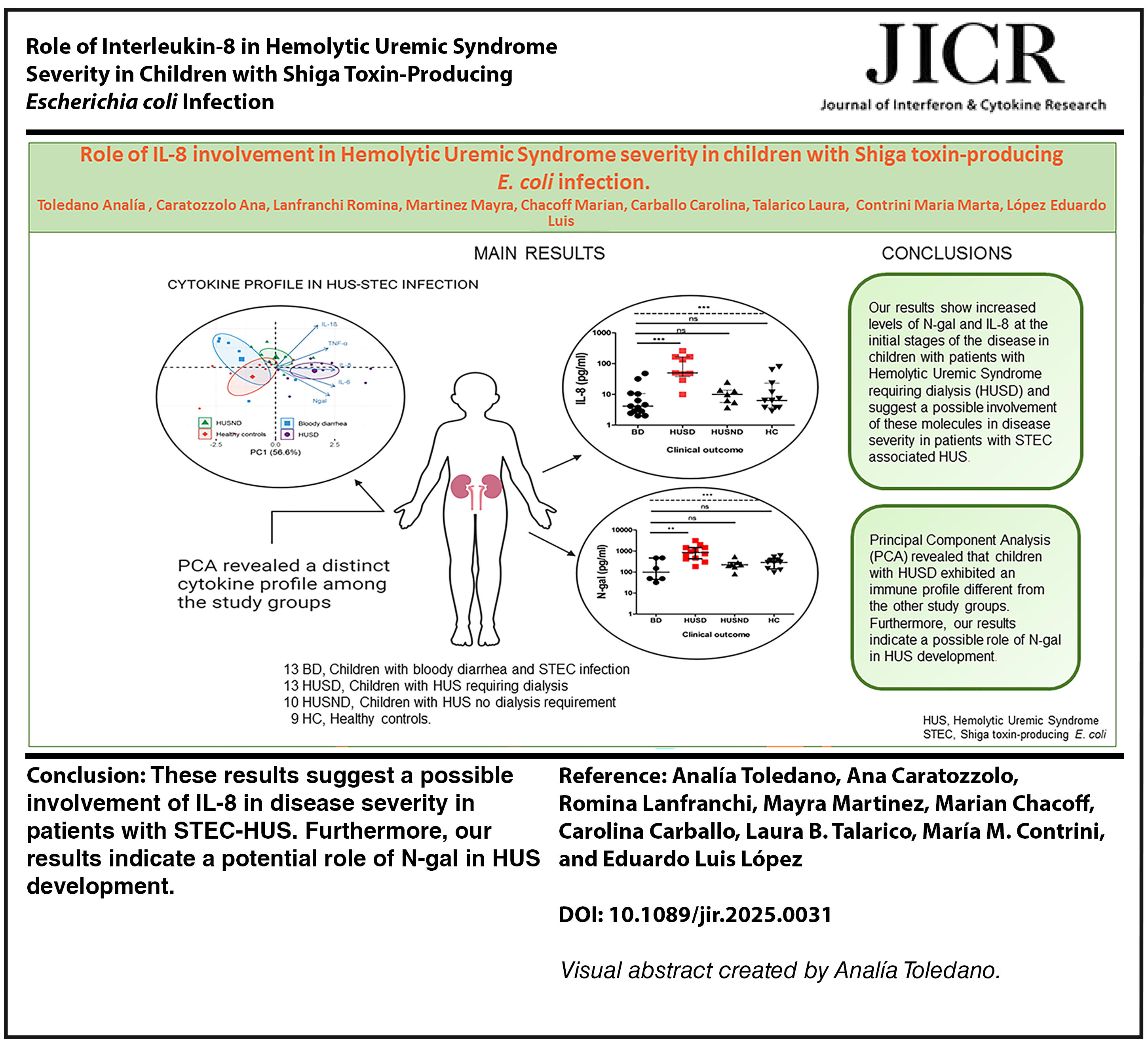
We aimed to measure serum concentrations of interleukin (IL) 8, tumor necrosis factor-α (TNF-α), IL-6, IL-1β, and human neutrophil gelatinase-associated lipocalin (N-gal) in children with Shiga toxin-producing Escherichia coli (STEC) infection to determine the inflammatory cytokine profile and the role of these molecules in hemolytic uremic syndrome (HUS) development and severity. Three groups of patients with evidence of STEC infection were incorporated: bloody diarrhea (BD), patients with HUS requiring dialysis (HUSD), and patients with HUS and no dialysis requirement (HUSND). Serum samples were assayed for cytokines and N-gal using immunoassays. Thirty-six children were enrolled: 13 with BD, 10 with HUSND, and 13 with HUSD. We found significantly higher levels of IL-8, TNF-α, IL-6, and N-gal in patients with HUSD compared to patients with BD. Only TNF-α levels were significantly higher in patients with HUSND than in patients with BD. Higher IL-8 and N-gal levels were evidenced in HUSD than in patients with HUSND at the initial stages of disease. Principal component analysis revealed that children with HUSD exhibited an immune profile different from the other study groups. These results suggest a possible involvement of IL-8 in disease severity in patients with STEC-HUS. Furthermore, our results indicate a potential role of N-gal in HUS development.
Get full access to this article
View all access options for this article.
References
Supplementary Material
Please find the following supplemental material available below.
For Open Access articles published under a Creative Commons License, all supplemental material carries the same license as the article it is associated with.
For non-Open Access articles published, all supplemental material carries a non-exclusive license, and permission requests for re-use of supplemental material or any part of supplemental material shall be sent directly to the copyright owner as specified in the copyright notice associated with the article.
