






Abstract
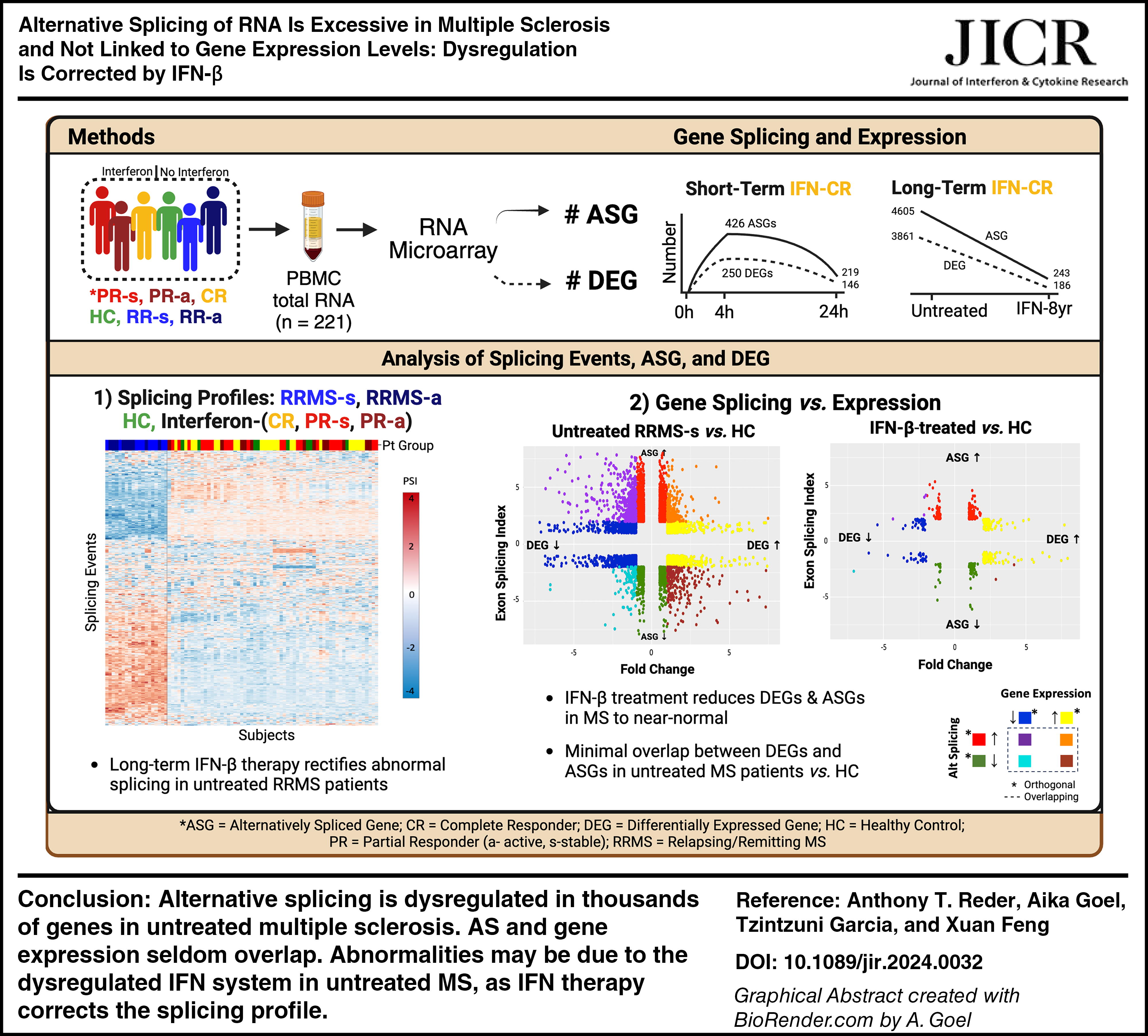
Multiple sclerosis (MS) is an inflammatory brain disease with dysregulated expression of over 8,800 genes and subnormal responses to type I interferon (IFN) by peripheral blood mononuclear cells (PBMCs). IFN-β therapy ameliorates the dysregulated gene expression, but clinical benefit varies. We hypothesized that IFN dysregulation and IFN-β therapy also affect gene alternative splicing (AS). Messenger RNA splicing was quantitated with microarrays that probe 339,000 splice junctions. We found extensive AS disruption in untreated MS compared with healthy control PBMC. Functional clusters predict that splicing dysregulation will affect immunity, IFN signaling, telomere length, and the splicing machinery itself. Highly dysregulated AS was largely corrected toward normal levels during IFN-β therapy. Nonetheless, during long-term IFN-β therapy, exacerbations were linked to more dysregulated AS. In short-term kinetics, AS increased 4 h after IFN-β injection and returned toward baseline at 24 h. Here, AS was more dysregulated in clinically stable partial responders to therapy compared with complete responders, and thus predicted future clinical exacerbations. All changes in AS were largely independent of (orthogonal to) differential gene expression. The effect of type I IFNs on AS is likely to expand genomic control in human immune cells.
Get full access to this article
View all access options for this article.