






Abstract
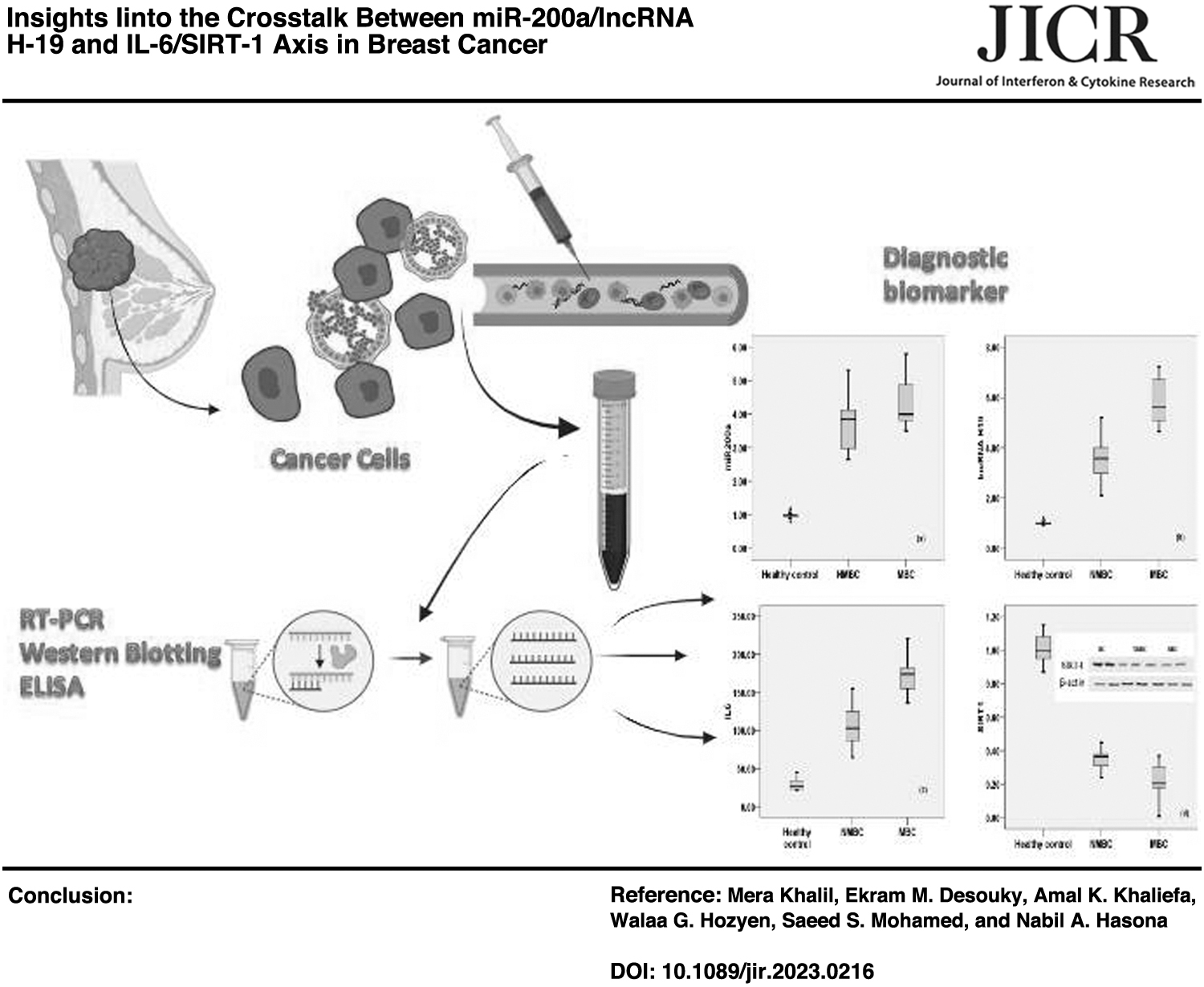
Breast cancer (BC) is a highly prevalent malignancy that poses a significant threat to women's well-being. Novel biomarker identification helps to improve clinical outcomes and provide tailored treatments. Our research aims to explore the diagnostic potential of miR-200a/lncRNA H-19 and interleukin-6 (IL-6)/SIRT-1 axis crosstalk and evaluate the impact of metastasis on gene expression, which provides valuable insights into the diagnosis and treatment of BC. In this case–control study, we collected blood samples from 54 nonmetastatic breast cancer (NMBC) patients, 46 metastatic breast cancer (MBC) patients, and 50 healthy individuals. We used real time-polymerase chain reaction to measure the expression levels of lncRNA H-19 and miR-200a, whereas enzyme linked immunosorbent assay was used to determine the IL-6 levels. In addition, we evaluated SIRT-1 expression level using a Western blot assay. The levels of lncRNA H-19, miR-200a, and IL-6 were higher in BC patients, whereas SIRT-1 levels were lower. Patients with MBC had higher levels of lncRNA H-19, miR-200a, and IL-6 than those with NMBC. In addition, the expression of lncRNA H-19 and miR-200a showed a negative correlation with SIRT-1 expression, whereas the levels of lncRNA H-19 and miR-200a showed a positive correlation with IL-6 expression level. The diagnostic potential of lncRNA H-19 and miR-200a in BC is undeniable. Moreover, the robust association of IL-6/SIRT-1 with lncRNA H-19/miR-200a expression presents a promising opportunity for clinical outcomes and tailored treatments.
Get full access to this article
View all access options for this article.