






Abstract
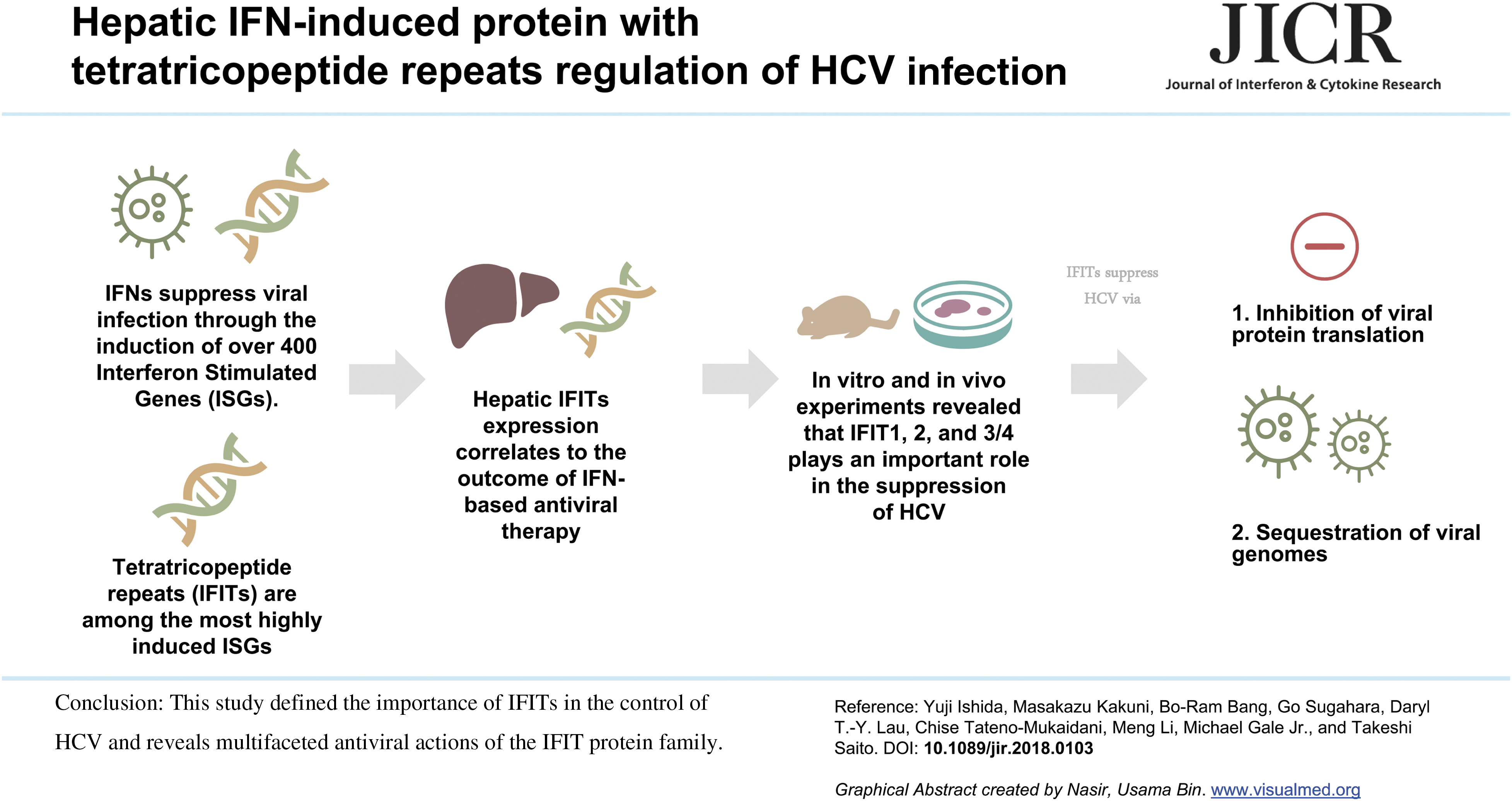
Interferons (IFNs) suppress viral infection through the induction of >400 interferon-stimulated genes (ISGs). Among ISGs, IFN-induced protein with tetratricopeptide repeats (IFITs) is one of the most potent and well-characterized ISGs. IFIT family consists of 4 cluster genes. It has been suggested that the antiviral action of each IFIT employs distinct mechanisms. In addition, it has been shown that each IFIT exhibits its antiviral properties partially in a pathogen-specific manner. To date, the expression profile of IFITs in the liver, as well as the antiviral potency of the individual IFITs in the regulation of hepatitis C virus (HCV) infection, is not yet fully defined. Our previous study found that the expression of hepatic IFITs is well correlated with the outcome of IFN-based antiviral therapy. This study explored the significance of each IFIT in the suppression of HCV. Our
Get full access to this article
View all access options for this article.