






Abstract
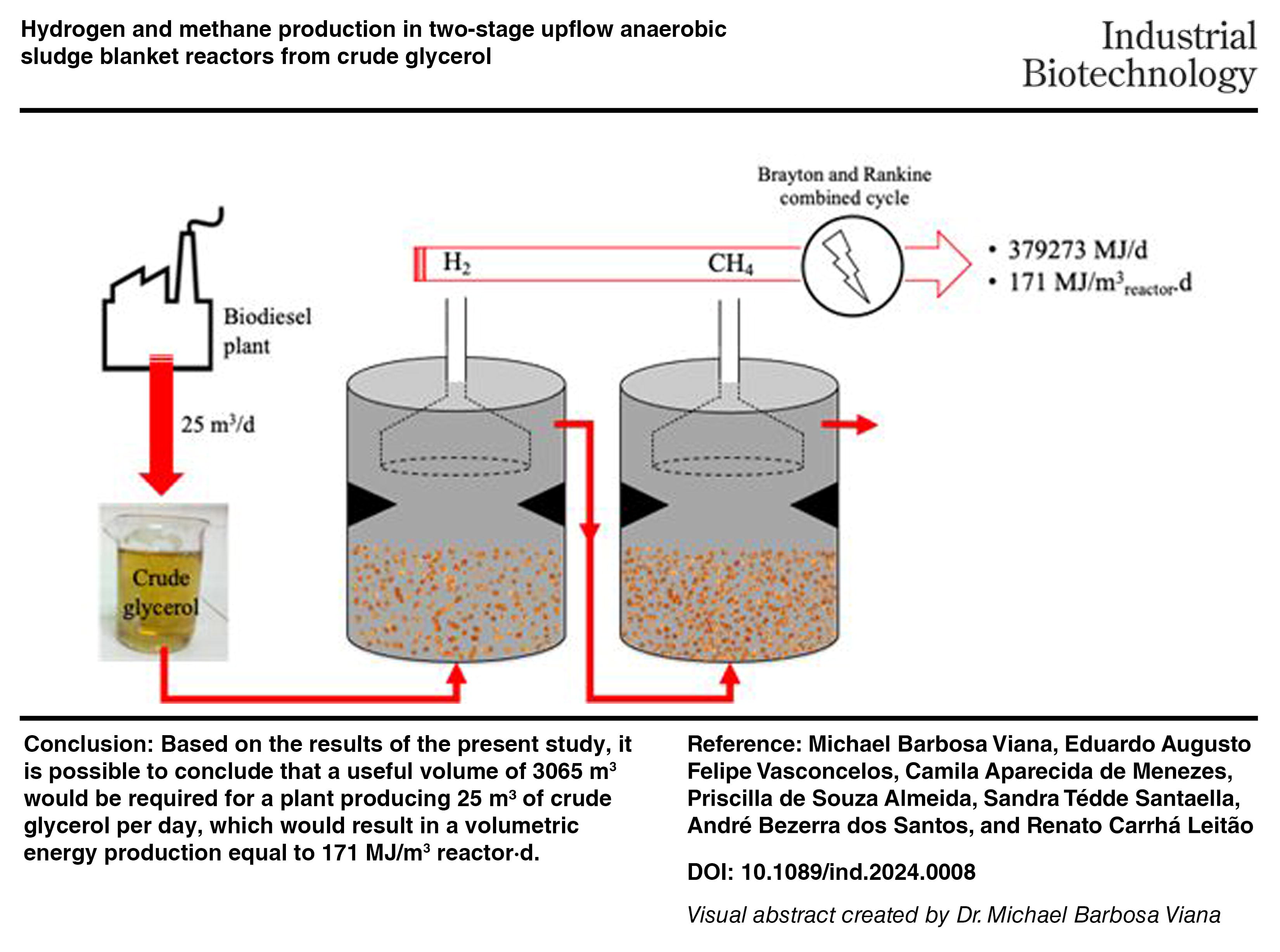
This study aimed to investigate the impact of operational conditions, such as hydraulic retention time and substrate concentration, on the production of hydrogen (H2) in an upflow anaerobic sludge blanket (UASB) reactor, which was followed by the production of methane (CH4) in a sequential UASB fed with acidogenic effluent. The maximum yield of H2 obtained was 0.23 ± 0.05 mol H2/mol glycerol (∼8% of the maximum theoretical yield) by applying a maximum organic loading rate (OLR) of 50 kgCOD/m3·d. The soluble metabolites detected in the UASB-H2 effluent showed that 1,3-propanediol was the primary metabolite formed during the operation (1.8–3.7 g/L). UASB-CH4 was operated stably with a maximum OLR of 19 kgCOD/m3·d, removing 94% of organic matter and producing 0.092 m3 of biogas daily (74% of CH4). The ecological succession analysis of the UASB-H2 showed the bacterial population parameters increase at average OLRs, promoting the dominance of generalist species because of a higher carrying capacity from a less specific substrate and increasing system stability because of niche diversification. An energy analysis was conducted in the condition with the highest daily CH4 production, that is, 18.72 kgCOD/m3·d. The two-stage system resulted in 171 MJ/m3 reactor·d for a plant generating 34,350 kgCOD/d of glycerol. In contrast, a single CH4 production system would be capable of generating only 94 MJ/m3 reactor·d. Therefore, although hydrogen production was low in the hydrogenogenic reactor, acidogenesis in the first UASB reactor allowed the methanogenic reactor to achieve high OLR and, consequently, high energy yields.
Graphical Abstract
Get full access to this article
View all access options for this article.