






Abstract
Consumers, despite having limited understanding of industrial biotechnology, are broadly supportive of this field. This support is seen across a wide geographic and political spectrum. This support, coupled with positive support at the state and federal government level as well as industry's interest in improving sustainability, may indicate an important opportunity to establish state and federal incentives for industrial biotechnology.
Introduction
The United States is uniquely positioned to benefit from expanded industrial biotechnology. There are numerous examples of new products which, today, provide the consumers with expanded and environmentally sustainable choices.1 Despite the opportunity that industrial biotech offers, market penetration has been slower than numerous studies have predicted.2
Perhaps one of the most important barriers to new technologies is the benefit that incumbency confers to existing market players. Manufactures who are able to produce using fully depreciated assets have a significant advantage over newly capitalized market entrants. We would argue that this is completely reasonable in the situation where these initial assets were privately funded. However much of today's petroleum infrastructure was supported by governments as societal needs at the time dictated public investment to drive forward specific industries. This support is ongoing,3 which creates a barrier to innovation that is almost insurmountable. We would encourage public funding for industrial biotechnology to create an environment which drives new economic opportunities and increases innovation.
A number of states have policies in place to support industrial biotechnology. For example, Iowa, Minnesota and Nebraska, among others have production incentive credits offered at the state level. There is a demonstrated need for federal support to leverage these state-based incentives. However, prior federal bills—like S. 2271 the Renewable Chemicals Act of 2015—have failed to find the necessary support to become law, largely due to the timing in which they were presented.
At the federal level, all indications are that the timing for support of industrial biotechnology is now. The Inflation Reduction Act of 2022 provides significant support for sustainable manufacturing. Additionally Executive Order 14081 specifically states a goal to “catalyze action inside and outside of government to advance American biotechnology and biomanufacturing.” This is very clear support from the highest office.
Policies, regardless of how strongly they are backed by any administration, must have support from the public at large to be successful. To this end, the National Corn Growers Association (NCGA) commissioned a study to better understand nationwide perception and interest in federal support of industrial biotechnology.
Methods
The results presented in this paper were derived from polls conducted between November 1 and 10 of 2022. In the polling, 11,602 randomly selected adults were questioned via online interviews. The data was subjected to hierarchical logistic regression to allow for poststratification analysis resulting in the ability to interrogate many more demographic subcategories while providing statistically significant results. The margin of error for the survey is plus or minus one percentage point. For more information see Gelman et. al. 1997,4 and Pew Research Center, June 2016.5
Results and Discussion
As shown in the following charts. The surveyed population, which is statistically representative of the overall general population, has a relatively low awareness of industrial biotechnology. In no instances do we see greater than 26% of the population having heard of industrial biotechnology. This low level of awareness shows some fluctuations across the different segments surveyed, but no group scored above 25% (Fig. 1). (Fig. 2 breaks out awareness-of by state and shows that there is a difference of awareness-of 7% (VT compared to DC), but in most cases no more than 25% of any state's population has awareness of industrial biotechnology (Fig. 2).
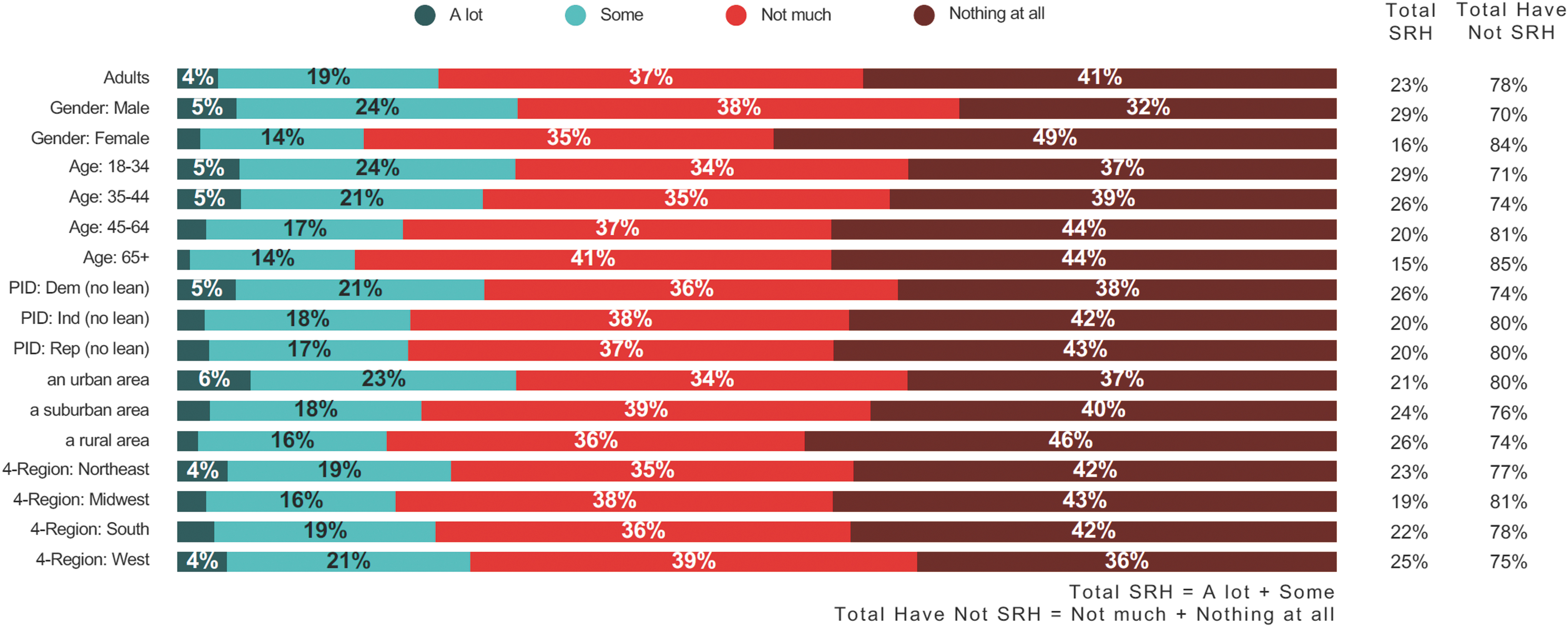
Awareness across U.S. for to question “How much have you seen, read or heard about industrial biotechnology?” From this, it is clear that public awareness is low across all demographics.
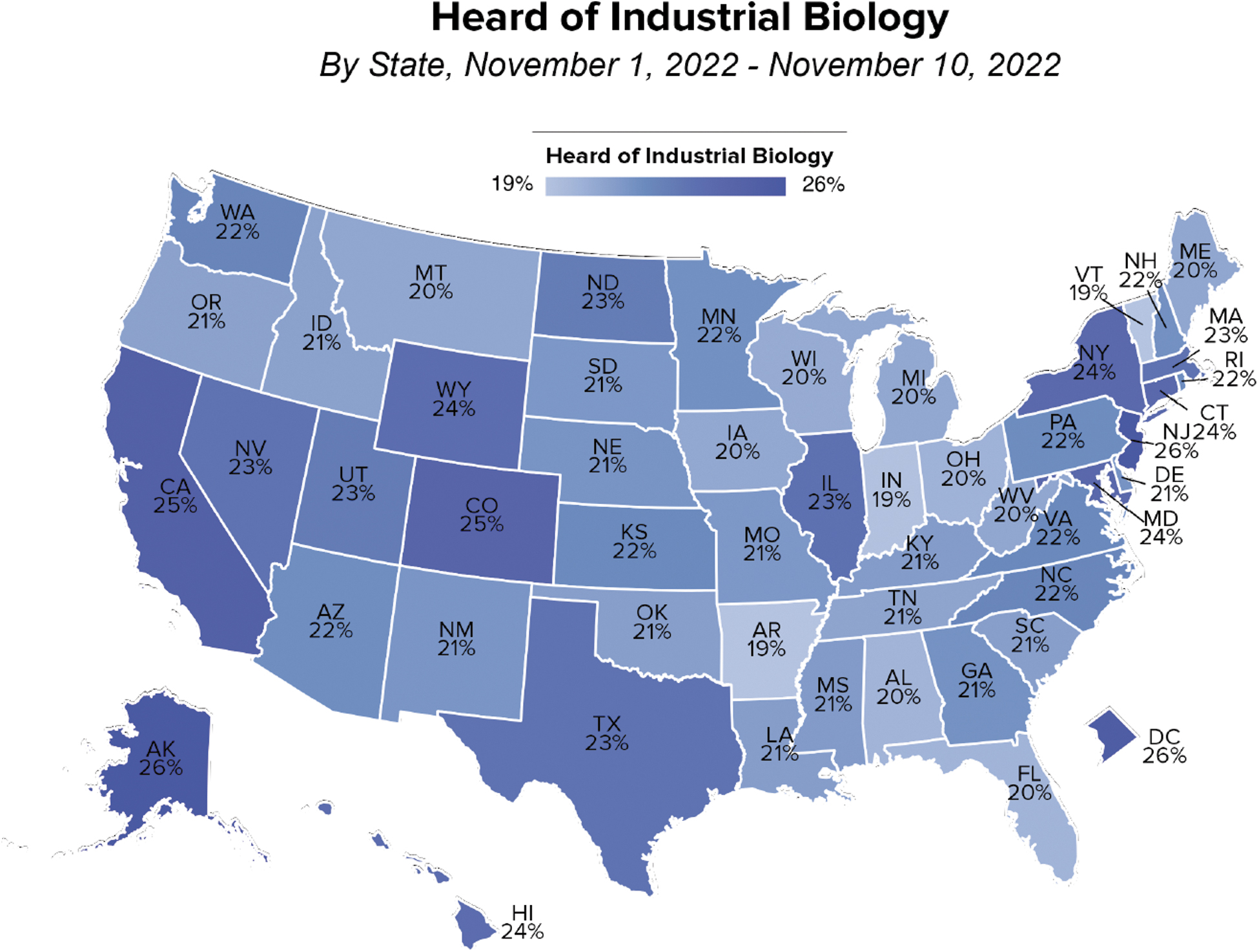
Nationally, in only a few locations, does more than 25 percent of the population know “a lot” or “some” about industrial biotech.
Despite the low awareness levels for industrial biotechnology, a generally positive impression, as demonstrated by support of additional federal funding of the field, resulted from a mild prompt. The prompt was “As you know, industrial biotechnology is the use of renewable resources, like plants, to produce energy, industrial chemical and consumer goods. After hearing more, do you support or oppose additional federal funding to promote industrial biotechnology?” The results in Fig. 3 show the impact in positive consumer views of even a small amount of additional information regarding this space.
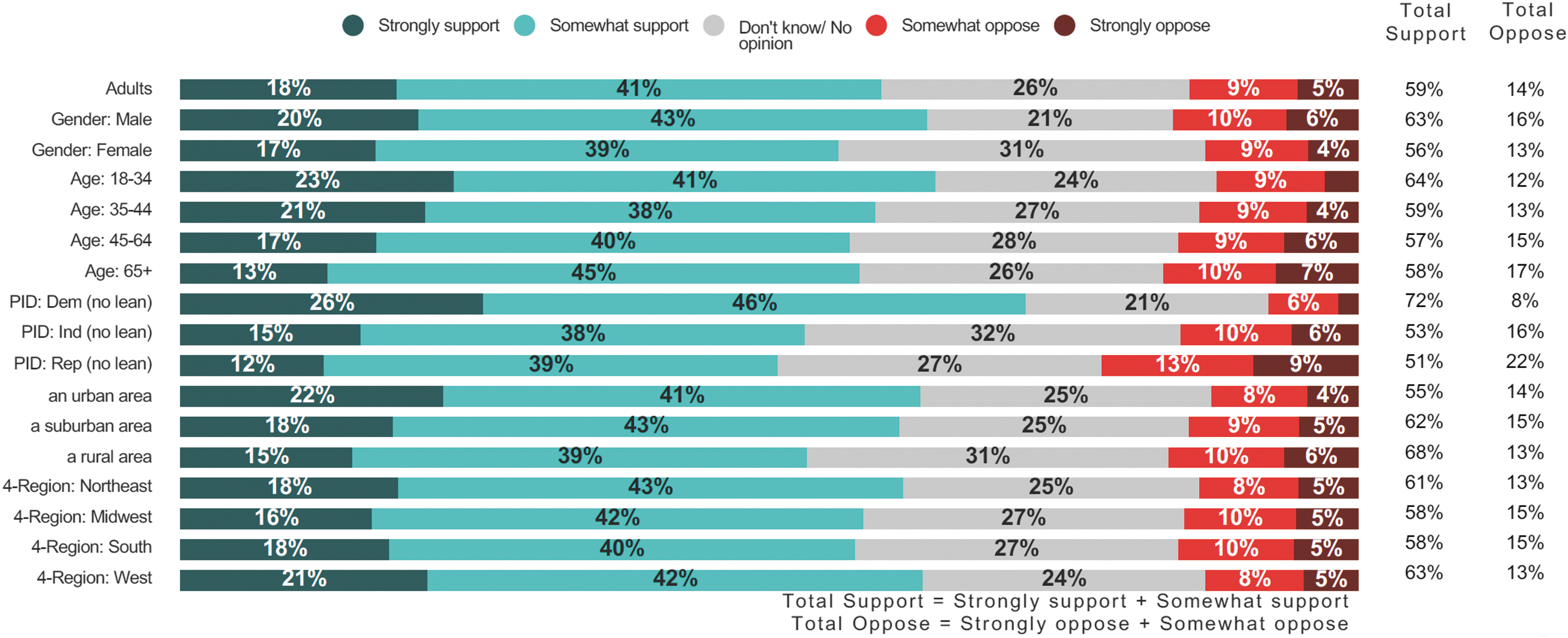
In the survey, mild prompting resulted in greater than 50 percent support and no more than 22 percent opposition across the demographics under study.
Participants were asked what aspect of industrial biotechnology is of most importance to them and the response was that a high level of importance was applied to all of the benefits which come from industrial biotechnology as shown in Fig. 4. These are very diverse categories of benefits, and yet nearly all were valued as “Very important” to a majority of those surveyed. The fact that displacing petroleum was the least important benefit is interesting from the standpoint that this is where a lot of messaging historically has been focused, particularly by petroleum companies who are trying to increase their use of biofuels.
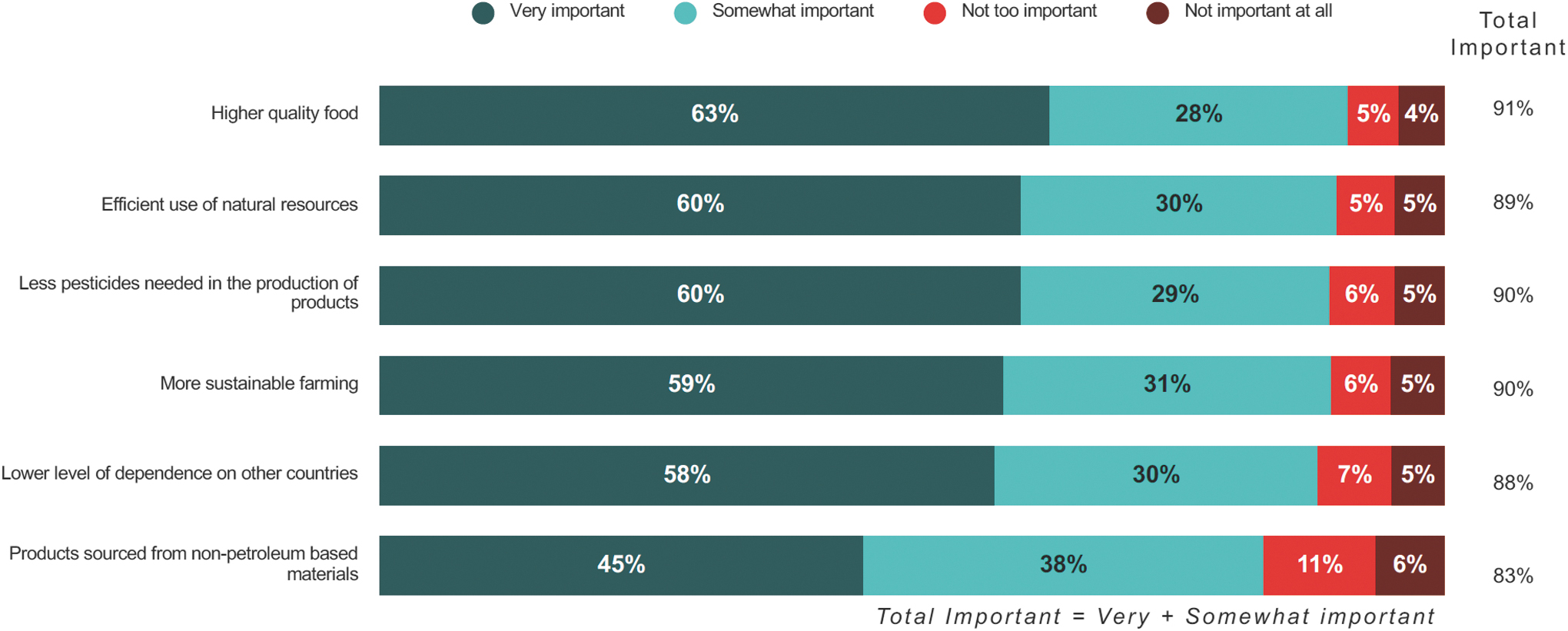
Consumers are most interested in industrial biotechnology being used to produce higher value food. However, there does appear to be some confusion on the difference between industrial biotechnology and agricultural biotechnology.
Figure 5 describes what aspects people who took the survey found most concerning. It is interesting that the focus here was much more around human health and potential impact on the ability of farmers to purchase seed. This indicates that most people probably do not make a clear distinction between health, agriculture and industrial biotechnology (Fig. 5). Again, this may be an opportunity to both educate and drive opinion in a positive direction.
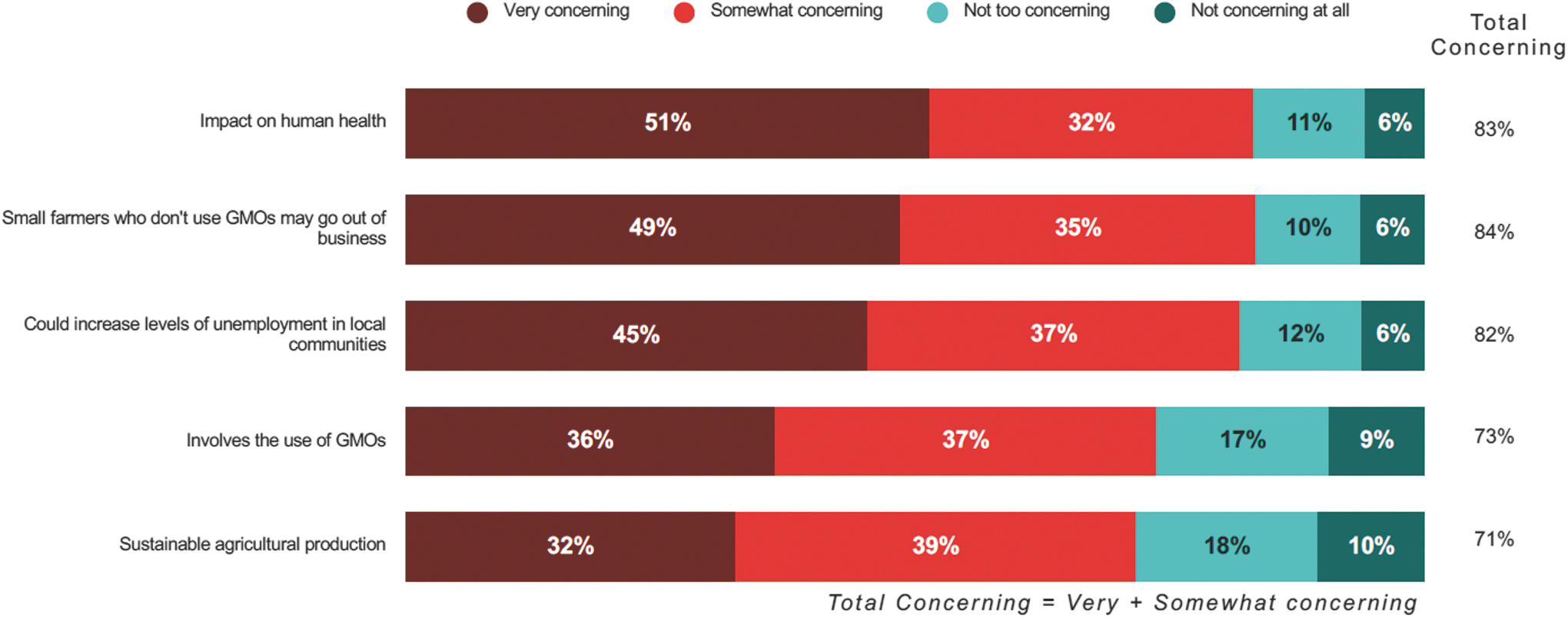
Areas of greatest concern for the surveyed audience focused on health and economic consequences to rural communities. Industrial biotech can improve health through reduced manufacturing pollution. Additionally, given the rural nature of feedstock and end-product production, it can also have a beneficial impact on rural economies. Therefore we have the potential to allay consumer concerns with the proper messaging.
Finally, Fig. 6 shows that a majority of people support additional state and federal funding for industrial biotechnology. This is particularly interesting in light of an effort by the NCGA and the Biotechnology Innovation Organization (BIO) to support a federal incentive for the industrial biotechnology industry that seeks to increase the development and market availability of biobased products, chemicals, and materials. The NCGA/BIO proposal would provide an incentive based on renewable or captured carbon content in order to help increase introduction of new renewable products into the market.
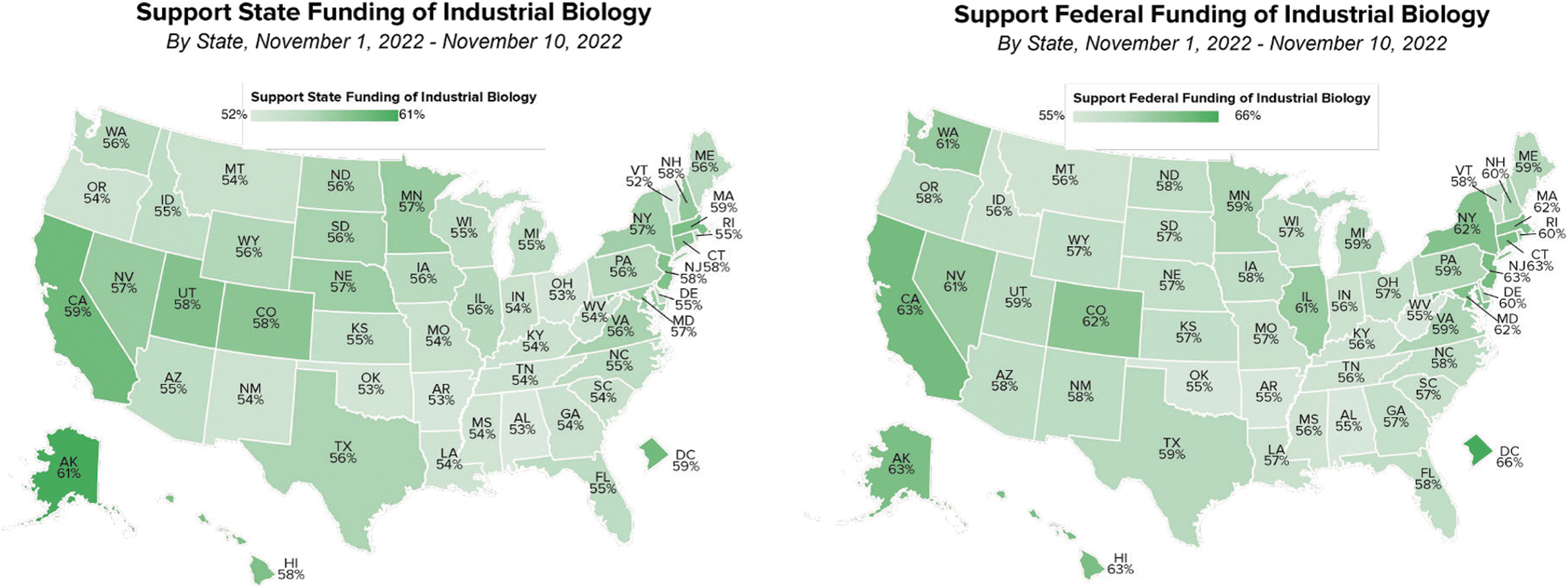
A majority of respondents support both state (above left) and federal (above right) funding for industrial biotech.
Key learnings from this survey were that industrial biotechnology is broadly supported both geographically and politically when positioned with the correct messaging.
The fact that survey participants supported both state and federal funding has key implications. States that have positioned themselves to welcome industrial biotech companies are already seeing major investments and job creation. This is clearly demonstrated by the state of Iowa which has announced a number of large industrial biotech investments by multinational companies. This trend should expand as both the Inflation Reduction Act and the Sustainable Aviation Fuel Grand Challenge begin to be implemented, providing significant federal funds for additional biomanufacturing. States that do not have a mechanism in place to encourage industrial biotechnology may find themselves less able to participate in opportunities in this segment.
Messaging around biotechnology is crucial. This message must resonate with an audience that does not necessarily understand the nuances of technology but will benefit from the outcome. For example, discussing the specifics of amylase on starch structure in baked products is unlikely to create as much goodwill for industrial biotechnology as stating that an industrial biotechnology product can extend shelf life of bread. Extending that comment to state “industrial biotechnology can improve shelf life of bread, increasing quality and simultaneously decreasing food waste” captures, in a single sentence, the two aspects of industrial biotechnology which were the most important to individuals in the survey.
Conclusion
Industrial biotechnology currently enjoys strong support despite a lack of deep understanding by the public at large. This support appears to be strengthened by simple messaging that concisely describes the benefits of industrial biotech to consumers, providing an opportunity to shore up support for this important segment. Furthermore, there is majority support for additional state and federal funds for industrial biotechnology. Funding of this nature has been demonstrated to create innovation and increase economic activity in states where they have been implemented. It is clear through these survey results that a wide range of demographics—including gender, age, political affiliation and region—support industrial biotechnology. This represents a rare opportunity to appeal to consumers of a variety of affiliations. Finally, it is clear that emphasizing the social and economic benefits in addition to environmental benefits of industrial biotechnology is key in garnering support for public funding of this segment. We would strongly suggest that industrial biotech stakeholders take the current unique opportunity to both increase positive consumer and lever that into expanded support at the state and national level.
Footnotes
Acknowledgment
National Corn Growers Association thanks Morning Consult for conducting this survey and to the prior Senior Manager Nick Lepore for his efforts in sharing the results. We'd also like to thank the corn growers and farmers across the United States who are members of the NCGA which funded this study.