






Abstract
Glioblastoma is the most aggressive brain tumor characterized by diffuse infiltration into the normal brain parenchyma. Neural stem cells are known to possess the tumor-tropic migratory capacity and thus can be used as cellular vehicles for targeted delivery of therapeutic agents. In the present study, we evaluated the efficacy of herpes simplex virus thymidine kinase (HSV-TK) suicide gene therapy for glioblastoma using neural stem/progenitor cells (NS/PCs) derived from human induced pluripotent stem cells (hiPSCs). Although transduction of hiPSCs is preferable for a safe and stable supply in the clinical setting, high-level and/or constitutive HSV-TK expression was highly cytotoxic to hiPSCs. To overcome this problem, we used the tetracycline-inducible system to control the expression of HSV-TK. hiPSC-derived NS/PCs expressing HSV-TK were transplanted in an orthotopic xenograft mouse model of human glioblastoma. Glioblastoma cell growth in mice was dramatically inhibited following ganciclovir (GCV) administration. Survival of the mice was significantly prolonged with administration of GCV compared with control groups. Time-lapse imaging of organotypic brain slice cultures first demonstrated the directional migration of NS/PCs toward glioblastoma cells and the bystander killing effect upon GCV treatment. hiPSC-derived NS/PCs with HSV-TK/GCV suicide gene system may have considerable therapeutic potential for the treatment of glioblastoma.
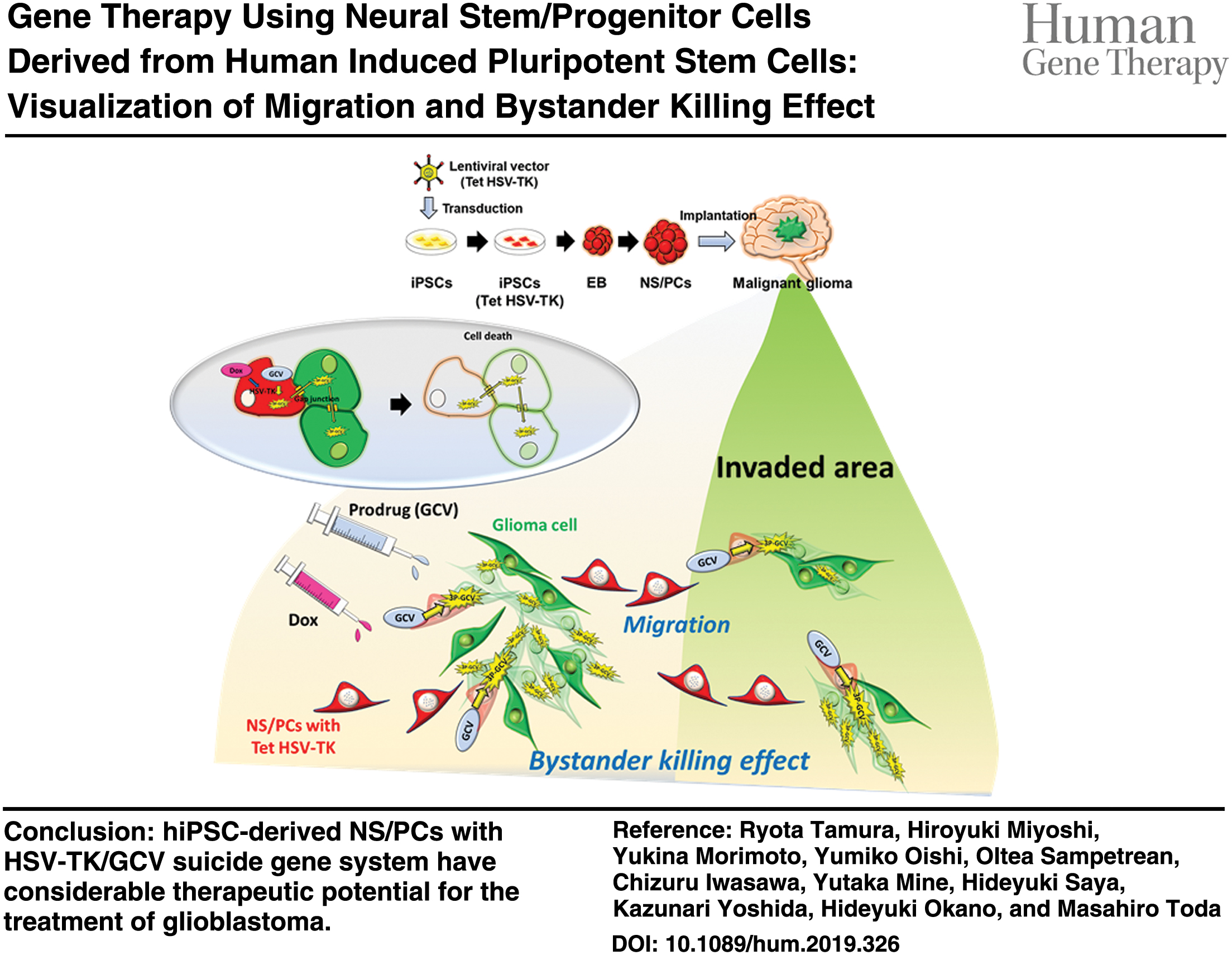
Color images are available online.
Get full access to this article
View all access options for this article.
References
Supplementary Material
Please find the following supplemental material available below.
For Open Access articles published under a Creative Commons License, all supplemental material carries the same license as the article it is associated with.
For non-Open Access articles published, all supplemental material carries a non-exclusive license, and permission requests for re-use of supplemental material or any part of supplemental material shall be sent directly to the copyright owner as specified in the copyright notice associated with the article.
