






Abstract
Infection of Western aid workers with Ebola virus disease during the 2014-2016 West African outbreak demonstrated the need for medical evacuation to high-level isolation units in Europe and the United States. In Norway, an ad hoc preparedness team was established for aeromedical evacuation in case of need. In October 2014, this team transported an infected aid worker from the military section of Oslo Airport to Oslo University Hospital. To maintain and strengthen the capacity for domestic ambulance transport on the ground and in the air, the Norwegian Medical Emergency Response Team for High Consequence Infectious Diseases (in Norway known as “Nasjonalt medisinsk utrykningsteam for høyrisikosmitte”), or NORTH, was established as a permanent service in 2017. Recognizing the expertise of this domestic team, Norway was subsequently entrusted with the task of enhancing the European aeromedical transport capacity for high-consequence infectious diseases and establishing the Norwegian rescEU Jet Air Ambulance for Transport of Highly Infectious Patients, or NOJAHIP, in 2022. In this case study, we present experiences and lessons learned from these 2 services and discuss how they can be further developed.
Background
O
Repatriation of patients with high-consequence infectious diseases (HCIDs) requires advanced transportation conducted in a timely and safe manner. The special challenges involved in aeromedical evacuation of HCID patients were clearly exposed during the 2014-2016 outbreak of EVD in West Africa, when both military and commercial aircraft were used.3‐6 To mitigate the transmission risk involved in HCID operations, either a closed or open isolation approach may be used. A closed isolation approach involves the use of a patient isolation unit (PIU), which creates a safe barrier between the patient and the surrounding environment. In the case of an open isolation approach, both the patient and the medical staff are placed within a larger mobile isolation unit—such as a tent, container, or ambulance—and the staff wear full personal protective equipment (PPE). 7
A study on patients with EVD who received treatment in Europe and the United States in 2014 and 2015 demonstrated that their rate of survival was better than those who received care in West Africa, at least in part due to the availability of more advanced intensive care facilities in the higher-resource countries. 8 However, even hospitals in high-income countries faced great challenges in providing adequate care and infection prevention and control (IPC) for EVD patients.
HCIDs are defined as acute infectious diseases that typically have a high case-fatality rate, may not have effective prophylaxis or treatment, are often difficult to recognize and detect rapidly, have the ability to spread in the community and within healthcare settings, and require an enhanced individual, population, and system response to ensure effective, safe, and efficient management. 9 Most European countries have established high-level isolation units (HLIUs) to provide specialized care for patients with HCIDs. However, their quantitative and qualitative capacities vary significantly.10,11
Norway’s only HLIU, located in the Department of Infectious Diseases at Oslo University Hospital, opened in 2008, prompting paramedics, doctors, and nurses to start preparing for potential transportation and admission of patients with HCIDs. Its first real mission, involving both prehospital and in-hospital personnel, occurred 6 years later, during the Ebola outbreak in West Africa. On October 5, 2014, the Norwegian National Unit for CBRNE Medicine received notification that a Norwegian aid worker had tested positive for EVD in Sierra Leone, and it accepted a request for repatriation. The ad hoc transport team was briefed and trained intensively. Two days later, the patient arrived at the military section of Oslo Airport in a PIU carried by a chartered air ambulance. On the tarmac, the patient was met by a trained team of doctors, nurses, and paramedics wearing full PPE (Figure 1). The patient was transported in a negative-pressure CBRNE ambulance to the HLIU at Oslo University Hospital, where the patient was successfully treated and discharged after 2 weeks.
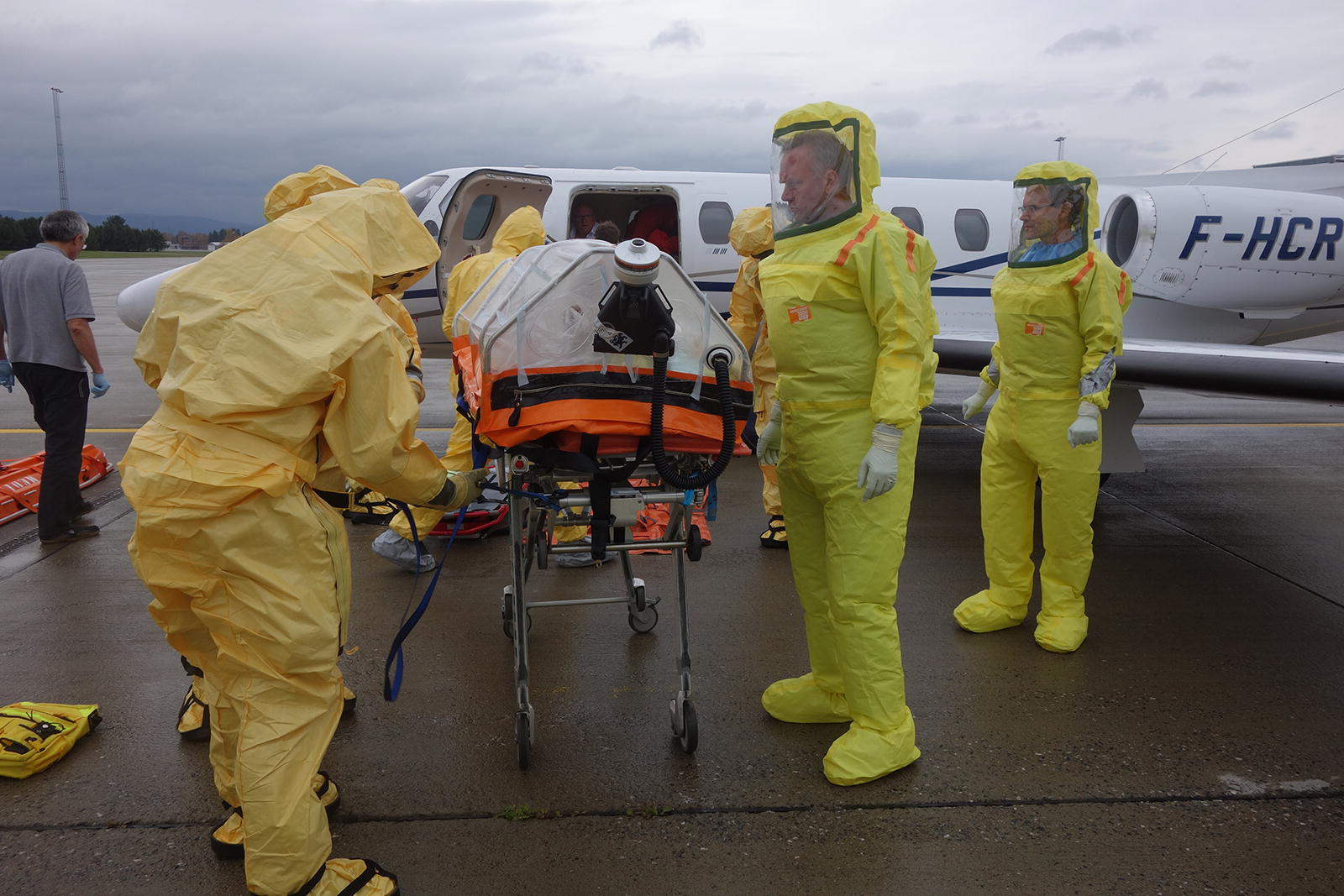
Arrival of a patient with Ebola virus disease inside a patient isolation unit at the military section of Oslo Airport in October 2014 (photograph by Vidar Stensvåg).
Norway’s geographical location, which includes both arctic rural regions and more densely populated urban areas, give rise to demanding conditions for patient transport, adding to the general logistical challenges of transporting patients with HCIDs. In this case study, we describe the current capacity of the Norwegian Medical Emergency Response Team for High Consequence Infectious Diseases (NORTH; in Norway it is known as “Nasjonalt medisinsk utrykningsteam for høyrisikosmitte”) for domestic ground and air transport of HCID patients. In addition, we describe the Norwegian rescEU Jet Air Ambulance for Transport of Highly Infectious Patients (NOJAHIP), an aeromedical transport service within Europe, funded by the European Union (EU).
Norwegian Domestic Capacity for HCID Patient Transport
To maintain and strengthen the capacity for domestic transport of HCID patients after the 2014-2016 Ebola outbreak in West Africa, NORTH was established as a permanent service in 2017. The main purpose of NORTH is to transport HCID patients from any hospital in Norway to the HLIU at Oslo University Hospital, either on the ground or by air.
There has never been consensus on the optimal approach for safe transport of HCID patients or what constitutes an adequate transport capacity.12–17 NORTH therefore built its preparedness systems based on its own experiences and those gained and shared by others after previous HCID patient transport missions.
Organization of NORTH
The Norwegian National Unit for CBRNE Medicine coordinates NORTH. Norway’s 4 regional health authorities and the Directorate of Health finance the team and the required technical resources. NORTH’s current annual expenditure amounts to approximately €173,000 (US$184,800).
Composition of NORTH
Initially, NORTH comprised 24 paramedics, 4 air ambulance physicians, 4 air ambulance nurses, 4 infectious disease nurses, and 4 infectious disease physicians. After an evaluation process, NORTH reduced the number of team members to provide and maintain a higher level of training for all team members and to optimize resource use. Currently, NORTH has a roster of 12 paramedics, 3 air ambulance physicians, 3 air ambulance nurses, 4 infectious disease physicians, and 2 infectious disease nurses.
Ground Transport by NORTH
NORTH operates a specialized negative-pressure intensive care CBRNE ambulance that can reach a significant proportion of Norway’s 5.5 million inhabitants by road. For missions lasting up to 8 hours, ground transport is preferred. If possible, the patient is transported within a PIU, which prevents contamination of the ambulance and accompanying personnel (Figure 2). This simplifies the operation and allows for rapid change of personnel, if needed, during longer missions. However, the negative-pressure patient compartment of the ambulance may also act as a mobile isolation unit if the patient’s condition or body size prevents the use of a PIU. This provides a flexible transport solution that can be adapted to patient needs.
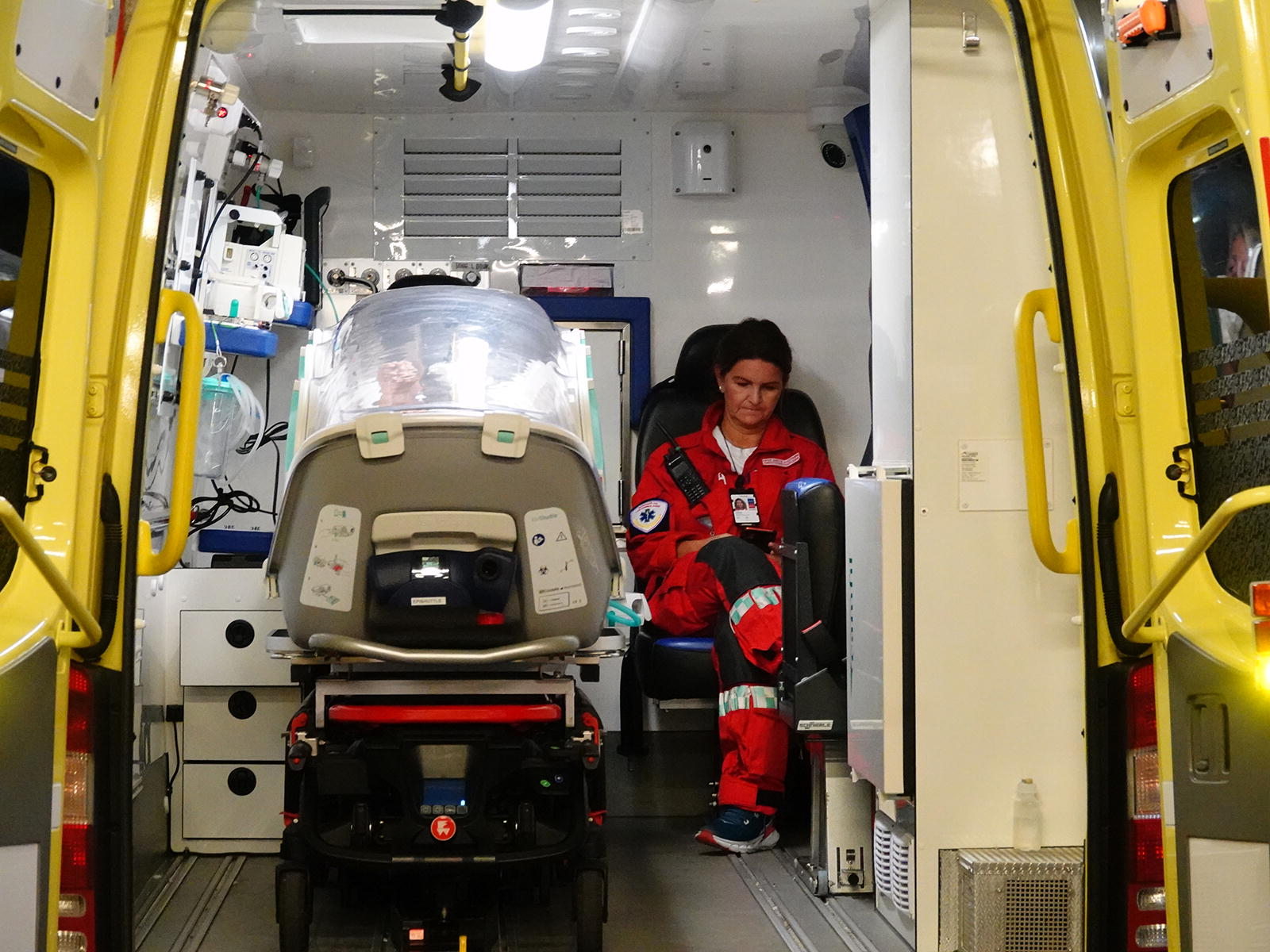
Transport of a patient within a patient isolation unit in a chemical, biological, radiological, nuclear, and explosive hazards ambulance (photograph by Arne Broch Brantsæter).
Air Transport by NORTH in Cooperation With the Royal Norwegian Air Force
For longer distances, where ground transport alone is impossible or impractical, the team leverages the aeromedical capacity of the Royal Norwegian Air Force in the spirit of civilian–military cooperation. The CBRNE ambulance can be carried aboard a military C-130J Hercules aircraft (Figure 3). This allows for door-to-door transportation of patients from any hospital in Norway to Oslo University Hospital.
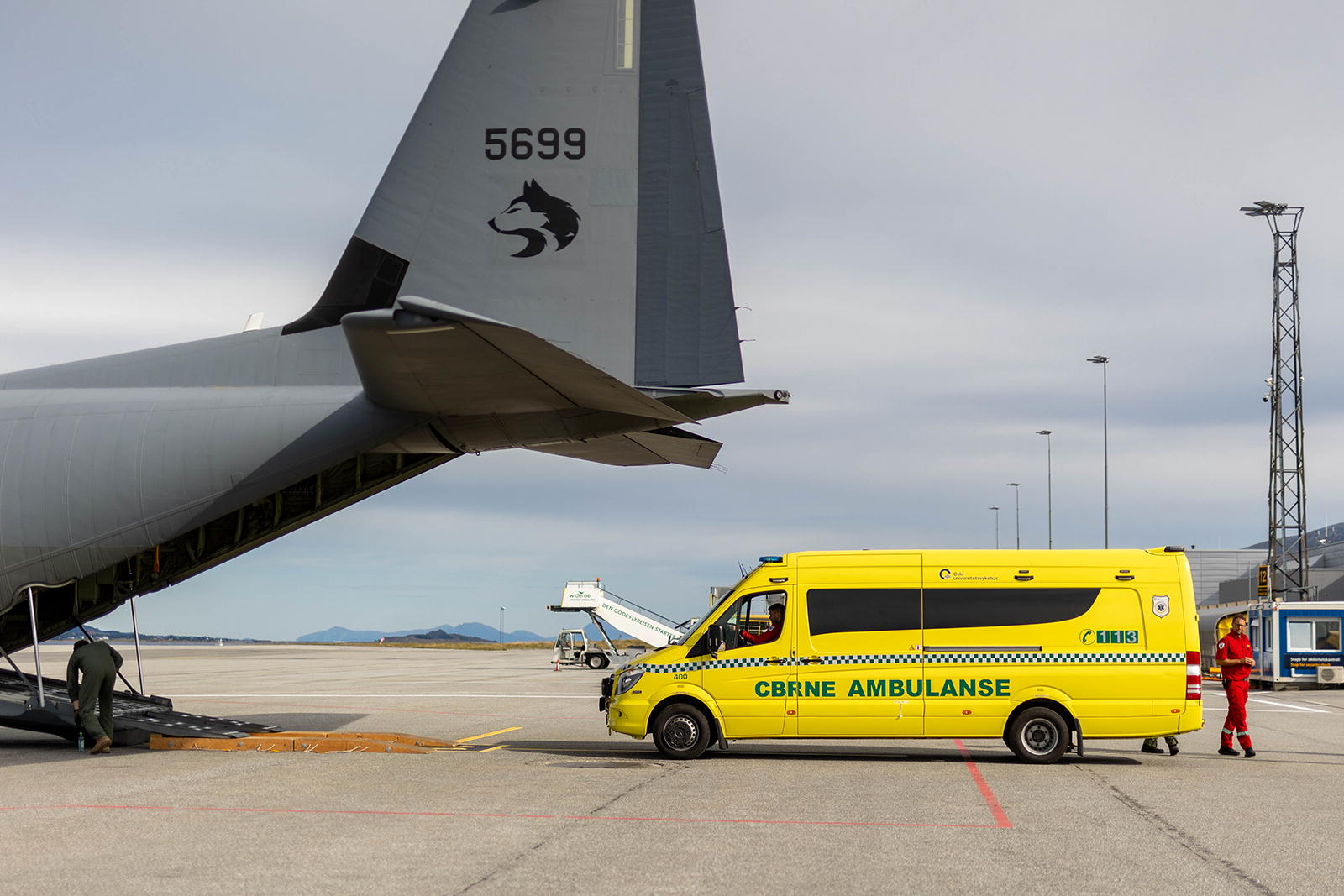
Preparing for loading of a chemical, biological, radiological, nuclear, and explosive hazards ambulance aboard a C-130J Hercules aircraft (photograph by Frederik Ringnes).
For flights of long duration, an in-flight change of the ambulance crew may be needed. If the patient is being transported in the ambulance without the use of a PIU, a negative-pressure tent can be attached to the rear of the ambulance to serve as an anteroom; this facilitates safe change of personnel without contamination of the aircraft when the door of the ambulance is opened.
Training and Exercises for NORTH
Over the years, team members have received training and taken part in full-scale exercises that are conducted twice a year. One exercise is devoted to patient transport from a hospital located in 1 of the 4 health regions to the HLIU at Oslo University Hospital. The other exercise is devoted to the reception, triage, and management of potential HCID patients at Oslo Airport, in collaboration with the airport authority, immigration services, customs, and the local municipality.
Building European Capacity for HCID Patient Transport
During and after the 2014-2016 EVD outbreak in West Africa, it became apparent that European countries had inadequate capacity for repatriation and aeromedical evacuation of persons with EVD and other HCIDs. 15
Organization of NOJAHIP
rescEU is part of the European Union’s Civil Protection Mechanism. It was established to ensure a more effective response to natural and human-induced disasters within and outside the European Union. 18 In particular, rescEU aims to strengthen the collective capacity of Europe to respond to the increasing challenges brought by climate change and complex emergencies. In essence, rescEU represents the European Union’s commitment to solidarity and mutual assistance in times of crisis. The initiative underlines the importance of collaboration, shared resources, and collective action to protect lives, livelihoods, and assets from various threats and disasters.
In December 2019, the Directorate-General for European Civil Protection and Humanitarian Aid Operations called on EU member states to provide capacity for transport of patients with highly infectious diseases to HLIUs in the European Union under the rescEU umbrella. Recognizing the experience and skill of the Norwegian Air Ambulance Services and the Norwegian National Unit for CBRNE Medicine, the Norwegian Directorate of Health responded to this call. It was awarded a contract to provide a service for aeromedical transport of HCID patients within Europe.
This service is now known as the Norwegian rescEU Jet Air Ambulance for Transport of Highly Infectious Patients, or NOJAHIP. Commencing operations on March 1, 2022, NOJAHIP is administered by the Norwegian Directorate of Health in cooperation with the 4 Norwegian regional health authorities. The 7 NOJAHIP teams are recruited from 3 of the 4 Norwegian regional health authorities. Oslo University Hospital, acting on behalf of the South-Eastern Norway Regional Health Authority, has operational responsibility for NOJAHIP, in collaboration with the Air Ambulance Services. NOJAHIP is also supported by other government agencies, such as the Norwegian Directorate for Civil Protection. It is scheduled to operate until the end of September 2026. Its operational reach encompasses the European Economic Area, including both EU member states and Norway, Iceland, and Liechtenstein. It is important to note that NOJAHIP, like other rescEU services, can only be called upon when the requesting nation’s own capacities for transportation are exhausted.
The NOJAHIP Teams
NOJAHIP has meticulously trained 7 teams for safe, effective, and efficient transport of HCID patients. Each team consists of an air ambulance medical doctor specialized in anesthesiology (team leader), an air ambulance nurse, and a paramedic (safety officer). Nurses and medical doctors must have prior operational experience with a national air ambulance service. All team members are carefully selected to enable optimal care and safety for both patients, medical crew, and the surroundings.
At all times, 1 of the NOJAHIP teams is on active duty, prepared to respond to calls from European Economic Area member states and to deploy within 24 hours after mission acceptance. Two pilots employed by the Air Ambulance Services command the aircraft.
During transport missions, the air ambulance medical doctor is the primary decisionmaker and has main responsibility for patient sedation, airway management, and critical care. The air ambulance nurse is specialized in anesthesia or intensive care and is responsible for patient monitoring, administration of medication, and essential care. The main task of the paramedic (safety officer) is to ensure that the safety protocols, including IPC, are strictly followed in order to minimize the risk of disease transmission. A fourth member may be added to the team for particularly complex missions (eg, due to the severity of the patient’s illness or demanding transport conditions).
Ground Transport by NOJAHIP
As NOJAHIP does not have dedicated ambulances at its disposal, the teams must cooperate with dispatching and receiving hospitals and their respective ambulance services. This cooperation with local ambulance personnel is essential to conduct safe transport from the dispatching to the receiving hospital.
The NOJAHIP Aircraft
For aeromedical evacuation, NOJAHIP uses a Cessna 680A Citation Latitude aircraft that has been specially modified for medical transportation purposes, including the installation of medical equipment for intensive care (Figure 4). When not in use by rescEU, the aircraft is based in Northern Norway and used for regular air ambulance missions.
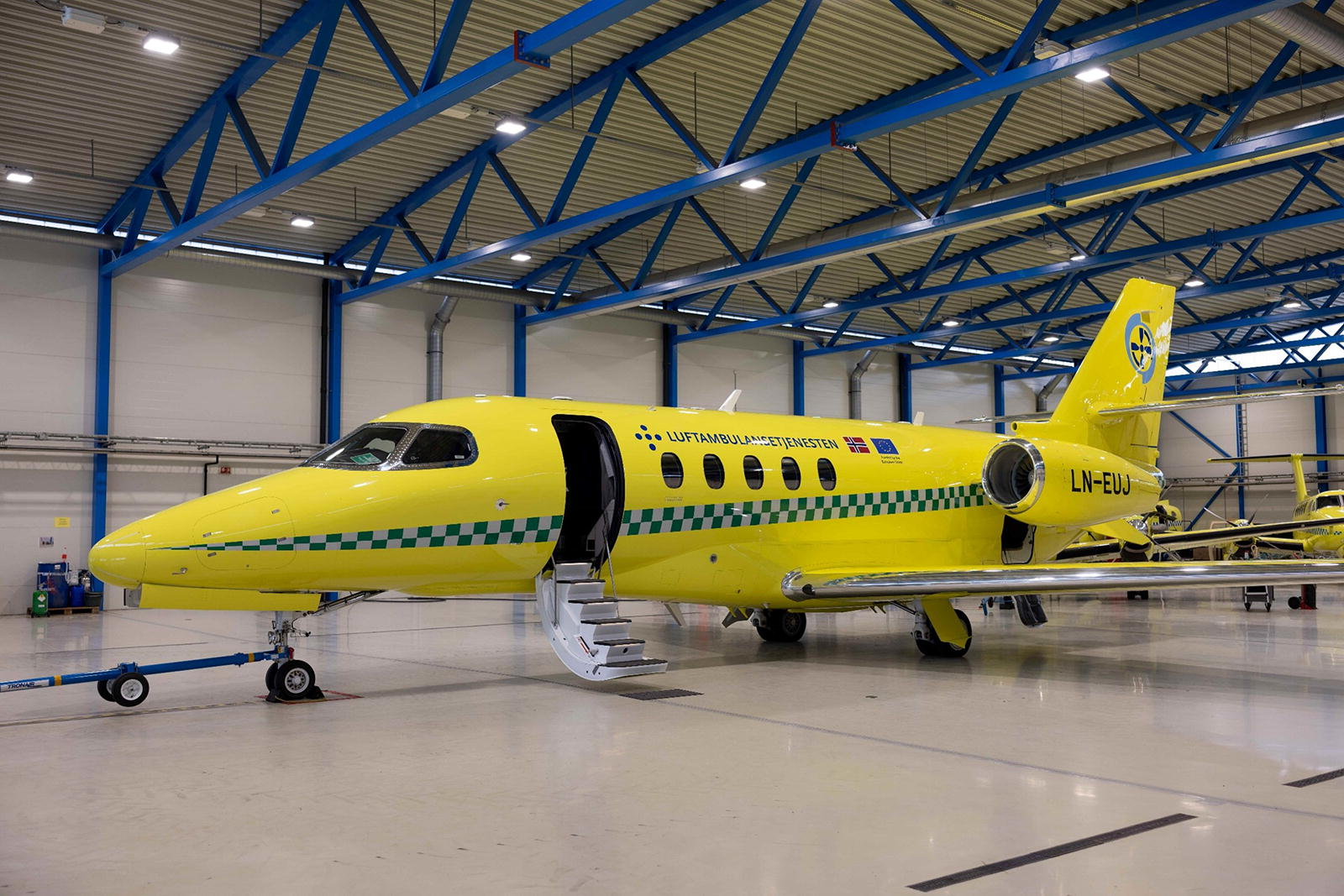
The aircraft used by the Norwegian rescEU Jet Air Ambulance for Transport of Highly Infectious Patients (NOJAHIP) (photograph by Erik M. Sundt).
The aircraft is a midsize business jet with a maximum range of approximately 2,700 nautical miles (5,000 km), allowing it to cover all of Europe without additional ground stops. It can fly up to flight level 450 (45,000 ft) while maintaining a cabin pressure of approximately 6,000 ft. Sea-level cabin pressure can be maintained up to flight level 250 (25,000 ft).
The aircraft is approved by the European Union Aviation Safety Agency for transportation of up to 5 sitting persons and 2 regular stretchers during regular air ambulance missions. The 2 stretchers can be substituted with 1 PIU during HCID missions. A limitation of this aircraft is that it can only be used for HCID patients that are transportable within a PIU, in contrast to the NORTH aeromedical transport setup.
Training and Exercises for the NOJAHIP Teams
During 2021 and 2022, all NOJAHIP team members were required to participate in an introductory course and to complete 2 education and certification courses to attain certification for inclusion in the team roster. Physicians, nurses, and paramedics from Oslo University Hospital who had previous experience with NORTH organized and conducted the teaching and training, with significant contributions from physicians specialized in infectious diseases and tropical medicine.
The introductory course consisted of a 5-day lecture-based series on HCIDs, operations management, and the scope of the NOJAHIP service. The main aim of the first education and certification course was to provide team members with detailed knowledge and hands-on experience with the PIU, both on a technical level and as a tool for HCID transport. In addition, the course provided training in the use of PPE, other IPC procedures, and logistical aspects of international patient transfers. The course was team centered and workshop based, providing all teams with the opportunity to apply theoretical concepts in practical scenarios throughout the week. The second education and certification course focused on a simulated transport request. The teams were able to refresh skills and knowledge acquired during the previous courses and carried out an entire HCID patient transport. After satisfactory assessment of performance with respect to patient care, IPC, and transport effectiveness, all teams were certified by NOJAHIP in collaboration with an external evaluator.
In May 2023, all 7 teams participated in a 3-day follow-up training session. This training concentrated on the care of intensive care patients using a PIU in the jet ambulance. In addition, the teams’ knowledge of general PIU management and IPC routines during patient handover and takeover were refreshed.
NORTH and NOJAHIP: Synergy and Mutual Benefits
The experiences and skills gained by NORTH personnel since 2017 provided a strong basis for the establishment of NOJAHIP in 2022, with respect to methods, standard operating procedures, and selection of equipment. In turn, the transfer of knowledge and practical experiences from NOJAHIP’s continuous training and development have benefited domestic NORTH operations. Both entities continue to accrue and exchange experiences from training and exercises.
Common Experiences With the Use of PPE and PIU
Transport of patients with HCIDs is complex due to the risk of disease transmission to ambulance personnel near the patient and the potential cross-contamination of the ambulance or aircraft, which can cause disruption in services. The level of concern increases with the duration of transport, the severity of the patient’s illness, and the HCID in question, as biological agents may be transmitted by direct contact, droplets, or aerosols. To provide transportation that is adapted to the situation, it is desirable to have flexibility in the way these transport missions are executed, including the apppropriate use PPE and PIU. This is best achieved by using well-trained personnel who are able to choose an appropriate modus operandi based on a concrete risk assessment.
NORTH and NOJAHIP use the same PPE and PIU procedures. Below we present some of the common experiences the teams have gained.
Personal Protective Equipment
In the isolation room at the dispatching and receiving hospitals, medical staff must wear PPE. Transport personnel from NORTH and NOJAHIP don positive-pressure respirator suits before entering the isolation room (Figure 5). During the exit procedure, decontamination with peracetic acid and doffing of PPE are carried out with the assistance of a paramedic (safety officer) wearing a “passive” full-protection coverall, full face respirator mask with a P3 particle filter, gloves, and shoe covers.
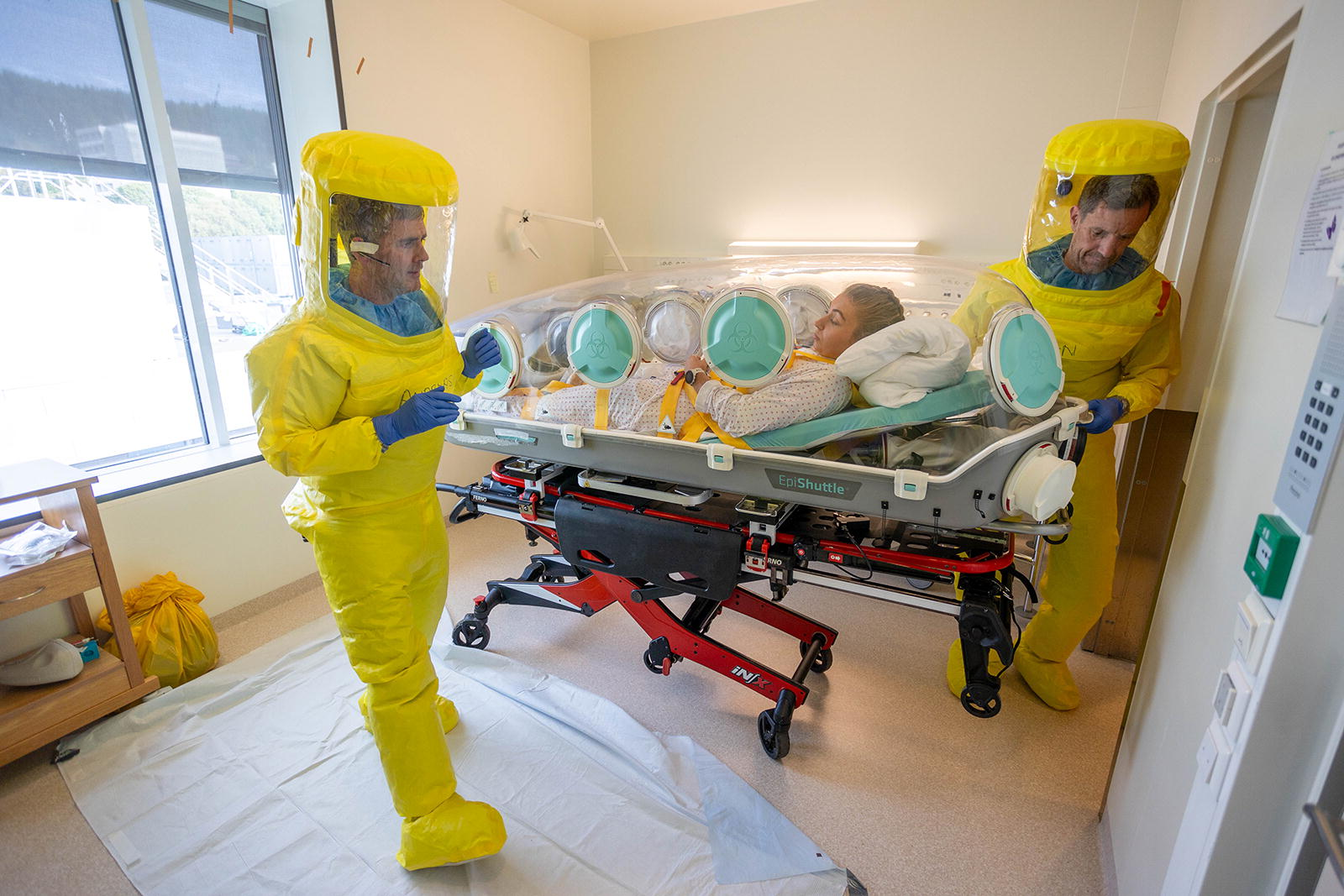
Transport personnel inside an isolation room wearing positive-pressure respirator suits. The patient has been placed inside a patient isolation unit (photograph by Frederik Ringnes).
When using a PIU, there is no need to wear PPE during transport, and accompanying personnel may use their regular work uniform. This considerably diminishes the likelihood of fatigue during extended transfers.
Patient Isolation Unit
For several decades, PIUs with high-efficiency particulate air filters, many featuring negative pressure, have been used to protect both transport personnel and the close surroundings from exposure to biological hazards. 19 The recent COVID-19 pandemic also demonstrated the utility of PIUs for transport of patients with SARS-CoV-2 infection.20–23 Although COVID-19 is no longer considered an HCID, practical experience with the use of PIUs during the pandemic has significantly improved the capability for transport of high-risk patients in many countries across the world.
A PIU obviates the need for using PPE during transport, which reduces personnel discomfort and fatigue and thus facilitates transports of longer duration. However, many PIUs have severe limitations, including patient discomfort, difficult access to the patient, challenging communication, vulnerability to external impact, incompatibility with commonly used stretchers, potential leakage of air and fluids, and lack of certification for ground or air transport.
Based on assessments of and experiences with PIUs on the market in 2014, a team of medical doctors at Oslo University Hospital joined forces with commercial actors to design a more robust, comfortable, and safe PIU. This led to the production of the EpiShuttle (EpiGuard, Oslo, Norway). The EpiShuttle is EN 1789 certified and can be safely used in ambulances, helicopters, and airplanes. It is a reusable hard-shell PIU, with a top that provides visual contact between patient and personnel, glove ports for necessary patient interventions en route, and access ports for medical equipment. Externally mounted equipment, such as infusion pumps and ventilators, can therefore be kept uncontaminated throughout transport. The EpiShuttle can be secured on different stretchers in a variety of vehicles and platforms. The EpiShuttle is used by both NORTH and NOJAHIP, and the experiences gained by the 2 transport services have been exchanged and have been of great mutual benefit. Today, the EpiShuttle is an integral part of transport services for patients with HCIDs in several regions of the world.
The EpiShuttle has some limitations that can be mitigated by pre-mission planning and training. However, the interior size prevents its use for very large patients. In addition, the entire EpiShuttle itself is a physical barrier, which makes some interventions cumbersome or impossible. Finally, the maximum allowed open flow of oxygen to the patient is 6 L/min.
After each use, the unit must be returned to the ambulance base for disinfection and resetting, in preparation for the next patient transportation. The manufacturer provides guidelines for cleaning and disinfection of the EpiShuttle in the user handbook and on its website. 24 Four disinfectants have been validated for use on the EpiShuttle: peracetic acid, hydrogen peroxide vapor, 25 ethanol (75%), and ozone. The chemical compatibility matrix (ie, a table demonstrating the suitablity of different disinfectants for the EpiShuttle) may act as a guideline for customers who want to implement their own disinfection procedures in cooperation with local infection control personnel.
To facilitate decontamination of the EpiShuttle after use, NOJAHIP, in cooperation with production engineers, developed a negative-pressure chamber with integrated glove ports that enables disassembly and sequential decontamination without risk of exposure to biological agents (Figure 6). Disinfection with vaporized hydrogen peroxide is done first, followed by physical removal of biological residue, and finally soaking of the separate parts in peracetic acid. This procedure is an example of how cleaning and disinfection can be performed in practice. It is fully compliant with the manufacturer’s decontamination guidelines. The chamber is fitted with a ventilation unit with high-efficiency particulate air filters and may also be used for other items needing decontamination after missions.
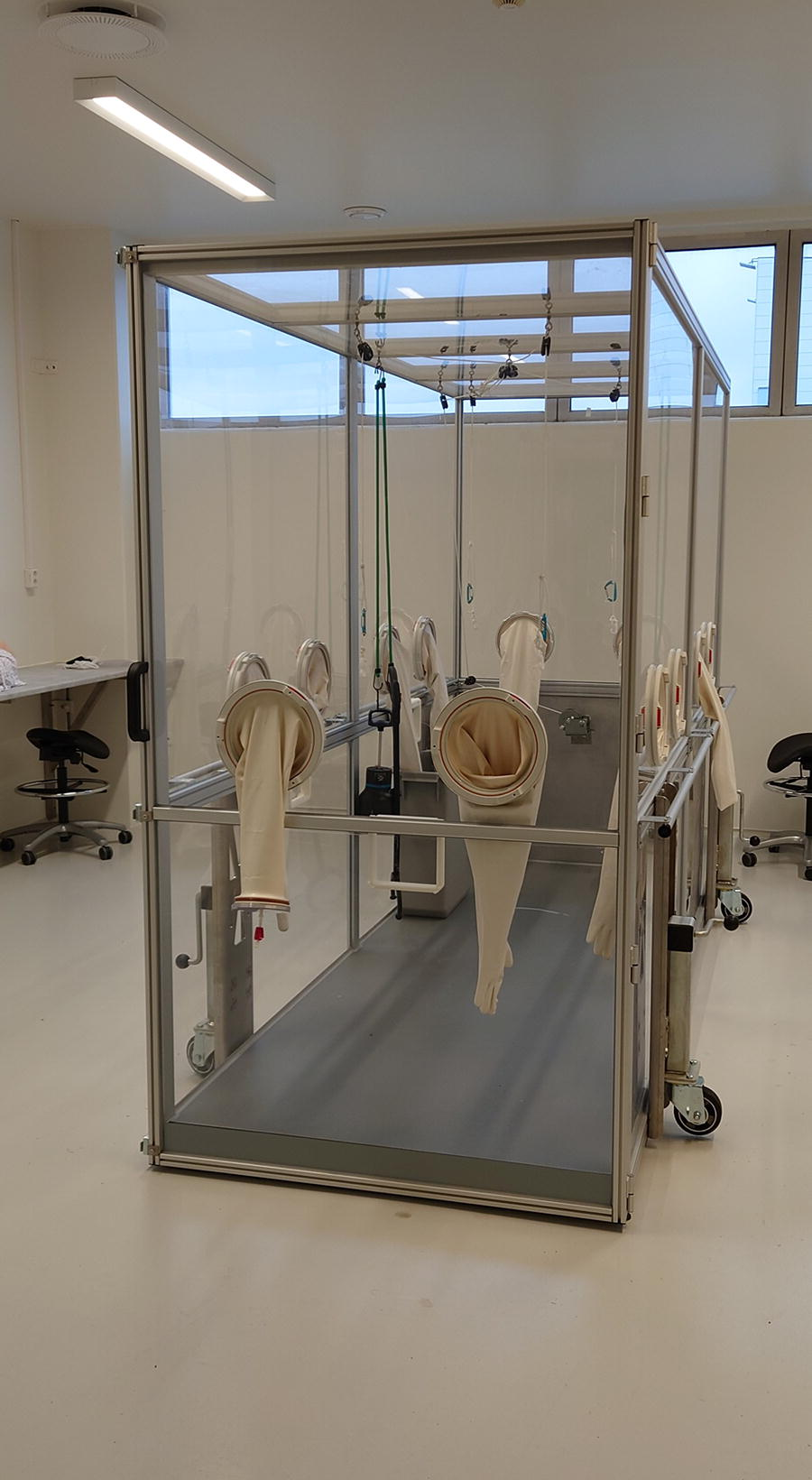
Chamber for disinfection of personal isolation units after use (photograph by Arne Broch Brantsæter).
NORTH and NOJAHIP in the Global Context
NORTH and NOJAHIP were developed in a well-resourced part of the world with few HCID patients but where there has been political commitment to provide high-quality transportation for this group of patients. The need for this service was clearly demonstrated during the 2014-2016 Ebola outbreak in West Africa, which also affected European citizens from countries with advanced healthcare services. Subsequent outbreaks of HCIDs in both resource-limited and affluent countries have reinforced this need.
It is our opinion that all countries must have plans for transportation of HCID patients. However, these must be adapted to the local context and resources. For example, smaller countries may not require an aeromedical service and resource-constrained countries may need to use less costly equipment. Nevertheless, we believe that our experience and systems for transportation of patients with HCIDs within Europe embody elements that are relevant to all countries, such as suitable vehicles, a pool of trained personnel, and protocols for IPC. The key is integrating these resources and ensuring that patient care and IPC measures are maintained throughout the entire transport axis. This approach protects personnel and the community from infection and ensures proper patient care.
The Future of NORTH and NOJAHIP
Repatriation of a Norwegian aid worker with EVD in October 2014 clearly demonstrated the need for Norway to have national capacity for transport of HCID patients. This led to the launch of NORTH in 2017. The establishment in 2022 of NOJAHIP for intra-European transport supplements this domestic capacity; it does not eliminate the need for Norway to maintain its national ground and air ambulance transport capacity for HCID patients. Sharing experiences from exercises and technical developments will continue to mutually benefit NORTH and NOJAHIP. For example, NOJAHIP’s experiences with aeromedical evacuation may facilitate domestic transport of HCID patients in new and larger helicopters, such as the AW101, which is being phased in as a search and rescue aircraft in Norway.
NOJAHIP’s current contract with the European Union runs until the end of September 2026. The annual cost of the NOJAHIP program is approximately €9 million (US$9.6 million), excluding the initial costs for leasing the aircraft and purchasing equipment. Until now, this program has primarily focused on the letter B of CBRNE (ie, biological hazards). Recognizing the evolving nature of threats and the importance of a comprehensive response mechanism, a process is underway to expand NOJAHIP’s mandate to the whole spectrum of CBRN (excluding the explosives aspect of CBRNE) and to burn injuries. This will be done within the program’s budget.
Broadening its scope may enable NOJAHIP to address a wider range of threats, from HCIDs to chemical spills, radiological hazards, and thermal injuries. This “all hazards approach” may enhance Europe’s resilience to current and future threats and contribute to better preparedness. In this way, NOJAHIP could also potentially evolve into a hub for expertise, training, and rapid response in the field of CBRN, and help facilitate an agile mechanism for patient transport between EU and other European Economic Area countries.