






Abstract
Introduction:
Chondrolaryngoplasty, or tracheal shave, is a cosmetic surgery performed either alone or with other facial feminizing procedures. The most common endolaryngeal complications are odynophagia, transient hoarseness, and laryngospasm. 1 One of the potentially devastating complications of over resection of the thyroid cartilage is destabilization of the anterior commissure ligament leading to lowering of the patient's voice. 2 At present, surgeons routinely perform evaluation of anterior commissure height with translaryngeal needle placement using flexible laryngoscopy through a laryngeal mask airway 3 before proceeding with thyroid reduction. The downside of this method is the necessity of switching to an endotracheal tube (ETT) if further procedures are required. We have circumvented these problems with the use of a Glidescope® during facial feminization cases requiring chondrolaryngoplasty. After the completion of the chondrolaryngoplasty, additional procedures can proceed with the ETT remaining in place.
Methods:
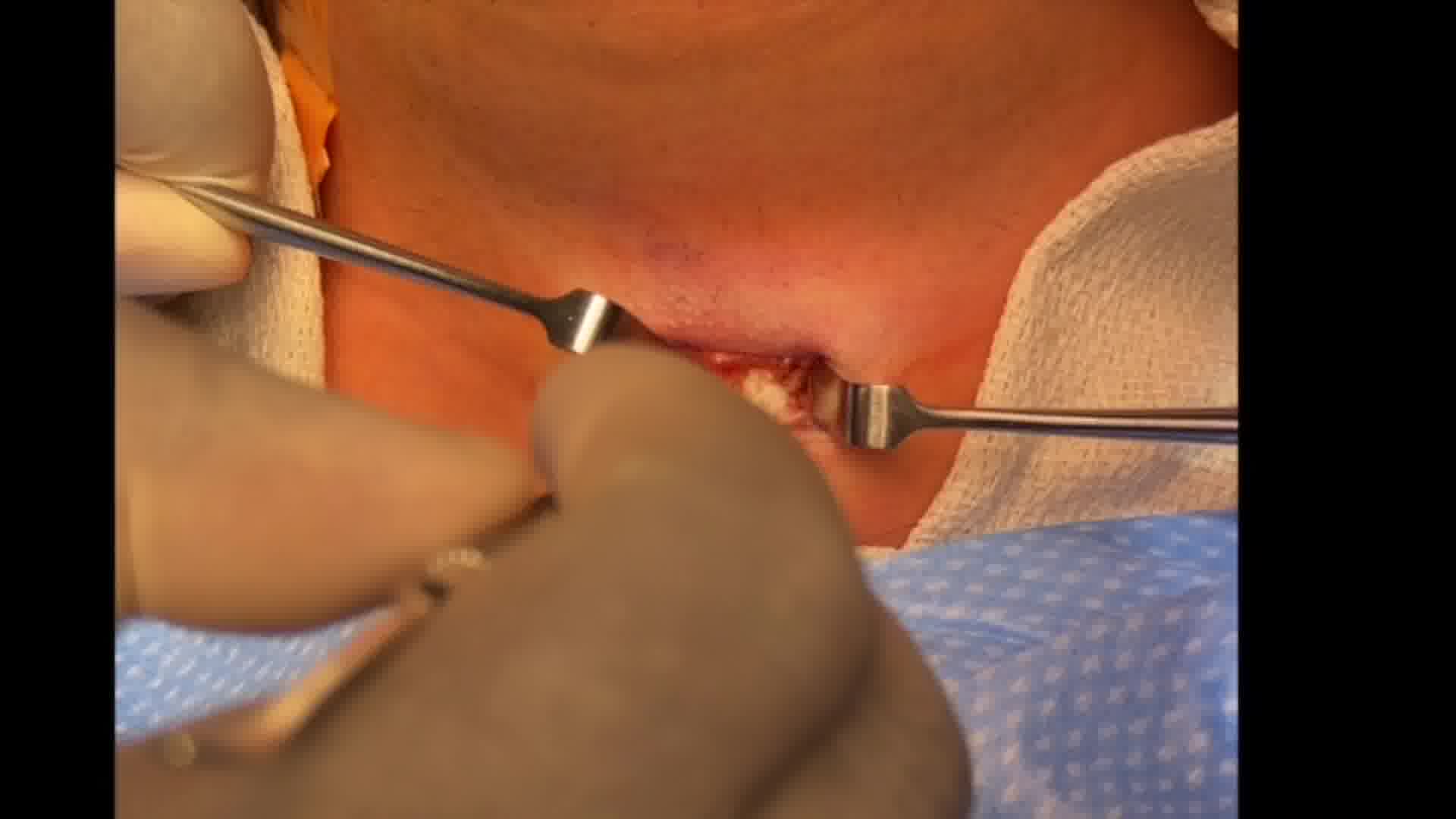
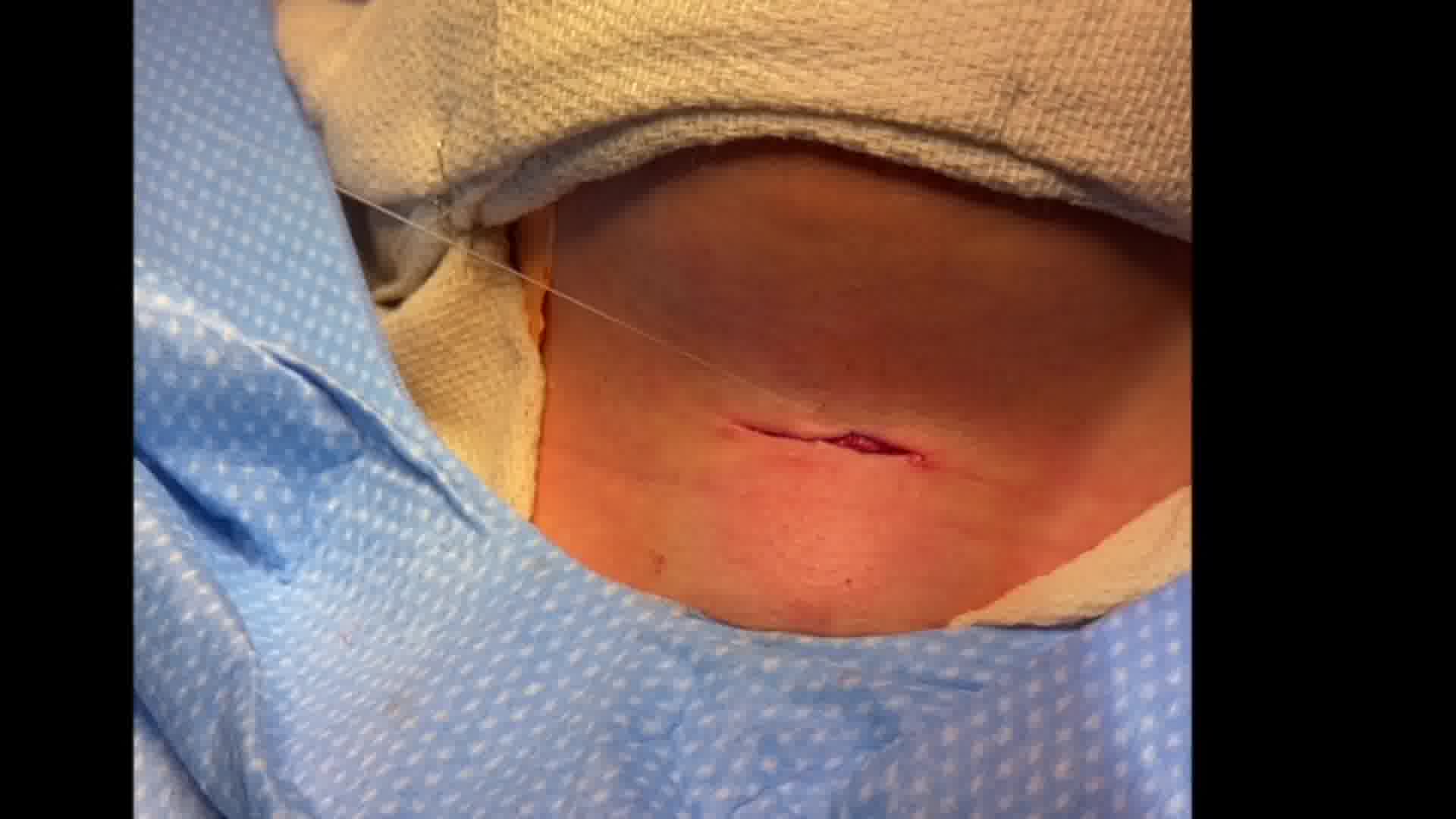
Glidescope-assisted chondrolaryngoplasty was performed on two patients in their 20s undergoing multiprocedure facial feminization surgery. Patients underwent standard induction for general anesthesia and the bed was maintained in a neutral position for the procedure. Surgical Technique: (1) The bed is maintained in a neutral position. The patient is prepped and draped appropriately for neck incision. The Glidescope is placed off the field with the monitor positioned to allow visualization to the primary surgeon. (2) The incision is marked along a pre-existing crease of choice. Local anesthetic is injected and dissection proceeds down to the thyroid cartilage. The thyroid perichondrium is incised and elevated using a Freer elevator on both sides of the thyroid notch. (3) An assistant proceeds with Glidescope visualization of the anterior commissure. The primary surgeon carefully passes a 22-gauge needle just above the level of the anterior commissure that is typically found at about halfway to two-thirds of the height of the thyroid cartilage. (4) The level of the anterior commissure, which demarcates the inferior extent of resection, is identified, and marked on the thyroid cartilage using a marking pen or Bovie. The Glidescope can now be removed. (5) Cartilage excision and contouring are performed superior to the marking leaving ∼2 mm of cartilage above the marking. In older patients, Rongeurs or a rotary burr may be necessary to remove the more calcified thyroid cartilage. (6) Once satisfactory reduction is confirmed, closure is performed reapproximating the strap muscles with buried 4-0 Vicryl, the dermis is closed using buried 6-0 Monocryl, and the skin is closed using a running 6-0 fast gut or a topical skin adhesive. (7) Appropriate prepping and draping are performed for all additional procedures.
Results:
This new approach for chondrolaryngoplasty with use of the Glidescope allows for excellent view of the anterior commissure during translaryngeal needle localization and the maintenance of an ETT throughout multiprocedural cases.
Conclusion:
We describe a quick and effective method for identification of the anterior commissure height in chondrolaryngoplasty using the Glidescope. After completion of the chondrolaryngoplasty, additional procedures can proceed with the ETT remaining in place that may reduce both operative time and risk to the patient.
All procedures performed in studies involving human participants were in accordance with the ethical standards of the institutional and national research committee and with the 1964 Helsinki declaration and its later amendments or comparable ethical standards.
Informed consent was obtained from all individual participants included in the study. No identifiable landmarks are listed in text, or in the video.
A.H. contributed to conceptualization, writing—original draft, and writing—review and editing. N.D. was involved in conceptualization, data curation, visualization, writing—original draft, and writing—review and editing. A.O. carried out supervision, visualization, writing—original draft, and writing—review and editing. R.D. was in charge of conceptualization, data curation, investigation, methodology, project administration, supervision, writing—original draft, and writing—review and editing.
No conflict of interest. All work was completed at SUNY Upstate Medical Center, Syracuse, NY.
No funding was received for this article.
Runtime of video: 1 min 18 secs
Get full access to this article
View all access options for this article.