




Abstract
Disadvantaged communities in rural agricultural areas throughout the San Joaquin Valley (SJVAB) and Salton Sea Air Basins (SSAB) disproportionately bear the impacts of poor air quality, despite years of regulatory efforts to reduce pollution from combustion sources. Evidence shows that there is an overlooked, unregulated pollution source affecting these areas. The influence of soil NOx emissions on air pollution in agricultural regions has come under scrutiny in recent years and is a potential candidate as an underestimated pollution source. However, despite many public comments and letters emphasizing the critical nature of this issue, little has been done toward investigating and regulating this putative source of air pollution. Here, we present a policy brief in representation of underserved communities in the SJVAB and SSAB of California, providing evidence from peer-reviewed research that supports this claim and offering regulatory recommendations to mitigate the overlooked source. We believe that through activating community organizations, farmers, policymakers, and scientists, we may work together to find solutions that will result in bringing these rural (and adjacent urban) areas into compliance with the Clean Air Act.
PROBLEM
The San Joaquin Valley (SJVAB) and Salton Sea Air Basins (SSAB) are two of the most polluted air basins in the country, renowned for their immense agricultural productivity. These regions are nonattainment for three federally regulated air pollutants: ozone (O3), fine particulate matter (PM2.5), and coarse particulate matter (PM10). Both have failed to meet O3 National Ambient Air Quality Standards (NAAQS) throughout the history of regulation. 1 In addition, PM2.5 concentrations in the SJVAB are so severe that the Environmental Protection Agency (EPA) has rejected the State Implementation Plans for attainment of the 2006 and 2012 PM2.5 NAAQS. In fact, the 1997 PM2.5 standard was only attained in the SJVAB in 2022. 2 Figure 1 shows the plateau behavior of O3 and PM2.5 design values3 in the SJVAB and the SSAB. The absence of a decreasing trend in the last 6 years for both strongly indicates a potential missing source in extant air emissions inventories, i.e., one that is outside of regulatory control.
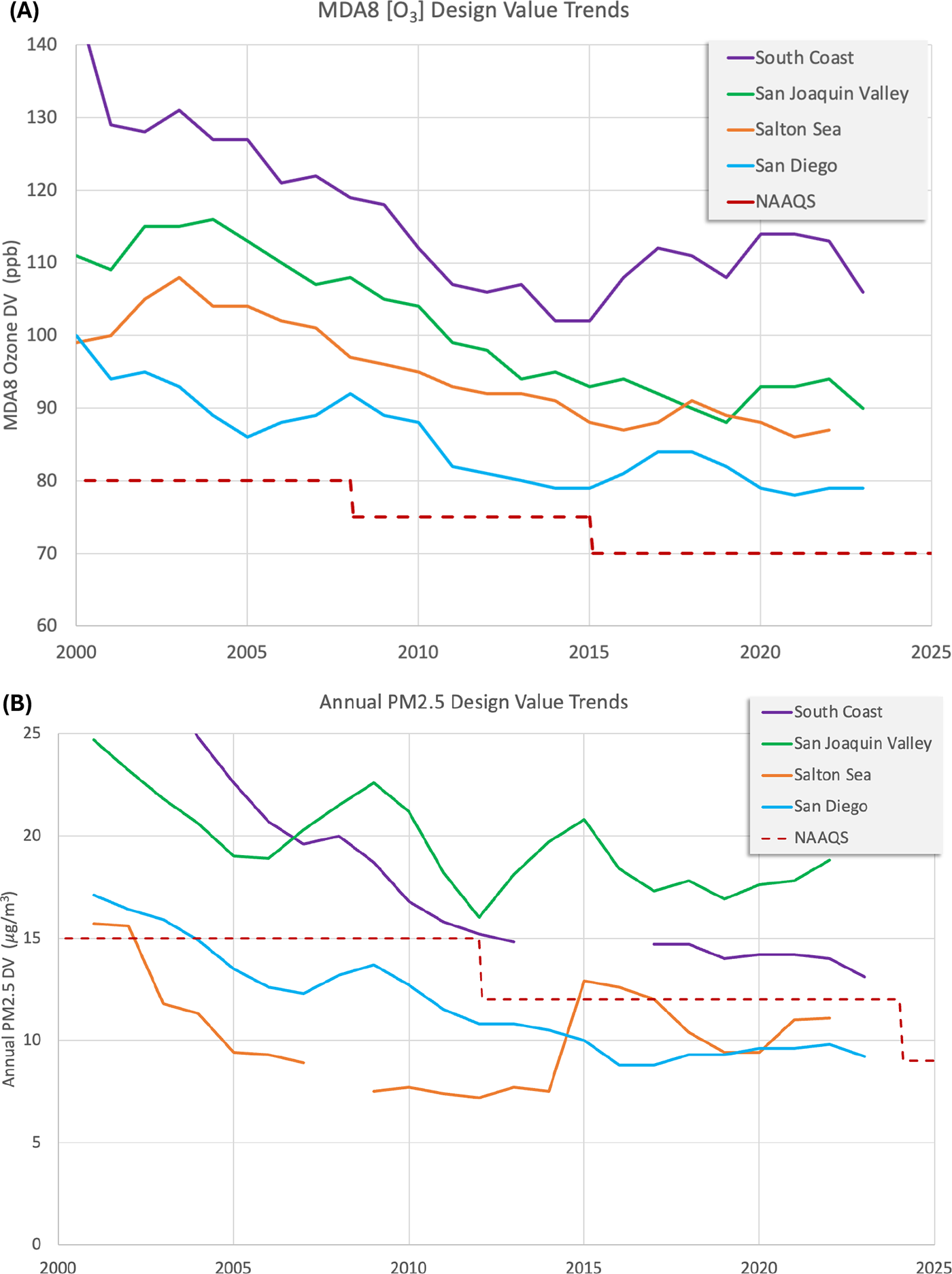
Trends in maximum daily 8-hour (MDA8) ozone
Persistent exposure to some air pollutants can lead to reductions in crop yield, 4 in addition to a wide array of impacts on human mortality and morbidity involving cardiovascular and lung disease as well as adverse birth outcomes, neurodevelopment and cognitive function, and even diabetes. 5 Exposure to air pollutants, such as O3 and PM2.5, inflicts significant and irreparable harm to people, especially to those with preexisting respiratory and cardiovascular diseases, the elderly, and children.6,7,8 In fact, Imperial County (in SSAB) held both the highest infection and mortality rates per capita in the state from COVID-19 throughout the height of the pandemic, believed to be influenced, at least in part, by these air quality issues.9,10,11,12 In addition to air quality, these communities face a number of other injustices that affect their overall well-being. 13 Residents of the SJVAB and SSAB are majority people of color (>70%), and 40% of residents live below the poverty line. 14 Moreover, these communities face insufficient housing availability, poor infrastructure, language barriers, high rates of asthma, and impaired water quality.15,16,17,18 Figure 2 is from CalEnviroScreen, 19 an environmental justice tracker that ranks census tracts in California based on potential exposures to pollutants, adverse environmental conditions, socioeconomic factors, and prevalence of certain health conditions. It is apparent that communities in these regions rank much higher on these common environmental injustice metrics in comparison to most of the rest of the state. Environmental health and justice organizations contend with the entrenched economic power of the agricultural industry, oil and gas, transportation, and land development industries in the state. In many cases, industry power takes precedence over community health.
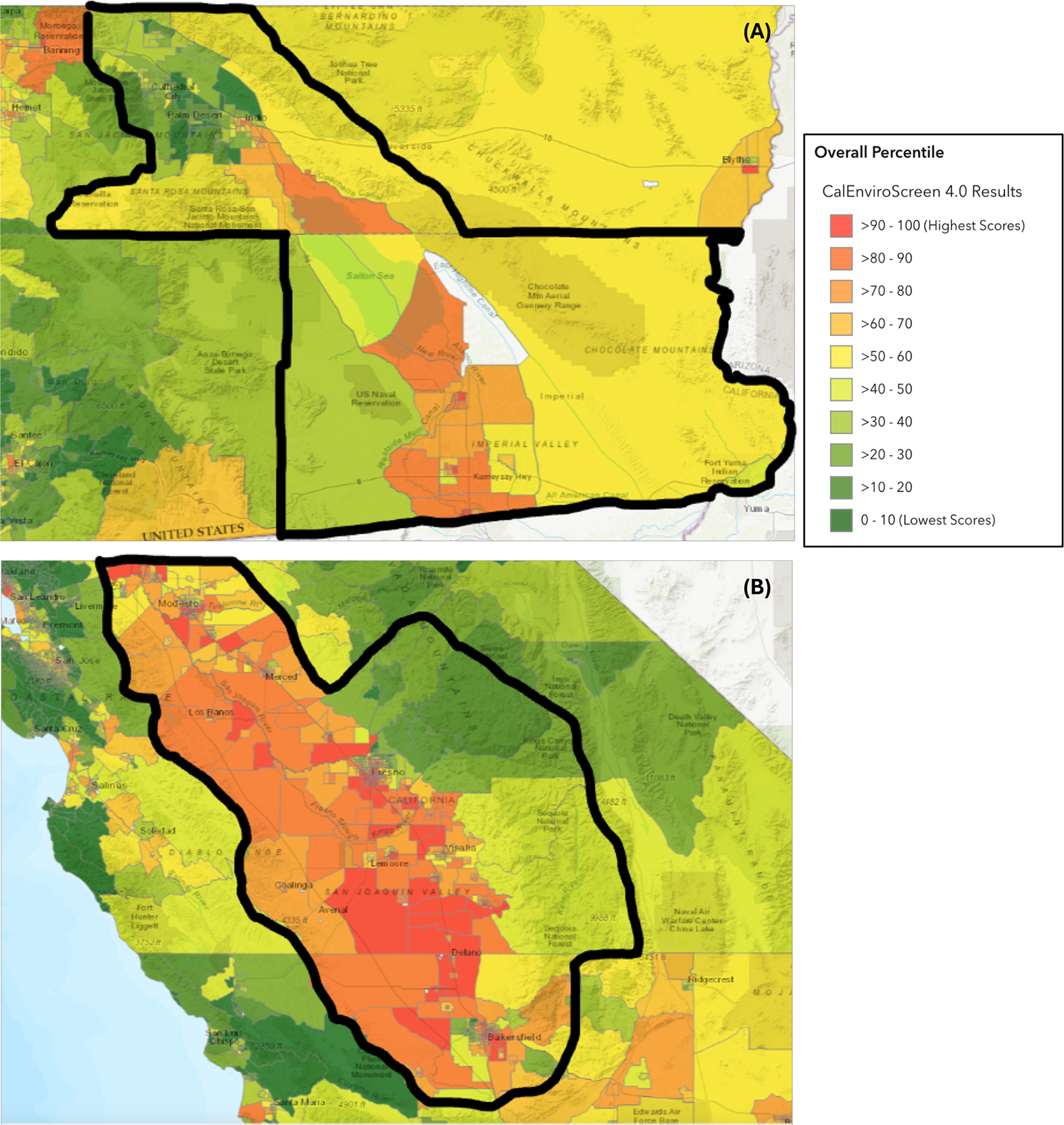
The environmental justice tracker (CalEnviroScreen) for the
Nitrogen oxides (NOx = NO + NO2) serve as important precursors to O3 and PM2.5, and primary NOx sources are generated by high-temperature combustion in air from vehicles, power plants, lightning, and biomass burning.20,21,22 However, microbial emissions of nitric oxide (NO) from nitrification/denitrification processes in soils are known to be significant, especially from fertilizer in industrial agricultural lands.23,24,25 The production of NO in soils is a complicated process dependent on many variables, but most importantly on nitrifying and denitrifying bacteria, nitrogen and oxygen availability, soil moisture and pH, and temperature.26,27 NO is a byproduct of both nitrification and denitrification soil processes. Nitrogen availability in agricultural soils is directly dependent on N fertilizer inputs. Thereby, the overapplication of N fertilizer results in the production of NO (as well as nitrous acid, HONO, and nitrous oxide, N2O). HONO rapidly photolyzes into NOx, while N2O is a potent greenhouse gas (298 times more potent than carbon dioxide).
As traditional anthropogenic emissions from fossil fuel combustion continue to decline due to air quality (AQ) and climate regulatory efforts, largely due to the federal Clean Air Act and California’s Global Warming Solutions Act (AB32), the proportional impact of anthropogenic soil emissions is steadily increasing. Despite the long-term progress in NOx reductions, nonattainment of national AQ standards for O3 and PM2.5 persists throughout intensive agricultural areas in California, like the SJVAB and SSAB. 28 This issue is a matter of environmental injustice because the impacts are felt most acutely in areas of high social vulnerability, 29 and these conditions may be avoidable with scientifically informed political action.
FINDINGS
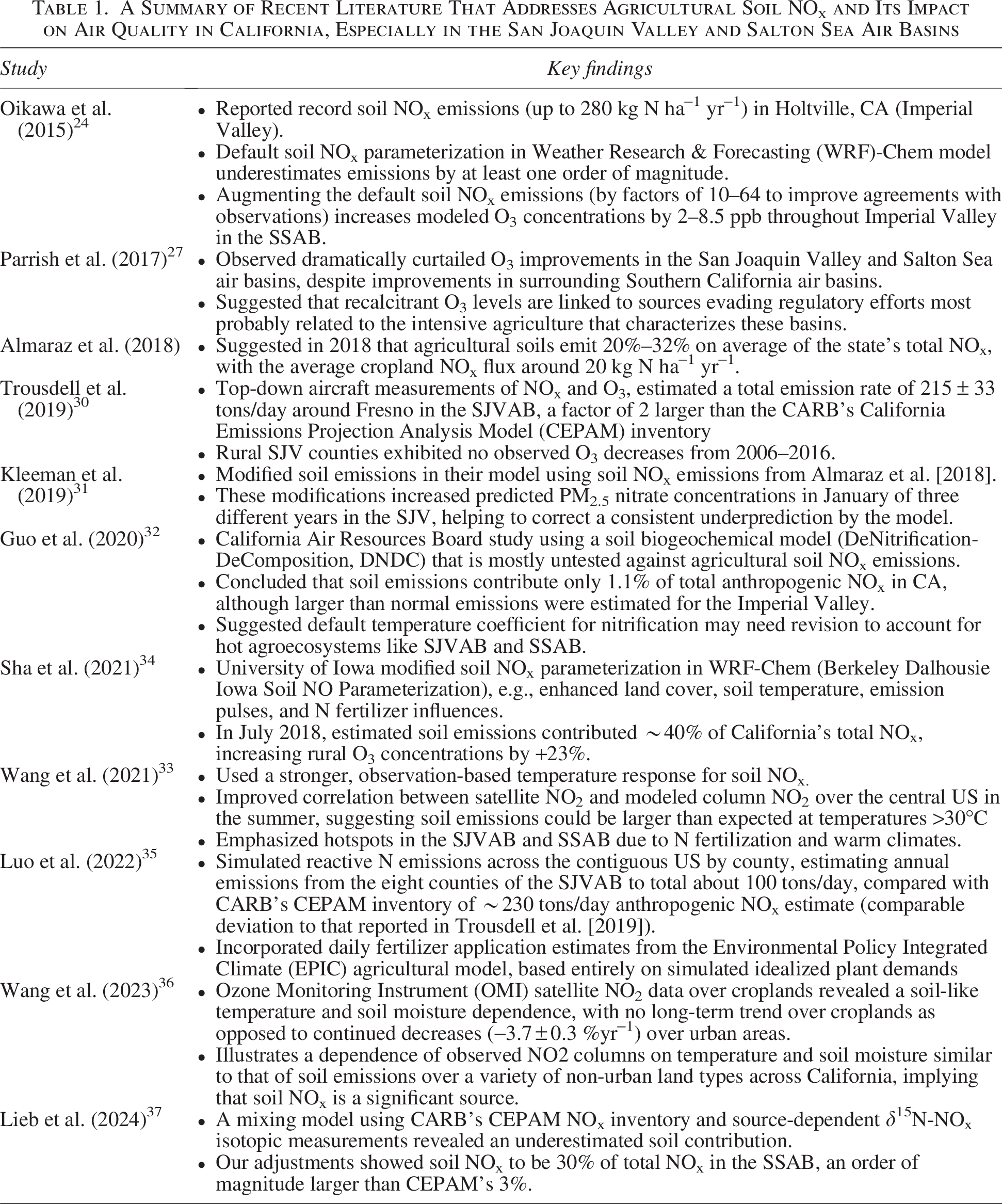
Several independent studies support the hypothesis that soil NOx emissions are underestimated by regulatory AQ models.30,31,32,33,34,35,36,37,38 These studies are summarized in Table 1, outlining key findings, including emphasis on the continual nonattainment of AQ standards in the SJVAB and SSAB, the impact of soil NOx on AQ nonattainment, and various environmental factors and agricultural practices that may influence soil NOx production. However, one study by CARB researchers, using a soil biogeochemical model (DeNitrification-DeComposition) that has not been extensively tested in air quality studies (that is, validated by observations of NO2 by satellite or surface network NOx/O3), found soil NOx emissions from agricultural systems across California to be negligible. Based on a study by Wang et al. (2021),33 this underestimate is likely to be, at least in part, due to their use of a default temperature coefficient for nitrification based on temperate meteorological conditions that may not accurately reflect the influence of extreme temperatures, like those observed in the SJVAB and SSAB. This negligible (∼1%) contribution from agricultural soils in California is conceptually hard to justify given that the global average of soil sources of NOx is on average ∼20%, 39 similar to the contribution from the continental US (∼17% according to Silvern et al., 2019). 40 On the contrary, 10 other studies, based on thoroughly tested models and observations, found emissions 2–50 times larger across California agricultural landscapes. The collective evidence strongly suggests that agricultural soil NOx significantly aggravates AQ problems in rural California communities (and inland cities), making it urgent that policymakers and regulatory bodies consider these insights for effective AQ management strategies. There is a pressing need for continued research to refine simulated soil NOx parameterizations and improve our understanding of the exact physio-chemical controls, which should emphasize collaborations between researchers, regulatory agencies, and local communities for comprehensive and sustainable solutions.
A Summary of Recent Literature That Addresses Agricultural Soil NOx and Its Impact on Air Quality in California, Especially in the San Joaquin Valley and Salton Sea Air Basins
INTERESTED GROUPS OF CONCERN
Key groups include community organizations in the SSAB and SJVAB, farmers, and various AQ management bodies. Community organizations will serve as stewards for community needs, while farmers and regulatory management bodies should work to ensure safe, sustainable, and efficient agricultural practices. Ensuring awareness about the health impacts of current farming practices among community members and organizations in agriculturally productive regions is crucial. Farmers should be provided alternative strategies to improve fertilizer use efficiency, ultimately reducing expenses and minimizing environmental consequences.
The responsibility lies with local, state, and federal environmental protection agencies (i.e., Imperial County Air Pollution Control District, South Coast Air Quality Management District, SJV Air Pollution Control District, CARB, State Water Resources Control Board, California Department of Food and Agriculture [CDFA], US Department of Agriculture, and the US EPA) to support comprehensive research and disseminate vital information to communities and farmers. Specifically, environmental management bodies such as CARB, CDFA, USDA, and the US EPA should be responsible for reviewing existing research and planning new projects to better understand the formation of NO (and HONO) from agricultural soils and how fertilizer, temperature, and soil moisture influence their production. These bodies are also responsible for enforcing new agricultural practices that result from research projects. Regional air quality management districts should work with state and federal agencies to ensure that their air quality complies with standards. Further, the Irrigated Land Regulatory Program (ILRP) of California requires farms to report their N fertilizer usage. This information should be shared with researchers to better understand the influence of N fertilizer usage (especially when used in excess) on the production of soil NO.
POLICY RECOMMENDATIONS
Policymakers have an important role in the reduction of soil NOx production in agricultural communities. It is important that communities are educated about the air quality issues and concerns. Specifically, community awareness about seasonal trends influencing pollution extremes and interpreting air monitoring data for O3 and PM2.5 is vital for mitigating health implications. Discussing this information in public engagement forums such as AB-617 Community Air Protection Program, 41 Imperial Valley Environmental Justice Task Force meetings, CARB’s Subject Matter Expert Review Panel, and other local AQ or agriculture-related meetings is imperative. Specifically, educating community members on conditions that lead to elevated O3 and PM2.5 concentrations should be reiterated seasonally. In addition, CCV and CARB have gone to extensive efforts to implement the Identifying Violations Affecting Neighborhoods (IVAN) air monitoring network to educate the public about their particulate matter pollution problems. This network has been expanded to other regions of the state; however, maintenance of these monitors is lacking as many of them are offline. We recommend that this network continue its expansion into more regions of the SJV and that more resources go toward maintaining the network. The IVAN network allows community members to report air quality incidents, which empowers communities to have more control over air quality issues and resolutions.
To enhance AQ management, local, state, and federal organizations should collaborate with scientists to comprehend the agricultural impact of soil NOx in rural areas, as well as research potential control measures that can be adopted into state Clean Air Act implementation plans. This is only going to become more imperative as the US EPA implements its most recent health-based refinement of the NAAQS for annual PM2.5 from 12 to 9 µg/m3. 42 The new standard is going to push most of rural California out of attainment and will require additional resources to achieve compliance, specifically addressing this agricultural source of NOx. Strengthening relationships with community organizations is key, and leveraging resources such as the EPA’s Environmental and Climate Justice Community Change Grants program could aid in addressing the soil NOx issue. These collaborations should aim to reduce pollution, enhance climate resilience, and build community capacity to address environmental and climate justice challenges. In addition, a deeper understanding of the primary components that produce soil NOx is crucial for assessing the manageability of soil NOx emissions. We strongly encourage regulatory agencies and state/federal funding to allocate more resources towards research projects focused on these topics for more informed policy recommendations.
We provide here scientific evidence supporting calls for investigating the impact of agricultural soil NOx emissions in state and federal models, along with suggesting practices to minimize emissions, while benefiting farmers, community members, and the environment. Various farming methods can be employed to reduce NOx emissions, which most often correspondingly reduce N2O emissions. Modern agriculture is driven by the maximization of output, which is often short-term focused, results in excessive amounts of food waste, and lacks regard for input efficiency. 43 Utilization of synthetic fertilizer maximizes output; however, input efficiency of N fertilizer is one of the lowest among the plant nutrients, contributing substantially to environmental degradation. 44 Furthermore, these suggestions could serve as a model for other polluted areas that suffer from soil NOx emissions.
Management suggestions
Promote precision techniques for agricultural sustainability.
Nutrient uptake efficiency can be improved by using precision fertilization, applying fertilizer below the surface closer to the site of root uptake, as well as timing the applications to coincide with crop developmental stages.45,46,47 Farmers should be encouraged to avoid applications of N when soil is bare and on especially hot summer days.
48
Alternative fertigation practices may reduce NO emissions.
Practices like Pump and Fertilize (P&F) and high frequency low concentration (HFLC) have been shown to reduce N2O emissions by 52%–72% and 48%–58%, respectively, although their impacts on NO emissions need further investigation.
49
To summarize, P&F reduces the applied N rate in response to measured concentrations of N in the groundwater so that added N and groundwater N reach the same total N applied, while HFLC applies smaller N rates per fertilization event.
Biogenic methods, such as nitrogen-fixing plants, biological nitrogen inhibitors, and cover crops, reduce N outputs in soils.
Biological nitrogen-fixing plants, such as legumes, efficiently fix N2 from the atmosphere, making N readily available in the soil.
50
These plants can act as a supplement to synthetic fertilizer, offering an economically attractive and environmentally friendly means of reducing overapplication of nutrient inputs; however, further study on their reliability is necessary. In addition, biological nitrification inhibitors (BNIs) are compounds released by plant roots of certain species (e.g., Brachiaria humidicola, sorghum) that suppress the activity of soil microorganisms responsible for nitrification.
51
BNIs slow the conversion of ammonium to nitrate, decreasing the availability of N for processes that lead to the production of NOx and N2O, while increasing the availability for N uptake by plants. Moreover, planting cover crops improves soil structure and health while reducing N loss from soils without reducing crop yield; however, the specific impact that cover crops have on the reduction of NO emissions has not been extensively studied.
52
Soil remediation practices can reduce soil NO production.
Promoting the reduction of NOx to environmentally benign gases, such as N2, can be achieved through the remediation of riparian zones that collect runoff.
53
In addition, soil carbon and reduction of N and P leaching can be improved using biochar inputs.
54
The large-scale dissemination of such farming practices could ultimately reduce environmental hazards in water and air and lower farming costs. It is important to note that the amount these practices will reduce soil NOx production is understudied; therefore, more research is necessary to determine which procedures should be implemented through policy.
Reported N inputs should be publicly available.
The ILRP, part of the California Water Resources Control Board, regulates the use of nitrogen on irrigated lands through a Total Nitrogen Applied (TNA) report to protect ground and surface waters.55,56,57 This information is currently not publicly available to protect farmers; however, it should be accessible upon request for researchers aiming to better understand the influence of excess N fertilizer inputs on the production of soil NOx emissions.
Cropland repurposing can help improve air quality and promote economic prosperity in disadvantaged agricultural communities.
California’s Sustainable Groundwater Management Act has stimulated discussion of land repurposing through retiring cropland. Land repurposing, especially in buffer zones, protects local rural frontline communities’ groundwater resources from agricultural overextraction, reduces pesticide exposure, and lessens the harmful air quality impacts of particulate matter. 58 In addition, repurposing retired croplands will reduce N fertilizer inputs and may even reduce legacy nitrogen depending on the management practice (e.g., reintroduction of native plants). The Environmental Defense Fund has outlined in detail strategies for repurposing retired agricultural land. 59
Areas in need of more research
Which fertilizer type and application process are best for reducing soil NOx production and preventing other harmful air pollutants?
Oikawa et al. (2015)24 showed that utilizing more complex forms of nitrogen, such as urea-based fertilizer, have been shown to reduce the rate of N diffusivity as NO.
60
Urea-based fertilizer has a higher nitrogen content (requiring less input), and is typically cheaper and less hazardous, but inefficient application may result in higher N2O emissions, volatilization of ammonia, and increased soil acidity.
61
Moreover, Slemr and Seiler (1984) showed that five times the amount of NO was emitted from soil fertilized with urea compared with ammonium nitrate; however, this study was performed on bare soil, which may not accurately reflect the state of fertilized land. N diffusivity is largely variable and depends on crop type and cycle.
62
More research is necessary to determine which fertilizer type is most efficient at reducing the emission of N gases as well as the amount and frequency of application per crop type. In addition, more research should investigate the effectiveness of cover crops at reducing excess nitrogen in the environment.
How do environmental factors (e.g., nutrient availability, oxygen availability, temperature, soil moisture, organic carbon availability, soil structure) and regenerative agricultural practices (e.g., cover crops, soil remediation) impact the production of soil NO?
While the influence of temperature on the production of soil NO has been extensively studied, yet still debated, other environmental factors vary between field/crop type and geographic location. More extensive studies on the impacts of these factors on NO production are necessary.
AUTHORS’ CONTRIBUTIONS
Each author played a pivotal role in the development of this brief. M.R., G.A., and I.C.F. have collaborated extensively to tackle air quality challenges in the San Joaquin Valley. H.C.L. was deeply inspired by their work and her collaborative efforts with community partners Christian Torres and Luis Olmedo from Comité Cívico del Valle. Together, they sought to gain deeper insights into the agricultural impact on air quality in the Salton Sea Air Basin. I.C.F. and H.C.L. collaborated closely to construct the brief presented here, drawing from comprehensive literature reviews, research endeavors, and active engagement with community partners.
Footnotes
ACKNOWLEDGMENT
The authors would like to thank our partners at Comité Cívico del Valle, the National Parks Conservation Association, and the Central California Environmental Justice Network for their organizational and advocacy work.
AUTHOR DISCLOSURE STATEMENT
No competing financial interests exist.
FUNDING INFORMATION
This work was made possible by support from the University of California, Davis (UC Davis) Environmental Health Sciences Center (EHSC) under award number
2
San Joaquin Valley Air Pollution Control District, “San Joaquin Valley Unified Air Pollution Control District Summary of Rules and Plans,” April 2, 2024.
3
Design value is an extreme value statistic that is approximately comparable to the values defined by the National Ambient Air Quality Standards (NAAQS). For ozone, it is the three-year running average of the 4th highest maximum 8-hr (MDA8) ozone observed in each year. For annual PM2.5, it is the average of 3 consecutive years of annual averages.
4
5
World Health Organization (WHO), “Review of Evidence on Health Aspects of Air Pollution – REVIHAAP Project,” 2013.
6
7
8
9
10
11
12
13
14
15
16
R W Atkinson et al., “Long-Term Exposure to Ambient Ozone and Mortality: A Quantitative Systematic Review and Meta-Analysis of Evidence from Cohort Studies,” BMJ Open 6, no. 2 (February 2016): e009493,  ; Miao et al., “Evaluating Health Outcome Metrics and Their Connections to Air Pollution and Vulnerability in Southern California’s Coachella Valley”
17
19
OEHHA, “CalEnviroScreen 4.0.”
20
21
22
23
24
25
26
Williams and Fehsenfeld, “Measurement of Soil Nitrogen Oxide Emissions at Three North American Ecosystems”; Yienger and Levy, “Empirical Model of Global Soil‐biogenic NO χ Emissions”; Oikawa et al., “Unusually High Soil Nitrogen Oxide Emissions Influence Air Quality in a High-Temperature Agricultural Region”.
27
28
29
30
Oikawa et al., “Unusually High Soil Nitrogen Oxide Emissions Influence Air Quality in a High-Temperature Agricultural Region”
31
32
Michael J Kleeman, Anikender Kumar, and Abhishek Dhiman, “Investigative Modeling of PM2.5 Episodes in the San Joaquin Valley Air Basin during Recent Years,” February 26, 2019
33
34
35
36
37
38
39
40
41
42
43
Eugene P. Odum, “Input Management of Production Systems,” Science 243, no. 4888 (1989): 177–82.
44
B.B. Bohlool et al., “Biological Nitrogen Fixation for Sustainable Agriculture: A Perspective,” Plant and Soil 141 (1992): 1–11.
45
Roland Harrison and J. Webb, “A Review of the Effect of N Fertilizer Type on Gaseous Emissions,” 2001, https://www.sciencedirect.com/science/article/pii/S0065211301730052/pdf?md5=76d7e69577cfa3eafa4a8091835f76ca&pid=1-s2.0-S0065211301730052-main.pdf
46
47
U Skiba, D Fowler, and K A Smith, “Nitric Oxide Emissions from Agricultural Soils in Temperate and Tropical Climates: Sources, Controls and Mitigation Options,” Nutrient Cycling in Agroecosystems 48, no. 139–153 (1997).
48
Hall, Matson, and Roth, “NO x EMISSIONS FROM SOIL.”
49
50
Bohlool et al., “Biological Nitrogen Fixation for Sustainable Agriculture: A Perspective.”
51
52
Skiba, Fowler, and Smith, “Nitric Oxide Emissions from Agricultural Soils in Temperate and Tropical Climates: Sources, Controls and Mitigation Options.”
53
Eric A. Davidson et al., “Excess Nitrogen in the U.S. Environment: Trends, Risks, and Solutions,” Issues in Ecology, no. 15 (2012).
54
55
56
57
California State Water Resources Control Board, “Porter-Cologne Water Quality Control Act,” Water Code Division 7 and Related Sections, January 2024.
58
59
60
Oikawa et al., “Unusually High Soil Nitrogen Oxide Emissions Influence Air Quality in a High-Temperature Agricultural Region.”
61
62
F. Slemr and W. Seiler, “Field Measurements of NO and NO2 Emissions from Fertilized and Unfertilized Soils,” Journal of Atmospheric Chemistry 2, no. 1 (March 1, 1984): 1–24, ; Skiba, Fowler, and Smith, “Nitric Oxide Emissions from Agricultural Soils in Temperate and Tropical Climates: Sources, Controls and Mitigation Options.”