






Abstract
The Mobile Lead Testing Unit (MLTU), coordinated by the Newark Water Coalition (NWC) and the University of California, Berkeley researchers, sought to measure and educate community members on the sources of lead exposure within the home by conducting field analysis on lead in paint, water, soil, and dust. Throughout our project spanning design, outreach, education and training, methodological design, analysis, and evaluations, the MLTU instilled, executed, and added to the principles of community-owned and managed research projects. The primary data collected will be used to build an exposure model and to support the NWC in their advocacy. Our community voice paper presents our reflections on the nuanced, unforeseen, and complexities of community-driven science and attempts to forge a path toward democratizing knowledge and science while fighting for environmental justice.
INTRODUCTION
The Newark Water Coalition (NWC) believes in an intersection between data and the narratives that we hear and believe in our communities. Often, initiatives to collect data are performed at the request of institutions, for institutions. The Mobile Lead Testing Unit (MLTU) project originated from the desires of our community and researchers to pursue community-driven research that liberates natural resources such as food, land, air, or water. In this article, we, the NWC and researchers, will share our narratives and reflections of conducting community-driven research in Newark, New Jersey (NJ), centered on household lead exposure.
We will share the processes and reflections of community science and how researchers can support the existing efforts of community-based organizations such as the NWC. We recognize that the NWC in Newark, NJ, USA, is located on the ancestral lands of the still living, still sovereign Munsee Lunaape peoples, communities, and nation, and the University of California (UC), Berkeley located in Berkeley, California, USA, sits on the territory of xučyun (Huichin), the ancestral and unceded land of the Chochenyo-speaking Ohlone people, the successors of the historic and sovereign Verona Band of Alameda County.
Brief history of Newark lead crisis
Lenapehoking's waterways have always been a sacred cradle of life, trade, and navigation, making Newark's birth, expansion, and industrialization possible. The ramifications of centuries of growth followed by divestment and white flight are dawning over post-industrial Newark. Today, the largest city in NJ, Newark, has a population of more than 300,000 comprising predominantly Black, Indigenous, and people of color (48.2% Black or African American alone, 36.8% Hispanic or Latino) more than a quarter of whom are living under the federal poverty threshold with a median household income of $41,335 (the 2022 federal poverty threshold for a family with four children is $30,186). 1
Reports of high lead levels in Newark drinking water systems go as far back as 2003. 2 In 2016, news reports of high levels of lead in Newark public schools' drinking water ignited a surge of community activism and community science. 3 , 4 Throughout 2017, the city reported some of the highest levels recorded by a large water system in the United States. 5 In June 2018, the Newark Education Workers Caucus, public school educators, and the National Resource Defense Council (NRDC) filed a federal lawsuit alleging numerous violations of the Safe Drinking Water Act and demanded a safe alternative source of water for Newark residents. 6 Consequently, the city enacted a corrosion control treatment plan, and in 2019, the city began a swift lead service line (LSL) replacement program. By 2022, Newark replaced 23,000 LSLs. 7
Formation of the NWC
City officials added to Newark's legacy of municipal corruption by initially downplaying the crisis and subsequently miscommunicating about use of water filters. 8 , 9 By December 2018, community members felt that municipal, state, and federal agencies failed to address the poison in Newark's water supply and organized to find a solution, leading to the formation of the NWC.
Multiple forms of persistent inequities (e.g., food insecurity, poverty) faced by marginalized people in Newark also manifest in the form of lead poisoning, where access to healthy food and nutrition can mitigate the harmful effects of lead poisoning. 10 Our primary NWC operations meet the basic needs of the community by distributing 75 tons of fresh food and 100,000 gallons of filtered water to more than 20,000 people annually. We started with ensuring that the community had accurate information about the lead crisis and access to resources to remediate lead contamination.
The NWC recognizes that lead exposure is an environmental injustice, rooted in historical systems of discrimination, which have led to inadequate housing infrastructure and contribute to ongoing systemic structures of racial and class oppression. 11 , 12 After the NRDC court case, LSL replacement and media attention, lead in Newark was centered on water, yet Newark residents still face lead exposure from multiple sources in their home, including paint, soil, and dust. Toxic legacy of leaded industries (including gasoline emissions) and lead-based paint have contaminated community and home yard soils and home dust. 13 , 14 , 15 , 16 Therefore, children in Newark continue to be at risk for lead exposure. In 2020, the incidence of children with elevated blood lead levels was 3.1% in Essex County and was higher than the 2.5% national average. 17
MLTU DESIGN
Historical motivation and MLTU “Template”
There is a saying that is used in organizing quite often: we must meet the community where they are at. For the NWC, that meant showing up to neighborhoods to introduce ourselves and working with individuals in their homes. Before the pandemic, the NWC was working toward creating a mobile water testing street team. The COVID-19 lockdown forced us to shelve the idea to meet the immediate needs of the community. As society reopened, we began conversations with a UC Berkeley graduate student to discuss building a primary data set by door-to-door lead testing.
Even though the removal of LSL spurred media coverage and a story of the city being “lead-free” by 2022, from our lived experiences, work in the community, and visions for the future of our organization, we posed the research question, “Is lead poisoning happening in Newark? If so, where?” UC Berkeley researchers wanted to support the NWC and supplemented the research question with: “How does community-driven research elucidate localized lead exposure in Newark, NJ?”
The street team project was dusted off and expanded into the MLTU. We assembled a team of NWC members, including local high school seniors and a few new volunteers, to run the MLTU. The MLTU placed the Newark community at the forefront of conducting the work.
To answer our research question, we aimed to capture holistic lead exposure by measuring all the sources of lead (paint, soil, water, and dust) within 315 Newark homes. Through the MLTU, we measured environmental lead levels inside homes using a field kit, conducted qualitative health surveys, provided cash compensations, provided an instantaneous quick report (Fig. 1B), and later mailed back a detailed report. The data collected will be used to supplement a quantitative model to gain insight into local dynamics and exposure sources in Newark.
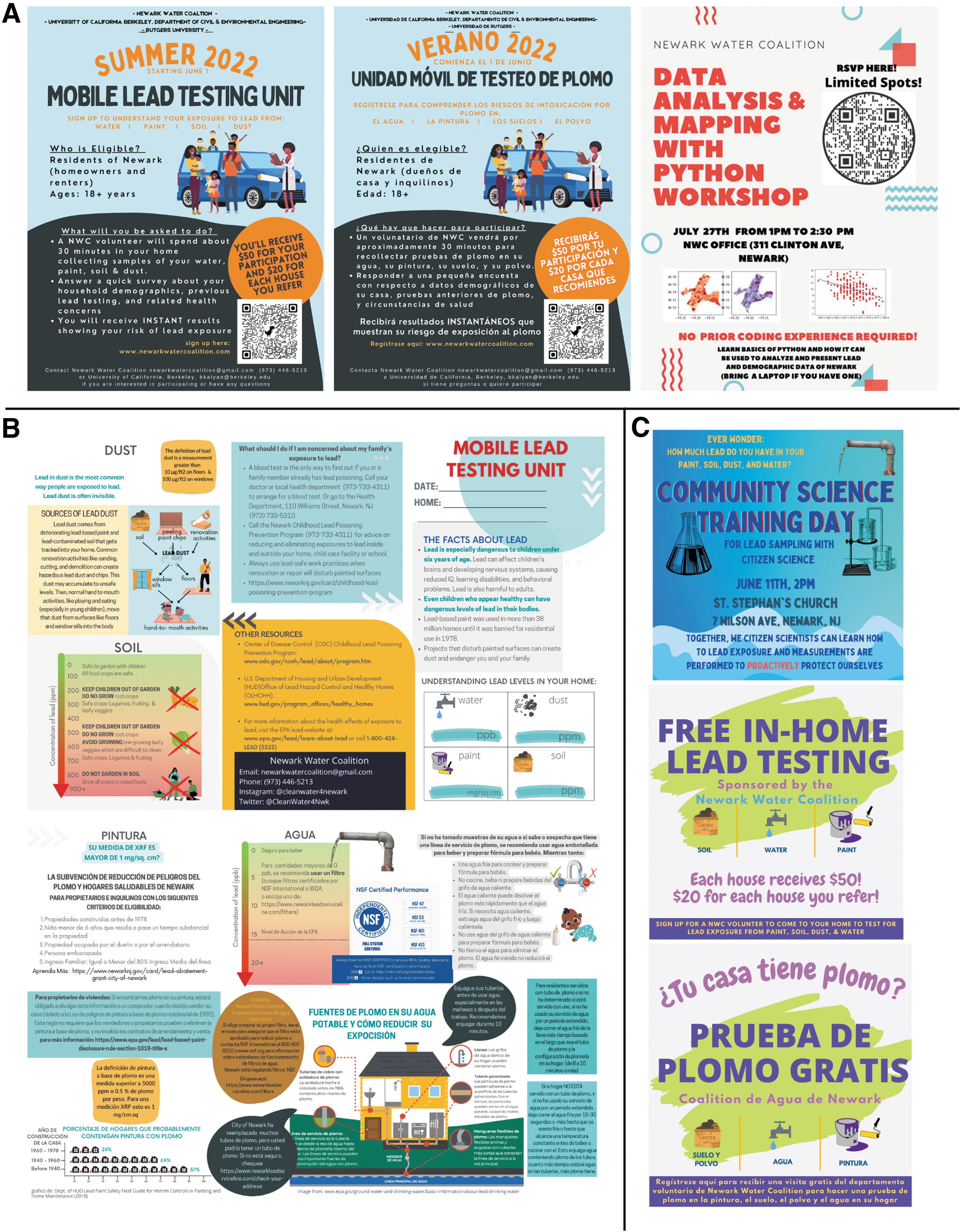
Snippet of recruitment materials and resources lists made for MLTU as well as workshop advertisements. All materials were translated to Spanish and Portuguese.
We aimed to limit as many barriers as possible to ensure that participants could get their homes tested in a manner that was not extractive but proactive in safeguarding our community from lead. We want to proactively safeguard our community by testing their homes for lead before their children received an elevated blood lead level reading and limit our extraction by compensate participants for their time and data in addition to providing them with the result. To protect the identities and privacy of individuals in the study, institutional review board approval was granted from the UC, Berkeley.
Researchers took on additional unexpected roles, such as pro bono secretaries, organizers, conveners, or facilitators, to build capacity and resources of the NWC. 18 This would not have happened without a graduate student having a desire to serve the community with integrity and her valuing the work of the NWC before this project and fostering a relationship with not only the leadership team but everyone at the NWC. For example, the UC Berkeley student attended the NWC food and water distributions, helped with driving the youth volunteers home, led the training and house visits in-person, was on-call for any testing team hiccups and concerns from participants, and held weekly meeting with the MLTU team to coordinate and ensure that the process was smooth.
OUTCOMES OF MLTU
Outreach and recruitment efforts
From June 2022 to October 2022, we deployed multiple recruitment strategies for the MLTU home visits, including tabling at four local events and at our weekly food and water distribution sites. By creating multilingual recruitment materials and brochures regarding lead exposure and other services, we built fundamental internal resource channels. To widen our reach, we started a referral program, which compensated community members for referring their neighbors. In addition, to reach the diverse cultural demography of Newark, we adapted all of our outreach material into Spanish and Portuguese (Fig. 1A). Table 1 summarizes the study population demographics captured by the MLTU survey. Many of the families we spoke to had limited English proficiency, predominately families of color, and predominately low income.
Excerpt Summary of Survey Responses
Education and training
The MLTU study placed us in the unfamiliar territory of scientific research with the added complexity of being in the field (people's homes). After consulting with health department officials, Environmental Protection Agency, and Department of Housing and Urban Development methodology, as well as certified lead assessors, a methodology and training protocol was established to train the MLTU team (see summary in Appendix Table A1). Beyond the protocol, it was essential for the MLTU team to be knowledgeable about the underlying scientific principles of the methods, effectively communicating the science to participants, managing unexpected situations, and troubleshooting equipment. After iterations, we refined a reproducible and rigid protocol to ensure consistent training and adapted continuously.
The field testing equipment was chosen based on their portability and our budget to provide instantaneous results to residents. The field portable X-ray fluorescence (XRF) analyzer was initially an academic loaner from SciAps allowing us to start the project, but a later grant allowed us to purchase the XRF analyzer. In addition, laboratory analysis to determine lead levels, in particular, inductively coupled plasma mass spectrometry, is expensive. Cost, safety, and time were the most important variables considered when selecting the equipment, and we balanced these considerations against the accuracy of laboratory analysis.
Education and training of the community members, by community members, is essential to conducting community-driven research. We held two public workshops, the first, titled “Community Science Training Day,” explained MLTUs motivation, plan, testing protocol, and invited discussion and questions. Researchers held the other workshop, “Data Analysis & Mapping with Python,” to build technical capacity with the NWC and broader community.
After building personal relationships with the high school volunteers, researchers put on a different hat and held a college applications workshop for local high school seniors. The workshop strengthened relationships across the partnership and created a space for NWC members and researchers to share their personal experiences and guide the high school students. The workshop was one instance where both researchers and NWC leadership saw the rippling effect of conducting community science and the influence on younger students. Figure 2 shows the timeline of the NWC milestones including the MLTU study.
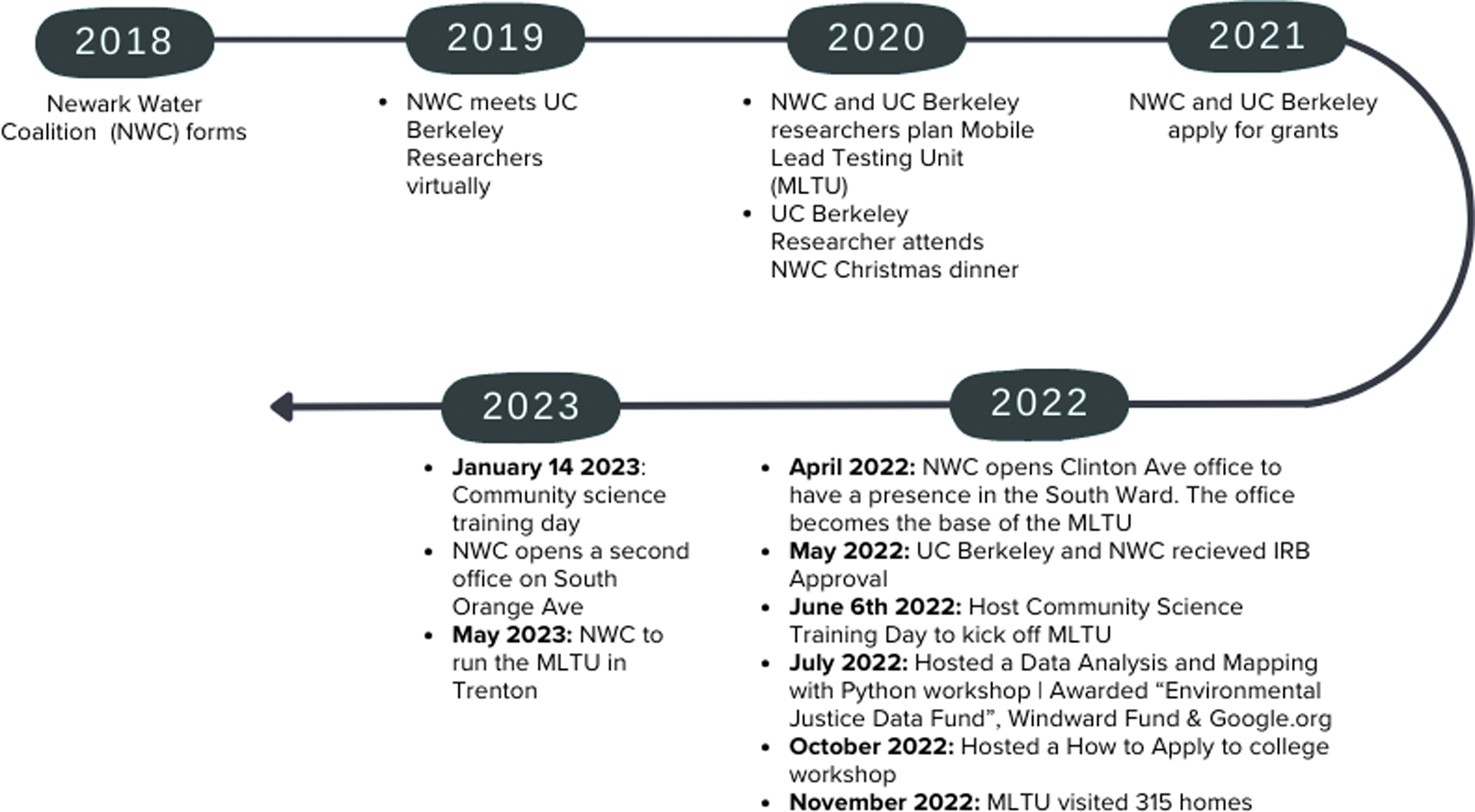
Timeline of the NWC and the MLTU with key milestones.
REFLECTIONS ON MLTU
Reflection on outreach and recruitment efforts
Tabling local events and our referral program proved to be our greatest assets as it bolstered interpersonal relationships between the research team and participants. Engaging with the community expanded the popular discussions of lead-contaminated water through lead pipes to call attention to lead poisoning through paint, soil, and dust. Residents learning about NWCs efforts to take action excited change for everyone. This led to residents entrusting the NWC to enter their home for testing, this was heartfelt and intimate considering we started the project post-COVID-19 lockdown. Through grassroots recruitment and cash referrals, we increased awareness of lead risks and improved material conditions of participants. Despite some logistical challenges, such as coordinating the schedule for participants to sign up and ensuring that each participant received compensation for the referral program, our recruitment strategy was remarkably successful.
Reflection on education and training
Planning and accounting for the materials, training procedures, and in-field methodology proved to be an extensive endeavor. Due to the flexibility required when doing fieldwork, we had to refine and reteach procedures as they became relevant sometimes inside a participant's home. In-field teaching proved to be fruitful because it engaged residents in our process and revealed their inherent knowledge about their community. Since the survey and information came from the NWC, fellow community members, participants were more receptive to our survey questions and receptive to our lead safety resources. Early in the project, accessing scholarly articles was an incredibly difficult roadblock and we only gained access through academic collaborators. In addition, sourcing specific equipment and having the funds to purchase them, and acquiring a laboratory space are tall orders for a community-run research project. We were lucky to acquire enough funding to purchase all the necessary equipment. After a makeshift fume hood and an office space cleared to serve as a laboratory, we got to work.
We witnessed the high school students on the team evolve from simply being participants in a project, to connecting their identity, motivation, and critical thinking, and making demonstrated efforts to becoming community leaders. We could see them grapple with their knowledge, experiences, and use their own language to learn about the lead contamination in Newark, as captured by their reflections:
Jaila: “As a MLTU member, I learned an in-depth view of what Newark's community is like. Although I was born and raised in Newark, I have never visited certain areas or knew the living conditions of many citizens and I found some folk's circumstances shocking. The lead project gave people hope and answers that they were looking for and allowed me to see Newark in a different light.” Ammar: “I learned how to look at life through other perspectives. Everybody has a different upbringing that affects their choices, everybody has a different pursuit to action that makes them the way they are in day-to-day life. That's what makes us human. The hardest part was adapting to my surroundings, every neighborhood was different: different people, different perspectives, and different languages. It all came to adaptation and code switching.”
Reflection on funding challenges
Community-based research is almost never funded for grassroots organizations compared with institutions. We initially proposed our project to foundations and other organizations and had an opportunity for a funding source but were denied in final stages. Our continuous efforts resulted in meeting above our financial goal and were able to properly execute our project on our terms—by adequately financially compensating all participants and team members for their contributions.
DISSEMINATION OF RESULTS
The main MLTU finding is concerning soil lead levels. Figure 3 shows the average soil lead concentrations aggregated per census tract by in situ and ex situ XRF measurements. The evaluation of the data and the dissemination of the results were led by the NWC. Analyzing the results became a reflective space for further action as we would meet to discuss the data and how to best tell the story. 19 The plots were altered to be more accessible, for example, a simple bar plot was adjusted to include graphics and information to help understand the impact of the soil concentrations (Fig. 4). Results have been shared through social media, newsletter, and shared in a public workshop, and soon to be released short film capturing the MLTU process and team reflections. We looked at paint lead levels in homes (Fig. 5) and the proportions by building components (Fig. 6 with details in Appendix Tables A2 and A3). Our dust findings and qualitative survey are not finalized yet, but a summary of the lead in water, paint, and soil can be found in Appendix Table A2.
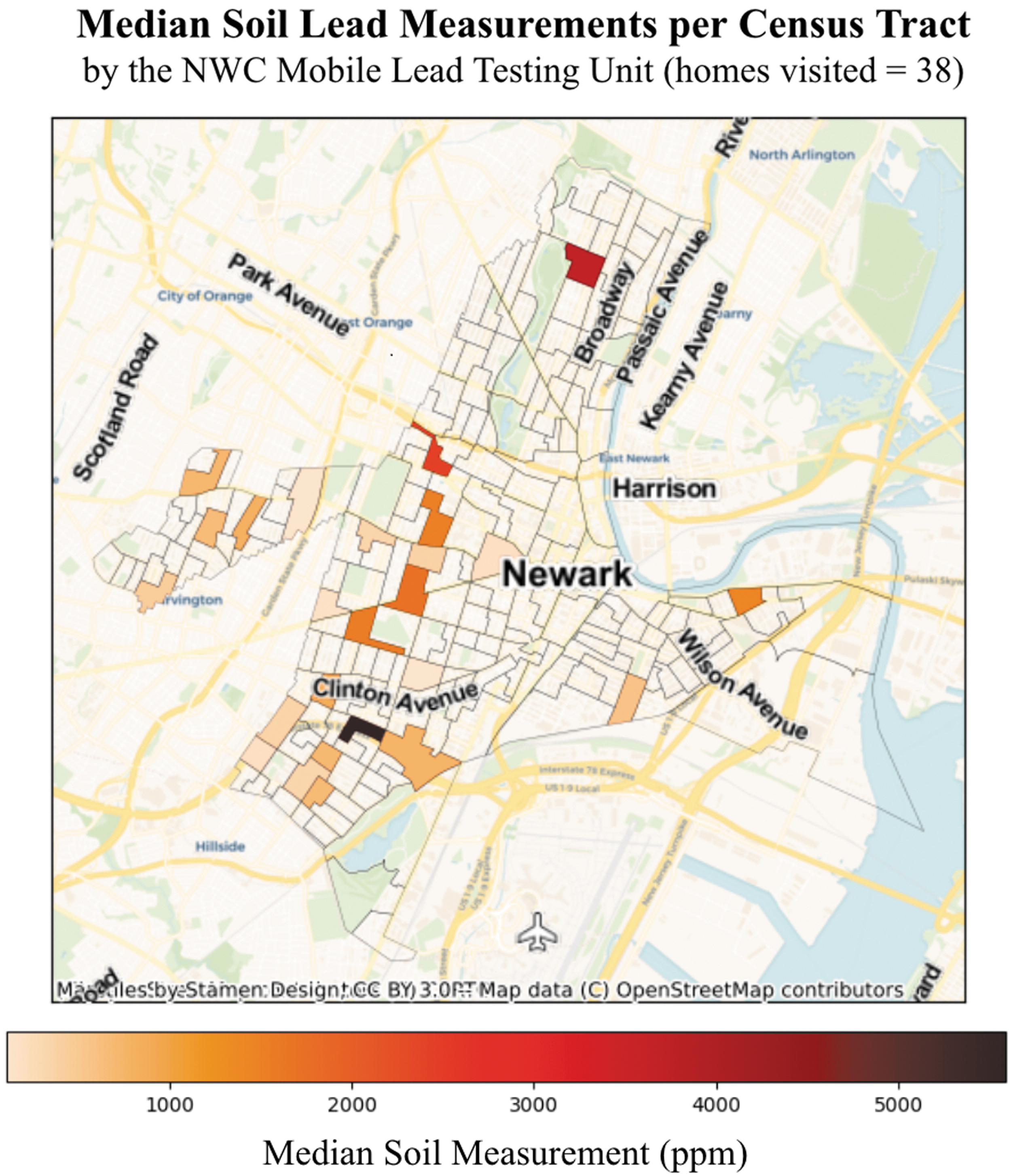
Map of Newark with average soil lead levels per census tract (measured by the portable X-ray fluorescence device in ppm). Soil measurements were aggregated to the census tract to protect privacy of participants.
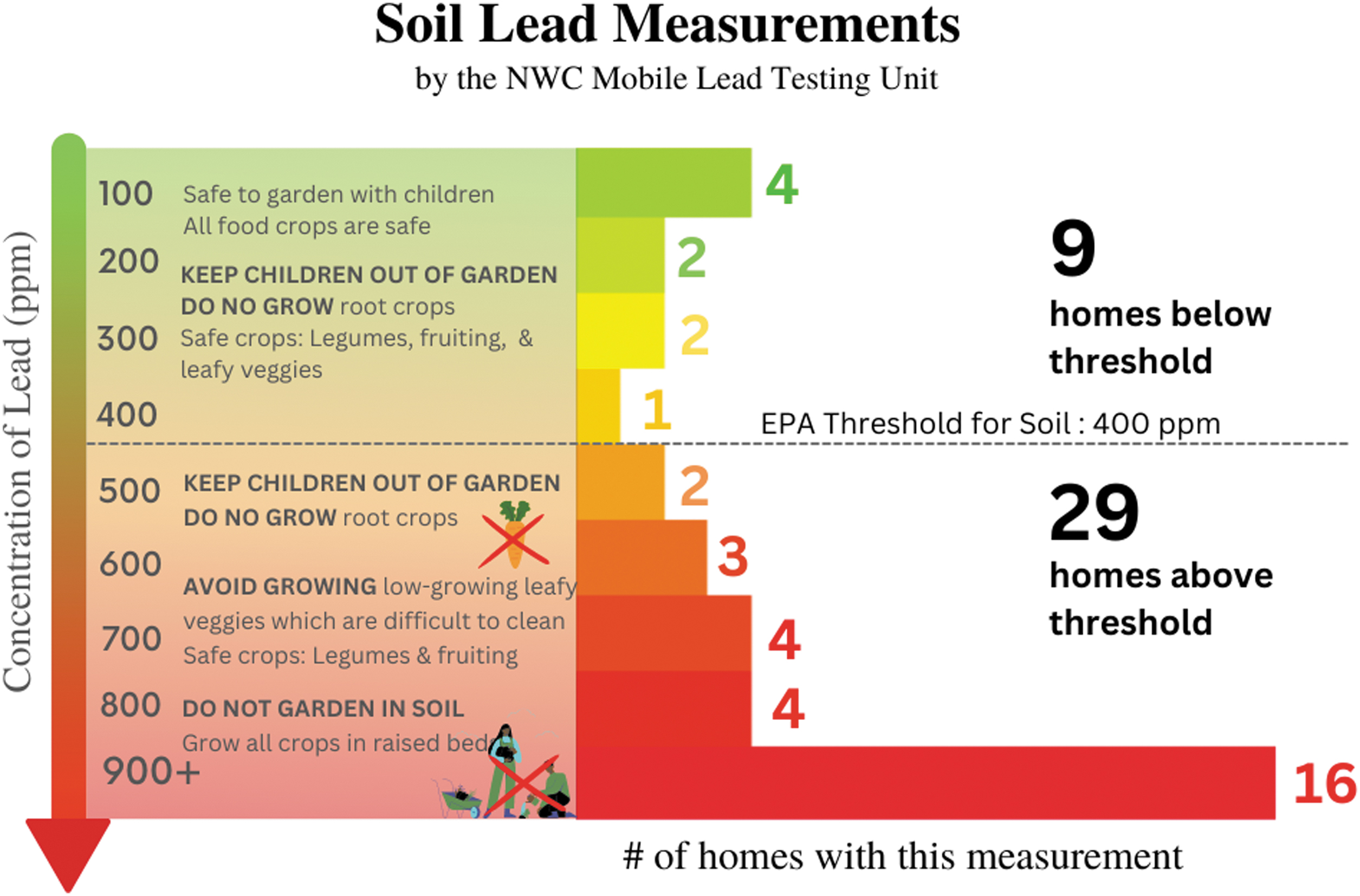
Histogram of soil lead levels across Newark averaged per home.
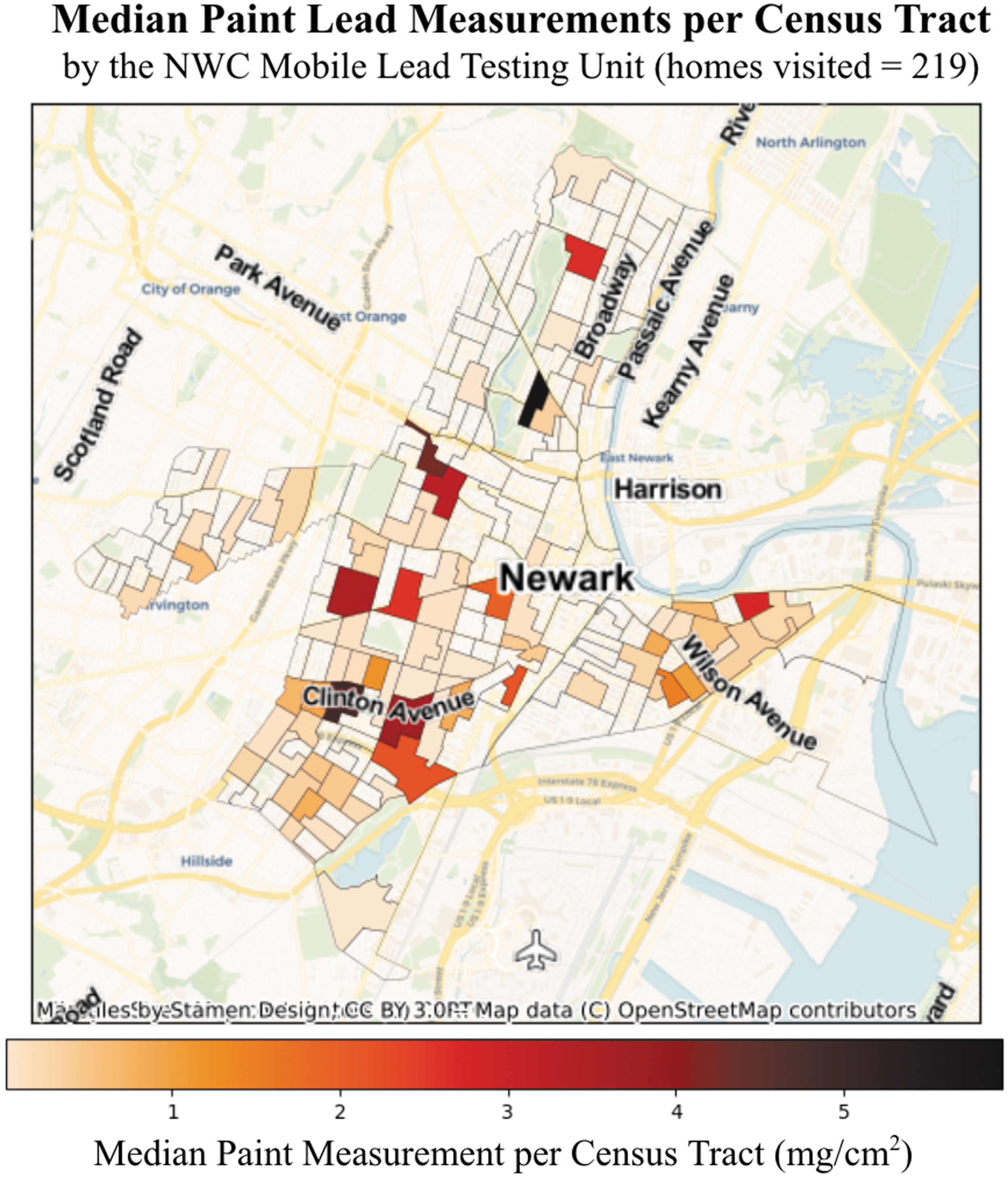
Map of Newark with measured median paint lead levels per household per census block with non-detects removed.
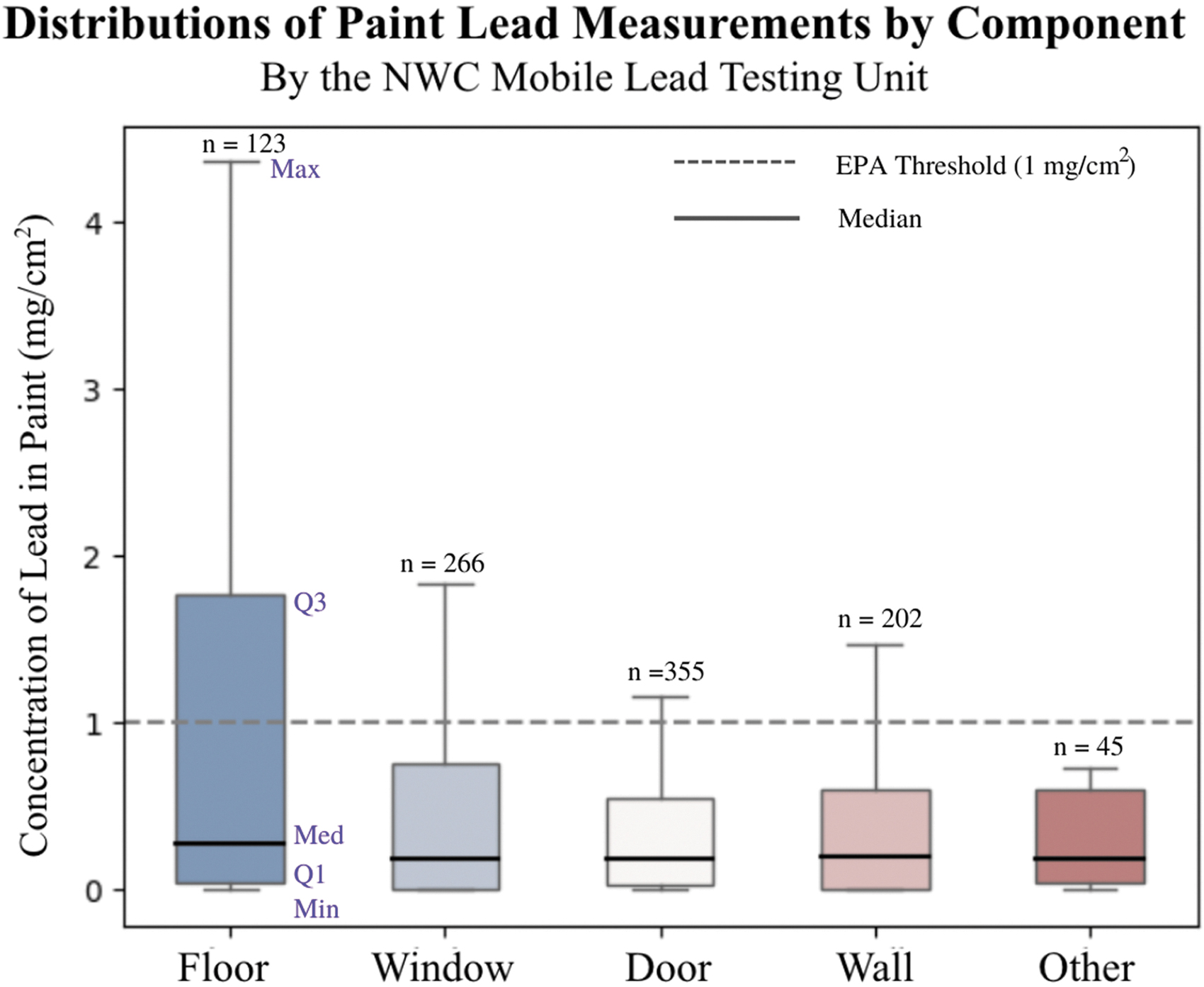
Distributions of lead measured (mg/cm2) in paint per home broken down by building component. The box plot displays the most common building components found by the MLTU. Outliers are not shown on this box plot but were included in the calculations of the quantiles and medians. Annotations are included to help read the plot. Q1 and Q3 denote the first and third quartiles, respectively. EPA, Environmental Protection Agency.
TRANSLATION OF RESEARCH TO ACTION
The MLTU project revealed three big gaps: the need for more lead assessors, a lack of lead assessor training centers in North Jersey, and barriers for our community members to obtain jobs as lead assessors. While the new lead safe certification for rental properties in NJ will increase preventative lead screening, there are not enough lead assessors to meet the new demand. The NWC sees this as a workforce development opportunity and is in the process of establishing a training academy for state-certified lead assessors. Another initiative born out of our work in the MLTU is a public research institute. The project showed us the impact and need of the community to be in the driving seat of research projects in our community.
The NWC, alongside researchers, aimed to tackle community-based research and share the lessons we learned and support other community-based organizations to pursue research—to spread the notion that they too can control their fate and the fate of their community. We aim to do research with integrity, honesty, and constant communication to the community in which we are doing research because we believe that the community needs to be its own source of knowledge. Our research and action have already inspired other cities in NJ to do similar work with their community members.
Footnotes
ACKNOWLEDGMENTS
We thank the community for inviting us into their homes, allowing us to share who we are, and allowing us to see who they are. We would like to thank the Mobile Lead Testing Team who took on many roles to make this possible. We would also like to thank St. Stephan's Church and Pastor Moacir for hosting our distribution site and recruitment. We are grateful to our supportive partners particularly Dr. Casey Finnerty, Luis Anaya, Heather Sorge, Sean Stratton, and Lead-Free New Jersey.
AUTHORs' CONTRIBUTIONS
A.D.D.: Conceptualization, formal analysis, funding acquisition, project administration, supervision, writing—original draft, writing—review and editing. B.K.: Formal analysis, funding acquisition, funding acquisition, project administration, supervision, visualization, writing—original draft, writing—review and editing. A.U.M.: Formal analysis, project administration, supervision, writing—original draft, writing—review and editing. K.A.C.: Project administration, writing—original draft, writing—review and editing. R.A.: Formal analysis, visualization, writing—review and editing. M.C.: Resources. C.C., R.R., N.W., and S.W.: Writing—original draft, writing—review and editing. S.H.: Writing—review and editing. P.C., J.R., J.W., A.Z.W., D.S., J.A., N.F., and J.H.: Investigation. W.D.: Investigation, project administration. S.I.R. and E.G.: Investigation. D.F.: Investigation, project administration.
AUTHOR DISCLOSURE STATEMENT
We acknowledge that we have no personal financial interests. We acknowledge that organizations will not lose or gain funding from publication of this article. We acknowledge that employment will not be gained or lost by publication of this article. We acknowledge that there are no competing interests that would affect the integrity of the work.
FUNDING INFORMATION

Appendix
Supplementary Metrics
| Counts and medians of paint components | |||||
|---|---|---|---|---|---|
| Floor | Window | Door | Wall | Other | |
| Count | 123 | 266 | 355 | 202 | 45 |
| Median (mg/cm2) | 0.28 | 0.19 | 0.19 | 0.2 | 0.19 |