






Abstract
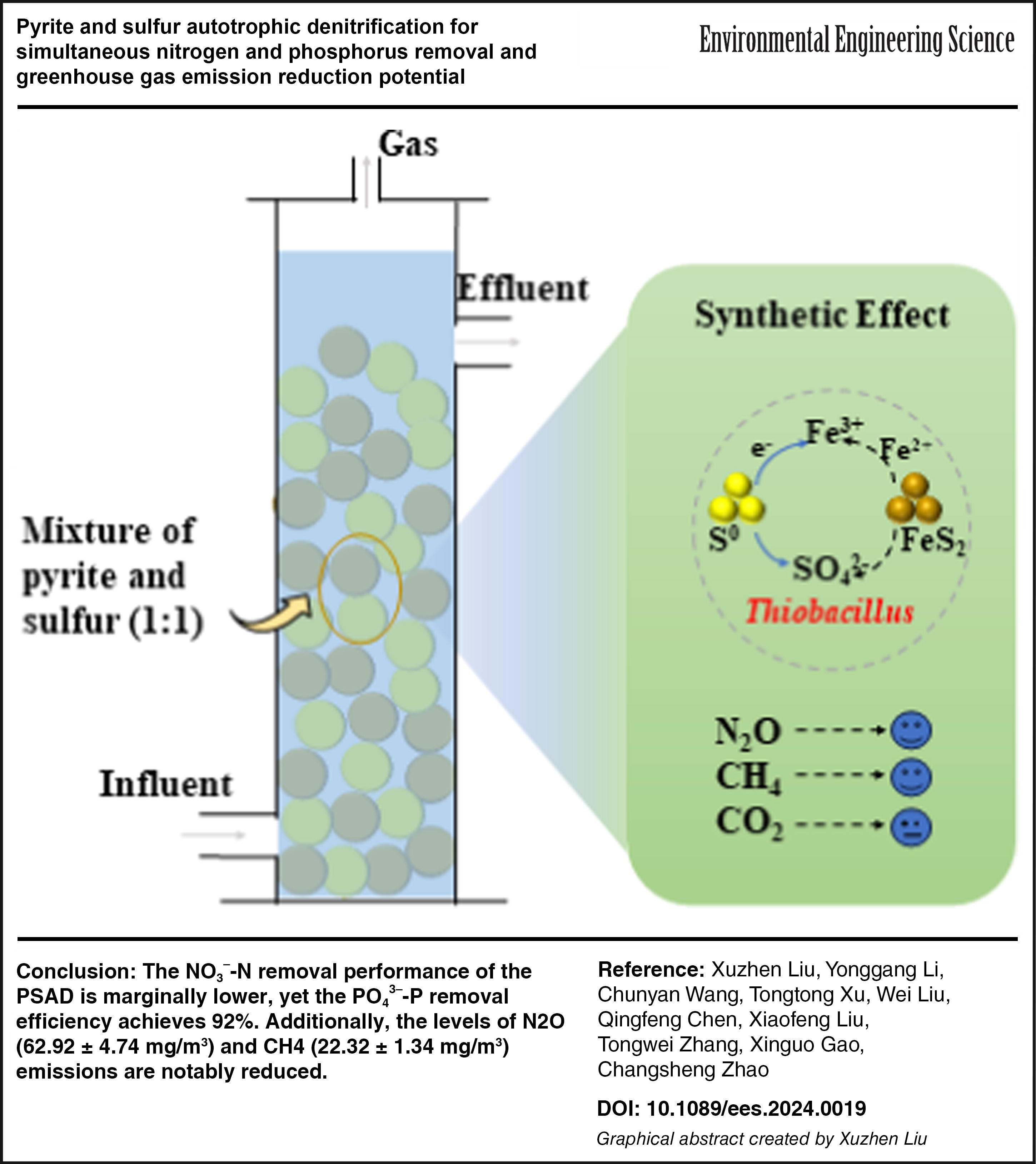
To achieve cost-effective and efficient removal of nitrogen and phosphorus, a comparative analysis was conducted on the efficacy of pyrite- and sulfur-coupled autotrophic denitrification (PSAD), sulfur autotrophic denitrification (SAD), and heterotrophic denitrification (HD) in terms of nutrient elimination and the potential reduction of greenhouse gas emissions. The addition of sodium acetate made the NO3−-N removal rate of HD higher than that of PSAD and SAD processes, but the synergistic effect of sulfur and pyrite made the average removal efficiency of phosphates (PO43−-P) in PSAD system (92%) significantly higher than that of SAD (65%) and HD (0). PO43−-P was mainly removed in the form of Fe3(PO4)2·8H2O. PSAD system produces a lower concentration of N2O (62.92 ± 4.74 mg/m3), and is prone to anaerobic oxidation of methane. CH4 concentration decreased from 31.32 mg/m3 to 22.32 ± 1.34 mg/m3. Thiobacillus can use pyrite or sulfur as electron donor to complete the autotrophic denitrification process and evolve into the dominant bacterium in PSAD. Acinetobacter is good at using acetic acid as electron donor to complete the denitrification process. Therefore, PSAD has the important significance of economical and efficient simultaneous nitrogen and phosphorus removal.
Graphical Abstract
Get full access to this article
View all access options for this article.