






Abstract
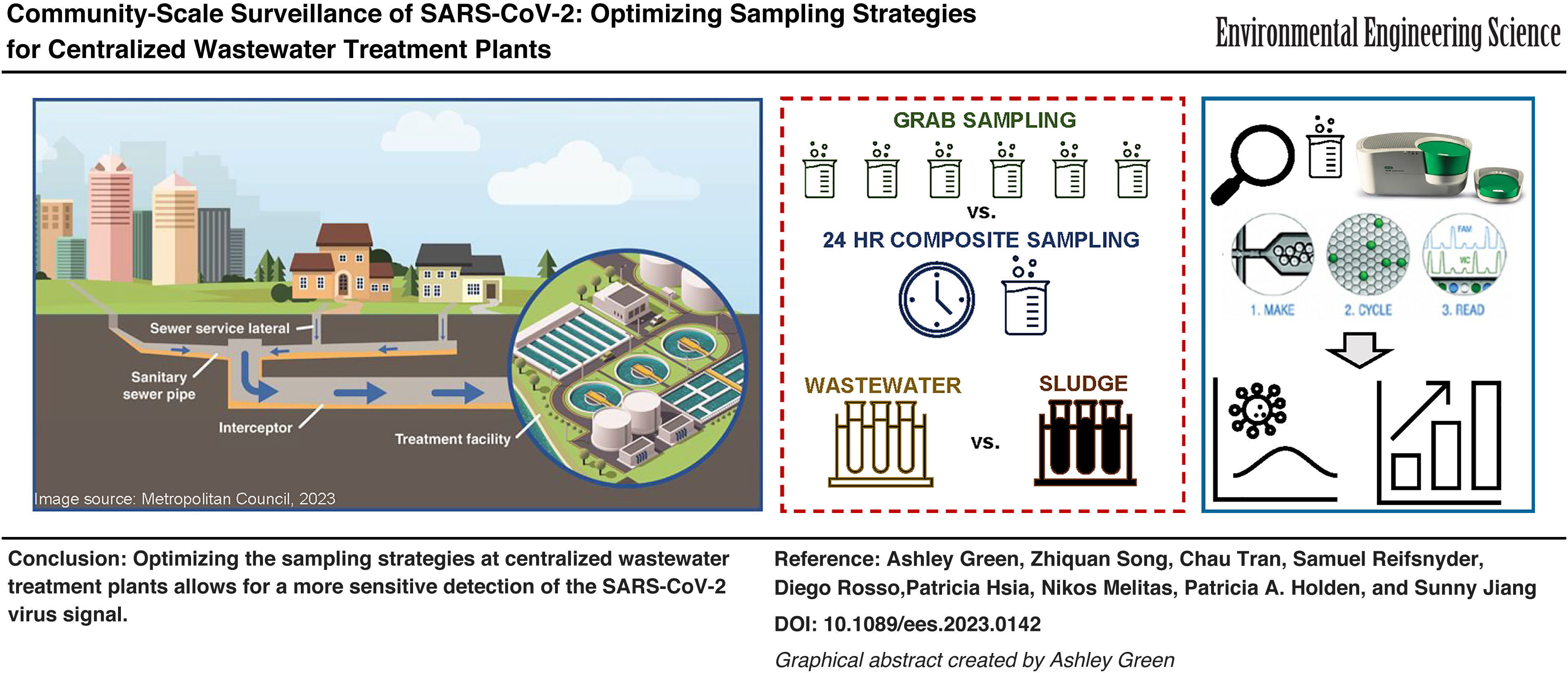
Wastewater-based surveillance (WBS) for SARS-CoV-2, the virus that causes COVID-19, is a complement to clinical testing that can provide an early warning of community infection. Applying WBS to centralized wastewater treatment plants (WWTPs), otherwise known as water resource recovery facilities, provides an opportunity to collect unbiased viral load information at the community scale. This study focuses on optimizing the sampling strategies from centralized WWTPs to best capture the signal of SARS-CoV-2 in wastewater. From November 2020 to February 2021, a total of 166 grab and 24-h composite wastewater and sludge samples were collected from 3 WWTPs in the Los Angeles (LA) County, with significant differences in size, service area, wastewater composition, and treatment technologies. Results showed that 24-h composite primary influent samples can best represent the trends of SARS-CoV-2 genome concentrations in centralized WWTPs, whereas grab samples showed significant variations in SARS-CoV-2 genome concentrations over a 24-h period. Primary sludge samples showed one log10 higher concentrations of SARS-CoV-2 genomes when compared with primary influent samples. The SARS-CoV-2 genome concentrations in primary influent samples ranged from 2.69 × 10² genome copies (GC)/mL to a high of 4.50 × 10³ GC/mL. The virus concentrations in primary sludge ranged from 6.00 × 10³ to 9.67 × 10⁴ GC/mL. Ultimately, the SARS-CoV-2 genome concentrations in wastewater and sludge collected from large centralized WWTPs were correlated, and both reflected the general trend of COVID-19 cases in the broader LA metropolitan community.
Get full access to this article
View all access options for this article.
References
Supplementary Material
Please find the following supplemental material available below.
For Open Access articles published under a Creative Commons License, all supplemental material carries the same license as the article it is associated with.
For non-Open Access articles published, all supplemental material carries a non-exclusive license, and permission requests for re-use of supplemental material or any part of supplemental material shall be sent directly to the copyright owner as specified in the copyright notice associated with the article.
