






Abstract
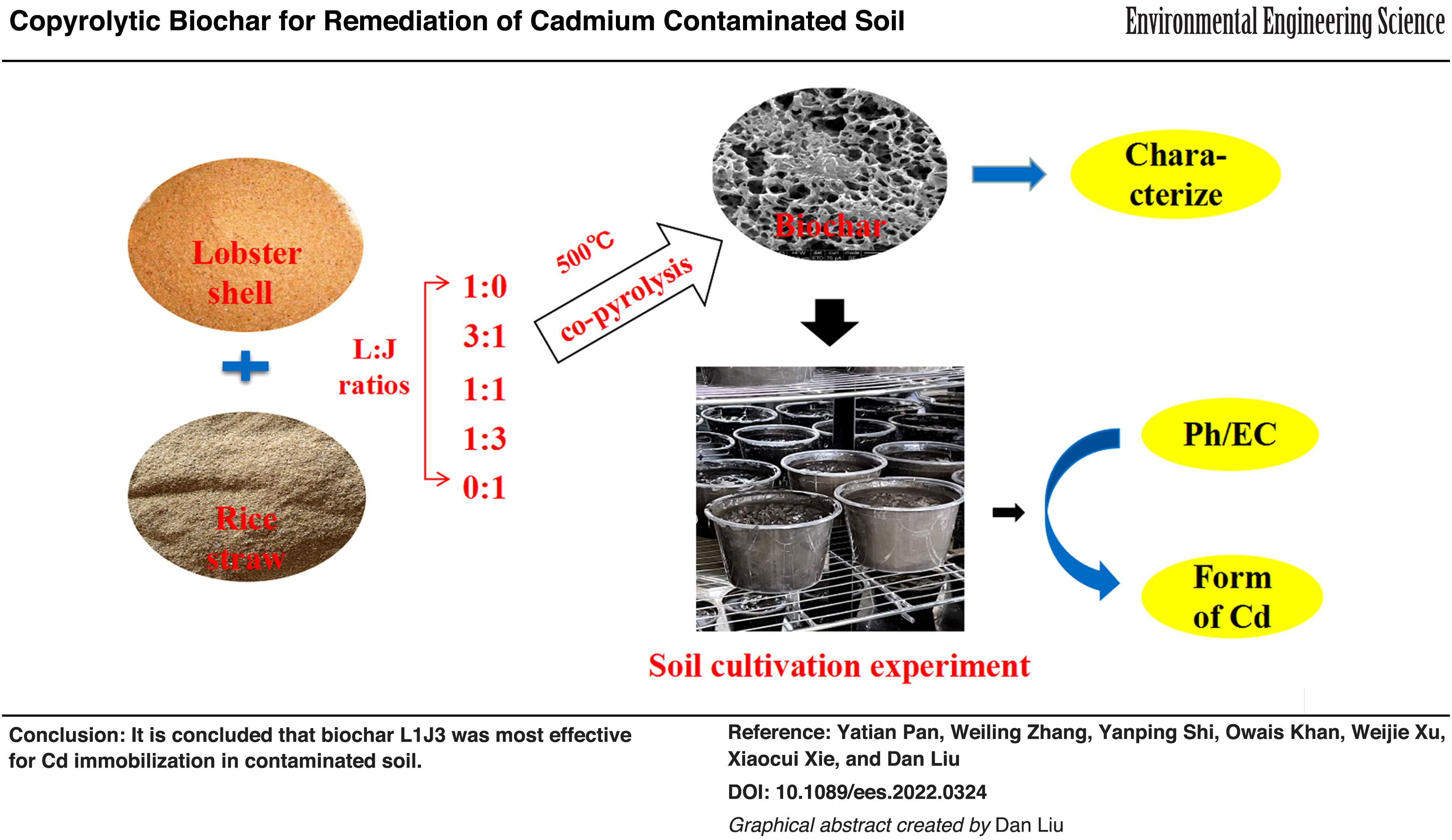
Biochar is an economical and efficient adsorption material of heavy metals. This study has evaluated physical characterization of biochar produced by co-pyrolysis at 500°C from lobster shells and straw. The availability of biochar reduces cadmium in cadmium-contaminated soil, and improves cadmium fixation. The results revealed that co-pyrolysis process has altered physical characterization of co-pyrolysis biochar compared with individual straw or lobster shell biochar. The incorporation of biochar in the soil has significantly enhanced soil pH, EC, and has reduced available forms of heavy metals in the soil. The biochar has enhanced carbonate-bound metal forms that has directly converted highly utilized metal forms in stable forms in the soil. The application of five biochars has reduced available content of Cd in the soil compared with control. The content of available Cd is in order of L1J3 < L1J1 < L < J < L3J1 < CK after 150 days of incubation, which has decreased available Cd by 58.49%, 54.09%, 51.45%, 50.60%, and 42.42%, respectively. The five biochars treatments of 1L3J were proved as effective soil amendment for remediation of cadmium pollution. It is concluded that co-pyrolysis biochar from lobster shell pyrolysis with mass ratio of 1:3 of straw was most efficient for cadmium fixation in the soil.
Get full access to this article
View all access options for this article.