






Abstract
Abstract
In this study, 26,315 mg/kg of diesel oil was mixed with food waste; the mixture was subjected to composting and monitored for temperature, pH, and moisture content to assure a normal composting process. Variation of total petroleum hydrocarbon (TPH) in the compost was monitored to better understand the progress of diesel decomposition. Samples were also collected for identifying Oleiphilus species. Results showed that food waste composting is effective in decomposing diesel oil, as the TPH was reduced to 2000 mg/kg with about 90%–92% removal efficiencies at the 24th day. Eleven Oleiphilus species were isolated during various composting stages: five from the initial stage, two from the temperature-rising stage, one from the thermophilic stage, one from the temperature-recovering stage, and two from the maturing stage. These observations reveal that the food waste composting pile contained a wide variety of microorganisms, and microorganisms with different oil-decomposing capabilities developed during the various stages of the composting process. After isolation and enrichment, these microbial consortiums may be developed to improve the novel biological method for treating oils in contaminated environment using food waste composting process. It was observed that major decomposition occurred in the thermophilic stage, a divergence from conventional biological treatment approaches conducted in mesophilic environments. Therefore, the proposed composting process involving various diesel-degrading thermophiles facilitated the biodegradation of diesel oil without bioaugmentation, reducing the bioremediation time and cost.
Introduction
Diesel fuel concentrations in contaminated soils typically range between 1000 and 10,000 mg/kg, with some hot spots containing 10,000 to 50,000 mg/kg. Bioremediation is thought a feasible and economical way to remove petroleum pollutants from contaminated soil or water (Alexander, 1999; Head and Swannell, 1999; Rittmann and McCarty, 2001; Piskonen et al., 2005; Filonov et al., 2006; Mihial et al., 2006; Gallego et al., 2007; Lin et al., 2010). However, mineralization of complex hydrocarbon mixtures such as those comprising diesel fuels usually requires the coexistence and effective mutualism of several specialized microorganisms with complementary substrate specificity (Rambeloarisoa et al., 1984; Alexander, 1999; Richard and Vogel, 1999).
Some researchers have screened bacterial species that decompose oil with satisfactory results. Owsianiak et al. (2009) studied a group of oil-decomposing microbes from a contaminated site including Pseudomonas alcaligenes, Ochrobactrum intermedium, Sphingobacterium sp., Pseudomonas putida, Klebsiella oxytoca, Chryseobacterium sp., and Stenotrophomonas maltophilia. They found that when incubated in a nutrient solution containing rhamnolipids biosurfactant for 7 days, these microorganisms decomposed 75% of diesel oil when mixed with 10% biodiesel of cometabolic effect. Hanson et al. (1997) discovered Acinetobacter sp. A3, which can use Bombay high crude oil as the only carbon source. In laboratory studies, Acinetobacter sp. A3 grown in flask that were continuously shaken for 120 h biodecomposed 60% of the Bombay High Crude Oil; the crude oil biodegradation increased along with population increase of Acinetobacter sp. A3. Antai (1990) studied the influence of temperature on the decomposition of low-carbon hydrocarbons by Bacillus sp. and Pseudomonas sp. and reported 36°C to be the optimum temperature for a maximum amount of oil to be decomposed. Hua (2006) reported that Escherichia coli, Pseudomonas maltophilia, and Dadosporium resinae could decompose 95% of the petroleum oil in the polluted sea water that had been mixed with soap. Of 47 species of screened microorganisms and enzymes, Haba et al. (2000) found Pseudomonas, Bacillus, Candida, Rhodococcus, and Staphylococcus capable of decomposing used olive oil and sunflower oil. Chaîneau et al. (2005) conducted experiments to compare the decomposition of crude oil in soils with and without nutrient additions with heterotrophic and oil-decomposing microorganism and found that, after 150 days, in soils enriched with nutrients (NH4NO3, Na2HPO4, and KH2PO4) there was a removal of 62% hydrocarbons and in those without the enrichment there was only 47% removal. In Argentina, Ruberto et al. (2003) studied the source of N and P nutrients for microplants contained in the soil collected from Antarctica and also the biodegradation of gasoline in the soil enriched with psychrotolerant strain (B-2-2). After 51 days, results revealed that bioaugmentation with B-2-2 strain could improve the bioremediation efficiency, leading to 75% of gasoline hydrocarbon removal.
All the aforementioned biological treatment methods were conducted under mesophilic or psychrophilic but not thermophilic environments and were dependent upon the addition of microbial mass that had been artificially extracted for decomposing oil. Effective oil decomposition also depends on the external addition of appropriate nutrients (C, N, P) to foster an environment for rapid microbial growth. However, excessive addition of the inorganic nutrients (such as NH4NO3, Na2HPO4, and KH2PO4) can adversely affect the decomposition of the oily pollutants (Ruberto et al., 2003; Chaîneau et al., 2005). Moreover, when the addition of oil-decomposing microbes and nutrients is practiced in situ, substrate decomposition and treatment efficiency are subject to many uncertainties (Li et al., 2002; Chaîneau et al., 2005). Thus, there is a great need for new biological treatment approaches that do not rely on bioaugmentation with artificial consortia or biostimulation with external addition of appropriated nutrients.
Formal background studies conducted by our research group (Wang, 2005) for studying edible oil decomposition in food waste composting revealed that oil and grease can be rapidly decomposed from 55,000 to 1000 mg/kg in 8 days by consortia of composting microorganisms. It was, therefore, hypothesized that the consortia of microorganisms that can decompose edible oil may also be capable of decomposing “diesel fuel” contained in the oil-polluted soil. Moreover, it is also hypothesized that if confirmed, the food waste composting technology can be applied for treating diesel-contaminated soil without depending on the continual bioaugmentation of oil-decomposing microbes. The nature of food wastes may also eliminate the need for external supply of nutrients as for other traditional biological treatment processes. Additionally, most food waste composting processes undergo thermophilic biochemical reactions, which may be more effective than either mesophilic or psychrophilic process in decomposing oil. However, as noted, not much research has been reported on the thermophilic biodegradation of contaminated oil. In Taiwan, an estimated 2000 tons of food waste is recovered daily (Lin, 2008). Thus, it is conceivable that abundant amount of food waste can be used to create a plentiful thermophilic composting environment that can be co-utilized for the treatment of diesel-contaminated soils. To test our hypothesis, 26,315 mg/kg (dry weight basis) of diesel contamination was simulated in the initial compost mixture. The mixture was then subjected to composting and continually monitored for temperature, pH, and moisture content to assure a normal composting process. Variation of total petroleum hydrocarbon (TPH) in the compost was monitored to better understand the progress of diesel decomposition. Samples were also collected during various stages of composting for screening and identifying Oleiphilus species. Finally, the removal efficiency of diesel oil was measured as the ratio between the removed and the initial TPH amount.
Materials and Methods
Materials
The food waste used in this research contained the discarded agricultural products from fruit and vegetable markets and kitchen and dinning wastes from residences and school (1.1% nitrogen, 0.6% phosphate, and 1.2% potassium with the C/N ratio of 36). Saw dust was used for adjusting the initial moisture content of the compost mixture (contained 0.8% nitrogen, 0.1% phosphate, and 0.3% potassium with the C/N ratio of 58). Mature compost was added to enrich the microbial population to hasten the development of the thermophilic fermentation stage (1.6% nitrogen, 0.3% phosphate, and 1.1% potassium with the C/N ratio of 23).
To prepare the initial compost mixture, the food waste was shredded into fractions of <1 cm diameter and seeded with 16% (w/w) of mature compost and 20% (w/w) saw dust. Therefore, a compost pile of 130 kg comprised of food waste (83.2 kg), mature compost (20.8 kg), and saw dust (26 kg), and the initial compost mixture in this experiment contained 1.2% nitrogen, 0.5% phosphate, and 1.1% potassium with the C/N ratio of 32. After thorough mixing, the initial compost mixture (63% moisture) was composted in piles. The pH of the initial compost mixture was 4.0, and conductivity was 3.32 dS/m. The compost was rotated once daily. When the compost moisture content fell below 50%, water was added to maintain a moisture content of 50%–60%, which will be most conducive to microbial fermentation (Lin, 2008). To study the biodegradation efficacy, the experimental compost pile, which had an initial fresh weight of 130 kg, was spiked with 1.3 kg of diesel fuel to simulate 26,315 mg/kg (dry weight basis) of diesel contamination. Compost studies were conducted in an open air facility on the campus of National Kaohsiung Marine University, Taiwan.
Sampling methods
THP was used as an index of reduction to monitor the progress of diesel and edible oil decomposition in the food waste composting process. The frequency of sampling for TPH analyses varied with changes of the compost temperature. During the initial 2 weeks, the oil decomposition rate was relatively faster, and TPH samples were collected daily. During the 3rd week, the oil decomposition rate was slower, so samples were collected every 2 or 3 days. Thereafter, samples were collected every 5 days.
Composting process parameters (i.e., temperature, pH, and moisture content) were monitored daily to ensure that the addition of 26,315 mg/kg diesel fuel did not interfere with the normal development of composting processes (Lin, 2008). Maintaining the normal operation of the composting process was targeted as the major control parameter for the initial stage and the temperature-rising stage. The assumption was that if the composting process could proceed normally, the prolific growth of edible oil-decomposing microorganisms would lead to the commensurate development of mineral oil-decomposing bacteria in the composting pile.
The existence of mineral oil-decomposing microorganisms in the composting pile was confirmed by collecting samples for culture identification during the various composting stages: the initial stage (30°C), the temperature-rising stage (55°C), the thermophilic fermentation stage (70°C), the temperature-recovering stage (55°C), and the maturing stage (30°C). Comparing the results with literature data, the characteristics of the isolated culture were analyzed for its relative ability to decompose oil.
Analytical methods and culture identification
Temperature was measured with a TES 1310 TYPE K digital thermometer coupled with a thermocouple probe (1.2 m long) for direct measurement of interior temperature of the compost. The thermometer has an effective range of −50°C to 1300°C±0.1°C. Composting moisture was measured indirectly using the standard method NIEA R203.02C issued by the Taiwan Environmental Protection Administration (TEPA, 2009); pH was determined according to the USEPA Method 9045C (USEPA, 1995).
TPH in the compost was analyzed by TNRCC (2001) Method 1005 issued by Texas Natural Resource Conservation Commission using gas chromatography (GC) equipped with flame ionization detector (FID). The TPH method has been chosen for the current soil remediation standard used in Taiwan and covers a range from C6 to C40. The GC used a 30-m-long capillary column (DB-1) with 0.32 mm inside diameter. Its inner surface was coated with a 0.1-μm-thin film of 100% dimethylpolysiloxane. Pure nitrogen gas was used as the carrying gas. Injection inlet temperature was maintained at 340°C and detector temperature at 340°C. The GC operating temperature was set at 50°C for 2 min and then raised at intervals of 10°C per minute to 340°C and held at 340°C for 3 min with a total analysis time of 34 min. Note that all diesel and TPH concentrations reported in the study are based on dry weight.
The procedures for bacteria identification included colony purification, PCR amplification for 16S rRNA gene, DNA sequencing, and databank searching. They are described as follows: (1) 10 g of solid sample collected from compost was suspended in 100 mL nutrient broth (Difco) and mixed thoroughly. An aliquot of the supernatant was then spread on a nutrient broth agar plate and incubated at designated temperature for 1–2 days. The well-separated colonies were selected and further purified with streak culture technique. The pure strains were inoculated to nutrient broth and cultivated at 30°C, 55°C, and 70°C, respectively. The “Difco” nutrient broth was a rich medium composed of peptone (5 g/L) and beef extract (3 g/L) and with final pH 6.8. (2) Crude genomic DNA was prepared by harvesting the bacterial cell from the culture, resuspending in pure water, and heating at 100°C for 10 min. The crude genomic DNA was used as the template for 16S rRNA gene amplification; the predictive size of PCR product was about 1.5 kb. (3) PCR product was subjected to gel purification, TA cloning, and DNA sequencing. The sequencing results were subsequently submitted to the NCBI website for BLAST analysis.
Results and Discussion
The initial composting moisture content was 63%. During the entire composting period, the moisture content was maintained at 56%±4% for optimum microbial growth. Further, the compost pile was turned once per day to maintain a normal progress of food waste composting (Lin, 2008).
Variations of temperature
Figure 1 shows the composting temperature variations and reveals the temperature-rising, thermophilic, temperature-recovering, and maturing periods. During the initial temperature-rising period, the compost temperature rose rapidly to 48°C on the 2nd day and 66°C on the 3rd day and reached the highest temperature at 73°C on the 4th day. The temperature remained at about 70°C for the following 1 week (thermophilic period), then decreased slowly (recovering stage) to reach 30°C, and maintained at this temperature on the 21st day (maturing stage). From that point on, the temperature was relatively constant, and the compost approached maturity.
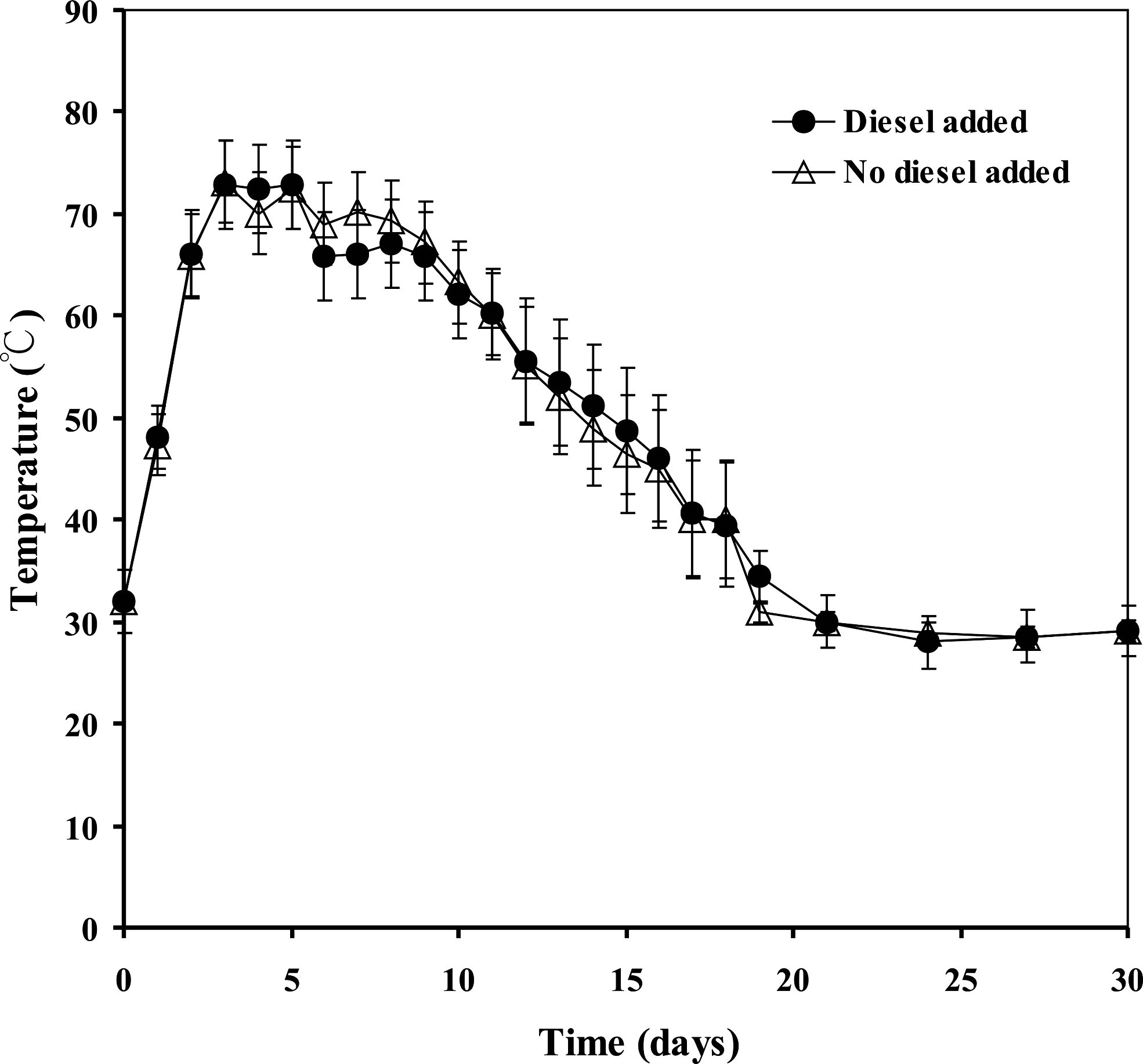
Temperature variations measured before daily rotation during composting.
Note that both the control set (without diesel addition) and the experimental set (with addition of 26,315 mg/kg diesel) exhibited no observable difference in composting temperature. Thus, it was assumed that the addition of 26,315 mg/kg diesel in the compost did not interfere with the normal development of the composting process. Additionally, this observation also confirmed that the addition of diesel fuel did not create a lag-period as has been seen in most batch biological processes.
Variations of pH
The pH variations in the control and experimental composting sets are shown in Fig. 2. The pH of the initial (day 0) composting mixture was 4.0, resulting from the acidifications of food waste, which produced organic acids and some low-molecular-weight volatile acids. The pH dropped to 3.9 on the 1st day but rose to 4.2 on the 2nd day. Afterward, it increased rapidly to 7.0 on the 4th day and then slowly increased to about 8.5 by the 8th day. This pH remained till the 16th day. On the 19th day, the pH dropped back at about 7.1 (slightly alkaline) and remained steady, indicating that the compost approached maturity (Haug, 1993; Lin, 2008). According to the pH variations, the experimental set (with addition of 26,315 mg/kg diesel) did not differ from the control set (without diesel addition). This observation gives further evidence that the addition of 26,315 mg/kg diesel in the compost did not interfere with the normal development of the composting process and caused no “lag-period.”
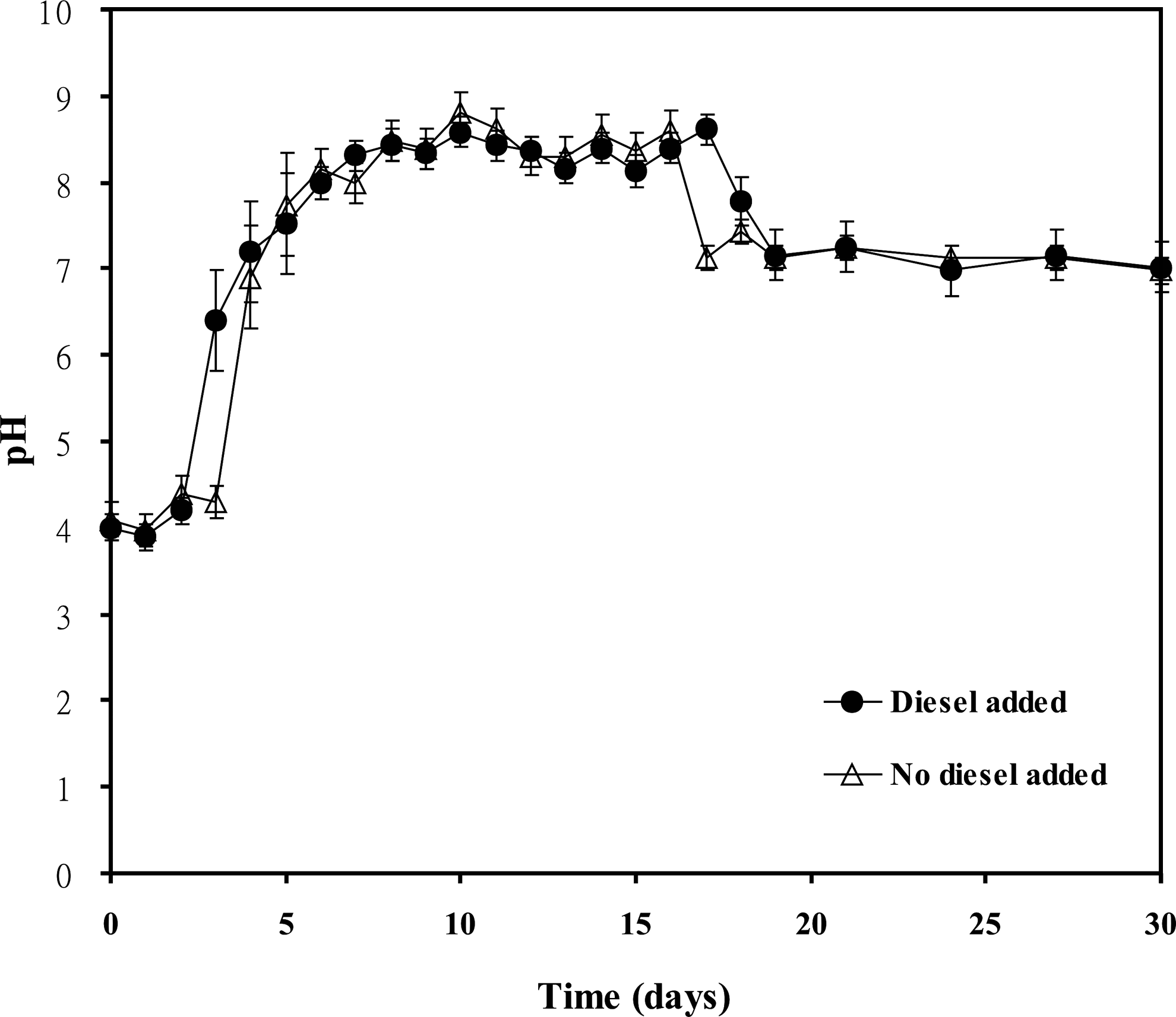
Variations of pH measured before daily rotation during composting.
Variations of TPH concentrations
Figure 3 shows the TPH variation in the experimental pile containing 26,315 mg/kg diesel fuel during the composting period. Initial TPH (day 0) was 20,000 mg/kg. At 24 h, it had increased to 36,000 mg/kg. The TPH rapidly dropped to 15,000 mg/kg on the 4th day but rose slightly on the 5th day and thereafter decreased monotonically, with 4,500 mg/kg on the 10th day and 2,000 mg/kg on the 24th day. Figure 4, which shows the diesel contents in day 0, 9, and 30 by GC/FID analytical spectrum, also revealed that diesel fuel peaks decreased over time.
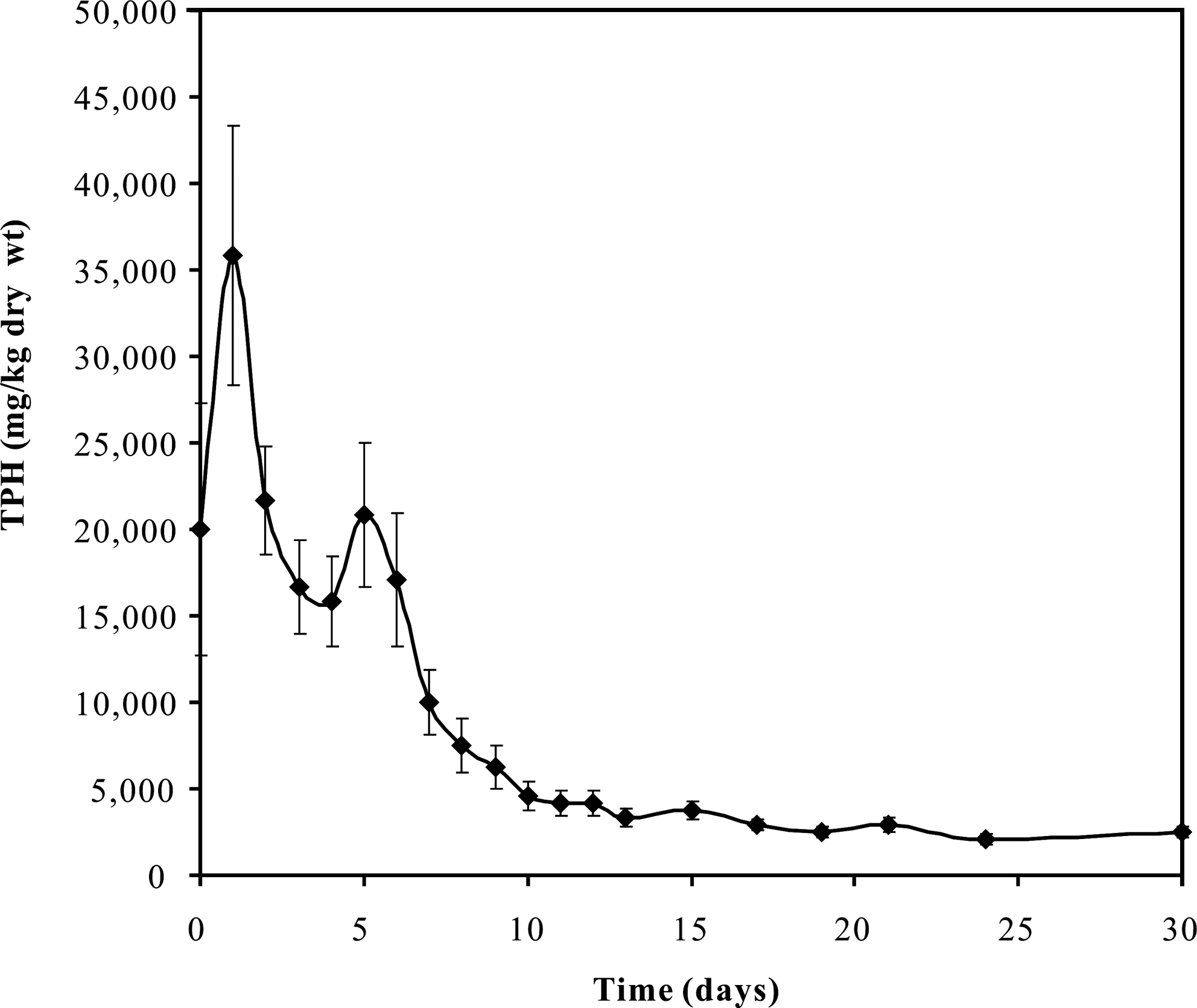
Concentration variations of TPH during composting. TPH, total petroleum hydrocarbon.
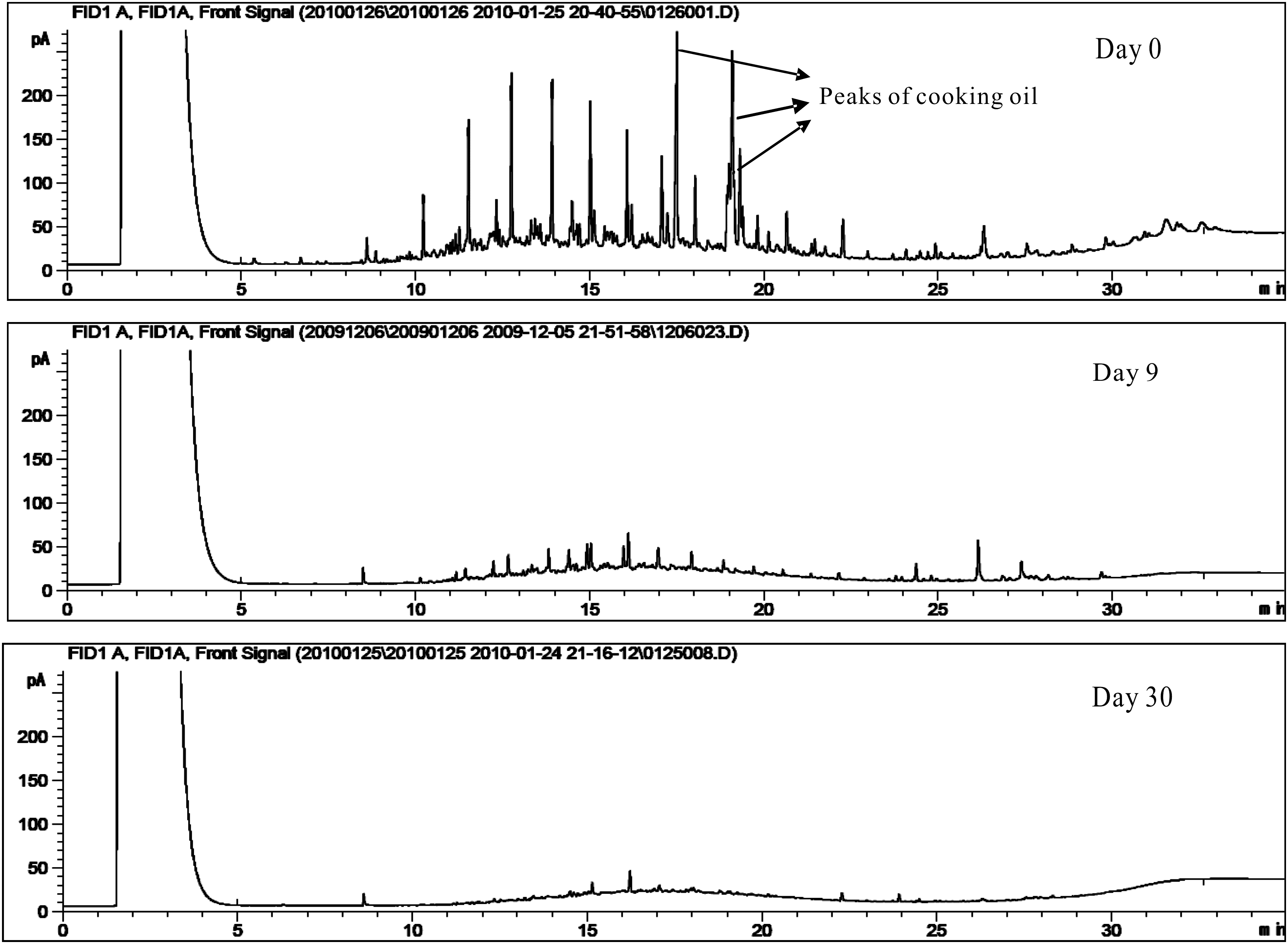
Gas chromatography/flame ionization detector spectra showing time-dependent reduction of edible oil and diesel in food waste composting.
The difference in 26,315 and 20,000 mg/kg measured on day 0 may have arisen from an accumulation of sampling and analysis inaccuracies. Moreover, if the spiked diesel was not well mixed on day 0, this may have also contributed to the discrepancy. Additionally, TPH discrepancies can also be related to the TPH analysis method used, including all C6 to C40 carbohydrates. Hence, the edible oils with low molecular weight (<C40) originally contained in the food waste were counted in the measured results when the initial TPH was assigned a value. This was also seen by the GC/FID analytical spectrum, which showed a group of peaks with nondiesel characteristics in the C20–C22 range (retention time=17–20 min; Fig. 4).
The rise to TPH 36,000 mg/kg in the composting pile during the initial 24 h was probably caused by the rapid initial decomposition of high-carbon (>C40) edible oil to compounds of less than C40. These low-carbon products, which were recorded in the analysis as TPH in the compost, lead to the observed TPH. Results obtained by Namkoong et al. (2002) noted that n-alkanes were relatively easy to decompose biologically and supports our hypothesis regarding the possible cause of elevated TPH.
Figure 3 also shows that the high 36,000 mg/kg TPH observed during the first day rapidly decreased to about 15,000 mg/kg on the 4th day, suggesting that both the edible and diesel oils had a rapid initial decomposing rate. This observation was also seen in the GC/FID analysis spectrum—peaks in that analysis rapidly disappeared on the 9th day (Fig. 4). However, the TPH showed a small increase on the 5th day (Fig. 3), possibly suggesting the edible oil may also contain biologically refractory components so that the large molecules were decomposed to compounds of less than C40 range during the second stage. After the 5th day, TPH decreased continually to 2,000 mg/kg on the 24th day. The theoretical removal efficiencies were calculated as 92.4% for the diesel fuel (26,315 mg/kg) added to the initial compost materials. Alternatively, the experimental removal efficiencies were calculated as 90% when compared with the measured C0 that was 20,000 mg/kg. Such decomposition rates (90%–92%) were much higher than those reported in literature (Li et al., 2002; Ruberto et al., 2003; Chaîneau et al., 2005; Mihial et al., 2006). Moreover, a comparison of Figs. 1, 3, and 4 shows that most of the degradation occurred in the first 10 days corresponding to the temperature-rising and thermophilic stages. The thermophilic decomposing capability might have been superior to the traditional mesophilic biodegradation, although further studies are needed to test this possibility.
Species variations of the dominant microorganisms during diesel-contaminated food waste composting
As shown in Table 1, 35 species of various microorganisms belonging to 26 genera were isolated from the experimental pile spiked with diesel fuel during various stages of composting. The general trend was that there were abundant microbial species at the initial composting period, and the number of species decreased gradually as the composting progressed. The number of microbial species was most abundant (14 species) at the initial stage (30°C), followed by 7 species at the temperature-rising stage (55°C) and 7 at the thermophilic stage (70°C), and 4 species at the temperature-recovering stage (55°C). The fewest (3 species) were found during the maturation stage (30°C). Changes in composting pH and increasing temperature modified the microbial consortium. The reduction of food and available nutrients may also result in decreasing microbial diversity during the temperature-recovering and the maturation stages.
The numbers within parentheses indicate reappearance times of the species during screening. Bold letters indicate species or consortia that were reported in literature to have the capability of decomposing edible oils or mineral oils.
Abundant Bacillus sp. appeared in every fermentation period except the maturation stage (30°C), indicating that they played an essential role in the composting process. Acinetobacter sp. was discovered to exist only at the initial stage of 30°C and the maturation stage of 30°C, leading us to postulate that Acinetobacter sp. grew well only during the mesophilic composting stage. Low G+C Gram-positive bacterium was traced during the temperature-rising stage (55°C) and the temperature-recovering stage (55°C), suggesting that it was able to survive in the thermophilic environment. Pseudoxanthomonas sp., which emerged during the extremely thermophilic period of 70°C and survived to the temperature-recovering stage (55°C), grew in both extremely thermophilic and thermophilic environments.
Table 1 1ists 11 microbial species (in bold letters) belonging to seven genera reported in literature to have the capability of decomposing edible oils or mineral oils (Antai, 1990; Hanson et al., 1997; Haba et al., 2000; Hua, 2006; Owsianiak et al., 2009; Zanaroli et al., 2010). Of these microorganisms, five species appeared at the initial stage (30°C), two species during the temperature-rising stage (55°C), one during the thermophilic fermentation stage (70°C), and one during the temperature-recovering stage (55°C). Two species appeared during the compost maturation stage. These observations reveal that the food waste composting pile contained an abundant variety of microorganisms and that microorganisms of different oil-decomposing capabilities appeared at various stages of the composting process. With isolation and enrichment, these microbial consortia could be possibly developed to improve the proposed biological method for treating oils in contaminated environments using a food waste composting process.
Implications of the findings
Results of this preliminary study on composting temperature and pH confirmed that the addition of 26,315 mg/kg diesel fuel to a composting pile comprising food waste will not affect the efficiency of this process. TPH concentration decreased daily, implying that most diesel fuel was decomposed within 10 days while the composting was still at the thermophilic stage. Analyses of the microbial species revealed that the Oleiphilus species reported in literature appear in all composting periods of different temperatures, like Bacillus sp. This finding was significant, because most previous studies on the use of the Oleiphilus bacteria for biological treatment were carried out under mesophilic conditions but few under thermophilic or extremely thermophilic conditions. If appropriate amounts of diesel-contaminated soil were mixed with food wastes to be co-composed, the presence of diesel fuel will not inhibit or interfere with the normal food waste composting operation, and the diesel can be decomposed efficiently.
Conclusions
In conclusion, the preliminary results reported in this article indicate that adding 26,315 mg/kg of diesel did not interfere with the normal operation of the composting process. This system, which achieved 90%–92% oil removal efficiencies without addition of oil-decomposing microbes and extra nutrients, provides certain advantages to the conventional biological treatments. Our direct chemical analysis on TPH reduction and GC/FID spectrum analysis suggest that most edible oil and diesel fuel were rapidly decomposed within 10 days. We postulated that edible oil-decomposing microbes during prolific growth periods might have simultaneously decomposed mineral oil or developed into mineral oil-decomposing microbes. Our chemical analyses and biological identification studies confirmed this hypothesis. We found at least one species of oil-decomposing bacterium existing in each of the composting stages. Together, these findings suggest that the food waste composting process can be used to decompose oil and that it may be used as a bioremediation method for treating oil-contaminated soil without bioaugmentation or biostimulation.
Footnotes
Acknowledgments
This work was supported by the National Science Council (NSC) of Taiwan, under Contract No. NSC-97-2221-E-022-006. The authors are grateful to NSC for the financial support provided for the pursuit of this project.
Author Disclosure Statement
No competing financial interests exist.