






Abstract
This paper presents findings from a pilot study of a five-week feminist psychoeducational group developed for mothers experiencing eco-distress during matrescence, the developmental shift of motherhood. Weekly journaling prompts served as narrative provocations to catalyze reflection and identity transformation in a case study of five mothers. Rather than a clinical or therapeutic intervention, this study tested a scalable, consciousness-raising format grounded in developmental principles of relational growth, eco-feminist psychology, and narrative therapy principles. Thematic analysis of participants’ journals identified five core themes in eco-maternal identity development: nature relatedness, paradoxical emotions, ecological questing, intergenerational commitment, and environmental stewardship. By externalizing eco-distress and reframing and reconstructing narratives about their relationship to nature, participants articulated a more integrated ecological self. These findings suggest that structured narrative reflection, situated in a developmental and feminist framework, may be a promising pathway for supporting maternal well-being and ecological engagement in the face of climate crisis.
Introduction
With the escalating threats of climate change, mothers find themselves at the intersection of environmental concerns and caregiving, often experiencing what has been recently conceptualized as maternal eco-distress (Davis & Athan, 2023). This psychological phenomenon may become an increasingly significant challenge since climate change has been shown to impact women and children disproportionately, particularly during the transition into motherhood known as matrescence (Barkin, Curry, & Goss, 2022). As the pressures of parenting merge with a sense of environmental responsibility, mothers experience a range of eco-emotions, which refers to the wide range of emotional responses individuals may experience in relation to the natural world or environmental degradation. Common eco-emotions, recognized in fields such as ecopsychology and environmental education, may include grief, anxiety, guilt, anger, hope, awe, and reverence—reflecting both distressing and motivating responses, and encompassing both negative and positive emotional experiences (Cianconi, Hanife, Grillo, Lesmana, & Janiri, 2023; Pardon et al., 2024; Sholomon et al., 2025). The dual role of both caregiver and environmental protector can especially amplify feelings of guilt and inadequacy, as mothers navigate the tension between caring for their families and the broader ecological systems they reside within (Hays, 1996; Ray, 2011).
Eco-maternal identity development and the double bind of green motherhood
Recent theorizing of maternal ecopsychology explores this dynamic, offering a developmental framework for understanding how parenting shapes, and is shaped by, mothers’ pre-existing or emerging ecological awareness (Davis & Athan, 2023). This novel framework suggested bridging matrescence with evolving understandings of environmental psychology, positioning motherhood as an opportunity for accelerating ecological identity formation. As mothers undergo the biopsychosocial changes associated with matrescence, they may simultaneously be reorienting their relationship to the natural world. This may awaken a newfound or deepened attachment to their local ecological niche or global climate change issues, thus motivating them to take on the role of environmental stewards for future generations (Athan, 2024; Davis & Athan, 2023; Sholomon et al., 2025).
While the experience of motherhood may instigate positive psychological growth, many mothers also express distress due to the double bind of societal expectations. For example, they may feel guilty for their role in “unsustainable population growth” while being simultaneously pressured to participate in potentially counterproductive “green motherhood” practices (Atkinson, 2014). Green mothering in Western societies is defined as the promotion of consumer-driven solutions, such as purchasing approved products and lifestyles (e.g., buying organic diapers), that give the illusion of ecological preservation, rather than fostering a more legitimate relational repair at the level of the psyche (AbiGhannam & Atkinson, 2016; Atkinson, 2014). This “greenwashing” ideology risks pushing mothers onto the wrong developmental track—perfecting the consuming self, rather than restoring their foundational attachment to nature. Such a psychological distortion has long-term developmental implications including distracting mothers from the deeper ecological identity work necessary during matrescence, as well as burdening them with an outsized sense of responsibility for “saving the planet,” while larger societal structures remain unchanged (AbiGhannam & Atkinson, 2016).
In contrast to negative interpretations of maternal eco-distress, there may be an alternative explanatory framework that signals that a more genuine eco-maternal identity formation process is underway. In this case, engagement with the mother’s psychological consciousness is attempting to move in the direction of a secure, “deep and warm” relationship between humans and nonhumans, one based in mutual trust and reciprocal caregiving (Davis, 2023; Molina-Motos, 2019). This pathway reflects established theories of ecopsychology that share an emphasis on the human capacity for biophilia, reattunement to ecological belonging, and the integration of self with the wider living world (Fisher, 2012; Kahn, 1995). Bolstering ecopsychological resilience in the specific population of new mothers (Molina-Motos, 2019; Plotkin, 2010; Spitzform, 2000) may be well-timed since they are already navigating the multidimensional identity shift of matrescence—now inclusive of the ecological domain of human existence. This perspective suggests that interventions need not aim solely to reduce eco-distress, but may instead support the internal maturational processes driving this emergent ecological dimension of maternal identity.
Eco-feminist developmental psychology and matrescence
The narrative intervention proposed in this study was grounded in theories of eco-feminist developmental psychology (Gaard, 2011; Gilligan, 1993; Griffin, 1978; Plumwood, 2002; Warren, 2000) that positions eco-distress not as a pathological symptom, but as a meaningful symptom of relational rupture between the self and the more-than-human world. This framing supports distress tolerance as a vehicle for re-embedding a person into their ecological context and enlarging their network of perceived relationship and sense of ethical responsibility. Rooted in the feminist tradition of consciousness-raising and collective storytelling (Brown, 1994), repairing the attachment, or deepening a mother’s biophilia, insists on a postmodern social constructionist approach that challenges dominant narratives of individualism, human exceptionalism, and ecological disconnection. Matrescence may represent a sensitive window for ecological identity transformation—a “developmental opportunity” of heightened receptivity that invites mothers to “sit with their eco-distress” in order to reconstruct their understanding of the natural world and the relational ethic of reciprocity (Athan & Reel, 2015; Davis & Athan, 2023; Gilligan, 1993). While matrescence is often marked by heightened vulnerability and mental health challenges (Rohr, 2023), it can also serve as a generative catalyst for ecological attunement in which parenting transforms environmental concern from abstraction into embodied, place-based care. Rather than pathologizing this sensitivity, an ecopsychological lens views it as an opportunity for restoring our foundational connection to the environment and “restorying” our personal narrative away from egocentricity and toward eco-centricity.
Once critiqued for essentializing women’s connection to nature, ecofeminist ideals are now being reinterpreted through the lens of relational care ethics—emphasizing "care over conquest", and advocating for all forms of life as a shared responsibility rather than reinforcing the oppression of both women and nature (Glazebrook, 2023). As a result, the everyday acts of mothering, such as recycling or walking with children outside, can become incrementally stronger expressions of what we refer to as eco-maternal awareness. This emerging interest in sustainability should be considered normative rather than “this is not another trauma-driven or hypervigilant response that requires clinical intervention but rather an opportunity to reorient toward an ecocentric perspective, one grounded in interdependence with the biosphere” (Sholomon et al., 2025, p. 3). If matrescence involves the biopsychosocial integration of the mothering role into one’s identity formation (Hwang, Choi, & An, 2022), then an ecopsychological lens expands this understanding by recognizing the affiliation with nature as an integral part of maternal development—thus reintegrating the “eco” into a truly holistic view of the maternal self (Derezotes, 2017; Davis & Athan, 2023).
Narrative therapy was chosen not merely as a technique, but as a paradigm aligned with eco-feminist epistemologies that treat knowledge as relational, storied, and emergent through dialogue (White & Epston, 1990; Brown, 1994). Unlike traditionally structured cognitive or behavioral therapies which focus on internal symptom management, narrative therapy is uniquely suited because it assists mothers to challenge their attitude toward nature and reauthor it as a social process, imbued with memory, meaning, and mutual recognition (Plumwood, 2002). Thus, mothers are tasked with positioning the biosphere not as a passive backdrop, inert and utilitarian for human benefit only, but as an active participant in their life story. In doing so, eco-feminist reframing serves as a relational bridge and creative ethical response to the original disorientation of eco-distress.
Restorying eco-distress: the role of narrative therapy
Narrative therapy principles further informed the design of this consciousness-raising group, which invited mothers to integrate eco-distress as part of their developmental and ecological identity process and to perceive their anxieties linked to environmental degradation in a new way. This therapeutic approach, pioneered by White and Epston (1990), is based on the premise that individuals construct meaning in life through the stories they tell about themselves and their world (White, 2007). For mothers grappling with eco-anxiety, narrative therapy creates an opportunity to creatively engage with a more resilient mindset, shifting from being immobilized victims of the climate crisis to agents of environmental stewardship instead.
A core element of narrative therapy is externalization, where the problem at hand is viewed as separate from the individual (Nichols & Schwartz, 2001), and mothers can distance themselves from feelings of inadequacy and challenge its negative influence over them. For example, mothers overwhelmed by anxious thoughts of a dire future may reconceptualize them instead as a meaningful, normative response to environmental threats rather than an internal, pathological flaw to be erased or avoided. This reduces self-blame and opens up possibilities to redefine what ecological activism might look like in ways that align with their values and capacities since becoming mothers. A related technique is deconstruction, which involves identifying and dismantling narratives that impose unrealistic expectations on individuals. By deconstructing oppressive master narratives from the culture, mothers are encouraged to move beyond paralysis brought on by unattainable standards and toward a self-compassionate stance that encourages more realistic environmental engagement and the need for greater accountability by large corporations (McLean & Syed, 2015).
Next, narrative therapy supports mothers in exceptional moments in their lives that contradict these dominant narratives and reveal alternative ways of being (Jagatdeb, Mishra, Bajpai, & Sen, 2024). When these counterstories highlight times mothers successfully modeled eco-reverent behaviors for their children, even small acts of ecological care can become powerful sources of meaning. These moments leave a lasting impression and serve as potent “medicine” for the mental health sequelae of feeling stuck. This process may help alleviate negative self-perceptions and allow a mother to move beyond idealized, self-sacrificing narratives of green motherhood, and toward fostering a more balanced and affirming ecological identity.
Finally, the process of restorying—or rewriting one’s personal narrative—is central to narrative approaches. Restorying empowers mothers to craft a reworked narrative about themselves and how they self-identify. Mothers may tell stories about their fostering a love of nature in their children through everyday interactions like gardening, hiking, or observing the changing seasons, or about rediscovering a “lost, now found” biophilia that is less extractive and more interactive. Such creative acts may be experienced as regenerative, much like nature itself, and offer a newfound vision of belonging (Corey, 2004).
Purpose of the study
Building upon previous research that highlights the developmental window of matrescence as an opportunity for positive psychological growth (Athan, 2024; Athan & Miller, 2013), this study explored the potential efficacy of narrative eco-therapy for mothers. This pilot study examined a five-week psychoeducational group that tested how structured narrative practices might support eco-maternal identity formation during matrescence by reframing their eco-distress as a developmental step toward greater eco-centricity. Findings may sensitize maternal care providers to recognize ecological content in mothers’ narratives and inform them of promising therapeutic strategies to support more meaningful engagement with environmental issues. Through the use of journaling prompts and self-reflexivity from the field of narrative therapy, the study aimed to explore three sequential areas of increasing complexity related to ecopsychological development: 1) to qualitatively explore the specific concerns of mothers experiencing eco-distress and understand the content of these preoccupations, 2) to identify potential shifts in their narratives from negative to more empowered or resilient attitudes, and 3) to apply developmental theories to assess whether these narrative shifts align with established models of psychological growth from anthropocentricity to eco-centricity.
Methods
Participant sampling and recruitment
Recruitment efforts targeted U.S.-based mothers experiencing eco-distress, with outreach conducted through social media advertisements, parenting listservs, and local parenting magazines. Participants were selected based on their desire to explore the intersection of motherhood and ecological responsibility. Thirteen self-identified mothers with children under the age of three were recruited for the corresponding umbrella study (Sholomon et al., 2025). Only participants who responded to at least four out of the five total journal prompts throughout the intervention were included in the analysis of this paper: the final sample comprises of five participants (Table 1). Despite the convenience of an online format and a welcoming attitude toward mother-child dyads onscreen, the time-consuming nature of parenting and the lack of available childcare may have contributed to retention challenges and further attrition. Yet, a small sample size of five to eight individuals aligns with standard practices in small group facilitation, where the number of participants are intentionally constrained to foster intimate and supportive environments (Irvine, Rawlinson, Bor, & Hoehn, 2021; Muzik et al., 2015).
Ethical considerations
Ethical approval for this study was obtained from the Institutional Review Board of Teachers College, Columbia University (IRB Protocol #23-276). All participants provided informed consent before engaging in the intervention. Participation was voluntary, and the participants’ anonymity was maintained through the use of pseudonyms in all data collection and reporting.
Intervention structure
The intervention consisted of five one-hour workshops, with weekly sessions introducing a new theme related to environmental awareness during matrescence. Specific discussion and journaling prompts related to each week’s theme were designed to guide participants through the process of externalizing their eco-distress and restorying their ecological identities (Table 2). Participants were encouraged to explore the intersection of their connection to nature and their roles as mothers (Schultz, 2002). The lead researcher, scholar, and licensed counselor trained in narrative therapy and eco-feminist psychology served as both curriculum designer and group facilitator, drawing on clinical training and feminist pedagogical methods to guide reflective dialogue and maintain a supportive group process.
Sociodemographic Characteristics of Case Study Sample
n = 5. All participants self-identified as cisgender, married women.
Matrescence-Based Eco-Therapy Weekly Workshop Stages and Prompts
In Week 1, participants were introduced to the Inclusion of Nature in Self Scale, adapted from Schultz (2002), to assess their self-perceived relationship with the natural world.
The group was explicitly framed as a psychoeducational consciousness-raising group structured to explore ecological identity transformation through narrative reflection, not clinical psychotherapy. Each session included a brief introduction to the week’s theme, space for participant discussion, and an invitation to respond to a guided journaling prompt (Table 2). Participants were encouraged to share insights, but disclosure was voluntary. The facilitator offered affirmations, asked open-ended questions to deepen reflection, and maintained boundaries aligned with a nonclinical educational setting. During the final session, participants reflected upon the experience of evolving their ecological self through personal reflection and insight.
Data analysis
Qualitative data were collected through pre- and post-intervention online surveys and weekly journaling responses which served as narrative provocations to stimulate reflective consciousness-raising around ecological identity. In addition to demographic information from the surveys, only the journal entries from each week of the intervention were analyzed in this paper, as they offered the sole source of rich, written narratives into participants’ perceptions of these issues.
The entire research team then generated initial codes of the participants’ journal entries using an iterative, inductive approach of thematic analysis (Braun & Clarke, 2006). Theories of maternal development and ecopsychology guided analysis, helping to expand thematic codes and their descriptions (Athan & Reel, 2015; Barclay, Everitt, Rogan, Schmied, & Wyllie, 1997; Logsdon-Conradsen & Allred, 2010). To ensure representativeness, the presence of themes was accounted for across participants and weekly journal entries. A large language model assisted with identifying themes based on the codes. Researchers reviewed and refined outputs to ensure accuracy, nuances, and methodological rigor. Coding concluded when all participants’ narratives were captured through the analysis.
Results
Across the narratives of the participants in this pilot study, five interrelated themes emerged as a result of the narrative eco-therapy and were identified as components of maternal ecological identity development (EID): Nature Relatedness, Paradoxical Emotions, Ecological Questing, Intergenerational Commitment, and Environmental Stewardship (Table 3). Superordinate themes encompassed the range of expression of ecopsychological growth reflected in the participants' descriptions of the impact of climate change on their maternal thinking (Fig. 1).
Maternal Ecological Identity Development
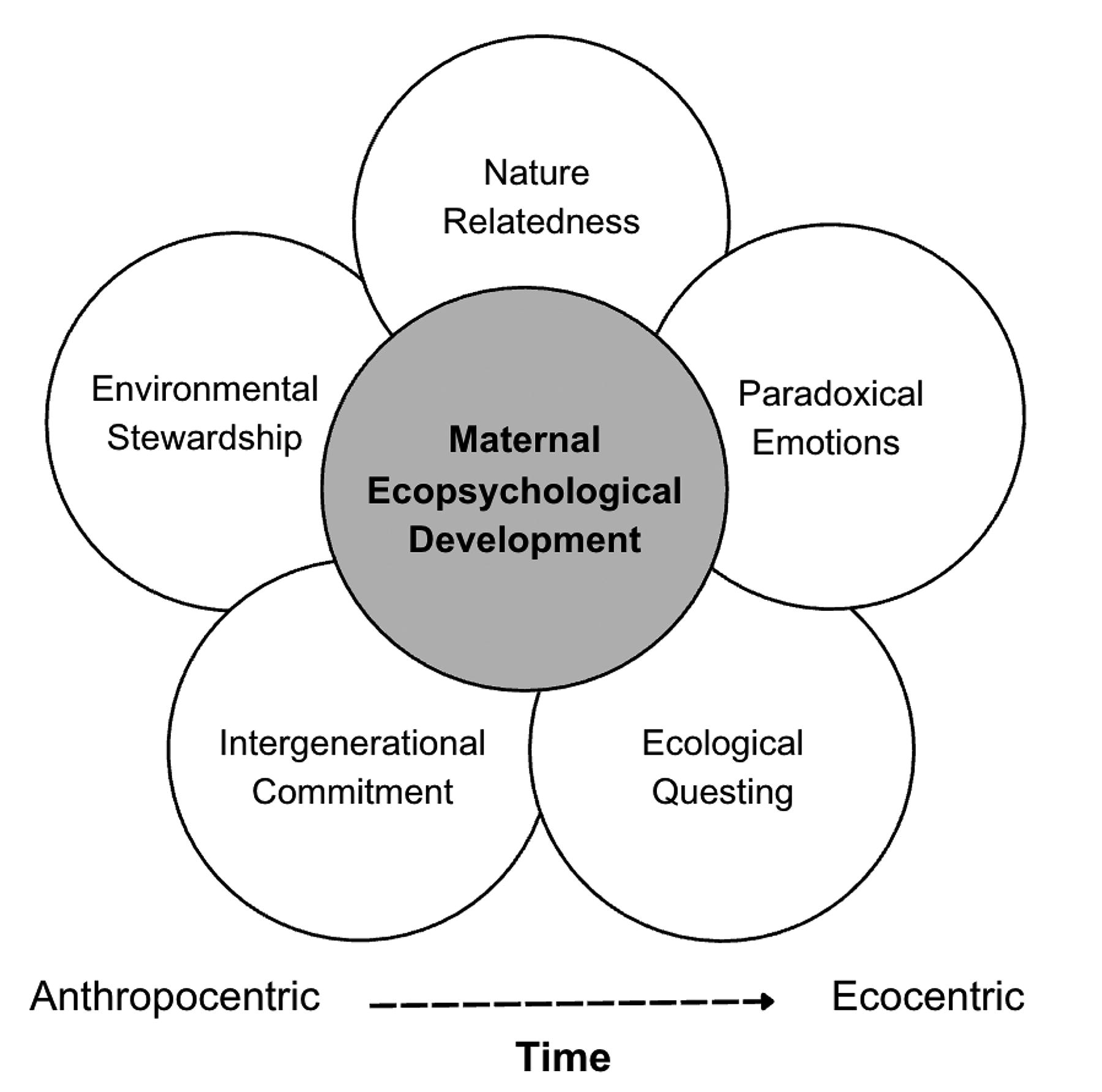
Eco-maternal identity development.
Nature relatedness
The theme of Nature Relatedness represents the quality of the participants’ connection with nature. For some mothers, this connection existed before motherhood but was profoundly transformed by the parallel experience of matrescence and caring for children. As their role as caregivers expanded, so did their concern for the well-being of other vulnerable beings in nature. For many, the practice of self-reflection through journaling helped them recognize their evolving sense of belonging to the earth, deepened by their newfound role as nurturers.
Ana reflected: “I’ve realized that I am not separate from nature. This journey into motherhood has made me feel like I’m part of something much bigger—part of a cycle that includes everything, from the earth to my baby’s first breath.” Participants noted that their child was often an instigator for this ecological perspective. Caroline described, “This awareness has definitely been heightened since having a child and seeing all of these things anew through my daughter’s eyes.” Reflecting on these early memories of being immersed in nature highlighted the contrast between the nature relatedness they experienced in childhood to their current disconnect from the natural world. Caroline expressed this longing:
Through this intervention, I have been trying to get back to that childlike sense of wonder I used to feel when exploring the woods. I want to pass that to my children—to see the world through their eyes and reconnect to that joy.
These narratives collectively demonstrate the yearning for a return to a sense of place and belonging with nature, once a mere backdrop, now forefronted as an important relationship to maintain and enjoy.
Paradoxical emotions
Participants expressed Paradoxical Emotions—a complex blend of coexisting and sometimes conflicting internal feelings, including guilt and hope, despair, and determination. Emily shared her conflictedness:
It is hard to not feel defeated. Every day I hear more about the damage we are doing to the planet, and it breaks my heart to think of what my daughter will inherit. But at the same time, this workshop has made me realize that I cannot do everything, and that is okay. I can only do my part.
Emily also echoed the overwhelming nature of becoming more conscious of the ramifications of environmental destruction facing the planet:
Things are starting to feel so profoundly sad and scary, which I never felt before becoming a mother. Is this an eco-awakening? Is eco-awakening a good thing or a bad thing? I am trying to think more about separating what I can control from what I cannot, and focusing on my little corner of the world where I have control. That means instilling in my daughter a deep appreciation for nature and teaching her how to be gentle and kind toward all animals and humans. It does not take away the anxiety, but does feel comforting. That feels like growth for me. I would love to be an activist, and I feel guilt that I am not fighting harder for my child’s future.
With prompts to help participants reframe their distress, mothers held space for these paradoxical emotions to be experienced without the previous immobilization as a result of guilt. As Ana stated, “I feel guilt from this realization, I am also welcoming this moment as an opportunity to change gears and find ways to do things differently.” By externalizing their eco-distress, mothers were able to view their anxieties as separate from their identities, creating space for action and reflection.
Ecological questing
Many mothers described Ecological Questing—a purposeful search for meaning in the light of seemingly insurmountable climate change. This quest was often framed as a journey toward awakening, ripe with questioning in which participants searched to find answers on how to integrate environmental stewardship into their daily lives as mothers, above and beyond basic proenvironmental behaviors (e.g., recycling). For some, the quest was driven by deciding which specific actions might be best, as with Margot:
Motherhood has lit a fire in me to find out what my role is in protecting the planet. I do not want to be passive—I want to be active, but I am still figuring out what that means for me and my family.
Rose depicted a more existential search that deconstructed a dominant narrative about humans as separate from nature, which motivated her to reclaim previously unexplored aspects of her identity:
In order to find my niche … I need to know the environment around me and the people and things within that environment … Being able to teach and raise my daughters to question things and be their truest selves is something that I desire to do with and for them and that is a big motivation for me, along with working through and finding my truest self.
This search for meaning was also expressed as the need to reconcile personal anxieties with the hope for a better future. Ana joined others in centering their child(ren) as the main driver and teacher in this search for eco-centric values. Ana wrote:
I think my child will challenge me to think about what kind of facilitator or guide I want to be and embody to support them in developing and connecting to their ecological self throughout their life. How do I facilitate that process of connection between ourselves (and) nature with my child?
Narrative restorying helped mothers reframe their eco-distress as a call to align their values with their actions, and to guide their children in forming a meaningful connection to the natural world.
Intergenerational commitment
Intergenerational Commitment was a recurring theme in the journals, highlighting the mothers’ desire to pass down proenvironmental values in their children while also revisiting their own cultural and familial heritage. Rose described such intergenerational thinking as both past and future-oriented:
When I think about what kind of world I want my kids to grow up in, it makes me think back to my own upbringing. My grandparents were farmers—they lived off the land, and they respected it. I want to pass that respect down to my children. … I want to teach my children all of those things that I did not learn growing up and I want those things to make a big impact in their and others’ lives in the future.
Emily described an error in her previous judgment and hoped to pass on this lesson to her child so that she could have a head start:
I grew up seeing nature as completely separate and limitless. I did not think it was possible to harm the environment, I thought it was endlessly resilient. Now that I feel how extremely precious the environment is, I try to impart that on my daughter.
Mothers increased their articulation of their ecological values through writing and reflected on how past relational experiences with nature shaped their identity and inspired a commitment to passing on a proenvironmental legacy to their children.
Environmental stewardship
The final theme, Environmental Stewardship, reflected the participants’ growing sense of responsibility toward the environment. Many mothers described how motherhood had catalyzed a broad range of lifestyle changes, from practically reducing their household’s carbon footprint and participating in environmental activism to larger reassessments of their beliefs and worldviews. Caroline’s entry captured this sense of stewardship:
Becoming a mom made me realize how much is at stake. I have made changes—small ones, like switching to reusable products, but I want to do more. This group has shown me that even the small things matter, and I am not alone in wanting to make a difference.
Stewardship, in this context, went beyond mere individual behavior, suggesting the participants' desire to move toward a collective effort to foster environmental responsibility within the family and community. Importantly, this theme extended to collective actions. Margot described:
The steps that move me closer to my niche are actively working on community building and deeply sharing friendships. I have discovered that the way to do this is through circumventing all holiday traditions soaked in norms that no longer serve the earth. … Everything else feels too soaked in capitalism and buying more more more. … I want to throw a Halloween party with a themed haunted house about climate change. This will allow me to be creative, spend time thinking about how to playfully grow the collective consciousness about climate change in a fun way.
Overall, the eco-therapeutic intervention enabled mothers to identify their ecological values, explore actionable steps, and foster a resilient attitude toward their eco-distress. As Ana noted, “I know my actions and lifestyle choices can have both a direct and indirect impact on my well-being and the well-being of diverse ecosystems.” This reflection illustrated a sense of confidence and personal empowerment in which the mothers emerged from their restorying with more agentic and less fatalistic language. Mothering became a vehicle to re-evaluate personal habits and participate in value-aligned actions that better reflected their growing love-of-the-natural-world.
Eco-maternal identity development
Taken together, the five interconnected themes derived from participant journals revealed an underlying emotional and developmental process reminiscent of established identity models in psychological literature, such as spiritual identity development. From this perspective, the themes reflected not only a reduction in eco-distress but also the early building blocks of Eco-Maternal Identity Development, marked by a step-wise shift from anthropocentric to eco-centric consciousness (Fig. 1). Evidence of this nascent growth was embodied by several participants. For example, Caroline described her experience of the ecological self as initially awakened through deeper engagement with nature: “I think that I experienced the Ecological self through this experience in nature where I was just soaking it all in and admiring it.” Emily named the narrative group’s role in not only alleviating anxiety but also facilitating her psychological transformation:
This workshop came at the right time for me as my feelings of eco-distress were peaking this summer. I’ve been anxious about climate change since studying environmental science in college almost 15 years ago, and for a long time, I felt alone in those feelings. This year, amidst a lot of scary news, I’ve been leaning into understanding these feelings rather than suppressing them. This workshop helped me understand that motherhood and matrescence are central to my experience of eco-distress. I’m thinking of motherhood more as a process and a way of engaging with the world. This has been pretty eye-opening, because beforehand I was applying a much more literal definition related to directly caring for my child. It is allowed me to accept that my whole being has changed, including how I perceive and relate to nature.
Discussion
The findings of this pilot study suggest that eco-feminist, consciousness-raising practices using narrative prompts to reframe ecological distress as a signal of psychological growth may support mothers in accelerating their eco-maternal identity development. Through the intervention, mothers externalized their eco-distress and reframed it as a transitional step toward cultivating a more secure connection with nature, rather than perceiving it as a pathological endpoint. Eco-distress was recognized as a potentially productive endeavor, a normative expression of a more genuine eco-awakening in need of redirecting. Participants shifted from anxious or avoidant coping styles to more resilient mindsets and creative problem-solving approaches. This transformative outcome—from human-centered consumerism to a proenvironmental eco-centricity with ecopsychological theories that promote movement toward a greater sense of belonging to, rather than alienation from, nature. The emergence of positive emotions, such as hope and purpose, served as counterweights to despair, enabling parents to develop a “learned hopefulness” for their children and future generations, even in the face of climate havoc (Sholomon et al., 2025).
Maternal ecological identity development
The five themes identified in this study—Nature Relatedness, Paradoxical Emotions, Ecological Questing, Intergenerational Commitment, and Environmental Stewardship—align well with Thomashow’s (1996) ecological identity concept and the EID model. As Clayton et al. (2021) describe, the EID model positions ecological identity as the perception of self in relation to the natural world, shaping values, behaviors, and emotional engagement. This is achieved via a developmental trajectory that starts with shallow environmental awareness and evolves through relational and experiential processes, ultimately into a deeply rooted eco-centric worldview. Bodnar (2023) suggests that the integration of clinical and ecopsychology enables a person experiencing eco-therapy to access the chronosystem—the changes and continuities that take place over a timespan and allows for psychological reorganization.
As Thomashow (1996) suggests, and as reflected in the theme of Nature Relatedness, reconnecting with nature awakens an intrinsic attachment to the natural world and restores our sense of embeddedness within ecosystems. Similarly, the theme of Paradoxical Emotions—encompassing feelings such as grief and hope—requires mothers to tolerate the tension of opposites borne of environmental crises, until a new sense of possibility arises out of the obvious loss. These emotions are especially challenging for mothers, who experience what Carey, Shaw, & Shiu (2008) refer to as an “inheritance factor, where parents are awakened to ethical issues because of the birth of their child, was prominent”, a heightened concern about how environmental damage affects all life and future generations (p. 553). Ecological Questing aligns with the EID model’s progression, capturing the process of mothers actively questioning, probing, and seeking a deeper understanding of environmental challenges. This theme reflects a sense of urgency and a desire for more knowledge, much like the rebellious search for meaning seen in adolescence, demanding a broader perspective on the world. Intergenerational Commitment connects maternal care for children to ecological stewardship, reinforcing Thomashow’s emphasis on reciprocal obligations that transcend time and space, extending beyond finite or limited understandings of responsibility. Maternal caregiving also extends beyond human relationships, now embracing the Earth itself, grounded in reciprocity and a moral responsibility to nurture all life systems (Davis, 2023). Finally, Environmental Stewardship reflects the behavioral activation of this ever-maturing ecological identity, where values transform into tangible practices that embody ecological care and advocacy in everyday life.
Acting in concert, these themes push forward the formation of eco-maternal identity through iterative interactions of awareness, emotional processing, relational connection, and action—not as a linear accumulation of knowledge, but as an upward spiral of growth. Over time, repeated psychoeducational exposure may mirror Bruner’s concept of the spiral curriculum, in which core ideas are revisited over time with increasing depth and complexity (Clark, 2010). Likewise, eco-maternal growth unfolds not through a single moment of insight, but through recurring and deepening engagement with environmental education, caregiving experiences, and reflective self-inquiry—each cycle building upon the last and enriching the individual's evolving identity (Clark, 2010). The findings of this study extend existing models of maternal identity development by demonstrating its entanglement with ecological identity and positioning caregiving itself as a powerful form of environmental advocacy (Athan & Reel, 2015; Raphael, 1975). Matrescence may indeed be a form of “spontaneous child-initiated EID” described in the aforementioned model and may thus serve as a sensitive period for cultivating both personal and planetary well-being.
Narrative eco-therapy during matrescence
One of the most significant implications of this study is the potential for the widespread use of narrative interventions for mothers coping with eco-distress or self-perceptions as ecological “offenders,” instead empowering them to reframe their identity and focus on positive, prosocial changes. Drawing upon research with other populations, such as prison-based rehabilitation communities, similar techniques have been successfully used as a means of purposive and agentic reconstruction of identity so that a “new” person emerges (Stevens, 2012). Matthews and Desjardins (2017) for example described strategies that could assist childless people to negotiate their socially stigmatized identities by categorizing them as reactive, intermediate, or proactive, based on “the degree to which they accept or challenge pronatalist ideologies” (p. 31). This was supported by another study of childlessness, in which clinicians helped clients externalize “subjugated” narratives of infertility by creating new metaphors that counter stagnation and promote generativity—the desire to establish a positive contribution to the next generation (Moore, Allbright-Campos, & Strick, 2017). In both examples, a narrative strategy such as cultural transcendence was employed to achieve this goal: rethinking cultural expectations and creating alternative categories of normalcy (Matthews & Desjardins, 2017). This approach dismantled internalized false expectations from their lifeworlds that yield feelings of stuckness and fatalism, and instead re-establishes a sense of legitimacy in their actual, lived experiences. Within our sample of mothers by comparison, eco-distress is no longer viewed as deviant but as a normal response to the deviancy of climate havoc.
Importantly, this was not a psychotherapeutic group designed to diagnose or treat clinical symptoms, but rather a psychoeducational, consciousness-raising space guided by a trained facilitator. It aligned with feminist traditions of education-as-liberation, offering language and reflective tools to help participants explore meaning, agency, and self-concept. Designed to be accessible and scalable beyond clinical settings, the group emphasized collective reflection over individualized mental health care. The supportive space allowed for the expression of confusing and paradoxical emotions without the pressure for immediate resolution—emotions that, if left unexamined, might otherwise lead to the rejection of environmental concern or the uncritical adoption of green motherhood norms (Davis, 2023). By externalizing these difficult paradoxes, mothers were able to name and navigate the feeling of being simultaneously “in” and “out” of control. In this context, exploring eco-emotions openly and relationally promoted emotional integration, fostering greater ecological awareness, psychological growth, and maternal resilience.
Strengths and limitations
The study offered evidence that mothers can engage constructively with their eco-anxiety and challenge societal pressures related to green motherhood that often lead to guilt, overwhelm, and perfectionism. Despite these strengths, it is not without limitations. The small sample size of five participants and the homogeneity of the group, in terms of race, education level, and family structure, limits the study’s ability to capture the full diversity of maternal eco-distress experiences across sociocultural contexts. The study was meant to be exploratory and not in service of recruiting a large, representative sample for generalizability. Recruitment relied on social networks of mothers already interested in sustainability and maternal mental health, which introduced sampling bias. Future research would benefit from a more geographically diverse sample, examining cross-cultural experiences of EID, and exploring longer-term outcomes through postintervention interviews or follow-up assessments.
The use of weekly journaling as the primary data source presents both unique strengths and notable limitations. Journaling enabled participants to articulate their experiences in their own words and on their own timelines, offering intimate, self-guided reflections that aligned with the intervention’s emphasis on self-authorship. However, this method may have constrained the emergence of spontaneous insights or relational dynamics that arise in dialogue-based mediums. It also presumes a certain level of literacy, emotional vocabulary, and psychological mindedness that may not be equally accessible to all mothers. Importantly, while the group sessions were recorded, the verbal dialogue was not analyzed for this paper. This was a deliberate methodological choice to focus on individual narrative construction through written reflection. Nonetheless, the group dialogue represents a rich and underutilized source of qualitative material. These transcripts contain valuable relational exchanges and meaning-making processes that could be explored in a subsequent analysis to illuminate how collective storytelling and peer witnessing contribute to EID.
Conclusions and Future Recommendations
Findings from this pilot study suggest that a feminist psychoeducational group using narrative provocations has the potential to foster EID in mothers. Future research should explore the enduring effects of such interventions over the longer term and examine how they could be adapted and scaled for larger, more diverse maternal populations (McCaffery & Boetto, 2024). Women, particularly minoritized women, face an increased risk of experiencing the social consequences of the climate crisis (Rothschild & Haase, 2023), along with severe or unexplored anxieties related to ecological issues. In a study that implemented narrative therapeutic interventions with young Latinx immigrant individuals, the combination of digital learning and narrative storytelling inspired meaningful change in participants (Lilly, 2023), suggesting a promising future for multimedia, hybrid approaches to narrative therapies. As noted in a special issue of Ecopsychology, “ecopsychology cannot only advocate for simple exposure to outdoor spaces…and ecopsychological work that focuses exclusively on wilderness immersion might benefit from a reality check. Some therapeutic impact requires more than a couch and more than a forest” (Bodnar, 2023, p. 207). Maternal eco-therapy should therefore initially focus on creating psychological spaces for mothers to emotionally process their identity transformation before engaging broader community-driven action. By taking place in accessible and familiar settings, such as online groups within the comfort of their home, this approach allows for new mothers to benefit from early and convenient interventions that can later incorporate more nature-based components down the line.
Lastly, this intervention empowers mothers as future ecological leaders by beginning at home within the family system, and within themselves, psychologically. This study points to the potential for restorying dominant cultural narratives, shifting away from individual, guilt-driven, consumption-based expectations of maternal responsibility toward a model of compassion-oriented environmental stewardship. This reframing not only validates mothers’ emotional and relational labor but also positions them as critical agents of societal ecological change. Modeling such shifts on behalf of future generations carries significant implications for how we must all awaken our own ecological identities and learn to act as responsible citizens in the face of ongoing environmental challenges (Hill, Wilson, & Watson, 2004).
Footnotes
Authors’ Contributions
A.D. and A.A.: Formulated overall research goals and developed the methodology. A.D., L.S., and A.A.: Coordinated the project and supervised the research team. L.S. cleaned and organized the data collected. A.D., L.S., R.M., D.X., X.Y., M.S., B.M., and A.A.: Conducted formal data analysis. A.D., L.S., R.M., D.X., X.Y., M.S., B.M., and A.A.: Contributed to the original draft of the writing. A.D., L.S., R.M., D.X., M.S., and A.A.: Reviewed and edited the writing. A.D., L.S., R.M., D.X., M.S., X.Y., and A.A.: Contributed to presentation and visualization of the data and article.
Data Availability Statement
The data that support the findings of this study are available on request from the corresponding last author. The data are not publicly available due to restrictions; data contain information that could compromise the privacy of research participants.
Author Disclosure Statement
No competing financial interests exist.
Funding Information
No funding was received for this article.