






Abstract
Introduction:
Chronic inflammation, particularly C-reactive protein (CRP), is a key indicator of obesity, which is believed to contribute to insulin resistance and type 2 diabetes. However, no known studies reported the effect of yoga and naturopathy (YN) on CRP levels in severe obesity. This study aimed to assess the efficacy of YN on CRP levels in an individual with severe obesity and prediabetes.
Materials and Methods:
A 25-year-old male with prediabetic obesity visited our hospital with complaints of a gradual increase in bodyweight, depression, and emotional instability over the past 3 years. He experienced palpitations, excessive sweating, breathlessness, and struggled with regular physical activity. His weight has gradually increased over the last 3 years; he gained almost 73 kg. He underwent YN intervention for 14 days of supervised care at the hospital, followed by 3 months of follow-up at home and 1 month of supervised care at the hospital.
Results:
The study showed a reduction in weight, body mass index (BMI), mid-arm, mid-thigh, waist, hip, and neck circumferences, waist-hip ratio, CRP levels, lipid profile, and Depression Anxiety Stress Scales 21 Item (DASS-21), and no changes found in blood glucose and glycosylated hemoglobin levels in the post-test assessments compared with the pretest assessments.
Conclusion:
Yoga and Naturopathy might be effective in reducing CRP, stress, anxiety, and depression, and in improving obesity related parameters in an individual with severe obesity and prediabetes. However, randomized controlled trials with a large sample size are recommended to validate the results of this study.
Introduction
The World Health Organization defines obesity as an abnormal or excessive fat accumulation that may impair health due to an energy imbalance between consumed and burned calories. 1 It affects 650 million people globally, with 135 million in India suffering from it, leading to 2.8 million annual deaths. 2 Obesity classified as class III affects adults with a body mass index (BMI) of 40 or above, also referred to as morbid or severe obesity. Chronic inflammation, particularly C-reactive protein (CRP), is a key indicator of obesity, which is believed to contribute to insulin resistance and type 2 diabetes mellitus (T2DM). Insulin resistance increases the risk of acquiring T2DM and other metabolic disorders. 3
Obesity is a multifactorial health condition driven by both societal influences, such as unhealthy eating habits and food deserts, and individual factors such as genetics and learned behaviors. Research indicates that yoga can help manage stress, reduce overeating, and support weight loss. 4 Lifestyle interventions, including naturopathic approaches that blend traditional therapies with modern techniques, have been shown to lower CRP levels in obese individuals with impaired glucose tolerance. 5 Numerous studies have demonstrated the therapeutic effects of yoga and naturopathy (YN) treatment on obesity. However, no known studies reported the effect of YN on CRP levels in morbid obesity. Hence, we assessed the efficacy of YN interventions on CRP levels in an individual with morbid obesity and prediabetes.
Patient Information
A 25-year-old male patient prediagnosed with prediabetic severe obesity came to our hospital on March 23, 2023. He presented with a complaint of a gradual increase in body weight for the past 3 years (gained almost 73 kg) associated with depression and emotional instability. He had palpitations, excessive sweating, extreme tiredness, and breathlessness on exertion for the past 3 months. He was unable to cope with regular physical activity such as stair climbing and walking for the past 3 months. He had a complaint of pain in the lower back region for the past 2 weeks, which was aggravated while driving. He was not under any medications for past 3 years. According to his personal history, he used to skip breakfast and some meals due to work pressure. His sleeping pattern and lifestyle habits were very poor, and he also indulged in binge eating during nighttime. He had both day and night shifts in his work, which also disturbed his food and sleep cycle, along with mental stress. He was a nonalcoholic and nonsmoker. He chose YN as a holistic therapeutic method to restore his body and mind, and was admitted to an inpatient ward.
Clinical findings
On physical examination, he was obese, fatigued, and had hyperpigmentation on the skinfolds, particularly around the neck and underarms. His BMI was 52.4 kg/m2, and other anthropometric data indicated that he was morbidly obese. His blood investigation showed that he had elevated CRP levels (59.6 mg/L) and slightly elevated glycosylated hemoglobin (HbA1c) (6.2%), which indicate systemic inflammation and prediabetes, respectively.
Timeline
The timeline of the intervention from hospital admission to follow-up is provided in Figure 1.
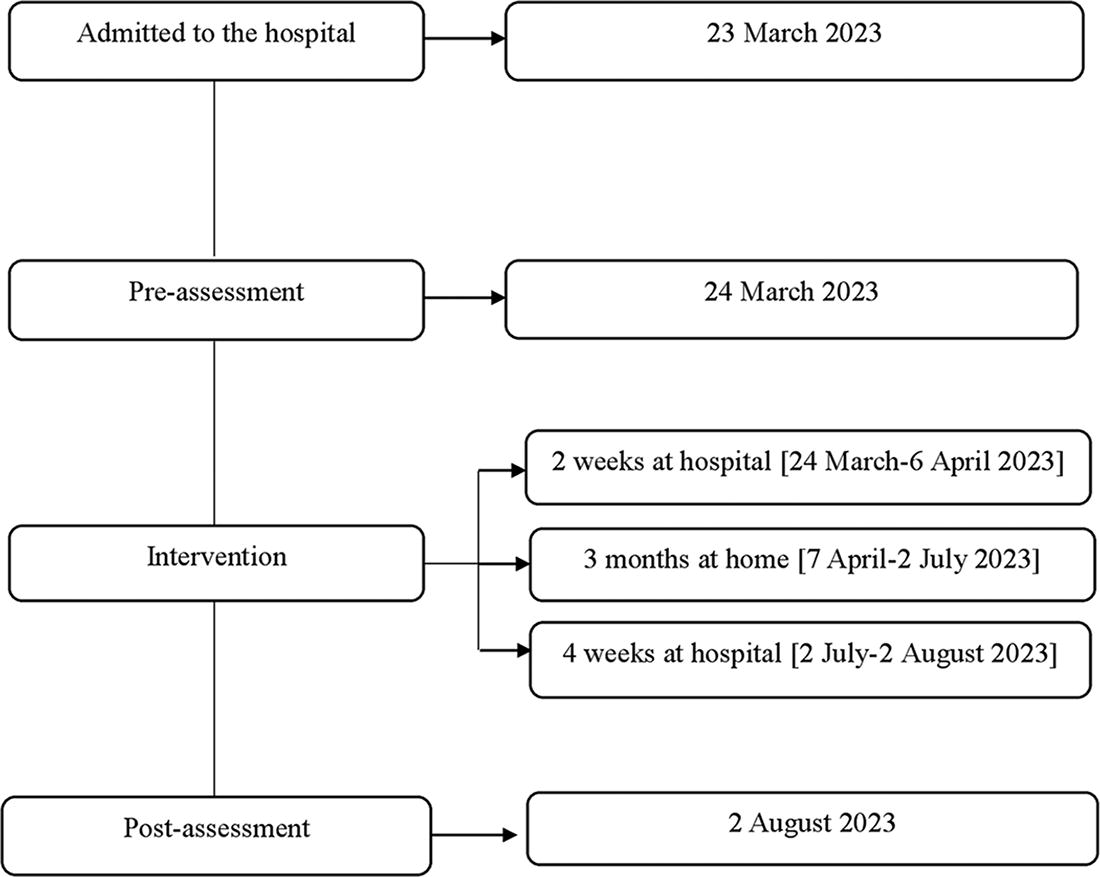
Details of the study from the admission of the patient in the hospital to follow-up.
Diagnostic assessment
The details of the baseline and post-assessment are provided in Table 1.
Pretest and Post-Test Assessments of the Patient
CRP, C-reactive protein; HDL, high-density lipoprotein; LDL, low-density lipoprotein; VLDL, very low-density lipoprotein; DASS-21, Depression, Anxiety and Stress Scale—21 items questionnaire.
Anthropometric measures
Weight was measured by using digital weighing machine, and BMI was calculated using the formula (weight in kg divided by height in m2). Body circumferences [i.e., mid-arm circumference (MAC), mid-thigh circumference (MTC), waist circumference (WC), hip circumference (HC), waist/hip ratio (WHR), and neck circumference (NC)] were measured using a nonstretchable inch tape. Measurements were taken before and after the intervention.
Biochemical assessments
Biochemical investigations, including CRP, blood glucose, HbA1c, and lipid profile [i.e., total cholesterol, triglyceride, high-density lipoprotein (HDL), low-density lipoprotein (LDL), and very low-density lipoprotein (VLDL)] were assessed in a standard private laboratory at the baseline and postassessment.
The Depression Anxiety Stress Scales 21
Depression Anxiety Stress Scales (DASS)-21 is a set of three self-report scales designed to measure the emotional states of depression, anxiety, and stress. Each of the three DASS-21 contains 7 items, divided into subscales, which were multiplied by 2 to get the final score. Total scoring is labeled as mild, moderate, and severe. 6
Therapeutic intervention
The patient underwent supervised YN-based lifestyle interventions for 14 days in the hospital, followed by 3 months of follow-up intervention at home and 1 month of intensive treatment at the hospital. The interventions provided in the hospital are as follows: (i) Customized yoga protocol (80 min/session, twice a day), which includes dynamic yoga asanas with breathing, pranayama, and relaxation techniques. (ii) Plant-based raw diet (approximately 600–650 Kcal per day), which includes seasonal fresh fruits and vegetables, juices and salads, and sprouts; juice and fruit fasting. (iii) Massage including full body massage and partial massage to the spine and both limbs and abdomen; ice massage to the abdomen and limbs. (iv) Hydrotherapy: Enema, cold hip bath, full wet sheet pack, and steam bath. (v) Mud therapy: mud pack to the abdomen and eyes, and full mud bath. (vi) Heliotherapy: Plantain leaf bath. (vi) Acupuncture. The details of the supervised YN interventions given to the patient in the hospital are provided in Table 2.
Details of the Interventions Given to the Subject
QRT, quick relaxation technique, DRT, deep relaxation technique, CV Meridian, conception vessel meridian, St, stomach meridian, UB, urinary bladder meridian.
Follow-up and outcomes
After 14 days of supervised intervention, he was advised to adhere to a prescribed diet and maintain a regular yoga practice at home. His lifestyle management was monitored via telecommunication from April 7, 2023 to July 2, 2023. After 3 months of follow-up, he was again admitted to the inpatient department and underwent supervised YN-based lifestyle intervention on July 2, 2023, and stayed for the period of 1 month till August 2, 2023.
After the intervention (14 days of supervised care at hospital followed by 3 months of follow-up at home and 1 month of supervised care at hospital), the study showed a reduction in weight, BMI, MAC, MTC, WC, HC, WHR, NC, CRP levels, total cholesterol, triglyceride, HDL, LDL, VLDL, LDL/HDL ratio, and DASS-21 scores and no changes were found in blood glucose and HbA1c levels in the post-test assessments compared with the pretest assessments.
Discussion
Behavioral lifestyle factors significantly influence inflammation, with obesity being a chronic inflammatory state. Even modest anxiety and depressive symptoms can increase proinflammatory cytokine production, which was evident as elevated CRP in this case. 7 This study resulted in a reduction in CRP, anthropometric measurements, lipid profile, and DASS-21 scores in the post-test assessments compared with the pretest assessments. It suggests that YN is effective in reducing inflammation, stress, anxiety, and depression and in improving obesity related parameters and lipid profile in an individual with severe obesity and prediabetes. Previous literature suggests that yoga can significantly reduce inflammatory markers, including CRP. 8 The purpose of the yoga protocol was to achieve an aerobic workout while simultaneously improving energy metabolism. Asanas were specifically selected to strengthen the core, and synchronized breathing was incorporated to align the body with the mind. Yoga poses, particularly forward bending, twisting, and backward bending, are known to reduce fat around the abdominal area, hips, and other areas. Yoga has been shown to have possible health benefits such as lowered sympathetic nervous system tone and enhanced vagal activity, which can lead to lower inflammation and positive endocrine and immunological responses. 7 Furthermore, irisin, a myokine released by skeletal muscle during yoga practice, has anti-inflammatory effects and can improve insulin sensitivity, help reduce obesity by converting white adipose tissue to brown adipose tissue, which enhances energy expenditure, playing a key role in mitigating obesity-related inflammation and insulin resistance. 3
Studies on acupuncture showed a significant reduction in CRP and other inflammatory markers by alleviating oxidative stress and promoting the release of endorphins, which leads to anti-inflammatory effects in patients with rheumatoid arthritis. 9 Cold application can trigger the production of irisin, an adipokine that allows white adipose tissue to imitate brown adipose tissue, thus ice massage to the abdomen and limbs leads to improved metabolism. 10 Massage to the abdomen promotes peristaltic movement of the small intestine, strengthens abdominal muscles and walls, and aids in the removal of excess fat. 11 A study found that sauna baths showed a reduction in the level of CRP, 12 suggesting that other perspiration-inducing treatments (i.e., steam bath, plantain leaf bath, and full wet sheet pack) may offer similar benefits in reducing systemic inflammation and promoting weight loss. 13
Strength of this study
This holistic approach of YN is readily available, affordable, and accessible to restore our body. This is the first case report on the effect of YN on CRP levels in prediabetic morbid obesity. The intervention was tolerable, and side effects were not reported by the patient during the study period.
Limitations of this study
The reliability and validity of this study may differ depending on the specific case. To strengthen the results, it is advisable to conduct a randomized controlled trial with a larger group of participants and incorporate advanced inflammatory markers such as cytokines.
Conclusions
The study found a reduction in weight, BMI, MAC, MTC, WC, HC, NC, waist-hip ratio, CRP levels, lipid profile, and DASS-21 scores, while blood glucose and HbA1c levels were maintained. These findings suggest that YN might be effective in reducing inflammation, stress, anxiety, and depression while also addressing obesity-related risks in an individual with severe obesity and prediabetes. Although the results are encouraging, the validity and reliability of this study may vary, as this is a single case study. Hence, randomized control trials with a larger sample size are recommended to validate the results of the study.
Informed Consent
Written informed consent was obtained from the patient to present this case report.
Footnotes
Authors’ Contribution
S.S.: Writing—original draft, conceptualization, investigation; A.V.: Writing—original draft; A.M.: Writing—review and editing; S.T.V: Supervision; R.A.: Methodology; K.S.L: Supervision.
Author Disclosure Statement
No potential conflict of interest relevant to this article was reported.
Funding Information
No funding was received for this article.