






Abstract
It has come to the Journal's attention that the cell lines used in the study titled “Long Noncoding RNA SOX2OT Accelerates the Carcinogenesis of Wilms' Tumor Through ceRNA Through miR-363/FOXP4 Axis” by Ma L, Xingzhen S, Kuai W, Hu J, Yuan Y, Feng W, and Lu X (DNA Cell Biol [Epub ahead of print]; DOI: 10.1089.dna.2018.4420), are not of Wilms' tumor origin, but rather are Ewing (SK-NEP-1) (Memorial Sloan Kettering) and Rhabdoid (G-401) (ATCC). These data were provided by unimpeachable authorities. Memorial Sloan Kettering Cancer Center (among the premier institutions for cancer research in the world) and ATCC (the most highly respected repository for cell lines and reagents) disagree with the authors assumptions about the specificity of the origin of the cell lines.
While many other publications can be found that assert the cell lines are of Wilms' tumor origin, this is not supported by the benchmark organizations.
For that reason, the experimental conclusions drawn in this peer-reviewed paper cannot be attributed to provide insights into Wilms' tumors, but rather to two cell lines of other pedigree. Therefore, DNA and Cell Biology is officially retracting this paper.
References
ATCC.
Memorial Sloan Kettering Cancer Cancer.
Introduction
W
Long noncoding RNAs (lncRNAs) are a type of transcription products >200 nt length in human genome (Lv et al., 2018; Sun et al., 2018a). The roles of lncRNAs in human diseases have been renewedly recognized in decades, especially in human cancers (Zhang et al., 2017a). lncRNAs are implicated in series of molecular processes, including differentiation, proliferation, metastasis, and transcriptional regulation. For instance, lncRNA LINC00460 is significantly upregulated in meningioma tissues and cells, and it promotes MMP-9 expression through targeting miR-539, thereby accelerating the pathogenesis (Xing et al., 2018). lncRNA UCA1 antagonizes miR-26a and recovers its target PETN to alleviate VSMCs proliferation against atherosclerosis (Tian et al., 2018).
In several human cancers, lncRNA SOX2OT has been reported to function as oncogenic molecular, such as esophageal squamous cell carcinoma (Shafiee et al., 2016), colorectal cancer (Liu et al., 2016), and gastric cancer (Qu and Cao, 2018). In this study, we investigate the expression profile and biological roles of lncRNA SOX2OT in Wilms' tumor carcinogenesis. We identify that SOX2OT is overexpressed in Wilms' tumor samples and cells, and the knockdown of SOX2OT impairs the proliferation and invasion in cellular levels.
Materials and Methods
Tissue samples collection
About 25 paired Wilms' tumor tissues and adjacent normal tissues were obtained from patients at The Affiliated Huaian No. 1 People's Hospital between 2015 and 2017. The Institute Research Medical Ethics Committee of The Affiliated Huaian No. 1 People's Hospital approved this study.
Cell culture
Wilms' tumor cell lines (SK-NEP-1, G-401) were purchased from the Chinese Academy of Sciences Cell Bank (Shanghai, China) and then cultured in DMEM (Gibco) supplemented with 10% fetal bovine serum, 100 IU/mL penicillin (Baomanbio), and 100 mg/mL streptomycin (Baomanbio). Cells were cultured in a humidified atmosphere (37°C, 5% CO2).
siRNA transfection
The siRNAs or mimics targeting lncRNA SOX2OT were offered by Guangzhou Ribo bioCo. Cells were transiently transfected with siRNA-SOX2OT, inhibitor (50 nM), or mimics (50 nM) using Lipofectamine 2000 (Invitrogen, Carlsbad, CA) according to the manufacturer's instructions. siRNA-SOX2OT-1, 5′-GGCAGGCCAAUUCUCCUAAUU-3′; siRNA-SOX2OT-2, 5′-GCUGAGCCACAUUCUAGUAAUU-3′; siRNA-SOX2OT-3, 5′-GCCAAUGCUGCAGGAUUCUUU-3′.
Reverse transcription–polymerase chain reaction
Total RNA was isolated from Wilms' tumor tissue and cell lines with TRIzol reagent (Takara, Shiga, Japan). The qualified extraction was identified according to the ratio of OD260/280 using spectrophotometer. RNA (2 μg) was reverse-transcribed into complementary DNA. The real-time quantitative polymerase chain reaction (PCR) was conducted with the SYBR Premix Ex Taq™ II kit (Takara). The target genes' expression was calculated using the 2−ΔΔCt method. Reaction condition was set at 37°C for 30 min and 5 s at 85°C and then maintained at 4°C. Primers sequences were as follows: SOX2OT, forward, 5′-GCTCGTGGCTTAGGAGATTG-3′, reverse, 5′-CTGGCAAAGCATGAGGAACT-3′. GAPDH, forward, 5′-ATGGGGAAGGTGAAGGTCG-3′, reverse, 5′-GGGGTCATTGATGGCAACAATA-3′.
Cell counting kit-8 and colony formation assay
The cell proliferation potential was detected using cell counting kit-8 (CCK-8) assay. Cells (5 × 10³ per well) were seeded into 96-well plate. Then, CCK-8 solution (10 μL) treated the cells after transfection of 48 h. Absorbance value was tested by microplate spectrophotometer at 450 nm from triplicate groups. Colony formation assay was conducted as previously described (Qu and Cao, 2018).
Flow cytometry analysis
Flow cytometry apoptosis assay was performed and detected as previously reported. In brief, Wilms' tumor cells (SK-NEP-1, G-401) were transfected with siRNAs, and then seeded in six-well plates at 1 × 10³ cells per well. After incubation of 24 h, cells were harvested and washed by PBS for two times. SK-NEP-1 and G-401 were resuspended in Annexin V-FITC (5 μL) and propidium iodide (5 μL) by Annexin V-FITC Apoptosis Detection Kit (Invitrogen). FACS Calibur (BD, Franklin Lakes, NJ) was used to measure the apoptotic cells.
Transwell invasion assay
Invasion assay was carried using Transwell chambers assay (Corning, NY), which was precoated by Matrigel (BD) on 24-well plates. In brief, the transfected cells (1 × 10⁵ per well) were seeded on the upper chambers, supplementing DMEM without serum. Besides, lower chamber was added with DMEM with 10% serum. After 24 h, cells invaded through the filter, which was fixed in 4% paraformaldehyde, after the staining with crystal violet. The invasive cells were counted and quantitated in five different areas under a microscope.
Western blot analysis
Lysates were extracted from cells using RIPA buffer (CST, Danvers, MA) containing protease inhibitor. Proteins were isolated by sodium dodecyl sulfate–polyacrylamide gels and transferred no polyvinylidene difluoride membranes (Millipore, Darmstadt, Germany). Membranes were blocked at room temperature for >30 min, and then incubated with primary antibodies (anti-FOXP4, 1:1000 dilution; Abcam), after the incubation of horseradish peroxidase-conjugated secondary antibody (Beyotime). Finally, membranes were treated with ECL and graphed by X-ray film processor.
Cell cytoplasm/nucleus fraction isolation
RNA was isolated from the nuclear and cytoplasm fractions using Cytoplasmic Nuclear RNA Purification Kit (Norgen, Belmont, CA), according to the manufacturer's instructions.
Luciferase reporter gene assay
The luciferase reporters cloned with SOX2OT 3′-untranslated region (UTR) sequence, including wild type targeting miR-363 binding sites or mutant type, were generated. Then, 293T cells were cultured and co-transfected with the mentioned recombinant luciferase reporter and miR-363 mimics or controls. Renilla luciferase activity acted as internal control. After 48 h, luciferase activity was tested with the Dual-Luciferase Reporter Assay System (Promega, Madison, WI).
In vivo xenograft assay
This study was approved by the ethical committee of The Affiliated Huaian No. 1 People's Hospital, and all these male nude mice (BALb/c, 4-week-old) were obtained from its laboratory animal center. SK-NEP-1 cells were subcutaneously injected into mice at the concentration of 100 μL containing 5 × 10⁶ cells. After 4 weeks, tumor volume was calculated using the equation: 0.5 × length × width2.
Statistical analysis
Variable data were presented as the mean ± standard deviations or standard errors. Statistical test was calculated using SPSS (SPSS, Inc., Chicago, IL) by Student's t-test or one-way ANOVA. p < 0.05 was considered as the statistical difference.
Results
SOX2OT expression level was elevated in Wilms' tumor specimens
First, we measured the clinical expression profile of lncRNA SOX2OT in 25 paired Wilms' tumor specimens and their matched normal tissue. Reverse transcription–polymerase chain reaction (RT-PCR) revealed that SOX2OT expression was dramatically elevated in Wilms' tumor specimens compared with the paired normal tissue (Fig. 1A). Meanwhile, the matched analysis of these Wilms' tumor specimens showed that SOX2OT almost upregulated in every pair of Wilms' tumor specimens and matched adjacent normal tissue (Fig. 1B). Overall, our data illustrated that SOX2OT expression level was elevated in Wilms' tumor specimens, indicating the potential oncogenic role of SOX2OT in Wilms' tumor tumorigenesis.
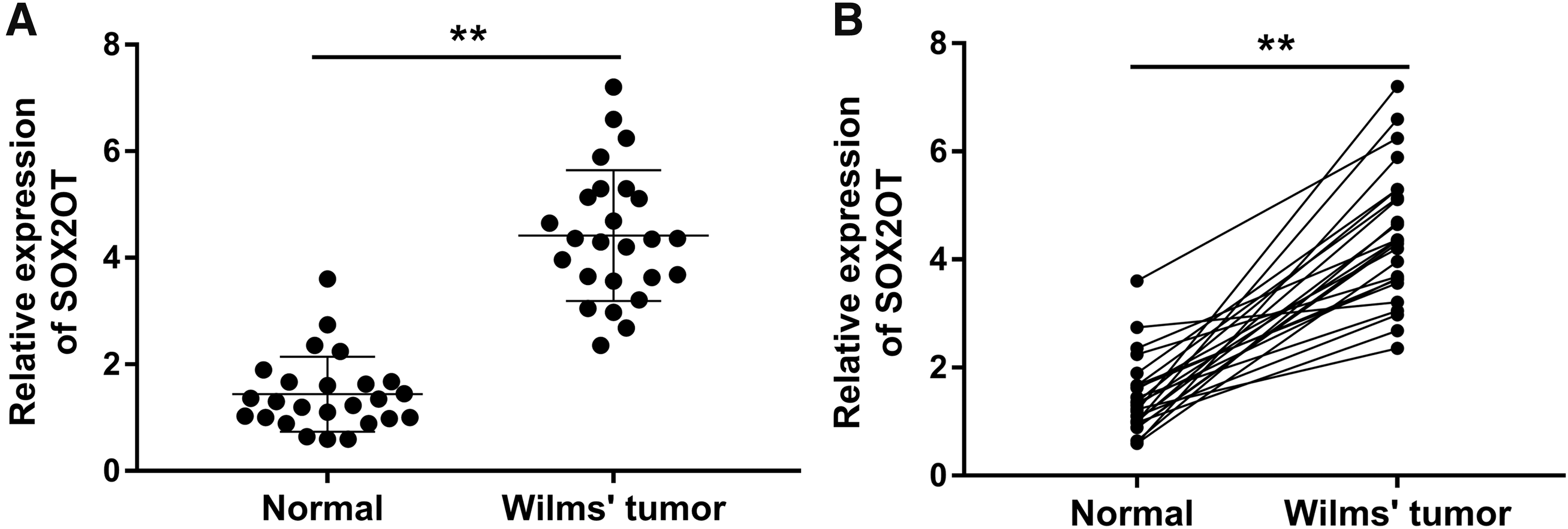
SOX2OT expression level was elevated in Wilms' tumor specimens.
lncRNA SOX2OT silencing suppressed the proliferation of Wilms' tumor cells in vitro
The elevated expression of lncRNA SOX2OT in the Wilms' tumor samples inspires the thought that SOX2OT might function as an oncogenic RNA in the tumorigenesis. RT-PCR revealed that SOX2OT expression was significantly enhanced in Wilms' tumor cell lines (SK-NEP-1, G-401) (Fig. 2A). Three different siRNAs were transfected into Wilms' tumor cells to silence its expression, showing that only one siRNA could effectively suppress the expression quantity (Fig. 2B). Then, the proliferation assays, including CCK-8 assay and colony formation assay, were performed using Wilms' tumor cells. The cell proliferation was significantly reduced after the si-SOX2OT transfection using CCK-8 assay, comparing with the control transfection (Fig. 2C). Subsequently, the cellular colony formation number of Wilms' tumor cells was markedly decreased in the si-SOX2OT transfection group, comparing with that of controls (Fig. 2D, E). In conclusion, these changes triggered by si-SOX2OT transfection indicated the tumor inhibiting of SOX2OT silencing on Wilms' tumor cells in vitro.
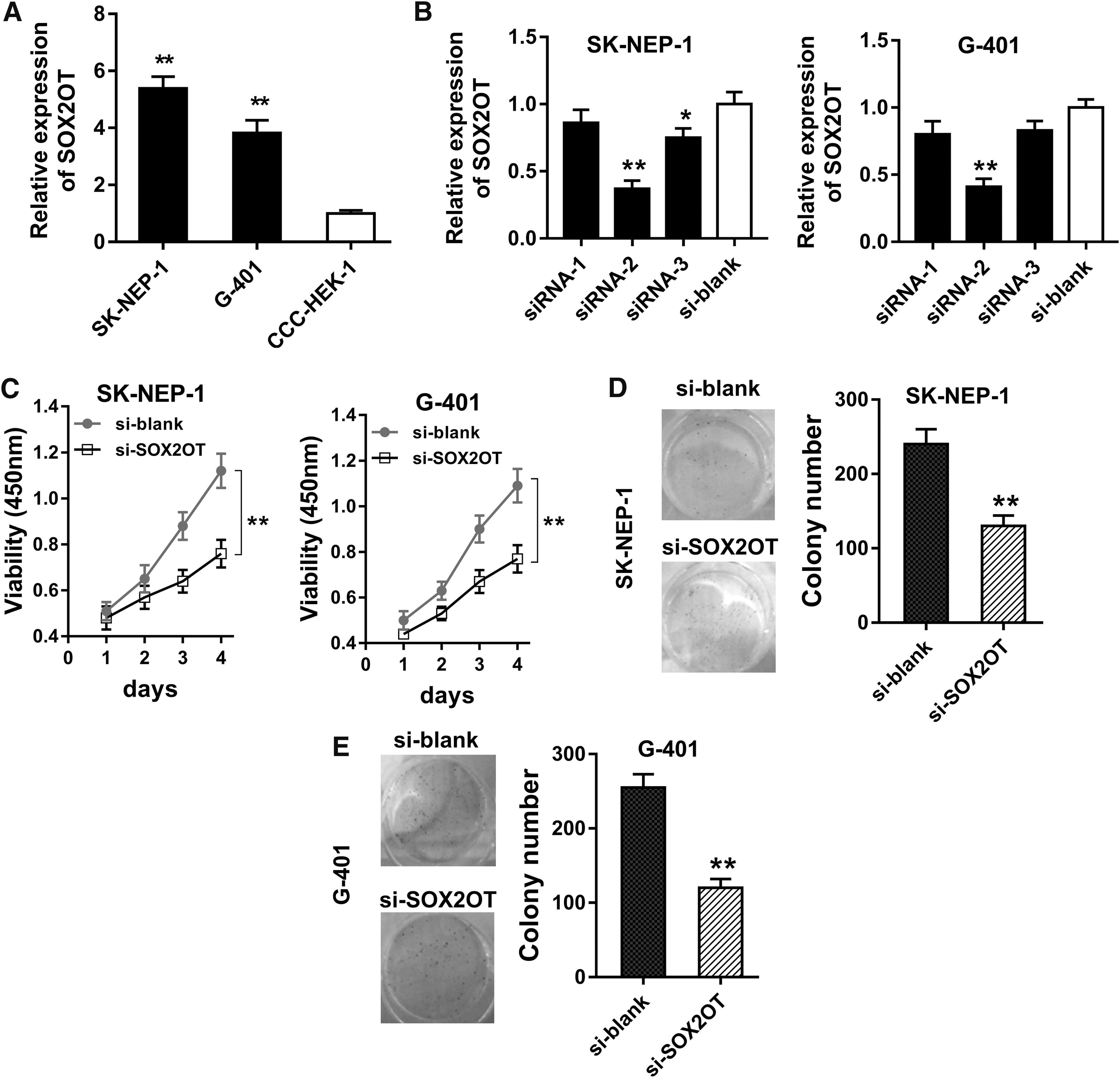
lncRNA SOX2OT silencing suppressed the proliferation of Wilms' tumor cells in vitro.
lncRNA SOX2OT silencing impaired the Wilms' tumor cells' invasion, accelerated the apoptosis, and inhibited the tumor growth in vivo
To validate the oncogenic role of SOX2OT on Wilms' tumor cells more convincingly, we performed further assays to confirm it. Flow cytometry analysis revealed that SOX2OT silencing elevated the apoptotic cells in Wilms' tumor cell lines (SK-NEP-1, G-401) (Fig. 3A, B). Transwell invasion assay illustrated that SOX2OT silencing impaired the invaded cells in Wilms' tumor cell lines (SK-NEP-1, G-401) (Fig. 3C, D). In vivo xenograft assay showed that stable SOX2OT silencing inhibited the volume and weight of in vivo tumor in mice comparing with the control transfection (Fig. 3E, F). In conclusion, data revealed that lncRNA SOX2OT silencing impaired the Wilms' tumor cells' invasion, accelerated the apoptosis, and inhibited the tumor growth in vivo.
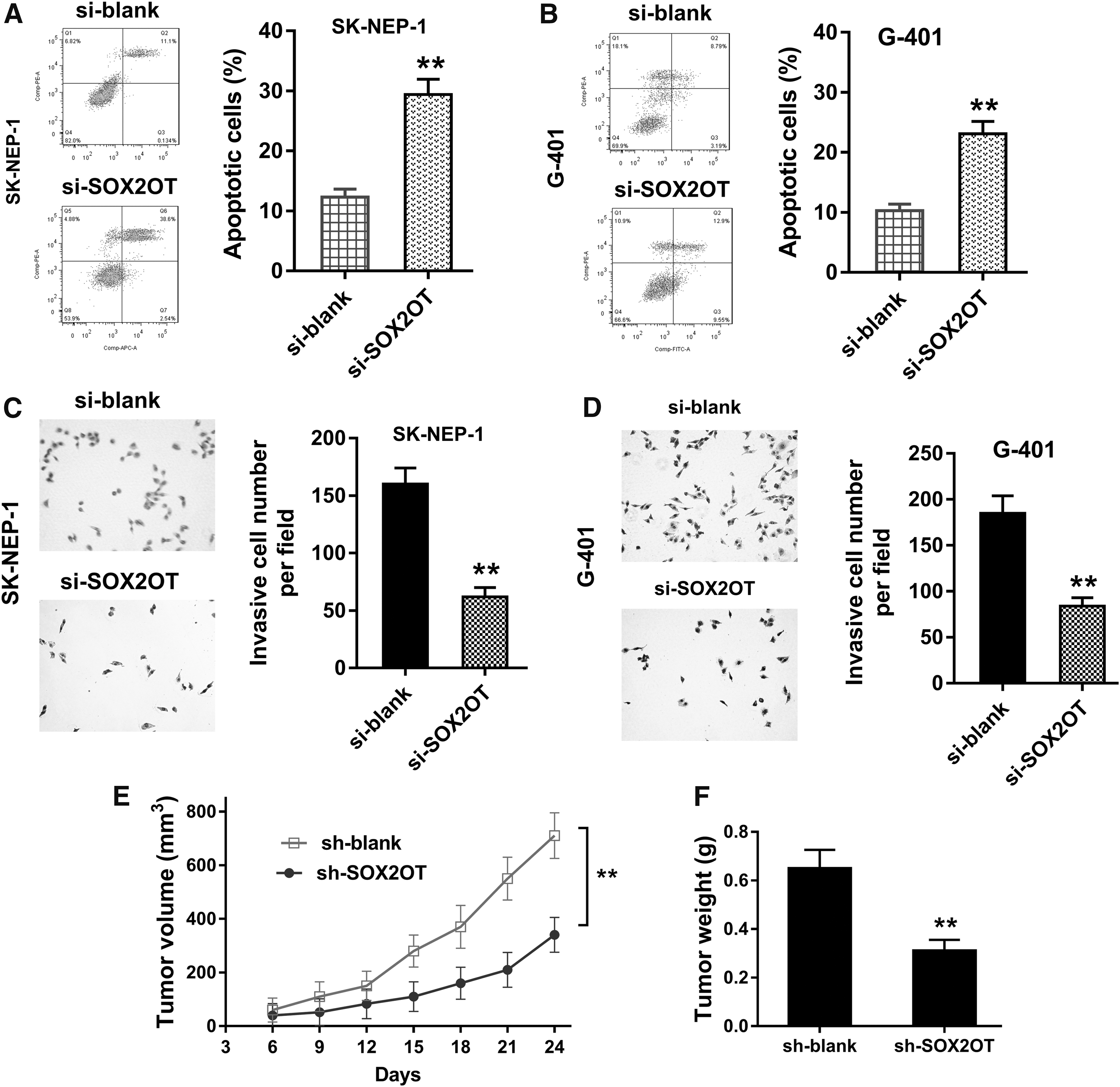
lncRNA SOX2OT silencing impaired the Wilms' tumor cells' invasion, accelerated the apoptosis, and inhibited the tumor growth in vivo.
miR-363 acted as the target RNA of SOX2OT and was negatively correlated with it
Subcellular fractionation analysis found that the subcellular location of SOX2OT in SK-NEP-1 cells was on the cytoplasm, proposing the possibility of post-transcriptional regulation (Fig. 4A). Online bioinformatics tools (
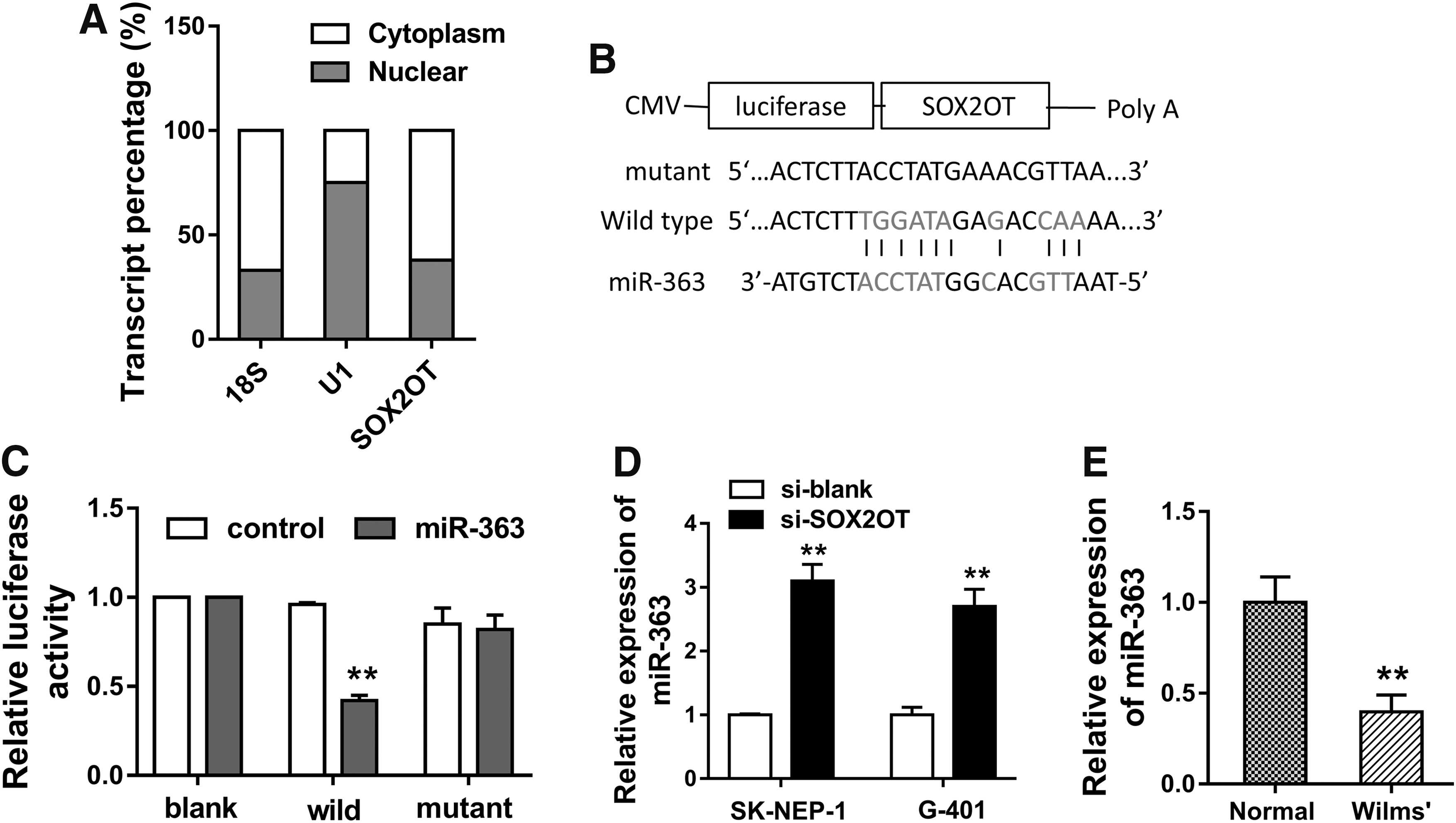
miR-363 acted as the target RNA of SOX2OT and was negatively correlated with it.
SOX2OT positively modulated FOXP4 expression through miR-363
Although the data had indicated that SOX2OT sponged miRNA-363, as a miRNA sponge, in Wilms' tumor cells, the potential functional protein of them was still unclear. Thus, we further investigated the downstream of SOX2OT and miRNA-363. Online bioinformatics tools (TargetScan;
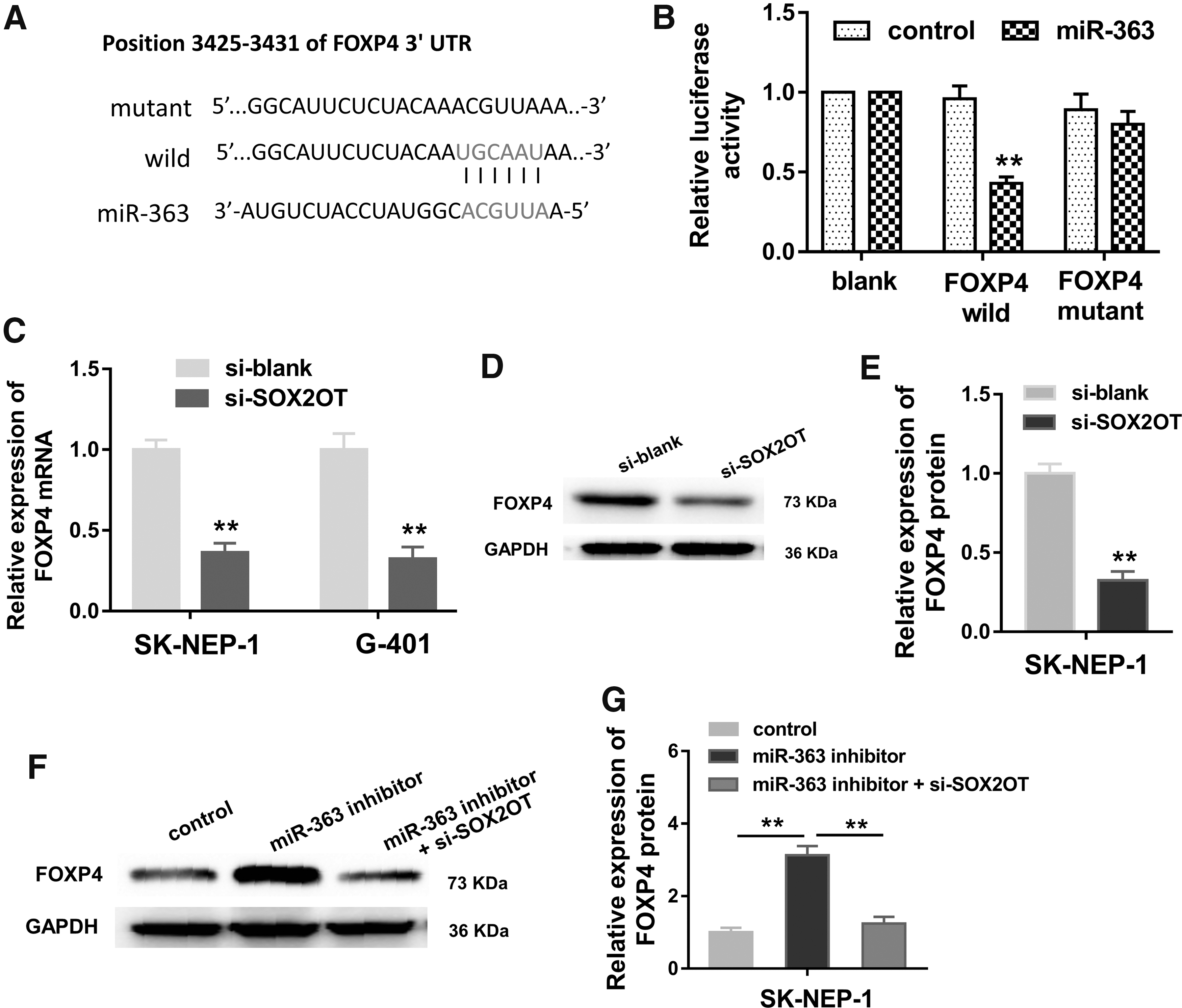
SOX2OT positively modulated FOXP4 expression through miR-363.
Discussion
More and more literature have demonstrated the important role of lncRNA in series of human diseases, such as nervous system disease, endocrine disorder, and multiple cancers (Wu et al., 2017; Zhang et al., 2017b; Jing et al., 2018; Li et al., 2018a; Li et al., 2018b). Wilms' tumor is one of the most common renal malignant tumors in children, which is also known as embryonal tumor or renal embryonal tumor (Gonzalez-Urquijo et al., 2018). Up to now, there is limited reported literature and published research about the lncRNA and Wilms' tumor. Thus, it is necessary to devote energy in this field (Petiti et al., 2018).
In this study, our team put effort into the clinical characteristic and molecular phenotypic of lncRNA SOX2OT in the Wilms' tumor. Clinically, lncRNA SOX2OT abundance was statistically highly regulated in Wilms' tumor specimens; besides, its quantity was also enriched in cells. The overexpression level of SOX2OT in Wilms' tumor might function as a cancer activator. In other type of human cancers, lncRNA SOX2OT has been indicated to accelerate the carcinogenesis. For instance, lncRNA SOX2OT expression was significantly associated with worse overall survival and related to clinical stage and distant metastasis, might be a promising prognostic factor in various cancers (Song et al., 2018). lncRNA SOX2OT upregulation is significantly associated with lymph node invasion, TNM stage, and recurrence; moreover, SOX2OT is correlated with malignant biological behaviors, including proliferation, migration, and invasion (Li et al., 2018c). lncRNA SOX2OT reduces drug resistance of osteosarcoma cells through the signaling cascade Notch3/DLL3 to reduce the stemness (Wang et al., 2018b).
The hypothesis of competing endogenous RNA (ceRNA) is the mainstream theory for the lncRNAs. This novel regulatory mechanism masterly illustrated the cross talk of lncRNA and functional protein (or mRNA) through competing binding with miRNA. In other words, lncRNAs negatively sponge the miRNA enrichment and miRNAs negatively regulated with mRNA, thereby, lncRNAs positively promote mRNA expression. In this study, we found that lncRNA SOX2OT functions as the sponge of miR-363 in Wilms' tumor cells and tumorigenesis. Then, we discover the downstream protein of miR-363, FOXP4, which is a type transcription factor and the member of FOX family (Yin et al., 2017; Estruch et al., 2018).
Our results confirmed the regulatory pathway of SOX2OT/miR-363/FOXP4 in Wilms' tumor tumorigenesis, which is the first time the regulatory mechanism of SOX2OT in Wilms' tumor has been identified. The ceRNA is constituted with lncRNA-miRNA-mRNA. For example, lncRNA LINC00339 is significantly upregulated in NSCLC tissue and cells, facilitating the tumorigenesis of NSCLC progression by sponging miR-145 through targeting miR-145 (Yuan et al., 2018). In colorectal cancer, miR-145 is confirmed to be the target of SOX21-AS1; moreover, MYO6 acts as one of the downstream protein of miR-145, forming the SOX21-AS1/miR-145/MYO6 (Wei and Li, 2017).
Forkhead-box (FOX) gene family consists of > 43 members (Yamazaki et al., 2018; Sun et al., 2018b). The transcription factors of FOX family also epigenetically regulate the protein gene expression in cells, thereby modulating the cellular progression (Yin et al., 2017; Hu et al., 2018). In this study, we found that SOX2OT promotes FOXP4 protein expression through sponging and inhibiting miR-363. The molecular function of FOXP4 has been identified to be oncogenic gene in human cancer (Liu et al., 2015). For example, FOXP4 expression level is high in osteosarcoma cell lines, and knockdown of FOXP4 in SAOS-2 and MG63 cells resulted in the decreasing of cell proliferation and migration, but increasing levels of apoptosis (Yin et al., 2017). For another example, FOXP4 expression is upregulated in breast cancer cells, and restoration of FOXP4 expression significantly reversed the effects of circular RNA circMYO9B knockdown on breast cancer cell proliferation, migration, and invasion (Wang et al., 2018c). Thus, FOXP4 exerts the tumor-promoting effects in the Wilms' tumor tumorigenesis, which is promoted by lncRNA SOX2OT.
In conclusion, we conclude that the enhanced expression level of lncRNA SOX2OT is closely correlated with the malignant biological behaviors of Wilms' tumor. SOX2OT positively accelerates FOXP4 expression through sponging miR-363, providing a valuable treatment strategy for the Wilms' tumor.
Footnotes
Disclosure Statement
No competing financial interests exist.