






Abstract
Introduction:
Food and beverage products containing cannabidiol (CBD) is a growing industry, but some CBD products contain Δ9-tetrahydrocannabinol (Δ9-THC), despite being labeled as “THC-free”. As CBD can convert to Δ9-THC under acidic conditions, a potential cause is the formation of Δ9-THC during storage of acidic CBD products. In this study, we investigated if acidic products (pH ≤ 4) fortified with CBD would facilitate conversion to THC over a 2–15-month time period.
Materials and Methods:
Six products, three beverages (lemonade, cola, and sports drink) and three condiments (ketchup, mustard, and hot sauce), were purchased from a local grocery store and fortified with a nano-emulsified CBD isolate (verified as THC-free by testing). The concentrations of CBD and Δ9-THC were measured by Gas Chromatography Flame Ionization Detector (GC-FID) and Liquid Chromatography with tandem mass spectrometry (LC-MS/MS), respectively, for up to 15 months at room temperature.
Results:
Coefficients of variation (CVs) of initial CBD concentrations by GC-FID were <10% for all products except ketchup (18%), showing homogeneity in the fortification. Formation of THC was variable, with the largest amount observed after 15 months in fortified lemonade #2 (3.09 mg Δ9-THC/serving) and sports drink #2 (1.18 mg Δ9-THC/serving). Both beverages contain citric acid, while cola containing phosphoric acid produced 0.10 mg Δ9-THC/serving after 4 months. The importance of the acid type was verified using acid solutions in water. No more than 0.01 mg Δ9-THC/serving was observed with the condiments after 4 months.
Discussion:
Conversion of CBD to THC can occur in some acidic food products when those products are stored at room temperature. Therefore, despite purchasing beverages manufactured with a THC-free nano-emulsified form of CBD, consumers might be at some risk of unknowingly ingesting small amounts of THC. The results indicate that up to 3 mg Δ9-THC from conversion can be present in a serving of CBD-lemonade. Based on the previous studies, 3 mg Δ9-THC might produce a positive urine sample (≥15 ng/mL THC carboxylic acid) in some individuals.
Conclusion:
Consumers must exert caution when consuming products with an acidic pH (≤4) that suggests that they are “THC-Free,” because consumption might lead to positive drug tests or, in the case of multiple doses, intoxication.
Introduction
Cannabidiol (CBD), the principal cannabinoid in hemp, is a phytocannabinoid derived from Cannabis sativa L. that is structurally similar to Δ9-tetrahydrocannabinol (Δ9-THC) (Fig. 1).1,2 While CBD does not produce the euphoriant and psychoactive effects of Δ9-THC, it has anxiolytic, anticonvulsant, and antipsychotic properties, and has been suggested to be neuroprotective.3,4 After the Agriculture Improvement Act of 2018 (Farm-Bill) removed hemp products (containing no >0.3% Δ9-THC on a dry weight basis) from Schedule 1 of the Controlled Substance Act (CSA), the usage of CBD grew substantially.1,2,5–7 This act subsequently led to the proliferation of hemp-derived CBD products often marketed as a “cure-all” for a variety of medical conditions, an increase in recreational use, and a surge of consumables that contain CBD.1,7,8 While the drug Epidiolex®, a CBD solution, was approved for use in 2018 to treat seizures in pediatric patients, there remains uncertainty around the legality of CBD in foods and beverages owing to the lack of regulation by the Food and Drug Administration (FDA).2,6,9
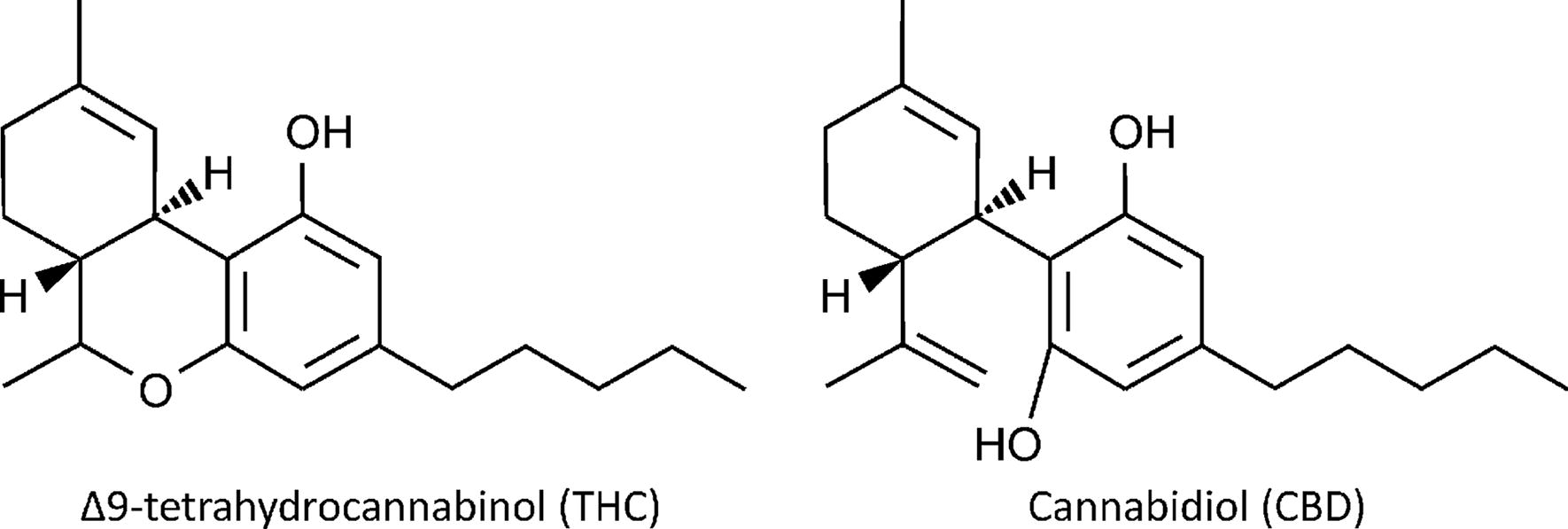
Structure of Δ9-tetrahydrocannabinol (Δ9-THC) and cannabidiol (CBD).
CBD-infused foods and beverages have seen substantial growth over the last 5 years. 2 Products include baked goods, candies, snack foods, condiments, and beverages with varying concentrations of advertised CBD. 2 Despite the surplus of products infused with CBD, beverages appear to be the most popular, with speculation that by the year 2025, sales for CBD-infused beverages could reach $1.7 billion dollars. 2 These products tout their ability to increase bioavailability of CBD with the use of nano-emulsion technology.10,11 This technique reportedly results in a more water-soluble/compatible form of CBD that “blends” easily with aqueous-based products. 10
CBD-infused products are often labeled as “THC-Free” along with an indication that there are no other cannabinoids present. However, in both a 2017 and a 2022 study conducted by Bonn-Miller et al. 12 and Spindle et al., 8 respectively, some CBD-infused products that were labeled as “THC-Free” contained THC. Additionally, a study that aimed to quantitate CBD, Δ9-THC,Δ8-Tetrahydrocannabinol (Δ8-THC), and minor cannabinoids in 47 CBD-infused consumable products yielded the following results: 19% of the products contained the exact amount of CBD listed. Many had more (27%) or less CBD (47%) than advertised. Some labeled CBD products (3%) contained no CBD. 13 Four products surprisingly contained THC, a psychoactive compound. One, labeled as CBD ketchup, had a high THC content and no CBD, suggesting mislabeling. Other THC-containing products were cookie bites, collagen powder, and sugar-free gum with lower THC levels. These findings support the need for more regulatory oversight of cannabinoid and hemp-based products and their labeling.2,6,9 It also highlights the need to investigate the stability of CBD in CBD-fortified products, with special consideration to those products with an acidic pH. The availability of such products poses questions for workplace drug testing including whether these products could contain sufficient Δ9-THC to cause a positive urine drug test (≥15 ng/mL 11-Nor-9-carboxy-Δ9-tetrahydrocannabinol, Δ9-THC-COOH) and whether the acidic environment of some food products may cause CBD to convert to either Δ8-THC and/or Δ9-THC.
Conversion of CBD to both Δ8-THC and Δ9-THC can occur in the presence of Lewis or protic acids, owing to the intramolecular cyclization that happens when a phenolic group interacts with the double bond of the isopropenyl group with the forgoing, documented as an analytical challenge for laboratories.4,7 A study conducted by Andrews and Paterson determined that the use of trifluoroacetic anhydride, an acid anhydride used in the derivatization of THC and CBD in gas chromatography mass spectrometry (GC-MS), resulted in derivatives that produced identical retention times and mass spectra as THC. 14 Similarly, Hart et al. and the National Laboratory Certification Program prepared a performance test to determine if the urinary metabolite of CBD, 7-carboxy-cannabidiol (7-COOH-CBD), would affect urine drug testing for THC-COOH. Although, no conversion of 7-COOH-CBD to THC-COOH was observed in assays used by the laboratories, conversion was documented when laboratories were asked to repeat the analysis with an acidic derivatization agent. 9
Currently, there is limited research available on whether CBD conversion occurs in acidic foods and beverages and how long it takes for the conversion to occur.4,9 Golombek et al. indicated that conversion of CBD into Δ9-THC and other forms of THC (i.e., Δ7-THC, Δ8-THC, Δ10-THC, Δ11-THC, and iso-THC) is possible with highly acidic conditions and high temperatures. 1
The aim of this study was to investigate the stability of nano-emulsified CBD in acidic foods and beverages.
Materials and Methods
To investigate the stability of CBD in acidic consumables, six products, including three beverages (cola drink, lemonade, and a sports drink) and three condiments (ketchup, mustard, and hot sauce), were fortified with a nano-emulsified isolate form of CBD that was Δ8-THC-, Δ9-THC-, Δ9-THCA-, and CBDA-free. The CBD was reference tested and contained only two cannabinoid constituents, cannabidivarin (CBDV) and cannabigerol (CBG), which were present respectively <0.1%. All products had a pH range of 2.6–3.7 and contained acetic, citric, or phosphoric acid. Prior to testing, the homogeneity of the prepared products was evaluated. The fortified products were tested multiple times for 2–15 months. To evaluate the importance of the type of acid, aqueous citric and phosphoric acid solutions were prepared to match the lemonade (citric acid) and cola (phosphoric acid) and then fortified with CBD at the same concentrations as those used in the beverages.
Nano CBD (30 mg/mL) used for fortification of the products was purchased from Shaman Botanicals (Kansas City, MO). The CBD emulsion was tested by GC-MS using a previously published method to confirm the absence of Δ8-THC and Δ9-THC (<0.001%) prior to fortification in the acidic foods and beverages. 15 Other than CBD, only traces of CBG (0.06%) and CBDV (0.01%) were detected. The cola, lemonade, sports drink, hot sauce, ketchup, and mustard were all purchased from a local grocery store. Citric and phosphoric acids were purchased from Fisher Scientific (Pittsburgh, PA). Δ8-THC and Δ9-THC were purchased from Cerilliant® (Round Rock, TX) as 1 mg/mL solutions in methanol. The purity of each standard was ≥99%, which was confirmed by LC-MS/MS. The deuterated internal standard, D3-Δ9-THC, was purchased from Cerilliant. All the solvents used were of LC-MS/MS grade and acquired from Sigma-Aldrich (St. Louis, MO).
Preparation of nano CBD-fortified beverages and food products
Each consumable product was prepared at both a low and a high CBD concentration. The lower concentration was chosen to mimic the CBD concentration found for that product type in the marketplace, and the high concentration was prepared at four times the low concentration. Cola, lemonade, sports drink, and hot sauce were prepared by adding CBD to 300 mL of the product in a beaker with a magnetic stir bar and stirred for at least 60 min. Concentrations of the products were 20 and 80 mg/355 mL serving for the cola and lemonade, 10 and 40 mg/355 mL serving for the sports drink, and 0.23 and 0.94 mg/14 g serving for the hot sauce. Afterward, the solutions were divided into 20 15-mL aliquots in 50-mL plastic conical centrifuge tubes. Ketchup and mustard were prepared by adding CBD to 284 g of the product in a glass pitcher of an Oster® Pro 1200-watt blender. Concentrations of CBD were 6.25 and 25 mg/14 g serving for both the ketchup and mustard. The mixture was blended on the “high” setting for 5 min and divided into aliquots of approximately 14 g each in 50-mL plastic conical centrifuge tubes. Samples selected for long-term stability were stored at ambient room temperature for the study, with remaining samples stored in a refrigerator (4°C).
Heated CBD foods and beverages
The CBD-fortified beverages were subjected to conditions to simulate storage in a hot automobile. Two of the 15-mL aliquots of cola, lemonade, and sports drink were placed in a water bath at 50°C for 6 h. The products were removed from the water bath and returned to refrigerated storage until testing.
The CBD-fortified food condiments were subjected to conditions to simulate cooking. Two of the aliquots of ketchup, hot sauce, and mustard were placed in glass flasks or beakers and “cooked” on a hot plate at 66°C while stirring for 30 min. Total volume was reduced in these products owing to evaporation of water during the cooking process.
CBD-spiked aqueous citric acid and phosphoric acid solutions
In addition to the CBD-fortified beverages and foods, CBD solutions containing citric acid (4.4 g/L) and phosphoric acid (0.56 g/L) in water to mimic the acid concentrations in lemonade and cola, respectively, were produced using the same fortification procedures as the beverages. These aqueous solutions were prepared to confirm that these acids would result in similar conversions of CBD to Δ9-THC as those observed with the beverages.
Cannabinoids testing
Testing for homogeneity and CBD conversion was performed at ElSohly Laboratories (Oxford, MS), a forensic toxicology laboratory that specializes in cannabinoids testing. Aliquots for homogeneity were prepared immediately after preparation and analyzed within 2 weeks. Three samples of the low-concentration CBD-fortified products were selected, and each was tested in triplicate. For the high CBD-spiked products, one sample was tested in triplicate.
To monitor conversion of CBD to Δ8-THC and Δ9-THC over time, samples were submitted to ElSohly Laboratories at 2 and 4 months after production. Samples of the lemonade and sports drink were retested at 15 months to determine if cannabinoids other than Δ8-THC and Δ9-THC were produced after long-term storage.
Cannabinoids testing methods
CBD testing was performed using a previously published GC-FID method. 16 To detect the low concentrations of THC that resulted from the isomerization of CBD, Δ8-THC and Δ9-THC were tested by LC-MS/MS using a novel method with a limit of detection of 10 ng/mL and a limit of quantitation (LOQ) of 25 ng/mL for both Δ8-THC and Δ9-THC. This LOQ was equal to 0.009 mg/serving for the beverages and 0.0004 mg/serving for the condiments. The reporting limits of Δ8-THC and Δ9-THC were set at 0.01 mg/serving.
The LC-MS/MS consisted of an Applied Biosystems/MSD Sciex (AB Sciex) QTRAP 3200 LC-MS/MS system with a Shimadzu Prominence HPLC. The turbo-ion ESI source was operated in positive-ion, multiple reaction monitoring (MRM) mode. Specific MRM transitions were used for Δ9-THC (315.3 > 193.2), Δ8-THC (315.2 > 193.1), and Δ9-THC-D3 (318.2 > 196.2, internal standard). Separation was achieved on a C18 Kinetex column (150 × 4.6 mm; 2.5 µm; 100 Å) from Phenomenex (Torrance, CA, USA) and column temperature was set as 30°C. The mobile phase consisting of 0.1% formic acid in water (mobile phase A) and 0.1% formic acid in acetonitrile (mobile phase B) was used for analysis at a flow rate of 0.8 mL/min. An isocratic separation at 77% mobile phase B (10 min) was followed by a wash step at 95% B (10.5–14 min) and returning to 77% B at 14.1 min. The injection volume was 10 μL.
Results
Initial test results showed good homogeneity for CBD with %CVs for most products <10% (Table 1). The exception was for ketchup with CVs for the low (product #1) and high (product #2) preparations of 17.6% and 15.6%, respectively. Test results are reported as the amount of CBD per serving of product (Table 1) and the amount of Δ9-THC per serving of product (Table 2). Results are shown for the time just after preparation (initial), at 2 months, and at 4 months for all products (Table 1). The amounts of CBD detected in products did not show any trend. For some products, the amount of CBD fluctuated or declined slightly. The three products that showed declines in the amount of CBD were sports drink #1, ketchup #1, and ketchup #2. While all beverages produced some Δ9-THC, only lemonade and sports drink produced substantial doses per serving. Δ8-THC was not detected in any of the products. Δ9-THC was detected in lemonade and sports drink at all three time points in the study with increase in the amounts of Δ9-THC in these products over time. Conversion of CBD to Δ9-THC after heating was variable but similar to the products stored at room temperature for 2 months. Traces of cannabinol (CBN) were observed in the 15-month test at 0.004 mg/serving for lemonade #1 (20 mg) and 0.007 mg/serving for lemonade #2 (80 mg), likely owing to degradation of the THC in the samples.
Cannabidiol, mg per Serving (Percent Remaining)
Product serving size: 355 mL beverage and 14 g condiment.
CBD, cannabidiol.
Δ9-THC Dose per Serving in Cannabidiol-Spiked Beverages and Condiments, mg (% of Cannabidiol Converted)
Product serving size: 355 mL beverage and 14 g condiment.
Not tested.
With the CBD-spiked aqueous acid solutions, the citric acid produced Δ9-THC concentrations of 1.19 mg/serving and 1.46 mg/serving, respectively, for the 20 mg and 80 mg CBD solutions. The CBD-spiked phosphoric acid solutions produced only traces of Δ9-THC (Table 2).
The highest potential doses of Δ9-THC produced were observed with the spiked lemonade and sports drink products with the higher starting CBD concentrations resulting in higher concentrations of Δ9-THC being produced. The highest THC dose was observed in the 80 mg/serving CBD lemonade (product #2) at 3.09 mg after 15 months.
Discussion
Six products were selected for study owing to their low pH to determine if conversion from CBD to Δ9-THC was possible over the study period of 2–15 months. The shelf-life or best by date of all products ranged from 12 to 24 months, which outlined the evaluation time of CBD to Δ9-THC conversion. Both the high and low concentrations of CBD-spiked lemonade exhibited the highest conversion. Citric acid is present in the lemonade (pH = 2.6) and sports drink (pH = 3.0) at 4.4 g/L and 2.7 g/L, respectively.17,18 In fact, both products contained <5% real juice, with the lemonade containing water, high-fructose corn syrup, citric acid, preservatives, and food coloring, and the sports drink containing similar ingredients—water, sugar, dextrose, citric acid, sodium citrate, preservatives, and food coloring. The lemonade likely produced more conversion owing to its higher citric acid content. The products containing acetic and phosphoric acids did not yield high rates of conversion although some conversion was recorded. The cola (pH = 2.6) used for the study contained phosphoric acid and although the pH of cola was similar to the lemonade, the amount of phosphoric acid in cola is only 0.56 g/L. The ketchup, mustard, and hot sauce products contained acetic acid and their pH ranged from 3.0 to 3.7. When aqueous citric acid and phosphoric acid solutions were prepared to mimic the amount of acid in the soft drinks and spiked with CBD, only the citric acid solutions produced notable amounts of Δ9-THC, similar to the observations in the spiked beverages (Table 2).
Based on current industry norms, the serving size of CBD in beverages typically range from 10 to 50 mg per 355 mL, fitting well with the 10–80 mg used in this study. The highest doses of Δ9-THC per serving were observed for lemonade #2 (80 mg) at 15 months (3.09 mg Δ9-THC) and 4 months (1.25 mg Δ9-THC), the sports drink #2 (40 mg) at 15 months (1.18 mg Δ9-THC), and the lemonade #1 (20 mg) at 15 months (1.14 mg Δ9-THC). Other products produced <1 mg Δ9-THC per serving. The lemonade #1 (20 mg) and #2 (80 mg) were tested for suspected degradation of THC to CBN as an expected oxidation product at the 15-month mark and negligible amounts of CBN were identified.
Our results show that up to 3 mg Δ9-THC per serving can be formed from CBD in acidic beverages with citric acid. Based on prior studies,19,20 in which the dosages of Δ9-THC were <3 mg Δ9-THC, it seems possible that Δ9-THC produced by conversion of CBD could lead to positive urine drug tests under some circumstances, such as if the products were stored for several months. One previous study reported positive urine results for Δ9-THC-COOH in a subject ingesting hemp oil containing 1.76 mg of Δ9-THC. 19 The subject tested positive versus the Department of Health and Human Services (HHS) cutoffs (50 ng/mL immunoassay test and ≥15 ng/mL confirmatory tests for Δ9-THC-COOH) on day 1 of a 7-day dosing study and tested negative about 72 h after the last dose. One notable observation was that although the day 1 results were positive, results on day 2 dropped below the confirmation cutoff before becoming positive again on day 3. In a 6-week study of 14 subjects ingesting 0.8 mg of Δ9-THC per day from full-spectrum CBD, 7 of the 14 subjects tested positive at the HHS cutoffs after a 6-week period. 20 Although Δ9-THC concentrations for the lemonades in this study were low, if used daily, accumulation could produce a positive urine sample (≥15 ng/mL THC-COOH) in some individuals.
Another source of Δ9-THC are products fortified with full-spectrum CBD, which is prepared from extracts containing small amounts of Δ9-THC. As with many products in the hemp industry, the amount of Δ9-THC is not always correctly identified on the label and consumers should exercise caution in consuming such products. 21 Additionally, there is a public safety aspect associated with a risk of either inadvertent or purposeful intoxication after ingestion of these products dependent on the amount and frequency of use.
Conclusion
Conversion of CBD to Δ9-THC was observed in certain acidic food products spiked with a nano-emulsified isolate form of THC-free CBD and stored at room temperature. The highest degree of conversion occurred in beverages containing citric acid. Although the amount of Δ9-THC produced was variable, the dose of Δ9-THC formed might lead to positive drug tests or, in the case of multiple doses, intoxication. Therefore, despite purchasing beverages manufactured with an isolate form of THC-free CBD, consumers might be at risk of unknowingly ingesting Δ9-THC owing to conversion of CBD. Consequently, consumers should exert caution when using or consuming products that indicate that they are “THC-free” that may result in unintentional ingestion of THC and potentially lead to undesired drug test results.
Footnotes
Authors’ Contributions
L.D.M., E.D.H., S.V., R.E.W., E.R.W., R.F., L.D.D., E.H., and E.J.C. conceptualized the ideas and aided in the goals and aims of the research. M.E., W.G., T.M., I.S., and K.E. aided in the validation and formal analysis for testing samples. All authors participated in an investigatory process that aided in the success of the study.
Disclaimers
Eric R. Welsh is a military service member or employee of the U.S. Government. This work was prepared as part of his official duties. Title 17, U.S.C. §105 provides that copyright protection under this title is not available for any work of the U.S. Government. Title 17, U.S.C. §101 defines a U.S. Government work as work prepared by a military service member or employee of the U.S. Government as part of that person’s official duties. The views expressed in this work are those of the authors and do not necessarily reflect the official policy or position of the Department of the Navy, Department of Defense, nor the U.S. Government.
Author Disclosure Statement
No competing financial interests exist.
Funding Information
This work was funded by the Division of Workplace Programs, Center for Substance Abuse Prevention, Substance Abuse and Mental Health Services Administration (SAMHSA) through the National Laboratory Certification Program contract (HHSS277201800001C and 75S20122C00002).