






Abstract
Biobanking is becoming increasingly important as a key tool for precision medicine, but neither biobanking nor precision medicine itself have generally been integrated in medical curricula. However, most medical students will encounter these topics in their future careers as physicians or researchers. The European Union (EU)-funded project eduBRoTHER aims to close this gap of professional input. Since the academic year 2020/21, students at the Faculty of Medicine of Pilsen—Charles University and the Faculty of Medicine of the University of Regensburg have been offered an innovative core elective subject that focuses on biobanking and precision medicine issues, using the concept of blended learning.
Introduction
In the field of clinical biobanking, precision or personalized medicine has become more and more important in various clinical disciplines and influences the disease and treatment management in a positive way. In this context, precision medicine plays a key role in the diagnosis and therapy of various malignant diseases because it became obvious that one specific malignancy could express different therapeutic or prognostic markers if it occurs in different patients. Therefore, one of the key issues of precision medicine is the translational research on biomarkers as suitable tools for patient stratification and targeted therapy strategies. Research studies are fostered by biobanks, enabling the access to large collections of high-quality human biospecimens along with patient-related clinical information. Therefore, biobanks provide a fundamental scientific infrastructure for precision medicine. 1
Biobanking involves a great number of different stakeholders including researchers and clinicians. 2 Clinicians commonly inform patients about the importance of the participation in research studies and invite them to become biospecimen donors. Therefore, it is crucial for future health care professionals to have at least basic knowledge about biobanking and its role in precision medicine. Furthermore, they should know how to use the potential of biobanks in an optimal way for their research purposes because a large number of clinicians are researchers at the same time.
There are a number of published studies based on surveys among medical students that have clearly demonstrated enthusiasm of students regarding biomedical research and sample donation. However, these studies also revealed a considerable lack of knowledge about biobanking within the group of medical students.3,4 Therefore, it is important to teach topics related to biobanking to medical students to close this gap of knowledge and to create the basis for further development of biobanks with a view to the rapid changes of scientific and formal requirements for best practices in biobanking. 5
Several educational programs have been established to train future scientists and biobank staff professionally.5–8 In various countries, for example, Austria, Canada, France, or Germany, the possibilities rank from Master degree programs about biobanking to lectures, which are part of the curricula of study programs in the field of medical and molecular sciences.9,10 A “Master of Science in Biobanking” can be completed at the University in Graz (Austria)11,12 and the Université Côte d'Azur (France) 6 is offering the Master program “Biobanking and Data Management.” Furthermore, the University of British Columbia Office of Biobank Education and Research (Canada) developed the online education program “Essentials of Biobanking.” 13 Biobanking lectures are also offered as a part of an elective course in the study program “Molecular Medicine” at the University of Göttingen (Germany). 14
However, an introduction to biobanking skills is not yet comprehensively integrated into the regular curricula of medical schools. Nevertheless, it is crucial to create awareness and basic knowledge for biobanking skills in the upcoming generation of physicians and researchers, because biobanking has become more and more important in modern medicine.3,15 Furthermore, there is evidence that teaching medical students about the content of informed consent, options of storage for different sample types or how to raise awareness for biobanking in patient consultations is essential to make biobanking more sustainable in the future.16,17
The innovative course Precision Medicine International (eduBRoTHER) was created in the frame of a bilateral German–Czech project to integrate the specific regional requirements and the requirements of this specific bilateral cooperation. The eduBRoTHER program is based on the long-term collaboration of the partner institutions. 18 It gives medical students and students of Molecular Medicine and Medical Informatics insights into biobanking. The course introduces various aspects of biobanking on a basic level and raises awareness for relevant topics in biobanking and precision medicine in an international setting. Attending the course, the students get to know two biobanks with a different focus on biospecimen collections, namely tissue versus liquid samples, in two different countries. With this possibility, they are able to get a first experience in international exchange and to start networking on an international level, especially in the neighboring country.
The idea for the joint course program arose from the BRoTHER project. BRoTHER, which stands for “Biobank Research on Telemedical approaches for Human biobanks in a European Region,” is an interactive, interregional biobank network of Czech and Bavarian biobanks. The network aims to optimize the collaboration of biobanks by use of telemedical and IT-based methods. Furthermore, this network aims to support young biobanks or institutions that plan to create a biobank with a view to the fulfillment of formal requirements, potential strategies for sustainability and initiation of collaborative projects. With regard to the latter point during the BRoTHER activities it became obvious that a student exchange significantly improves collaborative work. Therefore, the biobanks in Regensburg and Pilsen initiated a medical student exchange to train skills in biobanking and precision medicine.
The idea of a formal curricular module regarding those topics arose, and the partners conceptualized the eduBRoTHER-project—a course program based on a blended learning approach with a strong practical component that initiates international exchange.
The project pursues the goal of regional cooperation within the regions of Bavaria and the Czech Republic. Those regions are not only historically very closely connected, but also strongly separated by recent history until the fall of the iron curtain. With a concept focusing on exchange between students of the two regions, the course idea fit perfectly to the funding program INTERREG of the European Union (EU). The course is the basis for deeper strategic cooperation between the two institutions and an example for international cooperation in the field of biobanking education.
The aim of the eduBRoTHER project is a bilateral course on biobanking and precision medicine formally integrated into the curricula of four different study programs in Germany and the Czech Republic. Thus, a new course program is introduced that highlights the transdisciplinarity and internationality of the topic of biobanking. Furthermore, the course offers the opportunity of international exchange and with that, valuable insights in different health care systems and organizational structures. The main challenge is to consider the formal criteria for each of the study programs and to find a solution for a sustainable integration of the course into the curricula. In this study, we present the establishment of this educational program and the obstacles we encountered with the course realization during the COVID-19 pandemic.
Methods
Course administration and financing
To implement a course about biobanking and personalized medicine, the partners in Regensburg and Pilsen determined the required personnel and funding amount for at least 90 students and a period of 3 years. For funding, a proposal was submitted to the INTERREG program of the EU (Ziel ETZ 2014-2021).
Implementation of the course program
The course preparation started with meetings, where the teachers, scientists, and other experts on biobanking from Regensburg and Pilsen jointly identified the thematic objectives and the overarching goals. These were based on the principal field of expertise of each biobank. A concept was developed that makes it possible for students of both faculties to access the course. Special attention was drawn to the schedule of the medical curricula at both faculties, in Pilsen and Regensburg, to enable the integration of this course.
Structural design and development of the course content
Following the defined learning and teaching objectives and goals, the partners analyzed the requirements of the different medical study programs: Molecular Medicine and Medical Informatics in Regensburg and Human Medicine in Regensburg and Pilsen. It was thoroughly discussed how the course program would fit into these four study programs and the conditions for the curricular inclusion of the course into those programs. Furthermore, the schedules of all four study programs were compared to find options to make the course accessible for the students (course execution). The partners from Regensburg and Pilsen determined the structural design to fit all needs and the topics of the individual course contents. With this information, the goals, and the thematic scope, the partners decided on a course mode and implemented a pilot course program.
Results
Course administration and financing
The implementation of the course was financially supported by the INTERREG program of the EU (Ziel ETZ 2014-2021, Bavaria and Czech Republic). With the funding, both institutions could intensify their cooperation. Both partners employed a project manager who worked on the administrative organization of the course. The project managers also acted as the contact persons both for students and lecturers. Furthermore, the project funded two scientists at each institution for the conception of the course content and the design of the practical courses. The project funding also involved funds for travel expenses, both for the students and the administrative personnel, as well as for lecturers. Measures of public relations and the procurement of laboratory materials for the practical courses were funded as well. With this financial backing, the partners were able to conceptualize and to realize the course program.
In the beginning of the academic year, students are invited to a kick-off meeting, where the course concept is introduced and students can ask questions. Afterward, they can subscribe to the course and obtain the access details to the digital learning platform. The practical courses take place during the semester breaks, so that the students can participate without interference by other curricular activities or exams. Finding a time for the practical courses appears very difficult because of the different academic calendars of the institutions. The semesters in Pilsen always start and end earlier than in Regensburg. Therefore, the project managers must work closely together and find a compromise that makes the practical courses accessible for most of the students.
The project managers organize the practical courses in close collaboration. The proximity of the cities of Pilsen and Regensburg makes it possible for the students to travel by train. The travel and the accommodation are organized by the project managers. Because of the project funding, students do not have to pay for the travel, accommodation, and most of the meals during the practical courses.
Implementation of the course program
The thematic objectives of the course program were defined collectively by the project partners from Regensburg and Pilsen. After finishing the program, students will have a basic knowledge about the definition and the connection of biobanks, biobanking procedures, and personalized medicine (Fig. 1). Besides, the importance of stakeholders and their interests within the biobanking process are included in the course content. The differences between tissue and liquid biobanks will be clear as well as the importance of standardized procedures in biobanking, which are required for good scientific practice. Ethical, legal, and social issues were defined as further significant objectives. In addition, the program needs to introduce biobanking as an important part of research practice. Attending the program, students will get insight into developments, for example, digitalization, that will open future perspectives in the work of biobanks. The thematic objectives are picked up in the topics of the course content.
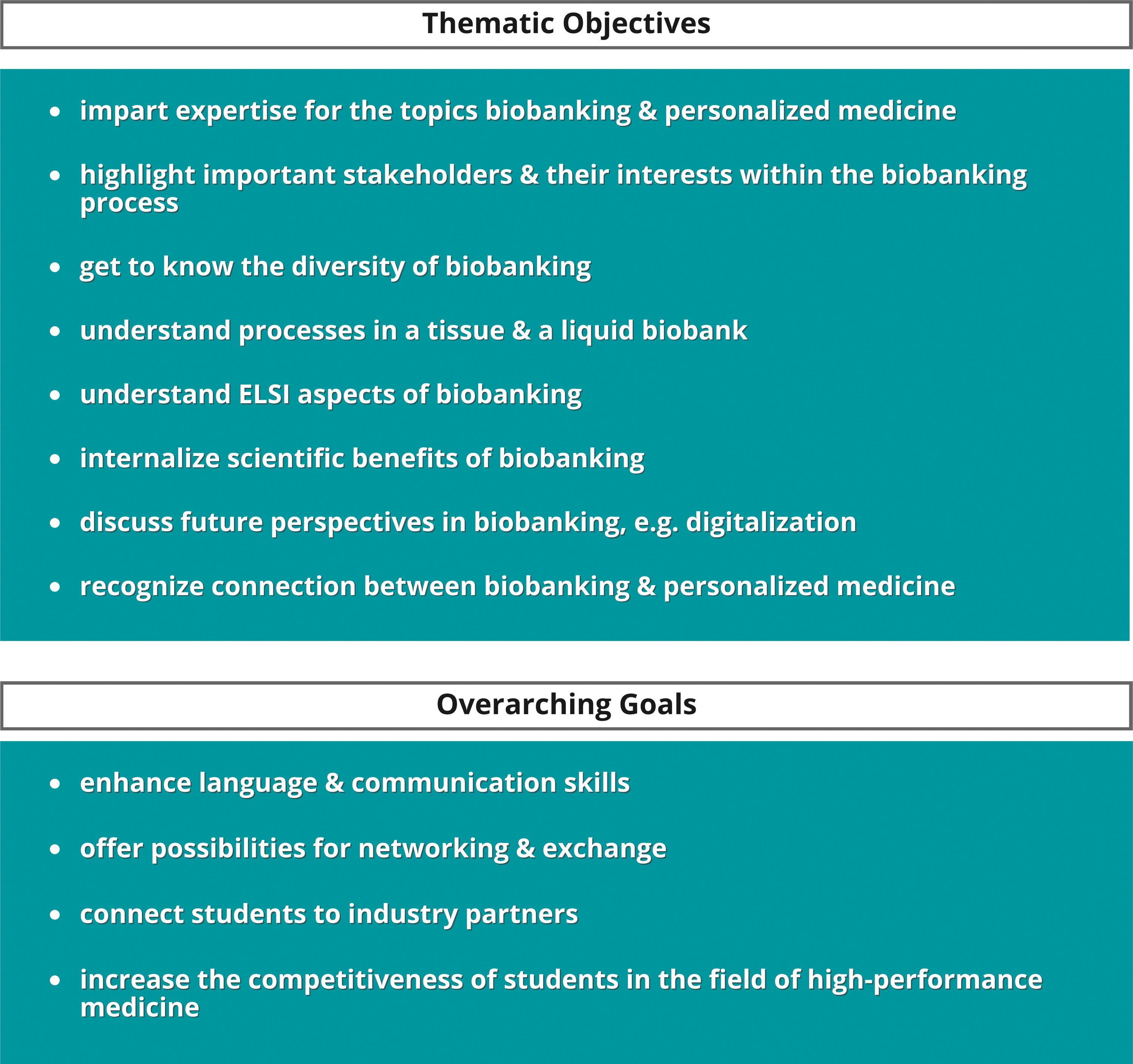
Thematic objectives and overarching goals of the eduBRoTHER course program.
In addition to the described thematic objectives, the course program follows overarching goals representing the experiences that the partners will provide to the students. One important goal is the enhancement of language and communication skills. Furthermore, the course gives students the opportunity to network and exchange with peers from another country and industry partners. This way, they can look beyond the horizon of their regular study programs, and they increase their competitiveness in the field of high-performance medicine.
Structural design and development of the course content
The course Precision Medicine International (eduBRoTHER) combines digital learning units with practical experiences at both locations to follow a blended-learning approach. This concept of blended learning was introduced to enable students of different study programs and different countries to work on the course material individually and to use small timeframes feasible for joint practical courses and exchange experiences. To deepen the knowledge, each student has to write a short study project report, which will be presented at the closing conference. A certificate will be awarded after successful completion of the course program (Fig. 2; upper image).
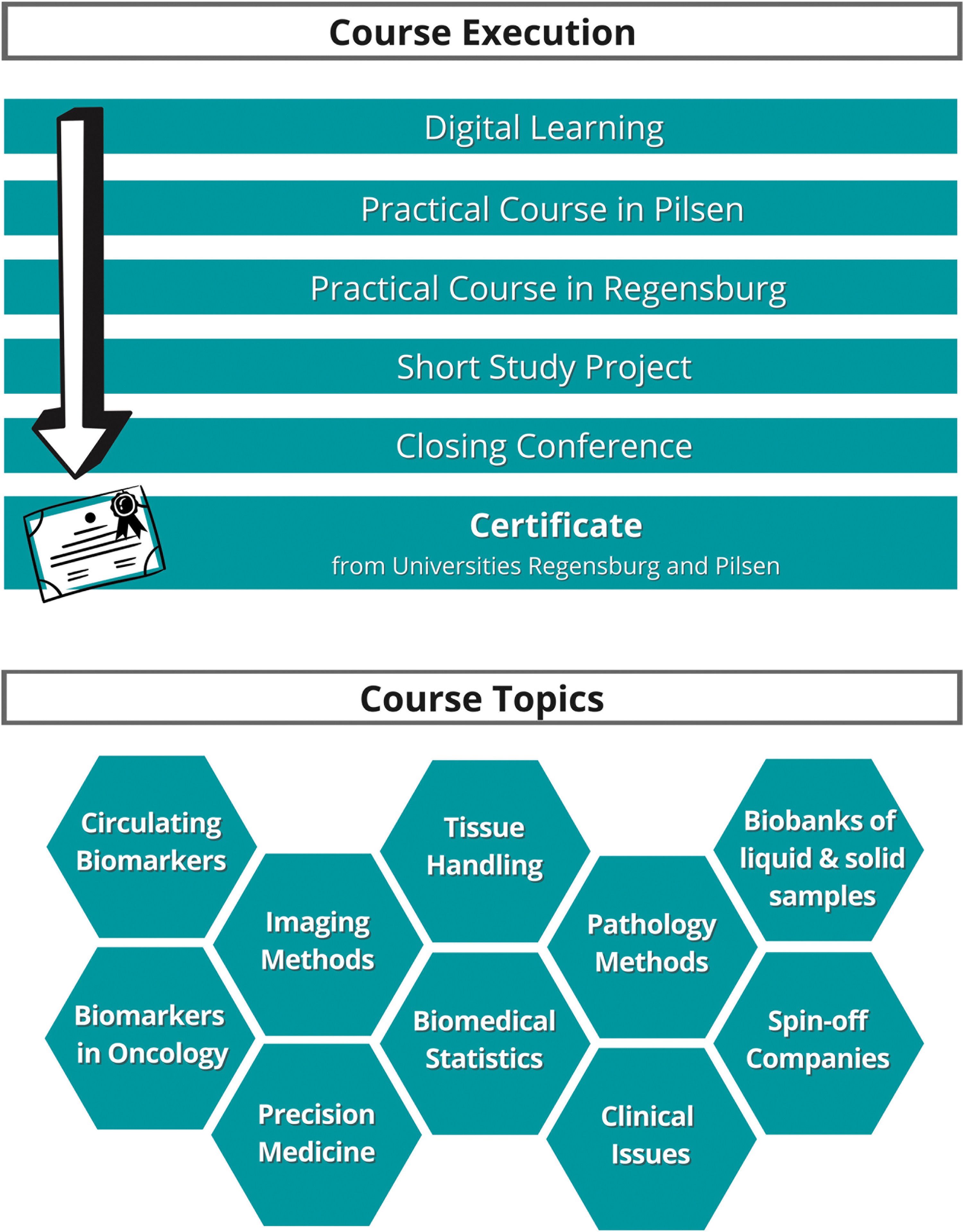
Graphical depiction of the course execution and topics.
Digital learning
Digital learning is achieved by 12 webinars, each of 15- to 20-minute duration, and 4 longer e-learning sessions, each of ∼1-hour duration. The webinars are shorter lessons addressing basic information about different course topics regarding biobanking and precision medicine (e.g., liquid biobanking, biomarkers, concept of precision medicine). The e-learnings have a more in-depth-approach. These lectures provide the students with the theoretical background to prepare them for the practical part of the course: Combination of laboratory, pathology, and imaging methods, immunoassays, ethical, legal, and social issues of biobanking and the use of artificial intelligence in precision medicine (Fig. 2, lower image). This part of the course content reflects the special expertise of both biobanks. The webinars and e-learning sessions are available on the e-learning platforms of both universities throughout the whole academic year, allowing the students to learn the theoretical background of the course program individually at their own pace.
The digital learning units focus on transdisciplinary issues connected to biobanking. Besides pathological and immunohistochemical topics, the course introduces the students to imaging methods, data management, biomedical statistics, and the economic issues of biobanking. The digital lectures are provided in the form of interactive videos. Students can test their gained knowledge during the video in multiple choice questions that relate directly to each lecture's content. They can continue with the digital lecture as soon as they answer the question correctly. This way, students get direct feedback about their knowledge while working with the webinars and can directly repeat the topic if something is unclear. The answers that the students give on those questions do not influence their course-grade. They are rather offering the students a more interactive course experience and are helping them in their individual learning processes. 19
In addition to the interactive webinar content, the students can find complimentary course literature, as well as videos from the biobanks in Regensburg and Pilsen in their e-learning courses. A message board was established to enable the students to ask questions and get in touch with the lecturers.
Practical courses in Regensburg and Pilsen
As mentioned previously, the e-learning content provides the theoretical background to the topics that are addressed in the practical courses. Because medical curricula are packed with mandatory classes, the students must study very efficiently with less time for extracurricular activities. This makes it difficult to gain experience in the field of international exchange. An important aspect of the course is to offer experience of exchange and international interaction because the practical courses for all students are performed in Regensburg and Pilsen. The students will get their first experiences with different health care systems during the course. This opportunity for exchange and hands-on learning is implemented through the practical courses of the program (Fig. 3).
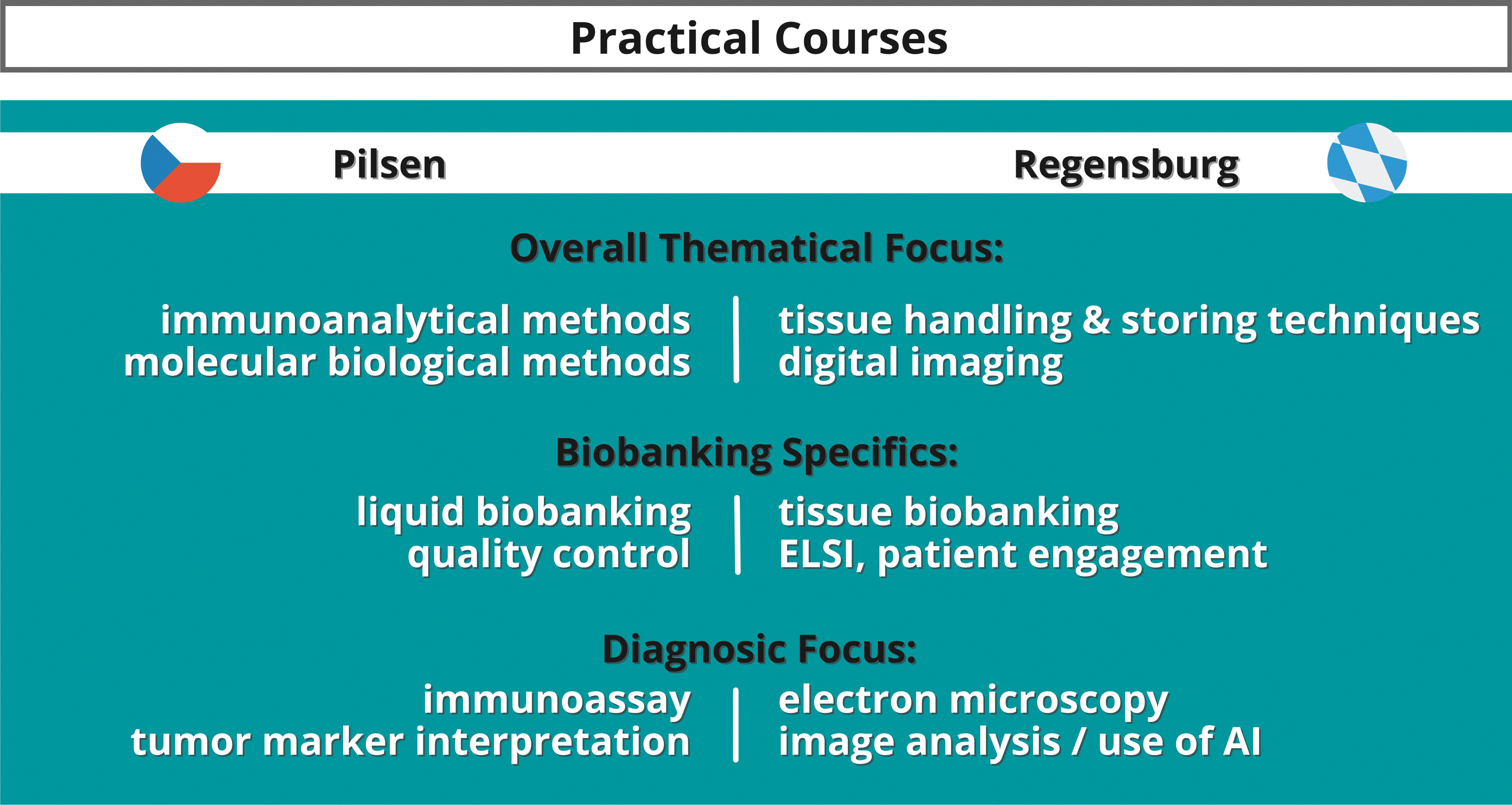
Topics of the practical courses in Pilsen and Regensburg: each biobank brings in their special expertise in the field of biobanking and precision medicine, which is focused on liquid biobanking and quality measurements in Pilsen and on tissue biobanking and the use of artificial intelligence in Regensburg.
The practical courses are held during 2–3 days at the end of each semester of the academic year. The students get to know the biobanks and gain practical experience in hands-on training. The practical course in Pilsen focuses on immunoanalytical and molecular-biological techniques. The students learn about the specific workflows of a liquid biobank and important measures of quality control. The biobank also provides insights into the diagnostic focus of the Department of Immunochemical Diagnostics of the Faculty Hospital Pilsen. They learn about immunoassay analysis, tumor marker interpretation, and the interaction with different diagnostic methods such as pathology and X-ray imaging.
The second training takes place in Regensburg and teaches the students techniques of tissue storage and processing, digital imaging, and basics in data management. Students learn about different techniques of tissue handling, such as cryo sections and sections of formalin-fixed paraffin-embedded tissue. They get hands-on trainings in histological staining and interpretation with the expertise of a pathologist. The sample workflow from biomaterial collection and handling to final storage in the biobank is demonstrated, and possible issues within the procedures of tissue handling and sample storage are discussed. Furthermore, they learn about important ethical, legal, and social implications of biobanks, the importance of consent and data protection, issues of sustainability and how crucial it is to raise public awareness and engage and empower patients. The practical course in Regensburg also includes a close insight into pathological diagnostic tools, including special diagnostics such as electron microscopy and image analysis.
Study projects
During the entire course, the students work on short study projects that are presented at the closing meeting. They can choose between writing an essay or giving a short presentation about biobanking in a specific medical field, a biobank-related topic, or a journal article that relates to biobanking or precision medicine. During the closing conference, the results of the study projects are presented and discussed within the group and with the teachers.
Workload, grading, European credit transfer system points, and eduBRoTHER certificate
Students who work on the digital learning, participated in both practical courses, and completed their study project are rewarded with a certificate from both the University of Regensburg and the Medical Faculty Pilsen of the Charles University Prague. The students must complete a workload of 91 hours in total to receive the certificate.
Beyond the focus on medical students of both faculties, the course is open for students of the study programs of Molecular Medicine and Medical Informatics in Regensburg (Fig. 4). The course is integrated into the curricula of all four study programs as an elective course or an elective module, respectively. Hence, students can earn European credit transfer system (ECTS) points, which are credit units that serve as measurement of the academic workload of students in the European Union, complementary to the final certificate. The grading of the course is based on the study project of the students.
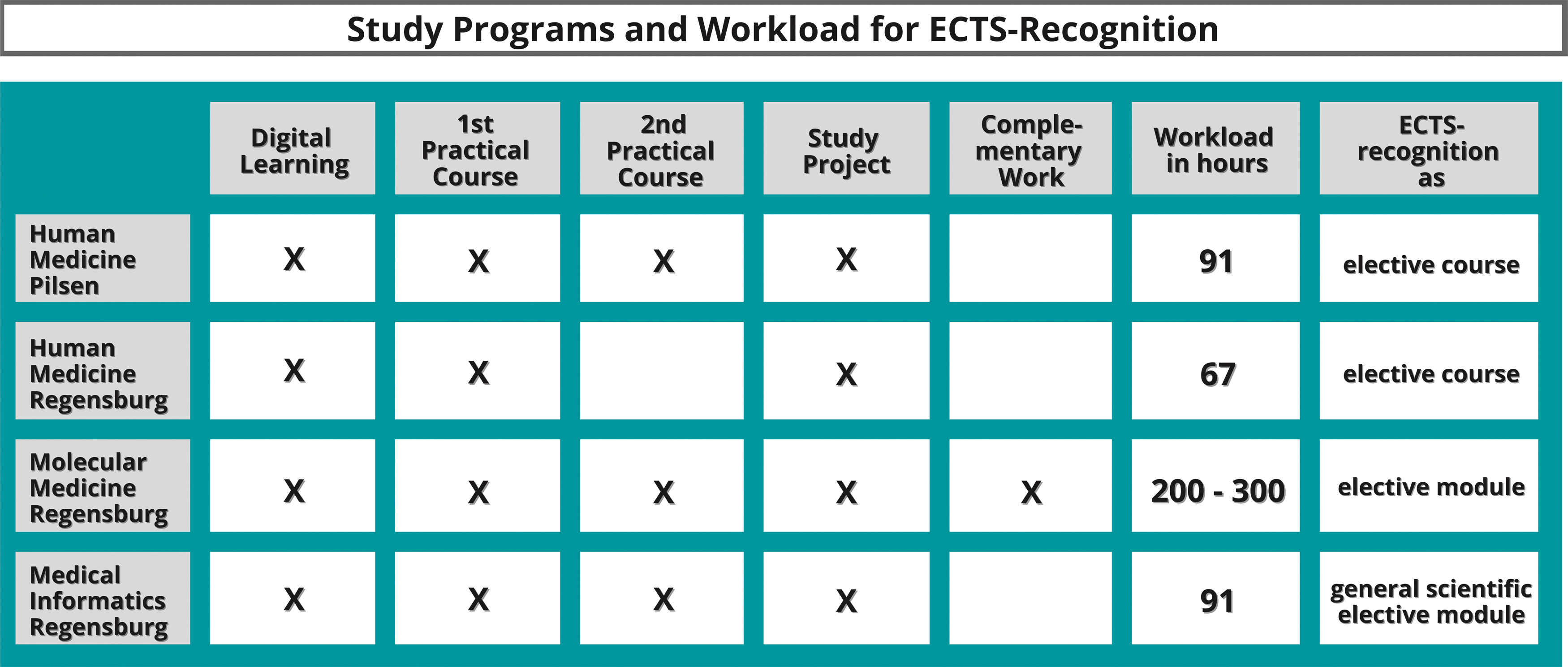
Study programs and workload for European credit transfer system points recognition.
Making sure that the students of the different study programs can earn credit points for the course, the workload to earn those credit points had to be evaluated for each study program. For the programs in Human Medicine in Pilsen and Medical Informatics in Regensburg, the set workload of the eduBRoTHER-course (91 hours in total) was sufficient. However, medical students in Regensburg need a reduced workload to get ECTS for an elective course. Those students can earn their credits by participating in one practical course, the digital learning, and the study project (67 hours in total). The respective students are invited to complete the second practical course as well, to earn the eduBRoTHER certificate.
Students from the study program in Molecular Medicine have to work more hours per week to get the course recognized as an elective module (250–300 hours in total). Molecular Medicine students, who decide to complete the course as their elective module, are offered options for complementary work, for example, working on a scientific project in more detail. One student, for example, performed an evaluation of image analyses, which are now used for publication.
Experiences from the pilot year—the course during the pandemic
After one academic year, the students completed the e-learning units, two practical courses, and their study projects. The digital learning experience that was initially designed for the course followed the approach of distance education in both faculties, owing to the COVID-19 pandemic. However, the pandemic caused relevant problems to perform the practical courses and the exchange of students and lecturers. Both had to be compensated for by digital solutions. The different situations during the pandemic in both cities and regions made it difficult to find a common approach. Therefore, in Regensburg it was possible to organize a hybrid version of the practical training in the first winter semester, with a mix of activities at the biobank and online. The partners in Pilsen produced methodological videos that presented the different workflows and relevant analytical methods in their biobank. In the summer term, the practical course in Pilsen could take place, but a few weeks after, students from Pilsen could not travel to Regensburg, caused by travel restrictions owing to the pandemic.
Feedback from the students
At the end of each course, a qualitative feedback analysis is conducted to capture the thoughts of the participants. With the feedback, the course can be further developed. After the first year, students appreciated the interactive character of the practical course, although it was mostly performed online. They assessed the mix of digital learning units and practical exercises as worthwhile but felt that the level of difficulty could be modified. This might be owing to differences in prior knowledge that students bring from four different study programs. For medical students, some course topics seem to be redundant because of the medical knowledge they already gained, whereas students of medical informatics are more skilled in the technical areas of the course program and need more input regarding medical course content. The students also wanted the course to be more compact, so that it can be completed in one semester.
It should be highlighted that all students evaluated the subject of biobanking as innovative and of high relevance for their future careers. They indicated that they want to learn even more about the aspects of personalized medicine, data management, and histopathology in the context of biobanking, and they acknowledged that these topics are less represented in their curriculum. Reflecting their experiences, all participating students would recommend the course to their fellow students—especially because of the possible exchange experience. Owing to the pandemic and the travel restrictions, it was not possible to execute the course as planned and the students could not take advantage of the full international exchange aspect of the course. Nevertheless, the students valued the efforts of the biobanks to give as many insights into their facilities as possible. The partners in Regensburg and Pilsen will continue to offer the course, trying to realize the course program as planned—given the circumstances of the pandemic.
Discussion
The eduBRoTHER program introduces medical students to the topics of biobanking and precision medicine through a blended learning approach that is used increasingly in medical education.20,21 It is designed as a basic module that provides the first introduction to the topic and engages the students at their respective level of knowledge. Students who want to learn more about biobanking after attending the course are invited to intensify their knowledge at longer internships at the two biobanks or at the yearly BRoTHER summer school.
The concept of blended learning allowed us to perform the course in its first year, even during the pandemic. Furthermore, this concept enables the possibility to open the education content to other universities and also in a transdisciplinary manner, as it could be already realized with the curriculum of Medical Informatics at the University of Applied Science at the partner site in Regensburg. Moreover, webinars could be shared with other sites or with other existing programs. The distribution of the course concept and content is a future project. We have already provided the eduBRoTHER webinars to the universities involved in setting up the Mali National Biobank. This underlines the character of the BRoTHER network, which is open to collaboration with different biobanks in Europe and worldwide for the exchange of knowledge and experiences.
The eduBRoTHER-course trains the students in tissue handling, biobank organization, and the storage of liquid and solid samples. They get an insight into the importance of data management and into the clinical issues of biobanking. Furthermore, they learn about imaging methods and biomedical statistics. Based on digital learning units, the students consolidate their knowledge in the practical courses, which gives insights into the daily work of the two biobanks, enabling them to understand the whole process. Hands-on trainings internalize the learning skills. With the study project, students find their personal take-home message from the course. Furthermore, the early experiences of international exchange broaden the horizons of students and strengthen their communication skills. 22 Thus, the program allows exploring different health care systems and the international research community as well as to profit from intercultural experiences.
Lessons learned
The integration of the course into the curricula of different study programs shows its transdisciplinary approach. It reflects the multidisciplinary core of biobanking, that combines different expertise—from a medical perspective to information technology and data management.5,8,23 Within the group of participants, the mixture of different focal points of interest and background knowledge of four different study programs encouraged the students to work together. Students could ask their fellow students for advice or help if something remained unclear during lectures or demonstration. This supported the cohesion of the group during the practical courses.
However, the biggest challenge during the implementation of the course was finding a time frame for the practical courses that fit three institutions and four different study programs with their different academic calendars, examination phases, and timetables. Careful planning and interactive discussions were required to reach this goal. In our experience, the best way to solve this problem is to find a compromise within the schedule that makes the practical trainings accessible to most students. It is very important to communicate the planned dates as early as possible. This way, students have the chance to schedule the practical courses. Furthermore, it was useful to maintain a close connection with the students and offer them a contact to the project managers in case of conflicts with other curricular activities. A compromise could almost always be found in these situations.
In the next academic year the course will be offered as a one-semester program, giving students the opportunity to complete the course in less time. The partners each offer two internships per semester (one at each location) for this purpose.
The eduBRoTHER course had a successful start, and was sustainably integrated into the curricula of the four different study programs in three academic institutions in two European countries. The novel course offers the first-time opportunity for medical students and students of Molecular Medicine and Medical Informatics to learn about biobanking and precision medicine in a transdisciplinary and international approach.
Footnotes
Acknowledgments
The authors thank all their colleagues that made the implementation of the course program possible. For the extraordinary contribution to bilateral cooperation that led to the realization of the project, the authors thank doc. RNDr. Judita Kinkorová, CSc.
Authors' Contributions
C.B., M.K., and O.T. contributed to the project design. D.S., M.K., T.N., and M.S. were responsible for the project execution. D.S., C.B., and M.K. drafted the article. O.T., T.N., and M.S. critically revised the article. All authors read and approved the submitted version of the article.
Author Disclosure Statement
No conflicting financial interests exist.
Funding Information
This project was generously funded by the EU, Ziel ETZ 2014–2020 (Ref.: Interreg 289). The project was awarded at the European Biobank Week 2020 with a poster prize.