






Abstract
Purpose:
The relationship between the Taiwanese traditional postpartum practice known as “Doing-the-Month” and breastfeeding requires clarification. This study aimed to identify specific elements of the traditional “Doing-the-Month” practice that significantly influence breastfeeding outcomes.
Study Design and Methods:
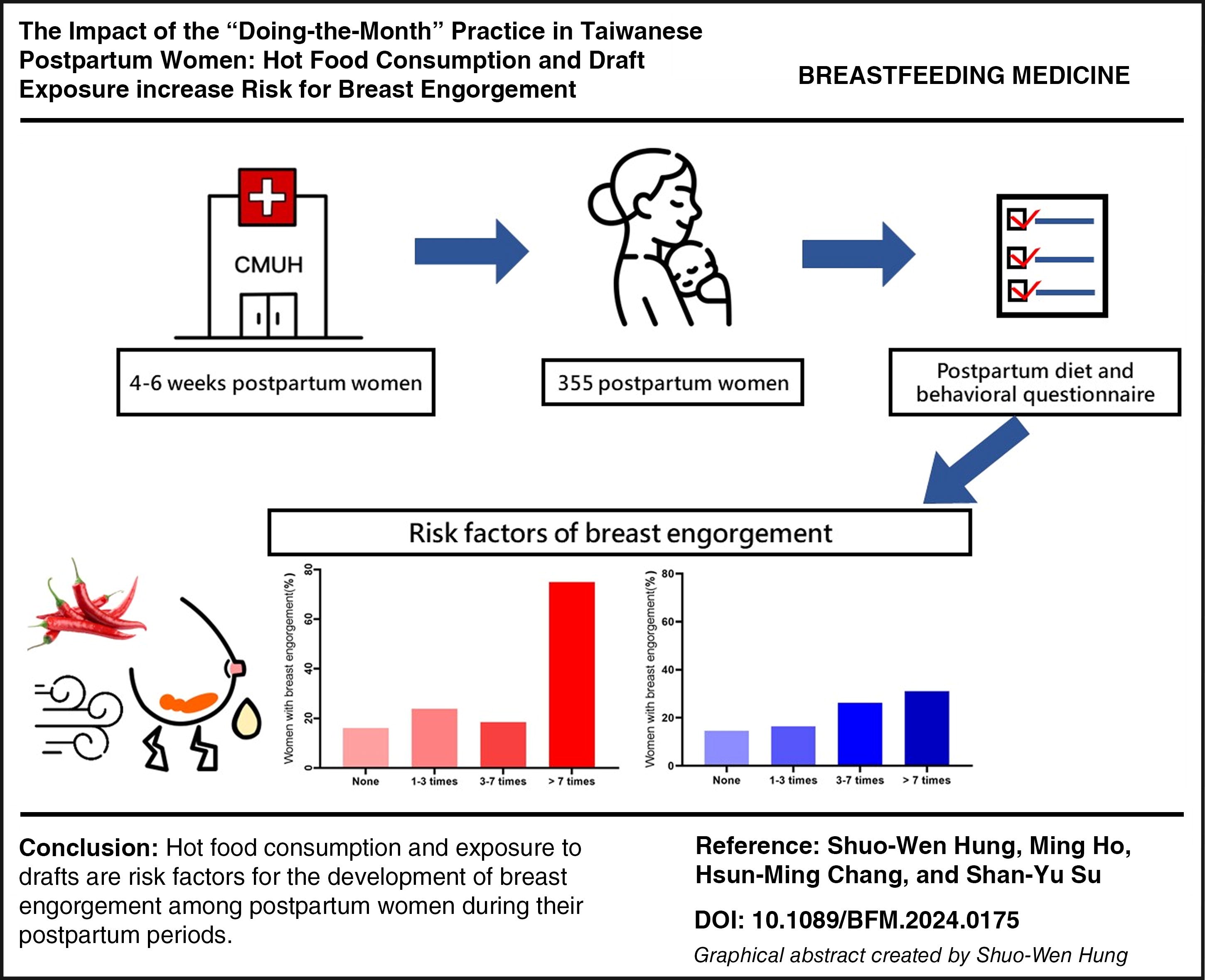
A retrospective self-reported questionnaire was used to investigate postpartum behavioral adherence, dietary habits, and breastfeeding outcomes during the initial 30 days after delivery. The study included 355 postpartum women, and parameters measured included the incidence of breast engorgement, the practice of exclusive breastfeeding, and the amount of formula supplementation provided to newborns. The Chi-square test was used to assess the association between customary practices and breast engorgement, while one-way analysis of variance was used to analyze the amount of formula supplement. Logistic regression was applied to identify predictors among practices for breastfeeding outcomes.
Results:
Hot food consumption emerged as the predictor for breast engorgement among various dietary factors. Those who consumed hot food more than seven times had a significantly higher odds ratio of 126.13 for experiencing severe breast engorgement. Exposure to drafts was identified as a predictor for breast engorgement among other behavioral factors. Participants exposed to drafts more than 7 days had a significantly higher odds ratio of 5.97 for experiencing severe breast engorgement.
Discussion and Conclusion:
This study reveals specific elements within the traditional “Doing-the-Month” practice, namely, hot food consumption and exposure to drafts as risk factors for the development of breast engorgement among postpartum women during their postpartum periods.
Get full access to this article
View all access options for this article.