






Abstract
BIOMEX (BIOlogy and Mars EXperiment) is an ESA/Roscosmos space exposure experiment housed within the exposure facility EXPOSE-R2 outside the Zvezda module on the International Space Station (ISS). The design of the multiuser facility supports—among others—the BIOMEX investigations into the stability and level of degradation of space-exposed biosignatures such as pigments, secondary metabolites, and cell surfaces in contact with a terrestrial and Mars analog mineral environment. In parallel, analysis on the viability of the investigated organisms has provided relevant data for evaluation of the habitability of Mars, for the limits of life, and for the likelihood of an interplanetary transfer of life (theory of lithopanspermia). In this project, lichens, archaea, bacteria, cyanobacteria, snow/permafrost algae, meristematic black fungi, and bryophytes from alpine and polar habitats were embedded, grown, and cultured on a mixture of martian and lunar regolith analogs or other terrestrial minerals. The organisms and regolith analogs and terrestrial mineral mixtures were then exposed to space and to simulated Mars-like conditions by way of the EXPOSE-R2 facility. In this special issue, we present the first set of data obtained in reference to our investigation into the habitability of Mars and limits of life. This project was initiated and implemented by the BIOMEX group, an international and interdisciplinary consortium of 30 institutes in 12 countries on 3 continents. Preflight tests for sample selection, results from ground-based simulation experiments, and the space experiments themselves are presented and include a complete overview of the scientific processes required for this space experiment and postflight analysis. The presented BIOMEX concept could be scaled up to future exposure experiments on the Moon and will serve as a pretest in low Earth orbit.
1. Results from Previous Spaceflight and Ground-Based Experiments
Previous experiments in spaceflight and ground-based studies, which were performed before the BIOMEX (BIOlogy and Mars EXperiment) proposal submission to ESA, showed that, in particular, microcolonies of bacteria, meristematic black fungi, and symbiotic associations of microorganisms such as lichens are able to survive and be reactivated after simulated and direct space experiments (Tarasenko et al., 1990; Horneck et al., 1994; de Vera et al., 2003, 2004a, 2004b, 2007, 2008, 2010; de la Torre Noetzel et al., 2007; Sancho et al., 2007; Onofri et al., 2008, 2010; Olsson-Francis et al., 2009; de la Torre et al., 2010; de Vera and Ott, 2010). Bacteria strains such as Bacillus subtilis and Deinococcus radiodurans have shown a certain radiation and vacuum tolerance (Horneck, 1993; Horneck et al., 1994, 2001; Rettberg et al., 2002, 2004; Möller et al., 2007a, 2007b, 2007c; Pogoda de la Vega et al., 2007; Wassmann et al., 2012; Panitz et al., 2014). Gram-negative endophytic bacteria and cyanobacteria survived a 14-day shuttle flight (within the shuttle interior) and exhibited enhanced plant colonizing activity in microgravity (Tarasenko et al., 1990). During the BIOPAN 5 and 6 experiments, the lichens Rhizocarpon geographicum and Xanthoria elegans were analyzed after exposure to space conditions of about 11–14 days coupled with parallel tests in ground-based facilities. These results have led to the conclusion that the tested symbiotic eukaryotic associations of alga and fungi in the lichen were not seriously damaged, and nearly 70–100% of the tested lichens survived. The lichens were physiologically active and able to germinate and grow. Furthermore, investigations on the mutation rate of photoproducts on the DNA have shown that the mycobiont (the fungal symbiont) is practically unaffected by UV radiation and that the algal symbiont is more sensitive (de Vera et al., 2003, 2004a, 2004b, 2007, 2008, 2010; de Vera, 2005; de la Torre Noetzel et al., 2007; Sancho et al., 2007; de la Torre et al., 2010; de Vera and Ott, 2010). Cyanobacteria, as has been shown by analysis on akinetes (resting-state cells of cyanobacteria), were also able to survive the low Earth orbit and simulated extraterrestrial conditions (Olsson-Francis et al., 2009), while vegetative cells of Chroococcidiopsis sp. CCMEE 029 survived prolonged desiccation periods (Billi, 2009; Fagliarone et al., 2017) and a few minutes of exposure to an attenuated Mars-like UV flux and 4 h of exposure to a Mars-like UV flux (Cockell et al., 2005). Numerous species mentioned in this study were even able to survive simulated catastrophes as induced by asteroid impact simulations (Horneck et al., 2001, 2008; Stöffler et al., 2007; Meyer et al., 2011). Mars simulation tests with methanogenic archaea have also shown a remarkable level of survival and demonstrated physiological activity during exposure to Mars-like environmental conditions (Morozova and Wagner, 2007; Morozova et al., 2007, 2015; Schirmack et al., 2014). The same has been observed for meristematic black fungi during a ground-based experiment in the facilities at the German Aerospace Center (DLR) Cologne named EVT (Experiment Verification Test), which was performed for the Lichens and Fungi Experiment (LIFE) on EXPOSE-E (Onofri et al., 2008) and after the final space experiment (Onofri et al., 2012, 2015). In other ground-based experiments, we were able to show that Paenibacillus sp. caused biocorrosion of anorthosite rock (Lytvynenko et al., 2006). In total, we can presume that a wide variety of different microorganisms, even from higher evolutionary advanced levels than those of archaea or bacteria, are able to resist and survive space and Mars-like conditions for a period of time (at least for 1.5 years). However, because of the limited capacity of the space exposure facilities, further work with replicates and other samples is still needed to finally answer questions on the degree of Mars' habitability or the kind of space and Mars-like environmental conditions that are limiting factors in reference to the most important vital functions of life (de Vera et al., 2014; Schulze-Makuch et al., 2015).
The BIOMEX results presented here further advance our knowledge and address pressing questions as mentioned above to an extended degree in comparison to previously executed space experiments, which, for the most part, were more restricted and focused on investigating the likelihood of an interplanetary transfer of life as is formulated in the lithopanspermia hypothesis (Richter, 1865; Thomson, 1894; Arrhenius, 1903; see also Lee et al., 2017). Accordingly, these new BIOMEX experiments in space were intended to address new questions in planetary research and improve future space exploration goals. Nevertheless, it is clear that the results obtained by BIOMEX could also be used to evaluate previously performed space experiments in reference to lithopanspermia.
2. Sample Selection
As a consequence of results obtained in previous space experiments that engendered a significant number of still-open questions, a proposal named BIOMEX (ILSRA-2009-0834) was submitted in 2009. This was in response to the ESA international research announcement for research in space life sciences at the International Space Station (ISS)—ILSRA-2009—and BIOMEX was successfully selected. The proposal included replicate exposure of known species used in previous space experiments such as the reassessed Antarctic fungus Cryomyces antarcticus, the cyanobacterium Chroococcidiopsis sp., the lichen Circinaria gyrosa (formerly known as Aspicilia fruticulosa before reclassification; Sohrabi et al., 2013), and a set of new, preselected organisms for further preflight experiments (see Table 1). After survival of these organisms was shown, the samples were incorporated into the BIOMEX experiment, integrated into the final EXPOSE-R2 hardware, and sent to space on the ISS.
Selected Samples for BIOMEX
Gray shaded cells indicate the samples for which results are available and included in this special collection.
This new sample set was chosen systematically and comprised a selection from archaea, bacteria, and eukaryotes, which represent the three main domains of the tree of life. Most of these organisms were collected from Mars analog habitats distributed on different continents, which include the Alps (climatic and geomorphologic Mars analogy: gullies, polygons, temperatures below 0°C, dryness, and elevated UV irradiation), the steppe highlands of Central Spain (characterized by extreme insolation, high temperature contrasts, and arid summers Crespo and Barreno, 1978]), and regions in the Arctic and Antarctica. The aim of selecting a wide variety of species was to identify which are able to demonstrate the limits of life with regard to the applied space and Mars-like conditions in low Earth orbit, as well as further our understanding of the kind of species for which Mars could be habitable.
2.1. Biological samples
A set of organisms was tested, which were embedded in, or grown on, Mars (optionally lunar) analogs and other terrestrial minerals. Bacteria, biofilms of bacteria and yeast species, cyanobacteria, archaea, lichens, snow/permafrost algae, meristematic black fungi, and bryophytes of mostly alpine and polar habitats of desiccation- and radiation-resistant strains were chosen because some of these organisms are thought to be among the oldest on Earth (Wang et al., 1999; Schidlowski, 2001; Campbell et al., 2003; Yuan et al., 2005) and, over time, have evolutionarily adapted to different environmental conditions. Some of these organisms could even be Mars-relevant because they use Mars-atmosphere resources such as CO2 to form methane, a trace gas found remotely in the martian atmosphere (Formisano et al., 2004; Mumma et al., 2009) and in situ at Gale Crater by way of the rover Curiosity (Webster et al., 2015). The processes that lead to extreme variations in the methane concentration of the martian atmosphere, in particular the potential for abiogenic origin (Lefèvre and Forget, 2009), have recently been reviewed (Yung et al., 2018). In previous studies, some of the organisms studied in the BIOMEX experiments have also exhibited a high resistance under simulated and real space conditions or simulated martian conditions. Others, like the newly selected bryophytes, provide insights on the resistance capabilities of an evolutionarily younger life-form. Details on the selected species are listed in Table 1.
2.2. Mars and lunar analog mineral mixtures
With the BIOMEX experiment, our goal was to analyze the effects of a space environment that approaches as closely as possible Mars-like environmental conditions and includes the use of Mars analog mixtures that could serve as a substrate or an embedding matrix for biological samples (see Table 2 and Figs. 1 and 2). These Mars analog mineral mixtures mimic the regolith cover from early and late evolutionary stages of Mars (Böttger et al., 2012). The components of the mixtures were developed in the Museum für Naturkunde (MfN) Berlin (Germany) in the context of the Helmholtz-Alliance “Planetary Evolution and Life” proposal and based on several observational studies (Bibring et al., 2005, 2006; Poulet et al., 2005; Chevrier and Mathé, 2007). It is important to test the effects of space and the martian environment on minerals in parallel biological investigations. A welcome consequence of this space experiment would be that the investigated samples would also be tested for viability and space-resistance capacity and provide valuable data if used in a replicate space experiment with regard to the probability of lithopanspermia in the Earth-Mars system. The lithopanspermia hypothesis has also been investigated in previous space experiments on FOTON/BIOPAN some years ago and on the EXPOSE-E mission on the ISS. However, replicates are still needed. Besides the Mars analog mineral mixtures, the MfN also provided a lunar regolith analog (see Table 2 and Figs. 1 and 3) for investigation into the influence of the lunar surface material on organisms, which could be relevant for life-support systems such as the selected and tested cyanobacteria (not part of this special collection of articles).
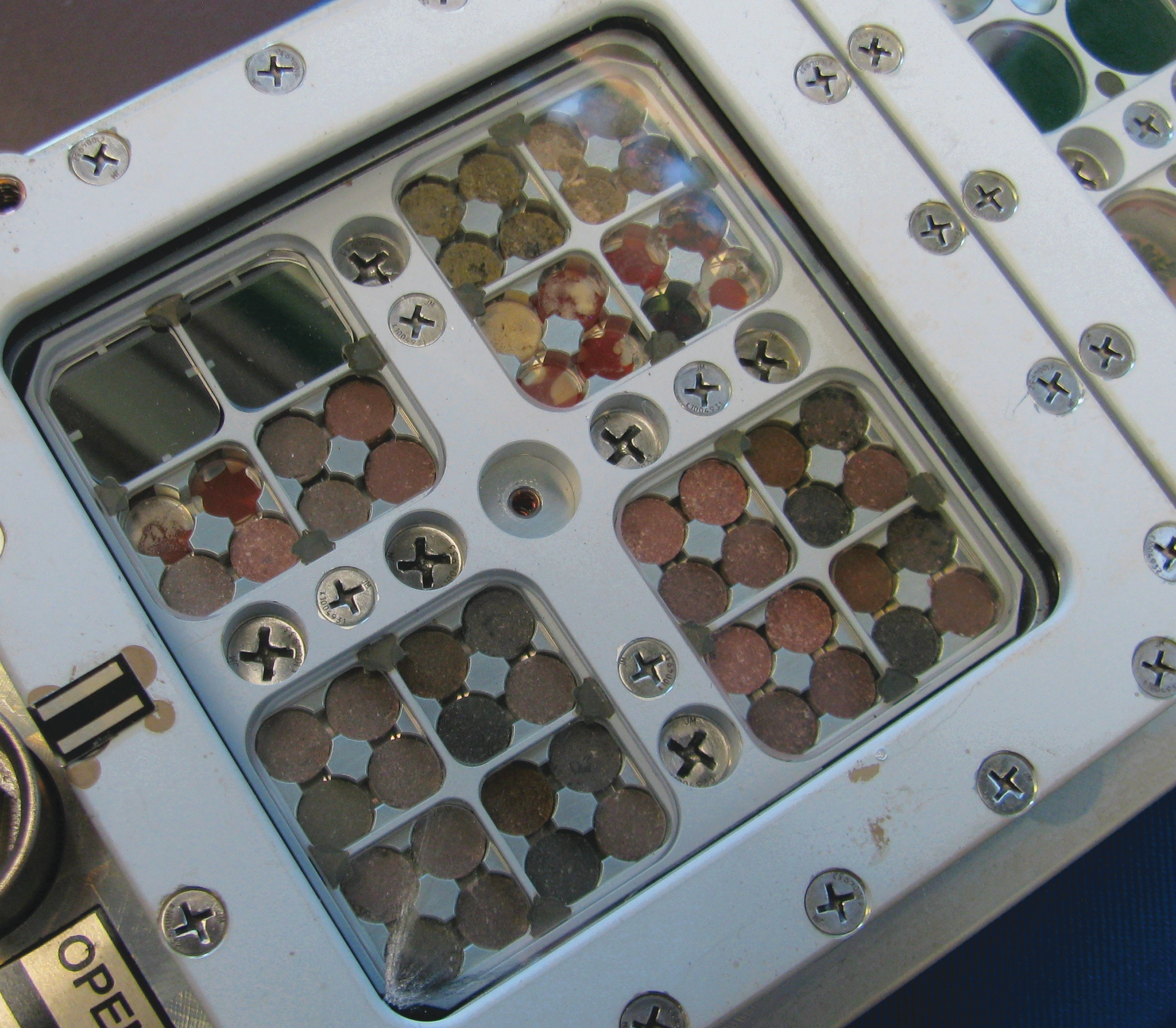
Mars analog pellets integrated in the EXPOSE-R2 hardware.
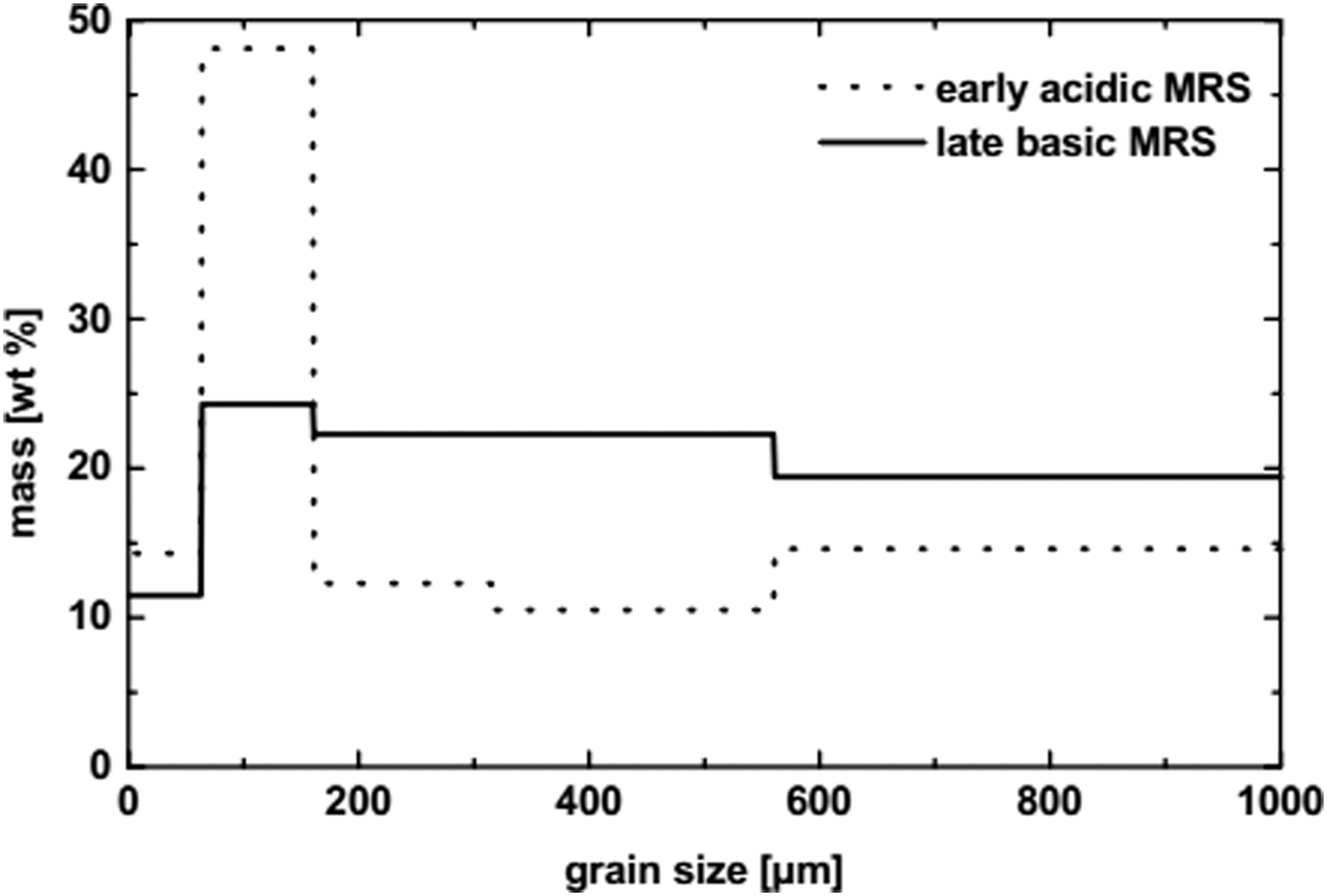
Grain size distribution of martian regolith analog P-MRS (early acidic MRS) and S-MRS (late basic MRS).
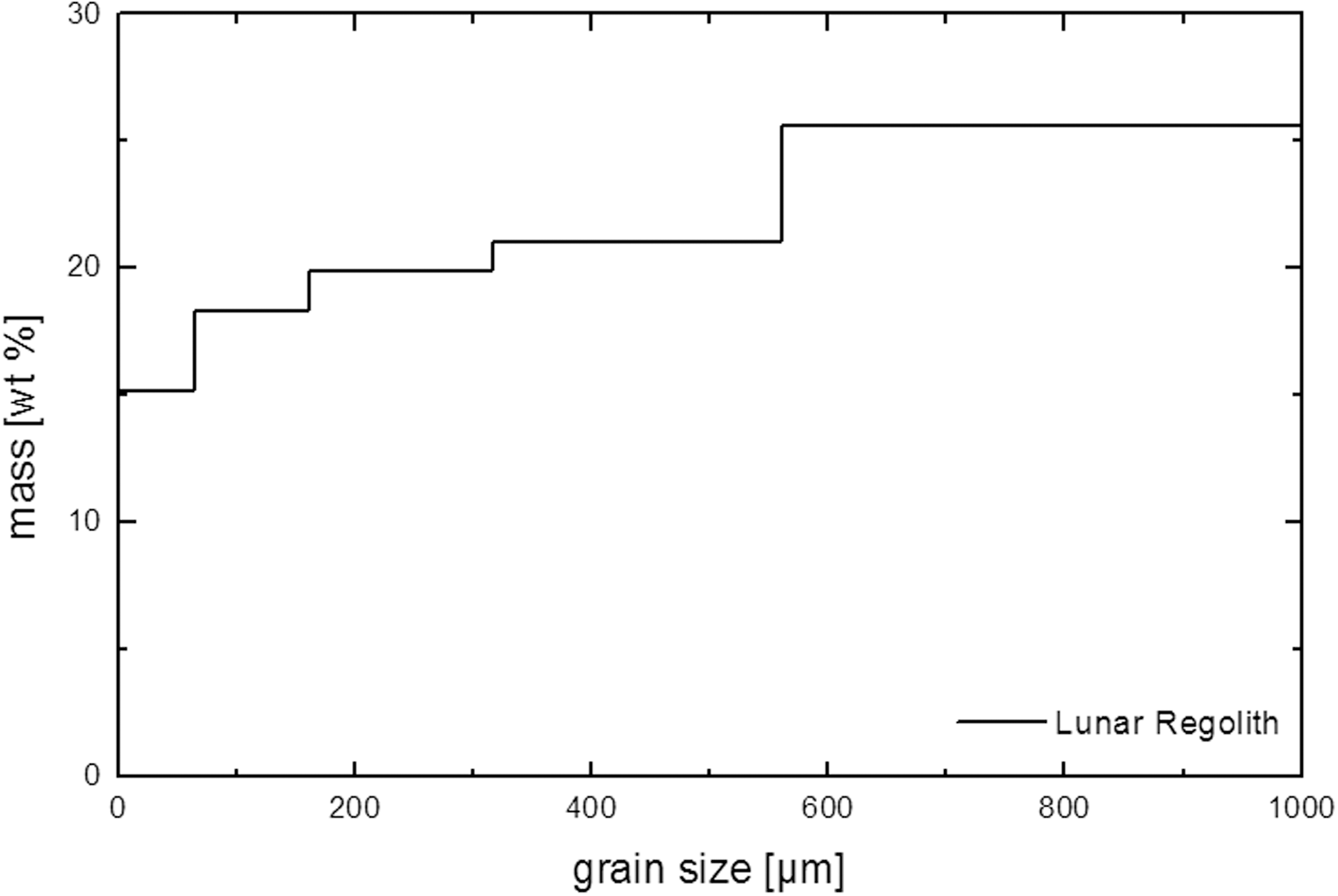
Grain size distribution of lunar regolith analog material LRA.
Mars and Lunar Analog Mineral Mixtures
P-MRS: phyllosilicatic martian regolith = early acidic. S-MRS: sulfatic martian regolith = late basic. LRA: lunar regolith analog.
2.3. Ground-based environmental and space simulations
Many preflight tests were performed to discern whether the chosen samples (Fig. 4) are able to resist extreme conditions with reference to space and martian environments. After an array of experiments on Mars-like regolith and desiccation tests, the organisms were exposed to Experiment Verification Tests (EVTs) and Scientific Verification Tests (SVTs) (Rabbow et al., 2017). In the EVTs, a number of parameters were tested individually on the selected samples. Among these tests, vacuum, a low-pressure Mars-like CO2 atmosphere, extreme temperature cycles from far below zero to more than 40°C, and UVC irradiation were applied (see Table 3). The SVT experiments were conducted inside hardware with conditions that approached those of the space environment at the ISS (see Table 4).
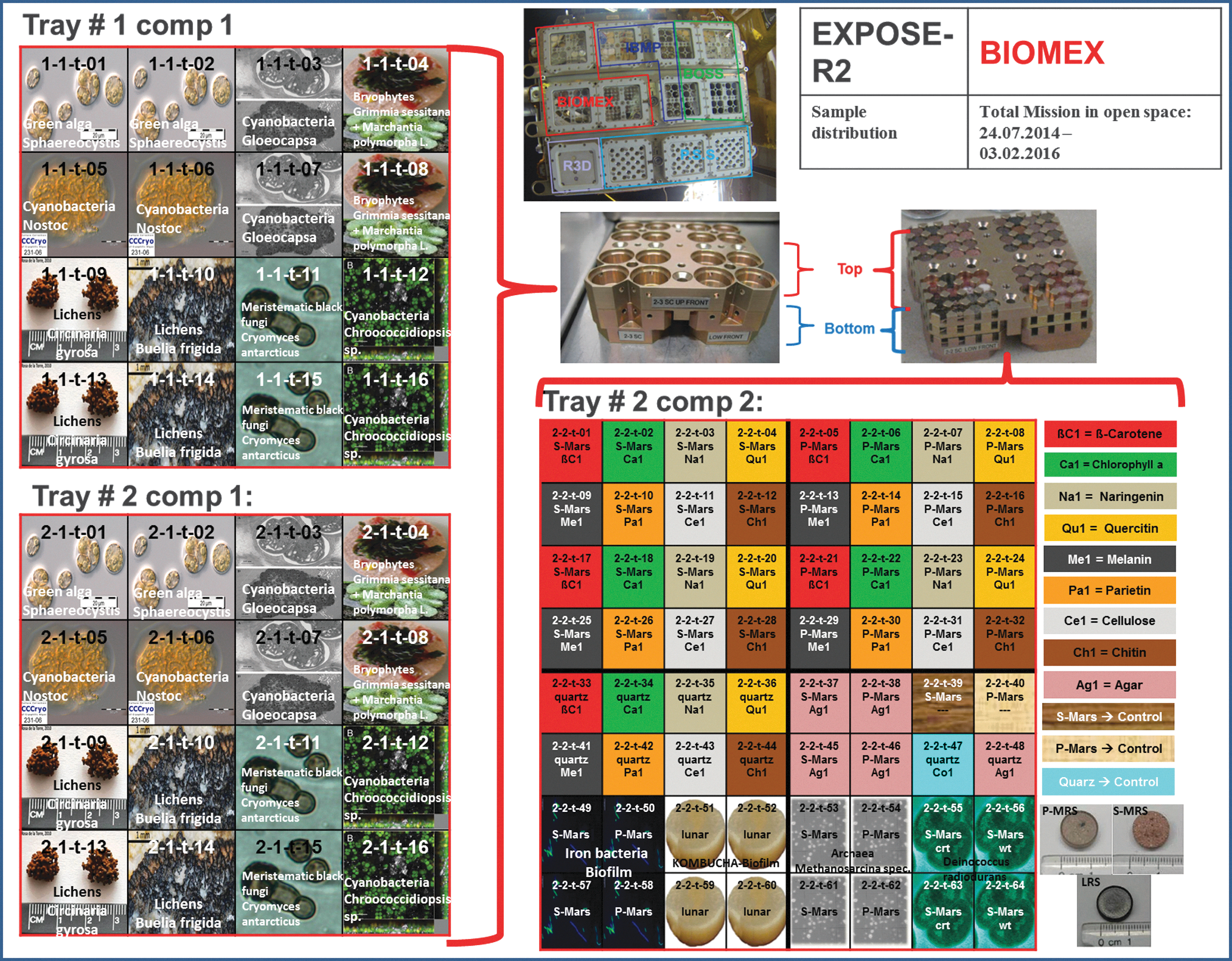
Visual table of the sample distribution within the EXPOSE-R2 hardware.
Experiment Verification Tests (EVTs)
ND: neutral density.
Scientific Verification Tests (SVTs)
2.4. Radiation conditions in space
For several of the BIOMEX experiments, we used different neutral density filters (Fig. 5) as covers below the sample window or as cutoff filters, which allowed for a radiation spectral range such as that present at the surface of Mars. For the more protected samples, doses varied between 4.13 × 101 kJ/m2 and 6.5 × 10³ kJ/m2 (see Fig. 5 for details). Samples such as the cyanobacteria of the genera Nostoc, Gloeocapsa, and Chroococcidiopsis; the green snow/permafrost alga Sphaerocystis; and the fungus Cryomyces antarcticus were partly shielded by special MgF2 neutral density filters with transmission of 0.1% for space conditions and quartz filters with transmission of 0.1% for Mars-like conditions (for detailed description of the EXPOSE-R2 facility and the space mission, see Rabbow et al. [2017]). These allowed for an approximation of martian subsurface radiation conditions, representing a thin soil cover with a significantly reduced amount of transmission. The reason for these filters, which covered select samples, was also to mimic those conditions that occur in natural habitats where organisms primarily colonize endolithic niches or fissures and cracks in rocks or soils or are embedded by shielding snow or ice. Some of these organisms occur naturally as endoliths, such as Chroococcidiopsis sp. and Cryomyces antarcticus. Furthermore, the neutral density filters with 0.1% transmission were additionally applied to the samples of the methanogen archaeon Methanosarcina soligelidi SMA 21. In this case, these filters were used because of the specific nature of this organism's original habitat, which is situated within permafrost-affected soils and protected by soil particles with different grain sizes. Deinococcus radiodurans was covered by neutral density filters with a transmission of 0.01%. The measured and calculated data with regard to the final doses the samples experienced, which included UVA, UVB, UVC, PAR (photosynthetically active radiation), and Lyman alpha, are represented in Fig. 6 and were kindly provided by ESA via computations completed by the company RedShift Design and Engineering BVBA.
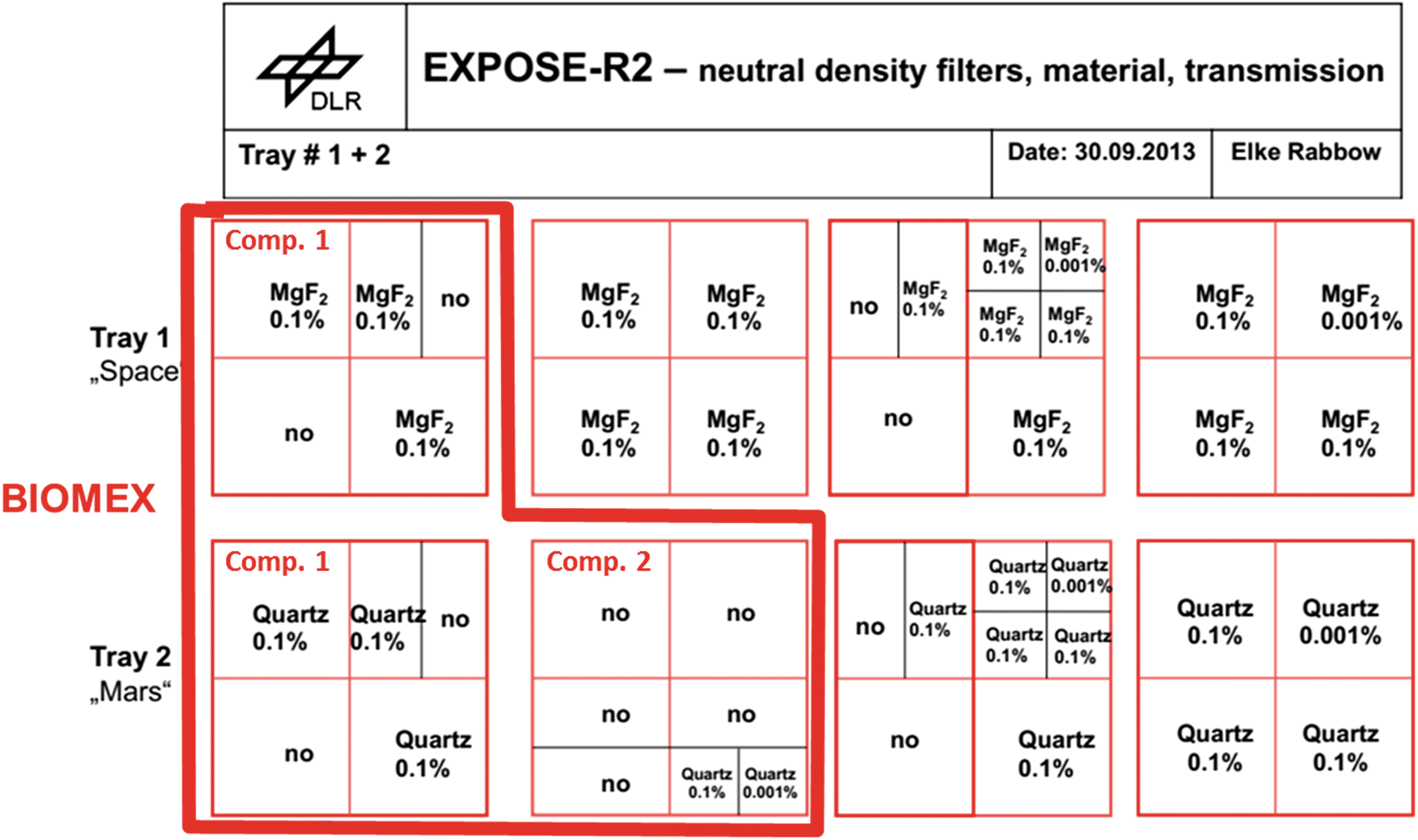
The distribution of neutral density filters and the values of transmission depending on the used material.
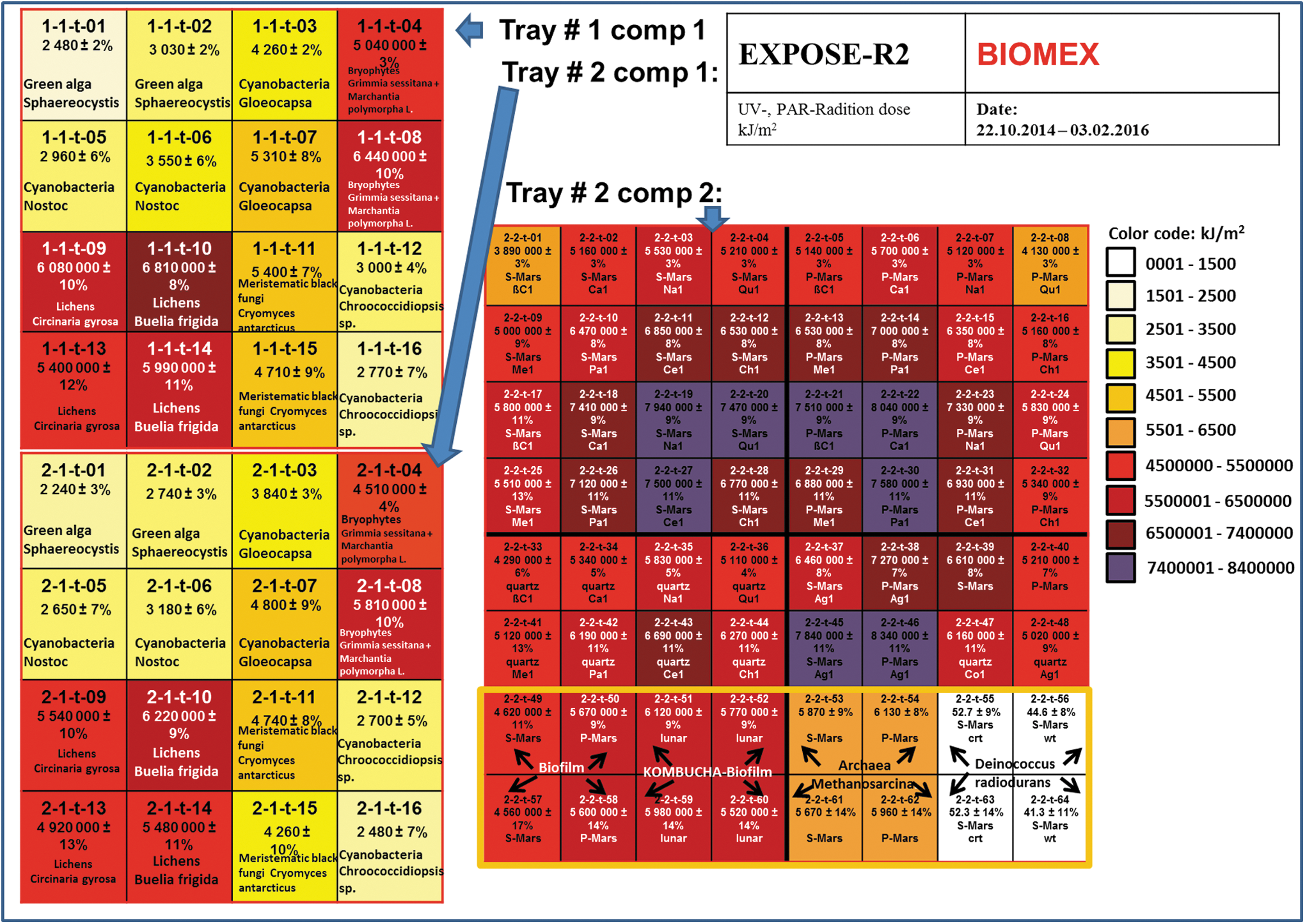
Final UV/PAR radiation dose distribution on the BIOMEX compartments within EXPOSE-R2 after exposure on the ISS (data provided by RedShift).
Significant variation was observed in the dose of UV among samples that were placed within sample sites not protected by filters. The observed variations could be explained by the dependence of the sample position in the hardware, which would have been exposed to a variety of shadowing effects during the orbit of the ISS. When filters were not used in the BIOMEX experiments, the final doses varied between 4.5 × 10⁶ and 8.4 × 10⁶ kJ/m2. Specific organisms exposed without any neutral density filters include the epilithic lichens Circinaria gyrosa and Buellia frigida, the epilithically living bryophytes Grimmia sp. and Marchantia polymorpha, the iron bacteria biofilm, and the kombucha biofilm. Biomolecules exposed on the surface and embedded in the Mars analog mineral pellets also endured the same direct space conditions without any neutral density filters.
3. Overview of Results within This Special Collection
The results presented in this special collection are arranged to provide an overview of each step of the processes involved in the BIOMEX experiment, that is, from selecting samples for simulation experiments to the final exposure experiments in space. Results from pretests on the chosen methanogenic archaeon of the genus Methanosarcina at the preselection level are reported in Serrano et al. (2019). This archaeon was chosen because of its relevance with regard to its potential for being metabolically active on Mars. Therefore, the first tests were designed to use different substrates that contained magnesium perchlorate to establish a Mars-relevant perchlorate environment and mineral mixture before attempting the next selection step of applying atmospheric and radiation-related environmental conditions within the preflight experiments EVTs and SVTs. With regard to the EVTs and SVTs, we present the results obtained by analysis of the fungus Cryomyces antarcticus (Pacelli et al., 2019) and the moss Grimmia sp. (Huwe et al., 2019). Results obtained after space exposure are shown from a series of analyses on the biofilm kombucha (Podolich et al., 2019), the cyanobacterium Chroococcidiopsis (Billi et al., 2019), the cryptoendolithic Antarctic fungus Cryomyces antarcticus (Onofri et al., 2019), and the lichens Buellia frigida (Backhaus et al., this issue) and Circinaria gyrosa (de la Torre et al., not part of this issue). A rough summary of the different studies is given in Table 5, and more details are shown in Table 6. Survival, physiological activity, and growth capacity were detected in all organisms tested. However, life's vital functions decreased from slight to significant, and the reader is directed to specific articles in this collection for detailed discussion of these findings. Several of the selected archaea, bacteria, and heterogenic multilayered biofilms formed by a multitude of species were found to be the most resistant to simulated or direct space and Mars-like conditions. Less resistance and a significant decrease in cell numbers and vitality with regard to the Mars-like environment were shown for multicellular life-forms such as the tested fungus Cryomyces antarcticus (Onofri et al., 2019) and the lichens Buellia frigida (Backhaus et al., 2019) and Circinaria gyrosa (de la Torre Noetzel et al., 2019). The bryophyte Grimmia sp. was an exception (Huwe et al., 2019), but further analysis after space exposure might show whether this specific moss is also resistant to the conditions in space. Actual results in reference to the bryophytes were shown only for the preflight selection mode of EVT and SVT. Our results so far indicate that present Mars seems to be habitable for archaea and bacteria over longer timescales. However, a clearer understanding of the limits of life would be achievable with the implementation of extended space exposure experiments on the Moon, for example, with similar space exposure facilities as those used in the present study (see de Vera et al., 2012).
Results Listed According to the Topics “Limits of Life” and Habitability of Life
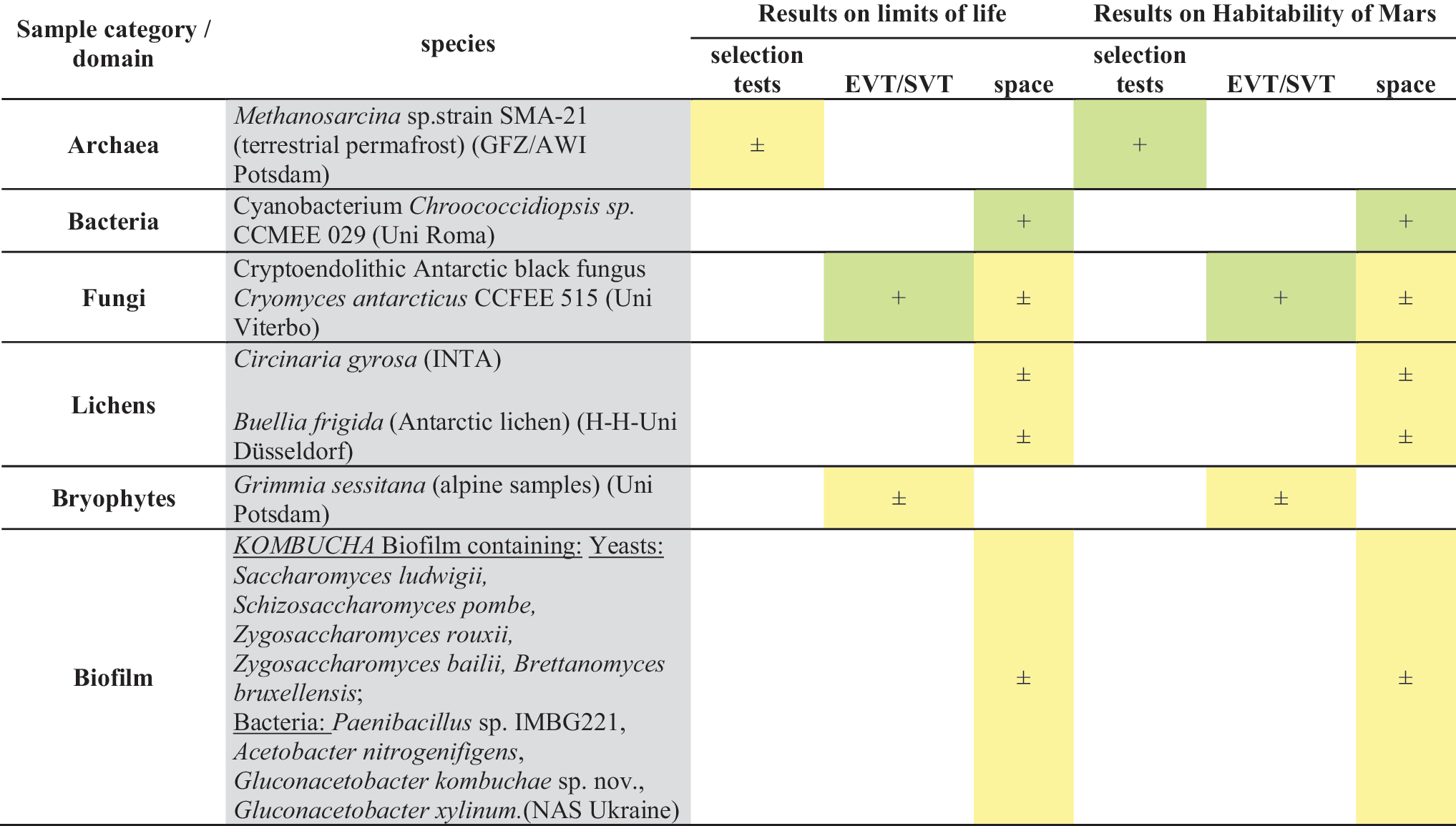
( ) Survival / metabolically active / growth capacity, (
 ) partly survival, more damaged
Detailed Result List Explaining the Classification Shown in Table 5
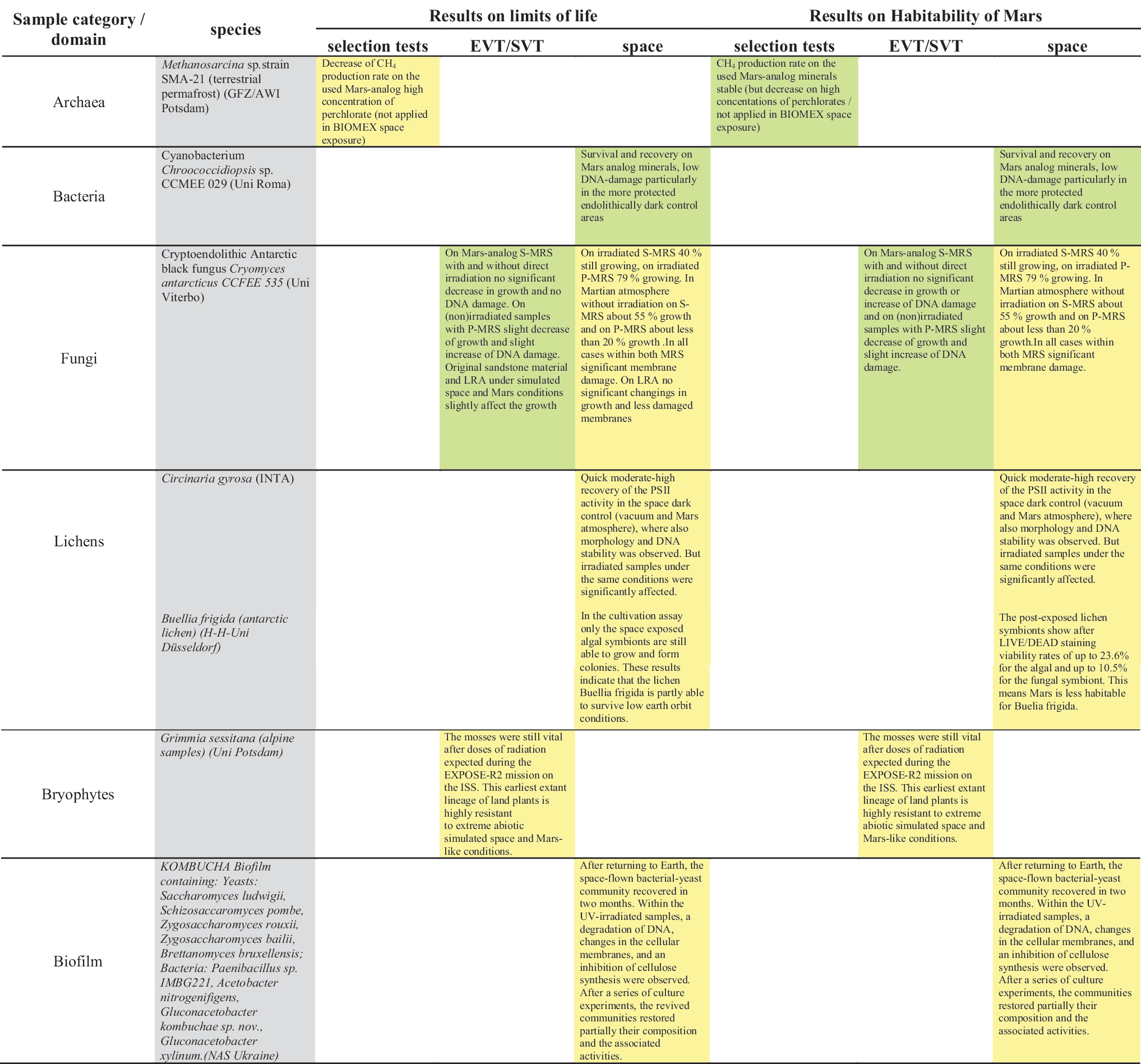
S-MRS: sulfatic martian regolith. P-MRS: phyllosilicatic martian regolith. LRA: lunar regolith analog.
Footnotes
Acknowledgments
This research was supported by the Italian Space Agency (ASI grant BIOMEX Cyano 051-R.0 to D.B., ASI grant BIOMEX MicroColonial Fungi 063-R.0 to S.O.); the German Aerospace Center (DLR-grants: Department of Infrastructure and Management, Astrobiology Laboratories through a grant DLR-FuW-Project BIOMEX (2474128)/Department of Radiation Biology supported by the grant DLR-FuE-Projekt ISS LIFE, Programm RF-FuW, Teilprogramm 475); the German Helmholtz Association through the Helmholtz-Alliance “Planetary Evolution and Life”; the Spanish Ministry of Economy, Industry and Competitiveness (MINECO, project SUBLIMAS “SUrvival of Bacteria and LIchens on Mars Analogs and Space,” ESP2015-69810-R, 2015, to R. de la Torre, and project “CTM2015-64728-C2-1-R” to L.G. Sancho); and the National Academy of Sciences of Ukraine (grant 47/2017). We also kindly acknowledge support from the Alexander von Humboldt Foundation, the German Federal Ministry of Economics and Technology (BMWi: grant to D.W. (50WB1152) and S.O., T.B. (50WB1153) in the frame of the BIOMEX project). L.S. acknowledges The Italian Antarctic National Museum (MNA) for financial support to the Culture Collection of Fungi From Extreme Environments (CCFEE). Also, Dirk Schulze-Makuch acknowledges the support of the ERC Advanced Grant HOME (# 339231). We would like to thank personally Antje Hermelink and the Robert Koch Institute for the SEM images, and Victor Parro (Centro de Astrobiología) for his opinion and suggestions concerning microbial survival to perchlorate exposure. Thank you also to Ralf Liebermann as well as Dorit Siebert and Sandra Jönsson, University of Potsdam, for supporting sample handling. The authors express appreciation to Mr. V'yacheslav Moskaluyk for excellent service regarding the examination of extracellular membrane vesicles, using a scanning electron microscope. We would like to express a special thank you to the BGR for the logistics for the necessary field work in Antarctica during the GANOVEX 10 expedition so that the collection of samples within Mars-analog field sites for BIOMEX was possible, and we are very thankful to Andreas Läufer, the expedition leader.
We thank ESA for supporting the EXPOSE experiments and in particular the BIOMEX project (ESA-ILSRA 2009-0834, PI: J.-P. de Vera), and we thank the cosmonauts for their excellent EVA work. Thank you also for the final dose calculation and providence of data by RedShift. Moreover, we would like to thank the anonymous reviewers for constructive feedback.
Author Disclosure Statement
No competing financial interests exist.