






Abstract
Aims:
Reactive oxygen species (ROS) are key regulators of plant growth, development, and stress tolerance. Stress-induced changes in ROS levels trigger multilevel signaling. However, the precise mechanisms by which ROS signals are translated into changes in gene expression remain poorly defined. Focusing on six key antioxidant enzymes, we performed a meta-analysis of transcriptome data available in public databases to analyze ROS-mediated control of nuclear gene expression.
Results:
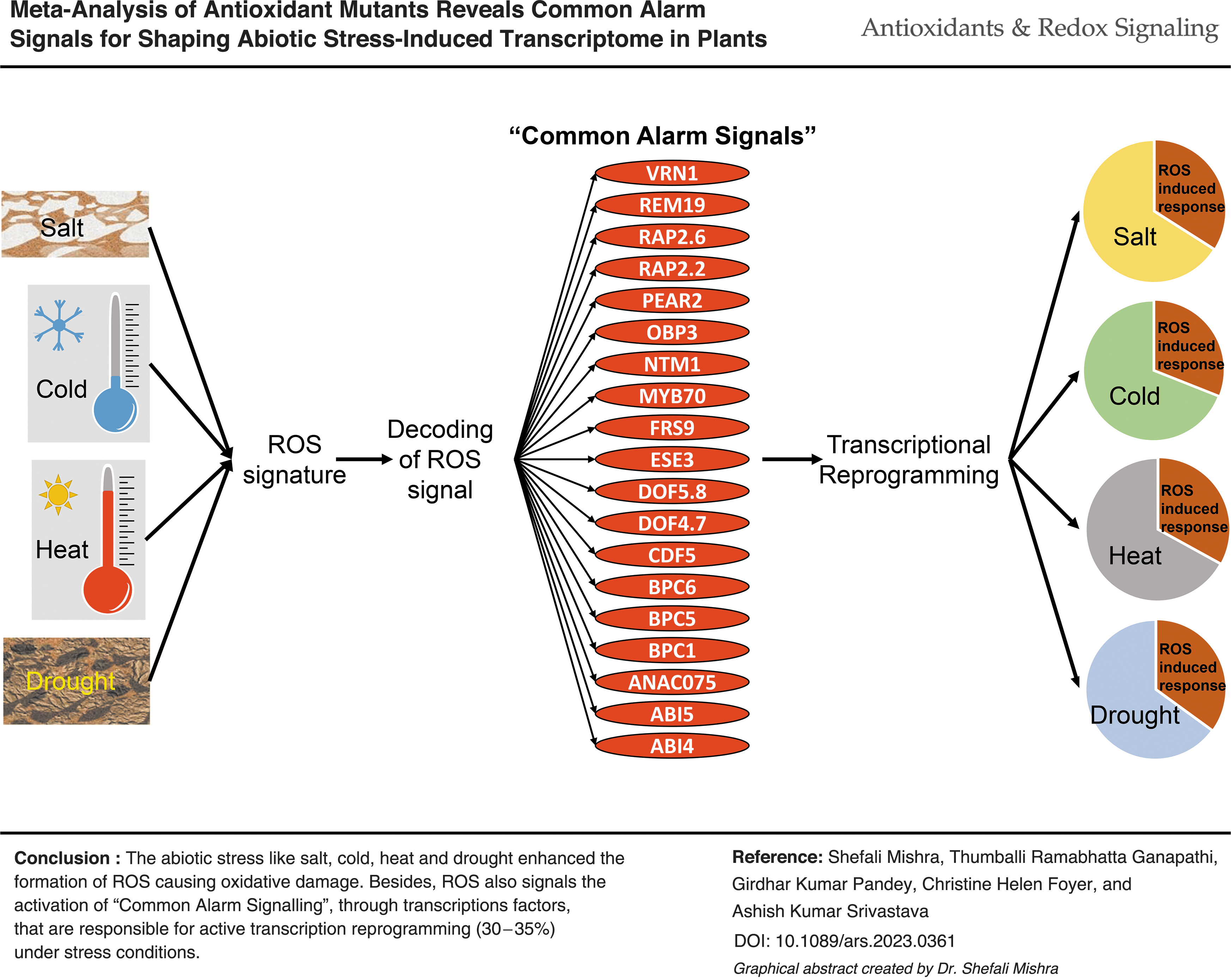
An information-guided pipeline was developed, which identified 19 putative transcription factors (TFs), as components in a “common alarm signal cascade” pathway following perception of changes in ROS levels. Crucially, 30%–35% of the abiotic stress transcriptome signatures had binding sites for common alarm signal-transcription factors (CAS-TFs) in their promoter regions. Furthermore, Phloem Early Dof 2 (PEAR2), DNA binding with one finger 5.8 (DOF5.8), and Obf-Binding Protein 3 (OBP3) were identified as top-ranked TFs on the basis of a cumulative DAPseq (DNA-affinity purification sequencing) score on the promoters of selected genes regulating core pathways of salt, drought, heat, and cold stress tolerance.
Innovation:
This study identifies a set of CAS-TFs that may play a major role in shaping the transcriptome of abiotic stress-induced ROS signaling. Ranking analysis identified PEAR2, DOF5.8, and OBP3 as the top-ranked CAS-TFs that regulated known markers of abiotic stress tolerance.
Conclusion:
The current findings suggest a major role of ROS in the abiotic stress signaling and also identify a set of TFs that take part in the signaling. Taken together, these findings suggested that the common alarm signal cascade underpins broad-range tolerance against multistress conditions. The identification of associated ROS-responsive CAS-TFs may provide novel targets for crop improvement.
Get full access to this article
View all access options for this article.
References
Supplementary Material
Please find the following supplemental material available below.
For Open Access articles published under a Creative Commons License, all supplemental material carries the same license as the article it is associated with.
For non-Open Access articles published, all supplemental material carries a non-exclusive license, and permission requests for re-use of supplemental material or any part of supplemental material shall be sent directly to the copyright owner as specified in the copyright notice associated with the article.
