






Abstract
Dr. Helmut Sies (MD, 1967) is recognized as a Redox Pioneer, because he authored five articles on oxidative stress, lycopene, and glutathione, each of which has been cited more than 1000 times, and coauthored an article on hydroperoxide metabolism in mammalian systems cited more than 5000 times (Google Scholar). He obtained preclinical education at the University of Tübingen and the University of Munich, clinical training at Munich (MD, 1967) and Paris, and completed Habilitation at Munich (Physiological Chemistry and Physical Biochemistry, 1972). In early research, he first identified hydrogen peroxide (H2O2) as a normal aerobic metabolite and devised a method to quantify H2O2 concentration and turnover in cells. He quantified central redox systems for energy metabolism (NAD, NADP systems) and antioxidant GSH in subcellular compartments. He first described ebselen, a selenoorganic compound, as a glutathione peroxidase mimic. He contributed a fundamental discovery to the physiology of GSH, selenium nutrition, singlet oxygen biochemistry, and health benefits of dietary lycopene and cocoa flavonoids. He has published more than 600 articles, 134 of which are cited at least 100 times, and edited 28 books. His h-index is 115. During the last quarter of the 20th century and well into the 21st, he has served as a scout, trailblazer, and pioneer in redox biology. His formulation of the concept of oxidative stress stimulated and guided research in oxidants and antioxidants; his pioneering research on carotenoids and flavonoids informed nutritional strategies against cancer, cardiovascular disease, and aging; and his quantitative approach to redox biochemistry provides a foundation for modern redox systems biology. Helmut Sies is a true Redox Pioneer. Antioxid. Redox Signal. 21, 2459–2468.
Background Development and Training
T
Sies was born in 1942 and grew up in northern Germany “at the border of meadows and hillside forests,” a place enchanted by colorful kingfishers, springtime lush with wildflowers, and metamorphosis of tadpoles into frogs (64). He cites his first elementary school teacher, Georg Henkel, for fostering curiosity that led to a lifelong pursuit of discovery. His formative education was rich with culture, achievement, and opportunity. He took demanding experimental physics, mathematics, and chemistry and credits study of Latin for providing logic and long-term perspective. At 17 years of age, he boarded a Greek liner along with 200 European exchange students traveling to the United States for studying abroad. He lived with a medical doctor in a small town near Cincinnati; the impressive life and dedication of the country doctor had a lifelong impact (64). Sies graduated high school in Kankakee, near Chicago, in 1960, and returned to Germany, where he graduated from Jakobson-Schule in Seesen in 1961.
Subsequent education at Tübingen (studium generale and Medicine), extending to Marburg and Munich for thesis research, and at the Sorbonne in Paris for clinical medicine, was extraordinary. Already in 1962, he sought out Theodor Bücher, Professor of Biochemistry, for dissertation research on steady-state enzyme kinetics. In 1963, he met and conversed with eminent scientists at what he described as an “Olympic event” (64), the 13th Nobel Prize winners meeting in Lindau, on Lake Constance. Imagine a 21-year-old aspiring scientist listening to Theorell discuss the biochemistry of alcohol, Ochoa present the chemical basis of heredity, Warburg talk about the chemistry of photosynthesis, Burnet explain the role of thymus in immunity, and Krebs talk about regulation of metabolism.
Sies finished MD certification in Munich in 1967 and began postdoctoral study with Bücher, surrounded by a technology genius. Bolko Brauser had enhanced a rapid-scanning spectrophotometer to measure spectral changes in biologic systems, and Sies, Brauser, and Bücher used this with a light guide and a photomultiplier to measure cytochrome changes in intact, perfused rat liver (68, 69). In a certain regard, this represented a steady march of science: the best minds, the best tools, and the best environment. More critically for Sies, this provided a launching pad for discovery. Michaelis, Briggs, and Haldane had enlightened science with their understanding of enzyme catalysis. However, key questions of respiratory enzymology were unanswered: two-electron reactions to generate H2O2 were known, but efforts to detect H2O2 in mammalian systems had failed. Chance had used spectrophotometry to detect a steady-state intermediate of H2O2 with isolated peroxidases and catalase. In Munich, Sies identified the spectrophotometer wavelengths in perfused liver specific for catalase Compound I. On infusing an electron donor (ethanol) to test for reduction of the Compound I, Sies showed for the first time the presence of H2O2 in an intact functioning mammalian tissue. This seminal finding, published along with Chance in 1970 (71), remains unsurpassed in laying the groundwork for quantification of H2O2 production and concentration in mammalian cells (12, 37, 56, 66, 79).
In his early career, Sies was a trailblazer in physiological chemistry, applying quantitative principles to redox biochemistry and physiology throughout the spectrum of structural complexity (56). As his career matured, he integrated disparate observations of chemistry and medicine into a central definition of oxidative stress (58, 59). In this, he emerged as a scout for new principles in redox biology, discovering redox cycling as a central process in oxidative toxicities (23), elucidating roles of GSH (63) and selenium as antioxidants (4, 31), and demonstrating the role of carotenoids in protection against singlet oxygen (60, 77). In fulfillment of his medical training, he translated his studies of dietary lycopene and cocoa flavanols to improve human health (14, 44).
Physiological Chemistry and Enzymology in Complex Systems: Quantitative Foundation for Redox Systems Biology
The key finding of H2O2 in living tissues (71) highlighted an integrated quantitative framework that Sies developed for redox systems biology of intact, functioning organs (8, 71, 72). Contemporary redox scholars are well served to revisit his pioneering contributions of the 1970s as he completed his habilitation [formal process for being accepted as faculty (52)], established his career in redox biochemistry, and took leadership of the Biochemistry Department at the University of Düsseldorf. The isolated, perfused organ and noninvasive monitoring techniques that Sies adopted (55) allowed him to quantify rates while monitoring redox steady-state changes by spectrophotometry and fluorometry (Fig. 1). With noninvasive readout methods to distinguish free thermodynamically active redox partners from bound ones, he obtained accurate quantitative descriptions of specific redox processes within intact functional organs (8, 57).
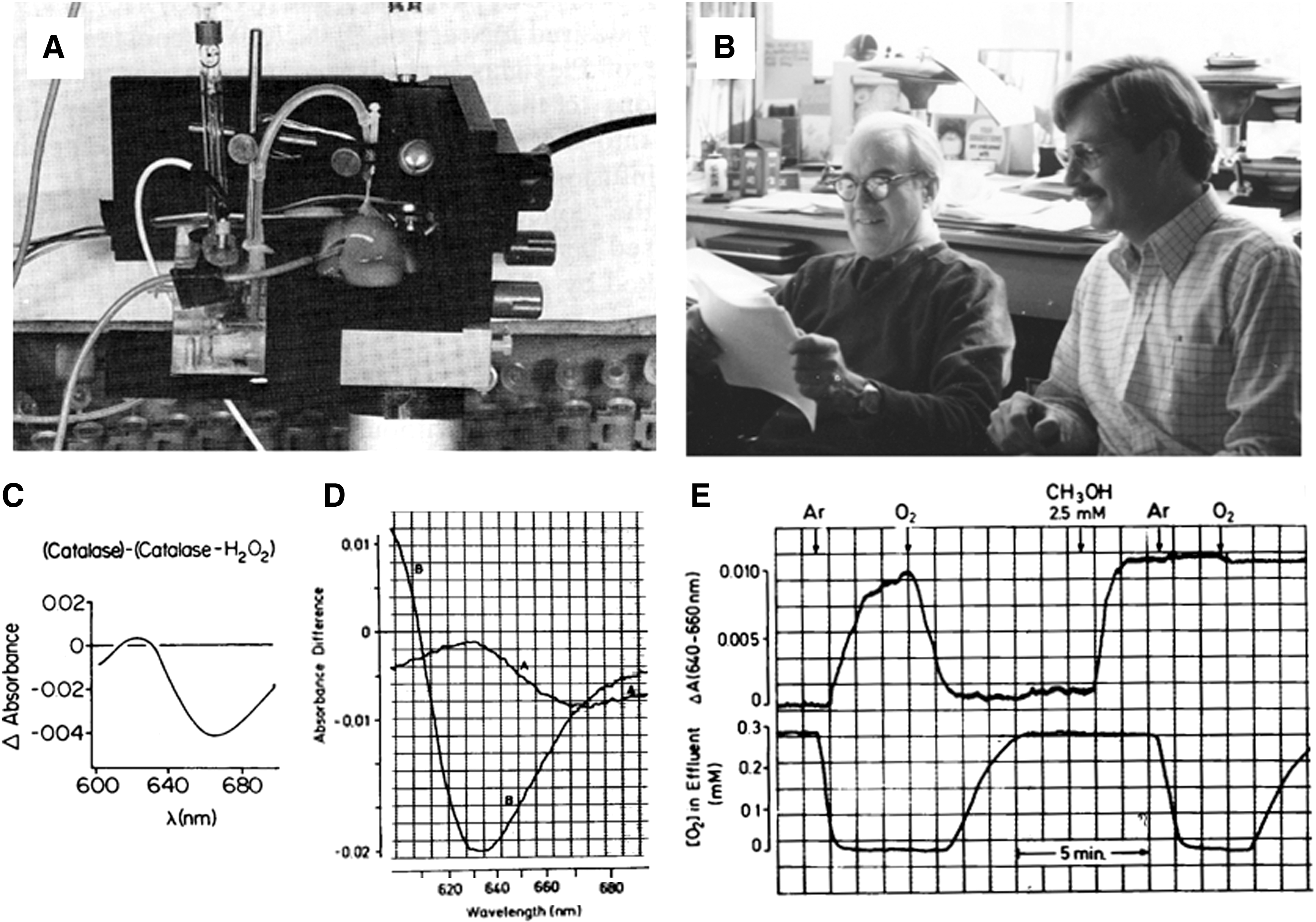
In a 10-year span, Sies extended these approaches to obtain the first measures of peroxisome function in an intact organ (79) and to understand tissue O2 gradients (54), mitochondrial function during hypoxia (53), integrated pathways of ethanol metabolism (34), contributions of mitochondria and endoplasmic reticulum to NADPH and NADH dependent metabolism (51, 57, 68), drug metabolism (55, 98, 99), hepatic release of GSSG and GSH (1, 2, 73), and selenium dependence of peroxide elimination. Parallel tissue fractionation showed the relationships of redox systems in mitochondria, cytosolic and nuclear compartments (56, 57, 80). This pioneering research remains a foundation for quantitative redox systems biology.
Integration of Chemistry, Toxicology, and Nutrition into Central Concept of Oxidative Stress
During a visit by Britton Chance to Benno Hess at the Max-Planck-Institut für Ernährungsphysiologie, Dortmund, Enrique Cadenas recalls Chance's reference to Sies as an “outstanding biologist who could see how concepts developed in the future.” In redox biology, Sies led others to discovery through his vision of oxidative stress, defined in 6.5 pages in Oxidative Stress: Introductory Remarks (58) and developed in a review in Angewandte Chemie (59). He brought together findings from biochemistry, chemistry, physics, radiology, medicine, nutrition, cell biology, physiology, and cancer biology, to provide a roadmap for upcoming decades as he conceptualized the consequences of an imbalance of pro-oxidants and antioxidants in terms of macromolecule damage to DNA, lipids, and protein (Fig. 2).
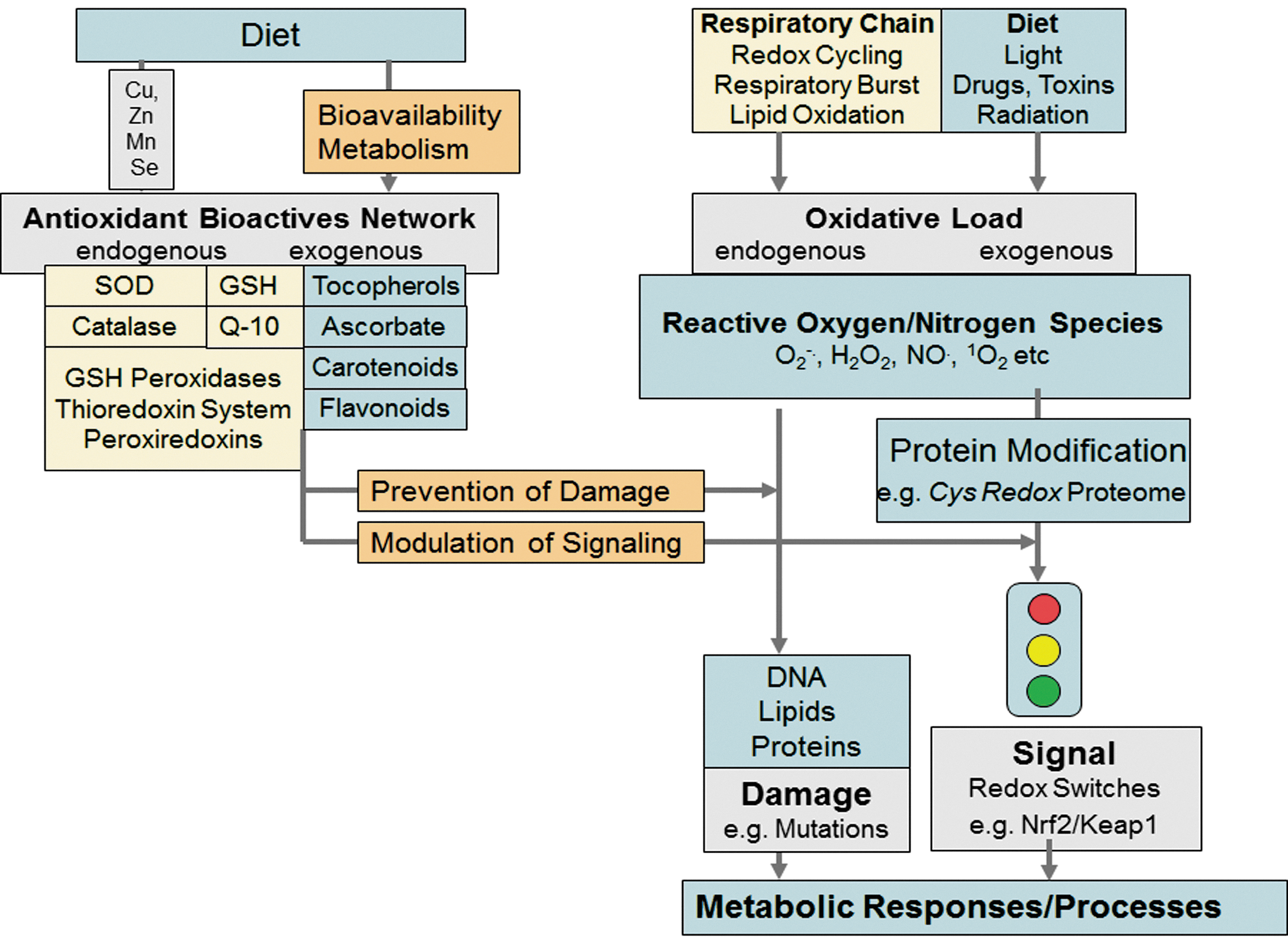
During this seminal period, he discovered that ebselen, an organoselenium compound, is a GSH peroxidase mimetic (33, 38, 39, 61, 62). His description of redox cycling linked a broad range of redox-active enzymes to mechanisms of macromolecular damage and cell toxicity (23) in a process driven by enzymatic activity and not requiring radical propagation for toxicity. Sies contributed to the understanding of •NO (24, 25, 27), the nitroxyl anion (35), a method to capture •NO (26), detect S-nitrosylated and S-glutathionylated proteins (22) and nitrite as a precursor to •NO (93). He characterized reactions of organoselenocompounds with peroxynitrite (3, 6, 7, 29) and showed that GSH peroxidase is a peroxynitrite reductase (76). He showed that plasma selenoprotein P protected low-density lipoprotein (LDL) against oxidation (94) and astrocytes (90) and endothelial cells from damage (91). He also examined a relationship of high selenium intake to type 2 diabetes risk (40, 92).
Translation of Basic Science to Health Practices in Studies of Carotenoids and Flavonoids
In a third key finding, Sies (14) showed lycopene to be the most efficient carotenoid quencher of singlet oxygen (Fig. 3). Lycopene, present in different foods (83 –87), showed preferential availability from processed tomato products (86). With Stahl, he extended lycopene research to humans, notably regarding skin damage from sunlight (Fig. 3). Applying noninvasive measurement and identifying dermal carotenoid products (82), his pioneering research demonstrated protection against ultraviolet light in humans (5, 17, 81, 82), and it is now extended to lycopene research worldwide, particularly in prostate cancer and cardiovascular disease. It should be noted that Sies studied carotenoids in a nutritional biochemical context, not as dietary supplements which, at high doses, proved counterproductive in human studies.
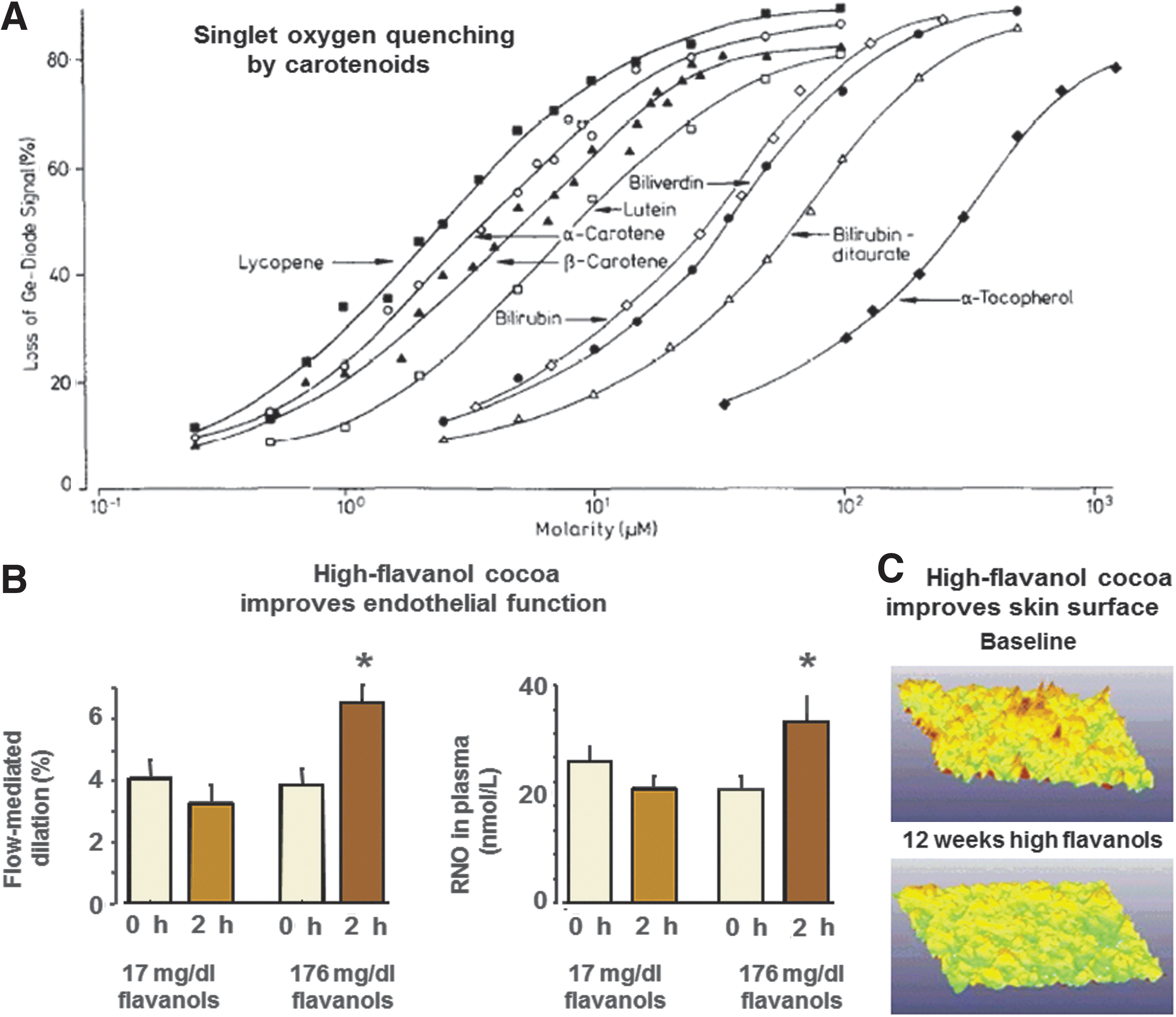
In diet and health research, Sies advanced a mechanistic understanding of flavanols on pro-oxidative enzymes (46 –49, 88, 89) and showed that flavanol-rich cocoa protects against inflammatory events (30). In human volunteers, high-flavanol cocoa increased the level of bioactive protein-bound NO in the blood and improved endothelial function (Fig. 3) (19, 20). The effect was mimicked by (-)epicatechin isolated from cocoa (50). He found flavanol-rich cocoa to diminish plasma F2-isoprostane in humans (100) and showed beneficial vascular effects in smokers (21), photoprotective and cosmetic effects in the skin (18, 36), and longer-term health benefits (20) distinct from acute vascular responses (65). In other research, Sies studied vitamin E in viral hepatitis (95 –97) and inactivation of virus in human plasma (32). He contributed to human research on aging (43), diabetics, congestive heart failure, ischemic stroke, and dementia (28, 41 –43, 45). Stretching forward from his key findings on singlet oxygen, reactive carbonyls, carotenoids, and other antioxidants, Sies provided pioneering leadership in the roles of vitamins, essential minerals, and phytochemicals in promoting optimum health and preventing disease.
Other Achievements and Current Position
As founder of the concept of oxidative stress, Professor Sies set the foundation for the integration in a rational way of the biochemical observations toward the field of biomedicine. With the advance in knowledge on the role of redox processes in biology, the concept of oxidative stress was updated to include the role in redox signaling (75). He is a pioneer in quantitative redox biology and a trailblazer in exploring mechanisms and impacts of dietary constituents on a large variety of disease conditions and even in the aging process. His concepts opened new avenues for the possibility of modulating redox processes in vivo through dietary or pharmacological means, an area that continues to be highly active and now extends to roles of oxidative processes in cell signaling. He continues his leadership role in basic and translational science as Professor Emeritus, Department of Biochemistry and Molecular Biology I, Faculty of Medicine, Heinrich Heine University Düsseldorf, Düsseldorf, Germany.
Professor Sies has frequently lectured at international scientific meetings and has also been active in dissemination of research to the public, through lectures to lay audiences, at nutrition meetings, at academies, and through television interviews. He frequently credits his close associates, Dieter Häussinger (13, 15, 16, 74), Enrique Cadenas (9 –11, 67, 70), Paolo diMascio (14), Theo Akerboom (1, 2), Wilhelm Stahl (78, 83 –87), and many others cited in the references, as well as support from the National Foundation for Cancer Research (Bethesda), Alexander von Humboldt Foundation, Deutsche Forschungsgemeinschaft, and others. In 1996, he received an Honorary Ph.D. degree from the University of Buenos Aires from Prof. Boveris' institution, and in 2010, he received an Honorary M.D. from Dr. Radi's institution, Facultad de Medicina, Universidad de la República, Montevideo, for his outstanding contributions to unravel molecular mechanisms in physiology and pathology and to celebrate the 25th anniversary of the emergence of the Oxidative Stress concept.
He has received FEBS Anniversary Prize (1978), the Ernst-Jung-Prize for Medicine (1988), the Claudius-Galenus-Prize (1990), the Werner-Heisenberg-Medal of the Alexander von Humboldt Foundation (1999), the Linus Pauling Institute Prize for Health Research (2013), and the Trevor Slater Award of the Society for Free Radical Research International (2014).
He has been an instrumental force in scientific leadership for decades, editing scientific journals and books and providing leadership, such as President of the Society for Free Radical Research International, an umbrella organization that encompasses the regional societies in America, Europe, Asia, and Australasia, and of the Oxygen Club of California. He has served as President of the Northrhine-Westphalian Academy of Sciences and is a Member of the German National Academy of Sciences Leopoldina. He has helped lead scientific education, fostering the highest standards in research conduct and dissemination. He stands staunchly on the shoulders of his distinguished scientific pedigree: a student of Theodor Bücher, who descends from Nobel Prize awardees Otto Warburg and Emil Fischer, who traces back to Justus von Liebig, the founder of nutritional biochemistry. Professor Sies extends this tradition with research transcending science to address the health of our society.
Footnotes
Acknowledgments
Helmut Sies writes in gratitude: “I was fortunate to start with Theodor Bücher, an ingenious and generous mentor, and have students and fellows who enthusiastically propelled the research, notably Dieter Häussinger, Theo Akerboom, Sibylle Soboll, Herbert de Groot, Karlis Briviba, Heribert Wefers, Regina Brigelius, Wilhelm Stahl, Wolfgang Schulz, Lars-Oliver Klotz, Peter Brenneisen, Cristina Polidori, Tankred Schewe, Christian Heiss, Holger Steinbrenner.
Associates from other countries and Alexander-von-Humboldt Foundation support were crucial: Enrique Cadenas, Gianna Bartoli, Lionel Gil, Denis Crane, José Estrela, Francisco Romero, Toshihisa Ishikawa, Marisa Medeiros, Paolo di Mascio, Mike Murphy, Vasanthy Narayanaswami, Paul Devasagayam, Greg Bartosz, Motoko Oarada, Wilhelm Hansberg, Lubica Horakova, Takeshi Nikawa, Kazuhiko Rokutan, Hiroshi Masumoto, Victor Sharov, Ivan Roussyn, Oleg Panasenko, Elena Ostrakhovitch, Alcir Dafré, Gavin Arteel, Jens Thiele, Claus Jacob, Govind Mugesh. Visiting scientists: Ray Burk, Toru Komai, Paul Talalay, Raj Sohal, Jim Kehrer, Gail Gurtner, Frank Meyskens, Jim Thomas, Dan Ziegler, Keith Ingold, Brian Ketterer, Etelvino Bechara. Of the many colleagues on the Düsseldorf campus, I would like to especially mention Karin Scharffetter-Kochanek, Jean Krutmann and Thomas Ruzicka from Dermatology, Malte Kelm and Christian Heiss from Cardiology, Hans-Jürgen Bidmon from Anatomy, and Hans-Dieter Martin from Organic Chemistry.
I had good fortune of early contact with Leopold Flohé and Albrecht Wendel on glutathione, longstanding relationship with Britton Chance, working with Nozomu Oshino on H2O2 and compiling the hydroperoxide metabolism review with Alberto Boveris. Deep thanks to sabbatical hosts: Alberto Boveris (Buenos Aires, 1979); Bruce Ames (Berkeley, 1984); and Roland Stocker (Sydney, 1992). The Berkeley sabbatical in 1984 led to a lasting friendship with Lester Packer, the founder of the ‘Oxygen Club of California (OCC),’ with whom I coedited a number of books in the redox field, for example, in Methods in Enzymology.
I am grateful to the National Foundation for Cancer Research, founded by Franklin Salisbury to support cancer research by Albert Szent-György, for research funding since 1984, and to Deutsche Forschungsgemeinschaft for funding since the 1970s.
Finally, I would like to express warm personal thanks to Dean Jones and Rafael Radi for this article, and last-not-least to my wife, Nancy, for her understanding and support throughout the years.”
Abbreviations Used
References
Supplementary Material
Please find the following supplemental material available below.
For Open Access articles published under a Creative Commons License, all supplemental material carries the same license as the article it is associated with.
For non-Open Access articles published, all supplemental material carries a non-exclusive license, and permission requests for re-use of supplemental material or any part of supplemental material shall be sent directly to the copyright owner as specified in the copyright notice associated with the article.
