






Abstract
Introduction:
Laboratory staff working in animal facilities face occupational risks beyond biological and chemical hazards. Organizations working with hazardous agents and animals must protect staff by developing safety programs focusing on risk reduction and fostering a positive safety culture.
Methods:
At the Abigail Wexner Research Institute at Nationwide Children’s Hospital, we formed a department-specific employee safety team tasked with rolling out the Employee Safety Bundle (ESB). The ESB outlines practices and tools to prevent incidents and ensure a safe work environment. This program requires departments with frequent Occupational Safety and Health Administration recordable incidents to develop a Quantitative Risk Assessment framework. The ESB components assist with reducing the overall risks in each area by developing procedure-specific risk mitigations. Additionally, the department-specific employee safety team must develop initiatives to improve the overall safety culture within the department.
Results:
The quantitative risk assessment tool helped us identify the high-risk areas within our animal resources core (ARC) facility. We then utilized the hierarchy of controls to develop risk mitigation plans and decrease the overall risk score in each area within the ARC facility. Additionally, this program requires annual re-evaluation and a focus on continuous improvement that has helped the animal facility reduce injuries, increase near-miss reporting, and improve the safety culture.
Conclusion:
This risk score-based framework has evolved into a more holistic risk mitigation system that involves department staff members, senior leadership, safety, and other subject matter experts working together to improve the operations within an animal facility.
Introduction
Animal facilities that work with hazardous agents or physical hazards must have a robust safety program to ensure the safety of workers, visitors, and animals. 1,2 Safety incidents can damage an organization’s reputation and jeopardize funding or stakeholder partnerships. Depending on the hazards involved, animal facilities are subject to regulations from agencies such as the Occupational Safety and Health Administration (OSHA), the U.S. Department of Agriculture, the Drug Enforcement Administration, and the Environmental Protection Agency. 3 –6 Similarly, the National Institutes of Health’s Recombinant DNA Guidelines and Biosafety in Microbiological and Biomedical Laboratories 6th edition provides recommendations for working safely with recombinant DNA and biological agents in animals. 6 –8 A strong safety program ensures compliance with the relevant regulations, avoiding penalties and legal issues.
Staff working in animal facilities are crucial to support research and, in many cases, compliance with animal welfare and safety regulations. 9 A thriving animal program is critical for an organization’s research success, as many cutting-edge medical research experiments involve an animal model system. An organization must provide a robust Occupational Health Care program, as animal staff work in a dynamic environment. According to 42 CFR 73.12(d), any staff working with Tier 1 select agents and toxins must be enrolled in an Occupational Health Program, meaning they are required to participate in a dedicated medical surveillance program designed to monitor their health and provide necessary treatment in case of exposure to these high-risk biological agents. 10 –13 Staff working in animal facilities encounter several health hazards during daily operations. 14 Health hazards include physical, chemical, radioactive, or biological hazards such as cage and rack washers, chemicals used for cleaning and disinfection, experimental drugs or biologics, radioactive isotopes, zoonotic diseases, allergens, experimental infectious agents, or biological toxins. 14 They are at the highest risk of animal bite-related injuries, sharps injuries, exposure-related injuries, push-pull lift injuries, etc., as they handle several animal species and equipment to support research. 15 –18 Therefore, organizations must evaluate programs and injuries in animal facilities to develop a proactive approach to injury management to protect their staff. 19,20 Additionally, organizations must engage their staff to assess procedures by employing them in risk assessments in their animal areas and seeking their input to improve the safety culture. 21,22
In the United States, OSHA has regulations and guidelines to reduce work-related injuries, illnesses, and fatalities. 23,24 These regulations set the standards for workplace safety and require employers to provide a safe and healthy work environment. 25 OSHA defines recordable injury or illness as any work-related injury or illness that results in loss of consciousness, days away from work, restricted work, or transfer to another job. 26 Any work-related injury or illness requiring medical treatment beyond first aid, the most common type of injury observed in animal facilities, is also considered OSHA recordable. 27 Under the General Duty Clause, employers must provide a workplace free from recognized hazards likely to cause death or serious harm to employees. 28 This clause allows OSHA to address various hazards even if no specific standard applies. 28 OSHA protects employees’ right to report unsafe conditions without fear of retaliation. 29 Whistleblower protections cover workers who report safety violations or exercise their OSHA rights. 29 By complying with OSHA requirements, organizations can reduce injury risks, avoid costly fines, and create a safer work environment for their staff. 30
Workplace OSHA injuries can be costly to organizations both financially and operationally. 31 Injuries or exposures can lead to expensive medical bills, especially if treatment requires hospitalization or long-term care, such as chemical burns or lab-acquired infections. 32 Employers are often legally required to cover injured employees’ medical expenses and lost wages, which can add up over time. 33 Workers’ compensation premiums are generally higher for organizations that handle hazardous agents, and if more injuries occur, it directly affects their insurance premiums. 34 Similarly, if an employee’s occupational health program is found negligent, significant legal and regulatory fines can directly impact the organization’s reputation and trust. 35,36
The current study outlines a process of implementing an “ESB” for departments with frequent OSHA recordable injuries. The ESB is implemented in departments with more than 3 OSHA recordable incidents annually. In our organization, “Implementing an ESB” means forming a department-specific employee safety team with institutional/departmental leadership participation, staff, and the support of the Institution’s Safety Team to reduce overall injuries and improve the safety culture by utilizing a risk-based framework. We also provide information about what components are essential in forming a department-specific safety team framework and how those frameworks have benefited our organization in promoting staff buy-in for safety-related initiatives and programs. The initiative identified the need for a dedicated full-time safety person for the animal facility. This study also highlights an occupational risk-management framework to constantly monitor risks in an animal facility and the importance of continuous improvement. The strategies outlined here will serve as a guideline for other organizations developing a risk assessment framework and may help to reduce injuries and improve overall safety culture. With the enduring focus on employee safety, Environmental Health and Safety staff within organizations must be agile and innovative and develop a collaborative framework with their research departments to develop and promote safety-related initiatives for their areas.
Methods
The Employee Safety Bundle Components at Abigail Wexner Research Institute at Nationwide Children’s Hospital (NCH)
The Employee Safety Bundle (ESB) at NCH was developed by the organization’s Business Process Improvement Team, which monitors all injuries in all Centers/Departments for an organization with more than 17,000 employees. The organization’s Research Safety Department implements the ESB in areas where OSHA recordable incidents are concentrated because they investigate all injuries and incidents. The ESB comprises five components modeled after OSHA’s Safety Management Tool for Hazard Prevention and Control Guide and the ISO 31000 standard on risk management.
37
–39
These “recommended practices for safety and health programs” are recommendations only. Employers are not required to have a safety and health program that complies with them and will not be cited for failing to adhere to this document.
39
The NCH ESB outlines step-by-step practices and tools to ensure a safe work environment and prevent accidents. The components include the following: Formation of a Departmental Safety Team: The organization’s Safety department is responsible for first forming a department-specific employee safety team in areas where OSHA recordable incidents are concentrated. The cross-functional department-specific employee safety team comprises a department manager/supervisor, two or three front-line staff members, and a member from the organization’s Safety department who serves as a liaison on the committee. The team roster also includes the Department Vice President or senior leadership. This Team meets monthly to review departmental employee safety performance and recent department incidents, identify employee safety risks, develop mitigation plans, and review and update safety training. A Departmental Employee Safety Risk Assessment: This risk assessment identifies the top employee safety hazards associated with the work done by departmental employees, the likelihood that an injury will occur, the severity of the potential injuries, and the current mitigation plan to reduce the risk. The department-specific employee safety team will complete a simplified employee safety risk assessment (Table 1) and determine the department’s total safety risk score. At a minimum, the department-specific employee safety team must evaluate the risk assessment document of the ESB for each area annually for this program. The Employee Safety Mitigation Plan: This formal employee safety plan is designed to minimize/eliminate the likelihood of an employee injury. The department-specific employee safety team will develop a mitigation plan (Table 2) to reduce the department’s overall employee safety risk score. At a minimum, this plan must include a department-level employee safety procedure and an annual training/review of the employee safety procedure for all departmental employees. Start with Safety: This process involves a daily discussion with staff on the tasks for the day, the potential safety risks associated with the tasks, and the plans to reduce the likelihood of injury. The department manager can schedule a safety timeout or huddle (∼2–5 minutes) at the beginning of the day or develop a process that promotes each staff member as a safety champion. Make Employee Safety Visible: This step involves measuring and posting the department’s employee safety performance in an area all employees can see. Employees can innovate by developing strategies to promote the importance of safety in their regions or developing programs to highlight safety-related initiatives in their areas.
The risk assessment matrix tool the department-specific employee safety team utilizes to assign a risk score
Negligible: Slight injury requiring first aid, no medical attention. Minor: Injury requiring medical attention or restricted duty. A contaminated needlestick/sharp injury; Injury is OSHA Recordable Moderate: Restricted duty, or lost time up to 3 days. Major: Lost time >3 days; permanent disability or restricted duty; admitted to hospital. Catastrophic: Death, loss of limb, or permanent disability.
Rare: Could happen, but probably never will; Occurs once every 10 years. Unlikely: Not likely to occur in normal circumstances, but has happened or could happen less than once per year. Possible: May occur or known to happen once or twice per year. Likely: Expected to occur at some time; up to once a month. Almost certain: Expected to occur regularly under normal circumstances once a week or more.
Elimination: The hazard is eliminated from the job/task. Substitution: The hazard is reduced by using a less hazardous alternative. Engineering controls: An engineered safety device controls or encloses the hazard. Work practice/administrative controls: Work practice designed and utilized to minimize the hazard. This may include supporting existing training, policies and procedures, and employee safety measures. Personal protective equipment (PPE)/Nothing: PPE is readily available and used by staff, or no hazard control is currently in place to mitigate the risk.
The Risk Score (G) is then determined as follows:
The risk mitigation plan the department-specific employee safety team utilizes to reduce the overall risk score
Negligible: Slight injury requiring first aid, no medical attention. Minor Injury requiring medical attention or restricted duty. A contaminated needlestick/sharp injury; Injury is OSHA recordable. Moderate: Restricted duty or lost time up to 3 days. Major: Lost time >3 days; permanent disability or restricted duty; admitted to hospital. Catastrophic: Death, loss of limb, or permanent disability.
Rare: This could happen, but it probably never will; it occurs once every 10 years. Unlikely: Not likely to occur in normal circumstances but has happened or could happen less than once per year. Possible: This may occur or be known to happen once or twice per year. Likely: Expected to occur at some time; up to once a month. Almost certain: Expected to occur regularly under normal circumstances once a week or more.
Elimination: The hazard is eliminated from the job/task. Substitution: The hazard is reduced by using a less hazardous alternative (i.e., material, operation, or equipment) Engineering controls: An engineered safety device is utilized to control or enclose the hazard. Work practice/administrative controls: Work practices are designed and utilized to minimize hazards; supporting policies, procedures, and training exist and include employee safety measures. PPE/Nothing: Personal Protective Equipment is readily available and used by staff, or no hazard control is currently in place to mitigate the risk.
Results
The Departmental Employee Safety Team Charter
The Institution’s Safety Team was tasked with implementing the “ESB” within the Animal Resources Core (ARC) Facility. The first step was buy-in from senior leadership. Collaborative discussions among leadership with the approximately 60 staff members of the Animal Core Facility decided on a minimum of five and a maximum of 11 members so that individuals from each area of the animal facility would be represented on the committee. Representation is critical as these employees are the department contacts for doing risk assessments in the workplace and continually updating the risk assessment matrix when new procedures are implemented within their areas. Additionally, when injuries happen, these members are the contact to implement proper follow-up procedures and take appropriate corrective actions.
The final charter composition developed for this department required the Institution’s President/Chief Scientific Officer participation, the Director/Attending Veterinarian, the Director of Safety, the Research Safety Specialist, and seven staff members from different areas within the animal facility. A template that was utilized for forming a department-specific employee safety team for the ARC facility is shown in Figure 1. The Team was responsible for developing a mission statement and a goal for the year. Staff members from the animal facility rotate on this committee annually so all employees can contribute to the initiatives developed by their safety team. Representation on the department-specific employee safety team is considered a positive department contribution during annual staff appraisals.
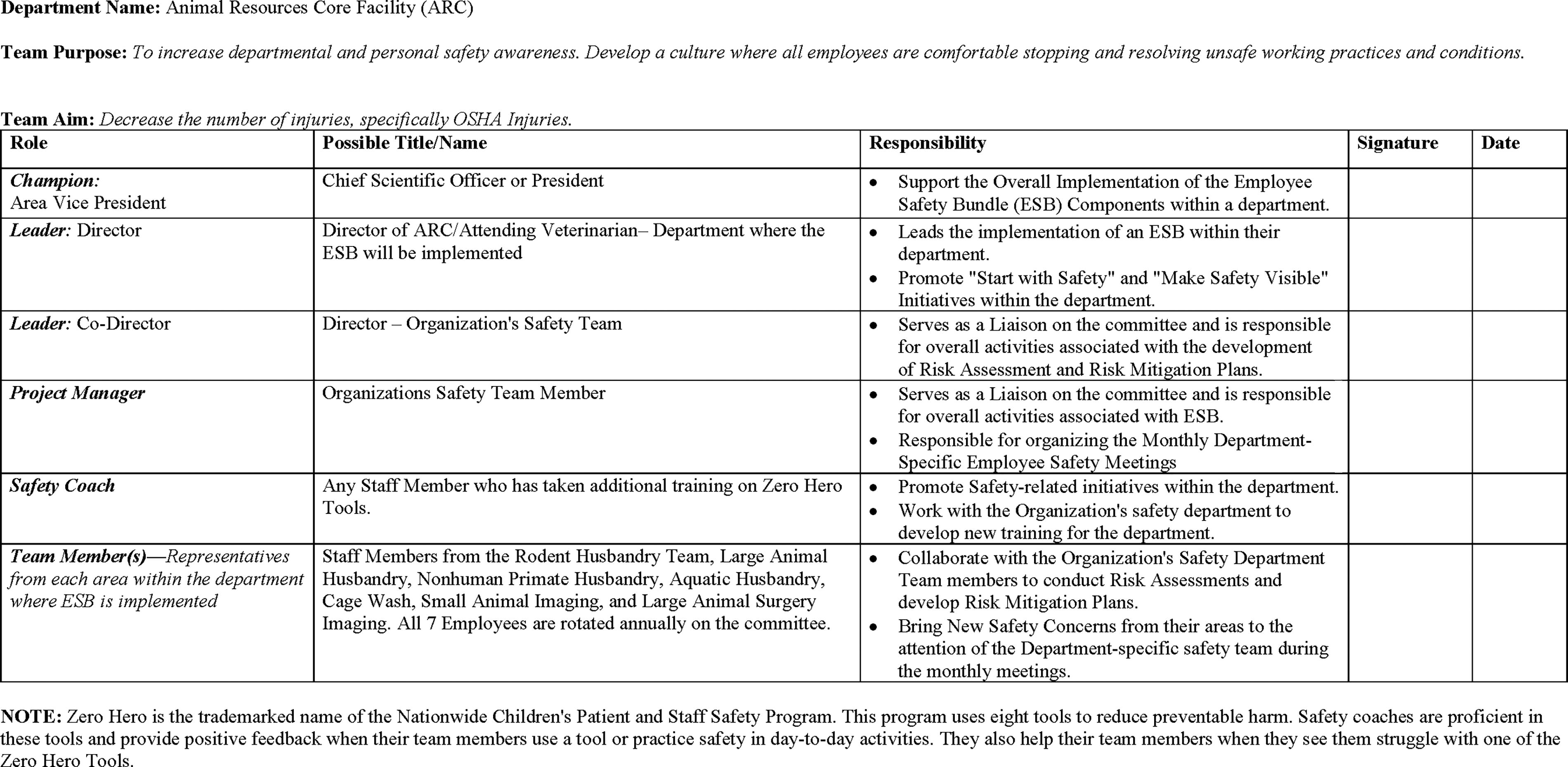
The Template for the Department-Specific Employee Safety Team Charter for the Animal Resource Core Facility.
Additionally, the organization’s Business Process Improvement Team audits the department to ensure the completion of the goals outlined at the beginning of the year. The department’s overall performance is evaluated by tracking the training of all employees using the records of our learning management system. The organization has an online incident reporting system to report all incidents and near misses. The Business Process Improvement Team reviews all injury huddles for the department and evaluates whether the department and the managers have taken the appropriate corrective actions. Additionally, based on incidents, the Process Improvement team annually reviews the changes incorporated in previously assessed risk assessment and mitigation plans.
Baseline Risk Score and Development of Risk Mitigation Practices
The ARC facility at the Abigail Wexner Research Institute has 102,924 sq. ft of animal housing space. It is organized into specialized areas to support diverse species and research needs. These include dedicated spaces for rodent husbandry, large animal husbandry, nonhuman primate husbandry, aquatic husbandry, cage wash area, small animal imaging, and large animal surgery imaging. This segregation ensures that each species’ specific safety, health, and welfare requirements are met while complying with research protocols and regulatory standards. After implementing the ESB, the first six months involved comprehensively assessing risk for each area within the animal core facility for all procedures and determining a baseline risk score. Staff from each area of the department-specific employee safety team collaborate with the organization’s safety department team to develop a baseline risk score for each procedure performed in their area. On average, it takes up to three hours to complete a comprehensive risk assessment for an area. The department-specific employee safety team then discusses if the risk score is appropriate for that area and works to evaluate their procedure and to see if additional risk mitigation strategies can be developed to reduce the overall risk score. This study determined an overall Baseline Risk Assessment score in Aquatic Husbandry (Table 3), Large Animal Husbandry (Table 4), Nonhuman Primate Husbandry (Table 5), Cage Wash Area (Table 6), Large Animal Surgery Imaging (Table 7), Rodent Husbandry (Table 8), and Small Animal Imaging (Table 9).
The top 10 risk scores in the aquatic husbandry areas within the animal resources core facility and the impact of risk mitigation plans on the overall risk score
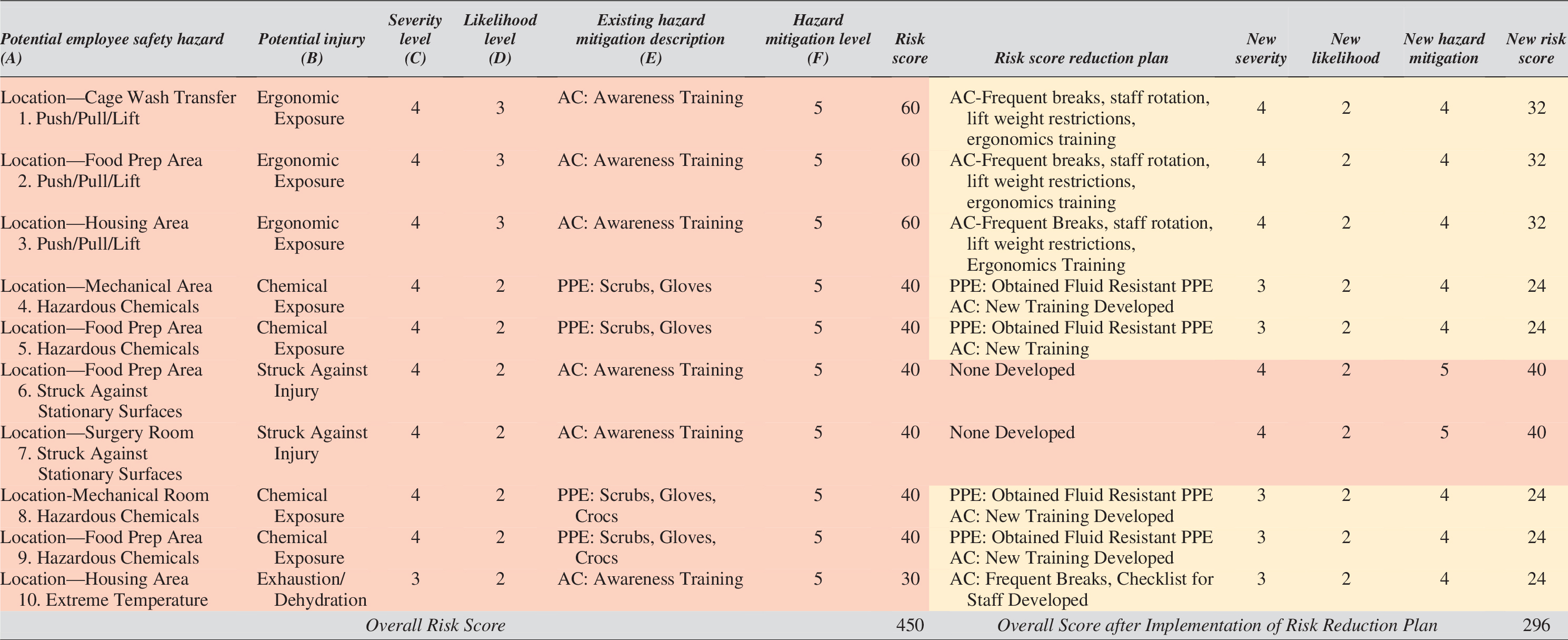
NOTE: The hierarchy of controls ranks workplace safety measures from most to least effective. In the table, different colors represent the hierarchy of control present during the initial risk assessment. A change in color under the “Risk Score Reduction Plan” indicates that the department-specific employee safety team implemented a new risk mitigation strategy to reduce the overall risk score.
Elimination (E),  ; Substitution (S),
  ; Engineering Controls (EC),
  ; Administrative Controls (AC),
  ; Personal Protective Equipment (PPE),
  .
.
The top 10 risk scores in large animal husbandry areas within the animal resources core facility and the impact of risk mitigation plans on the overall risk score
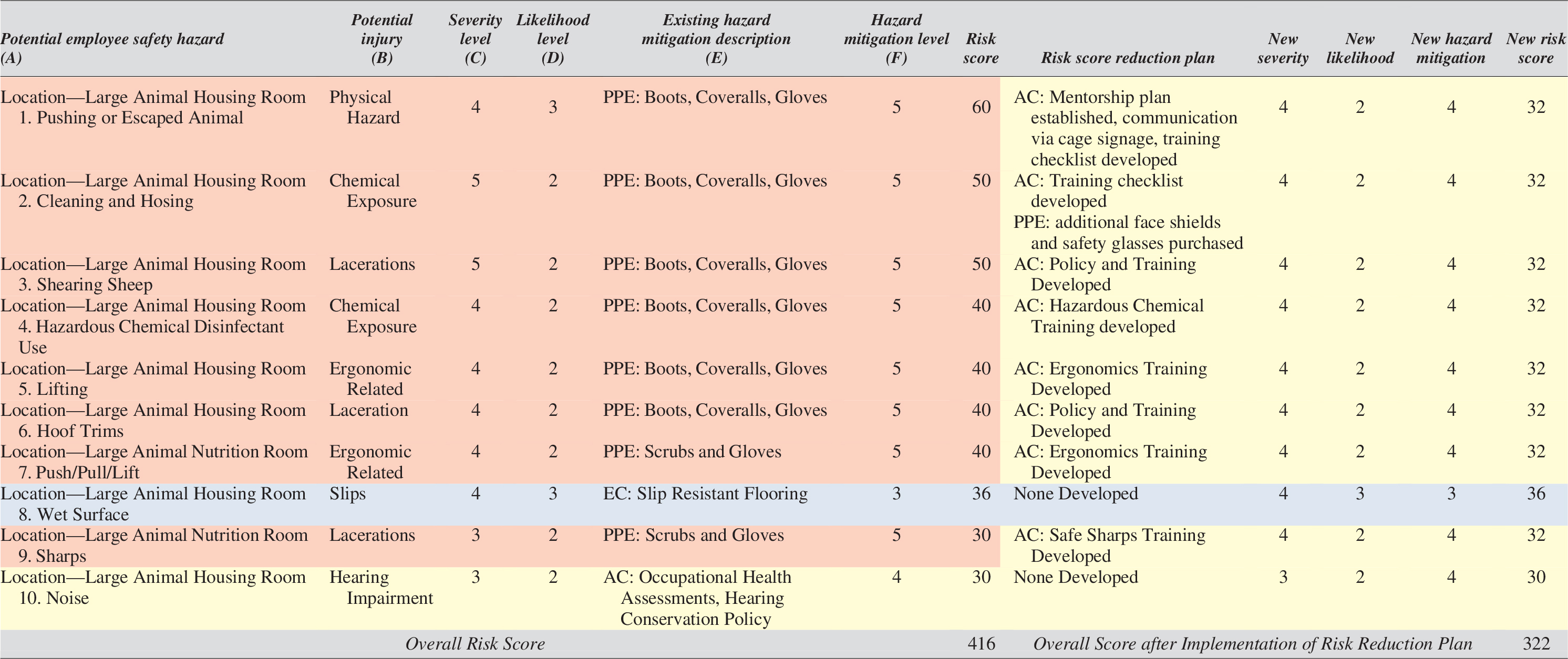
NOTE: SOP, standard operating procedure.
The hierarchy of controls ranks workplace safety measures from most to least effective. In the table, different colors represent the hierarchy of control present during the initial risk assessment. A change in color under the “Risk Score Reduction Plan” indicates that the department-specific employee safety team implemented a new risk mitigation strategy to reduce the overall risk score.
Elimination (E),  ; Substitution (S),
  ; Engineering Controls (EC),
  ; Administrative Controls (AC),
  ; Personal Protective Equipment (PPE),
  .
.
The top 10 risk scores in nonhuman primate husbandry areas within the animal resources core facility and the impact of risk mitigation plans on the overall risk score
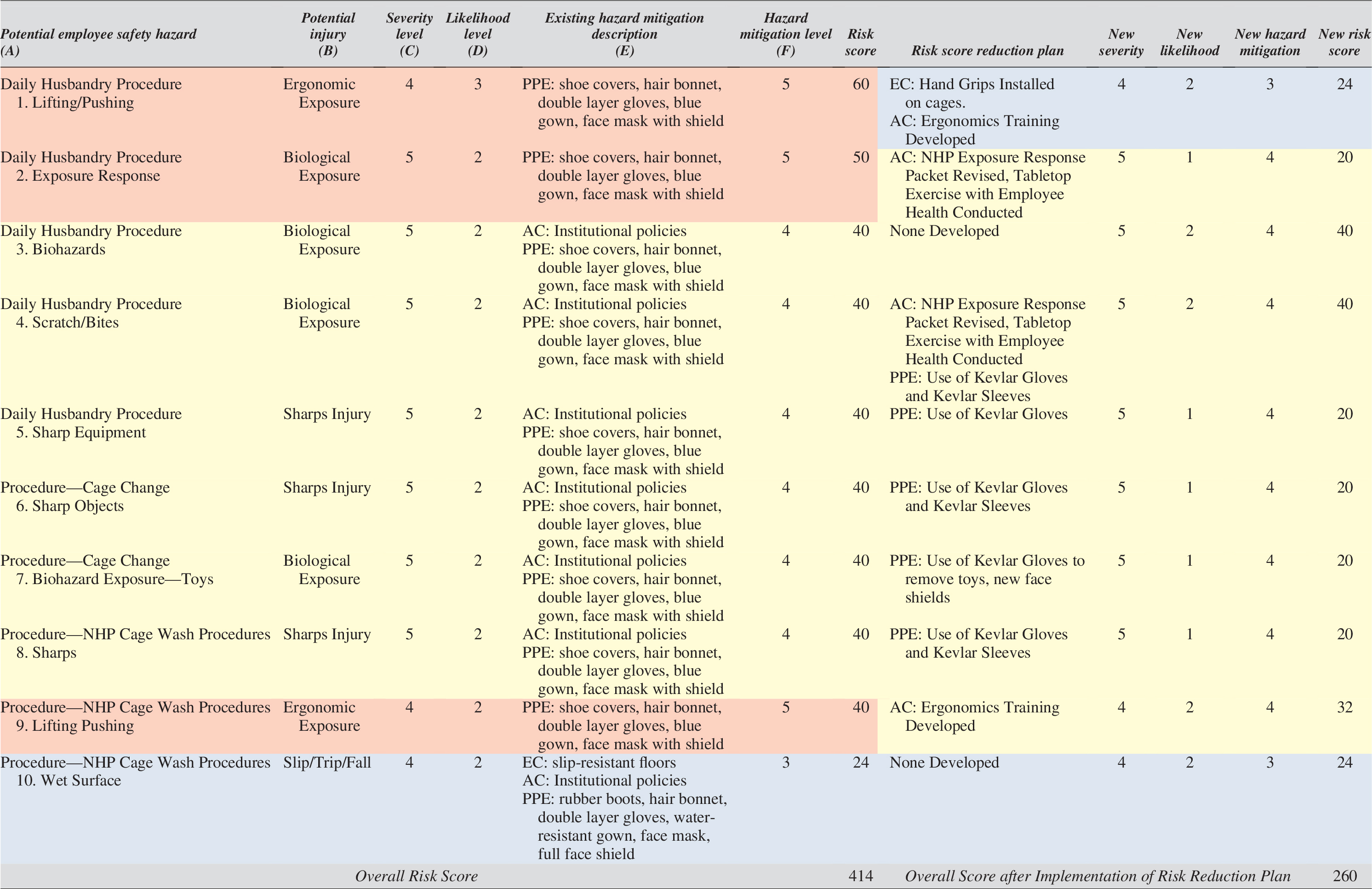
NOTE: NHP, nonhuman primate.
The hierarchy of controls ranks workplace safety measures from most to least effective. In the table, different colors represent the hierarchy of control present during the initial risk assessment. A change in color under the “Risk Score Reduction Plan” indicates that the department-specific employee safety team implemented a new risk mitigation strategy to reduce the overall risk score.
Elimination (E),  ; Substitution (S),
  ; Engineering Controls (EC),
  ; Administrative Controls (AC),
  ; Personal Protective Equipment (PPE),
  .
.
The top 10 risk scores in the cage wash areas within the animal resources core facility and the impact of risk mitigation plans on the overall risk score
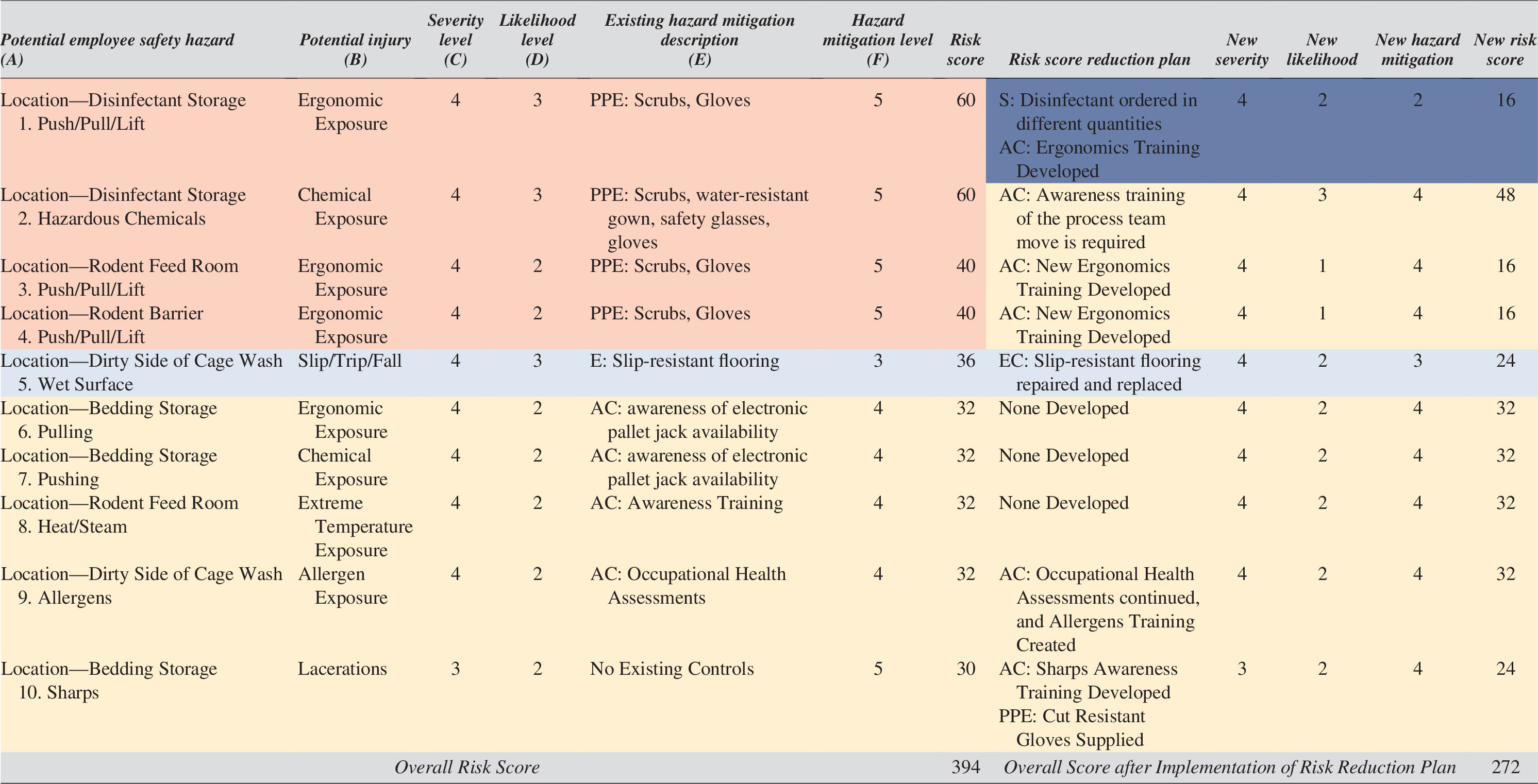
NOTE: The hierarchy of controls ranks workplace safety measures from most to least effective. In the table, different colors represent the hierarchy of control present during the initial risk assessment. A change in color under the “Risk Score Reduction Plan” indicates that the department-specific employee safety team implemented a new risk mitigation strategy to reduce the overall risk score.
Elimination (E),  ; Substitution (S),
  ; Engineering Controls (EC),
  ; Administrative Controls (AC),
  ; Personal Protective Equipment (PPE),
  .
.
The top 10 risk scores in large animal surgery imaging area within the animal resources core facility and the impact of risk mitigation plans on the overall risk score
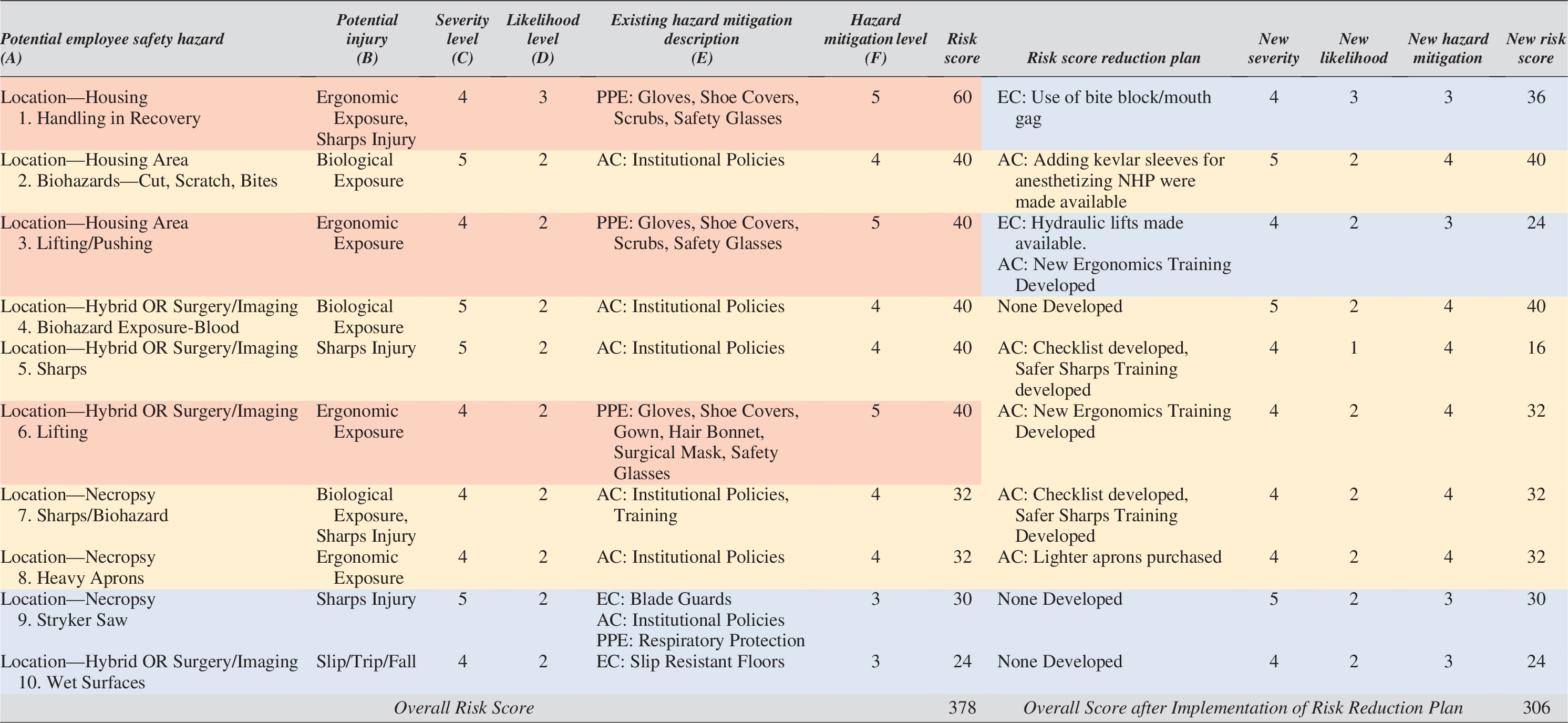
NOTE: OR, operating room.
The hierarchy of controls ranks workplace safety measures from most to least effective. In the table, different colors represent the hierarchy of control present during the initial risk assessment. A change in color under the “Risk Score Reduction Plan” indicates that the department-specific employee safety team implemented a new risk mitigation strategy to reduce the overall risk score.
Elimination (E),  ; Substitution (S),
  ; Engineering Controls (EC),
  ; Administrative Controls (AC),
  ; Personal Protective Equipment (PPE),
  .
.
The top 10 risk score in the rodent husbandry areas within the animal resources core facility and the impact of risk mitigation plans on the overall risk score
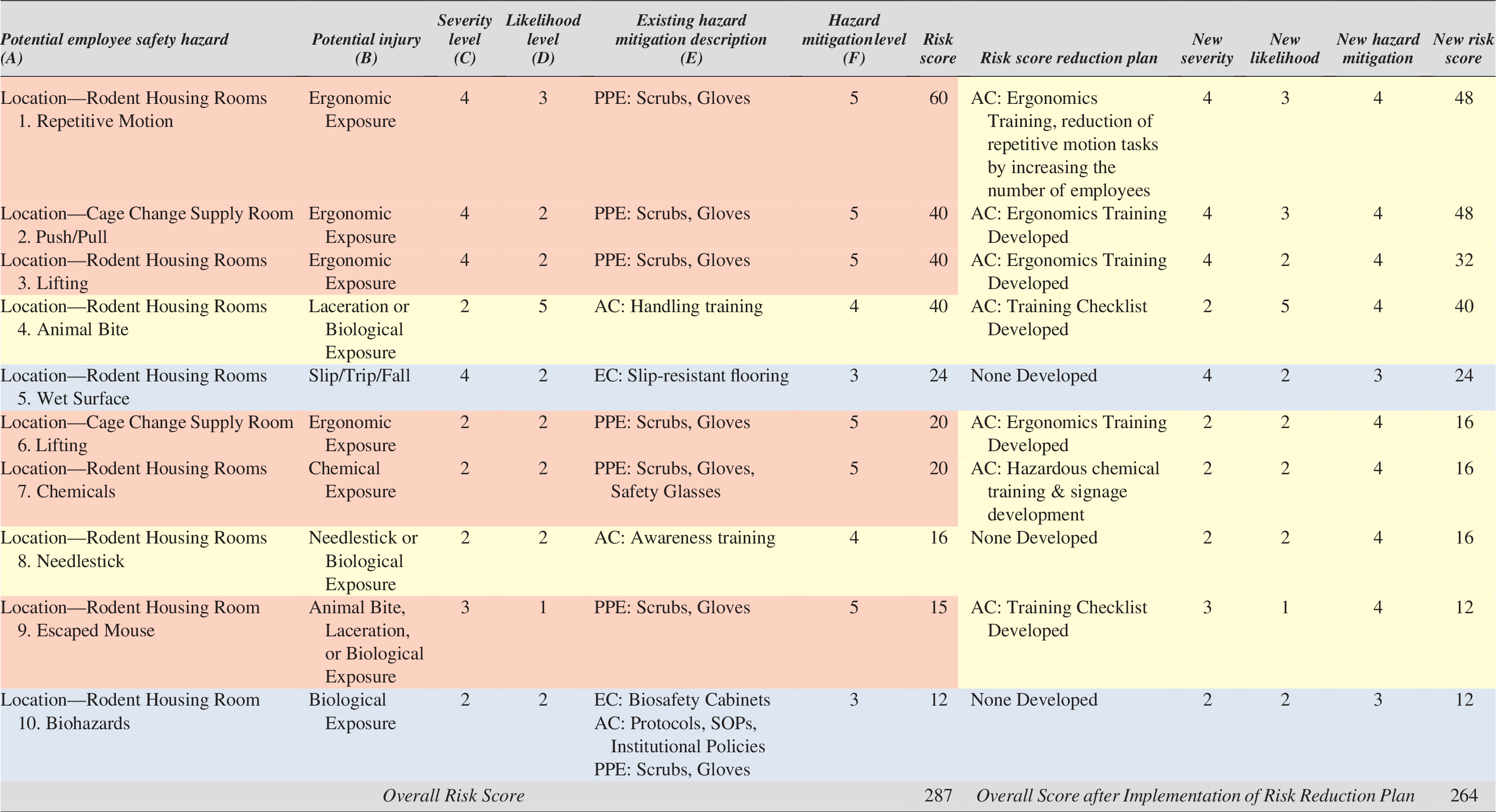
NOTE: SOP, standard operating procedure.
The hierarchy of controls ranks workplace safety measures from most to least effective. In the table, different colors represent the hierarchy of control present during the initial risk assessment. A change in color under the “Risk Score Reduction Plan” indicates that the department-specific employee safety team implemented a new risk mitigation strategy to reduce the overall risk score.
Elimination (E),  ; Substitution (S),
  ; Engineering Controls (EC),
  ; Administrative Controls (AC),
  ; Personal Protective Equipment (PPE),
  .
.
The top 9 risk scores (only 9 identified) in the small animal imaging area within the animal resources core facility and the impact of risk mitigation plans on the overall risk score
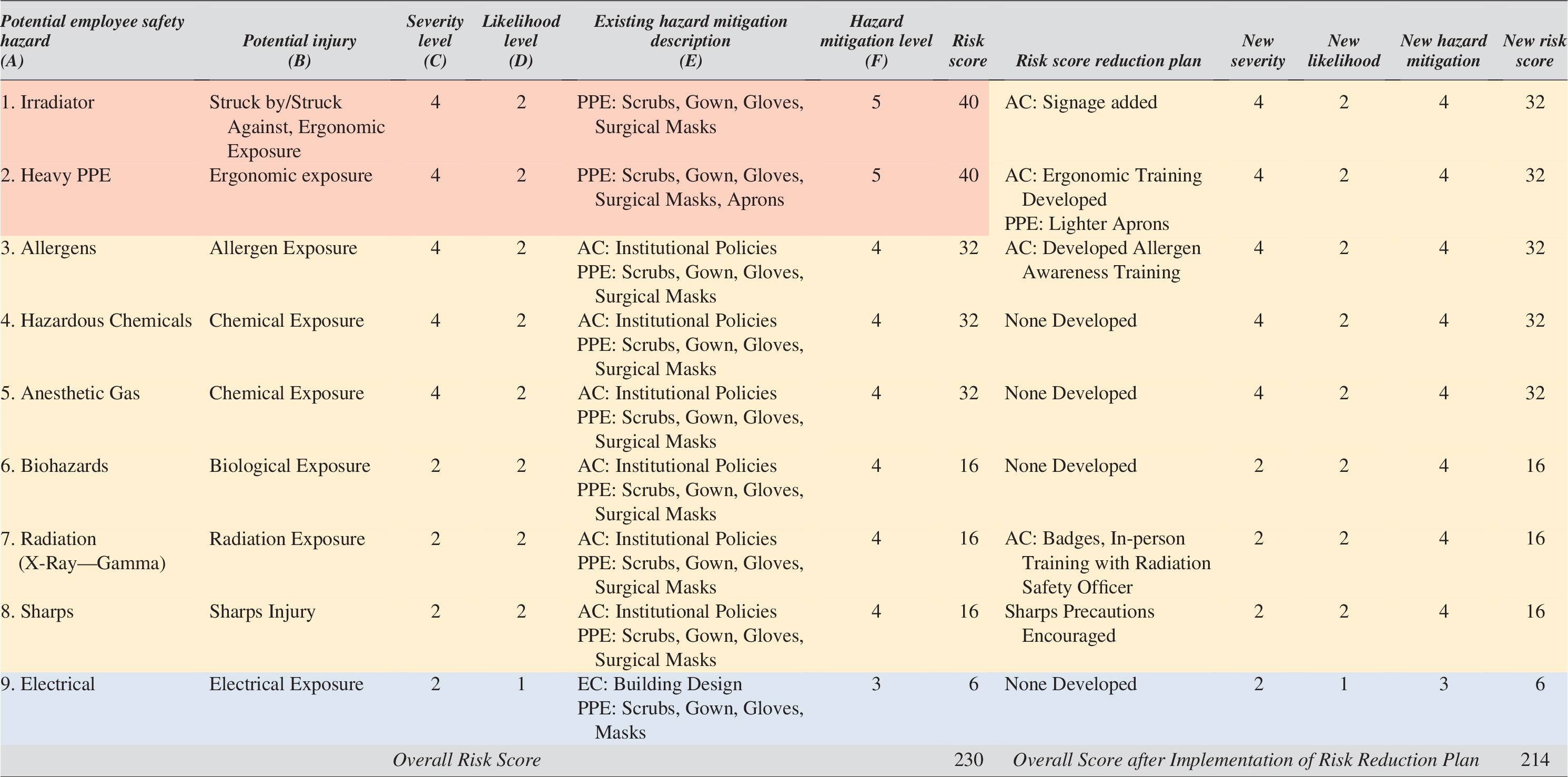
NOTE: The hierarchy of controls ranks workplace safety measures from most to least effective. In the table, different colors represent the hierarchy of control present during the initial risk assessment. A change in color under the “Risk Score Reduction Plan” indicates that the department-specific employee safety team implemented a new risk mitigation strategy to reduce the overall risk score.
Elimination (E),  ; Substitution (S),
  ; Engineering Controls (EC),
  ; Administrative Controls (AC),
  ; Personal Protective Equipment (PPE),
  .
.
For each identified risk, the department-specific employee safety team was tasked with discussing and implementing a new hazard mitigation level, when feasible, to reduce the overall risk score in the respective areas. The team utilized the hierarchy of controls to address these risks, including strategies such as elimination, substitution, engineering controls, administrative controls, and personal protective equipment (PPE). In certain instances, the safety team recommended enhanced training and improved PPE practices. While these measures, in some cases, did not alter the overall hazard mitigation level or risk score, they contributed to reduced incidents over the past five years.
The results presented in Figure 2 summarize the reductions in risk scores (% reduction) across various areas within the ARC facility following the implementation of risk mitigation plans (Tables 3–9). The Aquatic Husbandry area, which initially had the highest risk score (Table 3), demonstrated a 34.2% reduction (Figure 2). The Nonhuman Primate Husbandry area (Table 5) achieved the highest percentage decrease, with a 37.2% reduction in risk score (Figure 2). Similarly, the Cage Wash area (Table 6) exhibited a notable 30.9% decrease (Figure 2). The Large Animal Husbandry (Table 4) and Large Animal Surgery Imaging (Table 7) areas showed moderate reductions of 22.6% and 19.0%, respectively. These reductions were primarily driven by a combination of engineering and administrative controls (Tables 3–7). In contrast, the Rodent Husbandry area (Table 8) displayed a more modest 8.0% decrease, while the Small Animal Imaging area (Table 9) showed the smallest reduction of 6.9% (Figure 2). These areas implemented fewer administrative controls and training programs as part of their risk mitigation strategies (Tables 8 and 9).
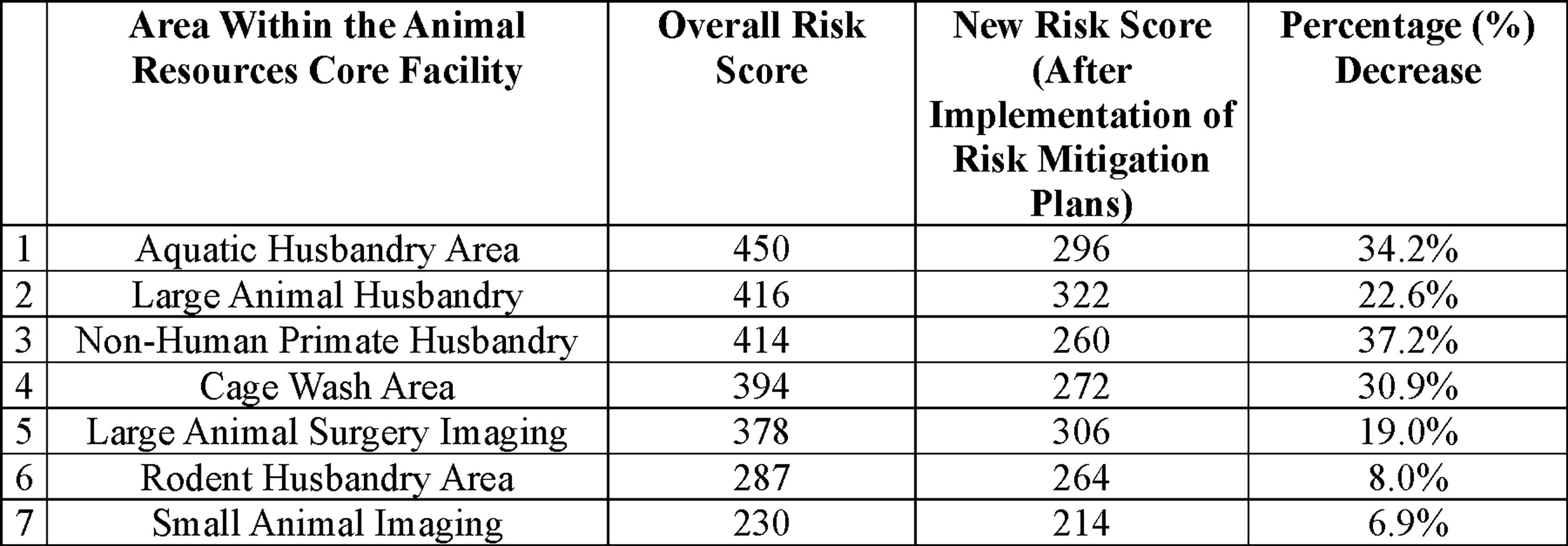
The Overall Decrease in Risk Scores (%) in the different areas within the Animal Resources Core Facility after implementation of Risk Mitigation Plans.
Introducing new hazard mitigation levels based on comprehensive risk assessments reduced risk scores in most facility areas. Tables 3–9 describe the hazard mitigation measures and their impact on the overall risk score. These documents are reviewed annually by the department-specific safety team to ensure accuracy, while the organization’s Business Process Improvement Team conducts yearly audits, fostering continuous program evaluation and improvement.
Initiatives That Lead to Improved Safety Culture
The primary goal of the ESB is to improve employee morale and the departmental safety culture. The ESB implemented several procedures that helped promote “Start with Safety” initiatives. Several initiatives were implemented in the department. The ARC Facility Director sent daily emails about safety topics. The managers in different areas had a safety huddle (∼2 min) at the beginning of every shift that highlighted some of the risks associated with the proposed work. If injuries and incidents happen, the ARC Facility Director will put a safety spotlight on that topic with possible suggestions for mitigating those within that department. Leadership encouraged near-miss reporting by giving staff incentives (meal deal cards, free ice cream or coffee coupons, etc.). The organization’s Business Process Improvement Team also recognizes safety coaches during the annual town hall meetings for reducing OSHA recordable or Days Away Restricted or Transferred incidents.
The department-specific safety team also improved safety visibility in the different departmental areas. One initiative implemented by the department is the “OSHA Day Counter” in the various locations within the animal facility that highlighted “Days post last OSHA event.” A pizza party or other celebration is scheduled when the day counter reaches over 100 days. Additionally, staff members from the ARC areas were recognized for reporting near misses and injuries during their monthly department-specific team meetings. Similarly, the organization’s safety team members host workshops throughout the year, and staff members get incentives for attending these workshops. All these initiatives over the last five years have played a crucial role in improving near-miss reporting by 933.33% and decreasing OSHA recordable injuries in the ARC facility (Figure 3). During this period, the total number of employees within the ARC facility increased by 93.5% (from 31 in 2019 to 60 in 2024). Although the number of staff working in the ARC areas has increased, the overall OSHA recordable injury numbers have decreased over the 5 years, indicating that the “Start with Safety” and “Make Safety Visible” initiatives have been indirectly helpful in promoting safety-related education in the department.
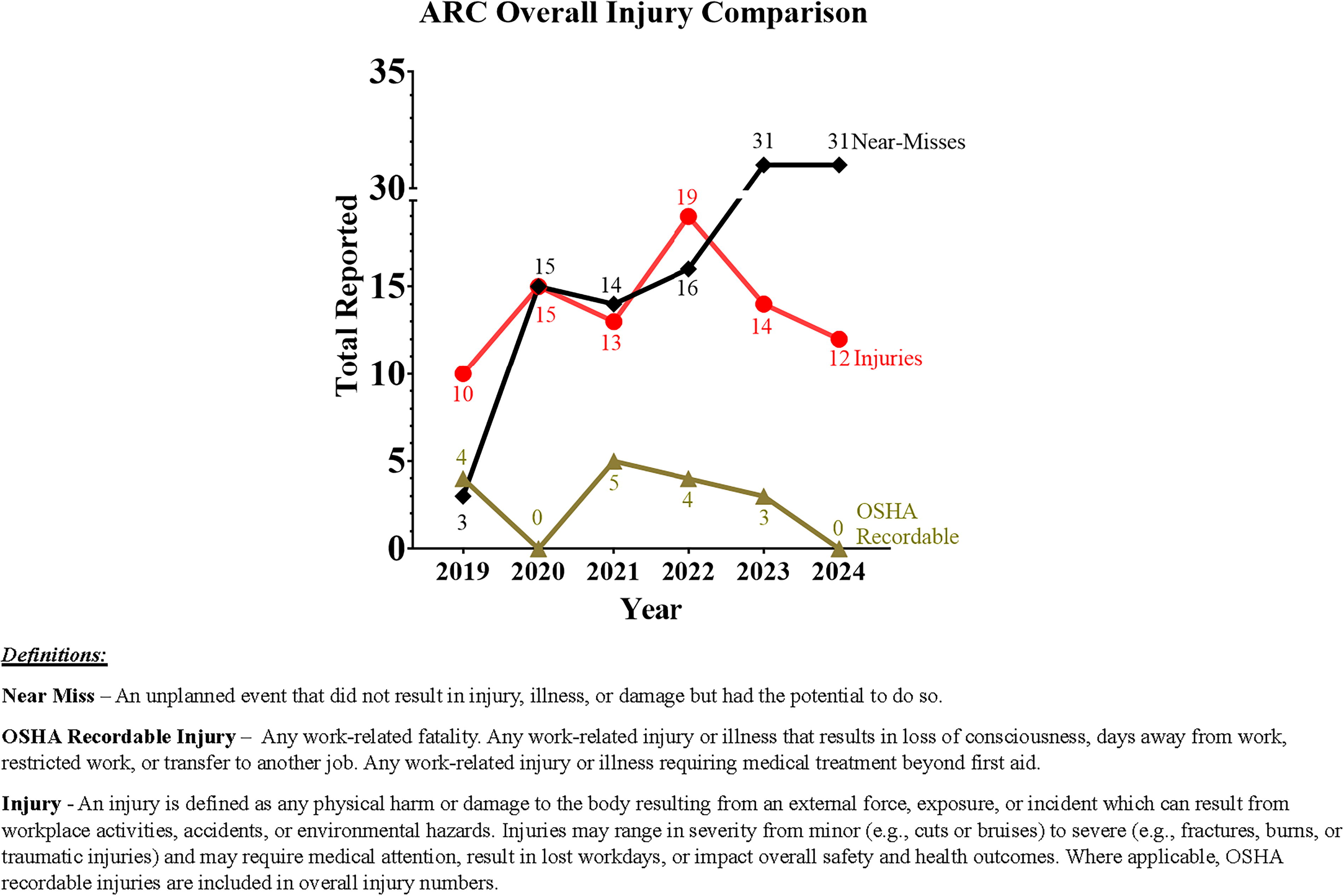
The total number of Occupational Safety & Health Administration recordable injuries, overall injuries, and near-miss reports from the Animal Resources Core (ARC) Facility from 2019 to 2024. The total number of new employees in ARC increased by 93.5% during the period.
Discussion
Health care research studies using an Animal Model System are the cornerstone for comparative and translational studies. 40 Staff members who work with research animals face unique physical and health hazards not usually encountered by clinical staff in the health care industry. 40 Animal facility staff face complex risks as they work with infectious agents, chemical agents, animals harboring zoonotic risks, and handling heavy equipment. 40 Developing practical risk mitigation tools is essential to prevent occupational exposure, protect animal welfare, and maintain containment to avoid environmental impact. 41,42 The primary objectives of implementing an ESB and forming a department-specific employee safety team in our animal facility are to reduce OSHA recordable injuries and, at the same time, improve the overall safety culture that promotes injury and near-miss reporting. Additionally, these tools aim to simplify workflows, ensuring that employees consistently follow safety protocols and have the necessary knowledge and resources to work safely by being the safety advocates in the department.
Operating a large animal facility that handles hazardous agents involves significant complexity due to balancing animal care, biosafety, and research objectives. Key challenges include stringent containment and decontamination protocols, specialized facility design to prevent cross-contamination, staff training in handling animals and hazardous materials, and adherence to regulatory standards. Implementing an advanced risk assessment tool, like the ESB, provides a proactive approach to identifying and controlling potential hazards by representing employees from different areas. Employees responsible for enforcing safety-related policies play a critical role in identifying possible gaps and working collaboratively with the organization’s safety team to address them. Their active involvement and on-the-ground perspective enable them to provide valuable insights into areas where new policies or procedural improvements may be necessary, thereby enhancing the overall effectiveness of the safety program. Team members who directly enforce safety measures are more motivated to uphold and monitor these practices daily. Employees representing each area and familiar with required safety practices are more likely to approach familiar colleagues about safety concerns or suggestions, fostering a supportive environment for continuous improvement.
This approach also provides a visual framework that integrates preventive and reactive controls, potentially reducing incidents by addressing root causes and having a direct impact during the procedure development stage. The risk score tool visually represents risks and controls to all staff within the department, making it easier for employees at all levels to understand the pathways through which incidents can occur and the importance of hazard mitigation controls at each stage. Additionally, the department-specific employee safety team aids in developing procedures that distinguish between preventive measures and mitigation, creating a more straightforward action plan for different risk scenarios for employees.
One of the main challenges in forming a department-specific employee safety team is the initial time commitment required for employees to become familiar with the ESB process. As this process requires comprehensively assessing all procedural risks within the department, it may initially require a higher time commitment from staff, leadership, and the organization’s research safety team. The department-specific employee safety team helps streamline the resources needed for safety initiatives and incident response processes by identifying and addressing gaps in preventive controls. Our organization determined that a full-time dedicated staff was required to support all safety-related initiatives within the ARC facility and manage the department-specific employee safety team. A dedicated full-time safety staff member can assist with continuously monitoring the progress of the ESB Initiatives, be a go-to resource for veterinarians and staff for new risk assessments, and, at the same time, develop a collaborative relationship with animal care staff. However, an institutional decision to support a full-time position should always be based on the animal program’s complexity and the risk assessment results.
The departmental safety team must track the number and severity of safety incidents along with near misses and conduct surveys to gather employee feedback on the tool’s ease of use and value to assess the risk framework’s effectiveness. Our organization discusses all injuries and near misses during the monthly meetings. These discussions improve clarity around mitigation steps and have helped boost compliance with safety protocols and foster a more robust safety culture. All reported incidents are investigated within 24 h in collaboration with our Animal Facility Training Team (four full-time employees), thereby reducing downtime associated with incidents as members from every area serve on the employee safety team. Regular reviews of the Risk Assessment and Mitigation data allow departments to refine tools continuously and, at the same time, initiate a new risk assessment process when new procedures are conducted or the scope of work changes within their areas. We have found that incentives help encourage reporting near misses and can help create a proactive safety culture where employees feel motivated and empowered to identify and report potential hazards without fear of retaliation and judgment. However, such incentive programs should be designed carefully to avoid unintended consequences, such as underreporting actual incidents to gain rewards or submitting a near miss just for an incentive award. A way to mitigate this is for the institution's Safety Department to develop a collaborative relationship with staff that encourages follow-up on near-miss reporting and shares how reporting can lead to specific safety improvements to demonstrate the value of reporting incidents. Additionally, the management should lead by example by promoting and actively participating in the reporting process. Visible leadership commitment reinforces the importance of reporting.
We found that implementing an ESB and forming a department-specific employee safety team in the animal facility improved the overall risk assessment process in high injury-prone areas, helped develop new risk mitigation plans, and encouraged the departmental staff to create new safety-related initiatives that impacted the safety culture. Additionally, this initiative helped increase near-miss reporting from staff members, reducing OSHA recordable injuries within the department. Implementing an ESB represents a significant step toward a more resilient risk management approach. This approach can help teams reduce risks and injuries by noticing trends, e.g., repeated near misses with a particular procedure or machine, and it can foster a proactive safety culture and demonstrate a commitment to employee safety, employee communication, and operational excellence. Engagement from leadership to staff members, which is critical for forming a departmental-specific employee safety team, is also key to realizing the full benefits of this approach. When each department champions a culture of safety, it reinforces the message that safety is everyone’s responsibility.
Conclusion
This report outlines a risk-based program for reducing overall risk and improving the overall safety culture within an animal facility. Where applicable, our department-specific risk reduction framework outlines practical recommendations that can be adapted to various environments. The procedures and strategies outlined here should serve as guidelines for establishing similar safety programs at other organizations to meet institution-specific standards for reducing overall risk and decreasing employee injuries. Developing comprehensive risk assessment and mitigation tools is critical to safeguard employees working in an animal facility. Organizations prioritizing employee safety and training build a safety culture that will help minimize risk. Future enhancements may include adapting training approaches to ongoing challenges in animal research facilities and keeping staff members on the committee engaged, leading to a more robust safety culture.
Footnotes
Acknowledgment
The authors thank Melody Davis at the Abigail Wexner Research Institute at Nationwide Children’s Hospital for critically reading the article.
Authors’ Contributions
S.G. and K.C.: Conceptualization (ideas; formulation or evolution of overarching goals for implementing the Employee Safety Bundle); J.C., S.P., and L.G.: Methodology (Implementation of the Employee Safety Bundle in the Animal Resource Core Facility); H.M. and K.B.: Development of Employee Safety Bundle and Risk Assessment Tool; S.G. and K.C.: Formal analysis; S.G. and L.G.: Writing—original draft (preparation, creation, and/or presentation of the published work, explicitly writing the initial draft; K.C.: Supervision (oversight and leadership responsibility for the research activity planning and execution, including mentorship external to the core team); J.C., S.P.: Project administration.
Disclaimer
The views presented in this manuscript are those of the authors and do not necessarily reflect the position of the associated institutions.
Authors’ Disclosure Statement
The authors declared no potential conflicts of interest regarding this manuscript’s authorship, and/or publication.
Ethical Compliance
Not applicable, no human subjects research was included in this study.
Funding Information
This study did not receive any funding for authorship and publication.