






Abstract
Introduction:
Threaded conical centrifuge tubes are ubiquitous in biological laboratories and are frequently used for the storage/transport of potentially biohazardous samples. However, limited data are available on how frequently and from where these tubes leak. These data are valuable for laboratory biorisk management and to inform future studies on risks arising from the routine use of laboratory consumables.
Methods:
The frequency of leaks from threaded conical centrifuge tubes was tested using a Glo Germ solution as a tracer. Conical tubes (15 and 50 mL) from several brands were filled, inverted, and placed on their side on the benchtop. After 1 h, the presence or absence of leaks on the benchtop surface, tube threads, and exterior was recorded.
Results:
We observed that liquid leaked out of tubes that were apparently properly threaded in 2% of 15 mL tubes (confidence interval [95% CI] 1.4–2.6) and 1.4% of 50 mL tubes (95% CI 0.2–1.5). After opening, liquid was found on the threads on the outside of the tube in 20% of 15 mL tubes (95% CI 10–31) and 14% of 50 mL tubes (95% CI 1–28). We did not find sufficient evidence that differences in leak rates among brands were practically significant.
Conclusions:
The fact that leaks were not uncommonly observed from conical centrifuge tubes suggests that mitigations for any hazard posed by a leak should be a component of every biorisk management strategy for protocols involving the manipulation of hazardous substances in these tubes. Further research should be conducted on other activities that could cause tubes to leak (such as centrifugation or vortexing) and should be completed to understand the risks associated with this consumable. Research into the costs and benefits of mitigating the risk of leaks from conical tubes is recommended.
Introduction
One of the primary aims of biosafety research in microbiology laboratories is to reduce the risks of exposure of workers and the community to infectious agents. One mode of exposure is from standard microbiology apparatuses and procedures, which have previously been shown to routinely generate splashes and aerosols that can pose biosafety risks to personnel. Previous studies have focused on the use of common devices such as centrifuges and mixers, as well as procedures such as pipette mixing, serial dilution, plating, and opening sample tubes.1–4
Conical centrifuge tubes are frequently used for sample processing, storage, transport, and testing, including for potentially biohazardous samples, yet little research has been conducted into their reliability. Some studies have suggested that liquids can leak through the threaded cap and put personnel at risk, though the authors of these studies did not cite empirical evidence to back their claims.5–7
Limited research has been conducted into the potential risks of using conical centrifuge tubes, specifically the frequency of leaks. Whitwell et al. studied the hazards to laboratory staff from centrifuging screw-capped containers. 5 Their research found that fluid from threaded centrifuge tubes can escape during centrifugation, extending in a spray over an area of 7 feet when spun in an angle centrifuge.
Further investigation found that the cause of the contamination was fluid trapped between the threads of the bottle and cap, which can happen either through careless filling or after uncapping and recapping a tube that has been shaken or inverted, both common occurrences in a microbiology laboratory. These results from Whitwell et al. were later confirmed by Kanner, who similarly observed leaks when the threads of centrifuge tubes were contaminated with tracer solution. 6
After implementing several safety measures, including being careful not to wet the tube rims during filling, a leakage rate of 0.6% was observed during centrifugation. In another study, Rutter and Evans examined the propensity of commonly-used laboratory apparatus to produce aerosols of infected blood, including screw-capped tubes. 7
These were filled, inverted, and then the lids were removed and replaced several times in front of an air sampler. After the tube had been recapped more than twice, a bloody froth increasingly contaminated the outside of the tube and lid and aerosols were detected by the air sampler. As described, previous research into conical centrifuge tube leaks was generally qualitative and observational.
Biosafety recommendations and guidance documents generally state that threaded tubes are safer than plug-top or snap-top tubes, which can produce aerosols or splashes when opened.4,8 For sample transfer within the laboratory, the World Health Organization (WHO) Laboratory Biosafety Manual recommends using screw-capped tubes over ones with snap-on lids. 9
When working with potentially hazardous or infectious material, the Canadian Biosafety Handbook and other guidance documents specifically advise using externally threaded tubes to minimize lid surface contamination.10–12 Similar language can be found in the recommendations from a CDC-convened Biosafety Blue Ribbon Panel, which states that plug-top tubes can produce aerosols and splatter when opened, and that using screw-cap tubes can reduce this risk. 8 However, no guidance documents were identified that specifically discussed the safety of externally threaded centrifuge tubes or provided recommendations on measures to reduce or eliminate the occurrence of leaks.
The objective of this study was to investigate how often conical centrifuge tubes leak and the sources of leaks. We also sought to determine whether the rate of leaks differed between brands of tube. The data obtained from this study can be used to inform future guidance and best practices, as well as biosafety risk assessments of the potential for inadvertent exposures in the laboratory. An advantage of this study compared with previous research is the design and the use of modern plastic tubes as opposed to glass tubes used previously.
The total number of tubes tested in this study (8064) is similar to the total sample size in Kanner (6000). 5 However, our study involved filling the tubes, carefully determining whether the tubes were threaded properly, inverting the tubes, and laying them on the side to determine whether leaks occurred. Centrifugation can put stress on the material of the tube and force leaks where one would not have occurred otherwise. Only our study can be used to determine risks arising from conical tubes when used for storage or shipment.
Also, the previous study was an observational report, and our study controlled for fill volume and carefully eliminated other sources of fluid that could be counted as a leak.
Materials and Methods
Experimental Procedures
The purpose of this study was to study the failure of centrifuge tubes under a commonly observed condition that could cause leaking (inversion and falling on their side) with a method that is reproducible. In addition, we hoped to show that this study could be conducted in a relatively low-resource setting (a small, liberal arts college) to demonstrate that meaningful biosafety research can be conducted outside of major research institutions.
To promote reproducibility, we chose an accident condition that would force liquid in the tube to contact the joint between the lid and the tube (where leaks were expected to occur) yet could be repeated exactly by a variety of undergraduate students. Other studies our group has conducted (manuscript in preparation) have demonstrated that a change in contact angle between a vessel and a surface of as little as 5° during a drop can greatly change the chance (and energy) of a leak.
Our study simulates mixing by inversion that could cause leaks, or slow leaks caused by a tube being knocked over during an experiment or while stored in a refrigerator.
A 1-to-4 dilution of Glo Germ gel with water was prepared. Glo Germ, 13 which contains plastic particles visible under an ultraviolet light (blacklight), simulates the presence of microorganisms, and it was used for the identification of tube leaks on the benchtop surface. The Glo Germ solution was stored at room temperature and re-suspended with a stir plate before each use.
In total, 4500 15 mL conical centrifuge tubes from five brands (Celltreat, Corning, Globe Scientific Red/Blue, Thermo Fisher Scientific) and 3564 50 mL centrifuge tubes from five brands (Celltreat, Corning, Falcon, Globe Scientific, MTC Bio) were tested for leaks. These brand names were redacted in the presentation of the results given next, because we did not have confidence that the observed differences were statistically different enough to justify claims of superiority or inferiority between brands.
Overall, 500–1000 tubes were used per brand for both conical tube sizes (Tables 2 and 3). Before filling the centrifuge tubes, the benchtop surface was covered in black paper and all surfaces and equipment were checked with a blacklight for visible Glo Germ contamination. At the beginning of each experimental run, the date and time were recorded, along with the tube brand, tube size (15 or 50 mL), and the names of the filler, observer, and recorder.
All project experimenters were undergraduate student researchers, with at least some previous experience in the laboratory and possessing basic knowledge in general research techniques and methodologies. In total, 12 undergraduate researchers participated in this experiment.
The filler then filled the conical centrifuge tubes to a predetermined volume (10 mL for the 15 mL tubes and 20 mL for the 50 mL tubes). The volume was chosen to emulate lab usage, and not to be over, or under filled. The volume was also chosen so that it could reach the cap when the tube was laid on its side. After filling each tube, the filler checked the outside of the uncapped tube with a blacklight for visible Glo Germ and cleaned the tube with a Kimwipe until contamination could no longer be detected.
Then, the filler capped the tube, noting whether it took more than one attempt to thread the screw cap. Each tube was then inverted twice and placed on its side on the black paper covering the benchtop surface, six inches away from the other tubes. After filling 20 tubes, the gloves of the filler were checked for visible Glo Germ. If contamination was detected, the filler donned a new clean pair of nitrile gloves and all recent tubes were rechecked for external contamination using the same method as described earlier. The filled centrifuge tubes were allowed to sit on their sides on the benchtop for 1 h, undisturbed.
After 1 h, the observer picked up each tube and wiped it with a Kimwipe from cap to bottom, which was then checked with a blacklight for Glo Germ contamination. Next, the cap was removed, and the threads were wiped with a Kimwipe and checked for contamination. The observer also checked the black paper on the benchtop surface for leaks. For each tube, the presence or absence of leaks on the tube threads, exterior, and paper was recorded by the recorder.
Next, we attempted to infer whether the leaks observed were due to mis-threading of the cap/thread contamination or were “true tube leaks” (TTLs). A TTL was defined as a tube with an observed leak on the tube exterior but where there was no note indicating operator error.
Statistical Interpretation
The mean rates of leaks observed on the conical centrifuge tube threads, exterior, and paper on the benchtop surface were calculated for each of the different brands tested. As discussed in a previously published paper that also uses several different experimenters, 4 we used the emmeans R package to calculate estimated marginal means (EMMs) of error rates by brand.14,15 The goal of an EMM is to describe the error rate of a typical experimenter on a typical workday.
Both experiments had similar challenges in their design, which were an unbalanced allocation of experimenters to workdays along with substantial variation in the recorded error rate by experimenter. Ignoring this variation by using the simple average of leak rates by brand may bias the estimate, thus we considered models that included experimenter along with other covariates. This approach is expected to reduce the bias by estimating the difference in leak rates between brands after adjusting for differences between experimenters. 4
Unlike in our previous study, we had enough overlap between day of week and experimenter to include the day of week in our models. This step mitigates the risk that differences in error rates between brands are really being driven by differences in error rates across workdays. The strongest observed difference was a much higher incidence of true tube leaks for 50 mL tubes on Friday, and our model accounts for the possibility that tubes tested on Friday may be more prone to leaking due to some external factor. However, identifying differences in error rates between workdays was not the main goal of this study, and so we did not attempt to verify the statistical significance of this difference.
Additional testing would be needed to determine whether day of the week significantly affects studies of the performance of laboratory consumables.
In some of the results given next, the raw average and EMM are very similar, but not the same. Some observations were removed due to experimenter error, or because relevant covariates were unknown. If the selected model was a logistic regression with no other covariates besides tube brand, the simple average and EMM should be the same. This was the case for TTL when considering 15 mL tubes.
Our statistical work focused on rates of thread leaks and TTL for the 15 and 50 mL datasets. The analysis was separated by tube sizes since each size had a different set of brands. We calculated a set of models (nine for thread leaks and eight for all other measures) and chose the model with the best Bayesian Information Criterion value 16 that passed a goodness-of-fit test and converged numerically.
These models included tube brand with different combinations of the following variables: day of week, number of thread attempts, and the experimenter effects. This model selection step potentially invalidates confidence intervals (CIs), and as with the previous microfuge study, we used a simulation study to calibrate the length of our intervals. A CI from this study can be interpreted as “what relative risk values are indicated by the experiment, given our assumptions,” which should not be confused with the results of a hypothesis test.
We tested the null hypothesis of no difference in error rates between brands for both tube sizes and two measures (thread leaks and TTL) and were able to reject it for two comparisons. However, we did not have sufficient confidence in the model or the strength of the effect size to justify a claim of superiority for one brand over the other. For each of the four analyses, the probability of falsely rejecting the null in any comparison, the family-wise error rate, was <5%. Future tests to establish superiority, inferiority, or equivalence of brands should prespecify the test. For more details, please see the statistical supplement.
Results
Our results do not indicate that any brand is materially inferior to the others across all measures of error rates.
Table 1 shows an estimate and 95% CI for the overall leak rate for each tube size and two primary error types. Error rates between the two tube sizes seem to be comparable but this was not tested. Overall, our results suggest that carefully threaded tubes that were not contaminated on the outside leak 1–2% of the time they are filled. Similarly, liquid seeps onto the outer threads of the tube about 15% of the time under similar circumstances.
Estimates and confidence intervals for the overall average leak rate across brands
Results for 15 mL Tubes
Table 2 shows the summary statistics for the 15 mL tubes. Ten tubes were excluded from brand A-15, with only 1 tube excluded among the other 4 brands. Across all brands, 3.6% of 15 mL tubes needed to be threaded more than once. The estimated rates of leaks on the threads ranged from 0.11 to 0.26. The estimated rates of true tube leaks ranged from 0.012 (1.2%) to 0.034.
Number of 15 mL conical centrifuge tubes tested for each brand and normalized (estimated marginal means) and raw (in parentheses) rates of leaks on the tube threads, and true tube leaks
Values for the thread leak rate are rounded to the second decimal place.
Our key measurement of difference between brands is the relative risk. The relative risk is the ratio of the EMMs of two methods. For example, the brand B-50 had an EMM of 0.20 for thread leaks whereas the brand C-50 had an EMM of 0.11. The estimated relative risk of C-50 versus B-50 for thread leaks is ∼0.5 (Figure 4). Two brands with equal EMMs would have a relative risk of 1.
Figures 1 and 2 show the inferential results for the TTL and thread leak rate for 15 mL tubes. Some comparisons did not indicate any informative range of relative risk values. For example, for TTL, the D-15 versus B-15 CI stretches from almost 0.3 to almost 3.4. In this case, little difference in performance is likely to be observed if one tube were used versus another. The statistically significant comparison between E-15 and C-15 has a lower 95% CI bound at 1.09.
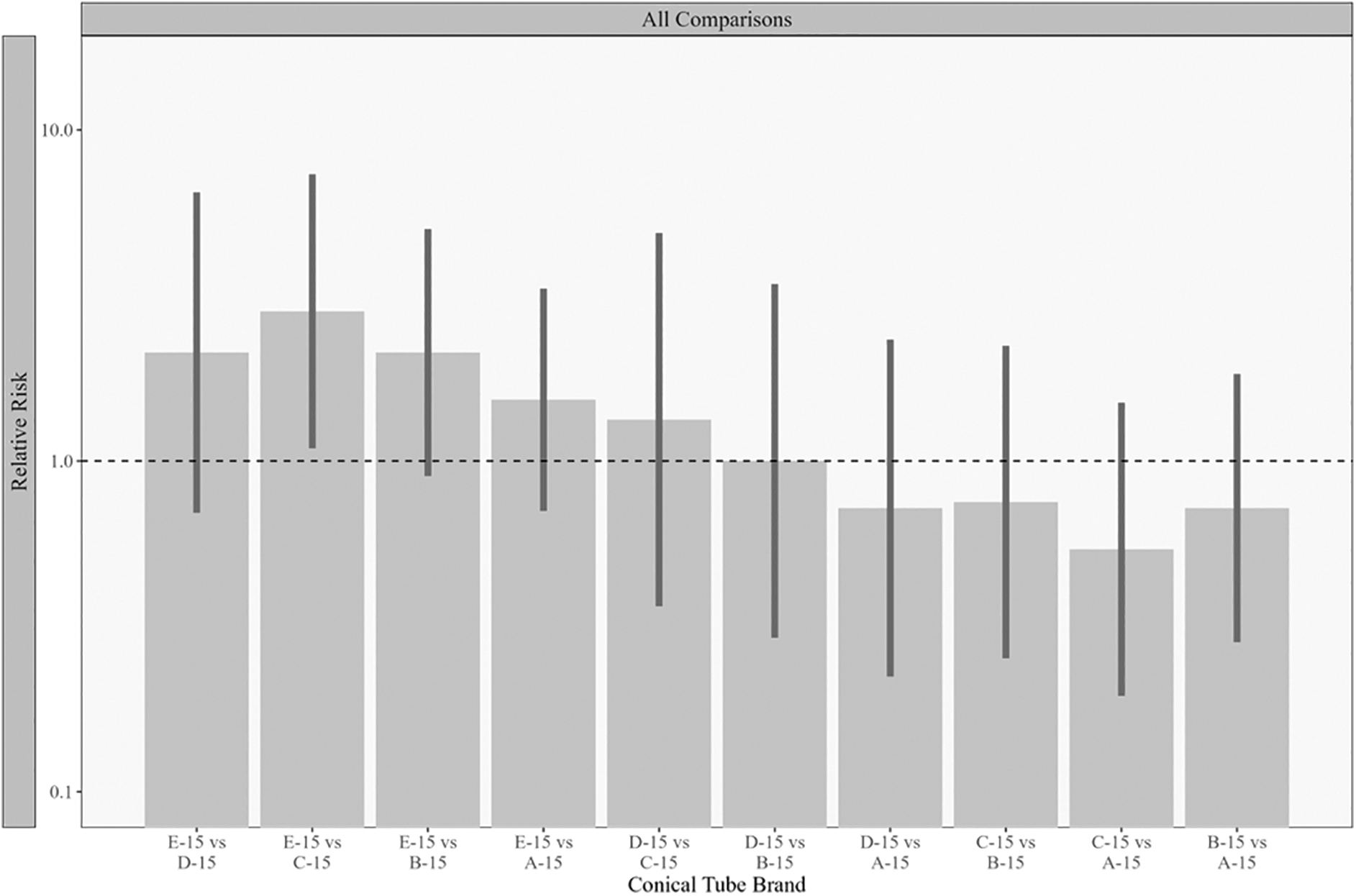
Testing for significant differences between brands for true tube leak (15 mL). Inferential results for the relative risk of a TTL from the pairwise comparison of five brands (A–E) of 15 mL conical centrifuge tubes. The y-axis is on a log scale. Solid vertical bars are confidence intervals for the relative risk that keep the FWER below 5%. Bars that reach the top of the plot were cut off for readability. When the error bars overlap 1 (dotted line), there is no indication of a statistical difference between brands. For example, the relative risk of the brands E-15 versus D-15 is the ratio of their EMMs: 0.034/0.016, which is 2.125. The lower and upper bound of the confidence interval for this pairwise comparison are 0.7 and 6.5. For the interpretation and justification of these values, refer to the methods section and the statistical supplement. EMMs, estimated marginal means; FWER, family-wise error rate; TTL, true tube leak.
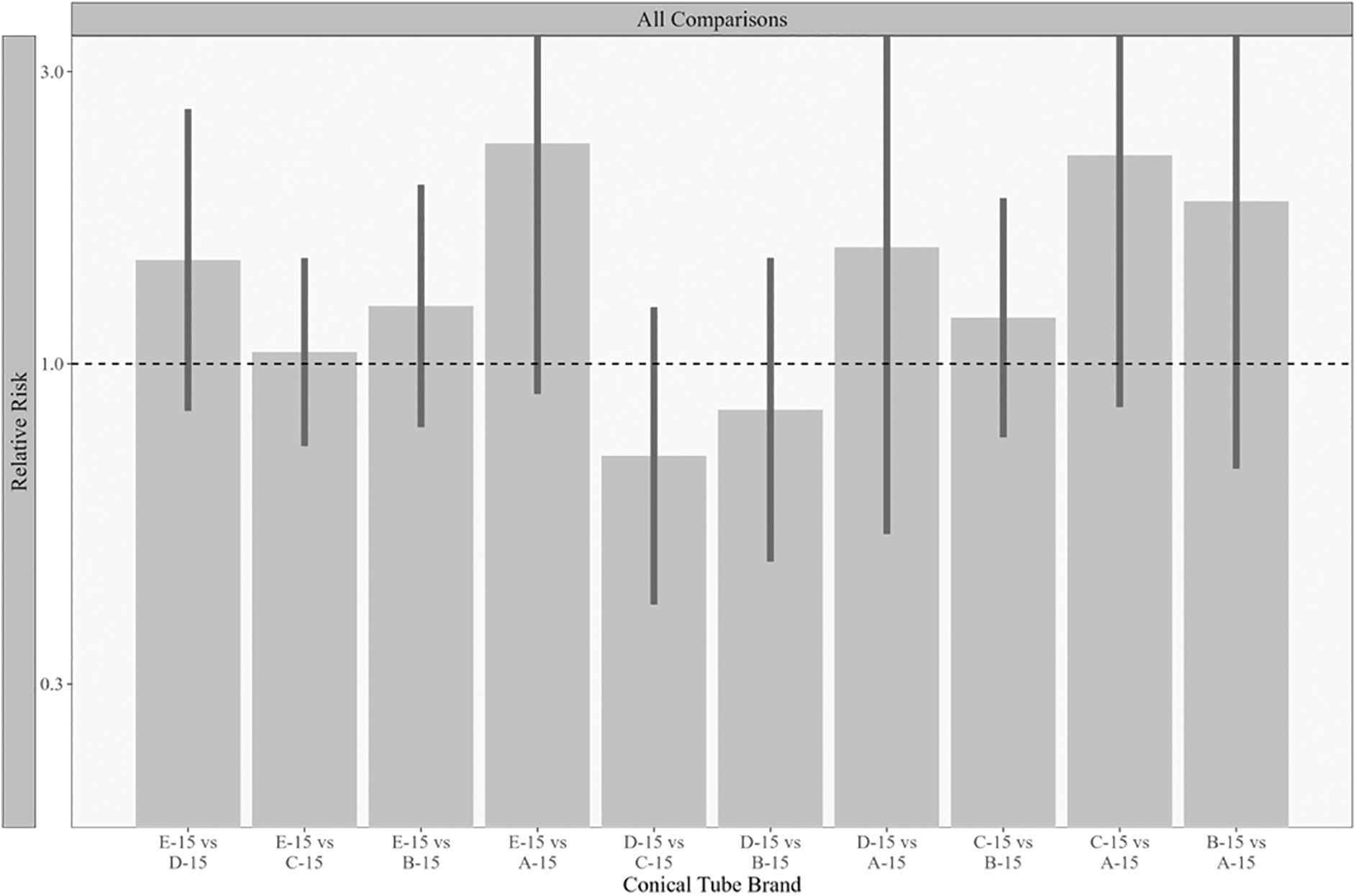
Testing for significant differences between brands for thread leak (15 mL). Inferential results for the relative risk of a thread leak from the pairwise comparison of five brands (A–E) of 15 mL conical centrifuge tubes. The y-axis is on a log scale. Solid vertical bars are confidence intervals for the relative risk that keep the FWER below 5%. Bars that reach the top of the plot were cut off for readability. When the error bars overlap 1 (dotted line), there is no indication of a statistical difference between brands. For example, the relative risk of the brands E-15 versus D-15 is the ratio of their EMMs: 0.26/0.175, which is ∼1.47. The lower and upper bound of the confidence interval for this pairwise comparison are 0.84 and 2.6. For the interpretation and justification of these values, refer to the Methods section and the statistical supplement.
Results for 50 mL Tubes
The rates of leaks for 50 mL tubes were of the same magnitude as the rates for the 15 mL tubes. There were some large observed differences between the EMMs and simple brand averages for the thread leak rate (see the Supplementary Data for more details). Like with the 15 mL tubes, the pairwise comparisons for relative risk were not statistically significant between brands (Figures 3 and 4), with one exception, although this result barely crossed the threshold of significance. Across all brands, 3.5% of tubes needed to be threaded more than once.
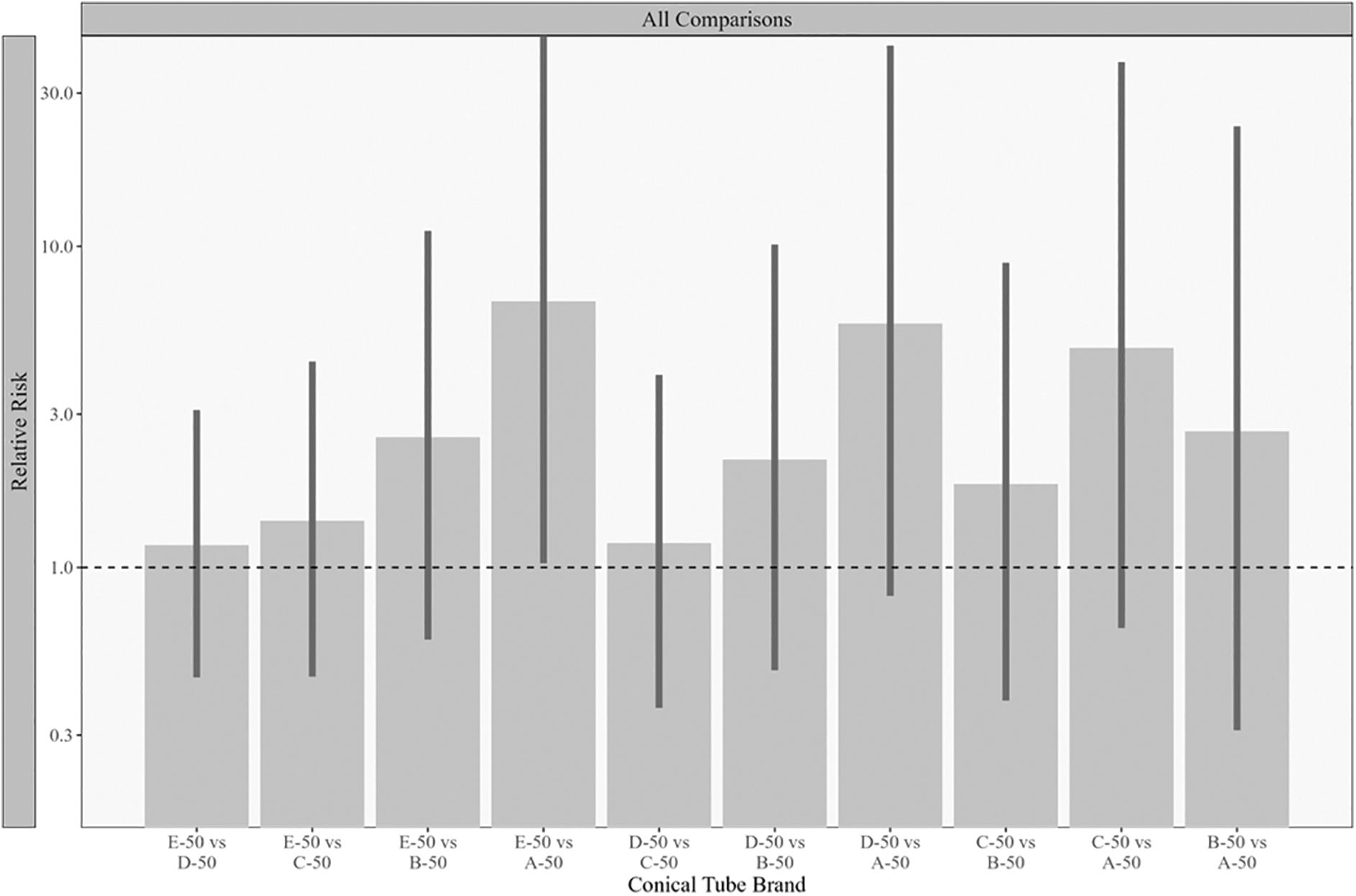
Testing for significant differences between brands for true tube leak (50 mL). Inferential results for the relative risk of a TTL from the pairwise comparison of five brands (A–E) of 50 mL conical centrifuge tubes. The y-axis is on a log scale. Solid vertical bars are confidence intervals for the relative risk that keep the FWER below 5%. Bars that reach the top of the plot were cut off for readability. When the error bars overlap 1 (dotted line), there is no indication of a statistical difference between brands. For example, the relative risk of the brands E-50 versus D-50 is the ratio of their EMMs: 0.02/0.019, which is ∼1.02. The lower and upper bound of the confidence interval for this pairwise comparison are 0.45 and 3.09. For the interpretation and justification of these values, refer to the Methods section and the statistical supplement.
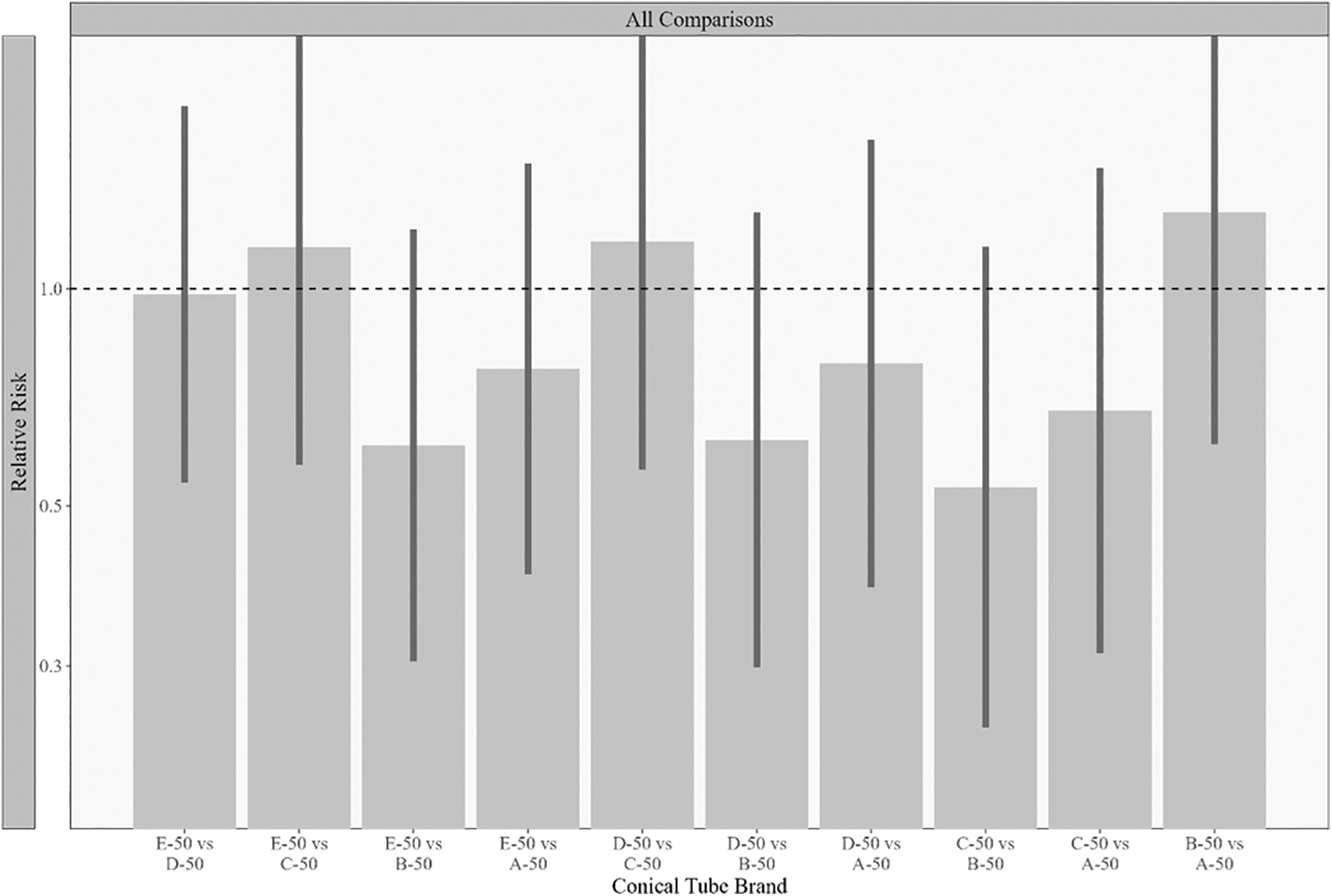
Testing for significant differences between brands for thread leak (50 mL). Inferential results for the relative risk of a thread leak from the pairwise comparison of five brands (A–E) of 50 mL conical centrifuge tubes. The y-axis is on a log scale. Solid vertical bars are confidence intervals for the relative risk that keep the FWER below 5%. Bars that reach the top of the plot were cut off for readability. When the error bars overlap 1 (dotted line), there is no indication of a statistical difference between brands. For example, the relative risk of the brands E-50 versus D-50 is the ratio of their EMMs: 0.124/0.126, which is ∼0.98. The lower and upper bound of the confidence interval for this pairwise comparison are 0.54 and 1.79. For the interpretation and justification of these values, refer to the Methods section and the statistical supplement.
In Table 3, the estimates for the TTL rate are smaller than the raw averages across all five brands because the chosen model for TTL used day of week as a control variable. Thursday and Friday had the most observations, and the raw average on Friday was much higher than for the other days. Since the EMM starts with a rate for each day, then takes the average of these per-day rates, the overall error rate for TTL is reduced toward zero for 50 mL tubes.
Number of 50 mL conical centrifuge tubes tested for each brand and normalized (estimated marginal means) and raw (in parentheses) rates of leaks on the tube threads, tube exterior, on the paper and true tube leaks
Values for the thread leak rate are rounded to the second decimal place.
Discussion
After inversion or being laid on their side, leaks were observed from 15 and 50 mL conical centrifuge tubes not uncommonly. Both procedures occur not uncommonly in the laboratory (the former, intentionally, to mix the contents; the latter, accidentally, when stored tubes are knocked over in a cold room or refrigerator). The tube threads were observed to be contaminated with Glo Germ in 11–26% of cases for 15 mL tubes and 11–20% of cases for 50 mL tubes.
As investigated by Whitwell et al. and confirmed here, contamination can occur after uncapping and recapping a tube that has been shaken or inverted. 5 Our results demonstrate that this potential contamination source should continue to be a focus of risk management training, even though the design of tubes has changed since Whitwell published his work. For example, emphasis should be placed on not touching the rim of the tube and on carefully observing the tube for any drips starting to form on the outside.
TTLs, where contamination was found on the tube exterior, were much more infrequent, observed in 1.2–3.4% of cases for 15 mL tubes and 0.3–2% of cases for 50 mL tubes. While we were unable to confirm that the TTLs were due to defects in the tubes, rather than undetected splashing or glove contamination, the rate of TTLs observed was very similar to the centrifuge tube leakage rate of 0.6% reported by Kanner after his laboratory implemented measures to mitigate leaks from contaminated threads. 6
Our results demonstrate that, even when not subjected to the stress of centrifugation, conical tubes may leak not infrequently and means to mitigate these leaks should always be used. Mitigations include storing the tubes with an absorbent material should they be knocked over during storage or using parafilm on the outside of the tube. Moreover, even though our study was completed with modern, plastic tubes (instead of glass tubes used in the older studies), the leakage rate was remarkably similar. Our results also show the value of decades-old biosafety results. Even though Kanner did not provide much in the way of experimental detail that supported his claim, his finding was extremely similar to our own, further supporting the value of these older reports in the absence of modern, carefully controlled experiments.
In this experiment, we examined a variety of brands, including those that are more expensive versus less expensive. We also examined brands that claim to have extra inherent safety features (e.g., an extra lip in the lid) to prevent leaks. As shown, our results did not demonstrate that any brand was clearly superior to any other.
This paper demonstrates that very simple methods could be used to empirically determine the rate of failure of common laboratory consumables. A variety of containers and vessels are used in the microbiology laboratory and this experiment simply tests one of the most commonly used. These experiments are extremely low cost and can be done with undergraduate-level researchers, demonstrating that any scientific environment is appropriate for this research.
For this reason, we hope that this experiment is an example that can be followed by non-traditional researchers in the biosafety field. To avoid the need for complex statistical tests, future researchers should ensure that brands tested are normalized across individual experimenters and days of the week.
Given the frequency with which conical centrifuge tubes are used to manipulate and store potentially hazardous materials in the laboratory, further research should explore other activities that could lead to a leak. Vortexing is another common means of mixing tube contents, and one that is more energetic and so could cause more frequent leaking than we observed.
Leaking during centrifugation could be explored, where variables such as fill volume, centrifuge speed, and rotor type could be controlled to understand exactly what conditions mitigate risk of leaks the most when working with hazardous materials.
Footnotes

References
Supplementary Material
Please find the following supplemental material available below.
For Open Access articles published under a Creative Commons License, all supplemental material carries the same license as the article it is associated with.
For non-Open Access articles published, all supplemental material carries a non-exclusive license, and permission requests for re-use of supplemental material or any part of supplemental material shall be sent directly to the copyright owner as specified in the copyright notice associated with the article.
