






Abstract
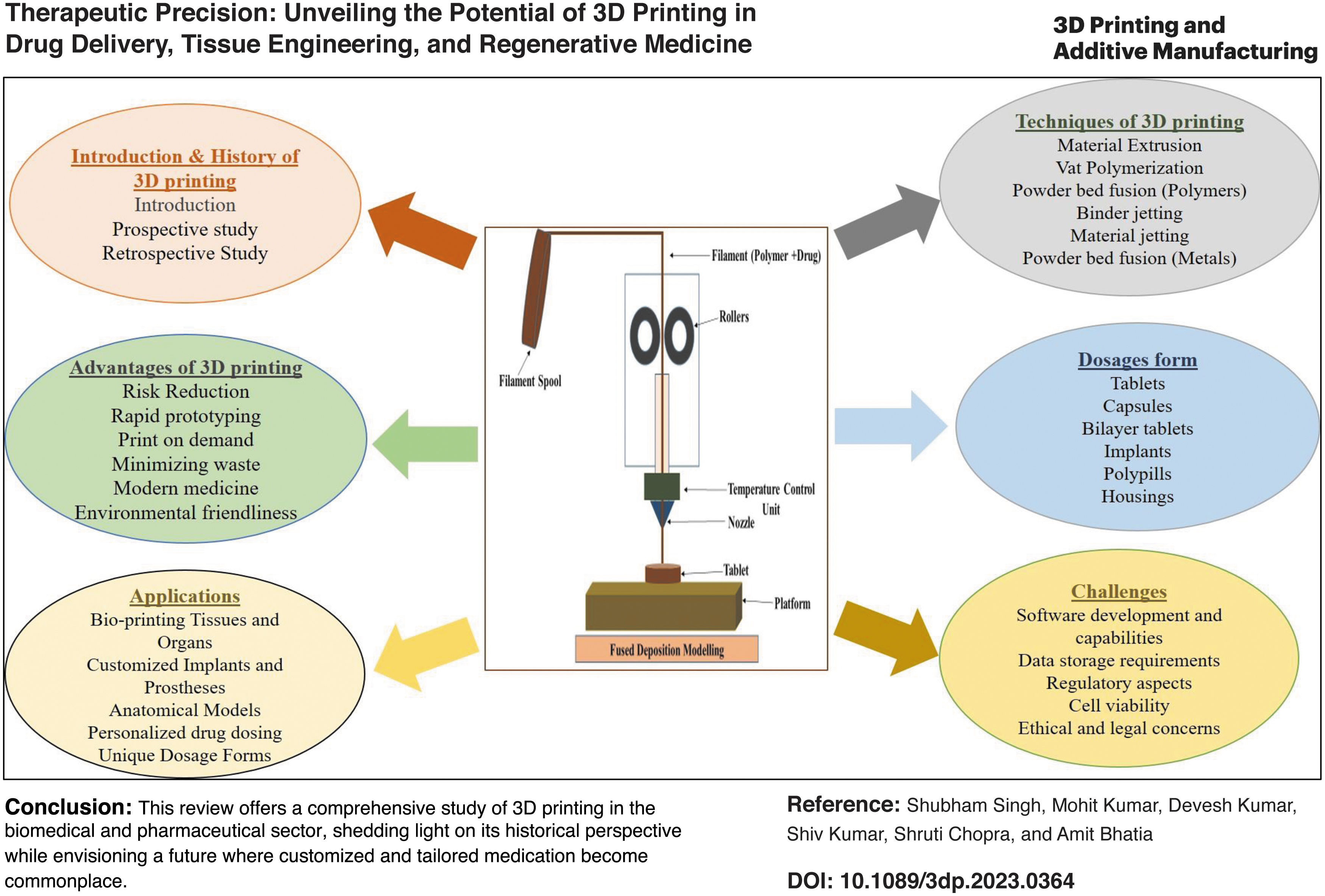
3D printing has emerged as a groundbreaking technology with transformative applications in various health care domains. In drug delivery, it enables the precise fabrication of customized dosage forms, offering controlled release patterns and stimulus-triggered release capabilities. In addition, 3D printing plays a pivotal role in tissue engineering, facilitating the creation of complex structures with biomimetic properties. The impact of 3D printing technology extends to personalized medicine, allowing for the production of patient-specific medications tailored to individual needs. In the realm of regenerative medicine, 3D printing contributes to the fabrication of intricate scaffolds and bioprinted tissues, fostering advancements in the regeneration of damaged or diseased tissues. The versatility and precision of 3D printing make it a powerful tool across these domains, promising innovative solutions and personalized approaches in the field of health care. A comprehensive review of scholarly literature spanning from 1980 to the present was conducted across prominent databases such as PubMed, Wiley Online Library, Multidisciplinary Digital Publishing Institute, Kosmet, Science Direct, and Scopus. The present review offers a comprehensive examination of 3D printing in the biomedical and pharmaceutical sectors, shedding light on its historical progression while envisioning a future where regenerative and customized medicines become commonplace.
Get full access to this article
View all access options for this article.