



Abstract
This paper explores the concept of e-resilience in educational systems, particularly in Public Affairs Education, in response to the COVID-19 pandemic. We investigate the drivers and challenges faced by actors from an educational system perspective, which is conceptualized by adjusting Bronfenbrenners’ ecological model using dimensions of Technology, Human, and Intersections and levels Macro, Meso and Micro, during this global shock. Utilizing a multiple case study approach across Argentina, Nigeria, South Africa, the Netherlands, and the United States, we examine e-resilience through 36 group interviews involving 41 students, staff, administration, and program directors. Our findings reveal that challenges within the technological system impact overall system performance, while human-level challenges disrupt learning and pose greater obstacles for the system. Despite these challenges, each context exhibits various drivers, providing insights for building more robust educational systems. By better understanding the dynamics of e-resilience within each educational system context, we can enhance educational systems in the face of unprecedented shocks.
In an era of educational transformation, there is space to learn about the impact of the COVID-19 pandemic on public affairs educational systems. The pandemic triggered public affairs educational systems to adjust to challenges and to innovate. It “accelerated the necessity for digital technology in education, transforming it from a supplementary tool to an essential platform for delivering education globally” (Wang et al., 2024, p. 12). Numerous studies have dissected the move to online learning, yet few have delved into the impacts on and changes of entire educational systems, embracing the contextual situation in which public affairs education takes place and the perspectives of various actors that are part of those systems (e.g., teachers, administrators, program directors, and students). Our research aims to understand how public affairs educational systems, defined by the perception of its actors, are e-resilient to overcome shocks. We do so by analyzing the drivers and challenges encountered by those actors within the context of public affairs educational systems during the COVID-19 pandemic (hereinafter, pandemic). 1
It is argued that the digital learning of the 2020s is defined by personalization and transdisciplinarity (Sancassani, 2024). This phase started with the pandemic, which coined the term “digital distance learning,” and is currently impacted by the use of artificial intelligence by students to personalize their learning experience (Mustapha et al., 2021, p. 137; Smyrnova-Trybulska, 2019; Wang et al., 2024). The incorporation of technology in curriculums of public administration and public policy as a needed skill for public servants has been addressed as one of the main challenges that public affairs programs need to care for (McDonald et al., 2024, p. 20). Yet, due to their contextual setting, not all educational systems are equally capable to embrace those changes and deal with the challenges. Contexts determine among others the infrastructure in which the system is situated, the educational background of teaching staff, and the financial abilities of higher educational institutions.
The way the pandemic affected educational systems provides the ideal setting to understand e-resilience in public affairs education. Resilience, which is defined as the capacity of a system to adapt to a shock, takes on a new dimension in the digital realm. E-resilience, as articulated by UN-ESCAP (2022), is defined as the ability of Information and Communication Technology (ICT) to support systems to withstand, recover, and evolve in the face of external shocks. This study takes a comprehensive definition of e-resilience in education which extends beyond technological dimensions.
The study presents an empirical analysis focused on public affairs educational master’s programs across diverse global contexts—Argentina, Nigeria, South Africa, the Netherlands, and the United States of America (USA). It uses an adjustment of the Bronfenbrenners’ ecological model to define e-resilience as a conceptual framework with three dimensions (human, technological, and interaction) and three levels (macro, meso, and micro level) (van de Laar et al., 2024). Using the framework, we empirically analyze the drivers and challenges of six public affairs educational systems, considering their specific contexts. The study zooms in on the unique challenges, achievements, and collective resilience exhibited by educators, administrators, program directors, and students against the backdrop of a dynamically transformed learning environment. The empirical findings provide valuable input to reinforce the capacity of the educational sector to adjust and to provide recommendations to higher education programs to improve the training of the next generation of public affairs professionals in this transformational era.
Literature review and conceptual framework
The capacity of the technology to overcome a shock
During and post-pandemic, several papers used empirical data to address the impact that the pandemic and online education had on teachers and/or students focusing on a country or region. Yet, there are very few papers addressing empirically how resilient educational systems were in using technology as a tool to navigate their challenges, and how various actors in the system interacted.
The pandemic accelerated digital transformation and technological innovation (Deroncele Acosta et al., 2023). Technological challenges emphasize the critical role of a well-functioning technological infrastructure in ensuring the quality of education (Arora et al., 2020; Daly & Institute for Defense Analyses, 2021; Gul et al., 2023; Gurukkal, 2020; Sterbenz et al., 2013). Governments can support educational systems a lot by investing in digital infrastructure. Countries with well-developed digital infrastructure and institutions with existing technological support systems had a head start in the transition (van de Laar et al., 2024). Empirical studies in Cambodia, India, Sri Lanka, Thailand, the Republic of Korea, and Pakistan highlight the challenge faced by these countries to have proper ICT connectivity and highlight the importance of educational development of achieving adequate ICT infrastructure (and gender equality) in higher education (ESCAP, 2022; Gul et al., 2023). Yet, government support alone is not enough to ensure the system will be able to cope.
The pandemic gave evidence that context matters. It exacerbated existing socio-economic inequalities and emphasized the importance of social gaps in educational transitions (Adedoyin & Soykan, 2023; Sing Yun, 2023). Students experienced technical challenges due to limited experience with online education and weak internet connectivity and access to technology (Agormedah et al., 2020; Cramarenco et al., 2023; Elfirdoussi et al., 2020). There were serious disadvantages experienced by vulnerable students in connecting online and often they experienced psychological challenges due to the lack of access to digital resources (Sing Yun, 2023). As such, the support from the higher education institutions during the transition was essential, especially in providing strategies for enhancing online teaching and proposing ways for higher education institutions to embrace sustainable development in an equitable way (Sá & Serpa, 2020; Sing Yun, 2023; Stecuła & Wolniak, 2022; Turnbull et al., 2021).
The capacity of the individual to overcome a shock
The literature recognizes that educational challenges are complex and extend beyond technology (Sing Yun, 2023). The pandemic also impacted individual health, directly through illness of the virus COVID-19 and indirectly, as such impeding learning (Aristovnik et al., 2020; Orozco et al., 2023; Zelezny-Green et al., 2022).
A large number of the challenges mentioned in the literature come from individual ability to overcome the shock (van de Laar et al., 2024). Empirical papers addressed that good crisis leadership personalities, effective communication, proper administrative support, the intrinsic capacity of people to overcome shocks, a flexible mind-set to adjust to change, and an innovative culture foster human e-resilience (Appolloni et al., 2021; Martin & Furiv, 2020; Shaya et al., 2023).
Teachers highlight that online teaching differs significantly from in-person teaching. Primarily because online teaching is less effective in transmitting knowledge, students are less motivated to engage, and the preparation for online education is very time-consuming (Almazova et al., 2020; Orozco et al., 2023). Self-efficacy, prior relation with digital technology, and the type of personal attitudes toward technology were mentioned as positively influencing the experience of teachers (Cesco et al., 2021; Mishra et al., 2020; Muftahu, 2020; Sidi et al., 2023).
Teacher challenges included a lack of digital literacy, lack of training, time constraints for creating electronic educational materials, and difficulties in organizing productive interaction with students online (Agormedah et al., 2020; Almazova et al., 2020; Elfirdoussi et al., 2020; Eri et al., 2021; Mishra et al., 2020; Muftahu, 2020; Sing Yun, 2023; Toquero, 2020). Reliable access to technology and training for teachers was key to reducing the preexisting inequalities in terms of digital literacy and access to technology (Dayal & Türkmen, 2023; Kavaric et al., 2023; Orozco et al., 2023). However, there was also evidence that there were no significant differences in digital challenges and tools between the start of remote teaching and the term following it, indicating that challenges might be sticky and learning potentially takes time (Romero-Hall & Cherrez, 2022).
The challenges experienced by teachers added to the high workload already experienced (Versteeg & Kappe, 2021) and the reward and recognition systems did not adjust to those new tasks and responsibilities (Orozco et al., 2023). Teachers reinforced a negative relationship between online teaching and their physical and mental health (Agormedah et al., 2020; Dayal & Türkmen, 2023; Kavaric et al., 2023; Laili & Nashir, 2021). Hence, training and adjustment to the new technology have to go hand in hand with the promotion of socio-emotional well-being (Deroncele Acosta et al., 2023; Romero-Hall & Cherrez, 2022; Sing Yun, 2023; Stecuła & Wolniak, 2022; Turnbull et al., 2021).
Both teachers and students reported that online learning is not as engaging as traditional learning and both preferred the face-to-face experience (Elfirdoussi et al., 2020; Selvanathan et al., 2023). However, online learning still contributes to saving commuting time, individualized learning, easy access to materials, and limiting health risks (Stecuła & Wolniak, 2022). Studies that address the impact that online education during the pandemic had on the performance of students stated that highly motivated students and those with previous online learning experiences had the easiest transition to online education. Gonzalez et al. (2020) found a positive relationship between online education and performance, with evidence that grades during the pandemic were significantly higher than before the pandemic. The study proposes that this might be due to increased motivation and a change in learning strategies by students (Gonzalez et al., 2020). However, this study fails to include more lenient grader attitudes during the pandemic.
Students also perceived the efficiency, technology application, easier participation, no-commuting, ability to review lectures, and flexibility of the online education experienced during the pandemic as positive (Cramarenco et al., 2023; Karalis & Raikou, 2020; Laili & Nashir, 2021; Stevanović et al., 2021). Interactive communication, online presence, good time management, and timely feedback were indicated as key practices for successful online teaching, utilizing institutional support, peer collaboration, and social media applications (Orozco et al., 2023). An enhancement in the collaboration between different public organizations and an increase in the trust of management is also observed in the public sector (Bentzen & Torfing, 2023), which also justifies the need to update educational curriculums to continue fostering collaboration and trust. The resilience of students had a significant direct effect on their psychological well-being, with perceived distress playing a complementary mediating role (Sood & Sharma, 2021). Moreover, students experienced during the pandemic psychological pressures, social uncertainty, lack of personal contact, difficulty concentrating, technical difficulties, and mental well-being of students during the shift to online education (Agormedah et al., 2020; Bozkurt et al., 2020; Karalis & Raikou, 2020; Muftahu, 2020). Targeted interventions and support services for specific student subgroups were recommended to enhance student well-being (Brewer et al., 2019; Versteeg & Kappe, 2021).
Beyond the shock
As educational systems adapt to the new normal, changes in higher education are becoming increasingly apparent (Jakoet-Salie & Ramalobe, 2023). The study by Benito (2021) explores the satisfaction of students and faculty with online learning experiences, pointing toward a preference for hybrid education in the future. The majority of faculty members acknowledge the need for enhanced digital components in teaching and express support for a hybrid mode of delivery (Benito et al., 2021; Elfirdoussi et al., 2020). In this sense, digital education is recommended as a (potentially hybrid) contribution to face-to-face education and not as a substitute (Raju, 2020). Nonetheless, ICT training is needed for the hybrid format to succeed (Laili & Nashir, 2021). Digital literacy is crucial for navigating a world where social distancing and digitized services may become the new normal (Bhagat & Kim, 2020).
Students reported enjoying the flexibility and autonomy of online classes, while faculty members recognized the potential benefits of enhanced digital components (Benito et al., 2021; Karalis & Raikou, 2020). Online learning can foster independent learning, which is considered positive by students, though it needs to be supported by engaging interactions and trained teachers (Selvanathan et al., 2023). Moreover, studies already highlighted the financial impact of the pandemic on universities (Burki, 2020; Martin & Furiv, 2020). This has an impact primarily on the number of students entering university and especially on the possibility of international students to afford tuition fees and living expenses (Burki, 2020; Selvanathan et al., 2023). Another study reported that the pandemic gives us the chance to think of more creative approaches to include international students in higher education (Muftahu, 2020). The changes in the number of people registered in programs are triggering educational systems to assess their resilience to financial crises. In addition, universities also need to support students to adjust to face-to-face post-pandemic education to support their well-being. Studies show that many students experienced after the pandemic a decline in mental health and well-being, and certain factors such as gender expression, age, and coping styles were associated with these outcomes (Liverpool et al., 2023; Nandy et al., 2021).
While the literature provides valuable insights into the challenges and opportunities associated with the transformative impact of online learning in higher education, there remains a notable gap in the exploration of effective strategies to mitigate the challenges identified by taking education as a system that is set up to support the learning of the individual.
Capacity to overcome a shock: E-resilience of educational systems
The shift from resilience to e-resilience in educational systems gained prominence during the global pandemic, where sudden lockdowns compelled educational systems worldwide to adapt rapidly (van de Laar et al., 2024). Some papers, already pre-pandemic, expanded from traditional resilience to incorporate technology-centric factors within educational systems (Agarwal et al., 2021; ESCAP, 2022; Weller & Anderson, 2013). Technology can enhance the resilience of a system (Rothrock, 2017). Within education, the concept of “digital resilience” emphasizes the educational system’s ability to innovate by embracing digitalization (Weller & Anderson, 2013). UN-ESCAP introduced 2018 the concept of e-resilience and expanded it even more after the pandemic, evaluating the effectiveness of ICT infrastructure to overcome challenges related to disaster management (Waidyanatha, 2018).
An educational system is defined as an interactive structure in which the different dimensions and levels interact (Beltman, 2021; Heeks & Ospina, 2019; Mansfield et al., 2018; Shafi & Templeton, 2020; van de Laar, 2020). In (van de Laar et al., 2024) a conceptual framework of e-resilience of educational systems, building on the Bronfenbrenner ecological model, is proposed based on an analysis of the educational resilience literature. The macro level in the framework refers to drivers or challenges that are contextually determined at a country level, for instance, the educational policy or funding structure of higher education or the network resilience of a country (Sterbenz et al., 2013). The meso level refers to institutional drivers or challenges, for example, the way the educational program is organized, which is deemed essential for successful adaptability (Andrews, 2019). The micro level refers to the drivers and challenges faced by individual students or teachers (Beale, 2020; Cassidy, 2016).
This framework emphasizes that different levels jointly compose an educational system (such as the individual, program or institutional, and national level) and actor-groups within that system at each level also interact with technology. Each level’s performance in using ICT, allowing them to deal with the consequences of a shock, may impact the functioning of the (some of the) other levels of the system, ultimately all impacting the learning of the student. The conceptual framework includes “human,” “technological,” and “intersection” dimensions and ties various drivers and challenges to the macro, meso, and micro levels within the system (see Figure 1). Conceptual framework of e-resilience in educational systems.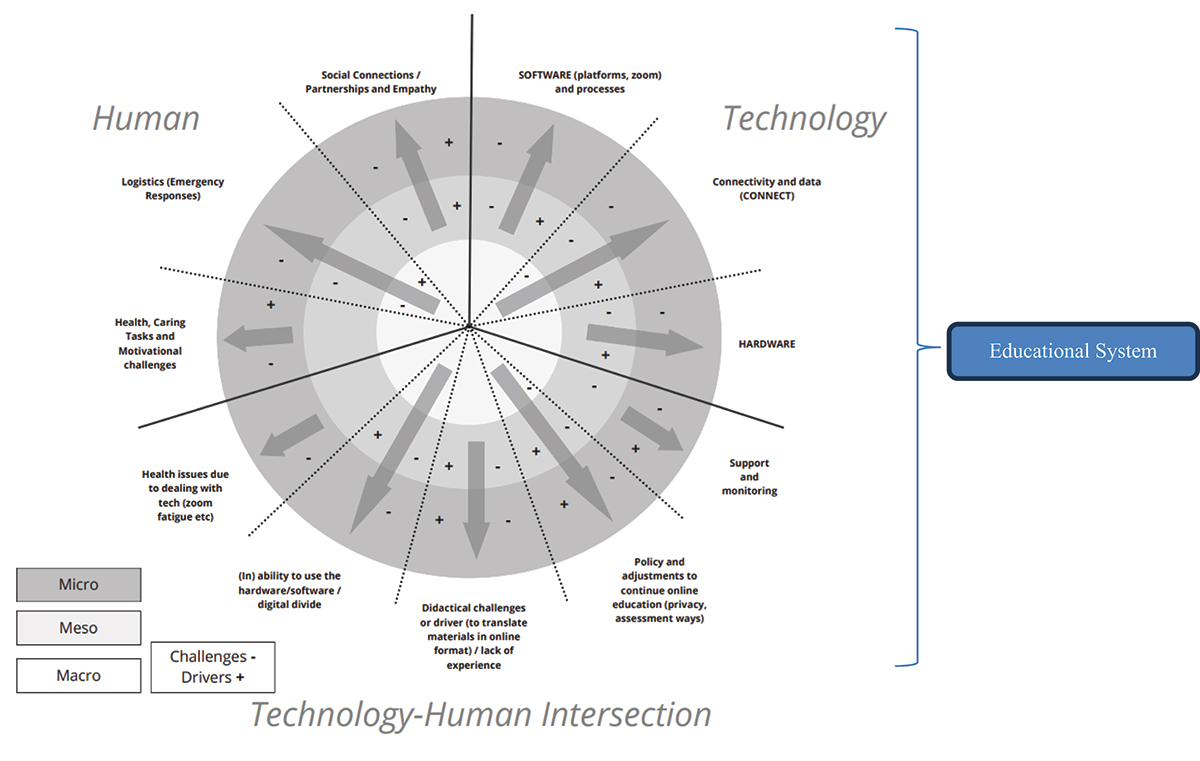
The “human dimension” highlights the ability of humans to learn or teach in a setting that is favorable to provide or receive education when a shock occurs. During the pandemic, examples are ill health due to COVID, or caring tasks that people took up due to isolation practices. While the learner itself is situated in the human dimension, also teachers or program directors that function within the meso level (program and/or institution) are impacted by factors categorized under the human dimension. The “technological dimension” reflects the technological state including among others the digital infrastructure (hardware), connectivity affordability, or software services within the system. Examples at the macro level are the ICT infrastructure in a country, at the micro level the availability of a computer and WIFI in a household. Lastly, the model includes an intersection between technology and humans, reflecting the capacity and skills of human actors to utilize the technological provisions.
The arrows in Figure 1 represent that the system is nested. While policies at the national level impact also the meso and micro level, health issues at a micro level will not impact the meso or macro level. The plus and minus signs indicate the dominance of either drivers (+) or challenges (-) as found in the literature and summarized in the previous section (van de Laar et al., 2024).
Methodology
This study analyzes the educational system from the perception of the main actors participating in the system, acknowledging that the strengths and weaknesses of systems may occur at different levels and dimensions, depending on their context. The existing literature gives evidence of some drivers and challenges within educational systems, with limited consideration of educational systems mitigation strategies. We address this gap through an empirical investigation, delving into the experiences of the administration, program director, students, and teachers across diverse regions and within a master’s program on Public Policy and Public Administration, with the COVID-19 pandemic being the shock we studied.
Characteristics of the programs.
Sample composition.
The data were collected between July and November 2021. See Annex B for an overview of the interview schedule. The data were analyzed thematically in Atlas.ti, based on a deductive coding approach with codes based on the theoretical model (see Figure 1), with the option to inductively add codes. We coded the data to understand e-resilience during the phases that occurred during the pandemic, exploring perceptions before the pandemic, the emergency reaction, the adaptation stage, and ways forward. Within each period, we coded the level at which the drivers or challenges took place (macro, meso, or micro level) and the dimension they belonged to (human, technological, or an intersection of both).
The sample size and the purpose selection approach show limitations since those educational programs and the interviewees within those programs who participated in this study most probably were motivated and committed directors, administrators, teachers, and students. In addition, the qualitative approach of the study provided us with the perception of participants. It is hard to generalize based on these findings, and further studies using quantitative methods can contribute to the external validation of these results. Moreover, the findings of this study are relevant for educational systems in public affairs at a master’s level. Further research needs to be done with disciplines from other educational systems, and other levels of education (secondary and bachelor education) since master’s education already represents an elite within the educational systems given the population that can afford such experiences and the resources available for such programs.
Results
Public affairs educational systems before the pandemic
During the pre-pandemic, participants’ familiarity with online education was diverse. Most underscored limited exposure to e-learning platforms and digital educational formats, with a majority acknowledging nascent engagement in these domains. Only two students conceded to possessing no prior interaction with digital tools or online education. However, the divergence in experiences manifested across continents. For example, in two universities (in the USA and South Africa), a strategic turn toward online formats was evident before the pandemic. This strategic orientation emanated from universities either pioneering select programs online or responding to external situations such as extreme weather and/or political conflicts that impeded physical attendance on campuses.
Participants explained that pre-pandemic e-learning platforms such as Blackboard, Canvas, and Virtual Campuses predominantly served as conduits for disseminating materials, scheduling, announcements, readings, and submission of assignments. In addition to the use of the main features of formal platforms, electronic mail assumed a relevant role, facilitating the exchange of assignments and administrative communications.
Video conferencing was not frequently used. The main provider Skype was more often used for private and work-related communications, while its integration into educational practices was very limited. For peer communication, WhatsApp emerged as a student-driven communication tool, fostering peer discussions, and serving as a conduit for assignment-related communications. This was mainly the case in African universities, where the e-learning platforms were not that prominent. While other online surveys, digital libraries, presentation software, and video conferencing services were sporadically mentioned, they were hardly linked to formal education.
Recorded lectures were sometimes used as an instrumental pedagogical tool, notably in skills courses and open-access classes. In on-campus programs, this modality was used to allow students to engage with course material before classes, facilitating enhanced preparation and subsequent review.
Interviewees conveyed varying degrees of e-learning experience before the pandemic. Most of the interviewees perceived having “little experience.” Those with extensive involvement attributed their expertise either to a preference for digital engagement or affiliations with institutions that had embraced digitalization long before the pandemic. One student explained: “I am an Internet addict and use the Internet for everything I do” (30-AFR1-STU). Some teachers from the Netherlands, Nigeria, and the USA had already designed online courses and materials before the pandemic, but generally, this experience was limited. In their words: “I had some experience with Google Forms;” “I had some experience with the virtual campus.” The experience was reported mostly with online classes (taped lectures). Some programs even integrated comprehensive training during introductory sessions to familiarize students with e-learning platforms.
The administrative personnel reflected on a shift in communication dynamics before and during the pandemic, as the nuanced personal engagements characteristic of pre-pandemic interactions contrasted with the surge in electronic communications during the e-learning era. Questions that were traditionally resolved through encounters “on the corridor” now reached digital inboxes. Students, in parallel, also missed the in-person engagements with administrative and academic staff.
Responding to the shock: Navigating the leap to online Education
Well, a driver was that we did not have another option. We also had no time to complain or to stop. (01-NETH-DIR)
Adaptation initiatives and pride in overcoming challenges
In response to the abrupt transition to online education, all academic programs shifted to virtual learning. A prevailing sentiment among interviewees was one of collective pride in their ability to overcome challenges and adapt swiftly. As articulated by a director, the initial phase was akin to a “honeymoon” period (35-ARG-DIR), characterized by a surge of support from program directors and university policies.
Emergency policies to facilitate the transition were predominantly crafted at the program level, reflecting the resilience and adaptability of each academic unit. University and national policies were being designed but programs did not have the luxury to wait for them to materialize. Noteworthy is a unique case in Nigeria where students themselves proposed policies to address in-person restrictions, leading to the continuation of two out of six courses in an online format initiated by the students. As mentioned by a student: I can even say that it was our class. We met and then extended an invitation to the lecturers that we could work online. It was not even the university, it was a request from the class that we can have online lectures. We created the Zoom room and it was not the decision of the university, it was the decision of the class that we wanted to have an online class and only two lecturers responded. (30-AFR1-STU)
Collegiate life
Financial implications surfaced for faculty, with some bearing personal costs to secure essential equipment and improve internet connectivity. During the adjustment phase, marked by trial and error mainly at the micro-level, instructors employed various tools and strategies to navigate challenges, fostering a sense of collective construction among faculty. As expressed by an interviewee, “There was a lot of collective construction with teachers to understand what was the best modality and share best practices in the process” (35-ARG-DIR).
The network of teachers and the communication with peers was important for this adaptation phase. For some teachers, this process led to “teaching innovation” (6-NETH-TEA), yet for others to “improvisation.” “We used break-out-rooms and we improvised” (2-NETH-TEA). However, what they agreed on was that they needed to do things differently and adjust daily. As mentioned by an administrator: “It’s day to day and see how we’re solving it as well. Every day something different comes up and see how you solve it, how, how you deal with it. But then we’re doing well” (39-ARG-Adm-2).
Programs made efforts to support staff and students during this emergency phase. Support mechanisms included training sessions, technological assistance, and communication networks facilitated by program directors, the administration, and teachers. Students played a pivotal role in helping instructors navigate the technological shift, emphasizing the importance of collaborative learning experiences.
The pedagogical methodologies employed to teach students online were largely built on pre-pandemic in-person teaching structures. Grading sheets remained unchanged, with some teachers counting on the support of teaching assistants to assess participation. There was limited time for staff to make courses suited for online education, and staff and students accepted these limitations.
Workspaces and well-being considerations
Administrative and teaching staff faced challenges beyond professional adjustments. The lack of a dedicated physical workspace affected the well-being of some. Universities provide support in the form of equipment and technical assistance. As addressed by a teacher: In the beginning, my partner and I were screaming over each other when we had our meetings at the same time. We only had Wi-Fi downstairs, so eventually we installed some improvements and now we can work from all over the house. (08- NETH-TEA)
It is worth mentioning that all groups of interviewees addressed the stress that students from abroad experienced during this period. Several students tried to return to their home countries. This was disruptive in class since some students had to deal with relocation and different time zones. As expressed by a program director, Attendance was a problem since students would sometimes stop attending. When asked why they did not attend, we found out about a whole range of issues that students felt. They felt, for instance, that they had to go back home before it was too late for them to return to their families. There was a lot of stress, but from a program level, we never gave them a break. We continued as planned and that might be criticized by some. In my mind, as I reflect now, I wanted the program to be a stable point of reference for all students and staff involved. Stability was crucial for all of us at that point. (01- NETH-DIR)
This emergency phase unfolded as a collective endeavor marked by adaptation, innovation, and resilience. Challenges were met with a proactive response from programs, fostering a dynamic environment where communication channels were refined, and adjustments were made to meet the evolving needs of students and staff.
Adapting to the shock: Confronting technological and human challenges
Access to technology and connectivity
Technological proficiency emerged as the tool to ensure the continuity of public affairs programs. Most important was the challenge of connectivity, particularly impacting students. As stated by a student from the USA: “In my classes, not everyone has access to Wi-Fi in the city, so several people take classes from cars outside a Starbucks or the library” (16-US1-STU). Access to hardware (desktop, laptop, and telephones) was a challenge for students, especially students from Nigeria but also in the Netherlands, where the MPP program hosted full-time younger students. Students from the USA and Argentina signaled this challenge less often, which could be explained by the fact that students interviewed were employed and did their studies in parallel to their work.
The cost of affording data was mentioned as a challenge mainly by students from Nigeria. One interviewee referred to it as the biggest disadvantages of online education, Connectivity [and] for those who don’t have enough money to buy data. However, there is always a friend from whom you can borrow a mobile device. But with a lack of money to buy data it is hard. (32-AFR1-STU)
Institutional responses and support
At a university level, responses taken included the establishment of internet hotspots and the provision of home office equipment for staff. However, financial constraints hindered some institutions, leaving them reliant on free software versions. In Nigeria, the absence of a learning management system prompted reliance on e-mail and WhatsApp exchanges, underscoring the importance of peer support. As mentioned by a program director in Nigeria: “When I send it to the class, I send it to the class representative, and they would share it with their colleagues. But there is no learning platform” (24-AFR1-DIR).
Interviewees were grateful for receiving access to software packages from the university. Both staff and students became more skilled in using the software packages, and as the pandemic prolonged, several students and staff were using fully the features of those packages.
Pedagogical shifts and teaching challenges
Teachers faced a huge challenge to adjust the format of their in-person courses to a functioning online course. Due to time pressure, most courses were taught online without major didactical adjustments. However, throughout the pandemic, most teachers reported using additional online tools and methods that were didactically more advanced. As reported by a teacher, Unfortunately, my videos were not too high quality. In my sessions, we used Wooclap. I would have loved to test the quizzes with my colleagues, but that didn’t happen because of time constraints. It took me some time to find the right methods for the course, for instance, I couldn’t stream PowerPoint through Wooclap. (08-NETH-TEA)
In addition, for some teachers, it was difficult to keep the interaction with students ongoing. This was more prominent in the Netherlands where interactive methods of education, such as Problem-Based Learning, are used. In their words: “You could not be present in all breakout rooms at the same time. Different groups have different dynamics—some students might be more proactive than the others” (08-NETH-TEA); and: “I sometimes felt like [that in the online setting] I did not have a good overview of what was going on during the tutorial” (11-NETH-TEA).
Such feelings also apply to students from other jurisdictions. As one student from Argentina mentioned: “It’s like [the teacher was] reading the chat 25 minutes after you had written something, so it was also difficult to rethink what you had written to generate a debate” (37-ARG-STU-1).
Zoom fatigue and disengagement
The inability of teaching staff to redesign classes well in an online format at such short notice led to long hours of screen time for students and little interaction between students and teachers. The number of hours that people in education were exposed to online interactions became a challenge, and we soon called the concept “Zoom fatigue.” This fatigue led to motivational drops and health challenges by students and staff. Students from all continents mention the risks of too lengthy classes. Burnout- it’s good to have a camera on during a lecture but at the end of the day it’s the last thing you want to do. I haven’t finished my best work in these classes. I’m better and take more risks academically in real time. (16-US1-STU)
Strategies in challenging environments
In Nigeria, where connectivity and data affordability were the main challenges, all tools to increase interaction and encourage participation were even more expensive, leading students to choose not to engage online. Instead, they explored alternative ways to meet up, such as peer-to-peer learning or using WhatsApp functions. As referred to by a student from Nigeria: “While e-learning is good, the level of interaction is reduced. Sometimes people are trying to save their data and therefore want to spend less time together” (31-AFR1-STU).
As the pandemic prolonged, faculties generally set up instruction mechanisms to train their staff. This training was often a digital skill training to teach staff how to manage the software. Several universities also invested in offering support and training to teachers to didactically improve their courses and increase the engagement of students. However, teachers also experienced fatigue, and not many reported making use of these services and training. For example, a teacher talked about the experience in the USA: This lady [offering support in didactically restructuring the course] was available for all staff. The university has 800+ teachers and only 3 people in the fall used her and 5 in the spring. People were not utilizing that. (21-US1-TEA)
In contrast, informal learning, from peer to peer or students, did add a lot of benefits. The practice of teaching online also benefitted the design of the next courses. Learning management systems were used more to compile all information so the amount of information shared over e-mail became less, decreasing the risk of losing information. Teachers became familiar with online tools and more appreciative of the functions, embedding them in the course materials.
Widening the gap: Unequal access to quality education
The move to online teaching enlarged digital divides that were already present—age divides and socio-economic divides. Younger people, most often students, were more at ease with the digital transition than older (more often teaching staff) were. This created an interesting dynamic, with students being more e-resilient and actively guiding the teachers during the classes. Equally, those students with a disadvantaged socio-economic background, who struggled with access to the internet and suitable equipment, were also exposed to a less suitable learning environment for their education. It is more of a challenge for students who come from an economically poor background. If they come from families that are living in areas that didn’t have the internet, or where they didn’t have their bedrooms, or where they had to do childcare. For them, it was much more of a challenge. (18-US1-ADM)
Wellbeing losses and declining motivation
Most students, teachers, administrators, and directors pushed hard for education to be delivered well. Yet, at the human level, several external challenges were interfering. The most frequent challenges mentioned were isolation, limited social interaction (loneliness), and a lack of motivation. Some staff members felt not appreciated for the extra time invested in rearranging courses. For example, a program director said: The challenge of lack of motivation is still on the ground because there was no compensation for the double job and no motivation. The semester was extended, and they had to pay for the data, so there was a lot of demotivation. (24-AFR1-DIR)
Health issues mentioned are often related to mental health, exhaustion, or burnout. Due to the pandemic, people had to take up caregiver roles that inhibited them from performing at their best. Working from home, in the same space where their family lived, affected the work-life balance. For example, an administrator highlighted: But yes, combining childcare with work is a big challenge. I think there were a lot of burnouts among my staff who have been trying to do both. Some staff members were able to find some kind of childcare arrangement, but for those who had not, they have faced a lot of challenges. (18-US1-ADM)
A student also addressed: For me, it was kind of hard. I have two kids at home, so it was difficult. They are 12 and 4 years old, so they need attention and demand it as well. With everybody staying at home, I couldn’t work from home, but the library and coffee shops were also closed during the pandemic. There is a basement here where I live, and this is where I am even right now. I had all my classes online here. (10-NETH-STU)
Working from home gave the possibility to teachers to increase the number of commitments since the time used to commute could be now used to increase work commitment. Moreover, it gave the option to explore skills and follow online training, workshops, or classes. Yet, the “easiness” of connecting to the internet and “being present” all over the place became a challenge. Recognizing the need to establish new boundaries to achieve a new balance within the pandemic restrictions took some time for many.
Post-pandemic prospects: Lessons for tomorrow
Interviews for this research took place in mid-2021, a time when most educational institutions were transitioning back to on-campus education in hybrid modes. While the initial fear of online education had diminished for most interviewees, almost all expressed a desire to return to face-to-face interactions, emphasizing the irreplaceable nature of human connections and interactions. Interviewees stressed the importance of fostering social moments on campus, indicating the need for efforts to create spaces for students to reconnect in person. As mentioned by an administrative staff: “Always human interactions are important, which cannot be achieved in virtuality” (39-ARG-Adm-2).
But there were positives to the experience, that deserve to be seriously considered for post-pandemic education as well. Administrators, students, and teachers did value the flexibility that online education offered and expressed interest in keeping that. Working from home for some allowed for improved work-life balance, reduced commute time, and accommodation of family obligations. However, there were differing opinions on the sustainability of combining childcare and work post-pandemic. As mentioned by an administrator: “Some people think they can do both childcare and their job, they are probably wrong” (23-US1-Adm).
Students raised the benefit of being able to join classes when not fully healthy, but concerns were raised, mostly by teachers, about the loss of interactive components when allowing online participation. And for some student groups, online education opened opportunities that they did not experience in class. Examples are students with social anxiety, for whom online education grants can grant a sustainable solution to learn. In addition, students from Nigeria reported that online education granted access to freedom of expression: “We felt free to ask questions” (33-AFR1-STUD). Likewise, administrative staff from the Netherlands reported that online meetings allowed for more privacy when students got emotional in conversations (“They can now cry to me in the privacy of their own homes rather than in my office” (9- NETH-ADM)). It also allows staff to be more detached from the emotions of other staff (“I have had a colleague cry in my office per week. I really enjoy having this physical disconnect; it improved my life balance. I will never go back to the office full-time” (9- NETH-ADM)).
Benefits of using educational tools and innovations
Despite challenges, interviewees acknowledged the benefits of online tools such as learning management systems, breakout rooms, and interactive software. Online education facilitated peer learning, and teaching innovations, and reduced the stress provoked by on-campus assessments. Students reflected that online assessments allowed them to reflect, analyze, and be critical with the support of sources and peers. Moreover, students from Argentina, the US, and Nigeria who followed evening programs valued the possibility of having online conversations in sub-groups and meeting without restrictions (addressing that in the on-campus setting, many times they needed to rush to get from work to class, and after class, they needed to rush to get back home on time). The online setting was mentioned as an enabler for students to attend other curricular activities such as summits, conferences, and speed networking events. As mentioned by a student, “I would not have been able to attend so many things physically” (16-GWU-STU).
Online education was also perceived as an enabler of access to education. This allows students from all over the world, from remote areas, or with long a commute to access education. As mentioned by a student: “[online education] unites people from different parts of the world” (41-ARG-STU). Likewise, program directors, teachers, and administrative staff valued what they could offer and be invited to lecture all over the world. Maintaining a balance between online and in-person components emerged as a key theme. Students particularly valued the flexibility, the reduced stress of online assessments, and the prerecorded lectures. In terms of flexibility, students referred to the fact that they could connect right after work and from any place. As explained by a student: “You can just take out your phone and connect to your class” (32-AFR1-STU).
Future of education post-pandemic
The skills acquired during online education, including the use of Zoom, Canvas, mind maps, and collaborative tools, were seen as valuable. Still, the general sentiment of teachers leaned toward the effectiveness of in-person teaching. They envisioned a hybrid learning model that blends the best of both online and on-campus experiences. Retaining positive aspects of online education while reinstating vital in-person interactions was considered essential for maintaining educational quality. While technology has enabled access and flexibility, preserving the essence of human connections remains paramount for educational systems to balance inclusiveness, effectiveness, and socially enriching learning environments.
Discussion
The pandemic showed us that public affairs educational systems have a great capacity to overcome shocks, as they mostly continued to provide education in the immediate period after the shock. Yet, how systems responded to the shock, and which elements in the system were the main drivers for e-resilience differed per context. When mapping drivers and challenges mentioned by the interviewees in the e-resilience conceptual framework, we derived contextual images as displayed in Figure 2.
4
We placed driver and challenges images at the different levels in the system but are aware of the interconnectedness of the system levels. Challenges that occurred at one level likely impacted experiences at the other level. Depending on their context, the strengths and weaknesses of each system became distinct in different dimensions and levels. Conceptual framework of e-resilience of MPP education during the pandemic.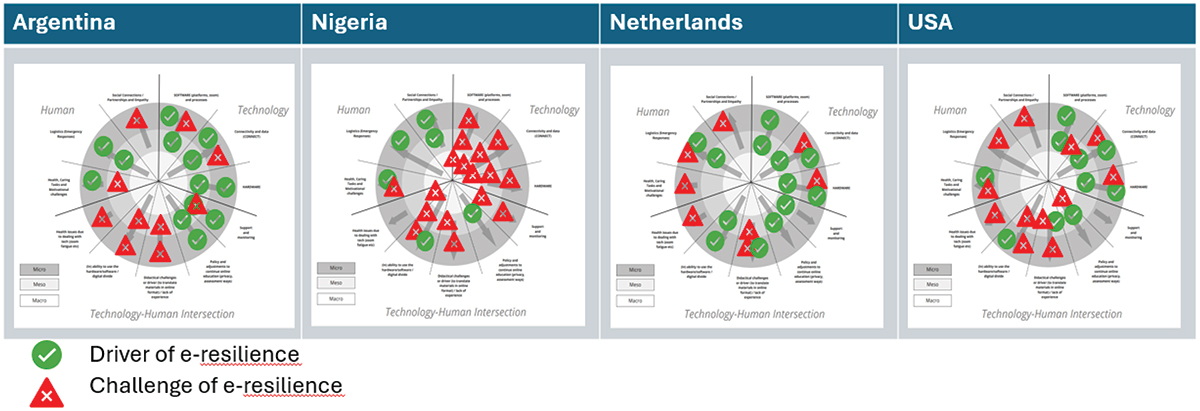
Technology did enable education, and as such it became a main tool for resilience (Rothrock, 2017). At a macro level, our results confirmed that the e-resilience of educational systems in countries with public policies to enhance equal access to education supported a better response to the shock. Digital policies that ensure connectivity and welfare policies to secure affordable data are essential for the use of technology. While in Argentina, the Netherlands, and the USA technology was not mentioned as a challenge at the macro-level, in Nigeria this item was flagged as the main hurdle for sound educational provision by almost all interviewees. When technology at the macro level is not well supported, it is hard to overcome that at a meso or micro level of the educational system. Thus, this governmental responsibility is an essential driver.
It was worth noting that during the interviews very few interviewees reflected on the type of policies and laws implemented by their countries. Only the program directors provided reflections on the impact of macro-level policy. Teachers, administrators, and students mainly reflected on how they experienced the transition. This is surprising, given their positions within public policy schools. The exceptions were in the USA, with a more frequent mention of socio-economic instability and inequality—often concerning the ongoing Black Lives Matter movement. In addition, mobility policies (visa policies) were mentioned in the USA as negatively impacting the functioning of the system at the start of the pandemic.
At the meso level, some students appreciated participating in the decision-making process of program educational policies (e.g., students in Argentina), and being the drivers of institutional action (e.g., students in Nigeria). From the reflections, the move to online education was the main task for institutions, and within most contexts (except for Nigeria) the programs succeeded in making that shift within little time. However, in all contexts, it was challenging to adjust the didactics needed for the online offering. Of course, there were outliers, mainly in the form of highly performing teachers (“the tech-savvy”). Students mentioned that some teachers were never able to adjust, yet also praised the fact that some teachers included very innovative elements in the classroom. For a system to be e-resilient, and at a meso level, it is essential to provide teachers with accurate equipment and training as soon as possible, allowing them to use the tools needed to adjust to the new reality. Equally, it was useful to provide teachers space to meet and share best practices amongst themselves. Macro and Meso-level responses often took longer to materialize, hence some educational programs exercised financial autonomy, to procure items that they flag as essentials (e.g., Zoom license) for a timely response.
In case of shocks, universities can contribute to focus on policies that retain the motivation of staff to perform. As Figure 2 indicates, in the countries researched there was hardly any mention of drivers to encourage motivation at either macro or meso level. By providing incentive mechanisms to reward the efforts undertaken to transition and adjust to shocks, individuals will feel more supported and motivated.
As can be seen in Figure 2 at the individual level, motivation and mental health are considered important in all countries. For future shocks that would lead to drastic educational adjustments, this might be avoided by timely responses at the university level. The pandemic taught us that programs need to support students emotionally, taking a comprehensive approach to education that goes behind covering the learning objectives of the curriculum. Similar to what other studies reported, the need for emotional support also applies to teachers, who expressed high levels of stress in uncertain periods (Agormedah et al., 2020; Dayal & Türkmen, 2023; Kavaric et al., 2023; Laili & Nashir, 2021). None of the teachers mentioned in the interviews the actual interventions by universities to support them in their well-being. Based on desk research, we are aware though that some universities did offer services in the form of workshops or well-being classes. In addition, our study shows that the type of support needed differs over time and full-time to part-time students. Immediately after the shock, teachers valued the technical support to adjust rapidly. Sometime after the shock, the teaching staff called for rewards and recognition. Students confirmed that interactive communication and emotional mentoring contribute to a positive learning experience (similar to the findings by Orozco et al., 2023). Moreover, part-time students have less (or no) expectations regarding well-being interventions by the programs. This was the case in Argentina, for example. Further research needs to be done regarding what type of support educational programs or universities could provide to students, teachers, and staff to support wellbeing.
E-resilience was increased by innovative teaching methods in the classroom. While in most of the programs that participated in this study, there were services in place to support teachers didactically, in practice they were hardly used during the shock. The conditions did not allow teaching staff to benefit from them. This is in line with previous research that flags to strengthen the importance of qualified teachers adjusting to digital education (Benito et al., 2021; Dayal & Türkmen, 2023; Elfirdoussi et al., 2020; Kavaric et al., 2023; Orozco et al., 2023). Those teaching skills should be developed in periods without shocks. As such, it would be useful to provide incentives to teachers to develop and upkeep digital skills and innovate their courses now that the value of digital education is confirmed. These incentives need to be supported by governments to reduce the burden on universities. Teachers and students ideally adjust their learning behavior and find a balance in-person and online, between autonomy, structure, and interaction, to preserve learning satisfaction (Shea et al., 2018). Regarding the qualifications of teachers, these include skills to deal with the technology but also relate to their capacity to keep the group engaged and allow them to interact.
There was a clear consensus that some features of the online education experienced during the pandemic are meant to be kept. Among students from all programs, these related to recorded lectures. This would benefit students and teachers in low-attended lectures. For example, in the USA during the week of Thanksgiving. But also, it might increase student safety in countries experiencing social crises or strikes.
Technology and the push toward use of it during the pandemic also made administration more efficient. The forced move to use new software and communicate differently did improve the administration of programs, reduce working hours, and allow staff in their support of students and teachers to be more efficient. This digital transformation—like the administrations experienced—is also essential for civil servants, policy designers, and policy analysts since they need to adjust to the speed of delivering outcomes that the digital transformation is calling for. Public affairs master’s programs need to integrate new technology, especially artificial intelligence, and train teachers and students to use it ethically. Further research on how programs best incorporate digital skill-building and the use of artificial intelligence in their curriculum is being developed. This learning is needed to find ways to ethically incorporate the use of technology in our work practice.
During the shock, technology has entered every aspect of interaction in all educational systems contexts we studied. However, in the case of Nigeria, where the technological solutions were absent or less fluent, human resilience took over. In Figure 2, the drivers of their educational system were all found at the micro level. Mainly students took charge of their educational provision, and by doing so they found increased value in peer learning and more interactive learning. While those developments largely happened due to failing technological support, the educational system may benefit not only from improving hardware, software, and connectivity but also from didactically reviewing the newly experienced best practices and listening to student learning.
The main challenges that students from all systems addressed in the online setting are to remain motivated, maintain social connections, and organize themselves. The administration, program directors, and teachers are very aware of the challenges students face, yet the reverse is less clear from our interviews. Students often recognized system challenges but largely failed to acknowledge that the “educational system” is implemented by humans who experienced the same shock as they did. Hence, it is recommended that programs of public affairs train students to be empathetic with the population they are in since it is they who will be public officers working for the good of society.
Recommendations for public affairs education
During the pandemic, changes preceded rules and procedures. In times of stability, programs should design rules and procedures that precede changes, hence helping ensure that there is clear guidance and homogeneity in the implementation. The recommendations below derive from the empirical evidence addressed above and are presented to address online and on-campus master’s programs. Online Programs One of the advantages of online programs is that they offer access to education for people who cannot commute to campus. However, these programs need to contemplate that some people still suffer from a lack of stable connectivity and affordable data. It is recommended that these programs offer a flexible format and sources that do not consume a lot of data. At a macro level, international funders could invest in infrastructure upgrades and technological support systems to address the digital divide, considering disparities based on country, economic status, gender, and age. Moreover, ministries of education and universities should create standards for online programs that grant degrees. The most prominent challenges of online courses are “Zoom fatigue,” and the loss of motivation which ultimately results in lower course completion. Courses need to be designed for online delivery considering those factors, and that design demands a qualified teacher and a good system of support. Interactive lectures and (group) assignments are tools to trigger motivation. Short lectures, of a maximum of 40 minutes each, can also contribute to avoiding fatigue. Moreover, the inclusion of interactive lectures, group assignments, and collaborative projects, helps to foster student motivation. When possible, spaces for in-person interactions should be established to enhance social connections. This could be at different locations with the assignment of a local focal point person who can host an in-person event. Education labs and public affairs networks such as NASPAA and APPAM serve as holders and disseminators of best practices. This could be nurtured within the annual conferences and the promotion of workshops and online materials. On Campus Programs The design of a more flexible curriculum that integrates online and in-person learning experiences seems to be the preference for public affairs educational programs. However, the preference is to include online elements in the on-campus education, but not in a hybrid fashion. The hybrid format that includes people online and in person at the same time is only beneficial for traditional lectures with little interaction. If classrooms have students online and in person at the same time, teachers must be well prepared to work with both groups, using different educational methods with each group. In such a case, there should be a moment where students online and on-campus interact together and another moment where they interact separately. Teachers might request the support of another trainer to be present in one of the two settings. Switching from one format to the other within the academic year seems to be the preference of most interviewees. This gives the flexibility that interviewers praised during the pandemic, allowing for adjustments during crises and busy periods, and accommodating diverse learning preferences and needs. The latter is important to include students with learning difficulties who might perform better under a different educational method. Further research is needed to understand what type of educational method is best for different individuals. t is essential that teachers are trained on these tools regularly, and therefore, they should be given time within their working hours for professionalization, and professionalization should be rewarded. This gives them tools to innovate in teaching methodologies, integrate technology-enhanced learning approaches, and adapt to evolving educational needs. Here, education labs and public affairs networks can also serve as holders and disseminators of best practices and training. Regardless of the format of education, universities need to recognize and reward faculty efforts in navigating policy and process changes and fostering inclusive classroom environments. They should be monitoring student well-being and supporting student success through mentorship and guidance. In addition, policy students might be motivated and have the space to influence the educational policy of the program, since this is good training for their future career and brings diversity to discussion. It is important to foster a culture of reflective practice and collaborative decision-making among program stakeholders to identify areas for enhancement and innovation in curriculum, pedagogy, and student support services.
Conclusion
This study contributes to the already existing literature that studies the impact of the pandemic on education which can be considered as a shifting point toward an educational system that relies on digital technology. This study confirms that, given the complex transition education is going through, the best approach is to consider the different levels and dimensions within the system. Hence, the Bronfenbrenners’ ecological model served as a framework for a comprehensive understanding of the public affairs educational systems and their e-resilience.
Public Affairs master’s programs can adjust rapidly to shocks using technology and the pandemic gave humans a buster to learn how to interact with technology. Educational programs can innovate at a meso level, and it is at this level that the quality of the delivery of education needs to be preserved. Nonetheless, the macro level is essential to enable a functioning educational system that can adjust to changes. For that purpose, educational policies at a macro level need to enable programs to incorporate new technologies. For that, they need to invest in proper infrastructure and human capital.
Public Affairs master’s programs are an example of the adaptability of human endeavors, with the use of technology as a main tool to adjust. The adaptation speed of individuals experienced during the pandemic had no precedent. Educational systems learned on the one hand how individuals already related to technology and how much technology can contribute to interactive learning; and, on the other hand, they learned how much human interaction is needed to foster knowledge in a motivating environment. This development will not slow down, hence a strong focus on digital skills within curricula in Public affairs master’s programs is needed.
Footnotes
1.
2.
Our attempts to include programs from Asia (India, Pakistan) were not successful within our limited timeframe and in order not to hold the data collection we decided to exclude Asia.
3.
4.
The research is qualitative and exploratory, hence the placement of drivers and challenges in  is not count-based but done through the thematic analysis of the coding. The visual in Figure 2 should be considered as simplified reflection of our complex thick data. Due to limited interviewee data in South Africa, we could not construct their e-resilience system visual.
Acknowledgments
We are grateful to the work of Lisa de Graaf and Mathias Weidinger who assisted us with the literature review and data collection. We are thankful to the interviewees who agreed to share with us their experiences, and who made this research possible.
Disclosure statement
No potential conflict of interest was reported by the author(s).
Notes
Interview guide
The interview guide establishes the themes to cover in each interview. The themes were covered in a different order depending on how the conversation was established. Each interview guide was adjusted to the interviewee group (teachers, students, directors, and administrative staff).
Interview overview
Date
Institution
Code
Role
July 9, 2021
NETH
1-NETH-DIR
Program Director
July 13, 2021
NETH
2-NETH-TEA
Teacher
July 13, 2021
NETH
3-NETH-ADM
Administration
July 13, 2021
NETH
4-NETH-ADM
Administration
July 14, 2021
NETH
5-NETH-ADM
Administration
July 14, 2021
NETH
6-NETH-TEA
Teacher (2)
July 15, 2021
NETH
7-NETH-TEA
Teacher
July 16, 2021
NETH
8- NETH-TEA (same as 9-UM-ADM)
Teacher
July 16, 2021
NETH
9-NETH-ADM (Same as 8-UM-tea)
Administration
July 16, 2021
NETH
10-NETH-STU
Students
July 19, 2021
UM
11-NETH-TEA
Teacher
July 19, 2021
US1
12-US1-DIR
Program director
July 19, 2021
US1
13-US1-TEA
Teacher
July 19, 2021
US1
14-US1-STU
Students
July 21, 2021
US1
15-US1-STU
Student
July 26, 2021
US1
16-US1-STU
Student
July 27, 2021
NETH
17-NETH-STU
Student
July 28, 2021
US1
18-US1-Adm
Administration
July 28, 2021
US1
19-US1-STU
Student
August 2, 2021
US2
20- US2-DIR
Program Director
August 2, 2021
US1
21-US1-TEA
Teacher
August 3, 2021
AFR2
22-AFR2-DIR
Program Director
August 18, 2021
US1
23-US1-Adm
Administration
September 29, 2021
AFR1
24-AFR1-DIR
Program Director
September 29, 2021
AFR1
25-AFR1-STU
Student
October 5, 2021
AFR1
26-AFR1-STU
Student
November 5, 2021
AFR1
27-AFR1-STU
Student
November 5, 2021
AFR1
28-AFR1-STU
Student
November 10, 2021
AFR1
29-AFR1-STU
Student
October 7, 2021
AFR1
30-AFR1-STU
Student
October 13, 2021
AFR1
31- AFR1-STU
Student
AFR1
32-AFR1-STU
Student
October 6, 2021
AFR1
33-AFR1-STU
Student
August 11, 2021
ARG
34-ARG-TEA
Teacher
August 18, 2021
ARG
35-ARG-DIR
Director
September 7, 2021
ARG
36-ARG-TEA
Teacher (2)
july 28, 2021
ARG
37-ARG-STU
Student (2)
july 30, 2021
ARG
38-ARG-STU
Student (2)
july 30, 2021
ARG
39-ARG-Adm
Admin (2)
August 2, 2021
ARG
40-ARG-TEA
Teacher
August 2, 2021
ARG
41-ARG-STU
Student