




Abstract
Mechanical metamaterials have opened an exciting venue for control and manipulation of architected structures in recent years. Research in the area of mechanical metamaterials has covered many of their fabrication, mechanism characterisation and application aspects. More recently, however, a paradigm shift has emerged to an exciting research direction towards designing, optimising and characterising mechanical metamaterials using artificial intelligence (AI) techniques. This new line of research aims at addressing the difficulties in mechanical metamaterials (i.e. design, analysis, fabrication and industrial application). This review article discusses the advent and development of mechanical metamaterials, and the future trends of applying AI to obtain smart mechanical metamaterials with programmable mechanical response. We explain why architected materials and structures have prominent advantages, what are the main challenges in the mechanical metamaterial research domain, and how to surpass the limit of mechanical metamaterials via the AI techniques. We finally envision the potential research avenues and emerging trends for using the AI-enabled mechanical metamaterials for future innovations.
Introduction
Metamaterials are pioneered with microstructures to obtain unprecedented characteristics that typically do not exist in nature [1]. While the majority of the advanced materials obtain the unique properties from their material composition, the predominance of metamaterials is derived from their microstructural geometry [2,3]. The superior properties of metamaterials have attracted extensive research interests in different areas such as acoustics metamaterials [4–6], optical metamaterials [7–10], thermal metamaterials [11,12], mechanical metamaterials [13–16], etc. Mechanical metamaterials are a type of architected structures that are designed to explore enhanced mechanical response. They have marked their debut a decade ago and have been experiencing rapid development ever since then [17]. Surpassing the mechanical characteristics of bulk materials, mechanical metamaterials are presented with superior response due to the effective material properties resulted in their internal structural design (i.e. substructures) [18–24]. As a consequence, it is critical and challenging to rationally design the engineered microstructures of mechanical metamaterials to obtain the advanced physical and mechanical properties that are otherwise not accessible in nature materials [25–33]. A study field has therefore been emerged to design, characterise and harness mechanical metamaterials to obtain desirable performance for specific applications. This area has formed a highly multidisciplinary research community that comprises structural analysis, material science, mechanics, engineering, etc. [34–37]. The existing studies on mechanical metamaterials can be categorised into four directions including (1) investigating the mechanisms at the physical level since mechanical metamaterials are typically combined with other physical fields to achieve predominant behaviours such as different functional materials; (2) designing microstructures at the local level since the microstructures in mechanical metamaterials can be designed with various periodic patterns and therefore, the uncertainty of the local microstructures needs to be resolved using certain computer-aided methods such as topological design or biomimetic optimisation; (3) fabricating and manoeuvring at the global level since the complexity of the microstructures results in severe challenges in fabricating mechanical metamaterials especially at the micro/nanoscale; and (4) applying in multipurpose devices at the industrial level which requires inexpensive, reliable and efficient fabrication of metamaterials such as using 3D additive manufacturing technology [17]. Since industrial applications typically have certain performance requirements, it is necessary to achieve inverse design (i.e. response-oriented design) of mechanical metamaterials to bridge the microstructures at the local level with the overall structures at the global level. Figure 1 categories the research focuses on mechanical metamaterials into the physical, local, global and industrial levels and characterise the main methods, challenges and objectives.
Research focuses on mechanical metamaterials. Four research focuses (i.e. four levels) of the existing studies on mechanical metamaterials and their main methods, challenges and objectives.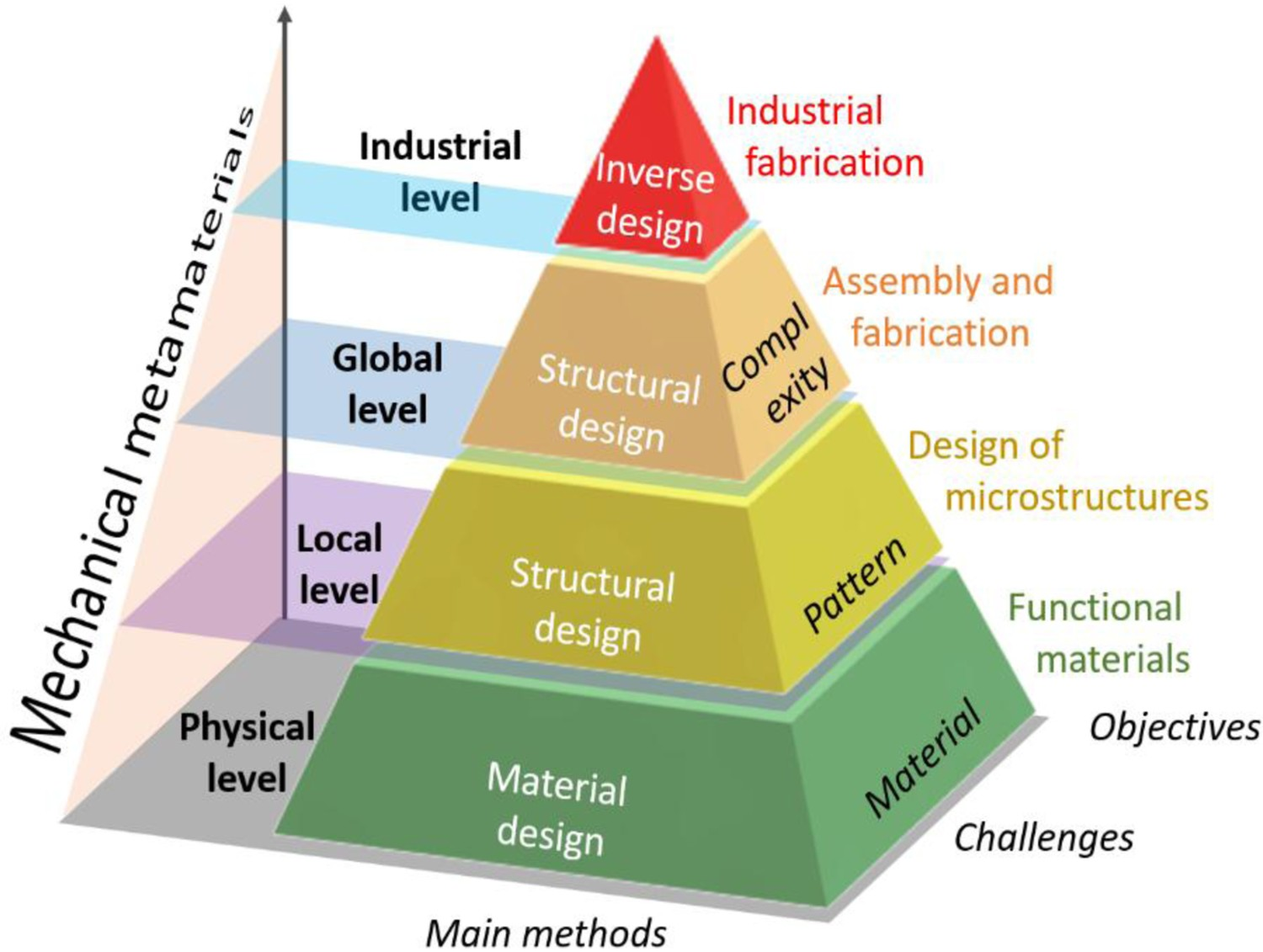
Compared to their traditional counterparts, mechanical metamaterials have been presented with mechanical advantages and unusual properties such as enhanced deformation resistance [27,29,38–43], enhanced toughness [30,33,44–47], ultra-light [35,48–52], negative mechanical characteristics [18,23,28,53–56], well recoverability [25,34,48,49,57], etc. To date, many effective applications of mechanical metamaterials have been reported in the literature [58–62]. including the innovative devices and techniques in energy absorption [63–66], heat transferring [11,12], microwave [67–71], electromagnetic transducers [72], resonators [73,74], sensors [75,76], and soft robots [77–80]. The complexity and diversity of the microstructures in mechanical metamaterials, however, lead to the difficulty in designing the local geometries, especially with the desire of achieving certain mechanical performance [17]. Therefore, research efforts have been dedicated to deploying computer-aided techniques to explore the mechanical limits of materials and structures and to improve the overall performance of the devices in applications [81–85].
Artificial intelligence (AI) has been growing rapidly as a computational solution based on mimicking human cognition. AI has been extensively used as a complementary paradigm to address various engineering problems that are difficult, if not impossible, to solve using conventional approaches [86–88]. Due to the inadequacy of physics-based models developed using the first principles, AI has attracted significant attention in recent years [89–95]. AI methods emulate complicated biological processes such as learning, reasoning and self-correction to enhance the capacity of computers for solving problems [96,97]. Early efforts have approved that AI and its branches are efficient approaches to address the challenges in design and optimisation of mechanical metamaterials [98–100]. Taking the AI approach toward data mining, processing and analysing substantially increases the accuracy and efficiency of material characterisation and structural design. In contrast to nearly all the traditional statistical methods, the AI methods are capable of capturing subtle functional relationships between variables without a need to assume prior form of the relationship [101–105]. The advantage of AI over the traditional methods is due to its feature of fostering computational efficiency in discovering and designing possible microstructures for mechanical metamaterials and therefore, the paradigm has been emerged to using the AI methods in mechanical metamaterials which leads to the future trends of the AI-enabled smart mechanical metamaterials [106–110]. The AI techniques have also been used to explore mechanical metamaterials for unobservable response such as emerging mechanical metamaterials with functional materials to manoeuvre the mechanical performance from the geometric and material perspectives [111–113].
However, the main goal of this paper to present an overview on the research in the area of designing smart mechanical metamaterials using the AI techniques. We review the promising features of mechanical metamaterials achieved by AI-based microstructural design. This review article first develops a broad perspective on the advent and development of mechanical metamaterials over the last decade, and then highlights the applications of AI in mechanical metamaterials design and its prototypes. Sections 2, 3 and 4 discuss the advent and classification, fabrication and characterisation, and challenges of mechanical metamaterials, respectively. Section 5 presents an overview of AI in architected materials and structures. Section 6 identifies the research avenues and emerging trends – AI-enabled smart mechanical metamaterials. Section 7 summarises the main findings in this review article.
Advent and classification of mechanical metamaterials
This section tracks the advent of mechanical metamaterials, mainly reviewing the development of mechanical metamaterials from natural materials to architected materials and structures. Mechanical metamaterials have been proposed and investigated in recent years as a novel type of architected materials that behave promising mechanical performance [1–3,17,114–119]. Figure 2 summarises the quantity of the existing studies on mechanical metamaterials with respect to the structures scale and publication time. Mechanical metamaterials denote the type of artificially engineered structures that are characterised with extraordinary mechanical properties resulted in the geometry of their substructures instead of the composition of materials. Compared to their counterparts in the family such as acoustics metamaterials or thermal metamaterials, mechanical metamaterials have shifted their advantages to focus on the mechanics. From the design perspective, mechanical metamaterials emerge architected microstructures to obtain anomalous mechanical response at the macroscale while maintaining their material in isotropic, which is the most typical difference between mechanical metamaterials and composite materials. All of those characteristics advance mechanical metamaterials from traditional natural materials. Identifying those key features of mechanical metamaterials assists in understanding the design and optimisation principles. From the structural property perspective, mechanical metamaterials are reported with critically enhanced mechanical properties including negative mass [18,55], zero or negative Poisson’s ratios [28,54,114–116,120–123], negative stiffness and compressibility [23,56,117,118,124], and buckling-induced structural instability [125–128].
Recent studies related to mechanical metamaterials. Quantities of the recent publications reported on mechanical metamaterials with respect to the structures scale and publication time.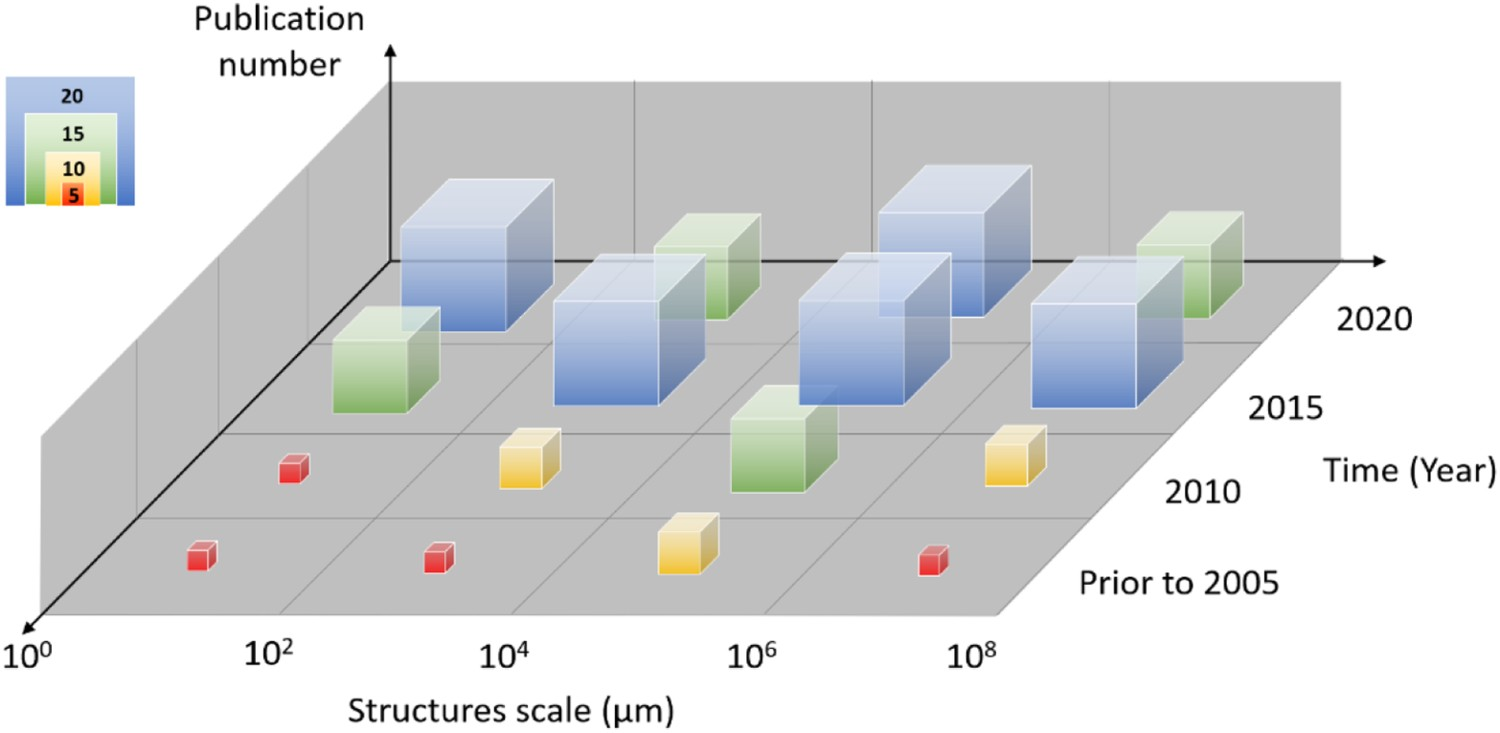
As an example, Figure 3 demonstrates the architected structures in the mechanical metamaterials in the literature [129,130]. Figure 3(a) shows the design of the microstructures in the cellular metamaterials [130], and Figure 3(b) displays the deformation configurations of the lattice metamaterials under axial compression [129]. Figure 3(c) presents the Ashby plot (i.e. Architected structures in mechanical metamaterials. (a) Alumina lattice assembled by octet-truss nanolattices at the microscale [130]. (b) Compression configurations of the polymeric nanolattices [129]. (c) Ashby plot (i.e. 

Natural materials
The mechanical response of natural materials can generally be investigated with respect to four elastic constants, i.e. the Young’s modulus 


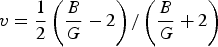




In general, the material properties of natural materials (i.e. strength, rigidity or stiffness) can be expressed with respect to the elastic constants including the Young’s modulus Ashby plot and Milton plot of mechanical metamaterials. The Ashby plot for the relations of the Young’s modulus and density (i.e. 


Mechanical metamaterials
Mechanical metamaterials have been reported with extraordinary mechanical characteristics such as negative stiffness and negative Poisson’s ratio [17]. Since their promising mechanical response is primarily due to the microstructures, this study categorises mechanical metamaterials with respect to the structural characteristics of the microstructures including the lattice metamaterials, cellular metamaterials, chiral metamaterials, and origami metamaterials. Figure 5 demonstrates the classification of the mechanical metamaterials, and the engineered microstructures and overall structures in some existing studies [119,129,130,133–145]. It can be seen that the mechanical metamaterials are categorised based on the shape configurations and structural characteristics of the microstructures from lattice, cellular, chiral to origami/kirigami. In addition, mechanical metamaterials can be designed with the microstructures have different characteristics such as lattice origami metamaterials [146–150], or auxetic origami metamaterials [151]. Table 1 summarises the existing studies on different types of mechanical metamaterials.
Classification of mechanical metamaterials. Classification of the existing studies on mechanical metamaterials with respect to the characteristics of the microstructures, including the lattice metamaterials [129,130,133,134], cellular metamaterials [119,135–137], chiral metamaterials [138–141], and origami metamaterials [142–145].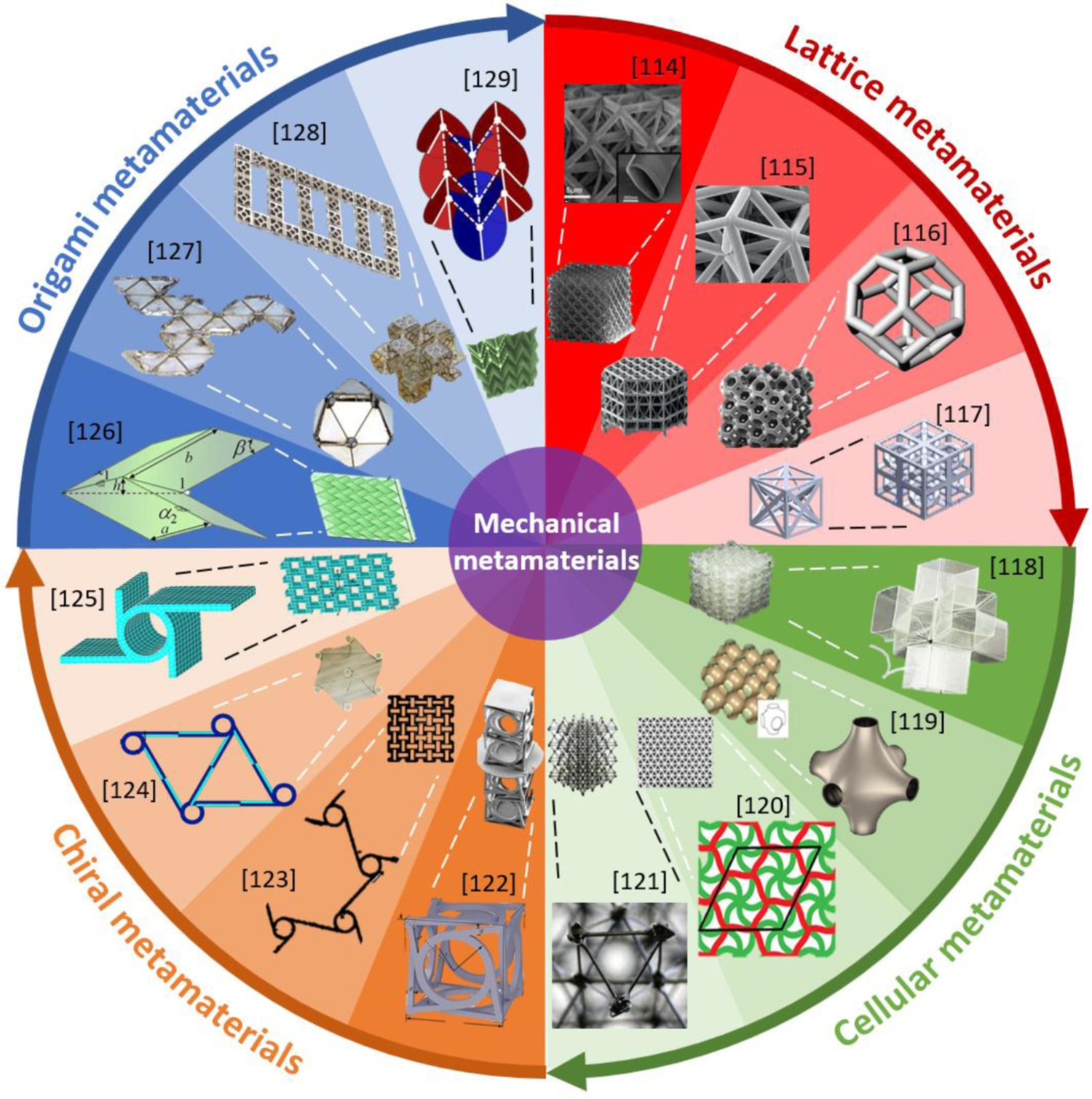
Summary of the existing studies on different types of mechanical metamaterials.
Lattice metamaterials
Lattice metamaterials in mechanical metamaterials are categorised as the microstructures (e.g. lattice or truss) comprised of numerous of uniform lattice elements [146]. Inspired by natural cellular solids such as foams, lattice metamaterials are designed with organised hollow lattices that allow precise control over the engineered structure at the micro/nanoscale [152–155,168,169,226]. Lattice metamaterials are commonly generated by assembling the unit cells consisted of lattice elements and therefore, the geometry and assembly of the unit cells are crucial [156,157]. Account for the two major factors of unit cells, the mechanical response of micro/nanoscale lattice metamaterials is affected by the cellular architectures and their density [158–160]. Open and closed cells are the common types of unit cells in lattice metamaterials, which form the heterogeneous or regularly engineered substructures. Two- and three-dimensional micro/nanolattices are found in the literature [129,130,133,134]. Two-dimensional unit cells (e.g. plate-like elements) are used to design planar structures by assembling regular polygons, such as the kagome lattices formed of triangular-hexagonal lattices [133]. Three-dimensional unit cells (e.g. regular polyhedrons) are used to assemble bulk structures. Note that particular three-dimensional lattices – octet-truss lattices – are formed by tetrahedral or octahedral cells. Recently, computer-aided techniques have been applied to design and optimise the lattice structures of the metamaterials [161,198,208], predict the mechanical response [227] or develop for novel applications [162]. Figure 6 presents the lattice metamaterials reported in the literature [133]. Figure 6(a) displays the overall structure of the lattice metamaterials and the microstructures before pyrolysis, and Figure 6(b) shows the deformation configuration of the pyrolysed lattice metamaterials under axial compression [133]. Figure 6(c) compares the Ashby plot of the compressive strength and density ( Lattice metamaterials [133]. (a) Nanoscale carbon lattice metamaterials before pyrolysis. (b) Compressive configuration of the pyrolysed lattice metamaterials under axial compression. (c) Ashby plot of the compressive strength and density (i.e. 

Cellular metamaterials
Cellular metamaterials, applying the origami design strategy to lattice metamaterials, are typically three-dimensional, which use structural instability to obtain promising mechanical response [170,199]. In general, two particular methods are found to form cellular metamaterials from the origami-based foundation: the stacked type and interleaved type [171,172]. The former uses the hierarchical design to generate complicated three-dimensional using paper folding structures such as extruded polyhedrons, and the latter uses the interweave design to assemble origami elements into cellular metamaterials. In particular, the stacked method applies rigid origami of flat-foldable elements to construct cellular metamaterials. Changing the folding patterns, the foldable metamaterials can be compressed in different shapes [119,135–137]. The interleaved method, on the other hand, uses rigid origami tubes to construct interwoven metamaterials. Numerical approaches have been used for optimal design [173–175,197] and systematic study [176] of cellular metamaterials. Figure 7 presents the cellular metamaterials in the literature [137]. Figure 7(a) demonstrates the cellular metamaterials assembled by vertex-connected octahedrons using shear clips, and Figure 7(b) presents the linear elastic and superelastic stress–strain relations of the cellular metamaterials in tension and compression [137]. Figure 7(c) presents the Ashby plot of the Young’s modulus and density (i.e. Cellular metamaterials [137]. (a) Cellular metamaterials assembled by vertex-connected octahedrons using shear clips. (b) Stress–strain relations of the cellular metamaterials in tension and compression, i.e. linear elastic followed by superelastic resulted in coordinated buckling. (c) Ashby plot of the Young’s modulus and density (i.e. 

Chiral metamaterials
Chiral metamaterials, designed by the left- or right-handed substructures such as chiral hexagons, are characterised as non-superimposable mirrored configurations [200]. Comparing with the symmetric metastructures, chiral metamaterials are generally found with regular polygons and chiral ligaments [201]. As a consequence, the chirality of the metamaterials is resulted in the chiral or anti-chiral connections between two-dimensional unit cells [202]. The unique mechanical behaviour of the chiral metamaterials is reported as negative stiffness or negative Poisson’s ratio [138–141]. Functionally materials are used to fabricate chiral metamaterials to obtain advanced, controllable mechanical performance, such as composites materials [203] or shape memory polymers [228]. Numerical approaches have been used in chiral metamaterials for response-oriented inverse design [204] and optimisation [205]. Figure 8 shows the chiral metamaterials in the literature [138]. Figure 8(a) the numerical simulations of the chiral metamaterials that behave end twist under axial compression, and Figure 8(b) compares the experimental, numerical and analytical results for the relations between the twist angle per axial strain and the scale factor N [138]. Figure 8(c) demonstrates the overall structures of the microscale chiral metamaterials fabricated using the 3D laser microprinting [138].
Chiral metamaterials [138]. (a) Numerical simulations of the chiral metamaterials that behave end twist under axial compression. (b) Comparison of the experimental, numerical and analytical results for the relations between the twist angle per axial strain and the scale factor N. (c) Demonstration of the microscale chiral metamaterials fabricated using the 3D laser microprinting.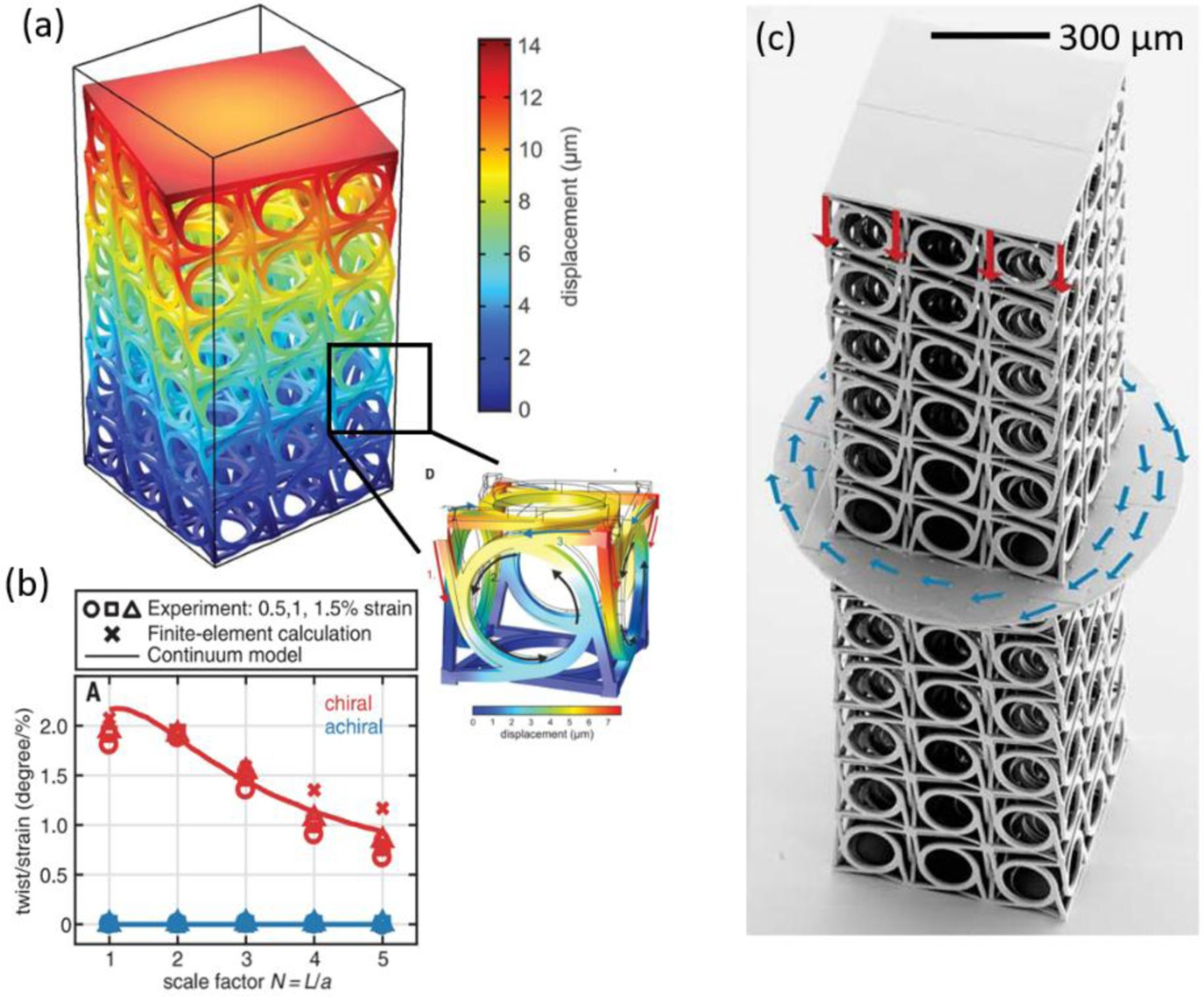
Origami metamaterials
Origami metamaterials are reported as the two-dimensional structures generated by emerging elegant patterns and shapes through folding planar films [142–145,209–212]. Origami metamaterials are inspired by the art of folding paper originated from Japan [213,214]. Architecting regular sheets into well-designed decorative shapes, origami has been applied to obtain ultra-stiff, ultra-light engineered structures [215,216], or extraordinary mechanical characteristics such as negative Poisson’s ratio [225]. Three types of origami strategies are found in the existing studies, including the Miura-ori pattern, non-periodic Ron Resch pattern, and square twist pattern [217–219]. Origami has been used as basic blocks (e.g. cellular origami) to form metastructures with advanced functionalities such as enhanced flexibility, deformability and compactness, etc. [220–222] Combining with the dynamically folding patterns, origami leads to particular metamaterials such as bio-origami hydrogel scaffolds or certain buckled surfaces [206,223]. As a special type of origami, Kirigami mainly focuses on cutting regular sheets to form two-dimensional structures [224]. Figure 9 presents the self-folding origami metamaterials in the literature [144]. Figure 9(a) displays the four-stage, force-stretching and hinge straining-stretching relations of an origami element [144]. Figure 9(b) demonstrates the self-folding elements connected to each other in series with similar folding angles, and Figure 9(c) showcases the self-folding configuration changes of the origami metamaterials from the flat elements to the cubic structure [144].
Origami metamaterials [144]. (a) four-stage, force-stretching and hinge straining-stretching relations of an origami element in the origami metamaterials. (b) Self-folding elements connected to each other in series with similar folding angles. (c) Complex shape-shifting behaviour of the origami metamaterials from the flat elements to the cubic structure.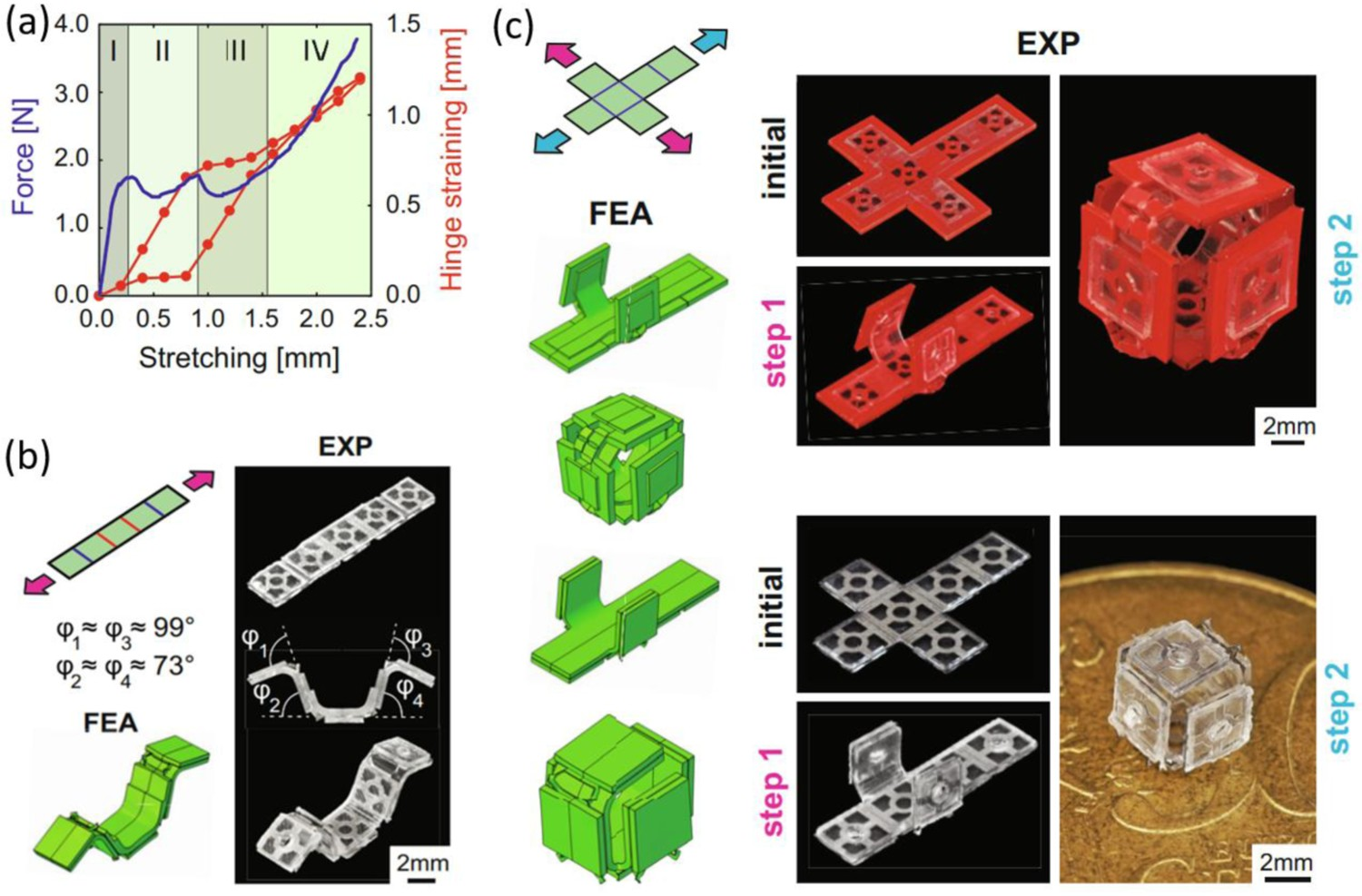
Highly porous materials
Highly porous materials, typically made of metals, ceramics or polymers, form an important subcategory of functional materials due to their promising mechanical properties [179–182]. For example, highly porous metals have been reported with well flexibility (up to 70% axial strain) and low weight under nearly constant stress [177], negative Poisson’s ratio [183–185,229]. Since highly porous materials are assembled by cellular microstructures, the morphology and arrangement of the cellular units (e.g. orientation, size or shape) dominate the mechanical performance of functional materials [163,186–189]. Highly porous materials have been used in different industrial applications due to their high internal surface and thermal connectivity, such as heat dissipation, thermal insulation, packaging, or comfortability design [177,230]. Computer-aided techniques have been used to model [190], topologically optimise [191,231] and predict [192] highly porous materials. Figure 10 compares different highly porous materials and cellular metamaterials in the literature [119,135,136,177,178]. Figure 10(a,b) displays the open-cell metallic and polymeric foams, respectively [177], and Figure 10(c) shows the close-cell metallic foams [178] in the highly porous materials. Figure 10(d–f) shows the cellular metamaterials designed with the rectangular, curved and triangular microstructures, respectively.
Comparison of the highly porous materials and cellular metamaterials. (a) Closed-cell metallic foams [177], (b) closed-cell polymeric foams [177], (c) open-cell NaCl foams in highly porous materials [178]. Cellular metamaterials assembled with (d) rectangular [119], (e) curved [135], and (f) triangular [136] microstructures.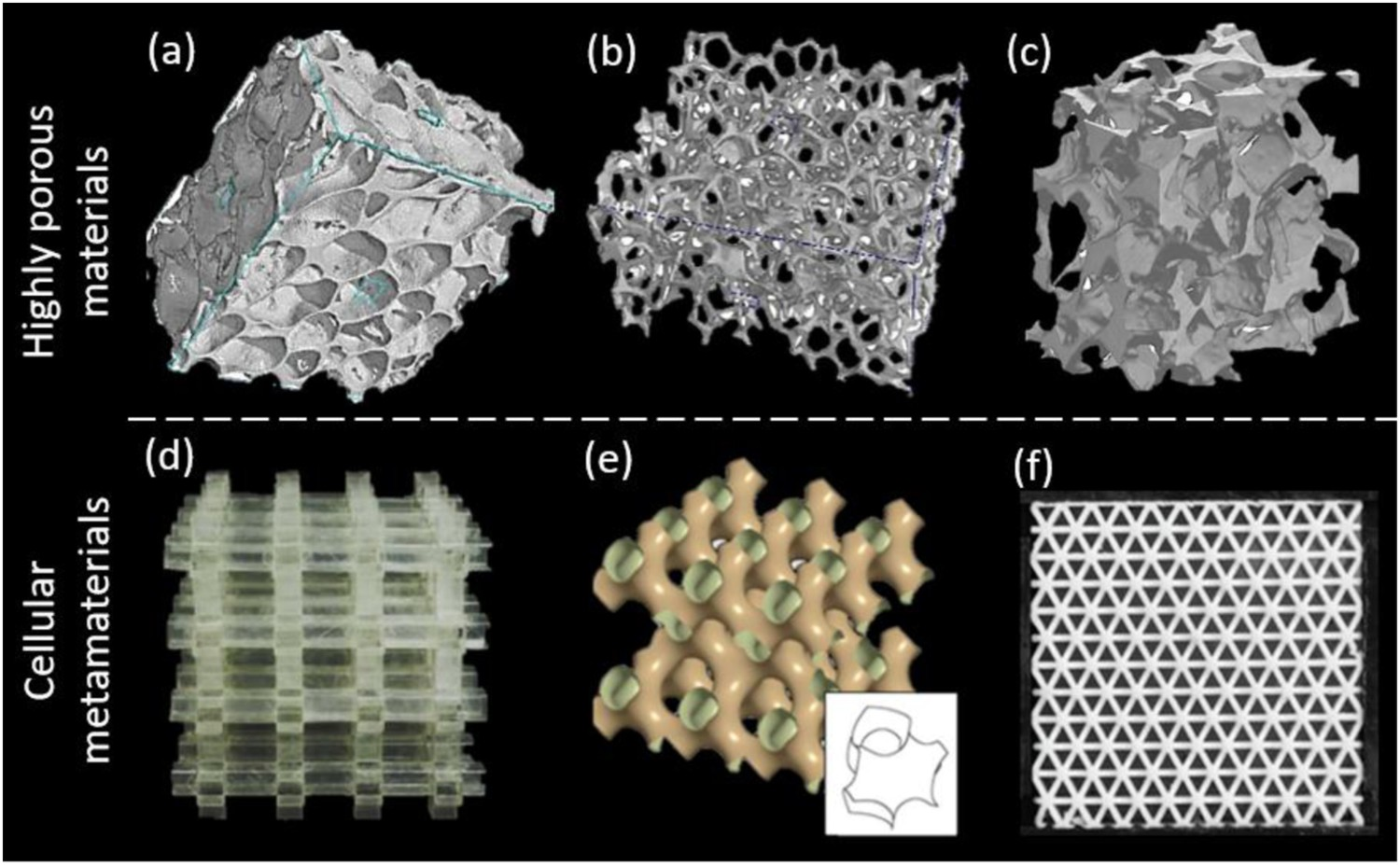
Summary
This section overviews the advent and recent development of mechanical metamaterials – a novel type of architected materials. Mechanical metamaterials are identified with respect to the characteristics of the microstructures at the local level and the assembly strategy at the global level, which can be classified as the lattice metamaterials, origami metamaterials, cellular metamaterials, and chiral metamaterials. The predominant mechanical properties of mechanical metamaterials are reported with respect to: (1) Self-weight vs. stiffness, which refers to the mechanical metamaterials that are ultra-light and ultra-stiff such as lattice metamaterials, hierarchical metamaterials, origami metamaterials, cellular metamaterials or 2D plate-like metamaterials; (2) Pattern vs. performance, which refers to the mechanical metamaterials that behave negative compressibility, negative thermal expansion or negative Poisson’s ratio such as auxetic metamaterials or cellular metamaterials; and (3) Compression vs. shearing, which refers to the mechanical metamaterials that vanish the shear modulus and behave the characteristics of 2D structures such as penta-mode metamaterials.
Fabrication of mechanical metamaterials
This section reviews the fabrication and characterisation techniques of mechanical metamaterials in the literature. Since mechanical metamaterials are reported with the advanced properties mainly due to their microstructures, it is crucial to fabricate the complex local structures in mechanical metamaterials and then characterise their mechanical response, especially for the mechanical metamaterials at the micro/nanoscales [50,51,164,193,232]. Various advanced processing approaches have been reported to manufacture mechanical metamaterials at the multiscale, including the additive manufacturing technique [165,207,233], atomic layer deposition (ALD) technique [49–51], and melt-electrospinning technique [232]. Additive manufacturing technique has been developed to fabricate engineered structures with complex periodic patterns such as 3D printing to fabricate cellular metamaterials [233]. Atomic layered deposition technique is developed used to fabricate, for example, plate-like 2D mechanical metamaterials with corrugation at the nanoscale [49]. Melt-electrospinning technique has been proposed to fabricate cellular metamaterials with ultra-high stiffness and ultra-light body weight [166,194,234]. Figure 11 presents the main fabrication techniques in mechanical metamaterials.
Main fabrication techniques in mechanical metamaterials. (a) Additive manufacturing technique to fabricate the lattice metamaterials using multi-materials [164]. (b) High-resolution optical additive manufacturing technique to fabricate the octet-truss lattice metamaterials [193]. (c) Photolithography and atomic layer deposition techniques to fabricate the plate mechanical metamaterials [49–51]. (d) Melt-electrospinning technique to fabricate the textile materials [232].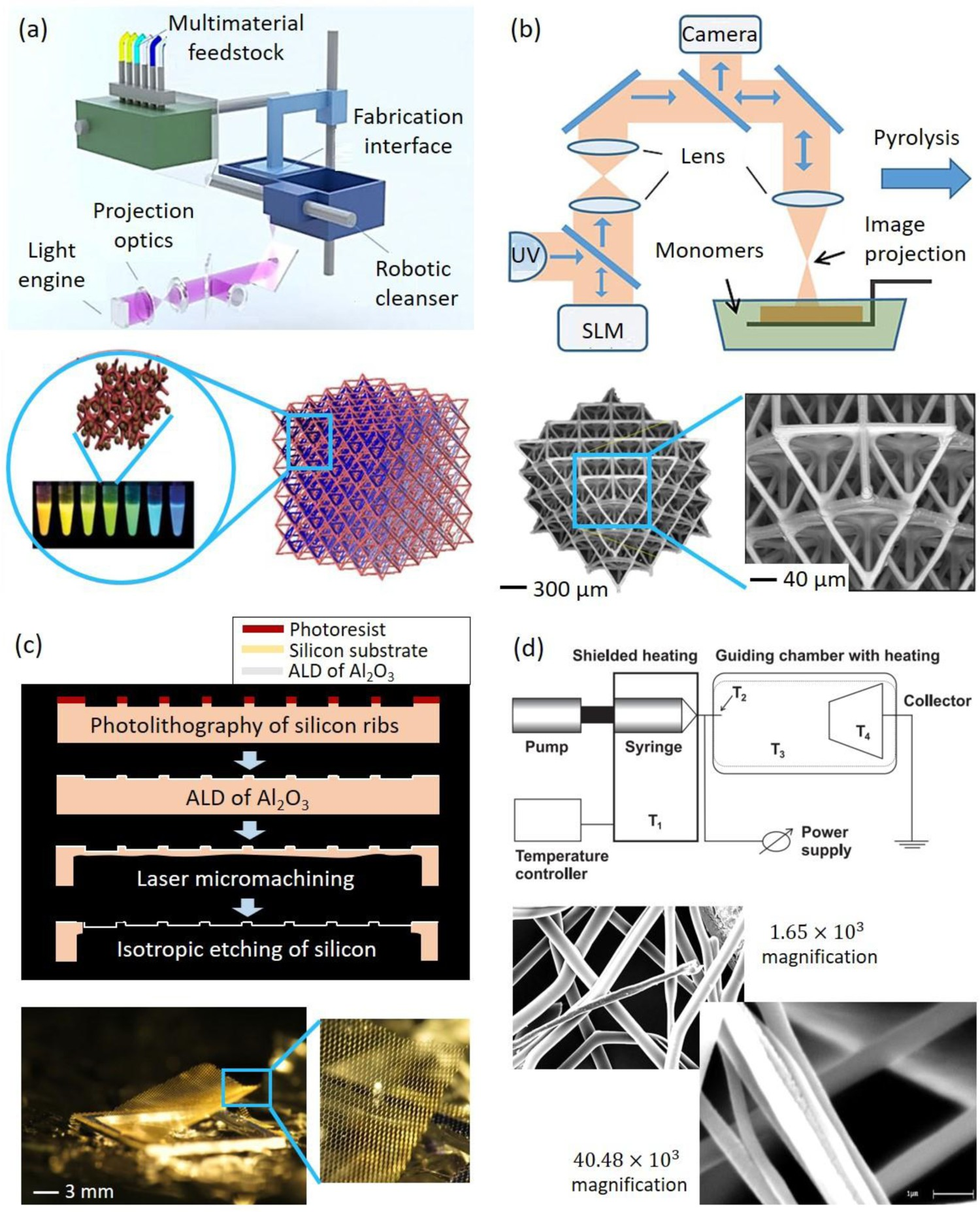
Additive manufacturing technique
Additive manufacturing is one of the most applied techniques in fabricating different types of metamaterials such as optical, acoustic, thermal and mechanical metamaterials [17,164,193]. Recent development in additive manufacturing technique has led to architected mechanical metamaterials at the multiscale, which assists in manipulating the complex microstructures to enhance the mechanical performance such as tailored stiffness, compressibility and toughness properties [165,207,233]. Realising and validating the mechanisms and properties of mechanical metamaterials require the fabrication and testing using advanced manufacturing techniques. Additive manufacturing technique has brought opportunities to conduct research in mechanical metamaterials, especially given the fact that many existing studies in the literature are developed using the theoretical or numerical approaches. Due to the difference of the applications, different techniques are found in additive manufacturing to fabricate engineered structures, including the 3D printing, binder jetting, direct metal laser sintering (DMLS), selective laser sintering (SLS), electron beam melting (EBM), photolithography, and stereolithography (SLA) [17]. Additive manufacturing is superior to those traditional techniques in realising complex microstructures, which therefore plays a critical role in fabricating mechanical metamaterials for different applications, e.g. energy absorption [166] and vibration damping [234]. The most recent techniques in additive manufacturing and topological optimisation ensure the possibility of designing periodic nanolattices with tunable anisotropy [194]. 3D printing has been applied to fabricate cellular metamaterials in additive manufacturing [195]. Figure 11(a) presents the multi-material additive manufacturing [164] and Figure 11(b) shows the high-resolution optical additive manufacturing [193] to fabricate the lattice metamaterials.
Atomic layer deposition technique
Atomic layer deposition (ALD) has been developed as an important technique to deposit thin films in different applications, given its capability of conformal and control deposition at the atomic layer level using self-limiting surface reactions [235]. The advantages of ALD include the precise control of thickness at the nanoscale level since the self-limiting reactions of ALD results in well step coverage and conformal deposition, especially for plate-like structures with extremely high aspect ratios [167]. ALD technique can be applied to the processing of multiple structures or the structures at the large scale.
Because ALD precursors are gas phase molecules which fill all space without the influence of substrate geometries, the technique is affected by the geometries of the reaction chambers. ALD process is impacted by the surface reactions as they are behaved sequentially. ALD technique has been reported in manufacturing engineered metastructures at the micro/nanoscales [167]. Figure 11(c) indicated the ALD technique used to fabricate the plate mechanical metamaterials at the multiscale [49–51]. The plate mechanical metamaterials designed with architected microstructures can be fabricated following the three main procedures, i.e. photolithography, alumina coating and releasing. Plate mechanical metamaterials designed with corrugated patterns have been fabricated using ALD. The mechanical metamaterials samples were fabricated from a mold on silicon wafers via photolithography. Prime n-doped (100) silicon wafers were spin coated with HMDS and baked. The corrugation pattern was exposed, and the pattern was etched into the silicon with a deep reactive ion etching. The photoresist was subsequently removed with sonication, following by rinsing with acetone, methanol and isopropanol, and oxygen plasma. The patterned wafers were conformally coated with aluminium oxide using ALD with tetramethyl aluminium and water. The deposited thickness of the plate mechanical metamaterials was measured after deposition with spectral reflectometry. The aluminium oxide material on the surface of the plate mechanical metamaterials was released by etching away the majority of the silicon wafer and the remainder of the silicon was etched away in XeF2 vapour.
Melt-electrospinning technique
Developing using electrostatic force to deform materials in the liquid state, electrospinning is proposed to produce micro/nanoscale fibres in high viscosity fluids, which incorporates strong electric fields between the metallic collecting devices and polymeric melt within the extruder [236]. More recently, melt-electrospinning has been reported as a direct writing approach to manufacture scaffold metastructures with periodic patterns [237]. Figure 11(d) demonstrates the experimental setup of the melt-electrospinning technique and the fabricated textile materials [232]. Developing from fused deposition modelling (FDM), melt-electrospinning has been applied to reduce the overall geometries of mechanical metamaterials while increasing the stiffness. Tuning porous scaffolds leads to the mechanical metamaterials with enhanced Young’s modulus and well recoverability after axial strains and thus, melt-electrospinning has been particularly applied in bioengineering to obtain multifunctional composite or synthetic tissue constructs [232]. Leading through surface topology, for example, ultrafine fibres can be used in many fields including energy harvesting, environment monitoring, filtration or textiles [196].
Summary
The main cutting-edge fabrication techniques of mechanical metamaterials, for example the additive manufacturing technique, are still in their early stages, which results in the fact that only limited types of architected materials and structures can be manufactured. Multi-materials mechanical metamaterials are of interest but challenging in additive manufacturing. Multi-materials additive manufacturing is expected to kindle a new paradigm since they combine different types of materials to achieve new classes of mechanical behaviours such as the hybrid responses of thermo-mechanical or electro-mechanical metamaterials. In addition, 3D printing of hard–soft materials is an emerging direction of multiple materials mechanical metamaterials as it increases the programmability of mechanical metamaterials for extraordinary mechanical behaviour.
Challenges in mechanical metamaterials
This section summarises the major issues in the current studies on mechanical metamaterials. Although the advent of mechanical metamaterials has opened the novel path of exploring mechanical characteristics through design and assembly of microstructures, we have to admit that mechanical metamaterials consist of certain challenges alongside the advanced properties. The challenges of mechanical metamaterials might be discussed in the perspectives of (1) design problem that is the difficulty in obtaining the quantitative relations between structural prediction and inverse design, (2) analysis problem that is the difficulty in obtaining the mechanism between structural assumption and performance imperfection, (3) fabrication problem that is the difficulty in fabricating complex mechanical metamaterials using the available technologies, and (4) application problem that is the difficulty in balancing the ideality and reality in mechanical metamaterials.
Challenges in design, analysis, fabrication and application
Figure 12 demonstrates the main challenges of mechanical metamaterials in design, analysis, fabrication, and application. The design challenge refers to the uncertainty of the relationship between structural prediction and inverse design, which leads to the obstacle of controlling the microstructures such that to control the mechanical properties of the entire mechanical metamaterials. Although mechanical metamaterials are typically composed of periodic microstructures, more advanced, specific application scenarios require aperiodic microstructures in mechanical metamaterials. For example, origami metamaterials are engineered with organised folding patterns and cellular metamaterials are architected with periodic substructure units.
Challenges in mechanical metamaterials. The challenges of design due to the lack of quantitative relations between structural prediction and inverse design, analysis due to the lack of mechanism between structural assumption and performance imperfection, fabrication due to the difficulty of manufacturing complex mechanical metamaterials using the available technologies, and application due to the difficulty of balancing the ideality and reality in mechanical metamaterials.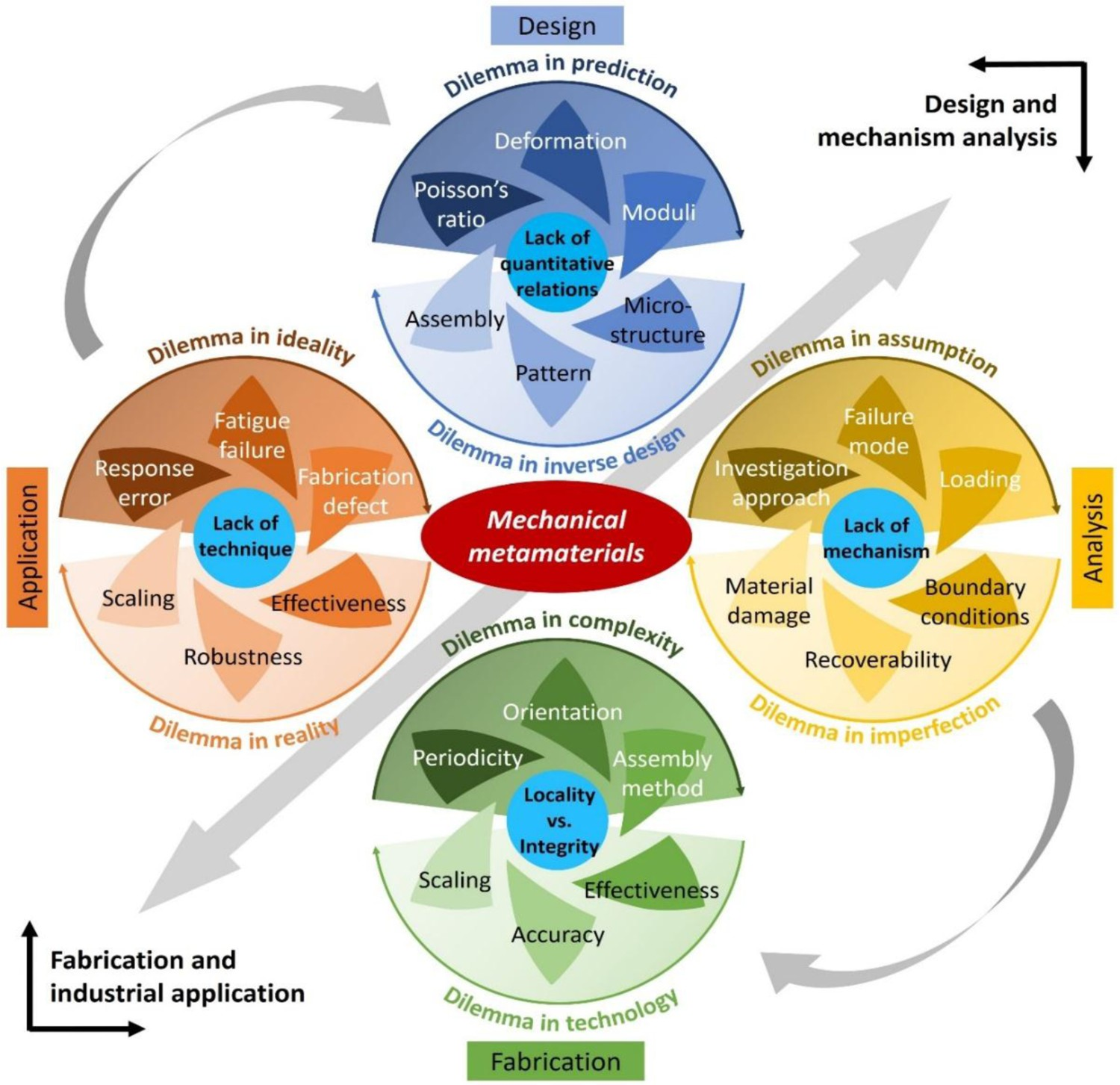
Computer-aided methods can be used to generate possible patterns in those mechanical metamaterials. However, lack of approach is available to provide mechanical metamaterials with varied designs such as gradually changed or arbitrary microstructures. The analysis challenge refers to the uncertainty of the relationship between structural assumption and performance imperfection. Although it is generally tacit to assume that mechanical metamaterials can be scaled up with the same mechanical advances as long as the geometric ratios are maintained, scaling effect may cause response changes of mechanical metamaterials in practice. In addition, failure mode has not been considered in mechanical metamaterials. The advanced mechanical properties of mechanical metamaterials are typically reported under monocyclic testing without the consideration of fatigue effect. It is still uncertain how material failure influences the properties of mechanical metamaterials in the long-term. The fabrication challenge refers to the uncertainty of the relationship between the complexity of mechanical metamaterials and available technologies, which leads to the obstacle in manufacturing the architected structures. The ineffectiveness of fabrication technology, especially for the rational design of the periodic microstructures, results in the unavailability of mechanical metamaterials in many cases. In addition, many existing studies on mechanical metamaterials have been conducted on the architected microstructures at the micro/nanoscale. However, many applications require engineered metastractures at the much larger scale. Therefore, it is desirable to develop a coherent framework to account for performance requirements and technology limitations. The application challenge refers to the uncertainty of the relationship between the ideality and reality. Since the mechanical metamaterials industry is still in its infancy due to the previously discussed challenges, applying mechanical metamaterials for multifunctional devices is on the horizon. For example, the origami metamaterials with shape-shifting response were reported in robotic structures, which have yet been applied in robotic industry. In addition, maintaining the geometric ratios critically narrows the range of mechanical metamaterials in practice. For example, the plate mechanical metamaterials were reported with the extremely large aspect ratio of 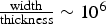
Potential solutions to address the challenges in future mechanical metamaterials
Addressing the challenges in mechanical metamaterials might be addressed in the following considerations. First of all, combining different types of mechanical metamaterials to obtain advanced mechanical characteristics. Future mechanical metamaterials might compose of different microstructural patterns such as the cellular lattice metamaterials that are ultra-light and ultra-stiff, and with negative Poisson’s ratio [146–148]. Second, replacing complex design of microstructures by various assembly strategies. Future mechanical metamaterials might obtain desirable mechanical response by assembling simpler microstructures in different ways such as origami design of 2D corrugated metamaterials. Thirdly, achieving desirable mechanical properties using architected functional materials. Taking the advance of composition, the complexity of the microstructures in mechanical metamaterials can be significantly reduced, such as functionally graded mechanical metamaterials. Fourthly, the rapid development of fabrication technologies is expected to resolve the issues in manufacturing mechanical metamaterials such as making architected materials and structures atom by atom. The development of future technology will address the limitation in crystal defects and therefore, mechanical metamaterials is expected to be fabricated from a new perspective. As a consequence, the future challenges of mechanical metamaterials can be concluded as how to design and fabricate mechanical metamaterials with desirable properties and well feasibility. To overcome the challenges, it is envisioned to combine combinatorial and rational techniques with computer-aided design methods such as AI, which is expected to lead to the mechanical metamaterials with more targeted functionalities.
Summary
The main challenges of mechanical metamaterials can be summarised as the problems in design, analysis, fabrication, and application. To effectively address the challenges, new insights can be applied to obtain future mechanical metamaterials, including (1) designing mechanical metamaterials using different types of mechanical metamaterials (i.e. different microstructures, (2) replacing complex microstructures by different assembly strategies, (3) achieving desirable mechanical properties using functional materials (e.g. composites), (4) improving the fabrication technologies in the industry, and (5) deploying computer-aided techniques in mechanical metamaterials such as AI algorithms.
AI and its applications in architected materials and structures
AI, in principle, uses given training data to identify the relationship between inputs and corresponding outputs [238,239]. Unlike the AI methods, almost all of the traditional statistical methods rely on the prior knowledge of the nature of the relationship between dependent and independent variables [240–243]. Given their capability in capturing subtle knowledge without a need to assume prior form of the relationship, AI has become a powerful component in integrated systems or an alternative approach to conventional techniques, which is typically applied to resolve complicated practical problems in various fields such as materials science [244–250] and engineering [251–265]. Due to the inadequacy of physics-based models developed using the first principles, AI has recently attracted significant attention in architected materials and structures [266–272]. According to the objectives and applications, AI in architected materials and structures can be categorised into the fields of technology (i.e. the AI algorithms) and utility (i.e. AI-enabled functionalities) [273]. The former includes the algorithms of artificial neural networks, computer vision, fuzzy logic, genetic algorithms, logic programming, natural language processing, nonmonotonic reasoning, problem solving and planning, robotics, learning and planning, and different types of hybrid systems that are combined with two or more of the branches [238,240,274–277]. The latter includes the functionalities of reasoning, programming, artificial life, belief revision, data mining, evolutionary computation, knowledge representation, natural language understanding, theorem proving, constraint satisfaction, reactive machines, limited memory, theory of mind, self-awareness, etc. [238,240].
Figure 13 summarises the main AI algorithms in the field of architected materials and structures [272]. During the past several decades, the main focus of computer-aided architected materials and structures have been gradually shifted from the development of computational techniques to exploring advanced characteristics by computational tools [278,279]. To this aim, AI has been extensively applied to design, predict and optimise materials and structures [280–285]. Advantages of the novel materials and structures are obtained mainly due to the capability of AI models in finding the good balance between rationale microstructures and high accuracy, such that to effectively satisfy the performance requirements for those architected materials and structures [286–289]. Comparing with the applications in other fields, AI has not debuted in materials and structures until recent years [290–300]. Studies have been reported on using AI algorithms to emulate complex biological processes (e.g. learning, reasoning and self-correction) to explore advanced solutions that are difficult to solve using conventional approaches in material discovery and structural design [301,302]. Deploying AI approaches especially the subset of machine learning (ML), in data mining, processing and analysing, the accuracy and efficiency of material characterisation and discovery can be substantially increased. Other than process control of materials and structures, recent research attention has been shifted to materials design and prediction using ML.
Classification of the main AI algorithms [272]. Main AI algorithms and their classification in the field of architected materials and structures and.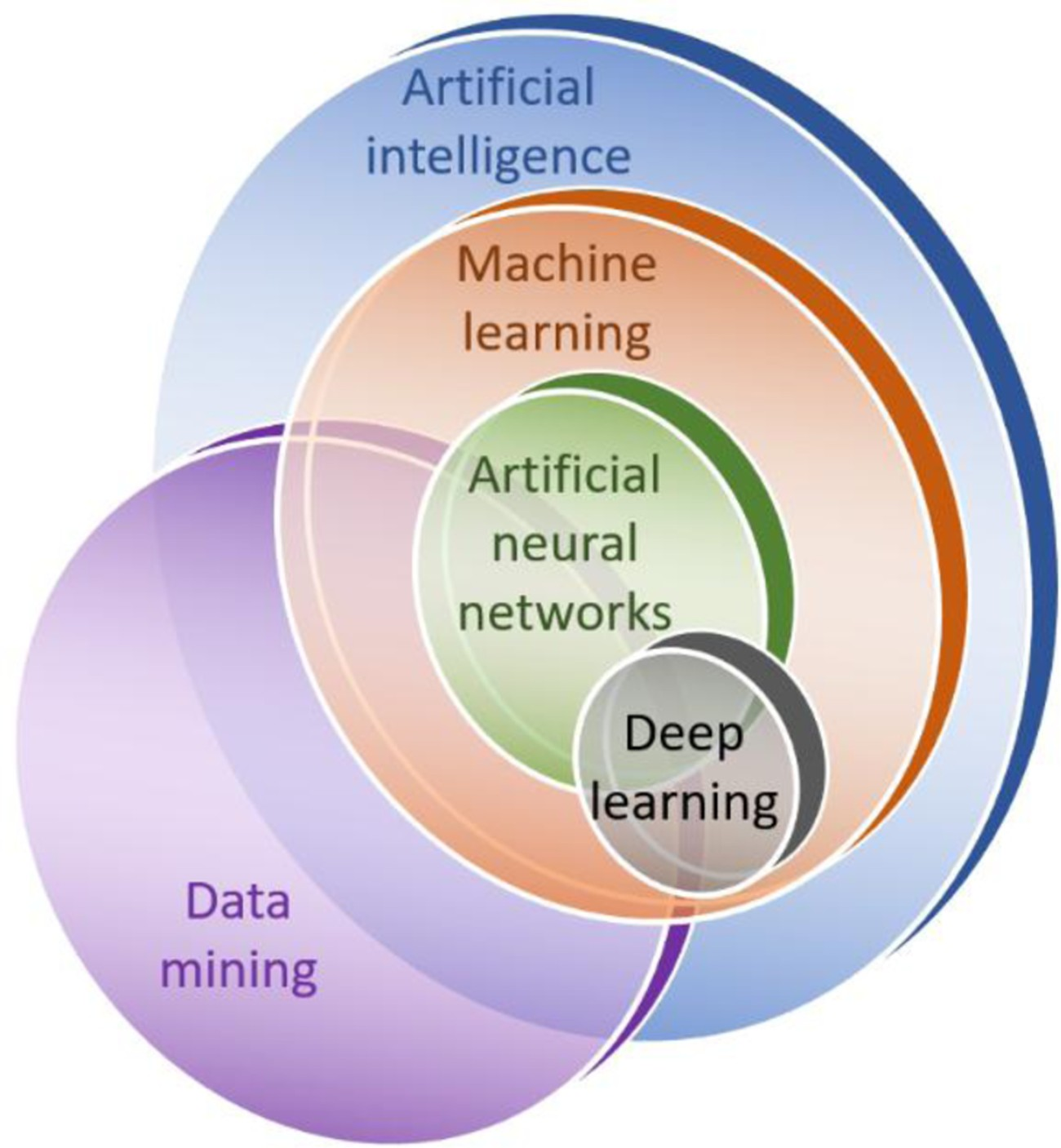
ML algorithms
ML has debuted in material and structure studies as the symbol method since the 1990s, e.g. artificial neural networks are used to predict the quantitative relations between the material and structure parameters and the mechanical performance for the fibre/matrix interfaces in ceramic-matrix composites [266,273–275]. In order to capture subtle knowledge among the existing data, ML performs superior to the traditional statistical methods in terms of the computational efficiency for a significant class of computationally hard problems in materials science, which, therefore, has been extensively used to address different problems in new materials discovery and material property prediction [103,247]. ML has been extensively applied in materials and structures, which demonstrates obvious superiority in terms of the time efficiency and prediction accuracy [248]. The application of ML in material and structure science can be, in general, divided into three main categories, including (1) structures performance prediction, (2) materials discovery, and (3) design materials with desirable performance. In the first category, regression algorithms are typically used to predict engineered structures with complex microstructures at the multiscale. In the second category, probabilistic algorithms are commonly used to design the microstructures for desirable mechanical response. In the third category, regression and probabilistic algorithms are applied together to screen various combinations of structures and components, and eventually to select the materials with desirable performance using the density functional theory-based validation. It is critical to select the appropriate algorithms for the ML system in material and structure science since the algorithms can significantly affect the design capability and prediction accuracy. ML algorithms have the specific applications since no algorithms can be applicable to all situations. In particular, ML in material and structure science can be characterised into four groups, including the algorithms in probability estimation, regression, clustering, and classification. Note that the probability algorithms have been mainly applied to design new materials and structures. On the contrary, the regression, clustering and classification algorithms have been applied to predict properties of materials and structures at the multiscale. Note that ML methods have generally been combined with different intelligent optimisation algorithms, e.g. genetic algorithms, simulated anneal algorithms or particle swarm optimisation algorithms. Given the high error tolerant in handling noisy and incomplete data, ML is able to address nonlinear problems due to its explanation, flexibility and symbolic reasoning capabilities, and once well trained can be used to achieve generalisation and prediction at a high speed [103].
Figure 14 demonstrates the three main application processes of ML in architected structures, including the data analysis, algorithm development, and model evaluation [103]. First of all, the data analysis process consists of data preprocessing and structure featuring, which aims to analyse the objectives, characterise the main features, e.g. extraction selection, construction, learning, etc. Since raw data are typically collected from experimental calibration or numerical simulations in materials and structures, the data are obtained with the issues of incompleteness, inconsistence, and high noise. As a consequence, data cleaning represents the identification of those inaccurate, incomplete, incorrect and irrelevant parts of those data, and then modifying or replacing the noisy data. Although some conditional factors tend to affect the obtained samples in materials and structures, some of them are not likely to directly relevant to the decisions, and thus, it is necessary to propose appropriate feature determination approaches to categorise and determine the dominant factors. Note that feature engineering is the basic, as well as the difficult and expensive, part to apply ML in material and structure science [269,270,303]. Second, the algorithm development process can be subcategorised into the supervised and unsupervised components. The supervised ML consists of the regression and classification and the unsupervised ML includes the clustering and probability estimation [272]. ML algorithms provide series of powerful tools to obtain certain mapping functions that approximate the target functions as closely as possible [304–306]. Aiming at patterning knowledge and obtaining insights based on those massive data, ML develops models from previous computations for determining the reliable and repeatable outputs, which plays a significant role in materials and structures. Using the black-box algorithms to link the input parameters and output results with complex relations, ML develops sets of linear or nonlinear functions that cannot be obtained from traditionally statistical methods [307–310]. Thirdly, the model evaluation process is to validate the performance of ML models with respect to the generalisation errors between the calculation-based tests and predicted response, since the models are expected to be accurate not only based on the existing data but also for unseen data [311–313]. In general, testing data are needed to validate the discriminative capabilities of the models based on new datasets with respect to performance indices using the approaches of bootstrapping, cross validation or hold-out.
Main application processes of ML in architected materials and structures [103]. Three main application processes of ML include the data analysis, algorithm development, and model evaluation.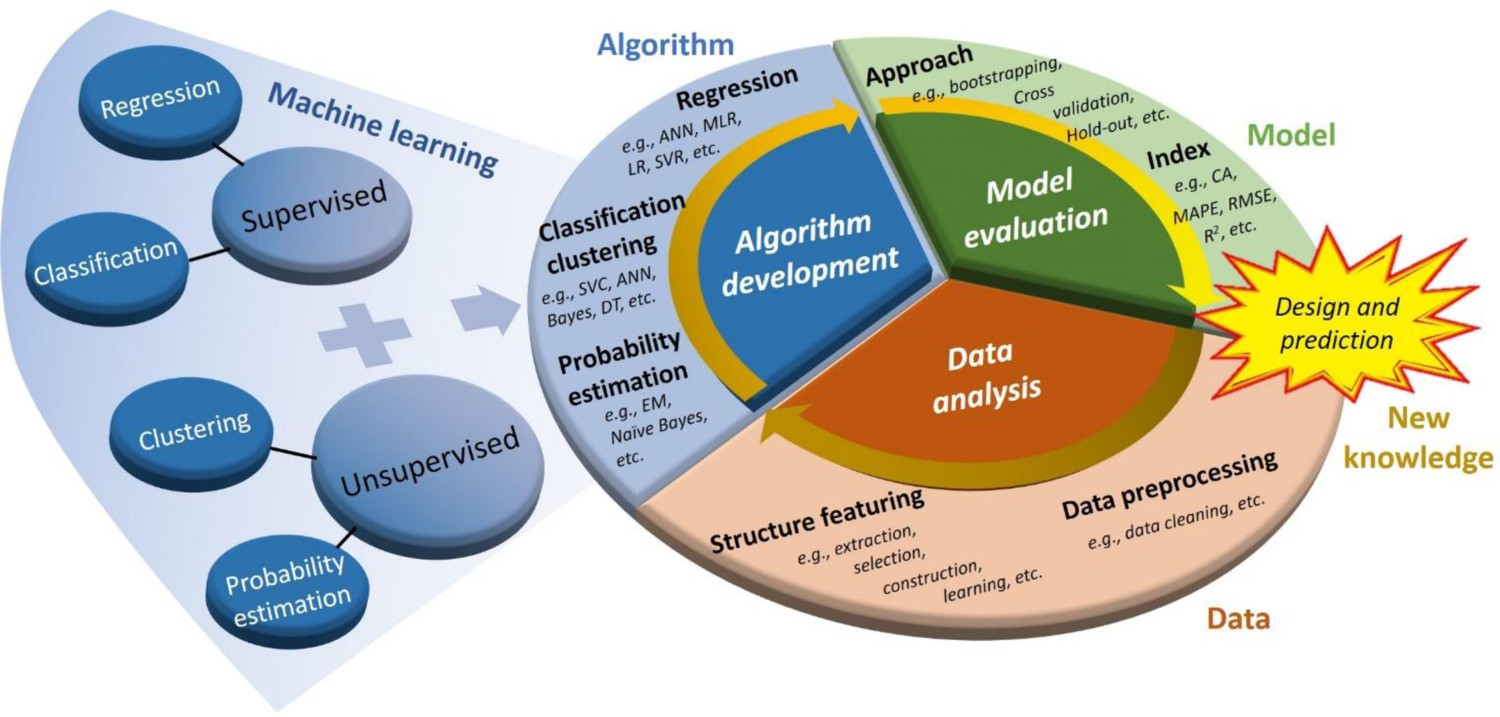
General paradigms of AI in architected materials and structures
The main AI techniques applied in the field of materials and structures focus on automatically learning from data, identifying unseen patterns between inputs and outputs and assisting in making decisions [314–316]. AI models can either be rigid and simple (e.g. classic statistical linear regression models) or complex and flexible (e.g. deep neural network), which are proposed to help computer-aided machines learn on themselves through the provided computational power and adequate data [317,318]. Mimicking the learning capabilities of human beings by obtaining experiences via thinking, AI develops algorithms to improve the performance of computers based on big amount of data. Although data are the key parameters in AI models, big data are meaningless until computers are able to extract the inferences or knowledge from them. Most of the tasks of AI in materials and structures can be formulated as obtaining inferences on latent or missing data based on the observed data [319,320]. To effectively obtain the missing data, AI typically makes certain assumptions and deploys them into models. Essentially inspired by biological learning, AI is superior to its traditional counterparts since it enables computers to learn without being explicitly programmed. Unlike material science that analyses data using intuition and logics, AI discovers unconsidered features beyond human capability [103,321,322]. The general paradigms of AI can be characterised as using series of techniques to find the inherent rules and dependences between observed data and unseen patterns or features in materials and structures [272].
Taking advantage of establishing unseen patterns from huge amount of observed data, AI algorithms (especially ML) have been applied to design and predict advanced structural materials in material and structure science. The advantages of ML can be characterised into three aspects, i.e. providing the code accelerator tool to reduce the computational cost of deterministic models, developing the empirical model if the deterministic model is not possible, and obtaining the classification tool [322–324]. Comparing different ML algorithms in the arena of materials science, supervised ML approaches have attracted more research attention in recent years [103,272]. Using the supervised algorithms to develop self-contained design and prediction models that have step-by-step operation processes, the ML models are commonly developed using the probability theory in five steps, including (1) collecting and partitioning data for training and testing, (2) preprocessing to clean, format and remove/recover data, (3) training model using numerical optimisation algorithms to tune the variables, (4) evaluating model with respect to the prediction accuracy using the test data, and (5) generating new data for prediction using an ML algorithm, as demonstrated in Figure 15. Recent studies have demonstrated the efficiency of the ML techniques in developing data-driven prediction models for structural materials such as the glass transition temperatures in novel glasses [325], mechanical properties [326] and chemical durability [327] of oxide glasses, and the glass-forming ability of metallic alloys [328]. These studies have led to obtaining important insights into the behaviour of the structural materials and expanding the knowledge in the field of compositions.
Development paradigms for AI-enabled architected materials and structures. ML-based design and prediction models to design and optimise architected materials and structures.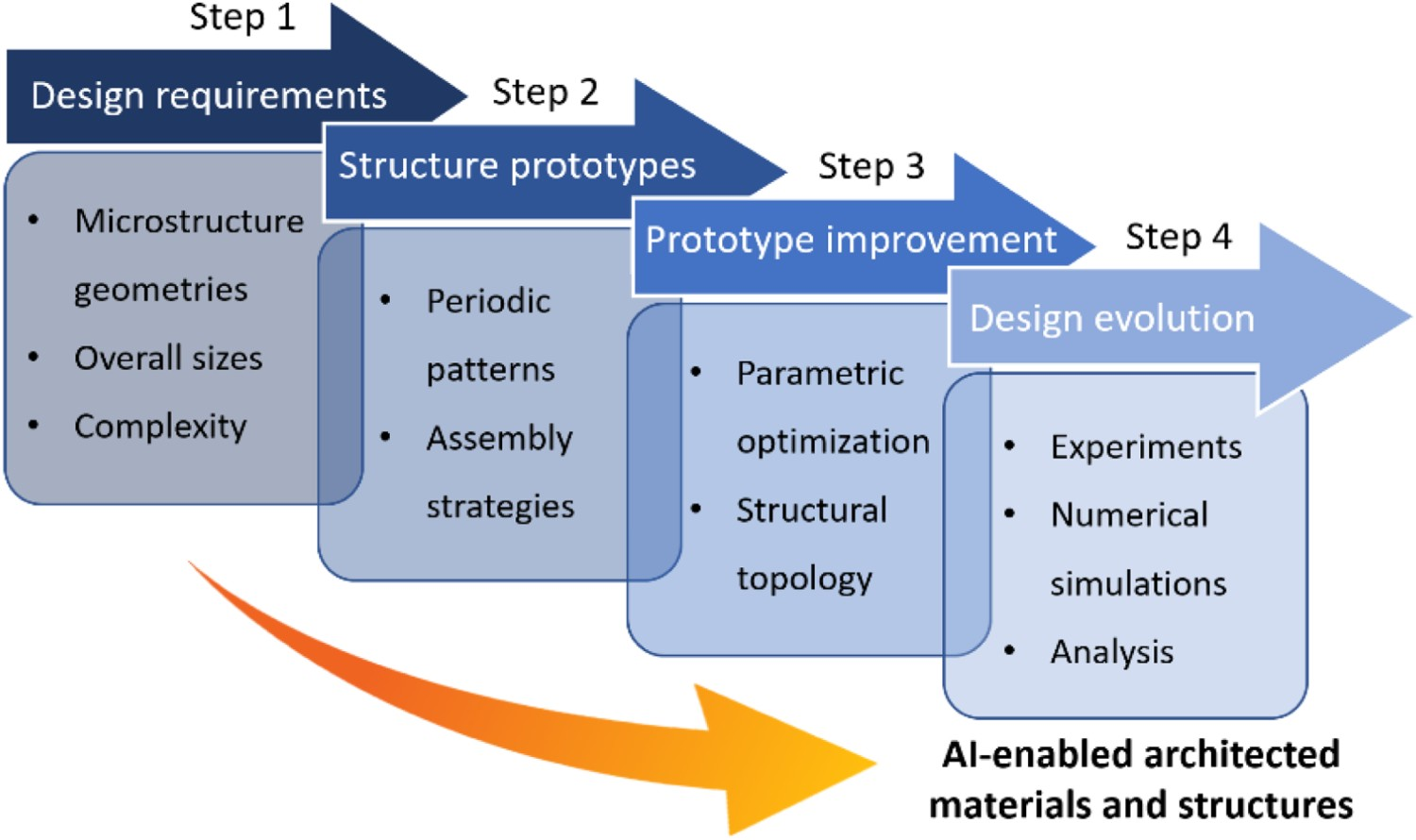
Within the ML arena, artificial neutral networks have found many applications in materials science [87]. As one of the cutting-edge algorithms in the ML arena, deep learning has received significant attention in the field of materials science [87,323]. Deep learning uses the artificial neutral networks concept with multiple layers to extract higher level features from the raw data progressively. Essentially based on artificial neutral networks, deep learning consists of critically deeper layers of neurons, which has been applied to solve classification and segmentation problems in seismology. Deep learning is a type of representation learning method that allows to learn from raw data to automatically discover the representations needed for classification or detection [91]. Representations are transformed into more abstract levels using simple modules, which are assembled to structure multiple levels of representation. Taking the advantage of increasing the amount of available computational data while requiring little engineering by hand, deep learning can easily outperform other ML methods [279,321]. New deep learning architectures and algorithms are likely to assist this progress [322]. The computational paradigm of AI has been shifted to material characterisation and discovery in recent studies, such as the materials genome initiative that aims to bridge the gap between experiment and theory and promote more data-intensive and systematic research approaches. The existing applications of AI in structural material have demonstrated the effectiveness in designing and optimising architected materials from the material perspective (e.g. composite materials) and the structural perspective (e.g. structural materials) [266,273–275].
Limitations and future direction of ML-based data-driven approaches
ML has been increasingly attracting interests in material science in recent years. Compared to the traditional modelling approaches that typically use physical principles to understand the specific aspects of materials, the ML approaches have the capability of comprehending and handling high-dimensional feature space [327]. Although the ML techniques have been drawing significant attention from the material science community, the current ML techniques are still suffering from certain inherent flaws. One of the critical limitations of the ML-based data-driven approaches is their inability to extrapolate out of the training parameter space. In addition, most of the ML methods are considered as the black-box models because they are not able to reveal the underlying functional relationship between the variables. If the scientific connection between the features and prediction is unknown, the prediction of new promising materials and scientific advancement might be doubtful, even if superior performance can be obtained by the ML methods [272]. Lack of novel laws, understanding and knowledge are other drawbacks of the ML algorithms in science. While these methods are proved to be effective for the optimisation problems, they might not be very useful for new discoveries in material science. However, there are newer ML versions that can alleviate some of these limitations. For example, evolutionary computation (EC) methods offer high model transparency and knowledge extraction leading to the conceptualisation of the physical phenomena and derivation of the mathematical structure. EC can provide a deeper insight into the model input-output relationships and further physical interpretation of the system by the users [301]. Other issues associated with the deployment of the ML approaches such as overfitting, input data quality and scalability still remain a challenge. Future research in the arena of ML in material and metamaterial science should focus on development of more sophisticated ML methods that can address these concerns. Besides, more effort should be made by the material science community to customise ML approaches that are more practical for solving material-specific problems, rather than general ML approaches that are basically designed for other scientific applications.
Summary
According to the objectives and applications, AI in architected materials and structures can be categorised into the fields of technology (i.e. AI algorithms) and utility (i.e. AI-enabled functionalities). In general, the applications of AI in architected materials and structures can be summarised into five steps, including (1) collecting and partitioning data for training and testing, (2) preprocessing to clean, format and remove/recover data, (3) training model using numerical optimisation algorithms to tune the variables, (4) evaluating model with respect to the prediction accuracy using the test data, and (5) generating new data for design and prediction. Since microstructures are the main elements, and therefore challenges, in mechanical metamaterials, AI techniques are expected to overcome the challenges in the five steps. However, the current ML techniques are still suffering from certain inherent flaws. One of the critical limitations of the ML-based data-driven approaches is their inability to extrapolate out of the training parameter space. In addition, most of the ML methods are considered as the black-box models because they are not able to reveal the underlying functional relationship between the variables.
AI-enabled smart mechanical metamaterials
Mechanical metamaterials have attracted significant attention due to their extraordinary mechanical characteristics resulted in complex designs of microstructures [329–331]. To manoeuvre the mechanical properties and obtain desirable performance, it is necessary to establish the relations between the dominant parameters of the local microstructures and the mechanical performance of the global metamaterials [332,333]. Given the complexity of the microstructures, it is typically difficult, if not impossible, to quantitatively predict the performance of mechanical metamaterials (i.e. response prediction) using traditional statistical tools, let alone designing microstructures to obtain predefined mechanical response (i.e. inverse design). As a consequence, AI has been applied to design and analyse mechanical metamaterials. For example, Figure 16 illustrates the quantitative relations developed using genetic programming algorithms to address the dilemmas in the design of mechanical metamaterials (i.e. prediction and inverse design in Figure 12). AI has recently been brought into the field of mechanical metamaterials to address the challenges, and studies have been reported on the emerging AI-enabled smart mechanical metamaterials.
Genetic programming-based quantitative relations. Demonstration of the quantitative relations obtained using genetic programming algorithms to address the dilemmas in response prediction and inverse design of mechanical metamaterials.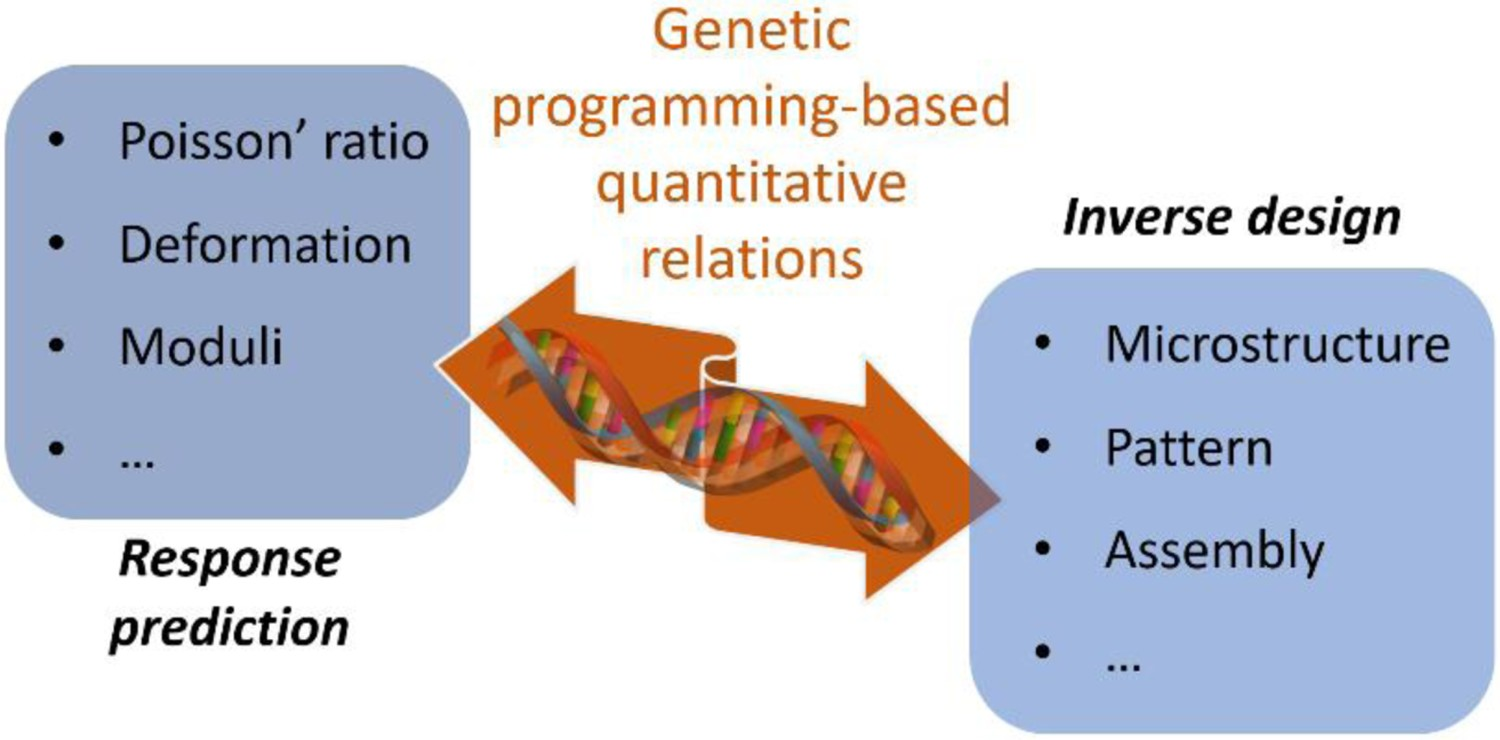
Applications of AI in mechanical metamaterials
Figure 17 summarises the existing studies in the arenas of the mechanical metamaterials and AI-based design since 2010 and envisions the emerging AI-enabled smart mechanical metamaterials [20,39,44,49,54,60,89,96,109,119,129,130,133,137,138,144,204,211,291,305]. AI is not only capable of automating the discovery and design of the mechanical metamaterials through learning from data, but can also add intelligence to their structural designs. Here, we concentrate on how the AI-based methods can revolutionise the field of mechanical metamaterials. The main challenges in this digital transformation in materials science are finding effective material descriptors, developing algorithm/work-flow, tackling the uncertainty in the AI predictions, and incorporating physics-based material models in the AI frameworks. Table 2 summarises the applications of different AI algorithms in mechanical metamaterials.
Vision for AI-enabled smart mechanical metamaterials. Some existing studies in mechanical metamaterials and AI in engineering since 2010, and the emerging AI-enabled smart mechanical metamaterials that use AI techniques to enhance mechanical metamaterials from the material and structure perspectives.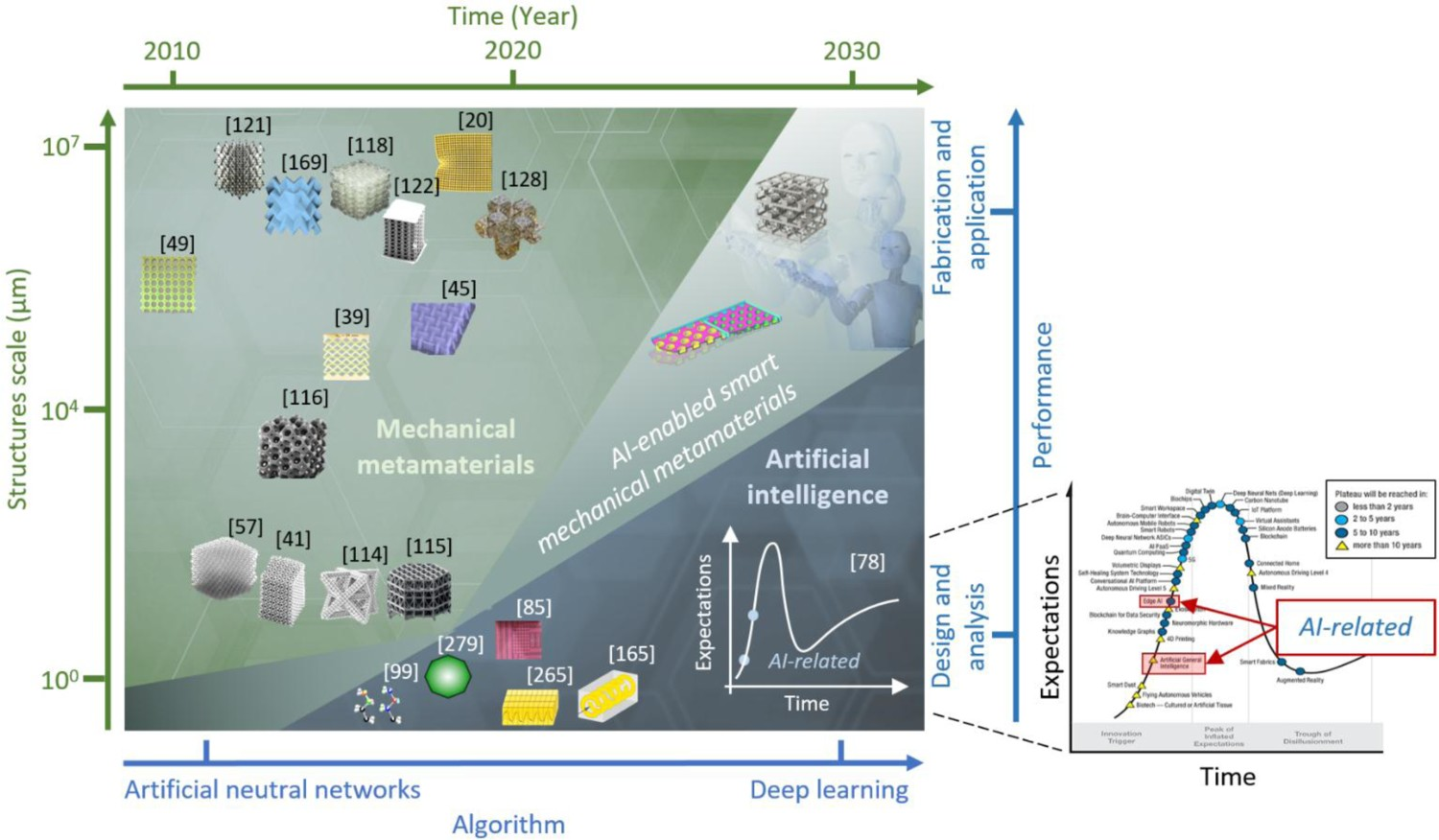
Comparison of the main ML algorithms in mechanical metamaterials.
AI in mechanical metamaterials: material perspective
From the material perspective, AI algorithms have been used in engineering for material design. Evolutionary process in natural materials has been accelerated with the assistance of AI. Mechanical materials can be optimised in AI computational frameworks, which are superior to natural materials in obtain otherwise contradictory properties (e.g. roughness and rigidity) at the same time. AI-based material design focuses on the materials of the mechanical metamaterials, aiming to generate artificial, advanced materials and structures using different types of functional materials.
AI in mechanical metamaterials: structural perspective
From the structural perspective, AI algorithms have mainly been used to design the microstructures of mechanical metamaterials. Since mechanical metamaterials emerges architected substructures to obtain anomalous mechanical response at the macroscale, which is the most typical difference between mechanical metamaterials and composite materials, it is significant to design the substructures of mechanical metamaterials. For example, starting with arbitrary population of initial designs of mechanical metamaterials, evolutionary computing in AI ranks those designs with respect to certain fitness evaluation functions. The designs with the best fitness are likely to have a significantly better chance to be the design parents in the next design generation. Creating design offspring from the parents is called reproduction process. The selected designs are then arbitrarily transformed into new designs via mutation, recombination or crossover operations. As a consequence, the fittest design is selected among millions of possible designs generated during this evolutionary process.
Future trends of smart mechanical metamaterials
From microstructure design to user-oriented design
While studies have been mainly focused to revolutionise the traditional material science field with AI, the entire concept of AI for characterising and designing novel mechanical metamaterials is still in its infancy. AI techniques have recently been applied for the design of mechanical metamaterials. The superiority of the AI-based design approaches over the existing methods pertains to its ability to extract the functional relationships for the architected mechanical metamaterials. As a consequence, the derived explicit models can be used to optimise the response or obtain the desirable mechanical performance of the smart mechanical metamaterials without the requirements of performing cumbersome experiments or iterating numerical simulations. In addition, these models can serve as objective functions in the optimisation algorithms to extract the structural design parameters that provide the optimal mechanical performance.
One of the most vital issues for predicting the mechanical response of the mechanical metamaterials is how to identify the appropriate predictor variables. The next step toward the AI design of smart mechanical metamaterials is to obtain the desirable structures by directly considering required mechanical response (i.e. user-oriented design of mechanical metamaterials). Introducing the structure prototypes into the AI designing process to augment the experiential nature of design prototyping, the AI design method follows the natural evolution process to evolve the millions of mechanical metamaterials structure prototypes directly, rather than the typical approach of directly assembling substructures. After the prototype has been evolved, the algorithm designs the mechanical metamaterials as per the design criteria. This approach can result in a new computational strategy for the mechanical metamaterials structural creativity based on the integrating topology optimisation and AI. In this strategy, a set of design constraints can be passed to a topology optimisation algorithm to generate the initial mechanical metamaterials geometries, and AI further explores a suite of new designs that outperform the initial patterns used for its training.
From programmable reaction to active self-adaption
Functional materials from the material perspective have been attracting significant attentions due to their promising functionalities, such as shape memory materials can be triggered by thermal or magnetic fields [336]. As a type of programmable, functional material, shape memory materials have attractive research attention since their debut due to the ability of the ability to fix at certain deformed single- or multi-state and return to their original shapes by external stimuli, such as temperature, electricity, light, or magnetic field [337–339]. Fabricating by shape memory materials, the smart mechanical metamaterials have been reported to be self-adaptive with programmable thermo-mechanical responses (i.e. actively triggered by external excitations) [340]. The emerging shape memory materials-enabled mechanical metamaterials lead to paradigm shifts in design, manufacture and perception of smart mechanical metamaterials. The extraordinary characteristics of shape memory materials have been incorporated into multifunctional devices such as the mechanically induced assembly of shape memory elements in the 3D mesostructures [340], or the multistable thermal actuators by shape memory materials using the 4D printing additive manufacturing technology [336].
Summary
Enabled by AI algorithms, smart mechanical metamaterials are obtained with quantitative mechanisms for design and analysis, and less complexity for fabrication and industrial application, which lead to promising utilities, such as the micro/nanoscale applications in bioengineering and the macroscale applications in civil engineering. In particular, the microscale applications in biomedicine and bioengineering [341,342], nanoscale lightsail for space travel in cosmic engineering [50], and mechanical metamaterials piezoelectric nanogenerators (MM-PENG) [64]; and the macroscale application is mechanical sensors for structural health monitoring in civil engineering [43]. In the future, AI-enabled smart mechanical materials are expected to lead to potential research avenues and emerging trends for future innovations.
Conclusions
This review article discussed the advent and development of mechanical metamaterials, overviewing the existing review and technical studies in the literature and discussing the fabrication, mechanism characterisation and applications of mechanical metamaterials. We explained why mechanical metamaterials have prominent advantages and are especially suitable for certain applications, what are the main challenges in mechanical metamaterials, and how to surpass those limitations using AI techniques. This article particularly discussed the paradigm shift of designing, optimising and predicting mechanical metamaterials using the AI techniques. The future trends of deploying AI to achieve smart mechanical metamaterials with desirable mechanical response is further discussed. We outlooked AI as a viable tool for designing and optimising mechanical metamaterials and exploring their mechanical performance. However, the entire concept of AI for characterising and designing architected metastructures is still in its infancy. We envisioned the potential research avenues and emerging trends to harness the power of AI-enabled smart mechanical metamaterials.
Footnotes
Acknowledgements
This study is supported in part by the Fundamental Research Funds for the Central Universities, China (2020-KYY-529112-0002). P.J. acknowledges the support from the Hundred Talented programme at the Zhejiang University, China. A.H.A. acknowledges the startup fund from the Swanson School of Engineering at the University of Pittsburgh.
Disclosure statement
No potential conflict of interest was reported by the author(s).
