



Abstract
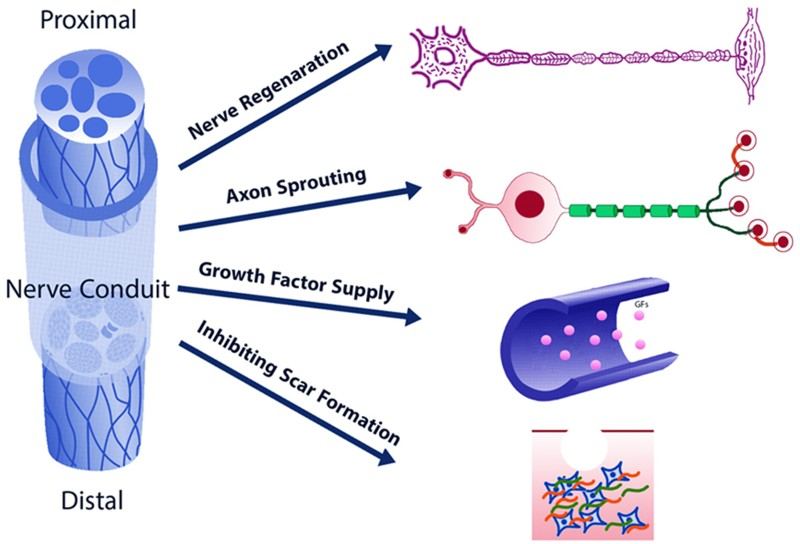
Peripheral nerve injuries face some clinical obstacles and unsatisfactory functional outcomes. The slow regeneration rate of defected nerve delays functional recovery. To date, various therapeutic agents are used to enhance the survival and regeneration capacity of damaged neurons. Among these, nerve guide conduits held promise for peripheral nerve regeneration, through the physical guidance of the injured nerve across the lesions. Many natural and synthetic polymers are used to produce nerve conduits. Biopolymer-based biomaterials offer important options in control of structure, morphology, and chemistry as reasonable substitutes or mimics of extracellular matrix systems. Silk protein fibroin as a biocompatible natural polymer, possesses biodegradability, tunable mechanical properties, process ability, and suitable for the peripheral nerve conduits. This review highlights recent advances in the use of silk-based conduits for peripheral nerve regeneration. Further, the development of nerve conduits based on other biopolymers, including chitosan, alginate, collagen, and gelatin is discussed and compared.
Get full access to this article
View all access options for this article.